Mobile Health Technology for
  Global Health in Action

        Julian Wimbush, PhD
           Research Fellow
        CIDER, UC Berkeley
            April 15, 2010
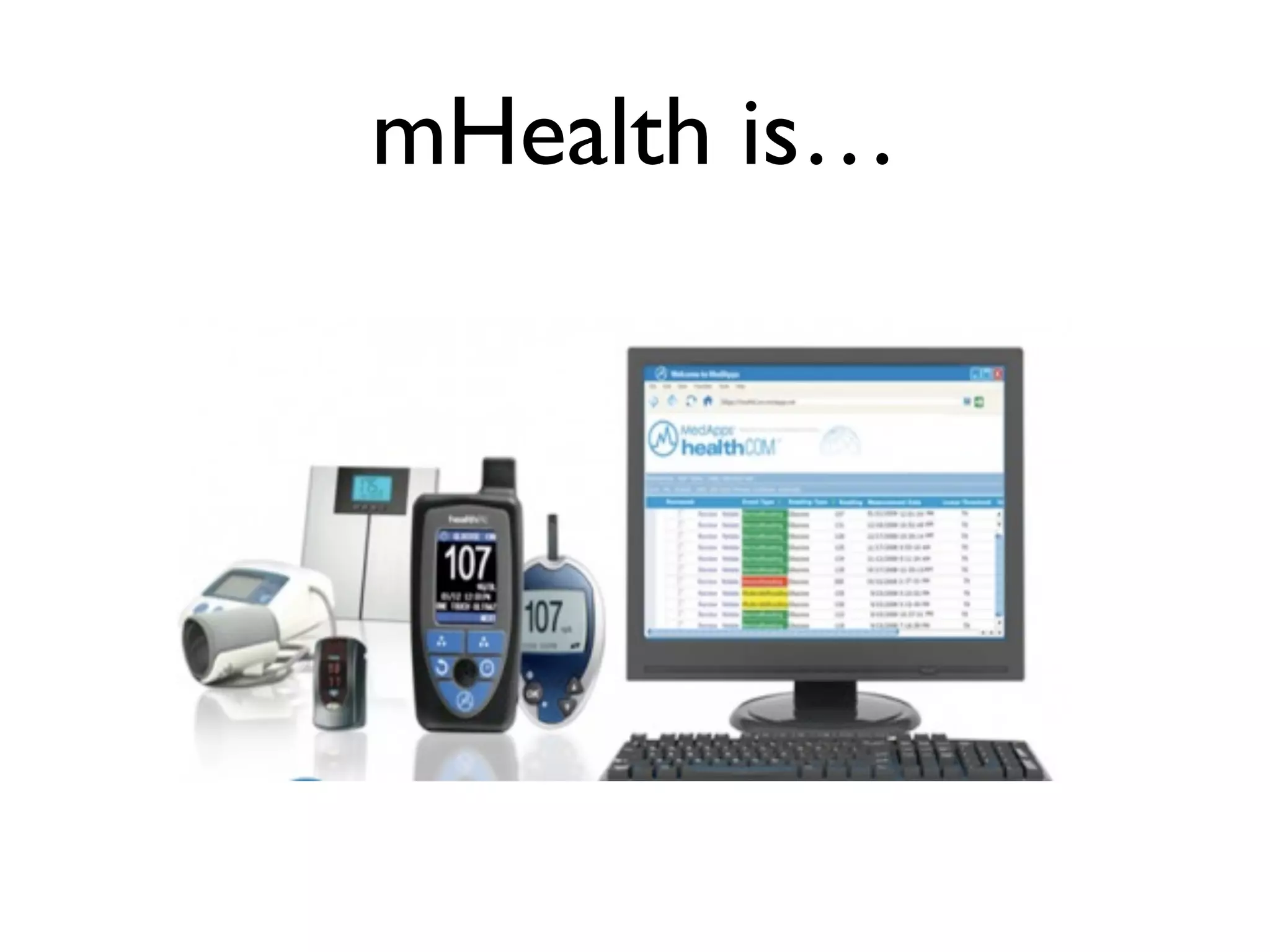
mHealth is…
…use of mobile communication devices for
health services
and (multimedia) information via:

•   Mobile phones
•   Smartphones
•   Patient monitoring devices
•   Mobile telemedicine/telecare devices
•   MP3 players for mLearning
•   Microcomputers
Information Flow
•   Moving community and clinical health data
    between
    •   Practitioners
    •   Researchers
    •   Patients
•   E.g.: real-time monitoring of patient vital
    signs,
•   E.g.: direct provision of care (via mobile
    telemedicine)
UN Millennium Development
     Goals: 2001-2015
For health:
 •   Reduce child mortality by 2/3
 •   Improve maternal health
     •   Reduce mortality / morbidity by 3/4
 •   Combat HIV and AIDS, malaria, and other
     diseases
     •   Halt and begin to reverse the spread
MDG: Strategic Objectives
•   Improvement of the access to emergency
    and general health services
•   Improvement of the efficiency of health
    service delivery
•   Improvement of the clinical practice for
    enhanced health outcomes
•   The reduction of child and maternal
    mortality and morbidity in MVPs
Reality
•   A child born in the developing world is 33
    times as likely to die within the first 5 years
    of life
•   Higher maternal mortality and morbidity
    rates (1M and 10M per year)
•   High HIV infection rates (2.5M new cases)
•   Prevalence of avoidable, communicable
    diseases (TB, malaria) due to preventable
    factors
•   Shortfall of medical workers (Def = 2.4M)
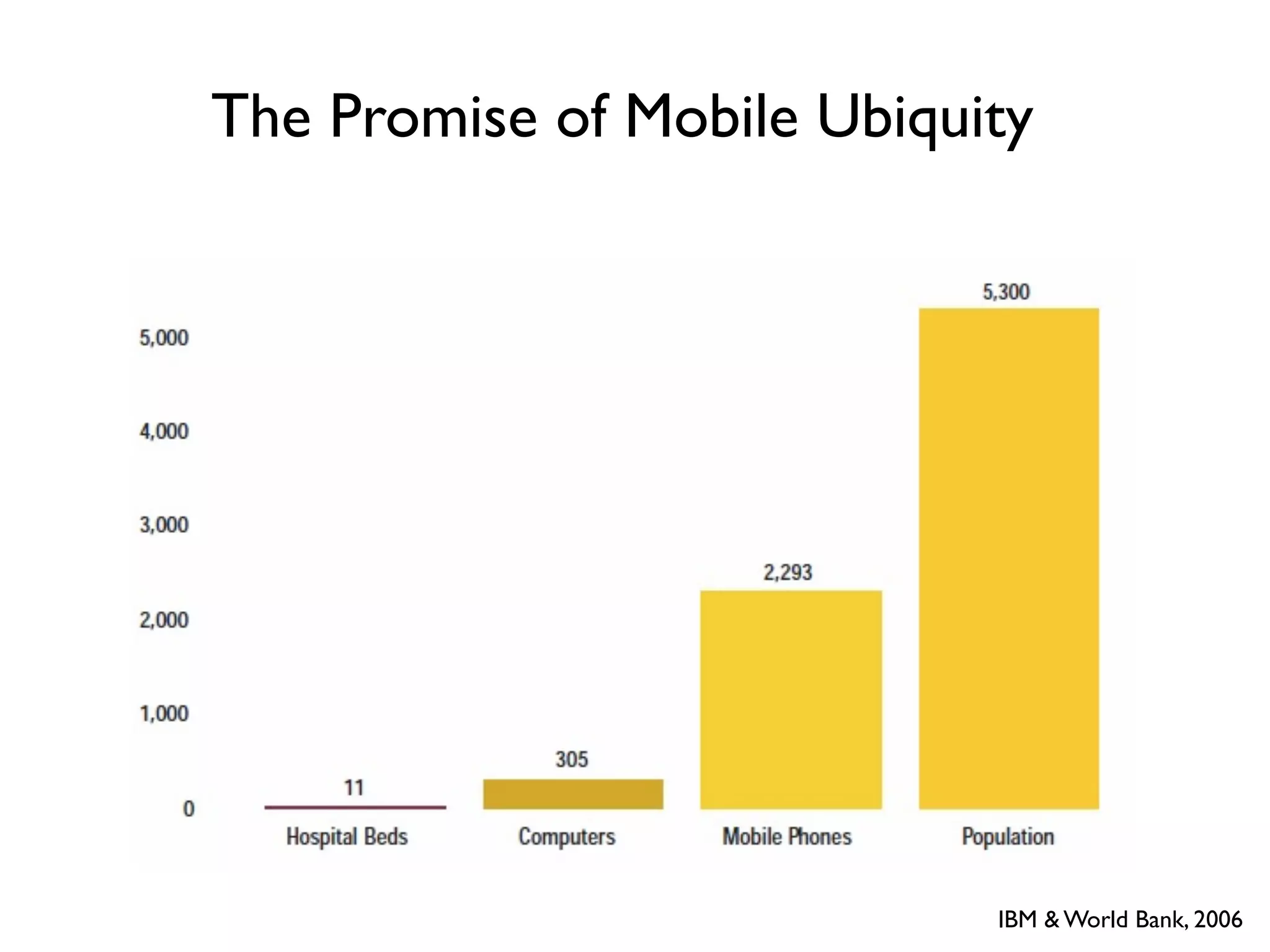
The Promise of Mobile Ubiquity


                            IBM & World Bank, 2006
Developing World Context: Ripe
         for Growth

•   3 billion+ mobile phone users (64% in
    developing world)
    •   Biggest growth in Asia, Middle East, Africa
•   Mobile phones (plus) as a leapfrog technology
    •   Bypassing fixed-line subscriptions
•   90% of the world now lives within a mobile
    reception area
•   2012: 50% of all remote populations will have
    mobile phones
Ease of Adoption: Low
         Cost
•   Cost of deployment continues to decrease
    •   Cheaper infrastructure technologies
        (CDMA)
    •   Cheaper phones (e.g., Java phone $50-100)
•   Availability of free and open-source software
    (FOSS) / apps
Ease of Adoption

•   Breaking the literacy barrier
    •   Direct voice communication


•   Communication and coordination with
    people in remote, rural areas


•   Tracking migrant populations
Emerging trends in mHealth

•   Emergency response systems
•   Mobile synchronous (voice) and asynchronous (SMS) telemedicine diagnostic
    and decision support to remote clinicians
•   Clinician-focused, evidence-based formulary, database and decision support
    information available at the point-of-care
•   Clinical care and remote patient monitoring
•   Health services monitoring and reporting
•   Health-related mLearning for the general public
•   Training and continuing professional development for health care workers
•   Health promotion and community mobilization
•   Support of long-term conditions
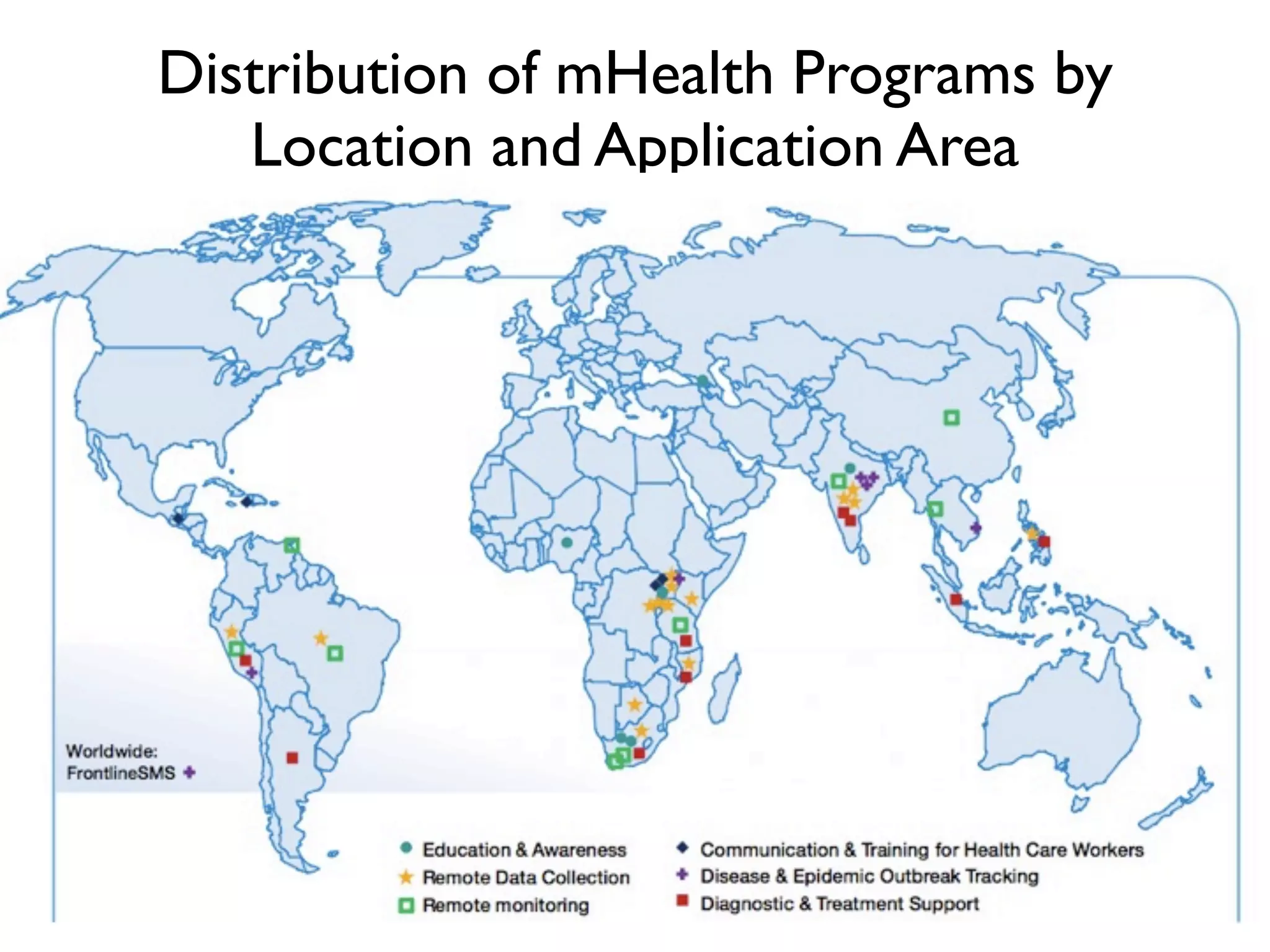
Distribution of mHealth Programs by
   Location and Application Area
Mobile Health


• Information as a provider
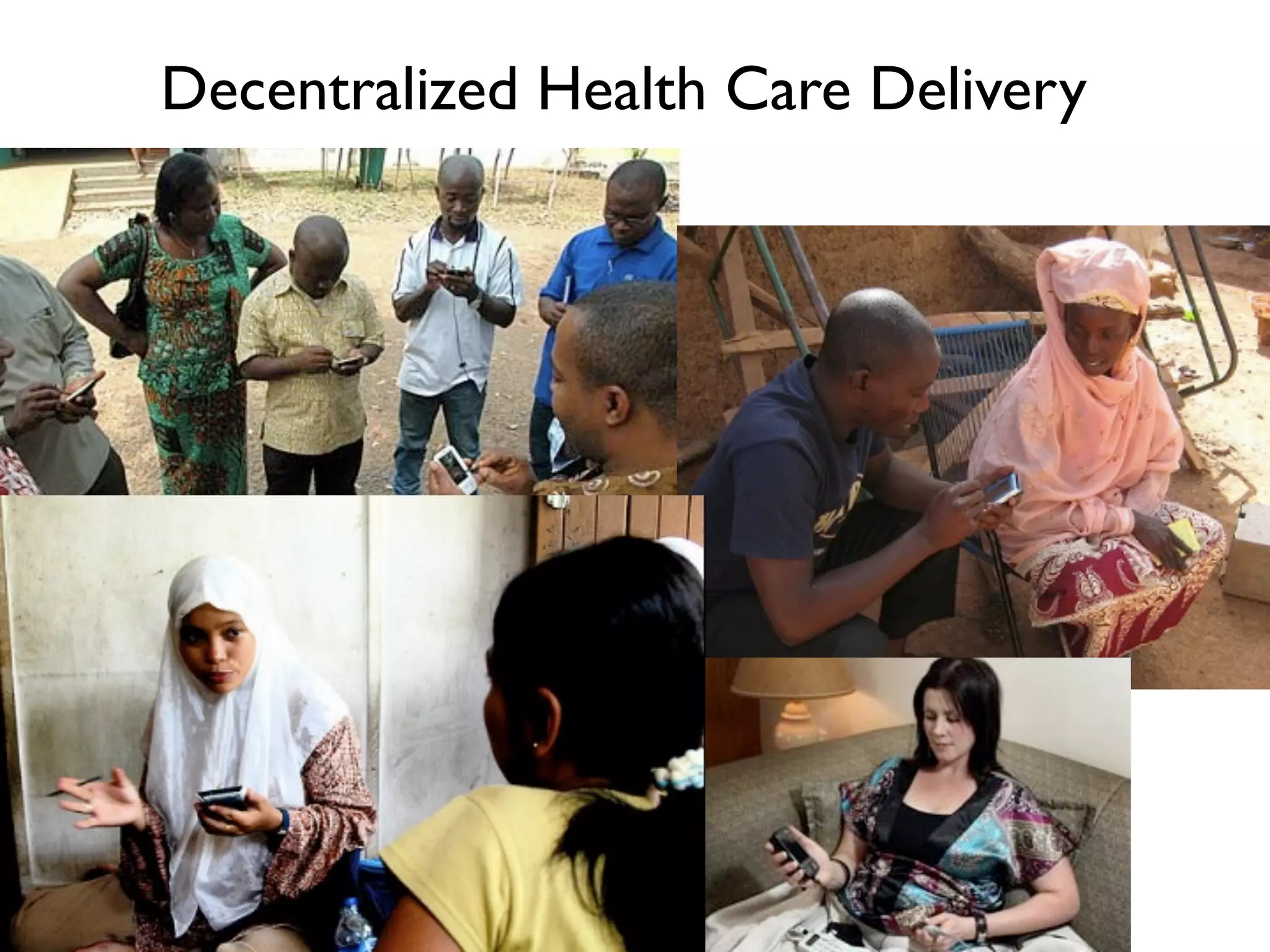
Decentralized Health Care Delivery
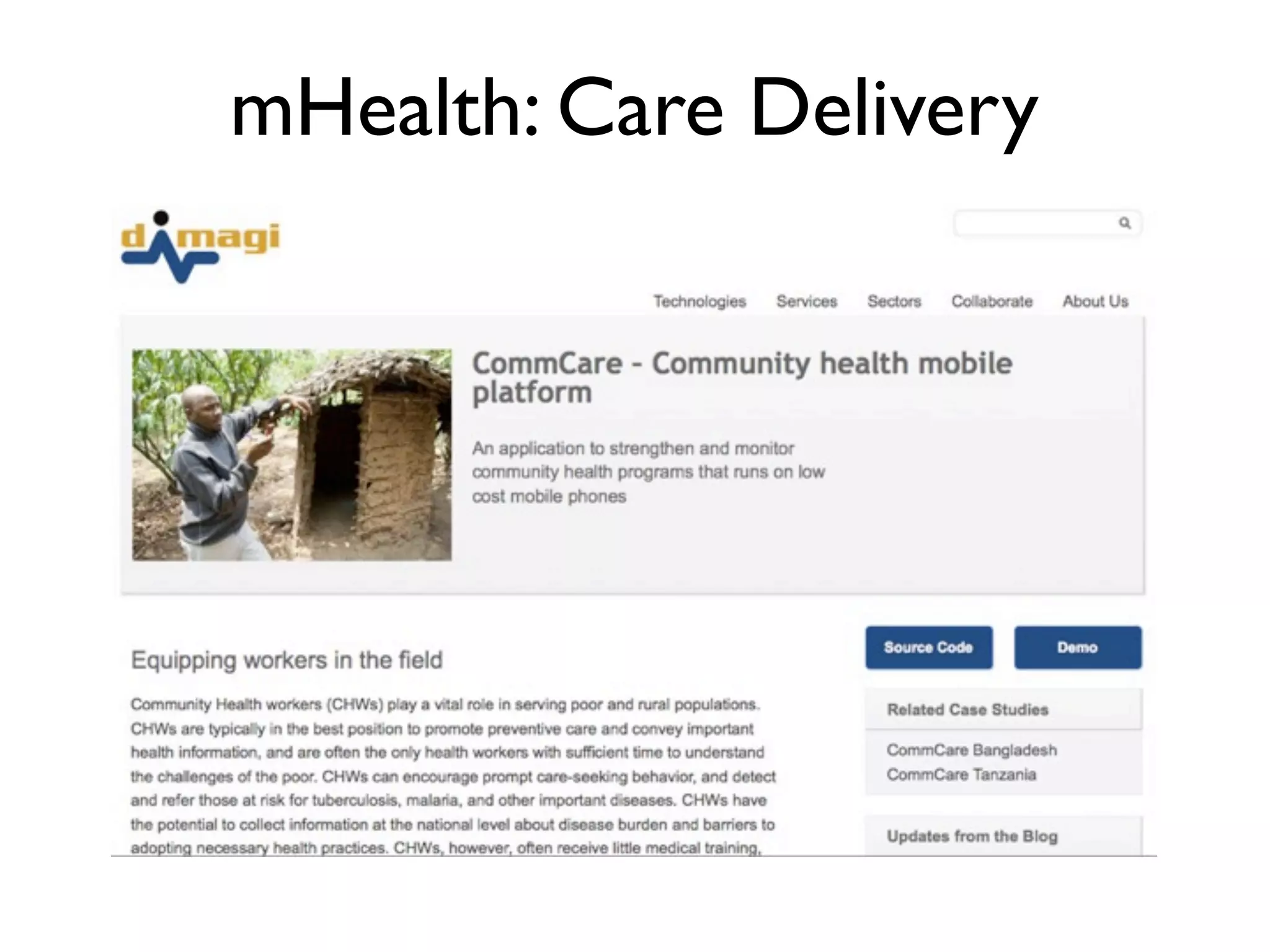
mHealth: Care Delivery


•   screenshot
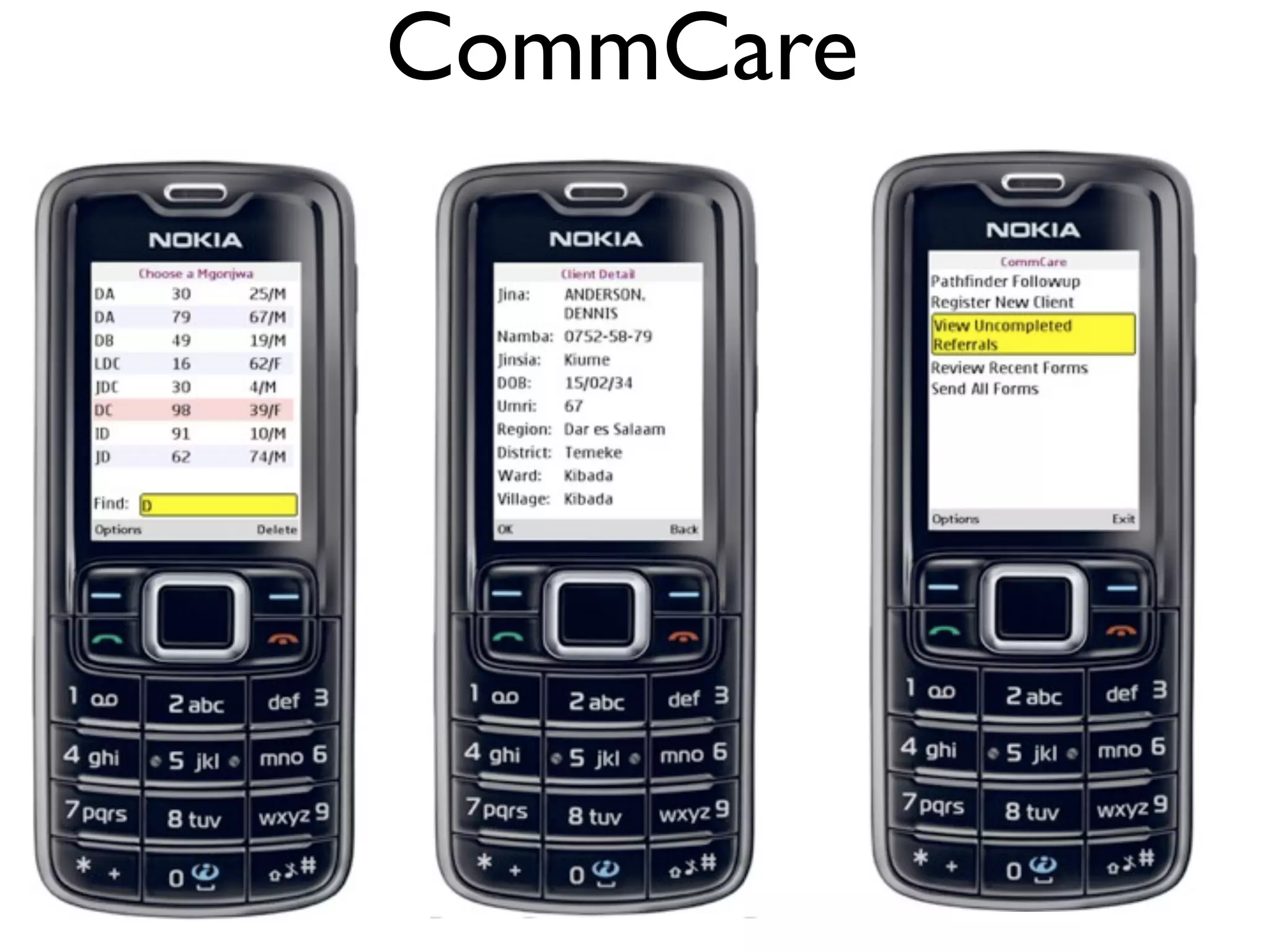
CommCare
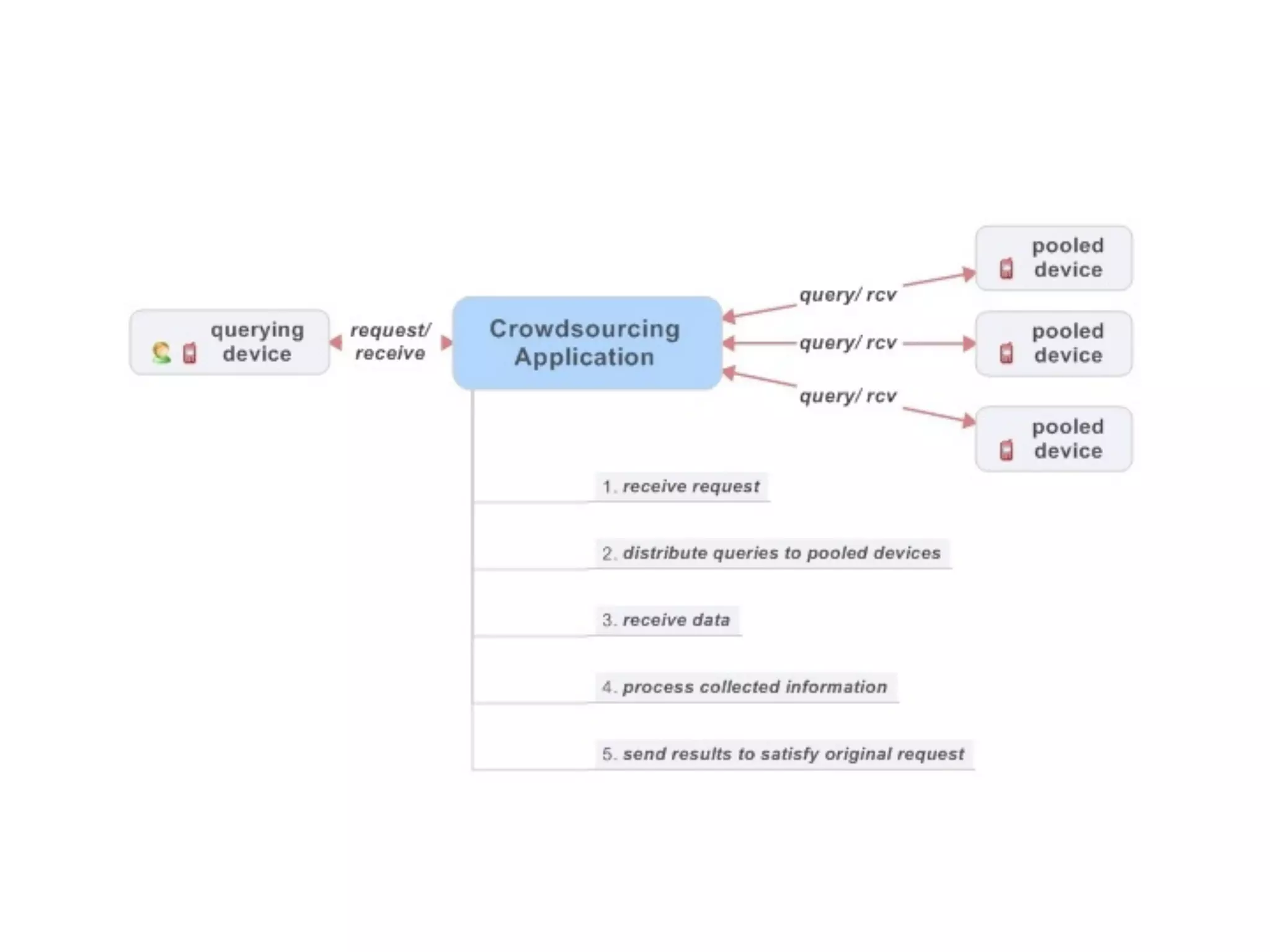
Information Flow:
Crowdsourcing Data
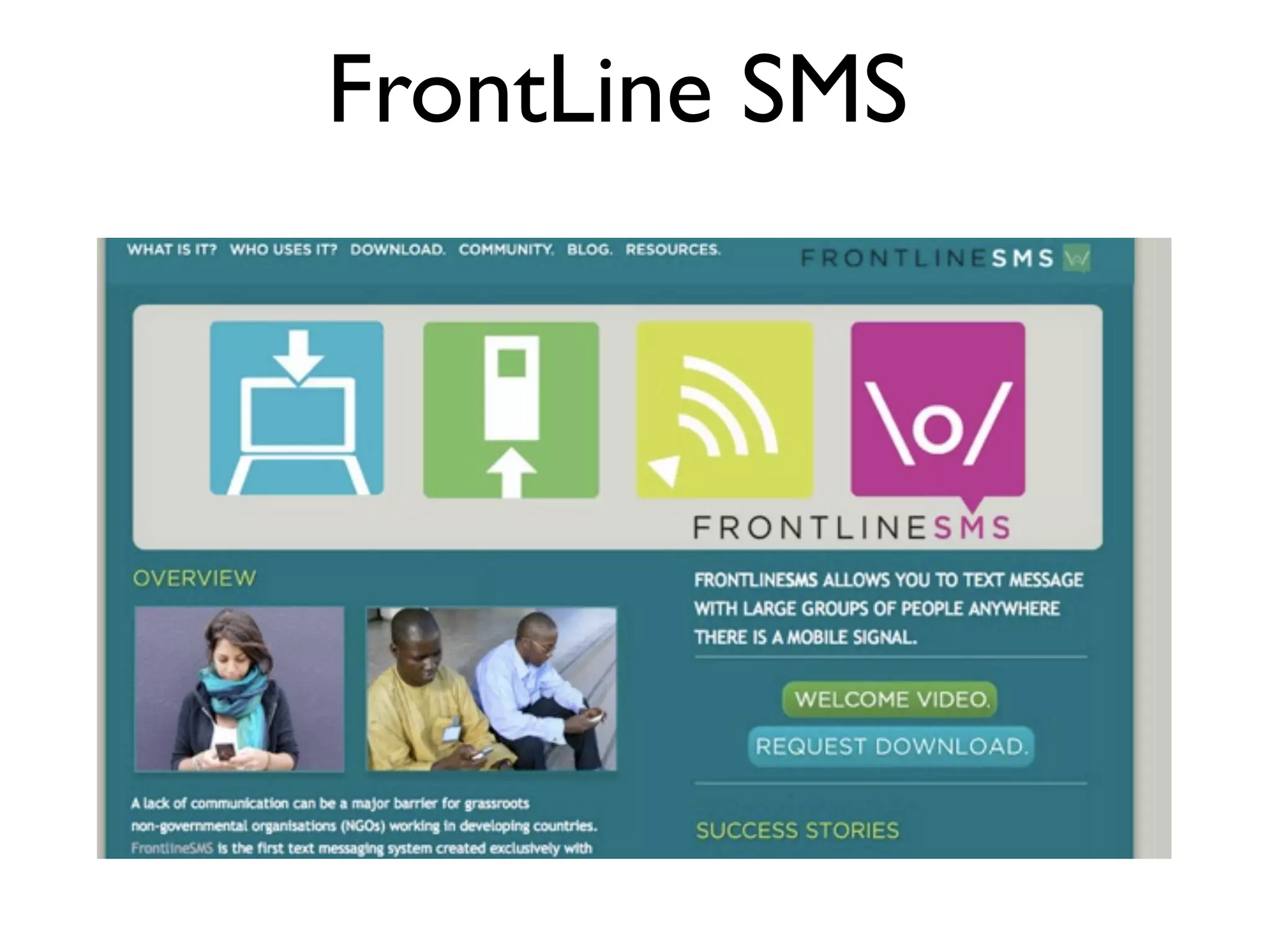
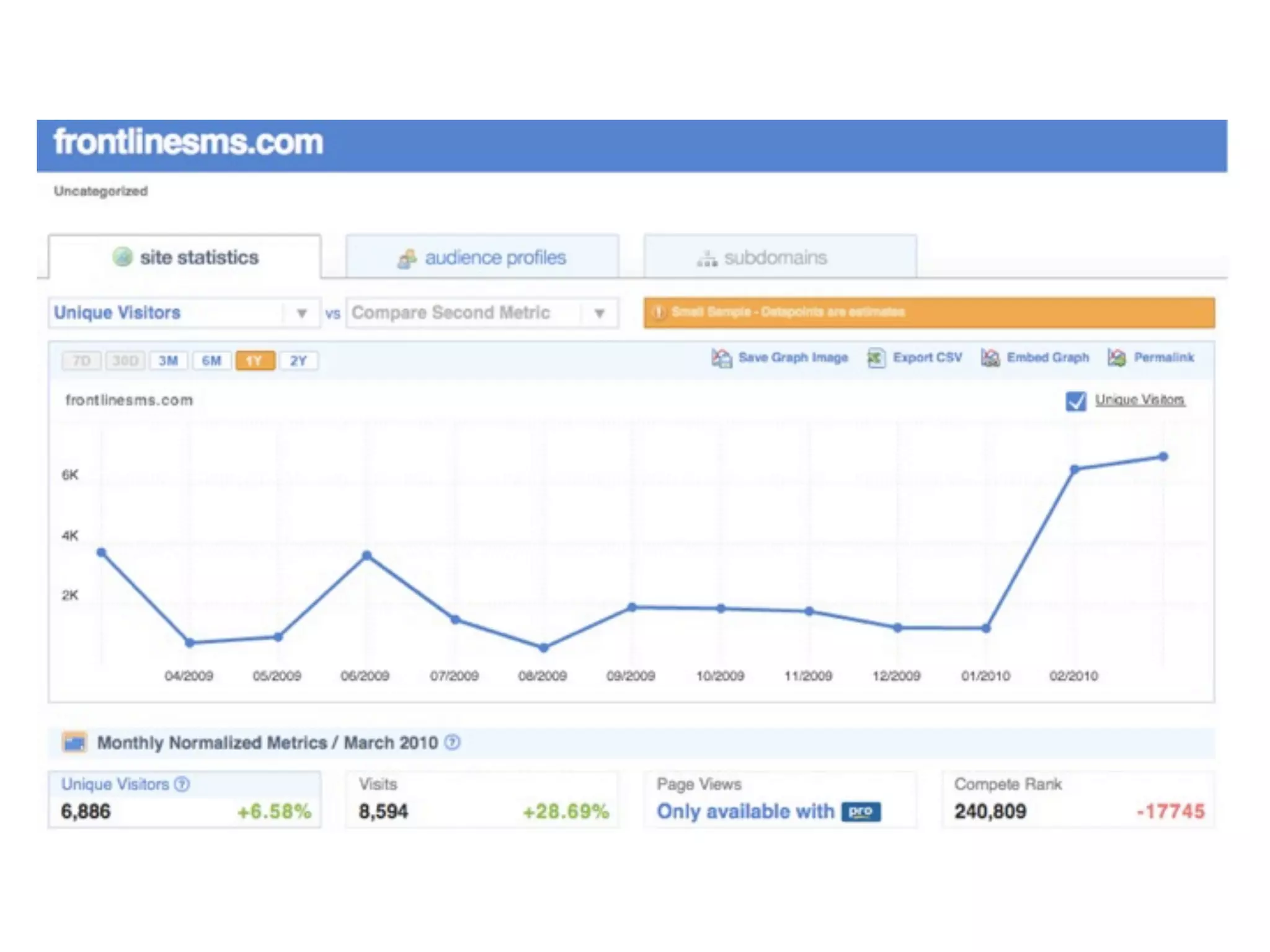
FrontLine SMS


•   Screen shot
Frontline SMS

•   enables users to send and receive text
    messages with large groups of people
    through mobile phones
•   does not require an Internet connection
•   works with existing plan on all GSM phones,
    modems and networks
FrontLine SMS


•   Reminders / Adherence
•   Coordination / Communication
•   Simple SMS-based forms
Situational Awareness

• Communication (plus Geospatial
  Awareness?)
• Surveillance vs. Disaster
  Response
Situational Awareness

•   Perception of:
    •   environmental elements in time and space
    •   comprehension of their meaning
    •   projection of their status in the near future


•   Vital for emergency responders &
    surveillance
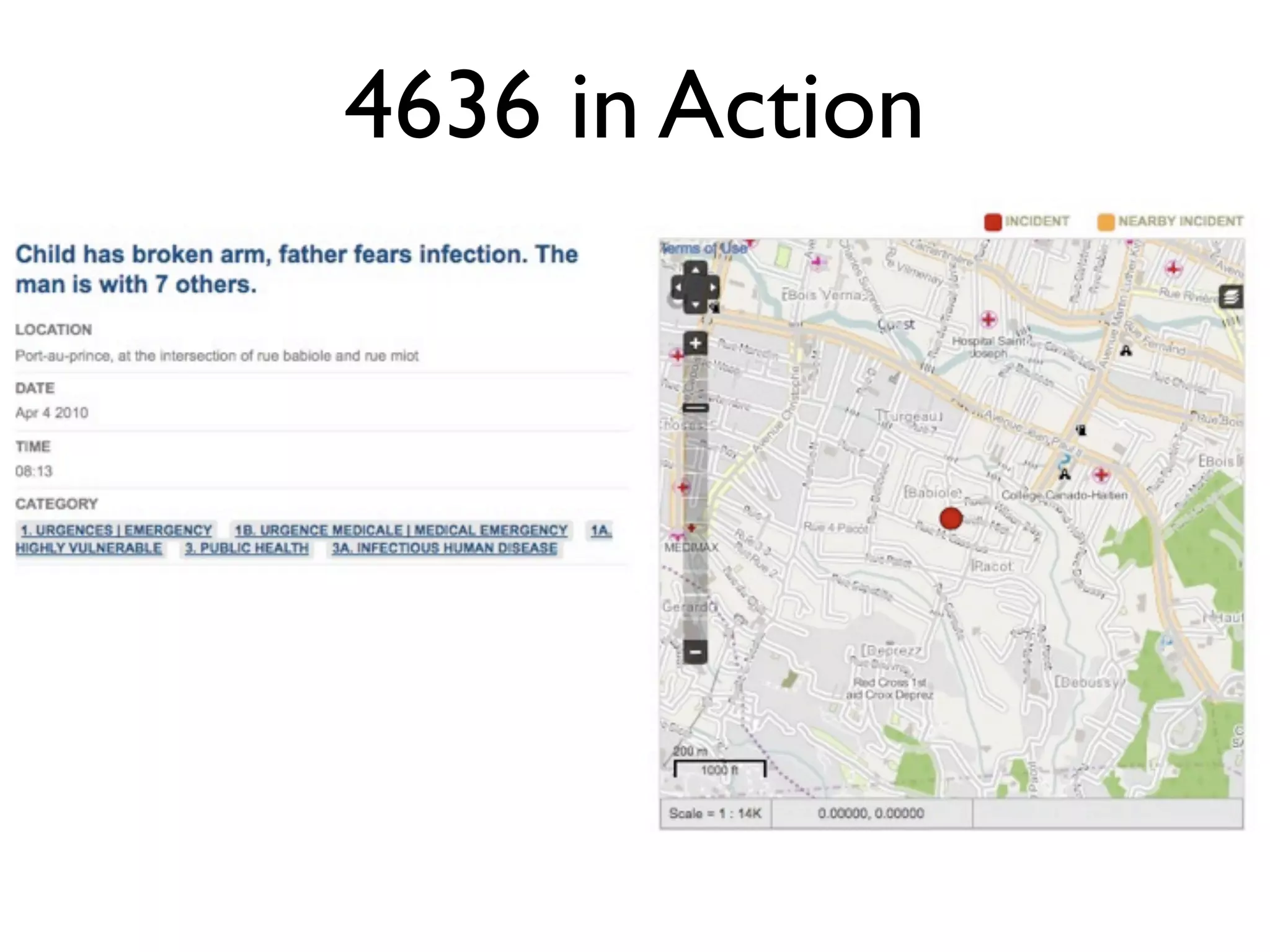
Situational Awareness: Haiti
How it works

1. Put word out that people on the ground can send
   [Name, location, status/message]
2. SMS submitted, with varying levels of structure/detail
3. Enters database
4. Passed to a mechanical turk-type outfit of volunteers
   for structuring
5. Message is structured in the database
6. Gets passed off to orgs (via Sahana) that can do
   something about the issue
4636 in Action
4636 in Action
Messaging Category Distribution Chart
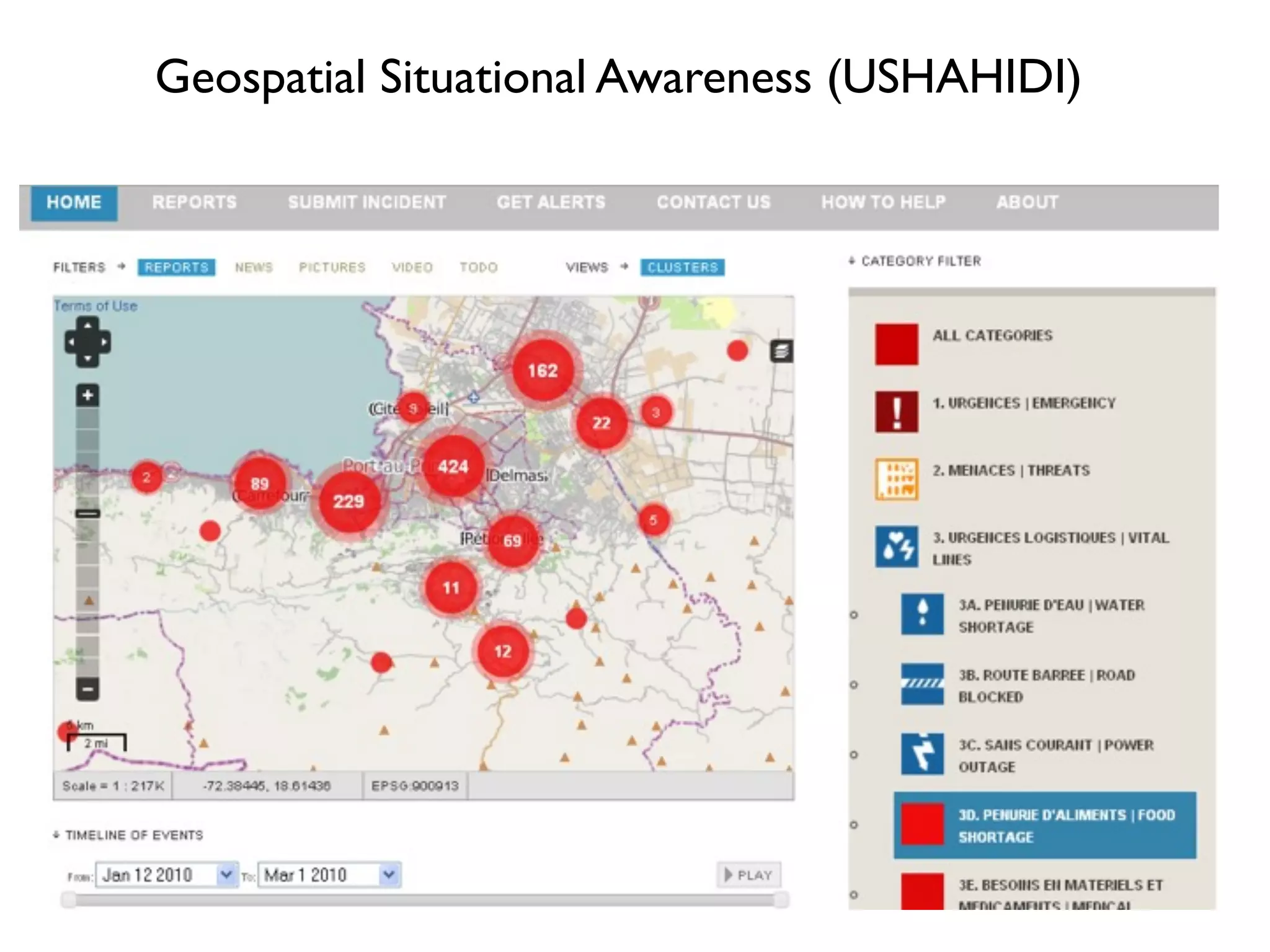
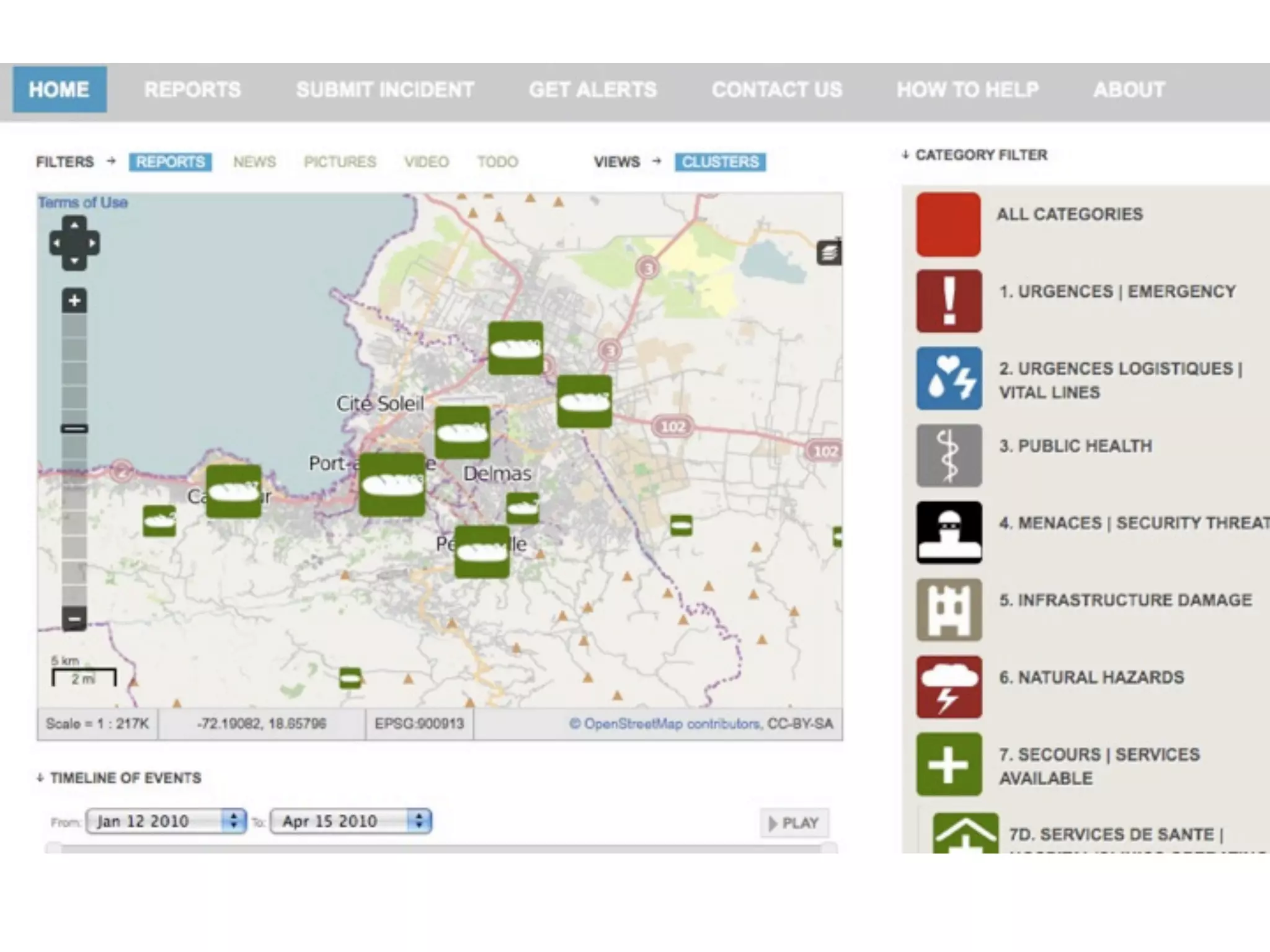
Geospatial Situational Awareness


•   Geospatial presentation of situational data
    related to incidents and resources


•   Real-time


•   Can be viewed simultaneously or in layers
GeoChat
GeoChat
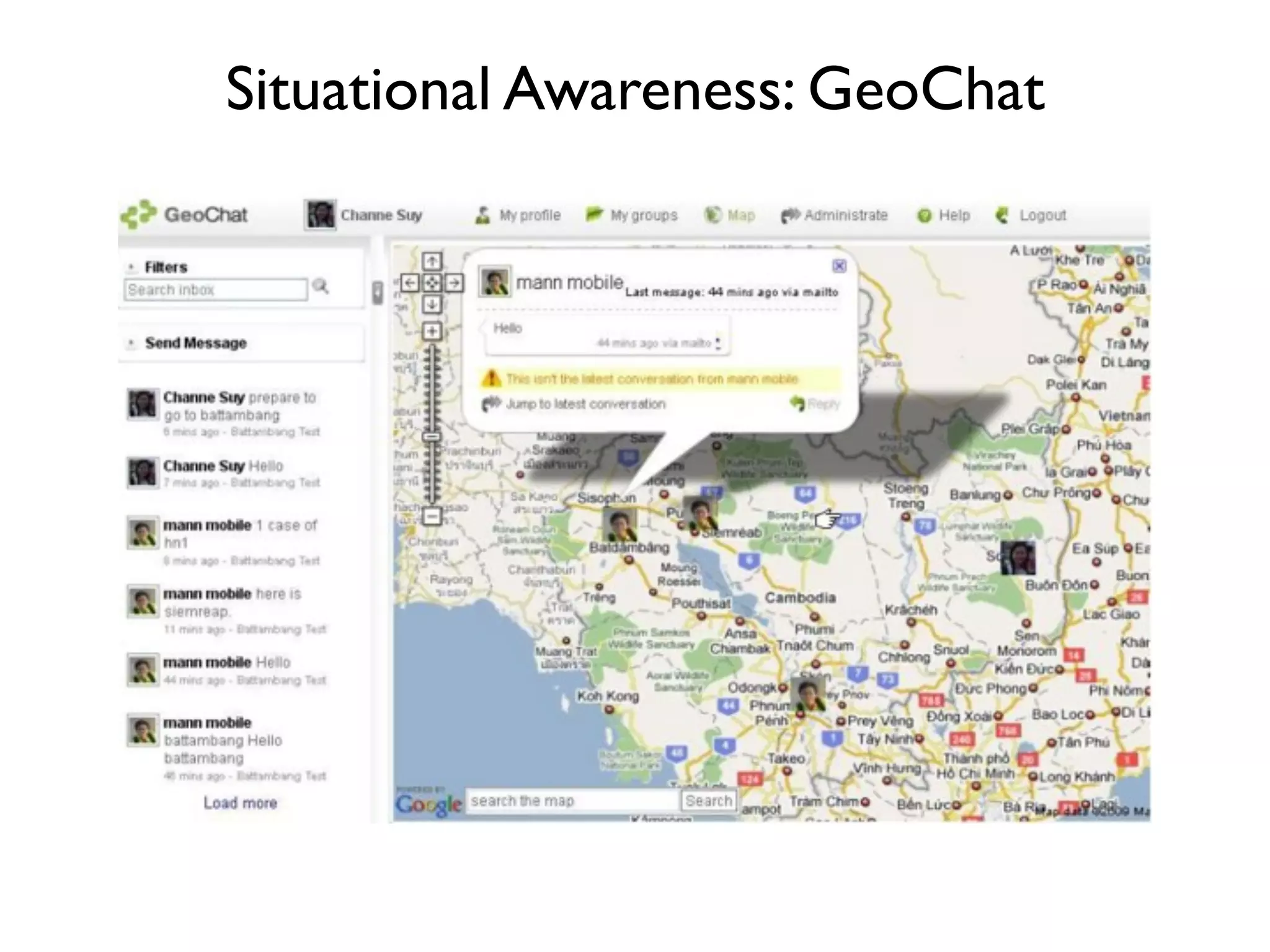
•   Evolved from a simple concept
    •   Can I send an SMS message and see it on a map?
    •   Automated!


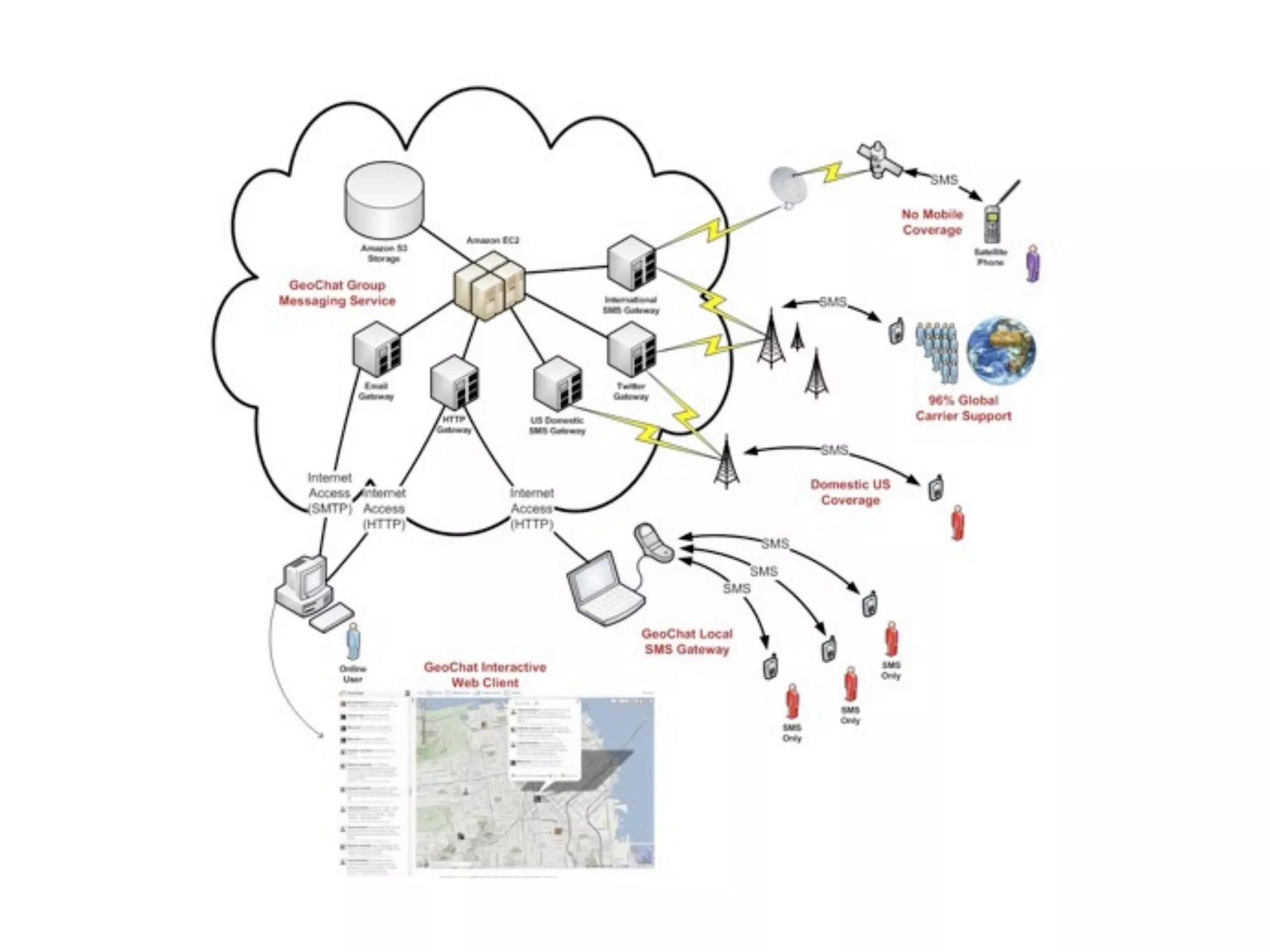
•   Collaboration / communication platform designed
    to meet the needs of humanitarian aid, international
    health and disaster response workers
Situational Awareness: GeoChat
GeoChat Capabilities
•   Create and join in chat groups.


•   Translates location names sent by users to a position on a
    map


•   Can broadcast one or more RSS feeds.


•   Twitter-enabled.


•   SMS gateway supported by 96% of the world’s mobile
    carriers.
Implementation Settings

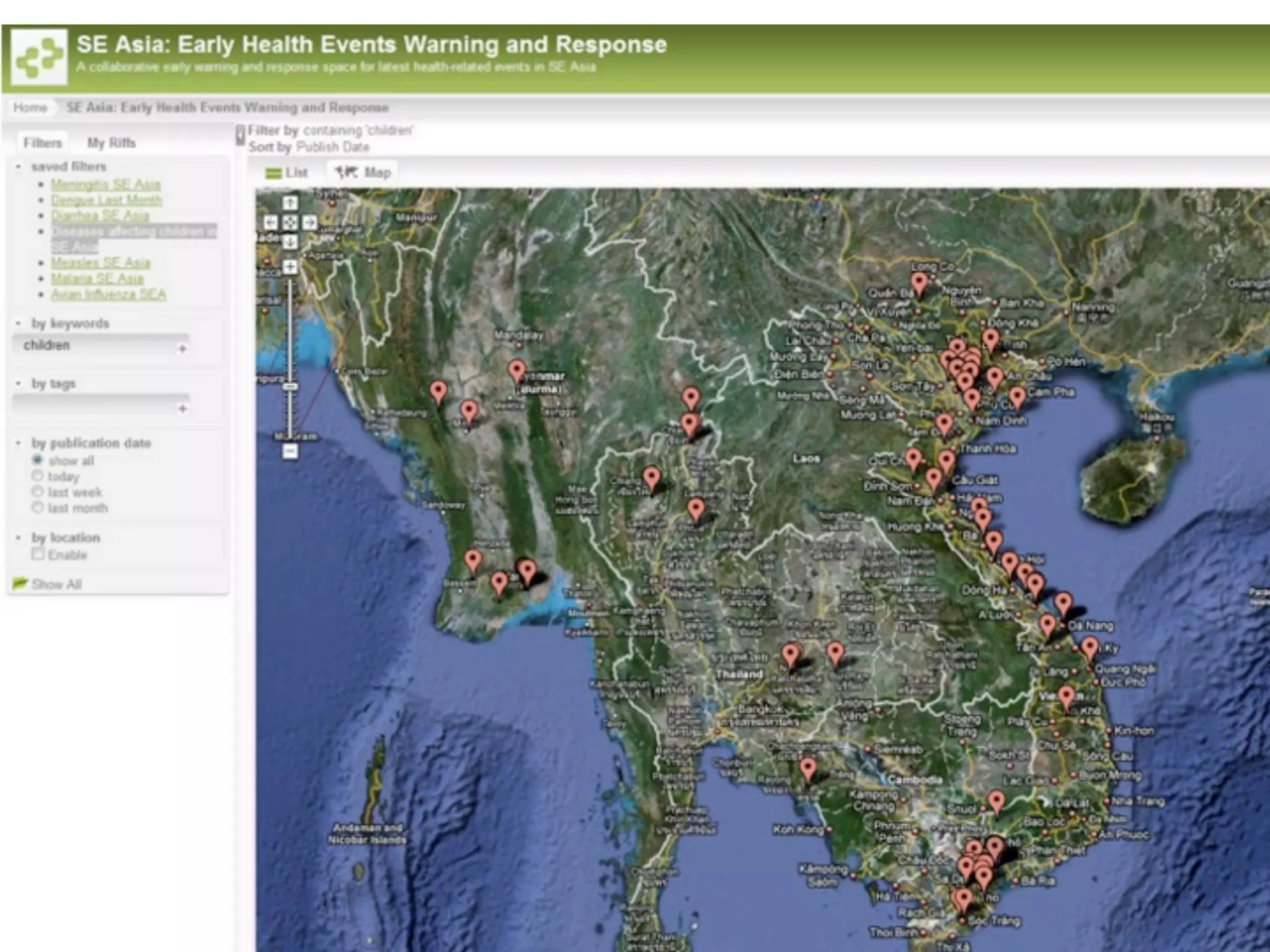
•   Mekong Basin Disease Surveillance network
    •   Laos, Thailand, Cambodia


•   Thai Hospital Surveillance System
    •   Tied to national EHR system rollout in 600
        public hospitals
Geospatial Situational Awareness (USHAHIDI)
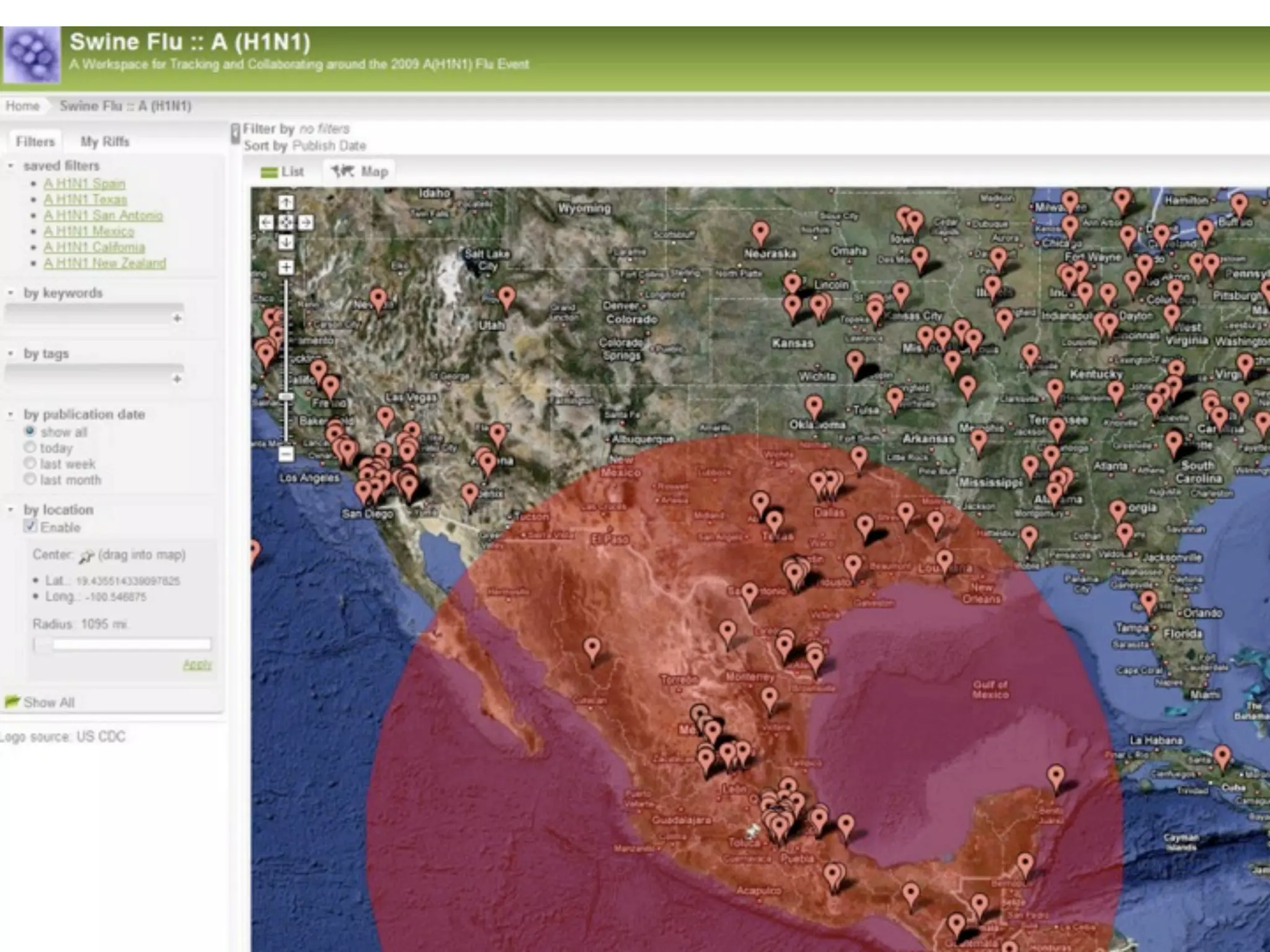
Data Analytics: RIFF-Evolve
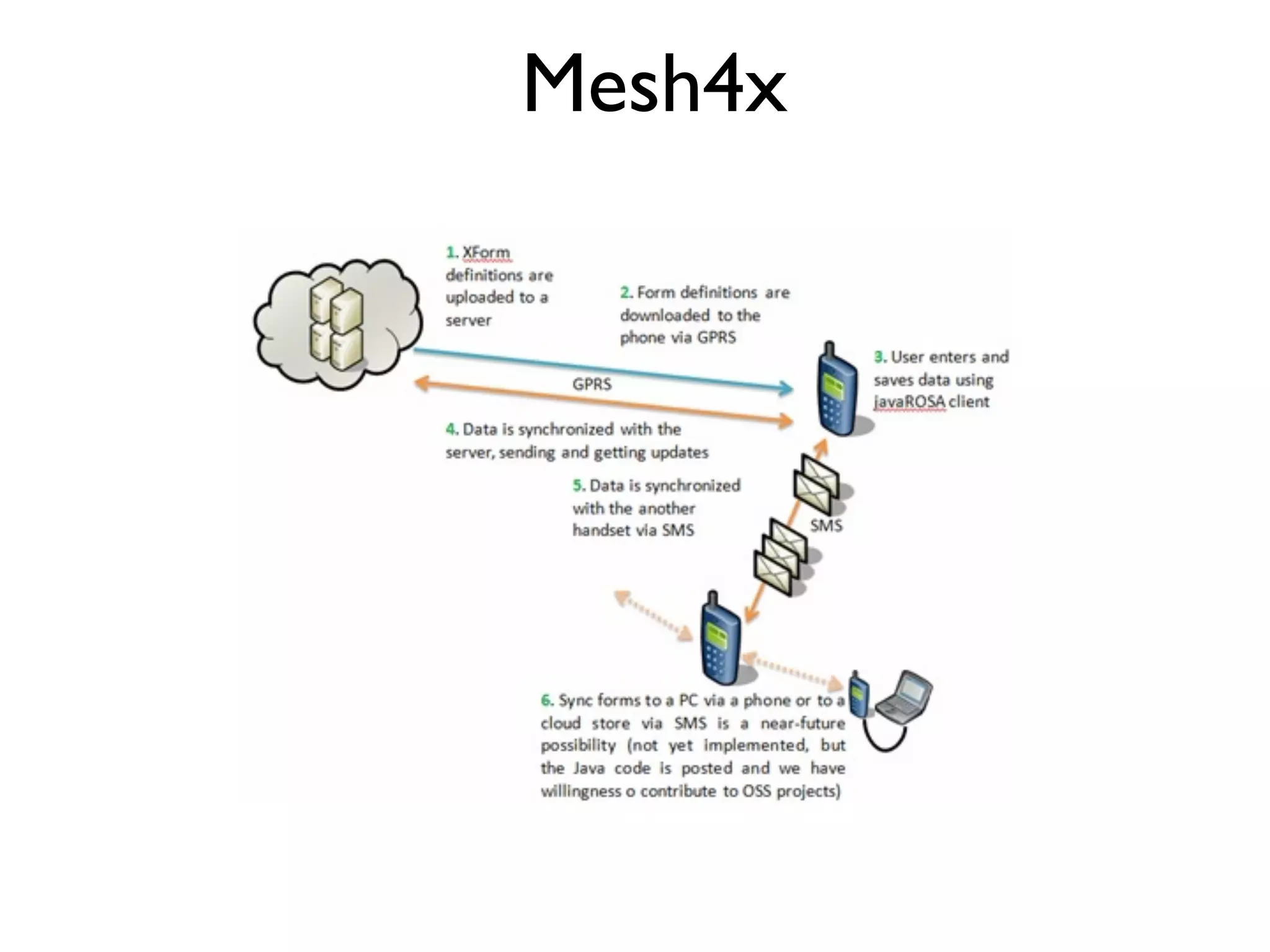
Combining Data: Data
“Meshing” with Mesh4x

•   Microsoft Access Database + Java XForms
    application + online Google spreadsheet.

•   = Combined, then centralized

•   Allows disparate orgs to share data while retaining
    local applications
Mesh4x
The Future?

•   Bigger crowd + more media = better filters?
•   Refined Data Acquisition and Analysis
•   Predictive Analytics
•   Automated Triaging
Thank you!


Questions?

Day 2_Global Health Workshop_Wimbush

  • 1.
    Mobile Health Technologyfor Global Health in Action Julian Wimbush, PhD Research Fellow CIDER, UC Berkeley April 15, 2010
  • 2.
  • 3.
    …use of mobilecommunication devices for health services and (multimedia) information via: • Mobile phones • Smartphones • Patient monitoring devices • Mobile telemedicine/telecare devices • MP3 players for mLearning • Microcomputers
  • 6.
    Information Flow • Moving community and clinical health data between • Practitioners • Researchers • Patients • E.g.: real-time monitoring of patient vital signs, • E.g.: direct provision of care (via mobile telemedicine)
  • 7.
    UN Millennium Development Goals: 2001-2015 For health: • Reduce child mortality by 2/3 • Improve maternal health • Reduce mortality / morbidity by 3/4 • Combat HIV and AIDS, malaria, and other diseases • Halt and begin to reverse the spread
  • 8.
    MDG: Strategic Objectives • Improvement of the access to emergency and general health services • Improvement of the efficiency of health service delivery • Improvement of the clinical practice for enhanced health outcomes • The reduction of child and maternal mortality and morbidity in MVPs
  • 9.
    Reality • A child born in the developing world is 33 times as likely to die within the first 5 years of life • Higher maternal mortality and morbidity rates (1M and 10M per year) • High HIV infection rates (2.5M new cases) • Prevalence of avoidable, communicable diseases (TB, malaria) due to preventable factors • Shortfall of medical workers (Def = 2.4M)
  • 10.
    The Promise ofMobile Ubiquity IBM & World Bank, 2006
  • 11.
    Developing World Context:Ripe for Growth • 3 billion+ mobile phone users (64% in developing world) • Biggest growth in Asia, Middle East, Africa • Mobile phones (plus) as a leapfrog technology • Bypassing fixed-line subscriptions • 90% of the world now lives within a mobile reception area • 2012: 50% of all remote populations will have mobile phones
  • 12.
    Ease of Adoption:Low Cost • Cost of deployment continues to decrease • Cheaper infrastructure technologies (CDMA) • Cheaper phones (e.g., Java phone $50-100) • Availability of free and open-source software (FOSS) / apps
  • 13.
    Ease of Adoption • Breaking the literacy barrier • Direct voice communication • Communication and coordination with people in remote, rural areas • Tracking migrant populations
  • 14.
    Emerging trends inmHealth • Emergency response systems • Mobile synchronous (voice) and asynchronous (SMS) telemedicine diagnostic and decision support to remote clinicians • Clinician-focused, evidence-based formulary, database and decision support information available at the point-of-care • Clinical care and remote patient monitoring • Health services monitoring and reporting • Health-related mLearning for the general public • Training and continuing professional development for health care workers • Health promotion and community mobilization • Support of long-term conditions
  • 15.
    Distribution of mHealthPrograms by Location and Application Area
  • 16.
  • 17.
  • 19.
  • 20.
  • 21.
  • 23.
    FrontLine SMS • Screen shot
  • 24.
    Frontline SMS • enables users to send and receive text messages with large groups of people through mobile phones • does not require an Internet connection • works with existing plan on all GSM phones, modems and networks
  • 25.
    FrontLine SMS • Reminders / Adherence • Coordination / Communication • Simple SMS-based forms
  • 27.
    Situational Awareness • Communication(plus Geospatial Awareness?) • Surveillance vs. Disaster Response
  • 28.
    Situational Awareness • Perception of: • environmental elements in time and space • comprehension of their meaning • projection of their status in the near future • Vital for emergency responders & surveillance
  • 29.
  • 30.
    How it works 1.Put word out that people on the ground can send [Name, location, status/message] 2. SMS submitted, with varying levels of structure/detail 3. Enters database 4. Passed to a mechanical turk-type outfit of volunteers for structuring 5. Message is structured in the database 6. Gets passed off to orgs (via Sahana) that can do something about the issue
  • 31.
  • 32.
  • 33.
  • 34.
  • 35.
    Geospatial Situational Awareness • Geospatial presentation of situational data related to incidents and resources • Real-time • Can be viewed simultaneously or in layers
  • 36.
  • 37.
    GeoChat • Evolved from a simple concept • Can I send an SMS message and see it on a map? • Automated! • Collaboration / communication platform designed to meet the needs of humanitarian aid, international health and disaster response workers
  • 38.
  • 39.
    GeoChat Capabilities • Create and join in chat groups. • Translates location names sent by users to a position on a map • Can broadcast one or more RSS feeds. • Twitter-enabled. • SMS gateway supported by 96% of the world’s mobile carriers.
  • 40.
    Implementation Settings • Mekong Basin Disease Surveillance network • Laos, Thailand, Cambodia • Thai Hospital Surveillance System • Tied to national EHR system rollout in 600 public hospitals
  • 41.
  • 44.
  • 47.
    Combining Data: Data “Meshing”with Mesh4x • Microsoft Access Database + Java XForms application + online Google spreadsheet. • = Combined, then centralized • Allows disparate orgs to share data while retaining local applications
  • 48.
  • 49.
    The Future? • Bigger crowd + more media = better filters? • Refined Data Acquisition and Analysis • Predictive Analytics • Automated Triaging
  • 50.

Editor's Notes

  • #2 i’m going to be talking about how
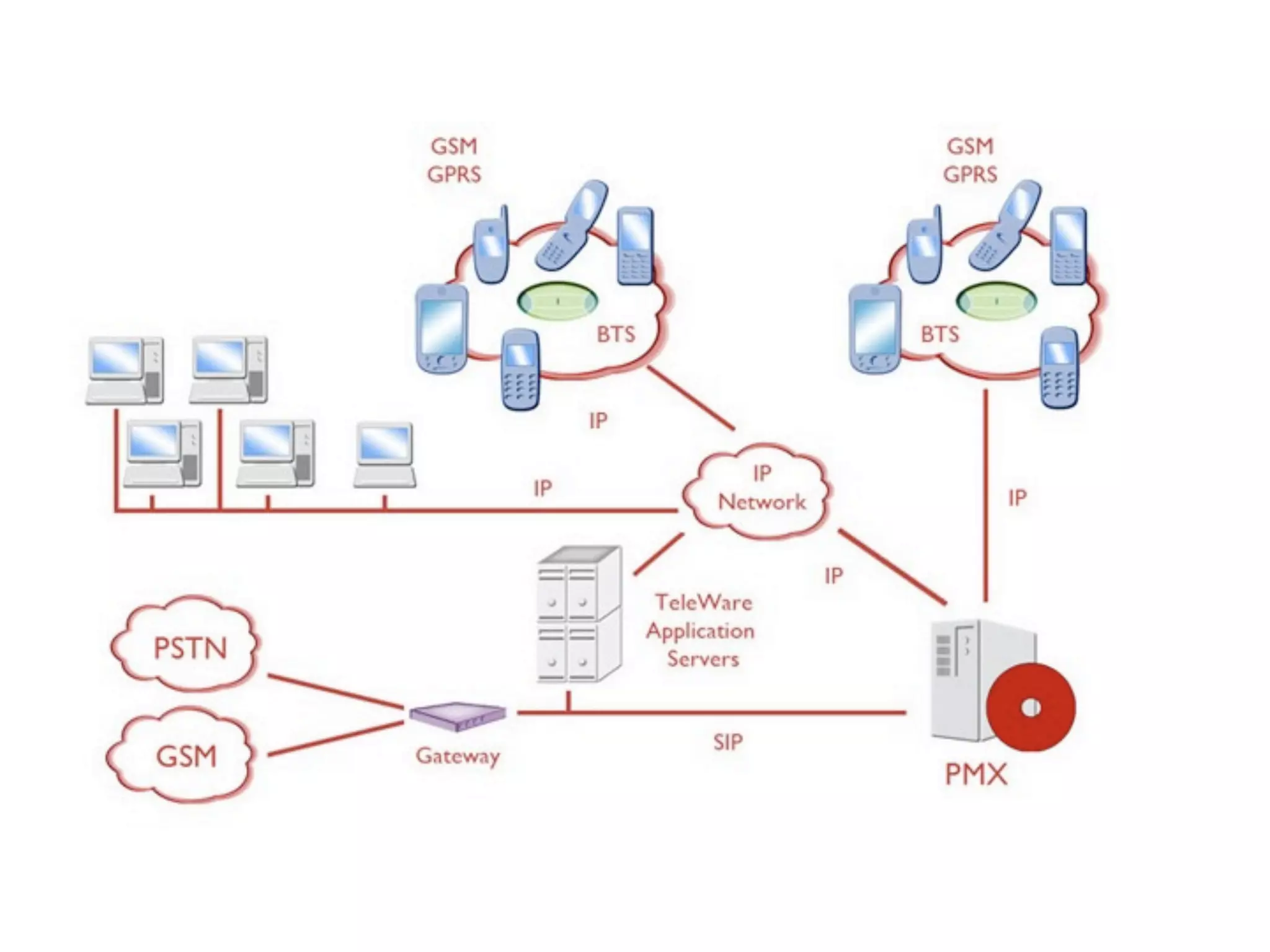
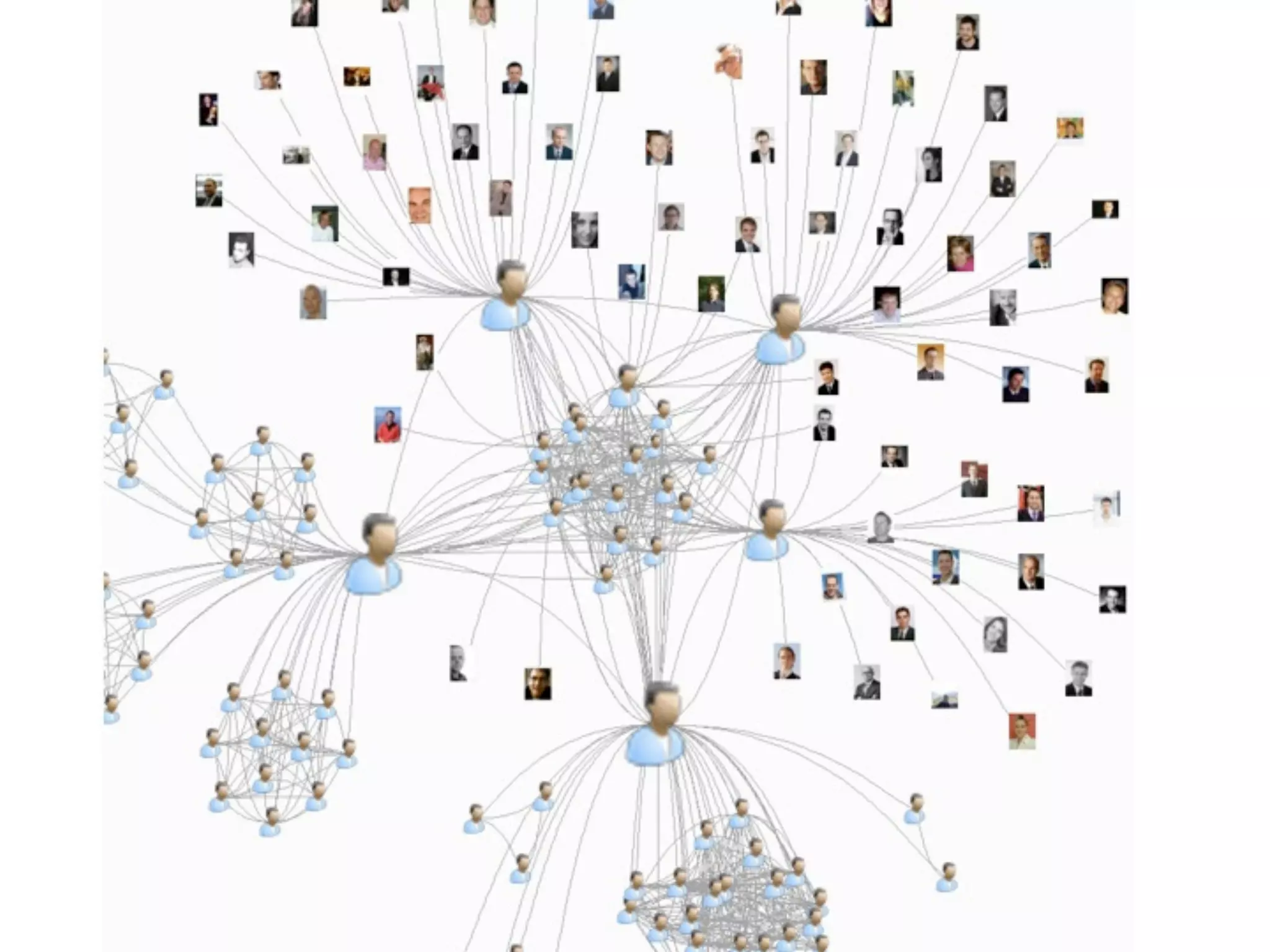
  • #3 One way of looking at mHealth is by considering how these distinct forms of technology connect to one another.
  • #10 preventable factors such as proper drugs and medical treatment deficit of 2.4 million over 57 countries
  • #17 - providing health information and diagnoses in regions where access to providers is scarce
  • #18 mHealth innovates via...
  • #20 Example of a provider-based mobile phone app Basically a mini mobile electronic medical record can guide community health workers, prompt them to do certain things, complete certain questionnairs, and sends everything back to a centralized data repository
  • #33 http://blog.ushahidi.com/index.php/2010/01/22/the-nuts-and-bolts-behind-4636-in-haiti/ In brief, Dalila asked to know an address written in one of the texts she was translating and 2 minutes later she had the latitude and longitude, even though no map showed it, thanks to the local knowledge of Apo. This has been *typical*. Text volumes vary from one every 5 seconds in the day to every 5 minutes overnight. The average turn-around for us receiving a text and having it translated, categorized and back on the ground with coordinates, message and return # is about 10 minutes.
  • #34 These are from the ~1000 people who have stepped in so far (my guess from IPs).
  • #40  Create and join in chat groups by SMS, email, or web browser.
  • #49 allows information to flow between established applications (like Excel, Access, GoogleEarth, MySQL, Oracle and many others), and between devices (laptops, smartphones, PDAs, and servers) reliably, selectively, and securely in a distributed "data mesh"