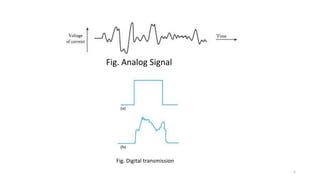
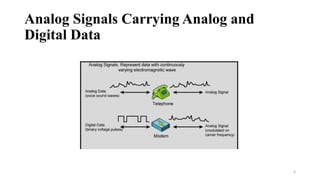
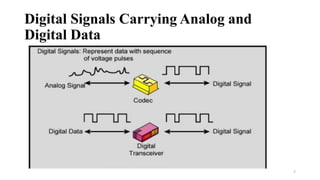
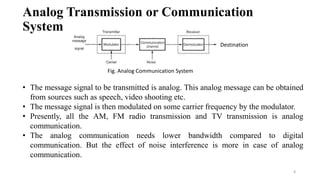
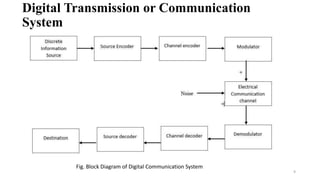
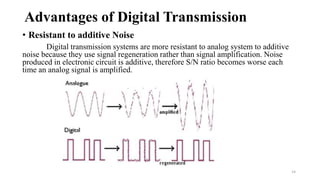
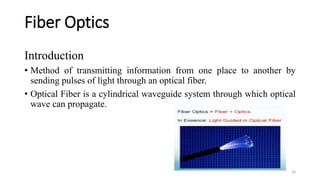
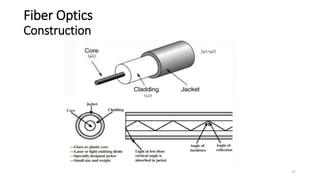
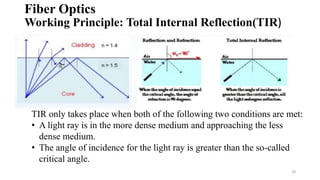
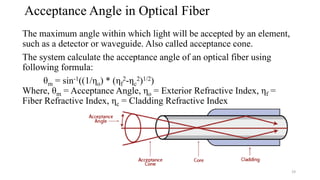
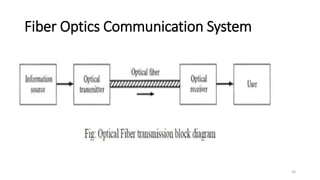
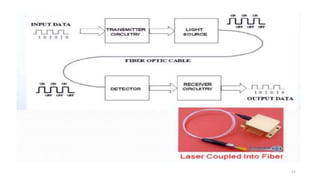
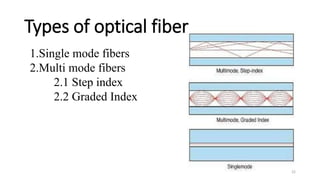
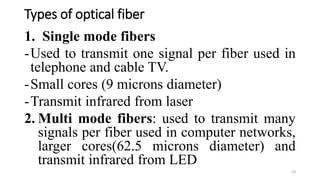
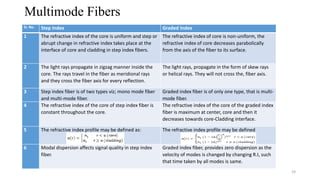
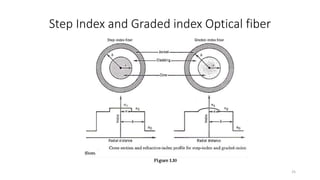
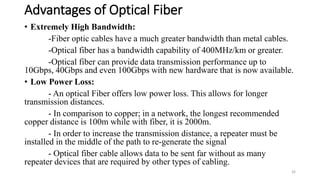
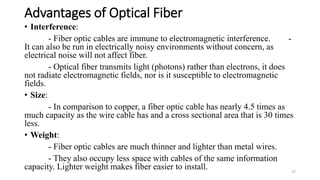
This document provides an overview of analog and digital data transmission and optical fibers. It discusses how analog signals carry data continuously while digital signals carry data in discrete pulses. It also explains the advantages of digital transmission such as noise immunity, multiplexing capability, and ability to detect errors. The document then describes how optical fibers transmit data using total internal reflection and their construction. It discusses the types of optical fibers and their properties. Finally, it outlines the advantages and applications of optical fibers, including their high bandwidth, low loss, immunity to interference, flexibility and secure transmission.