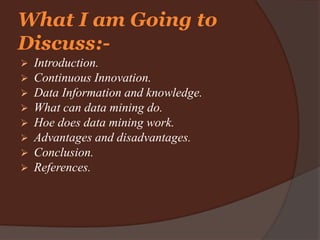
 Introduction.
 Continuous Innovation.
 Data Information and knowledge.
 What can data mining do.
 Hoe does data mining work.
 Advantages and disadvantages.
 Conclusion.
 References.
What I am Going to
Discuss:-
Introduction:-
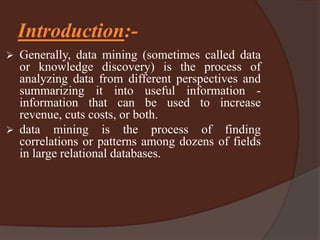
 Generally, data mining (sometimes called data
or knowledge discovery) is the process of
analyzing data from different perspectives and
summarizing it into useful information -
information that can be used to increase
revenue, cuts costs, or both.
 data mining is the process of finding
correlations or patterns among dozens of fields
in large relational databases.
Continuous Innovation:-
 Although data mining is a relatively new
term, the technology is not. Companies have
used powerful computers to sift through
volumes of supermarket scanner data and
analyze market research reports for years.
Data, Information and Knowledge :-
 Data:-
Data are any facts, numbers, or text that can be
processed by a computer. Today, organizations
are accumulating vast and growing amounts of
data in different formats and different
databases.
 Information:-
The patterns, associations, or relationships
among all this data can provide information.
Continue…
 Knowledge
Information can be converted into
knowledge about historical patterns and
future trends. For example, summary
information on retail supermarket sales can
be analyzed in light of promotional efforts to
provide knowledge of consumer buying
behavior.
Five major elements of
Data mining :-
 Extract, transform, and load transaction data
onto the data warehouse system.
 Store and manage the data in a
multidimensional database system.
 Provide data access to business analysts and
information technology professionals.
 Analyze the data by application software.
 Present the data in a useful format, such as a
graph or table.
What can data mining do?
 Data mining is primarily used today by
companies with a strong consumer focus -
retail, financial, communication, and marketing
organizations.
 It enables these companies to determine
relationships among "internal" factors such as
price, product positioning, or staff skills, and
"external" factors such as economic indicators,
competition, and customer demographics.
How does data mining work.?
 While large-scale information technology has been
evolving separate transaction and analytical systems,
data mining provides the link between the two. Data
mining software analyzes relationships and patterns in
stored transaction data based on open-ended user
queries.
 Types of relationships of Data Mining.
1. Class
2. Clusters
3. Associations
4. Sequential Patterns
Advantages and Disadvantages
of Data Mining
 Advantages:-
1. Marketing / Retail
2. Finance / Banking
3. Manufacturing
4. Governments
 Disadvantages:-
1. Privacy Issues
2. Security issues
Conclusion:-
 Data mining brings a lot of benefits to
businesses, society, governments as well as
individual. However privacy, security and
misuse of information are the big problems
if they are not addressed and resolved
properly.
References:-
 www.google.com
 www.ask.com
 www.seminar.com
 www.wikipedia.com
Data mining semiinar  ppo

Data mining semiinar ppo

  • 2.
     Introduction.  ContinuousInnovation.  Data Information and knowledge.  What can data mining do.  Hoe does data mining work.  Advantages and disadvantages.  Conclusion.  References. What I am Going to Discuss:-
  • 3.
    Introduction:-  Generally, datamining (sometimes called data or knowledge discovery) is the process of analyzing data from different perspectives and summarizing it into useful information - information that can be used to increase revenue, cuts costs, or both.  data mining is the process of finding correlations or patterns among dozens of fields in large relational databases.
  • 4.
    Continuous Innovation:-  Althoughdata mining is a relatively new term, the technology is not. Companies have used powerful computers to sift through volumes of supermarket scanner data and analyze market research reports for years.
  • 5.
    Data, Information andKnowledge :-  Data:- Data are any facts, numbers, or text that can be processed by a computer. Today, organizations are accumulating vast and growing amounts of data in different formats and different databases.  Information:- The patterns, associations, or relationships among all this data can provide information.
  • 6.
    Continue…  Knowledge Information canbe converted into knowledge about historical patterns and future trends. For example, summary information on retail supermarket sales can be analyzed in light of promotional efforts to provide knowledge of consumer buying behavior.
  • 7.
    Five major elementsof Data mining :-  Extract, transform, and load transaction data onto the data warehouse system.  Store and manage the data in a multidimensional database system.  Provide data access to business analysts and information technology professionals.  Analyze the data by application software.  Present the data in a useful format, such as a graph or table.
  • 8.
    What can datamining do?  Data mining is primarily used today by companies with a strong consumer focus - retail, financial, communication, and marketing organizations.  It enables these companies to determine relationships among "internal" factors such as price, product positioning, or staff skills, and "external" factors such as economic indicators, competition, and customer demographics.
  • 9.
    How does datamining work.?  While large-scale information technology has been evolving separate transaction and analytical systems, data mining provides the link between the two. Data mining software analyzes relationships and patterns in stored transaction data based on open-ended user queries.  Types of relationships of Data Mining. 1. Class 2. Clusters 3. Associations 4. Sequential Patterns
  • 10.
    Advantages and Disadvantages ofData Mining  Advantages:- 1. Marketing / Retail 2. Finance / Banking 3. Manufacturing 4. Governments  Disadvantages:- 1. Privacy Issues 2. Security issues
  • 11.
    Conclusion:-  Data miningbrings a lot of benefits to businesses, society, governments as well as individual. However privacy, security and misuse of information are the big problems if they are not addressed and resolved properly.
  • 12.
    References:-  www.google.com  www.ask.com www.seminar.com  www.wikipedia.com