Presented By :-
Kartik N. Kalpande.
CYBORG :
The term cyborg is
often today applied
to an organism that
have enhanced
ability due to
technology.
HISTORY
1. The term was coined by Manfred E.
Clynes and Nathan S. Kline in 1960 to
refer to their conception of an
enhanced human being who could
survive in extraterrestrial environment
2. In 2020 the cyborg foundation
become world’s first organization
dedicated to help humans become
cyborg.
Use Of Cyborg In Medicine
In medicine there are two types of
cyborg
1. Restorative cyborg
2. Enhanced cyborg
Advantages:
Disadvantages:
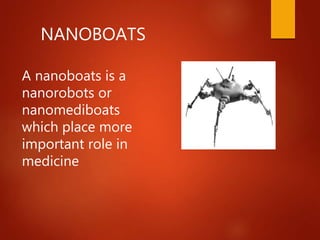
NANOBOATS
A nanoboats is a
nanorobots or
nanomediboats
which place more
important role in
medicine
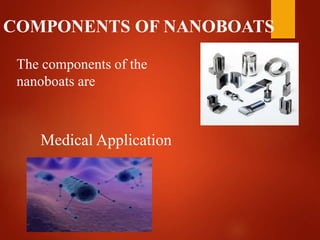
COMPONENTS OF NANOBOATS
The components of the
nanoboats are
Medical Application
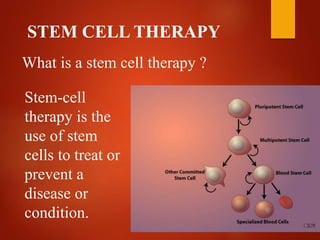
STEM CELL THERAPY
What is a stem cell therapy ?
Stem-cell
therapy is the
use of stem
cells to treat or
prevent a
disease or
condition.
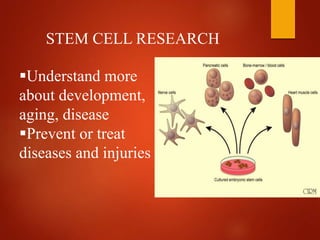
STEM CELL RESEARCH
Understand more
about development,
aging, disease
Prevent or treat
diseases and injuries
Application of stem cells
The stem cell is used in different
disease such as
Neurodegeneration
Brain and spinal cord injury
Heart
Missing teeth etc…
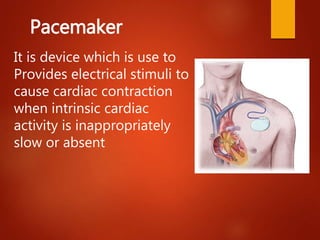
Pacemaker
It is device which is use to
Provides electrical stimuli to
cause cardiac contraction
when intrinsic cardiac
activity is inappropriately
slow or absent
Application
Use in medicine for
Hart Failure
birthing problem
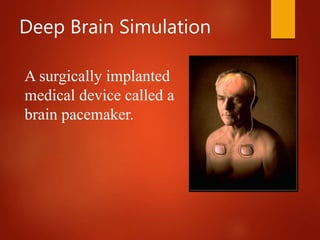
Deep Brain Simulation
A surgically implanted
medical device called a
brain pacemaker.
Application
Used in the following disease
Parkinson's disease
Chronic pain
Major depression
Tourette syndrome
Other clinical applications
Disadvantage
Possibility of Apathy, Hallucinations,
Compulsive, gambling, Hyper
sexuality,
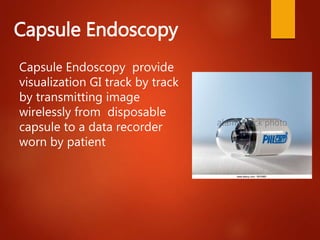
Capsule Endoscopy
Capsule Endoscopy provide
visualization GI track by track
by transmitting image
wirelessly from disposable
capsule to a data recorder
worn by patient
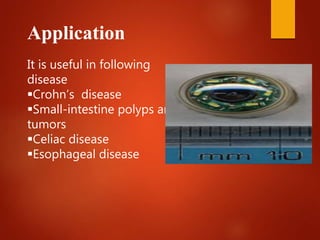
Application
It is useful in following
disease
Crohn’s disease
Small-intestine polyps and
tumors
Celiac disease
Esophageal disease
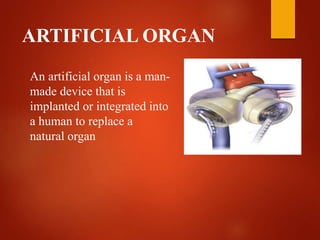
ARTIFICIAL ORGAN
An artificial organ is a man-
made device that is
implanted or integrated into
a human to replace a
natural organ
Application
The organs that are replace by Artificial
organ are
Cardia and pylorus valves
Corpora cavernosa
Ear , Eye, Heart, Brain
Artificial limbs
Liver, Lungs , Pancreas
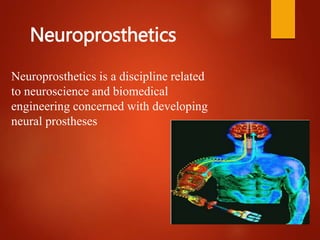
Neuroprosthetics
Neuroprosthetics is a discipline related
to neuroscience and biomedical
engineering concerned with developing
neural prostheses
Application
The disease where Nuroprosthetics
use are
Alzheimer's disease
Hippocampal deficits
Traumatic brain injury
Parkinson's disease
 Speech deficits, Paralysis , Spinal
Cord injury
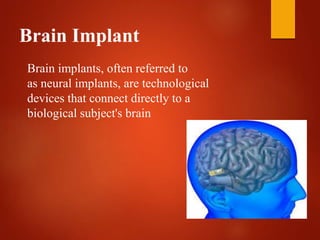
Brain Implant
Brain implants, often referred to
as neural implants, are technological
devices that connect directly to a
biological subject's brain
Application
brain implants used for creating
interfaces between neural
systems and computer chips
Brain implants electrically stimulate,
block or record signals from single
neurons or groups of neurons in the
brain
Conclusion
Thus we have conclude that there are many
microprocessor based chips and computer
based technology that are useful in medicine
or medical sector
References
1. Http://edition.cnn.com/tech/computing/99
01/14/chipman.idg/
2. https://en.wikipedia.org/wiki/microchip_i
mplant_(human)
3. http://www.av1611.org/666/biochip.html

Microprocessor in human body

  • 1.
  • 2.
    CYBORG : The termcyborg is often today applied to an organism that have enhanced ability due to technology.
  • 3.
    HISTORY 1. The termwas coined by Manfred E. Clynes and Nathan S. Kline in 1960 to refer to their conception of an enhanced human being who could survive in extraterrestrial environment 2. In 2020 the cyborg foundation become world’s first organization dedicated to help humans become cyborg.
  • 4.
    Use Of CyborgIn Medicine In medicine there are two types of cyborg 1. Restorative cyborg 2. Enhanced cyborg Advantages: Disadvantages:
  • 5.
    NANOBOATS A nanoboats isa nanorobots or nanomediboats which place more important role in medicine
  • 6.
    COMPONENTS OF NANOBOATS Thecomponents of the nanoboats are Medical Application
  • 7.
    STEM CELL THERAPY Whatis a stem cell therapy ? Stem-cell therapy is the use of stem cells to treat or prevent a disease or condition.
  • 8.
    STEM CELL RESEARCH Understandmore about development, aging, disease Prevent or treat diseases and injuries
  • 9.
    Application of stemcells The stem cell is used in different disease such as Neurodegeneration Brain and spinal cord injury Heart Missing teeth etc…
  • 10.
    Pacemaker It is devicewhich is use to Provides electrical stimuli to cause cardiac contraction when intrinsic cardiac activity is inappropriately slow or absent
  • 11.
    Application Use in medicinefor Hart Failure birthing problem
  • 12.
    Deep Brain Simulation Asurgically implanted medical device called a brain pacemaker.
  • 13.
    Application Used in thefollowing disease Parkinson's disease Chronic pain Major depression Tourette syndrome Other clinical applications Disadvantage Possibility of Apathy, Hallucinations, Compulsive, gambling, Hyper sexuality,
  • 14.
    Capsule Endoscopy Capsule Endoscopyprovide visualization GI track by track by transmitting image wirelessly from disposable capsule to a data recorder worn by patient
  • 15.
    Application It is usefulin following disease Crohn’s disease Small-intestine polyps and tumors Celiac disease Esophageal disease
  • 16.
    ARTIFICIAL ORGAN An artificialorgan is a man- made device that is implanted or integrated into a human to replace a natural organ
  • 17.
    Application The organs thatare replace by Artificial organ are Cardia and pylorus valves Corpora cavernosa Ear , Eye, Heart, Brain Artificial limbs Liver, Lungs , Pancreas
  • 18.
    Neuroprosthetics Neuroprosthetics is adiscipline related to neuroscience and biomedical engineering concerned with developing neural prostheses
  • 19.
    Application The disease whereNuroprosthetics use are Alzheimer's disease Hippocampal deficits Traumatic brain injury Parkinson's disease  Speech deficits, Paralysis , Spinal Cord injury
  • 20.
    Brain Implant Brain implants,often referred to as neural implants, are technological devices that connect directly to a biological subject's brain
  • 21.
    Application brain implants usedfor creating interfaces between neural systems and computer chips Brain implants electrically stimulate, block or record signals from single neurons or groups of neurons in the brain
  • 22.
    Conclusion Thus we haveconclude that there are many microprocessor based chips and computer based technology that are useful in medicine or medical sector References 1. Http://edition.cnn.com/tech/computing/99 01/14/chipman.idg/ 2. https://en.wikipedia.org/wiki/microchip_i mplant_(human) 3. http://www.av1611.org/666/biochip.html