•


        •


    •       ’

•
SOURCES OF DATA
• PRIMARY SOURCES
• SECONDARY SOURCES

METHODS OF COLLECTING DATA
•   DIRECT /INTERVIEW
•   INDIRECT/QUESTIONNAIRE
•   REGISTRATION
•   OBSERVATION
•   EXPERIMENTATION

SAMPLING TECHNIQUES
• SLOVIN’S FORMULA
• NON – PROBABILITY SAMPLING
• PROBABILITY SAMPLING
’
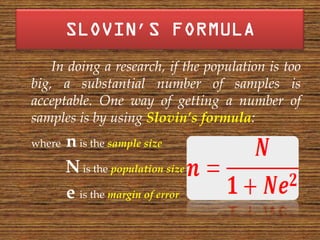
    In doing a research, if the population is too
big, a substantial number of samples is
acceptable. One way of getting a number of
samples is by using Slovin’s formula:
where   n is the sample size
        N is the population size
        e is the margin of error
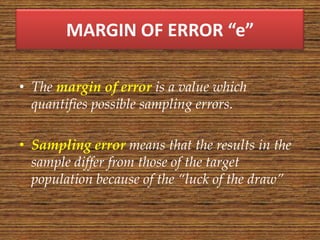
MARGIN OF ERROR “e”

• The margin of error is a value which
  quantifies possible sampling errors.

• Sampling error means that the results in the
  sample differ from those of the target
  population because of the “luck of the draw”
•
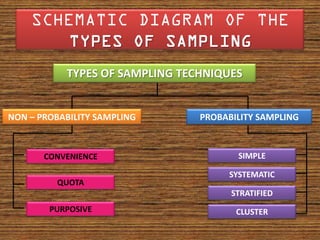
TYPES OF SAMPLING TECHNIQUES


NON – PROBABILITY SAMPLING      PROBABILITY SAMPLING


       CONVENIENCE                     SIMPLE

                                     SYSTEMATIC
          QUOTA
                                      STRATIFIED
        PURPOSIVE                      CLUSTER
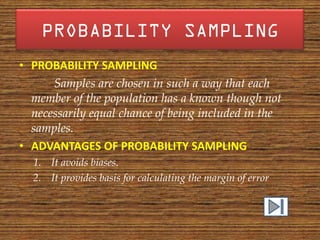
• PROBABILITY SAMPLING
      Samples are chosen in such a way that each
  member of the population has a known though not
  necessarily equal chance of being included in the
  samples.
• ADVANTAGES OF PROBABILITY SAMPLING
  1. It avoids biases.
  2. It provides basis for calculating the margin of error
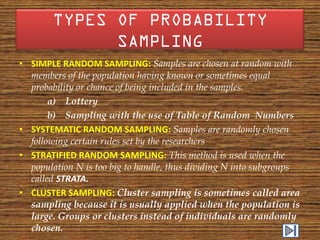
• SIMPLE RANDOM SAMPLING: Samples are chosen at random with
  members of the population having known or sometimes equal
  probability or chance of being included in the samples.
       a) Lottery
       b) Sampling with the use of Table of Random Numbers
• SYSTEMATIC RANDOM SAMPLING: Samples are randomly chosen
  following certain rules set by the researchers
• STRATIFIED RANDOM SAMPLING: This method is used when the
  population N is too big to handle, thus dividing N into subgroups
  called STRATA.
• CLUSTER SAMPLING: Cluster sampling is sometimes called area
  sampling because it is usually applied when the population is
  large. Groups or clusters instead of individuals are randomly
  chosen.
–

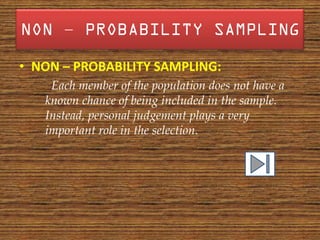
• NON – PROBABILITY SAMPLING:
    Each member of the population does not have a
   known chance of being included in the sample.
   Instead, personal judgement plays a very
   important role in the selection.
• CONVENIENCE SAMPLING: This type is used
  because of the convenience it offers to the
  researcher.
• QUOTA SAMPLING: This is very similar to
  stratified random sampling. The only difference is
  that the selection of the members of the samples in
  stratified sampling is done randomly.
• PURPOSIVE SAMPLING: Choosing the
  respondents on the basis of predetermined criteria
  set by the researcher.

Data Collection and Presentation

  • 1.
    • • ’ •
  • 2.
    SOURCES OF DATA •PRIMARY SOURCES • SECONDARY SOURCES METHODS OF COLLECTING DATA • DIRECT /INTERVIEW • INDIRECT/QUESTIONNAIRE • REGISTRATION • OBSERVATION • EXPERIMENTATION SAMPLING TECHNIQUES • SLOVIN’S FORMULA • NON – PROBABILITY SAMPLING • PROBABILITY SAMPLING
  • 3.
    In doing a research, if the population is too big, a substantial number of samples is acceptable. One way of getting a number of samples is by using Slovin’s formula: where n is the sample size N is the population size e is the margin of error
  • 4.
    MARGIN OF ERROR“e” • The margin of error is a value which quantifies possible sampling errors. • Sampling error means that the results in the sample differ from those of the target population because of the “luck of the draw”
  • 5.
  • 6.
    TYPES OF SAMPLINGTECHNIQUES NON – PROBABILITY SAMPLING PROBABILITY SAMPLING CONVENIENCE SIMPLE SYSTEMATIC QUOTA STRATIFIED PURPOSIVE CLUSTER
  • 7.
    • PROBABILITY SAMPLING Samples are chosen in such a way that each member of the population has a known though not necessarily equal chance of being included in the samples. • ADVANTAGES OF PROBABILITY SAMPLING 1. It avoids biases. 2. It provides basis for calculating the margin of error
  • 8.
    • SIMPLE RANDOMSAMPLING: Samples are chosen at random with members of the population having known or sometimes equal probability or chance of being included in the samples. a) Lottery b) Sampling with the use of Table of Random Numbers • SYSTEMATIC RANDOM SAMPLING: Samples are randomly chosen following certain rules set by the researchers • STRATIFIED RANDOM SAMPLING: This method is used when the population N is too big to handle, thus dividing N into subgroups called STRATA. • CLUSTER SAMPLING: Cluster sampling is sometimes called area sampling because it is usually applied when the population is large. Groups or clusters instead of individuals are randomly chosen.
  • 9.
    – • NON –PROBABILITY SAMPLING: Each member of the population does not have a known chance of being included in the sample. Instead, personal judgement plays a very important role in the selection.
  • 10.
    • CONVENIENCE SAMPLING:This type is used because of the convenience it offers to the researcher. • QUOTA SAMPLING: This is very similar to stratified random sampling. The only difference is that the selection of the members of the samples in stratified sampling is done randomly. • PURPOSIVE SAMPLING: Choosing the respondents on the basis of predetermined criteria set by the researcher.