Download to read offline
![IOSR Journal of Applied Chemistry (IOSR-JAC)
e-ISSN: 2278-5736. Volume 3, Issue 4 (Jan. – Feb. 2013), PP 29-34
www.iosrjournals.org
Characteristics of Metal Supported-Zeolite Catalysts for
Hydrocracking of Polyethylene Terephthalat
Wega Trisunaryanti1*, Triyono1, Cut Novrita Rizki1, Harwin Saptoadi2, Zainal
Alimuddin3, Mochamad Syamsiro4 and Kunio Yoshikawa4,
1
Department of Chemistry, Faculty of Mathematics and Natural Sciences, Gadjah Mada University, Sekip
Utara, Yogyakarta 55281, Indonesia;
2
Department of Mechanical and Industrial Engineering, Faculty of Engineering, Gadjah Mada University,
Jalan Grafika No. 2, Yogyakarta 55281, Indonesia.
3
Department of Mechanical Engineering, Faculty of Engineering, University Sains Malaysia, Engineering
Campus, Nibong Tebal, 14300 Penang, Malaysia
4
Department of Environmental Science & Technology, Faculty of Engineering, Tokyo Institute of Technology,
Nagatsuta-cho, Midori-ku, Yokohama 226-8502, Japan
Abstract : Characterization and modification of natural zeolite (ZA) produced in Sukabumi, West Java,
Indonesia, as well as metal supported onto the zeolite for hydrocracking catalysts of polyethylene terephthalat
(PET) have been conducted. The natural zeolite was refluxed in HCl 3M for 30 min., drying and heated in a
microwave produced the ZAA sample. The transition metal such as Cu, Cr, Ni, or Pd was loaded into the ZAA
sample under reflux in methanol using salt precursor of each metal, produced the Cu/ZAA, Cr/ZAA, Ni/ZAA,
and Pd/ZAA catalysts. The zeolite based samples were characterized by means of determination of acidity by
vapor adsorption of NH3 and pyridine, catalyst crystalinity by X-ray diffraction (XRD), surface area by surface
area analyzer NOVA-1000 and TO4 (T= Si and Al) site by Infra Red Spectrophotometer (IR). The PET was
pyrolyzed in 350 ºC produced liquid fraction as a feed for hydrocracking process. The hydrocracking of the PET
was carried out in a fixed bed reactor of stainless steel at temperature of 350 oC, H2 flow rate of 20 mL/min.,
feed/catalyst ratio of 10. Liquid products of the hydrocracking were analyzed using GC and GC-MS. The
characterization results showed that the Indonesian natural zeolite produced in Sukabumi consisted mainly of
mordenite crystalline. The HCl treatment towards the natural zeolite caused dealumination, increased its
acidity and surface area. Loading of Ni, Cu, Cr, or Pd metal on to the zeolite did not affect the zeolite
crystallinity. However, the metal loading decreased surface area of the zeolite. Products of the hydrocracking
were liquid, coke, and gas fractions. The liquid products consisted mainly of gasoline fraction (C 5-C12). The
highest liquid product conversion was produced by the Pd/ZAA catalyst, i.e. 34.05 wt. %, with selectivity
towards gasoline fractions was 97.99 wt. %.
Keywords: natural zeolite, characterization, modification, hydrocracking, metal loading, polyethylene
terephthalat.
I. Introduction
Waste plastics have caused serious environmental problems because it is not degradable. In contrast,
waste plastics are regarded as cheap and abundant sources of chemicals and energy. The recycling of waste
plastics into useful hydrocarbons, i.e chemicals and fuel fractions is desirable. The usual chemical recycling
method used for thermoplastics such as polyethylene was combination method of pyrolysis and catalytic
cracking. The pyrolysis of low-density polyethylene (LDPE) [1] as well as PVC waste plastics was carried out
under the range temperature of 150-350 ºC [2] and that for high-density polyethylene (HDPE) plastic was
pyrolyzed in temperature range of 400-450 ºC [3]. In the catalytic cracking of waste plastics, the utilization of
NiMo/Al2O3 [1] as wel as zeolite, i.e mordenite [4-5], or H-ferrierite [6], ZSM-5 [7], and mesostructure [5]
catalysts produced high conversion of liquid fractions.
Zeolites play highly important roles as catalyst in catalytic cracking because it has unique properties
such as high crystallinity, surface area, acidity, ion-exchanged capacity, and shape-selective character. On the
other hand, there are widespread, abundant resources of natural zeolites in Indonesia. Their utilization as
catalysts, however, has been little explored, in spite of the fact that their potential effectiveness may contribute
to reduce industrial production costs. Synthetic zeolites were used in a wide range as catalysts. However, the
synthetic zeolite was expensive and still imported by Indonesia. In spite of the fact that Indonesia have abundant
natural zeolites spread out in Java, Celebes, Sumatra and Timor. Indonesian natural zeolites produced in West
Java (Bayah and Cipatuja), Center of Java (Wonosari, Yogyakarta) has been known contains large portion of
Mordenite. The zeolites showed better performance in crystallinity and acidity after treated with HCl [8-9].
www.iosrjournals.org 29 | Page](https://image.slidesharecdn.com/d0342934-130409054208-phpapp01/85/D0342934-1-320.jpg)
![IOSR Journal of Applied Chemistry (IOSR-JAC)
e-ISSN: 2278-5736. Volume 3, Issue 4 (Jan. – Feb. 2013), PP 29-34
www.iosrjournals.org
Characteristics of Metal Supported-Zeolite Catalysts for
Hydrocracking of Polyethylene Terephthalat
Wega Trisunaryanti1*, Triyono1, Cut Novrita Rizki1, Harwin Saptoadi2, Zainal
Alimuddin3, Mochamad Syamsiro4 and Kunio Yoshikawa4,
1
Department of Chemistry, Faculty of Mathematics and Natural Sciences, Gadjah Mada University, Sekip
Utara, Yogyakarta 55281, Indonesia;
2
Department of Mechanical and Industrial Engineering, Faculty of Engineering, Gadjah Mada University,
Jalan Grafika No. 2, Yogyakarta 55281, Indonesia.
3
Department of Mechanical Engineering, Faculty of Engineering, University Sains Malaysia, Engineering
Campus, Nibong Tebal, 14300 Penang, Malaysia
4
Department of Environmental Science & Technology, Faculty of Engineering, Tokyo Institute of Technology,
Nagatsuta-cho, Midori-ku, Yokohama 226-8502, Japan
Abstract : Characterization and modification of natural zeolite (ZA) produced in Sukabumi, West Java,
Indonesia, as well as metal supported onto the zeolite for hydrocracking catalysts of polyethylene terephthalat
(PET) have been conducted. The natural zeolite was refluxed in HCl 3M for 30 min., drying and heated in a
microwave produced the ZAA sample. The transition metal such as Cu, Cr, Ni, or Pd was loaded into the ZAA
sample under reflux in methanol using salt precursor of each metal, produced the Cu/ZAA, Cr/ZAA, Ni/ZAA,
and Pd/ZAA catalysts. The zeolite based samples were characterized by means of determination of acidity by
vapor adsorption of NH3 and pyridine, catalyst crystalinity by X-ray diffraction (XRD), surface area by surface
area analyzer NOVA-1000 and TO4 (T= Si and Al) site by Infra Red Spectrophotometer (IR). The PET was
pyrolyzed in 350 ºC produced liquid fraction as a feed for hydrocracking process. The hydrocracking of the PET
was carried out in a fixed bed reactor of stainless steel at temperature of 350 oC, H2 flow rate of 20 mL/min.,
feed/catalyst ratio of 10. Liquid products of the hydrocracking were analyzed using GC and GC-MS. The
characterization results showed that the Indonesian natural zeolite produced in Sukabumi consisted mainly of
mordenite crystalline. The HCl treatment towards the natural zeolite caused dealumination, increased its
acidity and surface area. Loading of Ni, Cu, Cr, or Pd metal on to the zeolite did not affect the zeolite
crystallinity. However, the metal loading decreased surface area of the zeolite. Products of the hydrocracking
were liquid, coke, and gas fractions. The liquid products consisted mainly of gasoline fraction (C 5-C12). The
highest liquid product conversion was produced by the Pd/ZAA catalyst, i.e. 34.05 wt. %, with selectivity
towards gasoline fractions was 97.99 wt. %.
Keywords: natural zeolite, characterization, modification, hydrocracking, metal loading, polyethylene
terephthalat.
I. Introduction
Waste plastics have caused serious environmental problems because it is not degradable. In contrast,
waste plastics are regarded as cheap and abundant sources of chemicals and energy. The recycling of waste
plastics into useful hydrocarbons, i.e chemicals and fuel fractions is desirable. The usual chemical recycling
method used for thermoplastics such as polyethylene was combination method of pyrolysis and catalytic
cracking. The pyrolysis of low-density polyethylene (LDPE) [1] as well as PVC waste plastics was carried out
under the range temperature of 150-350 ºC [2] and that for high-density polyethylene (HDPE) plastic was
pyrolyzed in temperature range of 400-450 ºC [3]. In the catalytic cracking of waste plastics, the utilization of
NiMo/Al2O3 [1] as wel as zeolite, i.e mordenite [4-5], or H-ferrierite [6], ZSM-5 [7], and mesostructure [5]
catalysts produced high conversion of liquid fractions.
Zeolites play highly important roles as catalyst in catalytic cracking because it has unique properties
such as high crystallinity, surface area, acidity, ion-exchanged capacity, and shape-selective character. On the
other hand, there are widespread, abundant resources of natural zeolites in Indonesia. Their utilization as
catalysts, however, has been little explored, in spite of the fact that their potential effectiveness may contribute
to reduce industrial production costs. Synthetic zeolites were used in a wide range as catalysts. However, the
synthetic zeolite was expensive and still imported by Indonesia. In spite of the fact that Indonesia have abundant
natural zeolites spread out in Java, Celebes, Sumatra and Timor. Indonesian natural zeolites produced in West
Java (Bayah and Cipatuja), Center of Java (Wonosari, Yogyakarta) has been known contains large portion of
Mordenite. The zeolites showed better performance in crystallinity and acidity after treated with HCl [8-9].
www.iosrjournals.org 29 | Page](https://image.slidesharecdn.com/d0342934-130409054208-phpapp01/75/D0342934-1-2048.jpg)
![Characteristics of Metal Supported-Zeolite Catalysts for Hydrocracking of Polyethylene Terephthalat
Various methods have been developed to modify their acid properties and to improve their catalytic
performance, e.g. supported of transition metals into the Al2O3 [1] as wel as the zeolite framework [10-11].
Based on the above consideration, the authors undertaken characterization of natural zeolite produced in
Sukabumi, West Java, Indonesia, and its modifications by treating with an aqueous HCl solution, followed by
microwave treatment. In an attempt to increase the zeolite performance as catalyst, transition metals, i.e Ni, Cu,
Cr, or Pd was supported into the zeolite framework. Their characters to hydrocrack polyethylene terephthalat
(PET) were then evaluated. The results are discussed as followed.
II. Experimental
2. 1. Treatment of Zeolite
Natural zeolite (ZA) produced in Sukabumi, Indonesia was ground and sieved to <100 mesh particles
before use. About 5 g of natural zeolite sample in 3N HCl (125 cm3) was heated at 90 ºC for 30 min. while
magnetically stirred. After the HCl treatment, the sample was filtered and washed with deionized water until no
chloride ion could be detected by test using AgNO3 solution, after which it was dried at 120 ºC for 3 h and then
heated in a microwave at 450 watt for 30 min. produced the ZAA sample.
2. 2. Impregnation of metal onto the zeolite
Twenty five grams of ZAA sample was mixed with Ni(NO3)2.6H2O (1.25 g) in 200 mL of methanol
followed by refluxing. The mixture was laid still for 5 h, after which the solvent was evaporated. After drying at
120 oC for 3 h, the sample was then heated in a microwave at 450 watt for 30 min., followed by reducing under
hydrogen gas stream (20mL/min.) at 400 ºC for 3 h, produced the Ni/ZAA sample. The impregnation of others
metal onto the zeolite was carried out under the same procedure using Cr(NO3)3.9H2O (1.95 g) produced the
Cr/ZAA sample; Cu(NO3)2.3H2O (0.925 g) produced the Cu/ZAA sample; and PdCl2 (0.4 g) produced the
Pd/ZAA sample, respectively. The chemicals used were produced by Merck.
2. 3. Catalyst Characterization
The effect of modified treatments towards dealumination as well as acid sites in the natural zolite was
analyzed by FT-IR Spectroscopy (Shimazu). Total acid site amount on zeolite samples was determined
gravimetrically using ammonia and pyridine base vapour adsorption. Crystallinity changed of zeolite samples
was analyzed by x-ray diffraction (XRD)-Shimazu, surface area was determined using NOVA-1000,
Quantachrome Corporation based on the BET equation, and Si/Al ratio was analyzed by Atomic Absorption
Spectrophotometer (AAS) Perkin Elmer 3110, respectively.
2. 4. Catalytic Activity Test
Catalytic activity test was carried out in hydrocracking process of the Polyethylene terephthalat (PET).
The PET was pyrolyzed in 350 ºC to produce liquid fraction as a feed prior for hydrocracking process. The
process was conducted in a semi flow reactor system using H2 gas at flow rate of 20 mL/min.; for 60 min;
reaction temperature 350 oC, feed/catalyst weight ratio = 10 (the feed was a PET). Thermal cracking (without
catalyst) of the PET was conducted at 600 oC for 4 h. Thermal cracking (without catalyst) of the PET was
conducted at 600 oC for 4 h. The hydrocracking products consisted of gas, liquid, coke, and residue. The liquid
product was analyzed by gas chromatography (GC) and chromatography-mass spectroscopy (GCMS)
SHIMADZU QP2010S. Oxidation of the used catalyst was conducted at 500 oC for 1 h to determine the amount
of coke. The product conversion (wt.%) was quantitatively calculated by means of {(weight of the
product)/initial weight of the PET)}100%. Gas product (wt.%) was quantitatively calculated by means of (100 -
coke - liquid - residue)%. Selectivity of gasoline and diesel fractions was calculated by {GC area of gasoline or
diesel/total area of liquid product)100%.
III. Result And Discussion
Effect of the HCl treatment towards dealumination of zeolite framework was analyzed by Infra Red
Spectroscopy (IR) based on the wave number of TO4 (T = Si or Al) site at 1250-950 cm-1. The result was shown
in Fig. 1.
Fig. 1 showed that the acid treatment caused dealumination of the zeolite sample indicated by the
shifted of the wave number from 1041.56 to 1087.85 cm -1. The successive treatment caused the increase of
dealumination. The acid treatment leached Al framework of Indonesian natural zeolites as shown by research
undertaken by Trisunaryanti et al. [7-8]. This data was in line with the result of Si/Al ratio (mol/mol) of the ZA
and ZAA sample of 4.3 and 6.2.The ratio of Si/Al increased due to the dealumination process.
www.iosrjournals.org 30 | Page](https://image.slidesharecdn.com/d0342934-130409054208-phpapp01/85/D0342934-2-320.jpg)
![Characteristics of Metal Supported-Zeolite Catalysts for Hydrocracking of Polyethylene Terephthalat
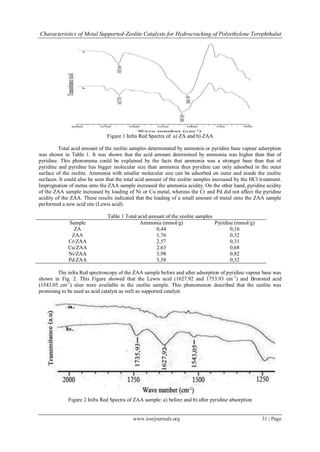
Fig. 3 showed the difractograms of the zeolite samples. It was found that the natural zeolite produced in
Sukabumi, West Java, Indonesia consisted mainly of the mordenite type crystalline. Treatment of HCl towards
the zeolite as well as impregnation of transition metal on to the zeolite did not alter the zeolite crystallinity.
The BET surface area of the ZA, ZAA, Ni/ZAA, Cr/ZAA, Cu/ZAA and Pd/ZAA was 24.63, 133.75,
46.13, 50.61, 47.47, and 53.89 m2/g, respectively. The HCl activation followed by microwave treatment towards
the ZA sample extremely increased its surface area. This result indicated that the activation and treatment
reduced the impurity that blockage the pore mouth of the zeolite. Impregnation of metal onto the ZAA
framework decreased its surface area. This phenomena were taken place may be caused by the non
homogeneous distribution of metal in the ZAA surface. Some of the metal atoms may block the pore mouth of
the zeolite.
Figure 3 Difractogram of: a) ZA, b) ZAA, c) Ni/ZAA, d) Cr/ZAA, e) Cu/ZAA and f) Pd/ZAA
Table 2 showed the activity of the zeolite catalysts on hydrocracking of the pyrolized PET. It was seen
that the thermal process produced the highest number of gas fraction, whereas using zeolites as well as metal
supported-zeolite catalysts showed a higher amount of the liquid product. This condition can be described by the
fact that the thermal cracking proceed via the radical mechanism. The zeolite based catalyst consisted of acid
sites that hydrocracked the PET feed via the carbonium ion intermediate to produce branched alkane and n-
alkene in the range of liquid hydrocarbons with carbon number range between C 7-C15 [12]. The highest
conversion of liquid product was performed using Pd/ZAA catalyst.
www.iosrjournals.org 32 | Page](https://image.slidesharecdn.com/d0342934-130409054208-phpapp01/85/D0342934-4-320.jpg)
![Characteristics of Metal Supported-Zeolite Catalysts for Hydrocracking of Polyethylene Terephthalat
Tabel 2 Product distribution of hydrocracking of pyrolized PET
Product distribution (wt. %)
Catalyst
Liquid Coke Residue Gas
Thermala) 21,90 - 0,09 78,01
ZAb) 22,95 2,64 1,77 72,64
ZAAb) 24,74 2,65 2,18 70,43
Cr/ZAAb) 32,03 2,85 2,39 62,73
Cu/ZAAb) 30,85 3,76 3,03 62,36
Ni/ZAAb) 29,81 3,35 2,27 64,57
Pd/ZAAb) 34,05 1,47 12,28 52,2
Note: a) carried out at 600 ºC within 4 h; b) carried out at 350 ºC within 60 min.
Table 3 showed the product distribution of the liquid fraction that consisted of gasoline (C 5 – C12)
fraction in retention time range of 0 - 10 min. and that of diesel (C13 – C20) fraction in the range of retention time
of > 10 min. The gasoline fraction was predominant for thermal and catalytic cracking conditions. This result
was consistent with the result showed by Aguado, et al [4]. The utilization of metal supported-zeolite catalysts
increased the gasoline product. The highest portion of gasoline fraction was shown by Pd/ZAA catalyst (97.99
wt. %) similar to that of Cr/ZAA catalyst (97.45 wt. %). The data was supported by chromatogram of the
product showed in Fig. 4.
Figure 4 Difractograms of the hydrocracking product of PET using: a) ZA, b) ZAA, c) Ni/ZAA, d) Cr/ZAA,
e) Cu/ZAA, f) Pd/ZAA catalyst, and g) thermal
Table 3 Product distribution of liquid fraction
Product distribution (wt. %)
Catalyst
Gasoline Fraction Diesel Fraction
Thermala) 85,49 14,51
ZAb) 90,52 9,48
ZAAb) 91,05 8,95
Cr/ZAAb) 97,45 2,55
Cu/ZAAb) 93,93 6,07
Ni/ZAAb) 92,30 7,70
Pd/ZAAb) 97,99 2,01
Note: a) carried out at 600 ºC within 4 h; b) carried out at 350 ºC within 60 min.
www.iosrjournals.org 33 | Page](https://image.slidesharecdn.com/d0342934-130409054208-phpapp01/85/D0342934-5-320.jpg)
![Characteristics of Metal Supported-Zeolite Catalysts for Hydrocracking of Polyethylene Terephthalat
The thermal cracking was carried out at 600 ºC that gave initial liquid product after 2 h run, while
that of the catalytic hydrocracking was conducted at 350 ºC produced initial liquid product after 30 min. run.
These conditions indicated that the catalytic hydrocracking was more effective than that of the thermal cracking
in order to produce the lighter liquid fractions from the PET feed.
IV. Conclusion
Characterization and modifications of Indonesian natural zeolite produced in Sukabumi, West Java,
have been carried out. Loading of a small amount of transition metal onto the activated zeolite was also
performed to evaluate their characteristics in hydrocracking of the PET. The results were concluded herein.
The characterization results indicated that the Indonesian natural zeolite produced in Sukabumi
consisted mainly of mordenite type crystalline. The HCl treatment towards the natural zeolite caused
dealumination, increased its acidity and surface area. Loading of Ni, Cu, Cr, or Pd metal on to the zeolite did not
affect the zeolite crystallinity. However, the metal loading decreased surface area of the zeolite. The
hydrocracking products of PET were liquid, coke, and gas fractions. The liquid product consisted mainly of
gasoline fraction (C5-C12). The highest liquid product was performed by the Pd/ZAA catalyst, i.e. 34.05 wt. %,
with selectivity towards the gasoline fractions was 97.99 wt. %.
Acknowledgements
The authors thank The JICA/AUN/SEED-Net for the financial support under The CRI (Collaborative
Research with Industry) Program.
References
[1] P. Shivakumar and K. Anbarasu, Catalytic Pyrolysis of Dairy Industrial Waste LDPE Film Into Fuel, Intern. J. Chem. Res. 3 (2012)
52 – 55.
[2] M.F. Ali and M.N. Siddiqui, Thermal and catalytic decomposition behavior of PVC mixed plastic waste with petroleum residue, J .
Anal. Appl. Pyrolysis 74 (2005) 282 – 289.
[3] S. Kumar and R.K. Singh, Recovery of Hydrocarbon Liquid From waste High Density Polyethilene By Thermal Pyrolisi, 28 (2011)
659 – 667.
[4] J. Aguado, D.P. Serrano, J.M. Escola, and A. Peral, Catalytic Cracking of Polyethilene Over Zeolite Mordenite With Enhanced
Textural Properties, J. Anal. Appl. Pyrolysis 85 (2009) 352 – 358.
[5] A. Peral, J. Aguado, D.P. Serrano, J.M. Escolla, Catalytic cracking of polyethylene over zeolite mordenite with enhanced textural
properties, J. Anal. Appl. Pyrolysis 85 (2009) 352–358.
[6] A. Bonila, D. Baudouin, and J. Perez-Ramirez, Desilication of ferrierite zeolite for porosity generation and improved effectiveness in
polyethylene pyrolysis, Journal of Catalysis 265 (2009) 170–180.
[7] A. López, I. de Marco, B.M. Caballero, M.F. Laresgoiti , A. Adrados, A. Aranzabal, 2011, Catalytic pyrolysis of plastic wastes with
two different types of catalysts: ZSM-5 zeolite and Red Mud, Applied Catalysis B: Environmental 104 (2011) 211–219.
[8] W. Trisunaryanti, R. Shiba, M. Miura, M. Nomura, N. Nishiyama, M. Matsukata, Characterization and Modification of Indonesian
Natural Zeolites and Their Properties for Hydrocracking of a Paraffin, J. Jpn. Petr.Inst. 1 (1996) 20-25.
[9] W. Trisunaryanti, A. Syoufyan, S. Purwono, I.Izul Fallah, Padi, P., The effect of hydrochloric acid solution treatment towards
characters of Indonesian natural zeolite, Proceeding of The 2nd International Conference On Chemical Sciences, Yogyakarta, 2010.
[10] W. Trisunaryanti, Triyono, Purwono, S., and K. Dewi, Characteristicsof Metals Supported-Zeolites Catalysts On Steam Reforming of
Bioethanol, J. Materiala Science and Engineering, 5 (2011) 239-246.
[11] J.M. Escola, J. Aguado, D.P. Serrano, A. Garciaa, A. Peral, L. Briones, R. Calvo, E. Fernandez, 2011, Catalytic hydroreforming of
the polyethylene thermal cracking oil over Ni supported hierarchical zeolites and mesostructured aluminosilicates, Applied Catalysis
B: Environmental 106 (2011) 405– 415
[12] S.T. Sie, Acid-catalyzed cracking of paraffinic hydrocarbons. 3. Evidence for the protonated cyclopropane mechanism from
hydrocracking/hydroisomerization experiments, Ind. Eng. Chem. Res. 31 (2003) 1881-1889.
www.iosrjournals.org 34 | Page](https://image.slidesharecdn.com/d0342934-130409054208-phpapp01/85/D0342934-6-320.jpg)

The document presents research on the characteristics of metal-supported zeolite catalysts for hydrocracking polyethylene terephthalate (PET) using Indonesian natural zeolite modified with HCl and loaded with transition metals. Various catalysts were synthesized and characterized, with findings indicating that the Pd/zaa catalyst achieved the highest liquid product conversion of 34.05 wt% and selectivity towards gasoline fractions at 97.99 wt%. The study highlights the potential of using abundant natural zeolites in Indonesia for effective recycling of waste plastics into valuable hydrocarbons.


