Cyber Crimes: The biggest
threat in the digital age.
Presented by:
Atul S. Jaybhaye
Assistant Professor (Law)
Hidayatullah National Law University, Raipur
B.A.LL.M.NET
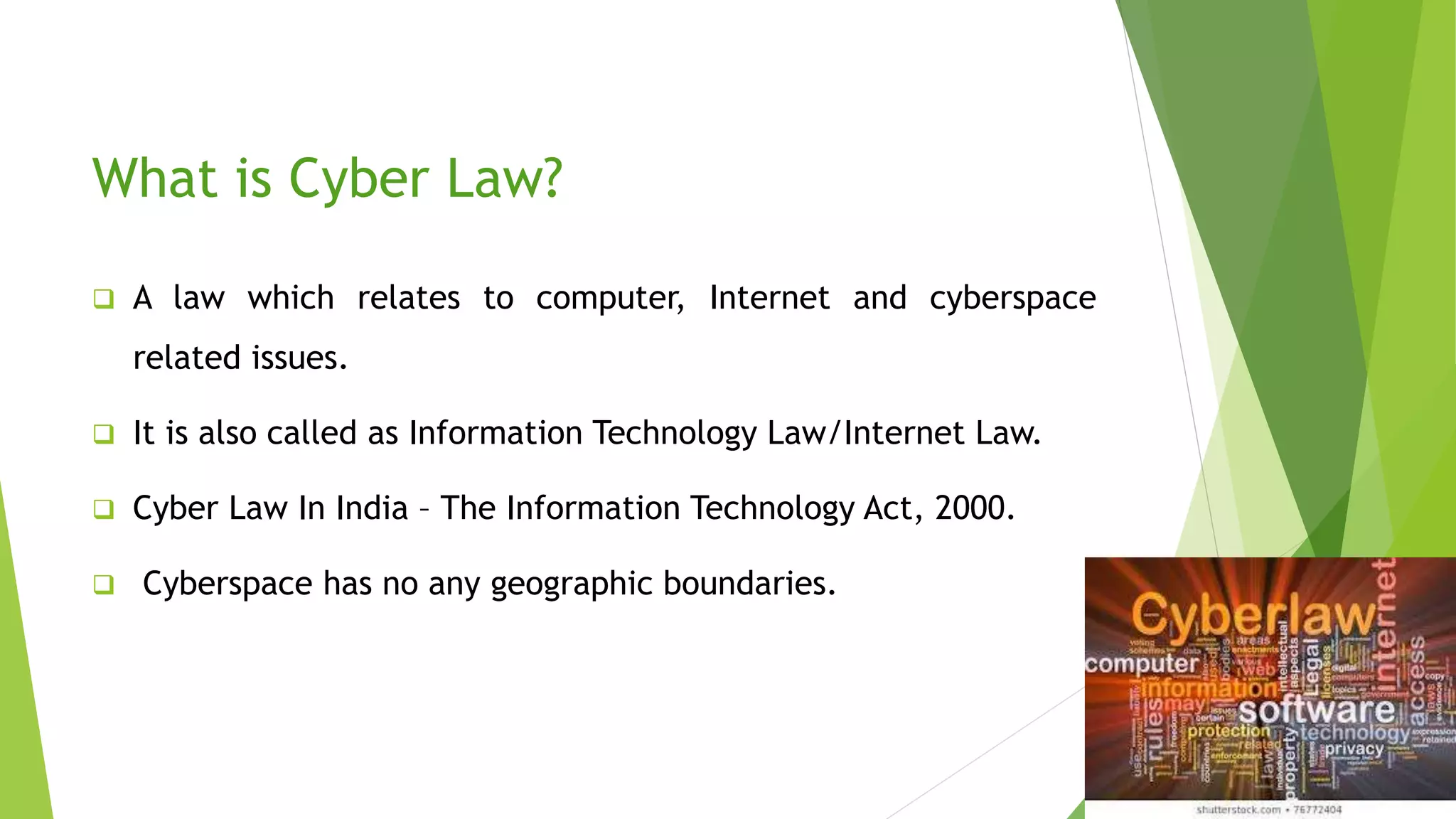
What is Cyber Law?
 A law which relates to computer, Internet and cyberspace
related issues.
 It is also called as Information Technology Law/Internet Law.
 Cyber Law In India – The Information Technology Act, 2000.
 Cyberspace has no any geographic boundaries.
Need for Cyber Law:
 Prevention of cyber crimes.
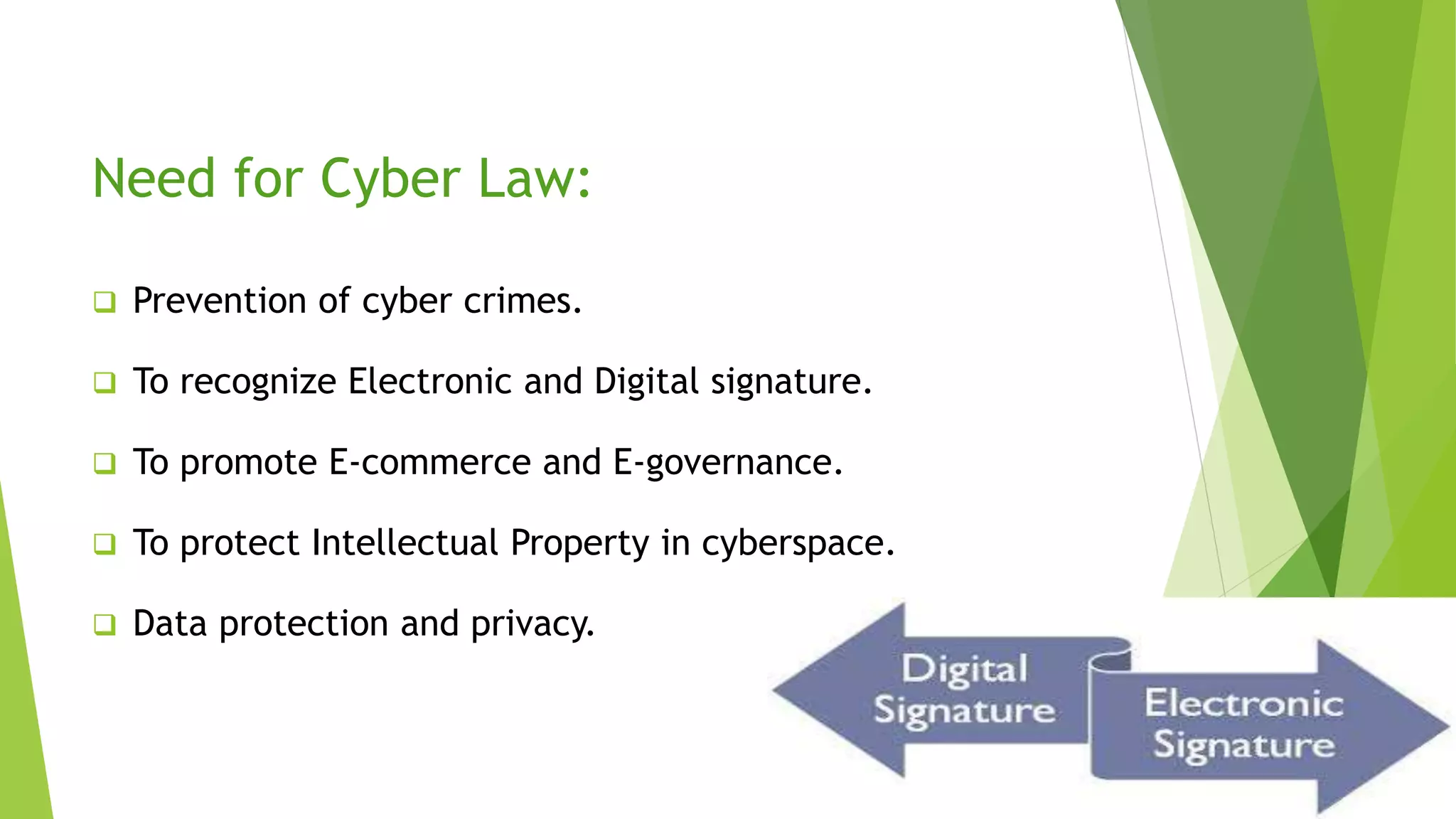
 To recognize Electronic and Digital signature.
 To promote E-commerce and E-governance.
 To protect Intellectual Property in cyberspace.
 Data protection and privacy.
What is cyber crime?
 Cyber crime is a crime where computer is used as a target
or tool to commit a crime.
 Cyber crime is a crime where ‘computer resource’ is
involved.
 Difference between cyber crimes and traditional crimes.
 Difference between cyber crimes and cyber torts.
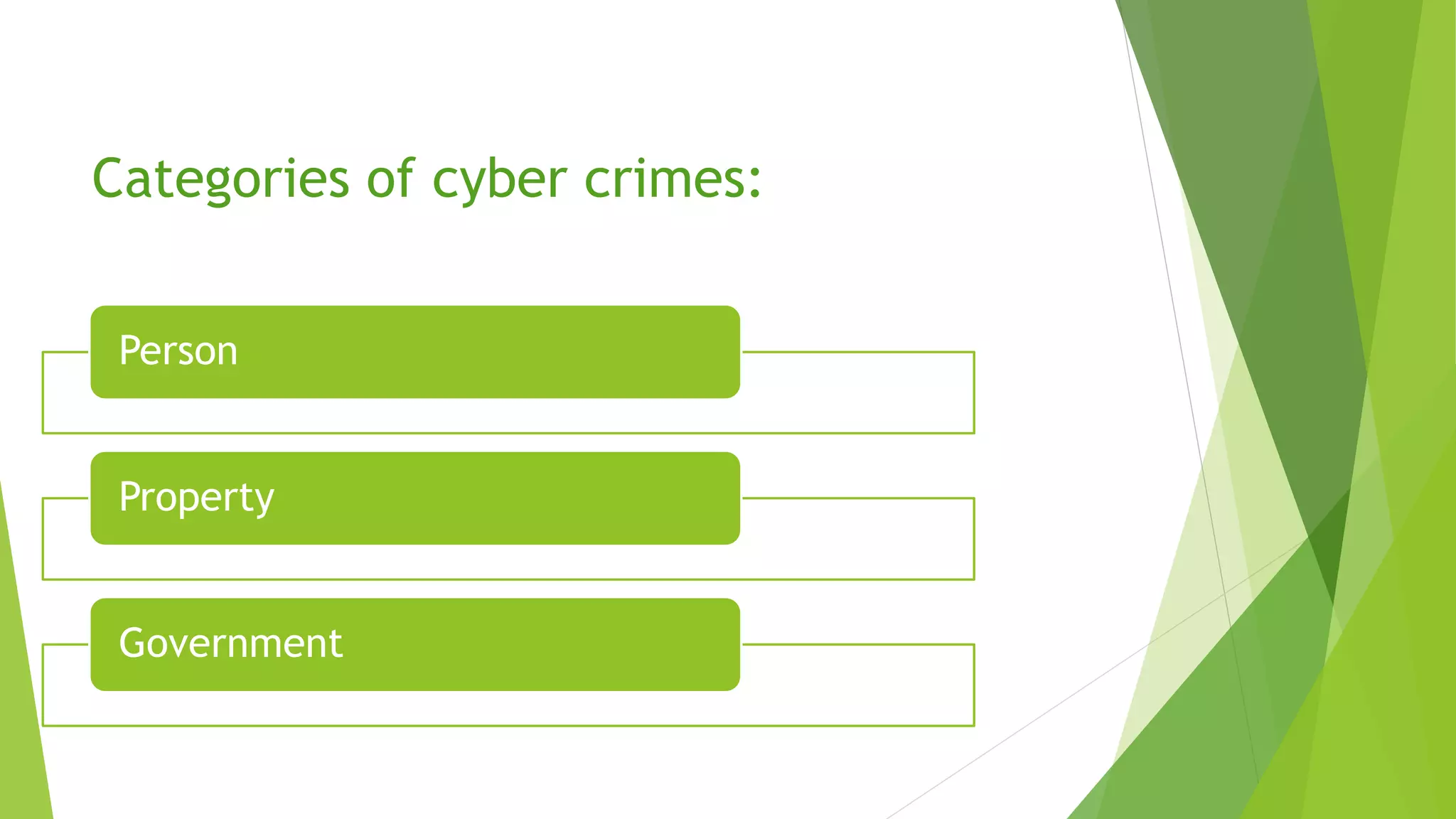
Categories of cyber crimes:
Person
Property
Government
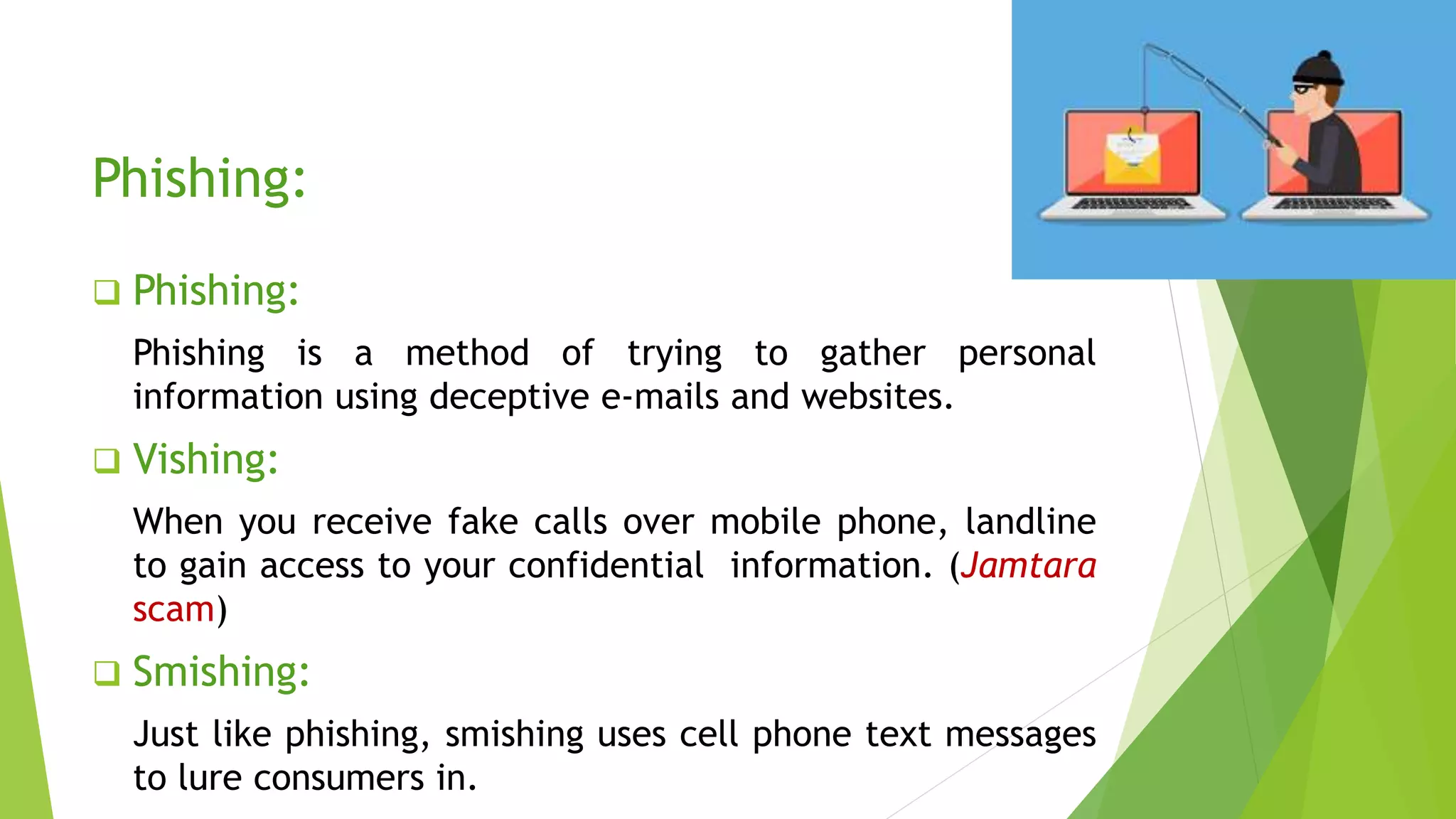
Phishing:
 Phishing:
Phishing is a method of trying to gather personal
information using deceptive e-mails and websites.
 Vishing:
When you receive fake calls over mobile phone, landline
to gain access to your confidential information. (Jamtara
scam)
 Smishing:
Just like phishing, smishing uses cell phone text messages
to lure consumers in.
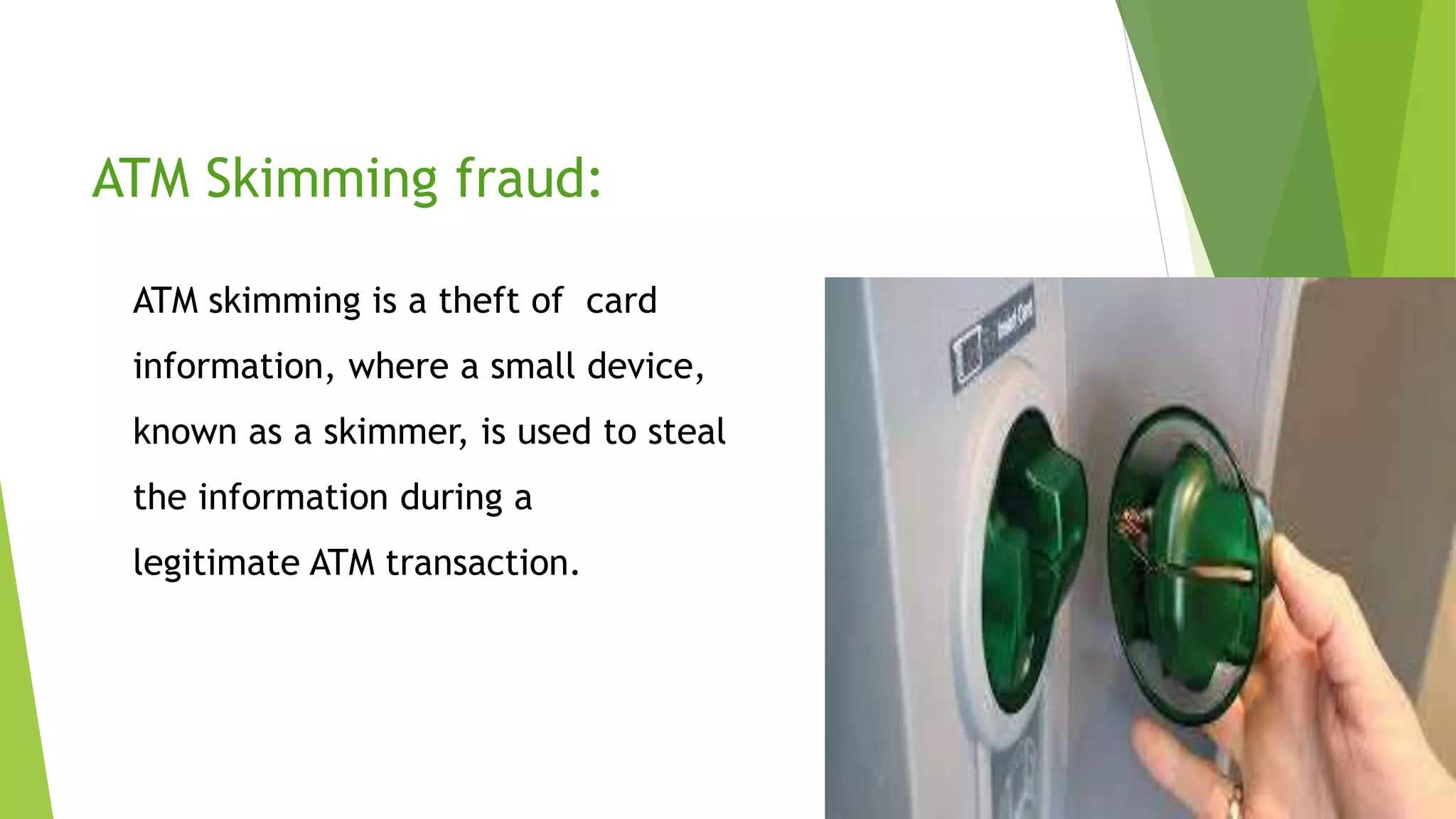
ATM Skimming fraud:
ATM skimming is a theft of card
information, where a small device,
known as a skimmer, is used to steal
the information during a
legitimate ATM transaction.
Hacking:
 Unauthorized access to computer system with the
intention of stealing information, causing damage,
wrongful loss to individual/entity/govt.
 Punishable under Sec. 66 of IT Act, i.e. Computer related
offences.
 Difference between ethical and unethical hacking.
 Types of Hackers- white hat, black hat hackers.
Violation of privacy:
 Whoever, intentionally or knowingly,
 captures,
 publishes or transmits,
 the image of a private area of any person without his or
her consent, under circumstances violating the privacy of
that person,
 Commits offence under Sec. 66-E of IT Act.
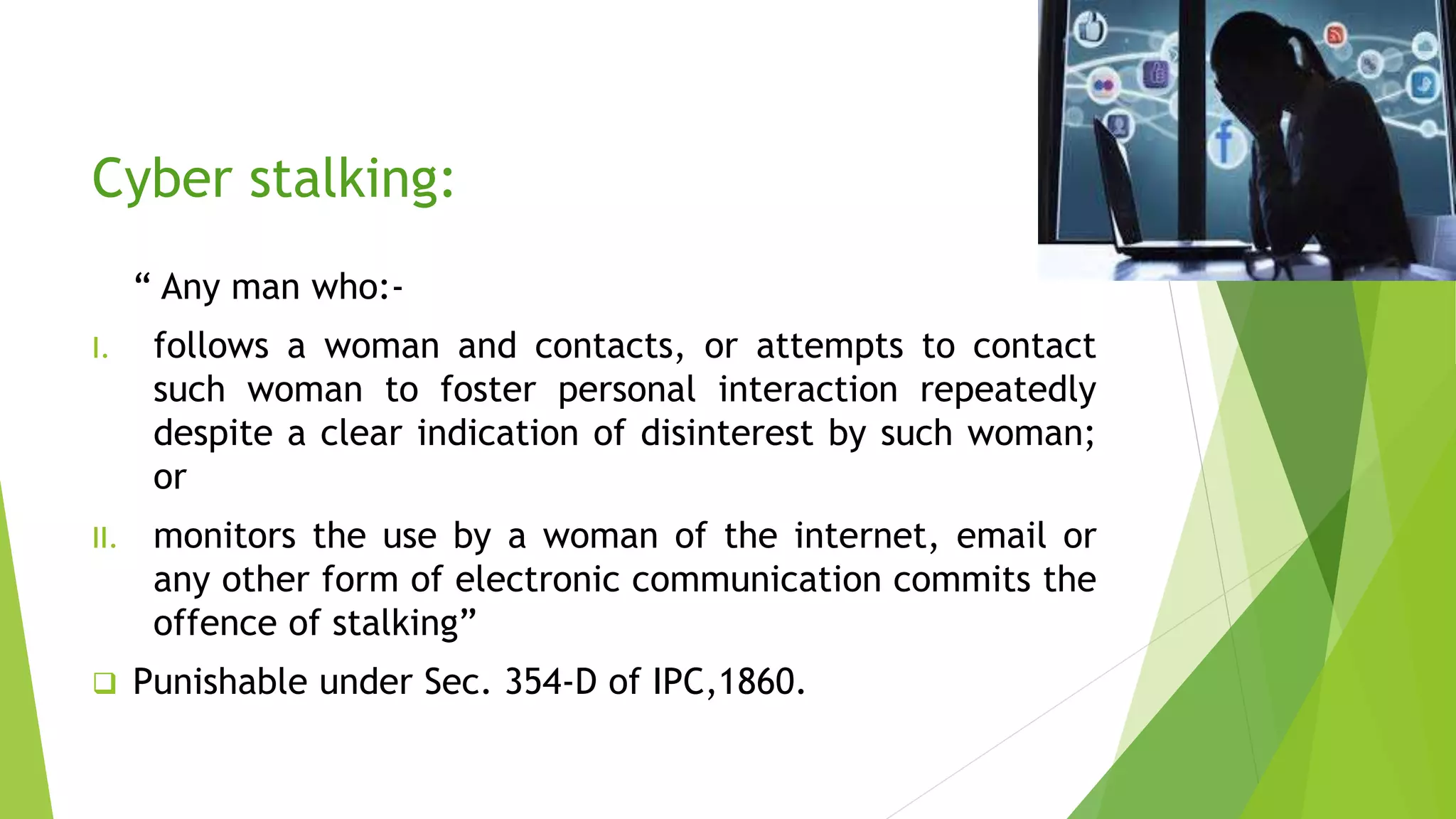
Cyber stalking:
“ Any man who:-
I. follows a woman and contacts, or attempts to contact
such woman to foster personal interaction repeatedly
despite a clear indication of disinterest by such woman;
or
II. monitors the use by a woman of the internet, email or
any other form of electronic communication commits the
offence of stalking”
 Punishable under Sec. 354-D of IPC,1860.
Cyber defamation:
 The term ‘Cyber Defamation’ basically means publishing of
false statement about an individual in cyberspace that can
injure or harm the reputation of that individual.
 Punishable under section 500 of IPC, 1860.
 Initially, cyber defamation, hate speech was punishable under
Sec. 66-A of IT Act, 2000.
 However, Sec.66-A has been struck down now.
Child pornography:
Acts prohibited under Sec. 67- B of the IT Act:
 Depicting children in sexually explicit act/conduct,
 Publishing or transmitting,
 browsing or downloading ,
 Inducing children to online relationship, or
 Facilitates abusing children online.
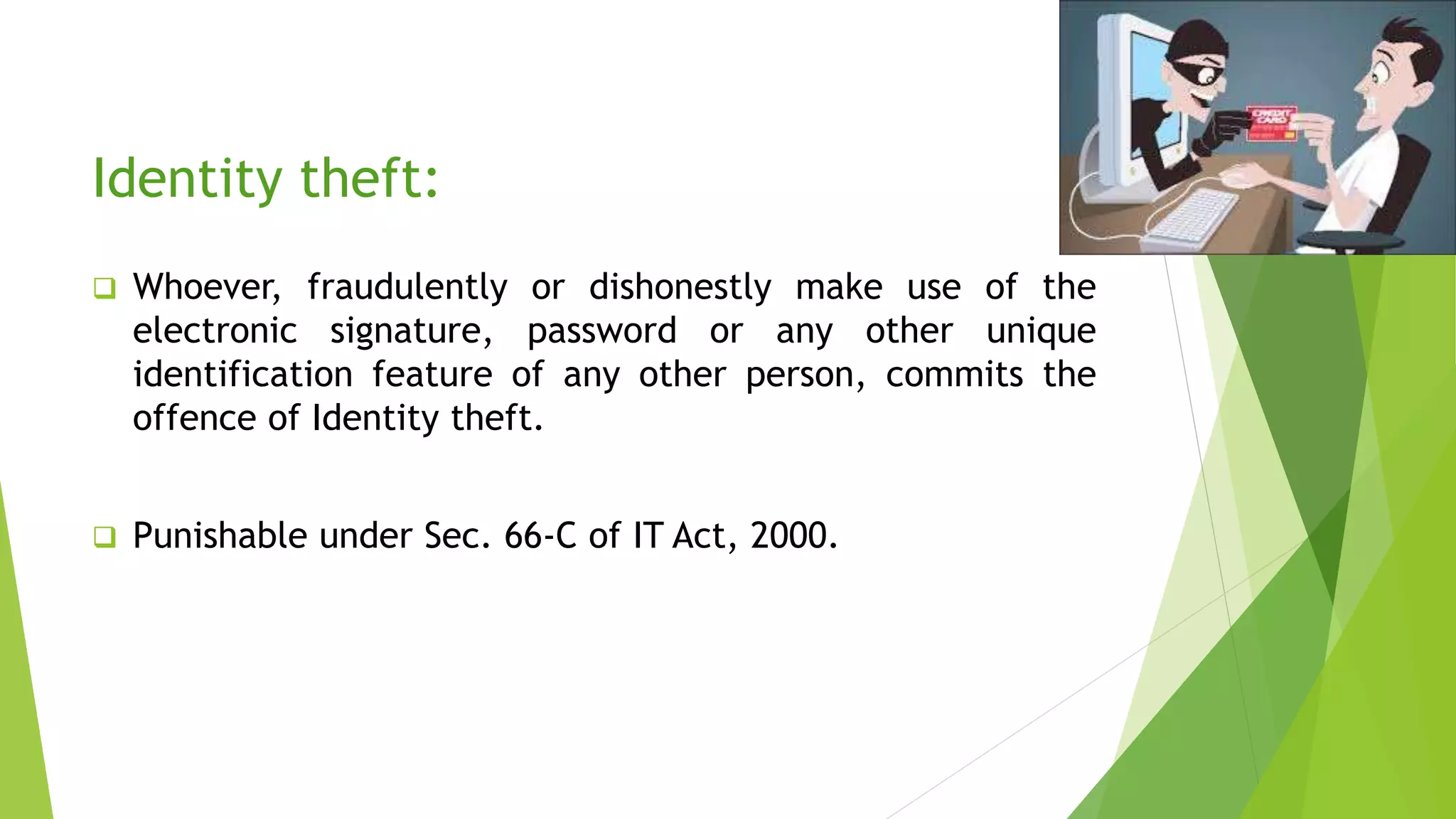
Identity theft:
 Whoever, fraudulently or dishonestly make use of the
electronic signature, password or any other unique
identification feature of any other person, commits the
offence of Identity theft.
 Punishable under Sec. 66-C of IT Act, 2000.
Other cyber crimes at a glance:
 Spamming.
 Denial of Service attack (DOS).
 Tampering with computer source documents.
 Dishonestly receiving stolen computer
resource/communication device.
 Cyber terrorism.
 Obscenity.
 Cheating by personation.
 Computer vandalism etc.
Investigation of a cyber crime:
 Investigation to be conducted by a police officer not below the rank of
Inspector. (Sec.78 IT Act, 2000.)
 Admissibility of E-records/ Digital evidence in a court of law. Sec. 65-B
Indian Evidence Act,1872.
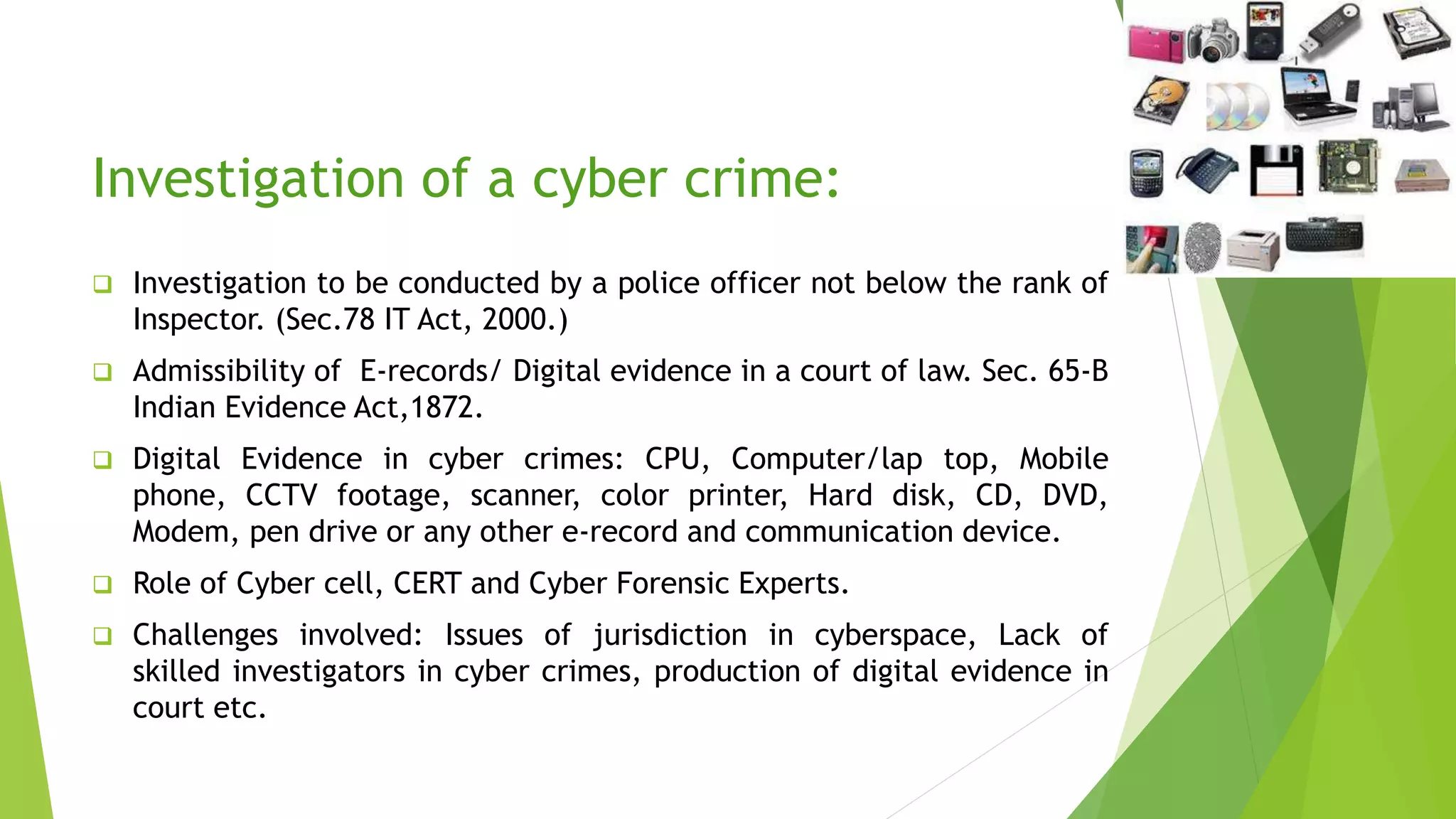
 Digital Evidence in cyber crimes: CPU, Computer/lap top, Mobile
phone, CCTV footage, scanner, color printer, Hard disk, CD, DVD,
Modem, pen drive or any other e-record and communication device.
 Role of Cyber cell, CERT and Cyber Forensic Experts.
 Challenges involved: Issues of jurisdiction in cyberspace, Lack of
skilled investigators in cyber crimes, production of digital evidence in
court etc.
Do’s and don'ts:
 Never handover your ATM card for swapping to others. Do
it yourself.
 Use 2 step verification method to sign in e-mails.
 Skimmers are usually used for ATM card frauds. Before
inserting ATM card check machine minutely.
 Be cautious at hotels, petrol pumps while making online
transactions.
 Report all cyber crimes on cybercrime.gov.in
 Always browse through https sites and not http.
Do’s and don'ts:
 Always reach to banking sites through address bar and not from
Google.
 Keep changing your passwords frequently. Don't set password as your
name, date of birth, mobile number, vehicle number.
 Don't use public Wi-Fi.
 Don't share your mobile number, e-mails unnecessarily at shops,
hotels.
 Inform bank within 24 hours if card is not used by you.
 Do the test transaction at ATM machine in case money is withdrawn
from your account by other person. Purpose is to prove your
presence at relevant time in that city/country. Even if you block
card, do the test transaction to get back your money.
Be Alert..Be Safe..
Thank you…

Cyber crimes in the digital age

  • 1.
    Cyber Crimes: Thebiggest threat in the digital age. Presented by: Atul S. Jaybhaye Assistant Professor (Law) Hidayatullah National Law University, Raipur B.A.LL.M.NET
  • 2.
    What is CyberLaw?  A law which relates to computer, Internet and cyberspace related issues.  It is also called as Information Technology Law/Internet Law.  Cyber Law In India – The Information Technology Act, 2000.  Cyberspace has no any geographic boundaries.
  • 3.
    Need for CyberLaw:  Prevention of cyber crimes.  To recognize Electronic and Digital signature.  To promote E-commerce and E-governance.  To protect Intellectual Property in cyberspace.  Data protection and privacy.
  • 4.
    What is cybercrime?  Cyber crime is a crime where computer is used as a target or tool to commit a crime.  Cyber crime is a crime where ‘computer resource’ is involved.  Difference between cyber crimes and traditional crimes.  Difference between cyber crimes and cyber torts.
  • 5.
    Categories of cybercrimes: Person Property Government
  • 6.
    Phishing:  Phishing: Phishing isa method of trying to gather personal information using deceptive e-mails and websites.  Vishing: When you receive fake calls over mobile phone, landline to gain access to your confidential information. (Jamtara scam)  Smishing: Just like phishing, smishing uses cell phone text messages to lure consumers in.
  • 7.
    ATM Skimming fraud: ATMskimming is a theft of card information, where a small device, known as a skimmer, is used to steal the information during a legitimate ATM transaction.
  • 8.
    Hacking:  Unauthorized accessto computer system with the intention of stealing information, causing damage, wrongful loss to individual/entity/govt.  Punishable under Sec. 66 of IT Act, i.e. Computer related offences.  Difference between ethical and unethical hacking.  Types of Hackers- white hat, black hat hackers.
  • 9.
    Violation of privacy: Whoever, intentionally or knowingly,  captures,  publishes or transmits,  the image of a private area of any person without his or her consent, under circumstances violating the privacy of that person,  Commits offence under Sec. 66-E of IT Act.
  • 10.
    Cyber stalking: “ Anyman who:- I. follows a woman and contacts, or attempts to contact such woman to foster personal interaction repeatedly despite a clear indication of disinterest by such woman; or II. monitors the use by a woman of the internet, email or any other form of electronic communication commits the offence of stalking”  Punishable under Sec. 354-D of IPC,1860.
  • 11.
    Cyber defamation:  Theterm ‘Cyber Defamation’ basically means publishing of false statement about an individual in cyberspace that can injure or harm the reputation of that individual.  Punishable under section 500 of IPC, 1860.  Initially, cyber defamation, hate speech was punishable under Sec. 66-A of IT Act, 2000.  However, Sec.66-A has been struck down now.
  • 12.
    Child pornography: Acts prohibitedunder Sec. 67- B of the IT Act:  Depicting children in sexually explicit act/conduct,  Publishing or transmitting,  browsing or downloading ,  Inducing children to online relationship, or  Facilitates abusing children online.
  • 13.
    Identity theft:  Whoever,fraudulently or dishonestly make use of the electronic signature, password or any other unique identification feature of any other person, commits the offence of Identity theft.  Punishable under Sec. 66-C of IT Act, 2000.
  • 14.
    Other cyber crimesat a glance:  Spamming.  Denial of Service attack (DOS).  Tampering with computer source documents.  Dishonestly receiving stolen computer resource/communication device.  Cyber terrorism.  Obscenity.  Cheating by personation.  Computer vandalism etc.
  • 15.
    Investigation of acyber crime:  Investigation to be conducted by a police officer not below the rank of Inspector. (Sec.78 IT Act, 2000.)  Admissibility of E-records/ Digital evidence in a court of law. Sec. 65-B Indian Evidence Act,1872.  Digital Evidence in cyber crimes: CPU, Computer/lap top, Mobile phone, CCTV footage, scanner, color printer, Hard disk, CD, DVD, Modem, pen drive or any other e-record and communication device.  Role of Cyber cell, CERT and Cyber Forensic Experts.  Challenges involved: Issues of jurisdiction in cyberspace, Lack of skilled investigators in cyber crimes, production of digital evidence in court etc.
  • 16.
    Do’s and don'ts: Never handover your ATM card for swapping to others. Do it yourself.  Use 2 step verification method to sign in e-mails.  Skimmers are usually used for ATM card frauds. Before inserting ATM card check machine minutely.  Be cautious at hotels, petrol pumps while making online transactions.  Report all cyber crimes on cybercrime.gov.in  Always browse through https sites and not http.
  • 17.
    Do’s and don'ts: Always reach to banking sites through address bar and not from Google.  Keep changing your passwords frequently. Don't set password as your name, date of birth, mobile number, vehicle number.  Don't use public Wi-Fi.  Don't share your mobile number, e-mails unnecessarily at shops, hotels.  Inform bank within 24 hours if card is not used by you.  Do the test transaction at ATM machine in case money is withdrawn from your account by other person. Purpose is to prove your presence at relevant time in that city/country. Even if you block card, do the test transaction to get back your money.
  • 18.