



Cyber Crime
Bhavya Mohindru & Adhiraj Goel
Apeejay School Saket
Contents
 Introduction.
 Definition.
 History.
 Cyber threat evolution.
 Categories of cyber crime.
 Types of cyber crime.
 Prevention.
 Security.
 Conclusion.
Introduction
 The internet in India is growing rapidly. It has given rise to new
opportunities in every field we can think of be it entertainment,
business, sports or education.
 There're two sides to a coin. Internet also has it's own
disadvantages is Cyber crime- illegal activity committed on the
internet.
Defining CyberCrime
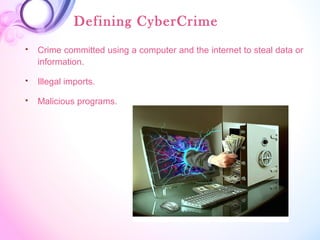
 Crime committed using a computer and the internet to steal data or
information.
 Illegal imports.
 Malicious programs.
Cybercrime is nothing
but where the computer
used as an object or
subject of crime..
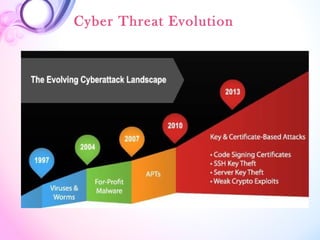
Cyber Threat Evolution
Types Of CyberCrime
 Hacking
 Denial of service attack
 Virus Dissemination
 Computer Vandalism
 Cyber Terrorism
 Software Piracy
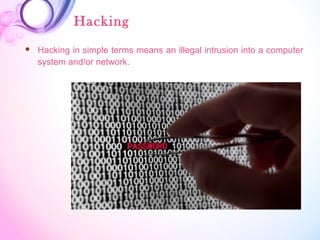
Hacking
 Hacking in simple terms means an illegal intrusion into a computer
system and/or network.
Denial Of Service Attack
 Act by the criminal, who floods the bandwidth of the victims
network.
 Is his e-mail box with spam mail depriving him of the services.
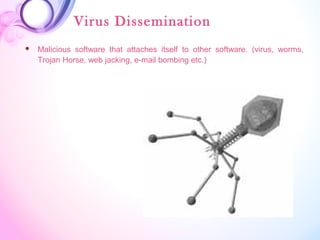
Virus Dissemination
 Malicious software that attaches itself to other software. (virus, worms,
Trojan Horse, web jacking, e-mail bombing etc.)
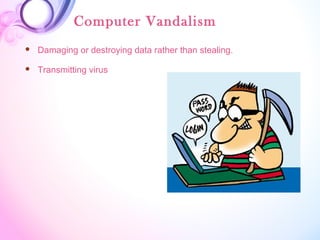
Computer Vandalism
 Damaging or destroying data rather than stealing.
 Transmitting virus
Cyber Terrorism
 Use of Internet based attacks in terrorist activities.
 Technology savvy terrorists are using 512-bit encryption, which is
impossible to decrypt.
Software Piracy
 Theft of software through the illegal copying of genuine programs.
 Distribution of products intended to pass for the original.
Types Of CyberAttacks By
Percentage
• Financial fraud: 11%
• Sabotage of data/networks: 17%
• Theft of proprietary information: 20%
• System penetration from the outside: 25%
• Denial of service: 27%
• Unauthorized access by insiders: 71%
• Employee abuse of internet privileges 79%
• Viruses 85%

Cyber Crime

  • 1.
    Cyber Crime Bhavya Mohindru& Adhiraj Goel Apeejay School Saket
  • 2.
    Contents  Introduction.  Definition. History.  Cyber threat evolution.  Categories of cyber crime.  Types of cyber crime.  Prevention.  Security.  Conclusion.
  • 3.
    Introduction  The internetin India is growing rapidly. It has given rise to new opportunities in every field we can think of be it entertainment, business, sports or education.  There're two sides to a coin. Internet also has it's own disadvantages is Cyber crime- illegal activity committed on the internet.
  • 4.
    Defining CyberCrime  Crimecommitted using a computer and the internet to steal data or information.  Illegal imports.  Malicious programs.
  • 5.
    Cybercrime is nothing butwhere the computer used as an object or subject of crime..
  • 6.
  • 7.
    Types Of CyberCrime Hacking  Denial of service attack  Virus Dissemination  Computer Vandalism  Cyber Terrorism  Software Piracy
  • 8.
    Hacking  Hacking insimple terms means an illegal intrusion into a computer system and/or network.
  • 9.
    Denial Of ServiceAttack  Act by the criminal, who floods the bandwidth of the victims network.  Is his e-mail box with spam mail depriving him of the services.
  • 10.
    Virus Dissemination  Malicioussoftware that attaches itself to other software. (virus, worms, Trojan Horse, web jacking, e-mail bombing etc.)
  • 11.
    Computer Vandalism  Damagingor destroying data rather than stealing.  Transmitting virus
  • 12.
    Cyber Terrorism  Useof Internet based attacks in terrorist activities.  Technology savvy terrorists are using 512-bit encryption, which is impossible to decrypt.
  • 13.
    Software Piracy  Theftof software through the illegal copying of genuine programs.  Distribution of products intended to pass for the original.
  • 14.
    Types Of CyberAttacksBy Percentage • Financial fraud: 11% • Sabotage of data/networks: 17% • Theft of proprietary information: 20% • System penetration from the outside: 25% • Denial of service: 27% • Unauthorized access by insiders: 71% • Employee abuse of internet privileges 79% • Viruses 85%