

CYBER CRIME AND SECURITY
SHUBHAM LOHIYA
Made By
INTRODUCTION
The internet in India is growing rapidly. It has given
rise to new opportunities in every field we can think of
be it entertainment, business, sports or education.
There’re two sides to a coin. Internet also has it’s
own disadvantages is Cyber crime- illegal activity
committed on the internet.
INTRODUCTION
DEFINING CYBER CRIME
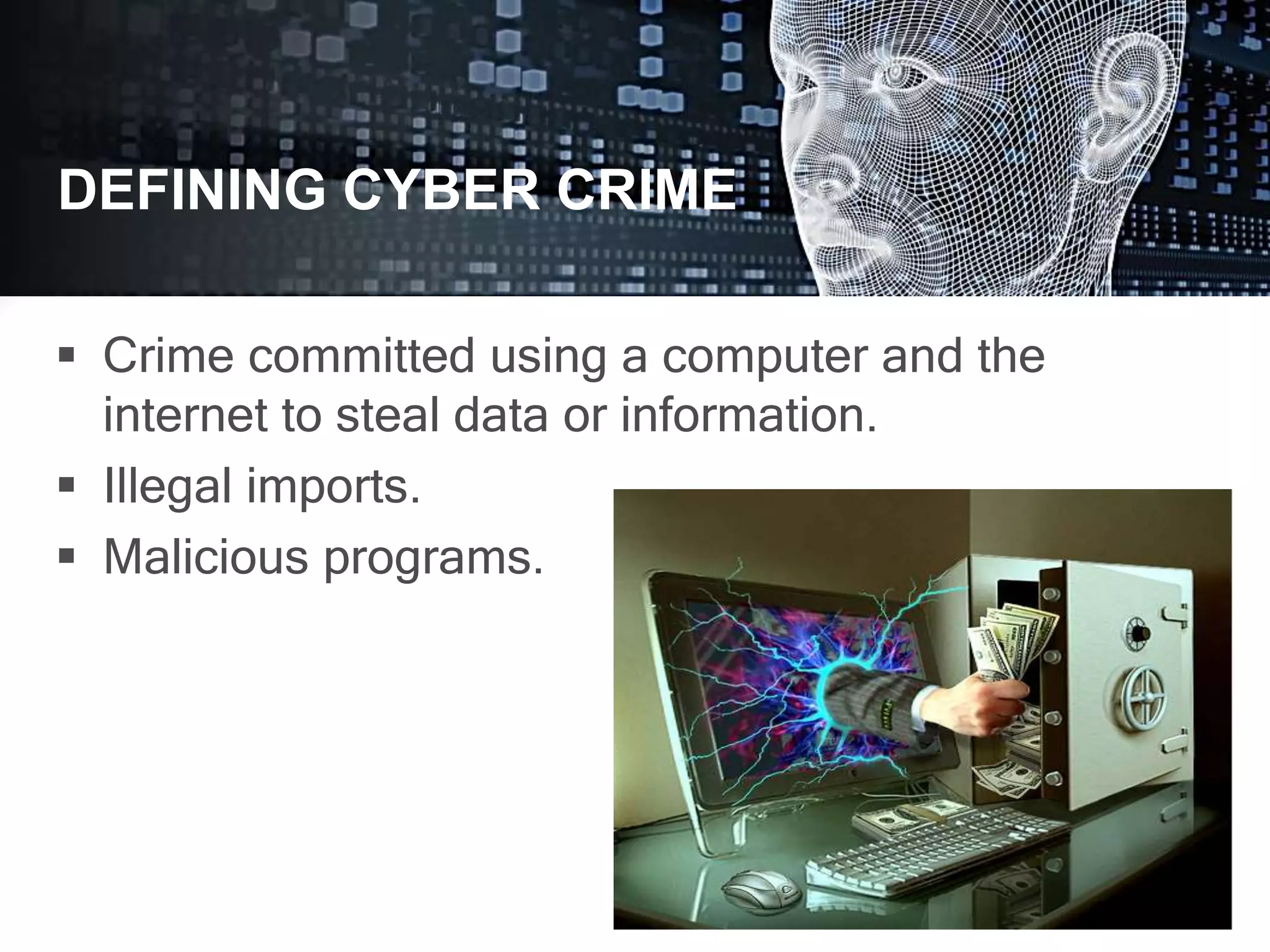
 Crime committed using a computer and the
internet to steal data or information.
 Illegal imports.
 Malicious programs.
DEFINING CYBER CRIME
Cyber crime
is nothing
but where the computer
used as an object or
subject of crime..
• The first recorded cyber crime took place
in the year 1820.
HISTORY
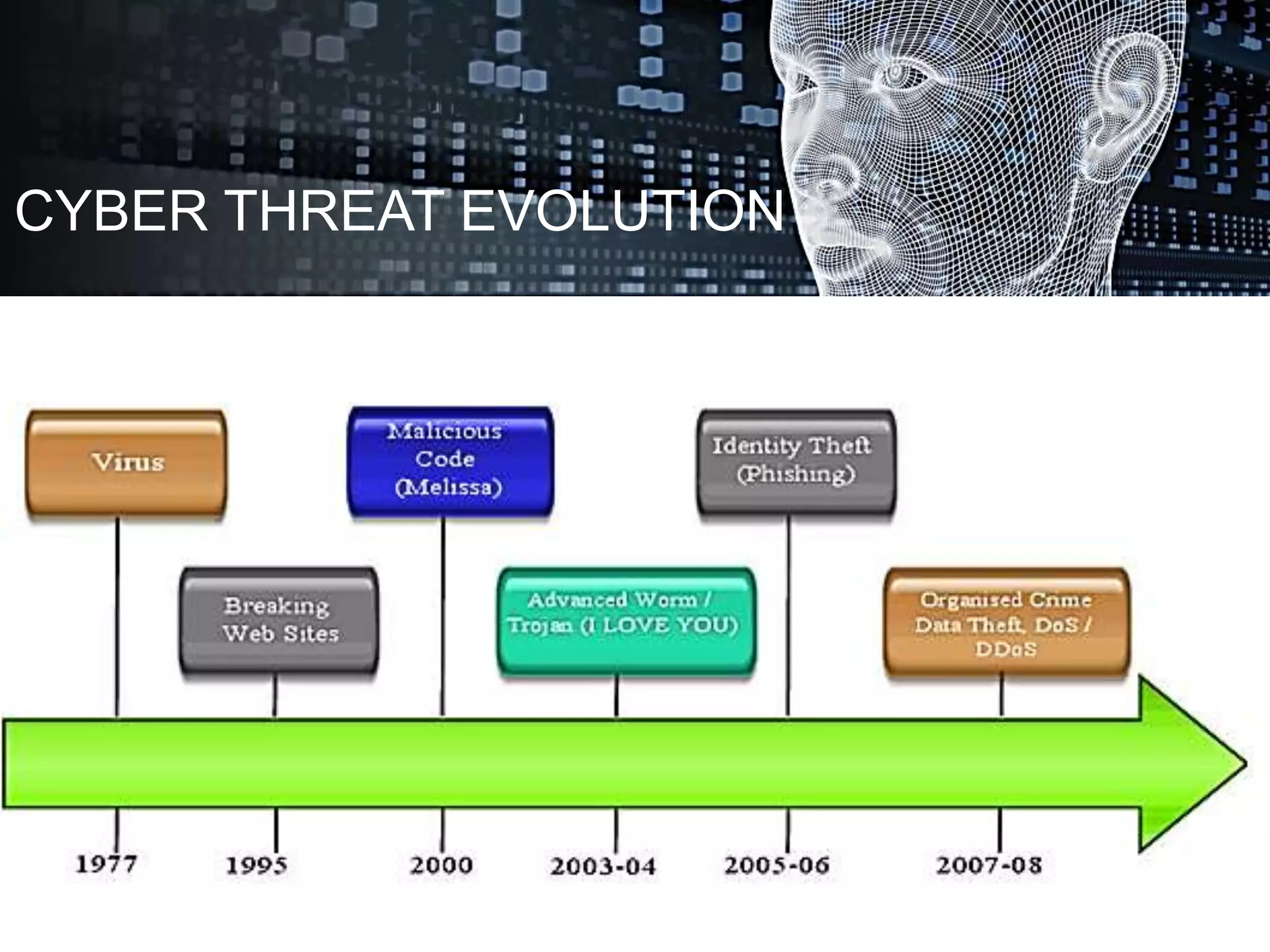
CYBER THREAT EVOLUTION
• The Computer as a Target
• The computer as a weapon
CATEGORIZATION
OF CYBER CRIME
• Hacking
• Denial of service attack
• Virus Dissemination
• Computer Vandalism
• Cyber Terrorism
• Software Piracy
TYPES OF CYBER
CRIME
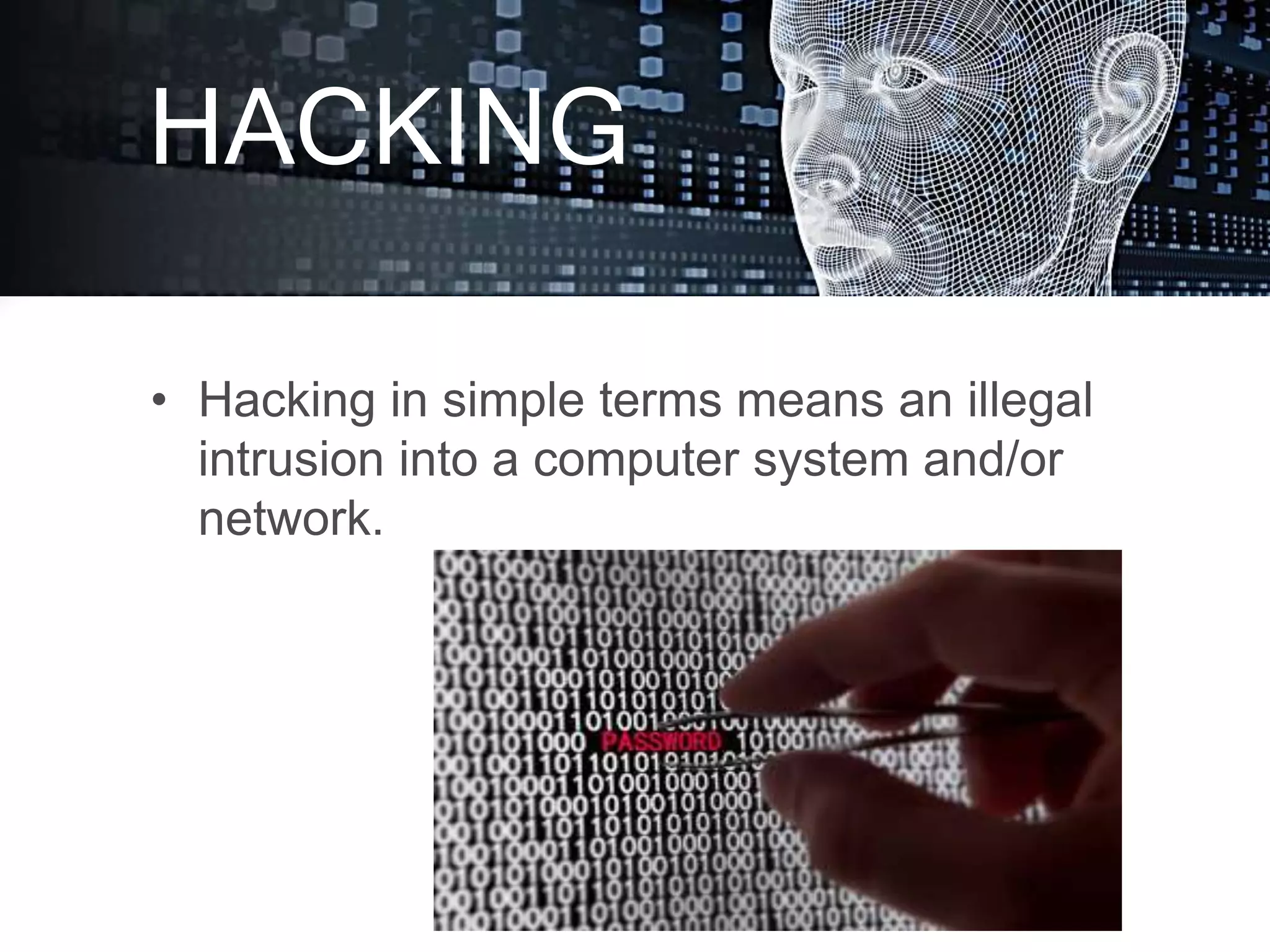
• Hacking in simple terms means an illegal
intrusion into a computer system and/or
network.
HACKING
• Act by the criminal, who floods the
bandwidth of the victims network.
• Is his e-mail box with spam mail depriving
him of the services.
DENIAL OF SERVICE ATTACK
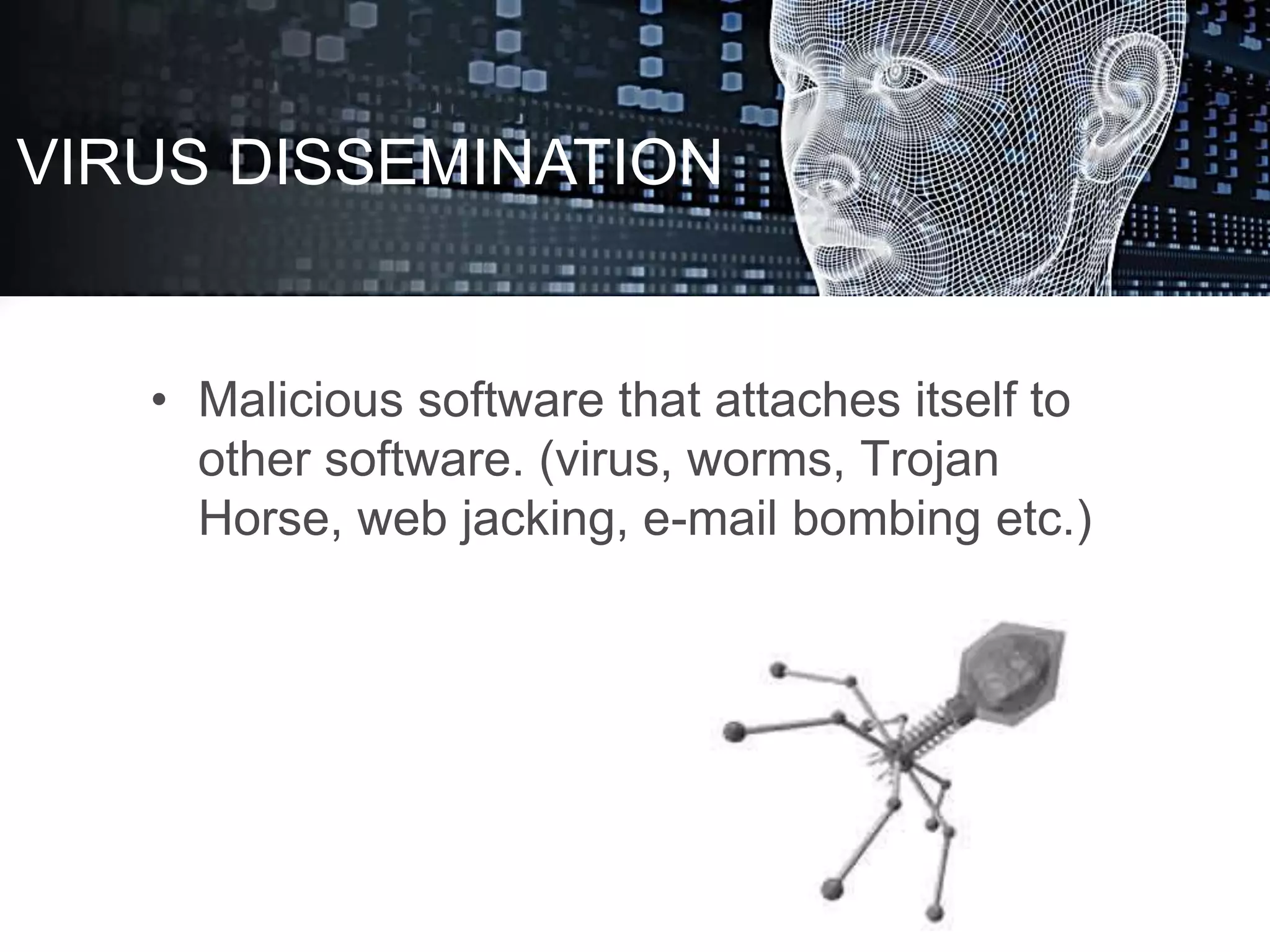
• Malicious software that attaches itself to
other software. (virus, worms, Trojan
Horse, web jacking, e-mail bombing etc.)
VIRUS DISSEMINATION
• Damaging or destroying data rather than
stealing.
• Transmitting virus
COMPUTER VANDALISM
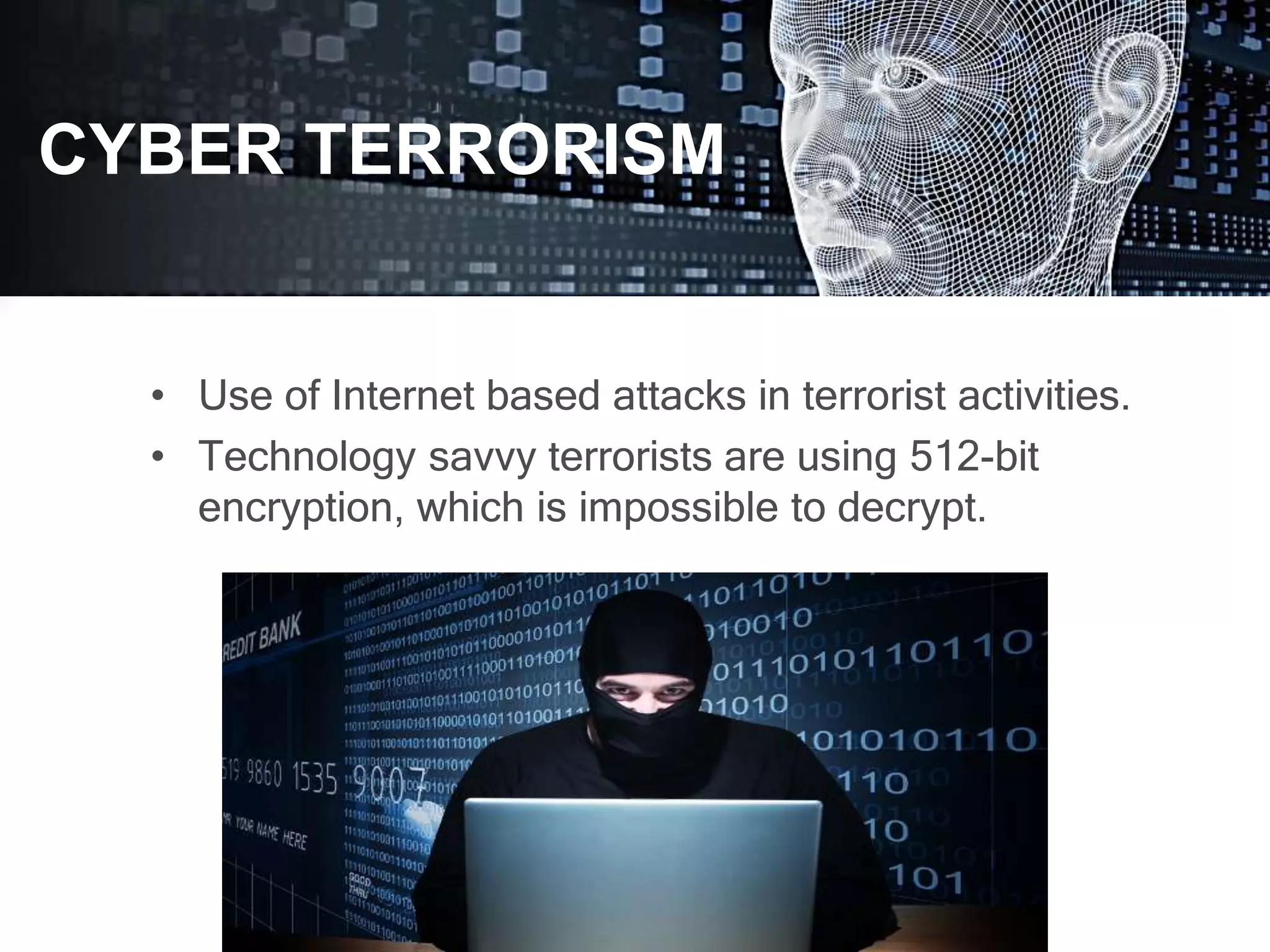
• Use of Internet based attacks in terrorist activities.
• Technology savvy terrorists are using 512-bit
encryption, which is impossible to decrypt.
CYBER TERRORISM
• Theft of software through the illegal copying of
genuine programs.
• Distribution of products intended to pass for the
original.
SOFTWARE PIRACY
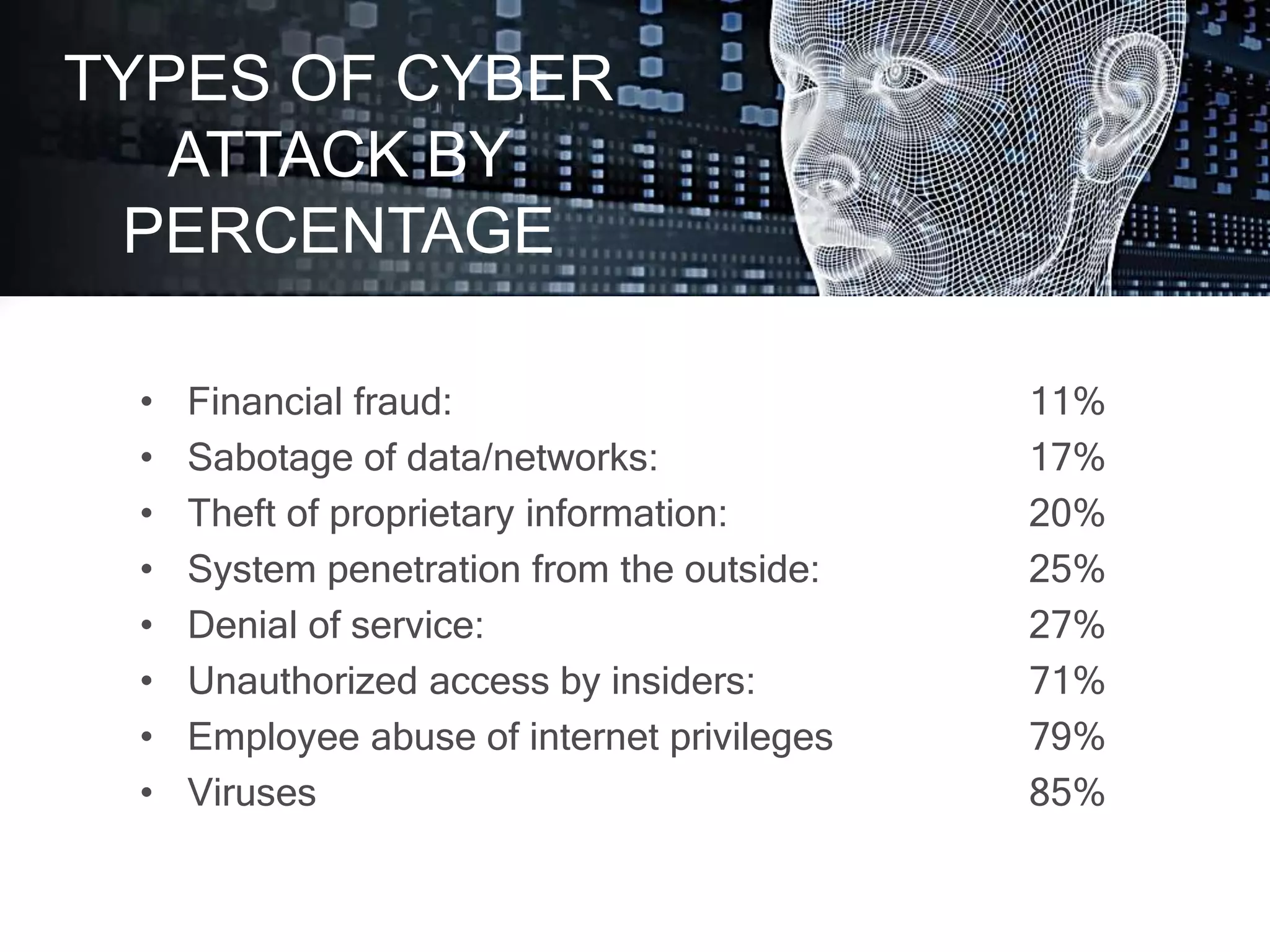
• Financial fraud: 11%
• Sabotage of data/networks: 17%
• Theft of proprietary information: 20%
• System penetration from the outside: 25%
• Denial of service: 27%
• Unauthorized access by insiders: 71%
• Employee abuse of internet privileges 79%
• Viruses 85%
TYPES OF CYBER
ATTACK BY
PERCENTAGE
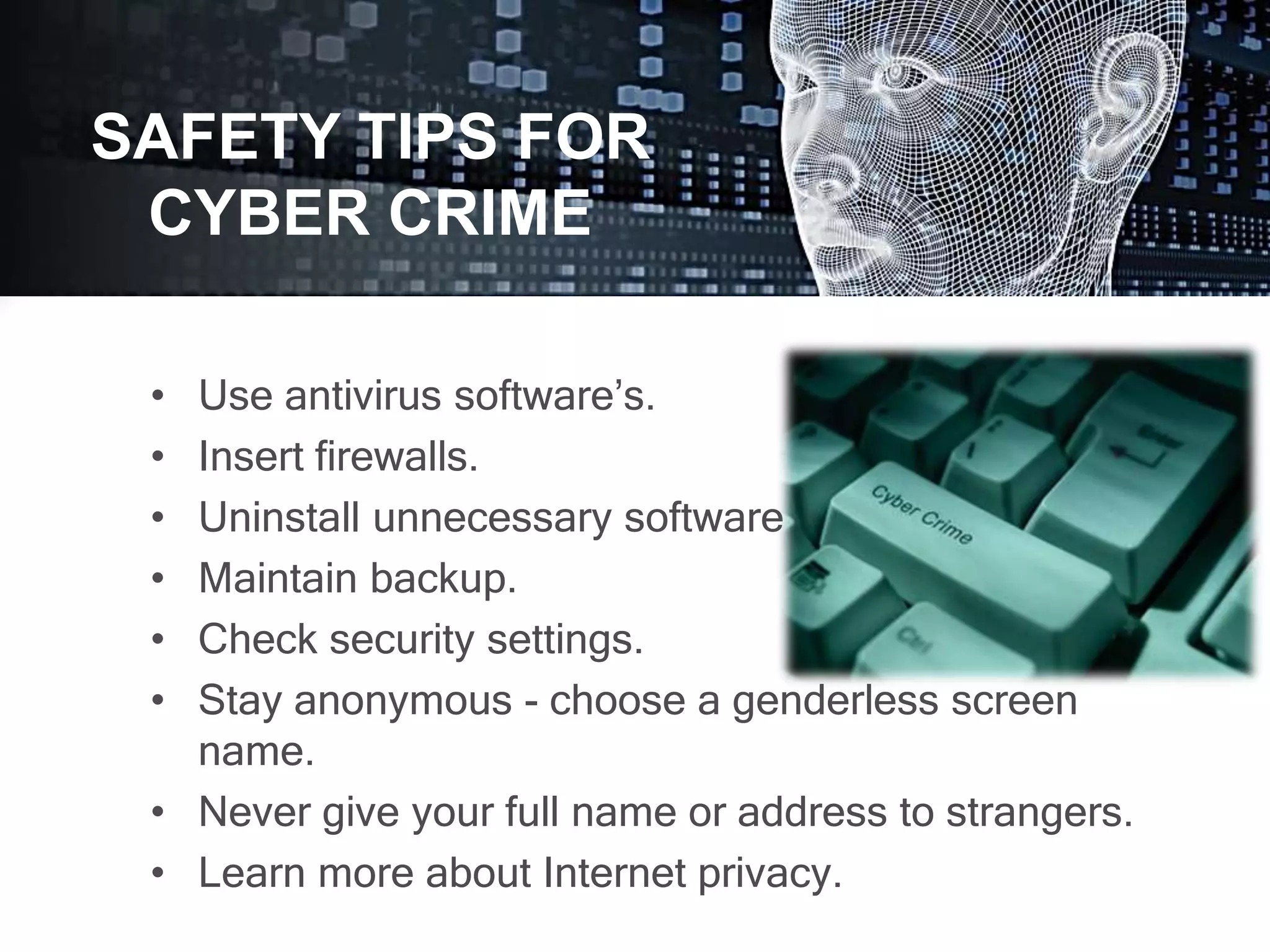
• Use antivirus software’s.
• Insert firewalls.
• Uninstall unnecessary software
• Maintain backup.
• Check security settings.
• Stay anonymous - choose a genderless screen
name.
• Never give your full name or address to strangers.
• Learn more about Internet privacy.
SAFETY TIPS FOR
CYBER CRIME
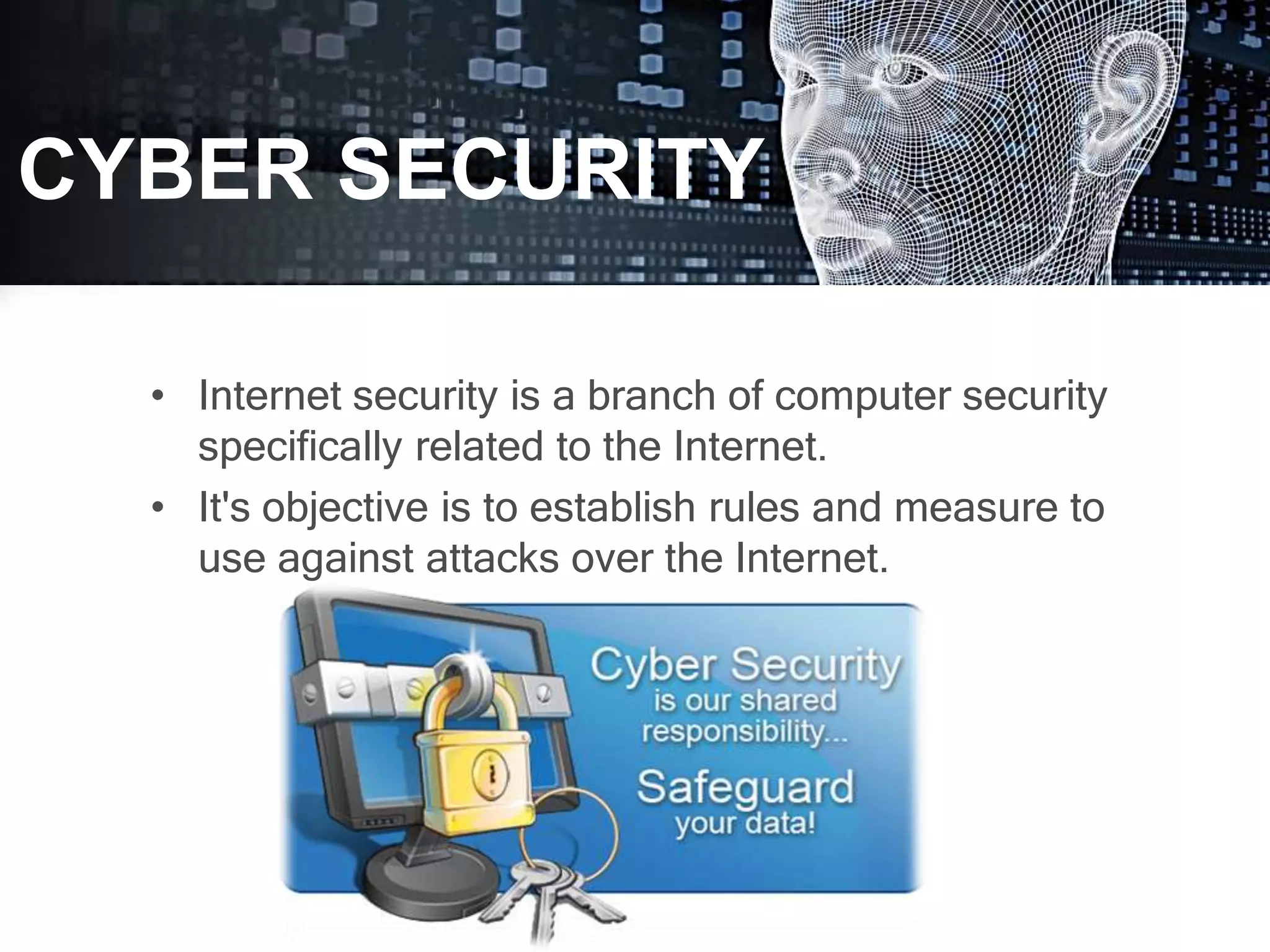
• Internet security is a branch of computer security
specifically related to the Internet.
• It's objective is to establish rules and measure to
use against attacks over the Internet.
CYBER SECURITY
• Defend us from critical attacks.
• Browse the safe website.
• Internet security process all the incoming and
outgoing data on our computer.
ADVANTAGES OF CYBER
SECURITY
Technology is destructive only in the hands of
people who do not realize that they are one
and the same process as the universe.
CONCLUSION
Cyber security

Cyber security

  • 1.
    CYBER CRIME ANDSECURITY SHUBHAM LOHIYA Made By
  • 2.
    INTRODUCTION The internet inIndia is growing rapidly. It has given rise to new opportunities in every field we can think of be it entertainment, business, sports or education. There’re two sides to a coin. Internet also has it’s own disadvantages is Cyber crime- illegal activity committed on the internet. INTRODUCTION
  • 3.
    DEFINING CYBER CRIME Crime committed using a computer and the internet to steal data or information.  Illegal imports.  Malicious programs. DEFINING CYBER CRIME
  • 4.
    Cyber crime is nothing butwhere the computer used as an object or subject of crime..
  • 5.
    • The firstrecorded cyber crime took place in the year 1820. HISTORY
  • 6.
  • 7.
    • The Computeras a Target • The computer as a weapon CATEGORIZATION OF CYBER CRIME
  • 8.
    • Hacking • Denialof service attack • Virus Dissemination • Computer Vandalism • Cyber Terrorism • Software Piracy TYPES OF CYBER CRIME
  • 9.
    • Hacking insimple terms means an illegal intrusion into a computer system and/or network. HACKING
  • 10.
    • Act bythe criminal, who floods the bandwidth of the victims network. • Is his e-mail box with spam mail depriving him of the services. DENIAL OF SERVICE ATTACK
  • 11.
    • Malicious softwarethat attaches itself to other software. (virus, worms, Trojan Horse, web jacking, e-mail bombing etc.) VIRUS DISSEMINATION
  • 12.
    • Damaging ordestroying data rather than stealing. • Transmitting virus COMPUTER VANDALISM
  • 13.
    • Use ofInternet based attacks in terrorist activities. • Technology savvy terrorists are using 512-bit encryption, which is impossible to decrypt. CYBER TERRORISM
  • 14.
    • Theft ofsoftware through the illegal copying of genuine programs. • Distribution of products intended to pass for the original. SOFTWARE PIRACY
  • 15.
    • Financial fraud:11% • Sabotage of data/networks: 17% • Theft of proprietary information: 20% • System penetration from the outside: 25% • Denial of service: 27% • Unauthorized access by insiders: 71% • Employee abuse of internet privileges 79% • Viruses 85% TYPES OF CYBER ATTACK BY PERCENTAGE
  • 16.
    • Use antivirussoftware’s. • Insert firewalls. • Uninstall unnecessary software • Maintain backup. • Check security settings. • Stay anonymous - choose a genderless screen name. • Never give your full name or address to strangers. • Learn more about Internet privacy. SAFETY TIPS FOR CYBER CRIME
  • 17.
    • Internet securityis a branch of computer security specifically related to the Internet. • It's objective is to establish rules and measure to use against attacks over the Internet. CYBER SECURITY
  • 18.
    • Defend usfrom critical attacks. • Browse the safe website. • Internet security process all the incoming and outgoing data on our computer. ADVANTAGES OF CYBER SECURITY
  • 19.
    Technology is destructiveonly in the hands of people who do not realize that they are one and the same process as the universe. CONCLUSION