

GRACY J. JOSEPH (T.E. CMPN ENGG.)
CONTENTS
 INTRODUCTION
 HISTORY
 CATEGORIES
 TYPES OF CYBER CRIME
 CYBER CRIMINALS
 CYBER SECURITY
 PREVENTION
 CYBER LAW
 CONCLUSION
INTRODUCTION
Cyber Crime is an activity done by the Computers
and Internet. It is an unlawful acts wherein the
computer is either a tool or a target or both.
HISTORY
 The first recorded cyber crime took place
in 1820.
 That is not surprising considering the fact
that the abacus, which is thought to be the
earliest form of a computer has been
around since 3500 B.C.
 The first virus was installed on an apple
computer in 1982.
CATEGORIES OF CYBER CRIME
 Cyber Crimes against persons
 Cyber Crimes against property
 Cyber Crimes against government
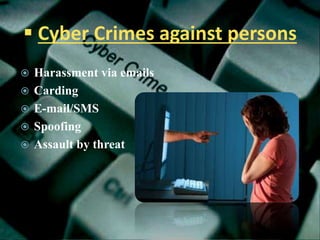
 Cyber Crimes against persons
 Harassment via emails
 Carding
 E-mail/SMS
 Spoofing
 Assault by threat
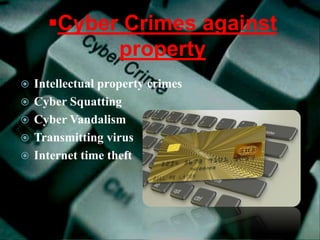
Cyber Crimes against
property
 Intellectual property crimes
 Cyber Squatting
 Cyber Vandalism
 Transmitting virus
 Internet time theft
Cyber Crimes against
Government
 Terrorism
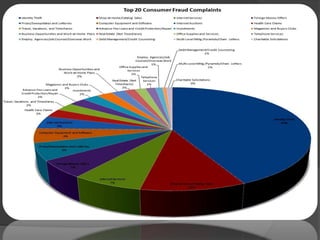
 Fraud
 Cyber Warfare
TYPES OF CYBER CRIME
Hacking
Child Pornography
Denial of Service Attack
Virus Dissemination
Computer Vandalism
Cyber Terrorism
Software Privacy
oHacking
Hacking in simple terms means an illegal
intrusion into a computer system and/or
network.
Hacking may refer to:
 Computer hacking
 Phone hacking
 Roof and Tunnel hacking, etc
oChild Pornography
 The internet is being highly used by its
abusers to reach and abuse children
sexually, worldwide.
 Laws regarding child
pornography generally include sexual
images involving prepubescents,
pubescent or post-pubescent minors and
computer-generated images that appear
to involve them.
oDenial of Service Attack
 Act by the criminal, who floods the
bandwidth of the victims network or fills his
e-mail box with spam mail depriving him of
the services he is entitled to access or provide.
 Short for denial-of-service attack, a type
of attack on a network that is designed to
bring the network to its knees by flooding it
with useless traffic. Many DoS attacks, such
as the Ping of Death and Tear drop attacks,
exploit limitations in the TCP/IP protocols.
oVirus Dissemination
 Malicious software that attaches itself
to other software. (viruses, worms,
Trojan, horse, e-mail bombing etc.)
 There are estimated 30,000 computer
viruses in existence.
Over 300 new ones are created each
month
First virus was created to show
loopholes in software.
oComputer Vandalism
 Damaging or destroying data rather
than stealing or misusing them is
called cyber vandalism.
 On the Internet, includes acts such as a
cracker’s replacing the original Web
page with profanity or some racist
oCyber Terrorism
 Use of internet based attacks in terrorist
activities. These terrorists are using 512-bit
encryption, which is impossible to decrypt.
 Cyber terrorism can be also defined as the
intentional use of computer, networks, and
public internet to cause destruction and
harm for personal objectives.
 Objectives may be political or ideological
since this can be seen as a form of terrorism.
oSoftware Privacy
 Theft of software through the illegal copying
of genuine programs.
 Distribution of products intended to pass for
the original.
 The majority of software today is purchased
as a one-site license,
meaning that only one
computer may have that
software installed on it at
one time.
CYBER CRIMINALS
Cyber criminal is an a individual who commits cyber
crime where heshe makes use of the computer either
as a tool or as a target or as a both.
Cybercriminals use computers in three broad ways:
 Select computer as their target: These criminals
attack other people's computers to perform malicious
activities, such as spreading viruses, data theft,
identity theft, etc.
 Uses computer as their weapon: They use the
computer to carry out "conventional crime", such as
spam, fraud, illegal gambling, etc.
 Uses computer as their accessory: They use the
computer to save stolen or illegal data.
TYPES OF CYBER
CRIMINALS
 Script Kiddies
 Scammers
 Hacker groups
 Phishers
 Insiders
 Cyber terrorists
CYBER SECURITY
 Cyber security focuses on protecting computers,
networks, programs and data from unintended or
unauthorized access, change or destruction.
 Computer security, also known as cyber security or
IT security, is the protection of information
systems from theft or damage to the hardware, the
software, and to the information on them, as well
as from disruption or misdirection of the services
they provide.
NEED OF CYBER
SECURITY
 Cyber security is necessary since it helps in
securing data from threats such as data theft or
misuse, also safeguards your system from
viruses.
 Hacking, cracking and other forms of cyber
mischief have reached a level of sophistication
equalling (and in many cases surpassing) the
capability of most organizations to defend
against.
ADVANTAGES OF CYBER
SECURITY
 Protects system against viruses, worms,
spyware and other unwanted
programs.
 Protection against data from theft.
 Protects the computer from being
hacked.
 Minimizes computer freezing and
crashes.
 Gives privacy to users
PREVENTION TIPS
 Use strong passwords
 Install the latest OS updates
 Secure your wireless network
 Secure your computer by activating
firewall and using anti-virus software's
 Maintain backups
 Check security settings
CYBER
LAW
 Cyber law is an attempt to integrate the
challenges presented by human activity
on the Internet with legacy system of laws
applicable to the physical world.
IT ACT PROVISIONS
 E-mail would now be a valid and legal form of
communication in our country that can be duly
produced and approved in a court of law.
 Companies shall now be able to carry out electronic
commerce using the legal infrastructure provided
by the Act.
 Digital signatures have been given legal validity and
sanction in the Act.
CYBER LAWS AMENDMENTS
 INDIAN PENAL CODE,1860
 INDIAN EVIDENCE ACT,1872
 BANKER’S BOOK EVIDENCE
ACT,1891
 GENERAL CLAUSES ACT,1897
CONCLUSION
 Technology is destructive only in the hands of
people who do not realize that they are one and
the same process as the universe.
 Cybercrime is a major problem – and growing
 Cybercrime is about much more than hackers
 There is a natural adversarial relationship
between IT and police
 Successful prosecution of cybercrime must be a
team effort
 IT personnel must learn investigation and police
must learn technology
Cyber crime ppt

Cyber crime ppt

  • 1.
    GRACY J. JOSEPH(T.E. CMPN ENGG.)
  • 2.
    CONTENTS  INTRODUCTION  HISTORY CATEGORIES  TYPES OF CYBER CRIME  CYBER CRIMINALS  CYBER SECURITY  PREVENTION  CYBER LAW  CONCLUSION
  • 3.
    INTRODUCTION Cyber Crime isan activity done by the Computers and Internet. It is an unlawful acts wherein the computer is either a tool or a target or both.
  • 4.
    HISTORY  The firstrecorded cyber crime took place in 1820.  That is not surprising considering the fact that the abacus, which is thought to be the earliest form of a computer has been around since 3500 B.C.  The first virus was installed on an apple computer in 1982.
  • 5.
    CATEGORIES OF CYBERCRIME  Cyber Crimes against persons  Cyber Crimes against property  Cyber Crimes against government
  • 6.
     Cyber Crimesagainst persons  Harassment via emails  Carding  E-mail/SMS  Spoofing  Assault by threat
  • 7.
    Cyber Crimes against property Intellectual property crimes  Cyber Squatting  Cyber Vandalism  Transmitting virus  Internet time theft
  • 8.
    Cyber Crimes against Government Terrorism  Fraud  Cyber Warfare
  • 10.
    TYPES OF CYBERCRIME Hacking Child Pornography Denial of Service Attack Virus Dissemination Computer Vandalism Cyber Terrorism Software Privacy
  • 11.
    oHacking Hacking in simpleterms means an illegal intrusion into a computer system and/or network. Hacking may refer to:  Computer hacking  Phone hacking  Roof and Tunnel hacking, etc
  • 12.
    oChild Pornography  Theinternet is being highly used by its abusers to reach and abuse children sexually, worldwide.  Laws regarding child pornography generally include sexual images involving prepubescents, pubescent or post-pubescent minors and computer-generated images that appear to involve them.
  • 13.
    oDenial of ServiceAttack  Act by the criminal, who floods the bandwidth of the victims network or fills his e-mail box with spam mail depriving him of the services he is entitled to access or provide.  Short for denial-of-service attack, a type of attack on a network that is designed to bring the network to its knees by flooding it with useless traffic. Many DoS attacks, such as the Ping of Death and Tear drop attacks, exploit limitations in the TCP/IP protocols.
  • 14.
    oVirus Dissemination  Malicioussoftware that attaches itself to other software. (viruses, worms, Trojan, horse, e-mail bombing etc.)  There are estimated 30,000 computer viruses in existence. Over 300 new ones are created each month First virus was created to show loopholes in software.
  • 15.
    oComputer Vandalism  Damagingor destroying data rather than stealing or misusing them is called cyber vandalism.  On the Internet, includes acts such as a cracker’s replacing the original Web page with profanity or some racist
  • 16.
    oCyber Terrorism  Useof internet based attacks in terrorist activities. These terrorists are using 512-bit encryption, which is impossible to decrypt.  Cyber terrorism can be also defined as the intentional use of computer, networks, and public internet to cause destruction and harm for personal objectives.  Objectives may be political or ideological since this can be seen as a form of terrorism.
  • 17.
    oSoftware Privacy  Theftof software through the illegal copying of genuine programs.  Distribution of products intended to pass for the original.  The majority of software today is purchased as a one-site license, meaning that only one computer may have that software installed on it at one time.
  • 18.
    CYBER CRIMINALS Cyber criminalis an a individual who commits cyber crime where heshe makes use of the computer either as a tool or as a target or as a both. Cybercriminals use computers in three broad ways:  Select computer as their target: These criminals attack other people's computers to perform malicious activities, such as spreading viruses, data theft, identity theft, etc.  Uses computer as their weapon: They use the computer to carry out "conventional crime", such as spam, fraud, illegal gambling, etc.  Uses computer as their accessory: They use the computer to save stolen or illegal data.
  • 19.
    TYPES OF CYBER CRIMINALS Script Kiddies  Scammers  Hacker groups  Phishers  Insiders  Cyber terrorists
  • 20.
    CYBER SECURITY  Cybersecurity focuses on protecting computers, networks, programs and data from unintended or unauthorized access, change or destruction.  Computer security, also known as cyber security or IT security, is the protection of information systems from theft or damage to the hardware, the software, and to the information on them, as well as from disruption or misdirection of the services they provide.
  • 21.
    NEED OF CYBER SECURITY Cyber security is necessary since it helps in securing data from threats such as data theft or misuse, also safeguards your system from viruses.  Hacking, cracking and other forms of cyber mischief have reached a level of sophistication equalling (and in many cases surpassing) the capability of most organizations to defend against.
  • 22.
    ADVANTAGES OF CYBER SECURITY Protects system against viruses, worms, spyware and other unwanted programs.  Protection against data from theft.  Protects the computer from being hacked.  Minimizes computer freezing and crashes.  Gives privacy to users
  • 23.
    PREVENTION TIPS  Usestrong passwords  Install the latest OS updates  Secure your wireless network  Secure your computer by activating firewall and using anti-virus software's  Maintain backups  Check security settings
  • 24.
    CYBER LAW  Cyber lawis an attempt to integrate the challenges presented by human activity on the Internet with legacy system of laws applicable to the physical world.
  • 25.
    IT ACT PROVISIONS E-mail would now be a valid and legal form of communication in our country that can be duly produced and approved in a court of law.  Companies shall now be able to carry out electronic commerce using the legal infrastructure provided by the Act.  Digital signatures have been given legal validity and sanction in the Act.
  • 26.
    CYBER LAWS AMENDMENTS INDIAN PENAL CODE,1860  INDIAN EVIDENCE ACT,1872  BANKER’S BOOK EVIDENCE ACT,1891  GENERAL CLAUSES ACT,1897
  • 27.
    CONCLUSION  Technology isdestructive only in the hands of people who do not realize that they are one and the same process as the universe.  Cybercrime is a major problem – and growing  Cybercrime is about much more than hackers  There is a natural adversarial relationship between IT and police  Successful prosecution of cybercrime must be a team effort  IT personnel must learn investigation and police must learn technology