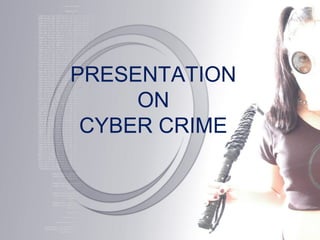
PRESENTATION
Organized Cybercrime
            ON
      CYBER CRIME
HISTORY

  “With just a few keystrokes, cybercriminals around the world
    can disrupt our economy.” - Ralph Basham, Director of the
    U.S. Secret Service at RSA 2005.


 “With just a few keystrokes, I can turn those pundits off and
                      watch porn instead.” – jrandom, NMRC,
2005
Outline
The Players

The Weapons

Precision Tactics

Examples
The Players
Former Soviet Military

Russian Mafia

Professional Hackers

Spammers

Traditional Mafia

Basic Cybercrime

Organizations
Former Soviet Military
Military industrial complex in Soviet Russia was
 even more corrupt than their USA counterparts

With the collapse of communism, many upper
 military personnel in Russia had few skills that
 paid well

  Good at money laundering
  Good at moving goods across borders
  Connections with international crime
Russian Mafia

Dolgopruadnanskaya is the second-largest
gang operating out of Russia. They are
considered ruthless and also are believed to
be behind numerous current cybercrime
activities.
Russian Mafia
Cybercrime elements are considered “divisions”

   The actual hackers themselves are kept compartmentalized


Due to protection from a corrupt Russian government,
 most “big cases” do not net the big players, e.g. Operation
 Firewall

When new hacking talent is needed, they will force
 hackers to work for them (or kill them and/or their
 families)
Professional Hackers
Paid per the job, usually flat rates

State-side hackers can earn up to $200K a year

The work is usually writing tools for others to use,
 developing/finding new exploits, and coding up
 malware
Spammers

They earn millions per year selling their direct
 mail services

They are the main employer of professional
 hackers
Traditional Mafia
They are currently leaving most of the “work” to
 others
Online ventures are sticking close to such things
 as pr0n, online gambling, etc
They are taking advantage of technology, using
 computers heavily, and using reliable encryption
Basic Cybercrime Organizations
Fluid and change members frequently


Although the most troublesome, they are
 considered the bottom feeders

  Think criminal script kiddies
  This is usually who the Feds get, not the big guys
The Weapons
Botnets

   Average size is 5000 computers, some have been as large as
    500,000 computer.

Phishing

   You guys *do* know what phishing is, right?


The usual Internet attack tools

   Metasploit, etc
Cyber crime

Cyber crime

  • 2.
  • 3.
    HISTORY  “Withjust a few keystrokes, cybercriminals around the world can disrupt our economy.” - Ralph Basham, Director of the U.S. Secret Service at RSA 2005.  “With just a few keystrokes, I can turn those pundits off and watch porn instead.” – jrandom, NMRC, 2005
  • 4.
  • 5.
    The Players Former SovietMilitary Russian Mafia Professional Hackers Spammers Traditional Mafia Basic Cybercrime Organizations
  • 6.
    Former Soviet Military Militaryindustrial complex in Soviet Russia was even more corrupt than their USA counterparts With the collapse of communism, many upper military personnel in Russia had few skills that paid well Good at money laundering Good at moving goods across borders Connections with international crime
  • 7.
    Russian Mafia Dolgopruadnanskaya isthe second-largest gang operating out of Russia. They are considered ruthless and also are believed to be behind numerous current cybercrime activities.
  • 8.
    Russian Mafia Cybercrime elementsare considered “divisions”  The actual hackers themselves are kept compartmentalized Due to protection from a corrupt Russian government, most “big cases” do not net the big players, e.g. Operation Firewall When new hacking talent is needed, they will force hackers to work for them (or kill them and/or their families)
  • 9.
    Professional Hackers Paid perthe job, usually flat rates State-side hackers can earn up to $200K a year The work is usually writing tools for others to use, developing/finding new exploits, and coding up malware
  • 10.
    Spammers They earn millionsper year selling their direct mail services They are the main employer of professional hackers
  • 11.
    Traditional Mafia They arecurrently leaving most of the “work” to others Online ventures are sticking close to such things as pr0n, online gambling, etc They are taking advantage of technology, using computers heavily, and using reliable encryption
  • 12.
    Basic Cybercrime Organizations Fluidand change members frequently Although the most troublesome, they are considered the bottom feeders Think criminal script kiddies This is usually who the Feds get, not the big guys
  • 13.
    The Weapons Botnets  Average size is 5000 computers, some have been as large as 500,000 computer. Phishing  You guys *do* know what phishing is, right? The usual Internet attack tools  Metasploit, etc