CV & Resume
What is a CV??
 Stands For “Curriculum Vitae”
 Means a brief account of your career. CVs are used to explain to
recruiters what you can do and what you have done, so a good CV
looks forwards as well as accounts for what you did in the past.
 A curriculum vitae includes a summary of your educational and
academic backgrounds as well as teaching and research
experience, publications, presentations, awards, honors, affiliations,
and other details. In Europe, the Middle East, Africa, or Asia, employers
may expect to receive a curriculum vitae.
 A CV should present your knowledge, learning, skills and
competencies in a positive, honest way.
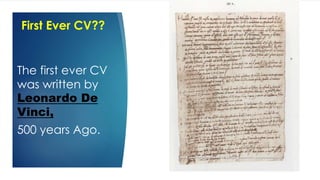
First Ever CV??
The first ever CV
was written by
Leonardo De
Vinci,
500 years Ago.
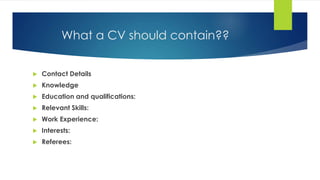
What a CV should contain??
 Contact Details
 Knowledge
 Education and qualifications:
 Relevant Skills:
 Work Experience:
 Interests:
 Referees:
Now, What's a Resume??
 A resume is a written compilation of your education, work
experience, credentials, and accomplishments that is used to
apply for jobs. It is one of the most important pieces of any job
application.
What a Resume contain??
 Resumes are usually a one-page document listing the applicant’s
work history, education background, and personal skills. An
effective resume lays out a summary of qualifications that will push
the hiring manager or employer to move forward toward an
interview. As well as details on skills, education, and work history,
resumes can also have optional sections , such as
an objective, summary statement, or career highlights.
What is the Difference b/w a CV &
Resume?
 Primary Difference is Length.
 Detailing.
 The Purpose.
 The Layout.
 Chronological order
 Usage
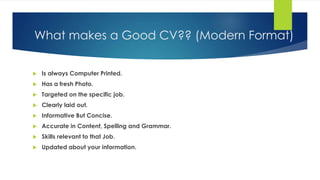
What makes a Good CV?? (Modern Format)
 Is always Computer Printed.
 Has a fresh Photo.
 Targeted on the specific job.
 Clearly laid out.
 Informative But Concise.
 Accurate in Content, Spelling and Grammar.
 Skills relevant to that Job.
 Updated about your information.
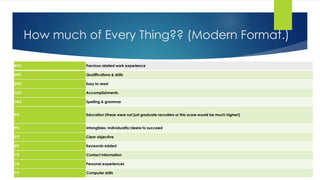
How much of Every Thing?? (Modern Format.)
45% Previous related work experience
35% Qualifications & skills
25% Easy to read
16% Accomplishments
14% Spelling & grammar
9% Education (these were not just graduate recruiters or this score would be much higher!)
9% Intangibles: individuality/desire to succeed
3% Clear objective
2% Keywords added
1% Contact information
1% Personal experiences
1% Computer skills
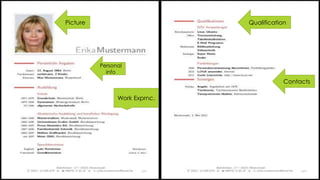
Picture Qualification
Personal
info
Contacts
Work Exprnc.
CV and Resume

CV and Resume

  • 1.
  • 2.
    What is aCV??  Stands For “Curriculum Vitae”  Means a brief account of your career. CVs are used to explain to recruiters what you can do and what you have done, so a good CV looks forwards as well as accounts for what you did in the past.  A curriculum vitae includes a summary of your educational and academic backgrounds as well as teaching and research experience, publications, presentations, awards, honors, affiliations, and other details. In Europe, the Middle East, Africa, or Asia, employers may expect to receive a curriculum vitae.  A CV should present your knowledge, learning, skills and competencies in a positive, honest way.
  • 3.
    First Ever CV?? Thefirst ever CV was written by Leonardo De Vinci, 500 years Ago.
  • 4.
    What a CVshould contain??  Contact Details  Knowledge  Education and qualifications:  Relevant Skills:  Work Experience:  Interests:  Referees:
  • 5.
    Now, What's aResume??  A resume is a written compilation of your education, work experience, credentials, and accomplishments that is used to apply for jobs. It is one of the most important pieces of any job application.
  • 6.
    What a Resumecontain??  Resumes are usually a one-page document listing the applicant’s work history, education background, and personal skills. An effective resume lays out a summary of qualifications that will push the hiring manager or employer to move forward toward an interview. As well as details on skills, education, and work history, resumes can also have optional sections , such as an objective, summary statement, or career highlights.
  • 7.
    What is theDifference b/w a CV & Resume?  Primary Difference is Length.  Detailing.  The Purpose.  The Layout.  Chronological order  Usage
  • 8.
    What makes aGood CV?? (Modern Format)  Is always Computer Printed.  Has a fresh Photo.  Targeted on the specific job.  Clearly laid out.  Informative But Concise.  Accurate in Content, Spelling and Grammar.  Skills relevant to that Job.  Updated about your information.
  • 9.
    How much ofEvery Thing?? (Modern Format.) 45% Previous related work experience 35% Qualifications & skills 25% Easy to read 16% Accomplishments 14% Spelling & grammar 9% Education (these were not just graduate recruiters or this score would be much higher!) 9% Intangibles: individuality/desire to succeed 3% Clear objective 2% Keywords added 1% Contact information 1% Personal experiences 1% Computer skills
  • 10.