EFFECTIVE CV WRITING
TIPS FOR ENTRY LEVEL
PROFESSIONALS(FRESHERS)
BY MOHAMMED RAFEEQ
(Founder jobsRmine.com)
What will you learn by end of speech?
 Importance of CV
 Ways to write CV
 How not to write a CV
 Common CV Mistakes to avoid
Some stats about CVs
 On average, each corporate job offer attracts 50+ resumes.
Of those candidates, 4 to 6 will get called for an interview, and only one will get the
job
 Average time spent looking at a CV is <30 seconds
 One in three employers rejected candidates based on something they found about
them online
 68% of employers will find you on Facebook
 76% of CVs are ignored if your email address is unprofessional like
lostfan9@gmail.com, ineedajobnow@someemail.com
 Few spelling or grammar mistake(s) and your CV will be chucked in the bin
 35% of candidates who apply for jobs are actually qualified for the role
 68.7% of resume errors involved missing accomplishments.
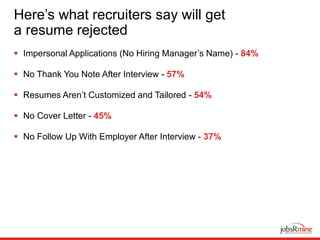
Here’s what recruiters say will get
a resume rejected
 Impersonal Applications (No Hiring Manager’s Name) - 84%
 No Thank You Note After Interview - 57%
 Resumes Aren’t Customized and Tailored - 54%
 No Cover Letter - 45%
 No Follow Up With Employer After Interview - 37%
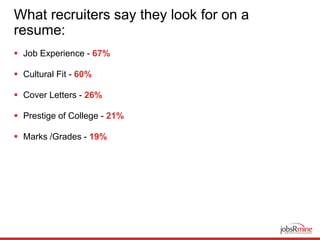
What recruiters say they look for on a
resume:
 Job Experience - 67%
 Cultural Fit - 60%
 Cover Letters - 26%
 Prestige of College - 21%
 Marks /Grades - 19%
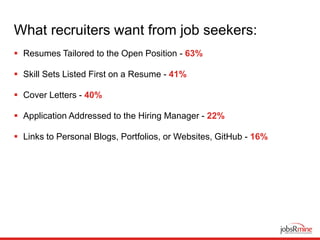
What recruiters want from job seekers:
 Resumes Tailored to the Open Position - 63%
 Skill Sets Listed First on a Resume - 41%
 Cover Letters - 40%
 Application Addressed to the Hiring Manager - 22%
 Links to Personal Blogs, Portfolios, or Websites, GitHub - 16%
What is a CV?
 What is the purpose of a CV?
 To inform the employer about your education, work experience,
skills and interests
 To ‘sell’ these qualities and to persuade the employer to invite
you to interview
First impressions count…
An employer will only read your CV for 30 seconds before deciding
whether
to interview.
They will be checking for 3 key things:
1. Are you qualified to do the job?
2. Have you got commercial experience?
3. Are you passionate & enthusiastic about the job
It’s all about you
CVs are an opportunity to show an employer why you are an ideal
candidate
for the job.
A good CV will:
 Stand out from the crowd.
 Draw attention to your relevant skills, experience, achievements and
potential.
 Create such an impression on the employer that they will not be able to
turn you down for interview.
What to do in a CV
 Use a standard font size in.
 Include recent and relevant work experience (paid or voluntary).
 Be consistent in your layout.
 List your skills and achievements and back up with evidence.
 Keep it short (approx. 2-3 pages).
 Proofread for spelling, punctuation, grammar and meaning.
What to do in a CV
 Use positive action verbs such as “organised, delivered,
accomplished, achieved”.
 Include a statement about your career aspirations and what you have
to offer the employer.
 Be honest but positive (negatives can always be turned into positives).
5 Cs for a Good CV
 Clear – well organized and logical
 Concise – relevant and necessary
 Complete – includes everything you need
 Consistent – don’t mix styles or fonts
 Current – Up-to-date
Things not to do in a CV
Do it in a rush.
 Leave gaps in employment.
 Lie.
 Include irrelevant personal details such as marital status.
 Simply write a list of duties under work experience
(remember you are selling yourself!).
 Use flashy or large font.
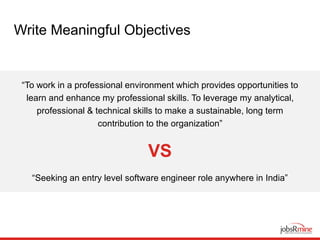
Write Meaningful Objectives
“To work in a professional environment which provides opportunities to
learn and enhance my professional skills. To leverage my analytical,
professional & technical skills to make a sustainable, long term
contribution to the organization”
VS
“Seeking an entry level software engineer role anywhere in India”
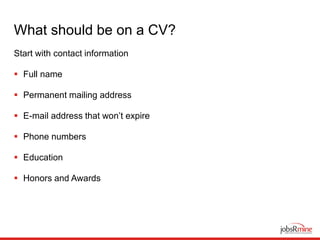
What should be on a CV?
Start with contact information
 Full name
 Permanent mailing address
 E-mail address that won’t expire
 Phone numbers
 Education
 Honors and Awards
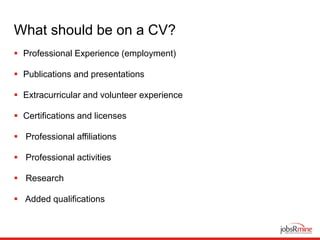
What should be on a CV?
 Professional Experience (employment)
 Publications and presentations
 Extracurricular and volunteer experience
 Certifications and licenses
 Professional affiliations
 Professional activities
 Research
 Added qualifications
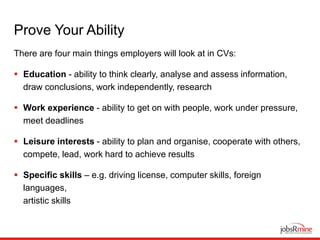
Prove Your Ability
There are four main things employers will look at in CVs:
 Education - ability to think clearly, analyse and assess information,
draw conclusions, work independently, research
 Work experience - ability to get on with people, work under pressure,
meet deadlines
 Leisure interests - ability to plan and organise, cooperate with others,
compete, lead, work hard to achieve results
 Specific skills – e.g. driving license, computer skills, foreign
languages,
artistic skills
In Education Section
Most current schooling first (include your current educational work)
 Only include diploma distinctions
 Get the school’s names correct!
 Degrees/certifications are what is important – not time spent
 List Thesis/Dissertation titles
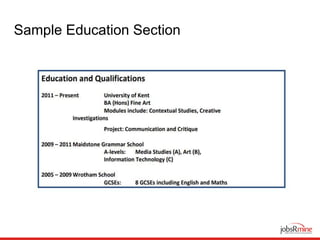
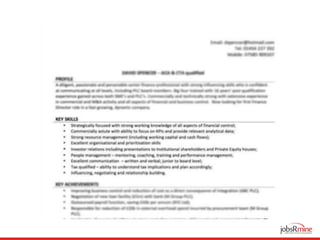
Sample Education Section
On Honors and Awards Section
 List most recent first
 Honors/Award Title – then date received
 Go back to undergrad but not before. – Only academic or professional
 Scholarships count
Tips on Professional Experience Section
 Includes anything you were paid to do or was extensive and regular
volunteer work
 Only list items relevant to academic work
 List most recent first
 If listing research, include the lab and director/principal investigator
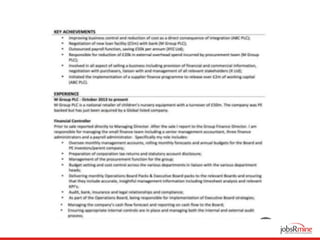
Work Experience
 There is no need to list every job you’ve ever had – detail the most
relevant
 Don’t just list your duties – sell your skills. Which skills are relevant
to the position/company you are applying to?
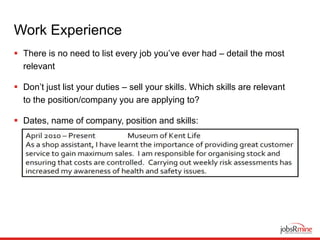
 Dates, name of company, position and skills:
Tips on Extracurricular and Volunteer
Experience Section
 List most recent first
 This tends to be a long list – careful!
 It is better to have long-term items or very relevant items instead
of EVERYTHING
 Student organizations go here
Added Qualifications Section
 Should be verifiable
 Include language fluency
 Cultural knowledge – maybe. Especially if you have had hands-on
experience
 Anything else special
 Any online certifications, trainings attend on own
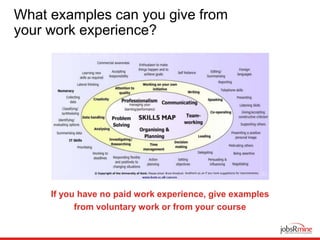
What examples can you give from
your work experience?
If you have no paid work experience, give examples
from voluntary work or from your course
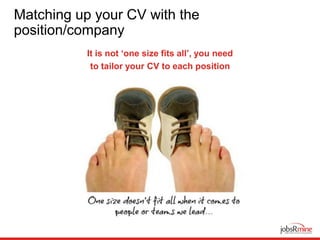
Matching up your CV with the
position/company
It is not ‘one size fits all’, you need
to tailor your CV to each position
you apply for.
Presentation of your CV
 The first visual impression of your CV is important
 For standard CVs, use plain white A4 paper
 Do not double side
 Keep your CV to two sides of paper
 Check your spelling
 Use bullet points and bold font but in moderation
Presentation of your CV
 Formatting – make sure it’s consistent
 Size 10-12 font (depending on font style)
 Clear font e.g. Arial, Calibri
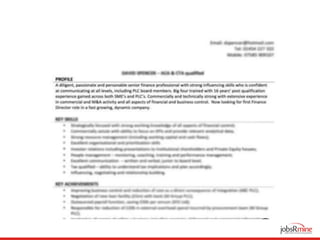
 Focus on accomplishments
 Target your CV to that job/company
 2:1, not Two One or 2,1
 Use short, concise sentences
 Consider your audience
References
 Ideally, one academic and your manager
 Ask permission from your reference and let them know what position(s)
you’ve applied for
 Use relevant references if possible
 Don’t merely say ‘references available on request’
 You can avoid providing contact details if you wish
Covering letters
 Never send a ‘lonely’ CV
 There are two types of covering letters:
 Speculative / accompanying letter
 Letter of application
Speculative/Accompanying letter
 Should be three short paragraphs
 Opening paragraph – why you are writing
 Paragraph 2 – show knowledge of employer, highlight your skills
 Paragraph 3 – Refer to your CV and availability
Letter of application
 Used when asked to ‘apply in writing’ or ‘send CV and cover letter’
 1 side of A4 – similar to a UCAS personal statement
 Opening paragraph – motivation for the job
 Followed by background skills and experience developed through
study,
work experience and paid work
 ‘Matching up’ with job description
 What you can offer the employer
ANY QUESTIONS?
mrafeeq@jobsrmine.com
Also Visit
https://blog.jobsrmine.com
https://www.jobsrmine.com/cvs/cv-and-resume-templates
https://www.jobsrmine.com/useful-job-search-infographics
https://www.jobsrmine.com/get-job-alerts-on-telegram-join-here

Effective CV Writing Tips for Entry Level Professionals - Freshers

  • 1.
    EFFECTIVE CV WRITING TIPSFOR ENTRY LEVEL PROFESSIONALS(FRESHERS) BY MOHAMMED RAFEEQ (Founder jobsRmine.com)
  • 2.
    What will youlearn by end of speech?  Importance of CV  Ways to write CV  How not to write a CV  Common CV Mistakes to avoid
  • 3.
    Some stats aboutCVs  On average, each corporate job offer attracts 50+ resumes. Of those candidates, 4 to 6 will get called for an interview, and only one will get the job  Average time spent looking at a CV is <30 seconds  One in three employers rejected candidates based on something they found about them online  68% of employers will find you on Facebook  76% of CVs are ignored if your email address is unprofessional like lostfan9@gmail.com, ineedajobnow@someemail.com  Few spelling or grammar mistake(s) and your CV will be chucked in the bin  35% of candidates who apply for jobs are actually qualified for the role  68.7% of resume errors involved missing accomplishments.
  • 4.
    Here’s what recruiterssay will get a resume rejected  Impersonal Applications (No Hiring Manager’s Name) - 84%  No Thank You Note After Interview - 57%  Resumes Aren’t Customized and Tailored - 54%  No Cover Letter - 45%  No Follow Up With Employer After Interview - 37%
  • 5.
    What recruiters saythey look for on a resume:  Job Experience - 67%  Cultural Fit - 60%  Cover Letters - 26%  Prestige of College - 21%  Marks /Grades - 19%
  • 6.
    What recruiters wantfrom job seekers:  Resumes Tailored to the Open Position - 63%  Skill Sets Listed First on a Resume - 41%  Cover Letters - 40%  Application Addressed to the Hiring Manager - 22%  Links to Personal Blogs, Portfolios, or Websites, GitHub - 16%
  • 7.
    What is aCV?  What is the purpose of a CV?  To inform the employer about your education, work experience, skills and interests  To ‘sell’ these qualities and to persuade the employer to invite you to interview
  • 9.
    First impressions count… Anemployer will only read your CV for 30 seconds before deciding whether to interview. They will be checking for 3 key things: 1. Are you qualified to do the job? 2. Have you got commercial experience? 3. Are you passionate & enthusiastic about the job
  • 10.
    It’s all aboutyou CVs are an opportunity to show an employer why you are an ideal candidate for the job. A good CV will:  Stand out from the crowd.  Draw attention to your relevant skills, experience, achievements and potential.  Create such an impression on the employer that they will not be able to turn you down for interview.
  • 11.
    What to doin a CV  Use a standard font size in.  Include recent and relevant work experience (paid or voluntary).  Be consistent in your layout.  List your skills and achievements and back up with evidence.  Keep it short (approx. 2-3 pages).  Proofread for spelling, punctuation, grammar and meaning.
  • 12.
    What to doin a CV  Use positive action verbs such as “organised, delivered, accomplished, achieved”.  Include a statement about your career aspirations and what you have to offer the employer.  Be honest but positive (negatives can always be turned into positives).
  • 13.
    5 Cs fora Good CV  Clear – well organized and logical  Concise – relevant and necessary  Complete – includes everything you need  Consistent – don’t mix styles or fonts  Current – Up-to-date
  • 14.
    Things not todo in a CV Do it in a rush.  Leave gaps in employment.  Lie.  Include irrelevant personal details such as marital status.  Simply write a list of duties under work experience (remember you are selling yourself!).  Use flashy or large font.
  • 17.
    Write Meaningful Objectives “Towork in a professional environment which provides opportunities to learn and enhance my professional skills. To leverage my analytical, professional & technical skills to make a sustainable, long term contribution to the organization” VS “Seeking an entry level software engineer role anywhere in India”
  • 18.
    What should beon a CV? Start with contact information  Full name  Permanent mailing address  E-mail address that won’t expire  Phone numbers  Education  Honors and Awards
  • 19.
    What should beon a CV?  Professional Experience (employment)  Publications and presentations  Extracurricular and volunteer experience  Certifications and licenses  Professional affiliations  Professional activities  Research  Added qualifications
  • 20.
    Prove Your Ability Thereare four main things employers will look at in CVs:  Education - ability to think clearly, analyse and assess information, draw conclusions, work independently, research  Work experience - ability to get on with people, work under pressure, meet deadlines  Leisure interests - ability to plan and organise, cooperate with others, compete, lead, work hard to achieve results  Specific skills – e.g. driving license, computer skills, foreign languages, artistic skills
  • 21.
    In Education Section Mostcurrent schooling first (include your current educational work)  Only include diploma distinctions  Get the school’s names correct!  Degrees/certifications are what is important – not time spent  List Thesis/Dissertation titles
  • 22.
  • 23.
    On Honors andAwards Section  List most recent first  Honors/Award Title – then date received  Go back to undergrad but not before. – Only academic or professional  Scholarships count
  • 24.
    Tips on ProfessionalExperience Section  Includes anything you were paid to do or was extensive and regular volunteer work  Only list items relevant to academic work  List most recent first  If listing research, include the lab and director/principal investigator
  • 25.
    Work Experience  Thereis no need to list every job you’ve ever had – detail the most relevant  Don’t just list your duties – sell your skills. Which skills are relevant to the position/company you are applying to?  Dates, name of company, position and skills:
  • 26.
    Tips on Extracurricularand Volunteer Experience Section  List most recent first  This tends to be a long list – careful!  It is better to have long-term items or very relevant items instead of EVERYTHING  Student organizations go here
  • 27.
    Added Qualifications Section Should be verifiable  Include language fluency  Cultural knowledge – maybe. Especially if you have had hands-on experience  Anything else special  Any online certifications, trainings attend on own
  • 28.
    What examples canyou give from your work experience? If you have no paid work experience, give examples from voluntary work or from your course
  • 29.
    Matching up yourCV with the position/company It is not ‘one size fits all’, you need to tailor your CV to each position you apply for.
  • 30.
    Presentation of yourCV  The first visual impression of your CV is important  For standard CVs, use plain white A4 paper  Do not double side  Keep your CV to two sides of paper  Check your spelling  Use bullet points and bold font but in moderation
  • 31.
    Presentation of yourCV  Formatting – make sure it’s consistent  Size 10-12 font (depending on font style)  Clear font e.g. Arial, Calibri  Focus on accomplishments  Target your CV to that job/company  2:1, not Two One or 2,1  Use short, concise sentences  Consider your audience
  • 32.
    References  Ideally, oneacademic and your manager  Ask permission from your reference and let them know what position(s) you’ve applied for  Use relevant references if possible  Don’t merely say ‘references available on request’  You can avoid providing contact details if you wish
  • 33.
    Covering letters  Neversend a ‘lonely’ CV  There are two types of covering letters:  Speculative / accompanying letter  Letter of application
  • 34.
    Speculative/Accompanying letter  Shouldbe three short paragraphs  Opening paragraph – why you are writing  Paragraph 2 – show knowledge of employer, highlight your skills  Paragraph 3 – Refer to your CV and availability
  • 35.
    Letter of application Used when asked to ‘apply in writing’ or ‘send CV and cover letter’  1 side of A4 – similar to a UCAS personal statement  Opening paragraph – motivation for the job  Followed by background skills and experience developed through study, work experience and paid work  ‘Matching up’ with job description  What you can offer the employer
  • 45.