
UNE Partnerships Pty Ltd - The Education and Training Company of the University of New England
Customer Service- does it
have a place in dental practice
Why do they come and Will they
keep coming?
Mark Stallwood
Academic Director UNE Partnerships
Practice Management Program
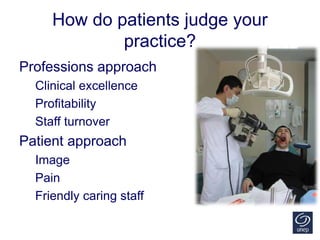
How do patients judge your
practice?
Professions approach
Clinical excellence
Profitability
Staff turnover
Patient approach
Image
Pain
Friendly caring staff
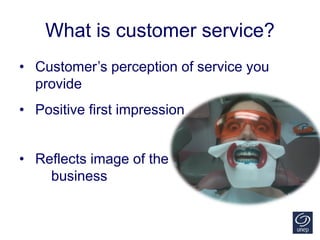
What is customer service?
• Customer’s perception of service you
provide
• Positive first impression
• Reflects image of the
business
Factors That Make Up Customer
Service
Reliability
Responsiveness
Competence
Access
Courtesy
Communication
Credibility
Security
Understanding
Tangibles
Focus
Quality
Patient Needs
Common needs
• skilled and competent service from clinical
staff
• a caring and empathetic approach by all staff
• confidentiality of information
• a focus on the dental needs of the patient
• access to the professional staff of their
choice at a convenient time and place.
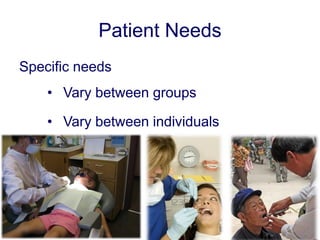
Patient Needs
Specific needs
• Vary between groups
• Vary between individuals
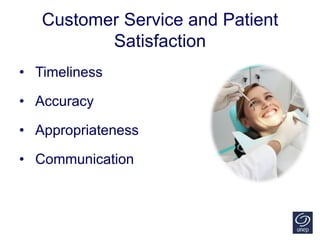
Customer Service and Patient
Satisfaction
• Timeliness
• Accuracy
• Appropriateness
• Communication
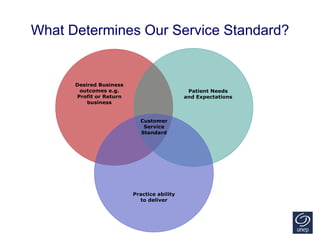
Setting a Service standard
Minimum standard to keep patients coming
to the practice
• All staff need clear guidelines as to how to
treat patients
• Must be at least 1% better than what will
keep patients happy
What Determines Our Service Standard?
Customer Service Training
Programs
• Induction programs
• Ongoing Training
• Difficult Patients
Training Programs
Induction programs
• Why you think customer service is important
• Role of staff in delivering high quality service
• Impact of good customer service
• Presentation of behavioural expectations
such as the ‘house rules’ that define what
you expect.
Training Programs
Ongoing Training
• Core skills for reception area
• Email training
• Team building
• Problem solving
• Service management training
Training Programs
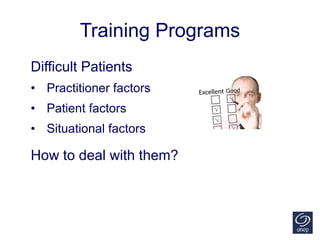
Difficult Patients
• Practitioner factors
• Patient factors
• Situational factors
How to deal with them?
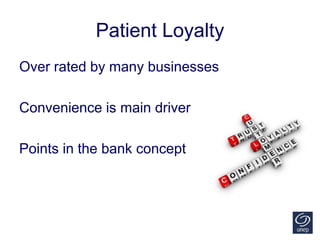
Patient Loyalty
Over rated by many businesses
Convenience is main driver
Points in the bank concept
Misconceptions about loyalty
• Satisfied patients are loyal
• Costs too much to get loyal patients
• Best to focus on the bottom of the scale
and improve their loyalty
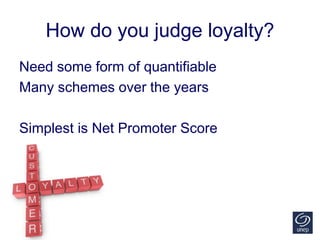
How do you judge loyalty?
Need some form of quantifiable
Many schemes over the years
Simplest is Net Promoter Score
Net Promoter Score
How likely are they to refer a friend or
colleague to this practice?
• Score 1 – 10
• Problem 1-6
• Work on 7-8
• Advocates 9-10
In Summary
• High levels of patient satisfaction drive
profits in practice
• Need to understand patient needs to
deliver high levels of satisfaction
• Highly satisfied patients become loyal
• Loyal patients generate more referrals
and have a higher spend.
Mark Stallwood B.V.Sc., MBA., Dip Pract Management.
MAVBA. AFAIM. MAAPM. MAICD. MAITD
Academic Director UNE Partnerships

Customer service dental practice presentation file

  • 1.
    UNE Partnerships PtyLtd - The Education and Training Company of the University of New England Customer Service- does it have a place in dental practice Why do they come and Will they keep coming? Mark Stallwood Academic Director UNE Partnerships Practice Management Program
  • 2.
    How do patientsjudge your practice? Professions approach Clinical excellence Profitability Staff turnover Patient approach Image Pain Friendly caring staff
  • 3.
    What is customerservice? • Customer’s perception of service you provide • Positive first impression • Reflects image of the business
  • 4.
    Factors That MakeUp Customer Service Reliability Responsiveness Competence Access Courtesy Communication Credibility Security Understanding Tangibles Focus Quality
  • 5.
    Patient Needs Common needs •skilled and competent service from clinical staff • a caring and empathetic approach by all staff • confidentiality of information • a focus on the dental needs of the patient • access to the professional staff of their choice at a convenient time and place.
  • 6.
    Patient Needs Specific needs •Vary between groups • Vary between individuals
  • 7.
    Customer Service andPatient Satisfaction • Timeliness • Accuracy • Appropriateness • Communication
  • 8.
    Setting a Servicestandard Minimum standard to keep patients coming to the practice • All staff need clear guidelines as to how to treat patients • Must be at least 1% better than what will keep patients happy
  • 9.
    What Determines OurService Standard?
  • 10.
    Customer Service Training Programs •Induction programs • Ongoing Training • Difficult Patients
  • 11.
    Training Programs Induction programs •Why you think customer service is important • Role of staff in delivering high quality service • Impact of good customer service • Presentation of behavioural expectations such as the ‘house rules’ that define what you expect.
  • 12.
    Training Programs Ongoing Training •Core skills for reception area • Email training • Team building • Problem solving • Service management training
  • 13.
    Training Programs Difficult Patients •Practitioner factors • Patient factors • Situational factors How to deal with them?
  • 14.
    Patient Loyalty Over ratedby many businesses Convenience is main driver Points in the bank concept
  • 15.
    Misconceptions about loyalty •Satisfied patients are loyal • Costs too much to get loyal patients • Best to focus on the bottom of the scale and improve their loyalty
  • 16.
    How do youjudge loyalty? Need some form of quantifiable Many schemes over the years Simplest is Net Promoter Score
  • 17.
    Net Promoter Score Howlikely are they to refer a friend or colleague to this practice? • Score 1 – 10 • Problem 1-6 • Work on 7-8 • Advocates 9-10
  • 18.
    In Summary • Highlevels of patient satisfaction drive profits in practice • Need to understand patient needs to deliver high levels of satisfaction • Highly satisfied patients become loyal • Loyal patients generate more referrals and have a higher spend.
  • 19.
    Mark Stallwood B.V.Sc.,MBA., Dip Pract Management. MAVBA. AFAIM. MAAPM. MAICD. MAITD Academic Director UNE Partnerships