Customer Service Skill
SKILLS FOR CUSTOMER SERVICE
 Know about your organization
 Learn the technical parts of the job
 Communicate well
 Be consistent
 Be organized
 Know your place in the team and be a team
player
GREETING CUSTOMERS
 Be attentive, acknowledge a person as soon as they appear,
even if you’re busy
 Smile
 Establish eye contact
 Tell them your name
 Ask how you can help
 Give the customer your full attention
 Be polite and courteous
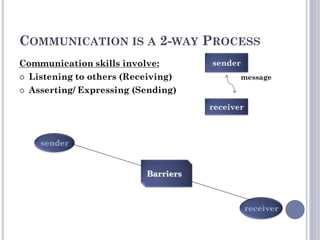
COMMUNICATION IS A 2-WAY PROCESS
Communication skills involve:
 Listening to others (Receiving) message
 Asserting/ Expressing (Sending)
sender
receiver
sender
receiver
Barriers
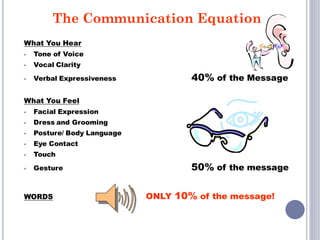
The Communication Equation
What You Hear
 Tone of Voice
 Vocal Clarity
 Verbal Expressiveness 40% of the Message
What You Feel
 Facial Expression
 Dress and Grooming
 Posture/ Body Language
 Eye Contact
 Touch
 Gesture 50% of the message
WORDS ONLY 10% of the message!
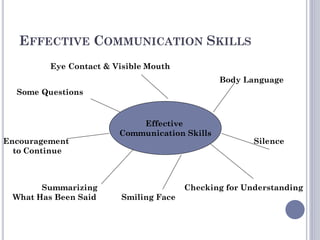
EFFECTIVE COMMUNICATION SKILLS
Eye Contact & Visible Mouth
Body Language
Some Questions
Encouragement Silence
to Continue
Summarizing Checking for Understanding
What Has Been Said Smiling Face
Effective
Communication Skills
HOW TO LISTEN CUSTOMERS
Active listening = Attending skills (being ready)
 Attend to immediate needs (if you need to
finish something before giving your full
attention)
 Being available
 Eye contact
 Attentive posture
 Concentration
QUESTIONING SKILLS
 Open Questions
 Closed Questions
 Paraphrasing
 Check for Understanding
POSITIVE FIRST IMPRESSION
 Be confident
 Knowledge - know your organisation and the services
you provide
 Confidentiality
 Follow up (don’t just say you’ll do something, do it)
 Strengthen the customer’s commitment to your
organization
PLANNING GOOD CUSTOMER SERVICE
 Recording procedures (when are your busy times)
 Reporting procedures (meeting organizational/
funding/ legislative requirements)
 Observe and report customer needs
 Be proactive in improving service
 Market your organization
 Have processes and procedures for dealing with
difficult situations BEFORE they happen and make
sure staff are trained.
TALKATIVE CUSTOMER
 Ask closed questions
 Limit the time available for them to interrupt (don’t
have long pauses)
 Provide minimal response
 Smile and be pleasant, but don’t encourage them
 Wind up – thank them for coming, walk them to the
door but don’t be rude or dismissive.
SUSPICIOUS CUSTOMER
 Establish your credibility
 Ensure you know your product or service
 They will try and catch you out so don’t guess or tell
them something you’re not sure of
 Be careful what you say
 Be polite
 Don’t take it personally, they don’t trust anyone!
ANGRY CUSTOMER
 Listen carefully without interrupting so you understand the
problem
 Empathies in a broad way
 Stay calm and remain polite
 Don’t escalate the problem
 Don’t take it personally, be defensive or blame others
 Propose an action plan and follow it
 Seek support if you are scared, if you can’t agree on a
solution or if the customer asks to see “whoever’s in charge”
THANK YOU

Customer service skill

  • 1.
  • 2.
    SKILLS FOR CUSTOMERSERVICE  Know about your organization  Learn the technical parts of the job  Communicate well  Be consistent  Be organized  Know your place in the team and be a team player
  • 3.
    GREETING CUSTOMERS  Beattentive, acknowledge a person as soon as they appear, even if you’re busy  Smile  Establish eye contact  Tell them your name  Ask how you can help  Give the customer your full attention  Be polite and courteous
  • 4.
    COMMUNICATION IS A2-WAY PROCESS Communication skills involve:  Listening to others (Receiving) message  Asserting/ Expressing (Sending) sender receiver sender receiver Barriers
  • 5.
    The Communication Equation WhatYou Hear  Tone of Voice  Vocal Clarity  Verbal Expressiveness 40% of the Message What You Feel  Facial Expression  Dress and Grooming  Posture/ Body Language  Eye Contact  Touch  Gesture 50% of the message WORDS ONLY 10% of the message!
  • 6.
    EFFECTIVE COMMUNICATION SKILLS EyeContact & Visible Mouth Body Language Some Questions Encouragement Silence to Continue Summarizing Checking for Understanding What Has Been Said Smiling Face Effective Communication Skills
  • 7.
    HOW TO LISTENCUSTOMERS Active listening = Attending skills (being ready)  Attend to immediate needs (if you need to finish something before giving your full attention)  Being available  Eye contact  Attentive posture  Concentration
  • 8.
    QUESTIONING SKILLS  OpenQuestions  Closed Questions  Paraphrasing  Check for Understanding
  • 9.
    POSITIVE FIRST IMPRESSION Be confident  Knowledge - know your organisation and the services you provide  Confidentiality  Follow up (don’t just say you’ll do something, do it)  Strengthen the customer’s commitment to your organization
  • 10.
    PLANNING GOOD CUSTOMERSERVICE  Recording procedures (when are your busy times)  Reporting procedures (meeting organizational/ funding/ legislative requirements)  Observe and report customer needs  Be proactive in improving service  Market your organization  Have processes and procedures for dealing with difficult situations BEFORE they happen and make sure staff are trained.
  • 11.
    TALKATIVE CUSTOMER  Askclosed questions  Limit the time available for them to interrupt (don’t have long pauses)  Provide minimal response  Smile and be pleasant, but don’t encourage them  Wind up – thank them for coming, walk them to the door but don’t be rude or dismissive.
  • 12.
    SUSPICIOUS CUSTOMER  Establishyour credibility  Ensure you know your product or service  They will try and catch you out so don’t guess or tell them something you’re not sure of  Be careful what you say  Be polite  Don’t take it personally, they don’t trust anyone!
  • 13.
    ANGRY CUSTOMER  Listencarefully without interrupting so you understand the problem  Empathies in a broad way  Stay calm and remain polite  Don’t escalate the problem  Don’t take it personally, be defensive or blame others  Propose an action plan and follow it  Seek support if you are scared, if you can’t agree on a solution or if the customer asks to see “whoever’s in charge”
  • 14.