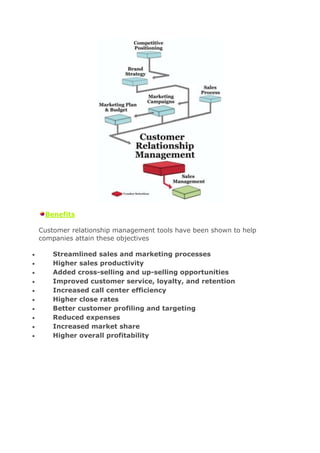
Customer Relationship Management - Overview


Customer Relationship Management (CRM), also known as relationship
marketing or customer management, is an information technology
industry term for the methodologies, strategies, software, and other web-
based capabilities used to help an enterprise organize and manage
customer relationships. The goal of CRM is to aid organizations in better
understanding each customer's value to the company, while improving
the efficiency and effectiveness of communication. CRM captures,
analyzes, and distributes all relevant data from customer and prospect
interactions to everyone in the organization. This distribution of
information helps an organization better meet customer, product, and
service needs.

CRM has replaced traditional marketing techniques that focused on key
marketing mix elements, such as product, price, promotion and place. By
being too functionally-based, traditional marketing techniques neglected
the customer in the after-sales process and failed to meet customers'
desires. CRM emphasizes customer retention over customer acquisition
and is recognized as one of the most viable tools used to further a
company's success in the highly competitive business world.

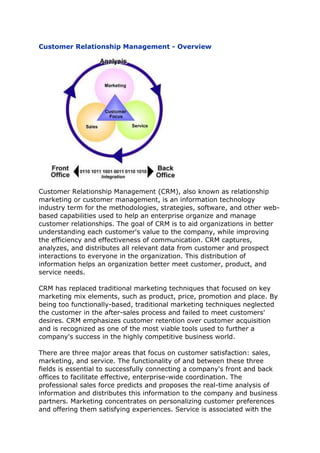
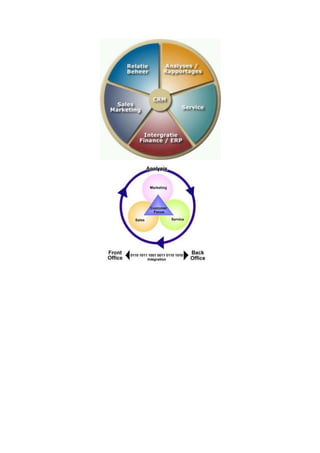
There are three major areas that focus on customer satisfaction: sales,
marketing, and service. The functionality of and between these three
fields is essential to successfully connecting a company's front and back
offices to facilitate effective, enterprise-wide coordination. The
professional sales force predicts and proposes the real-time analysis of
information and distributes this information to the company and business
partners. Marketing concentrates on personalizing customer preferences
and offering them satisfying experiences. Service is associated with the
companies' call centers and coordinates interaction between Web, e-mail,
and other communication medias. These fields are developed further with
the help of CRM automation.


  Definition

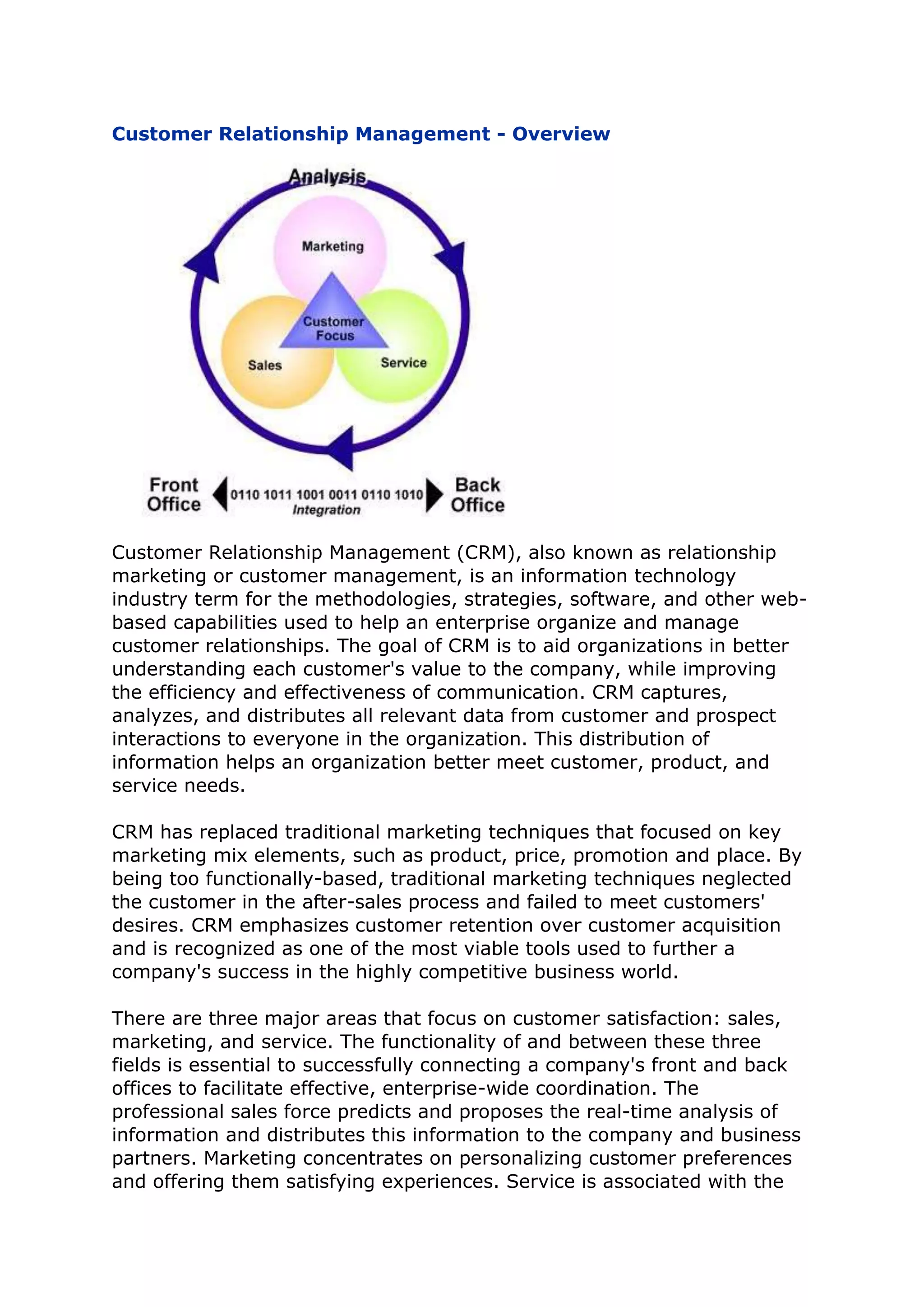
          Customer relationship management is a broadly recognized,
widely-implemented strategy for managing and nurturing a company’s
interactions with customers and sales prospects. It involves using
technology to organize, automate, and synchronize business processes—
principally sales related activities, but also those for marketing, customer
service, and technical support. The overall goals are to find, attract, and
win new customers, nurture and retain those the company already has,
entice former customers back into the fold, and reduce the costs of
marketing and customer service.
Benefits

Customer relationship management tools have been shown to help
companies attain these objectives

    Streamlined sales and marketing processes
    Higher sales productivity
    Added cross-selling and up-selling opportunities
    Improved customer service, loyalty, and retention
    Increased call center efficiency
    Higher close rates
    Better customer profiling and targeting
    Reduced expenses
    Increased market share
    Higher overall profitability

Customer relationship management2

  • 1.
    Customer Relationship Management- Overview Customer Relationship Management (CRM), also known as relationship marketing or customer management, is an information technology industry term for the methodologies, strategies, software, and other web- based capabilities used to help an enterprise organize and manage customer relationships. The goal of CRM is to aid organizations in better understanding each customer's value to the company, while improving the efficiency and effectiveness of communication. CRM captures, analyzes, and distributes all relevant data from customer and prospect interactions to everyone in the organization. This distribution of information helps an organization better meet customer, product, and service needs. CRM has replaced traditional marketing techniques that focused on key marketing mix elements, such as product, price, promotion and place. By being too functionally-based, traditional marketing techniques neglected the customer in the after-sales process and failed to meet customers' desires. CRM emphasizes customer retention over customer acquisition and is recognized as one of the most viable tools used to further a company's success in the highly competitive business world. There are three major areas that focus on customer satisfaction: sales, marketing, and service. The functionality of and between these three fields is essential to successfully connecting a company's front and back offices to facilitate effective, enterprise-wide coordination. The professional sales force predicts and proposes the real-time analysis of information and distributes this information to the company and business partners. Marketing concentrates on personalizing customer preferences and offering them satisfying experiences. Service is associated with the
  • 2.
    companies' call centersand coordinates interaction between Web, e-mail, and other communication medias. These fields are developed further with the help of CRM automation. Definition Customer relationship management is a broadly recognized, widely-implemented strategy for managing and nurturing a company’s interactions with customers and sales prospects. It involves using technology to organize, automate, and synchronize business processes— principally sales related activities, but also those for marketing, customer service, and technical support. The overall goals are to find, attract, and win new customers, nurture and retain those the company already has, entice former customers back into the fold, and reduce the costs of marketing and customer service.
  • 4.
    Benefits Customer relationship managementtools have been shown to help companies attain these objectives Streamlined sales and marketing processes Higher sales productivity Added cross-selling and up-selling opportunities Improved customer service, loyalty, and retention Increased call center efficiency Higher close rates Better customer profiling and targeting Reduced expenses Increased market share Higher overall profitability