MODELS OF CURRICULUM
DEVELOPMENT
CURRICULUM :-
Curriculum development is basically a plan for
structuring the environment,to coordinate in
an orderly manner the elements of
Time,space,materials,equipment and
personnel.
DEFINITION
CURRICULUM
DEVELOPMENT
MODEL ??
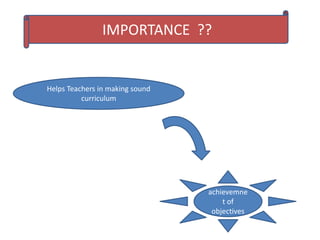
achievemne
t of
objectives
IMPORTANCE ??
Helps Teachers in making sound
curriculum
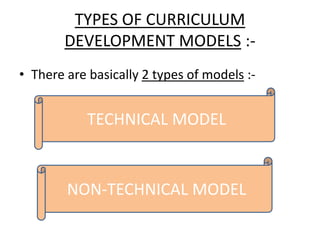
TYPES OF CURRICULUM
DEVELOPMENT MODELS :-
• There are basically 2 types of models :-
TECHNICAL MODEL
NON-TECHNICAL MODEL
TECHNICAL|SCIENTIFIC MODEL:-
 this model states that, the educator has a
belief in subject matter design.
 helps to understand the curriculum in a
open and acceptable
view.
 Prime objective is education of an individual.
 Helps in providing plan in the mind.
 If inbuilt, optimal student
learning can be achieved.
Types of technical models:-
1.a) Tyler’s model.
1.b) Hilda's Taba’s model.
1.c) Saylor’s and Alexander model.
1.d) Good lad’s model.
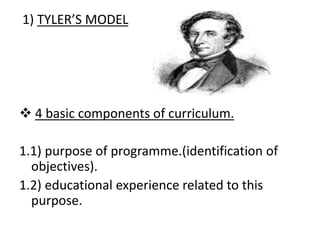
1) TYLER’S MODEL
 4 basic components of curriculum.
1.1) purpose of programme.(identification of
objectives).
1.2) educational experience related to this
purpose.
1.3) organization of these experiences.
1.4) evaluation in terms of attainment of these
purposes.
3 sources
 Society
 Subject matter
 Learner
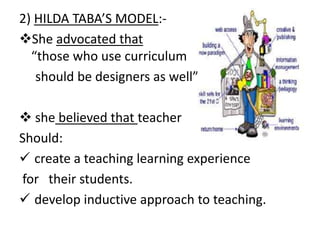
2) HILDA TABA’S MODEL:-
She advocated that
“those who use curriculum
should be designers as well”.
 she believed that teacher
Should:
 create a teaching learning experience
for their students.
 develop inductive approach to teaching.
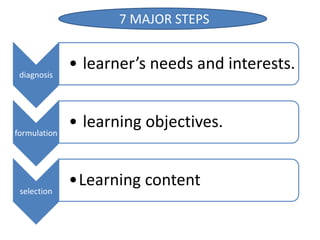
diagnosis
• learner’s needs and interests.
formulation
• learning objectives.
selection
•Learning content
7 MAJOR STEPS
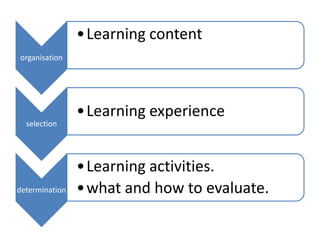
organisation
•Learning content
selection
•Learning experience
determination
•Learning activities.
•what and how to evaluate.
• 3rd) SAYLOR AND ALEXANDER MODEL :-
• Goals,objectives and domains
• Each major goal depicts a curriculum domain
• Curriculum design is decision made be planner
about a good curriculum.
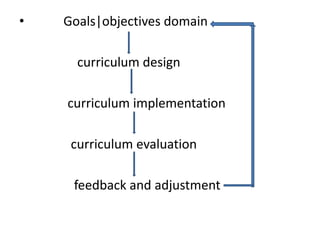
• Goals|objectives domain
curriculum design
curriculum implementation
curriculum evaluation
feedback and adjustment
 curriculum design includes content
organisation and applied learning experiences.
Implementation is decision regarding
instruction by teachers.
Evaluation means decision assessing the
curriculum as well as the teacher.
Development is a cyclic process.
• 4) Good lad’s model:-
• According to this model,educational aims are
derived from the analysis of values of existing
culture and then translated into educational
objectives in the behavioral term.
• Depending on objectives,learning
oppurtunities are provided,which are later
evaluated(feedback and adjustment) of each
student’s performance.
NON-TECHNICAL MODEL:-
a) Open classroom model.
b) Weinstein and Fantini.
c) Carl Roger’s.
NON-TECHNICAL MODEL:-
 this model,does not suggests that they are
irrational,but they focus on the learner’s self
perception of needs and preferences.
Here subject matter and society becomes
secondary.
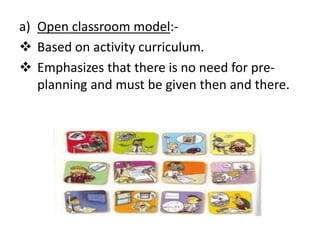
a) Open classroom model:-
 Based on activity curriculum.
 Emphasizes that there is no need for pre-
planning and must be given then and there.
a) Open classroom model:-
 Based on activity curriculum.
 Emphasizes that there is no need for pre-
planning and must be given then and there.
according toWilliam Kilpatrick ;
“learner need to be active and interested in
learning for an effective learning”.
and
“ Learning by doing”.
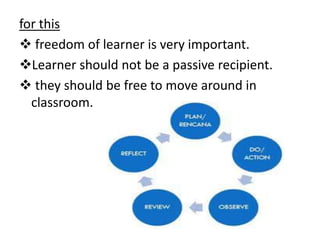
for this
 freedom of learner is very important.
Learner should not be a passive recipient.
 they should be free to move around in
classroom.
• According to kohl:-
A open classroom is a place where ;earners
can make choice and pursue what impresses
them.
Emphasized on unplanned work.
Freedom from rigid curriculum.
Freedom from teacher’s control.
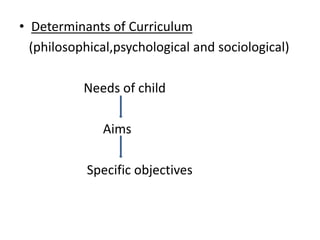
• Determinants of Curriculum
(philosophical,psychological and sociological)
Needs of child
Aims
Specific objectives
• b) Weinstein and fantini
Teachers can generate the new content and
techniques to assess the relevance of existing
curriculum, content and techniques.
.
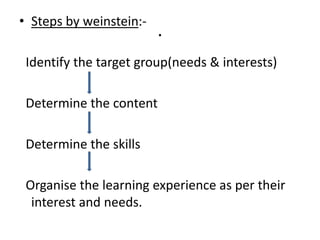
• Steps by weinstein:-
Identify the target group(needs & interests)
Determine the content
Determine the skills
Organise the learning experience as per their
interest and needs.
• C) Carl Roger’s(Humanistic theory):-
Gave model for changing human behavior.
Emphasized on experimental learning.
Based on human experiences rather than
learning experience.
• it is believed that change by changing
participation in curriculum development as it
involves:-
• more interaction.
• Can solve their problems.
• Honest in sharing their
experiences.
• Each person can adopt.
• Constructive behavior.
curriculum model.ppt

curriculum model.ppt

  • 1.
  • 2.
  • 3.
    Curriculum development isbasically a plan for structuring the environment,to coordinate in an orderly manner the elements of Time,space,materials,equipment and personnel. DEFINITION
  • 4.
  • 5.
    achievemne t of objectives IMPORTANCE ?? HelpsTeachers in making sound curriculum
  • 6.
    TYPES OF CURRICULUM DEVELOPMENTMODELS :- • There are basically 2 types of models :- TECHNICAL MODEL NON-TECHNICAL MODEL
  • 7.
    TECHNICAL|SCIENTIFIC MODEL:-  thismodel states that, the educator has a belief in subject matter design.  helps to understand the curriculum in a open and acceptable view.
  • 8.
     Prime objectiveis education of an individual.  Helps in providing plan in the mind.  If inbuilt, optimal student learning can be achieved.
  • 9.
    Types of technicalmodels:- 1.a) Tyler’s model. 1.b) Hilda's Taba’s model. 1.c) Saylor’s and Alexander model. 1.d) Good lad’s model.
  • 10.
    1) TYLER’S MODEL 4 basic components of curriculum. 1.1) purpose of programme.(identification of objectives). 1.2) educational experience related to this purpose.
  • 11.
    1.3) organization ofthese experiences. 1.4) evaluation in terms of attainment of these purposes.
  • 12.
    3 sources  Society Subject matter  Learner
  • 13.
    2) HILDA TABA’SMODEL:- She advocated that “those who use curriculum should be designers as well”.  she believed that teacher Should:  create a teaching learning experience for their students.  develop inductive approach to teaching.
  • 14.
    diagnosis • learner’s needsand interests. formulation • learning objectives. selection •Learning content 7 MAJOR STEPS
  • 15.
  • 16.
    • 3rd) SAYLORAND ALEXANDER MODEL :- • Goals,objectives and domains • Each major goal depicts a curriculum domain • Curriculum design is decision made be planner about a good curriculum.
  • 17.
    • Goals|objectives domain curriculumdesign curriculum implementation curriculum evaluation feedback and adjustment
  • 18.
     curriculum designincludes content organisation and applied learning experiences. Implementation is decision regarding instruction by teachers. Evaluation means decision assessing the curriculum as well as the teacher. Development is a cyclic process.
  • 19.
    • 4) Goodlad’s model:- • According to this model,educational aims are derived from the analysis of values of existing culture and then translated into educational objectives in the behavioral term. • Depending on objectives,learning oppurtunities are provided,which are later evaluated(feedback and adjustment) of each student’s performance.
  • 20.
    NON-TECHNICAL MODEL:- a) Openclassroom model. b) Weinstein and Fantini. c) Carl Roger’s.
  • 21.
    NON-TECHNICAL MODEL:-  thismodel,does not suggests that they are irrational,but they focus on the learner’s self perception of needs and preferences. Here subject matter and society becomes secondary. a) Open classroom model:-  Based on activity curriculum.  Emphasizes that there is no need for pre- planning and must be given then and there.
  • 22.
    a) Open classroommodel:-  Based on activity curriculum.  Emphasizes that there is no need for pre- planning and must be given then and there.
  • 23.
    according toWilliam Kilpatrick; “learner need to be active and interested in learning for an effective learning”. and “ Learning by doing”.
  • 24.
    for this  freedomof learner is very important. Learner should not be a passive recipient.  they should be free to move around in classroom.
  • 25.
    • According tokohl:- A open classroom is a place where ;earners can make choice and pursue what impresses them. Emphasized on unplanned work. Freedom from rigid curriculum. Freedom from teacher’s control.
  • 26.
    • Determinants ofCurriculum (philosophical,psychological and sociological) Needs of child Aims Specific objectives
  • 27.
    • b) Weinsteinand fantini Teachers can generate the new content and techniques to assess the relevance of existing curriculum, content and techniques.
  • 28.
    . • Steps byweinstein:- Identify the target group(needs & interests) Determine the content Determine the skills Organise the learning experience as per their interest and needs.
  • 29.
    • C) CarlRoger’s(Humanistic theory):- Gave model for changing human behavior. Emphasized on experimental learning. Based on human experiences rather than learning experience.
  • 30.
    • it isbelieved that change by changing participation in curriculum development as it involves:- • more interaction. • Can solve their problems. • Honest in sharing their experiences. • Each person can adopt. • Constructive behavior.