Culvert
Design
PREPARED BY ABEL MULUKEN
A small bridge having a total length of 6 m or less
than 6 m between the faces of abutments is
known as a culvert. A culvert is a permanent
drainage structure mainly constructed to carry
roadway or railway track over small streams or
channels. In this article, different types of culverts
are discussed
PREPARED BY ABEL MULUKEN
Culverts are classified into the following four types:
TYPES OF CULVERTS
1. Arch Culvert
2. Open or Slab Culvert
3. Pipe Culvert
3. Box Culvert
PREPARED BY ABEL MULUKEN
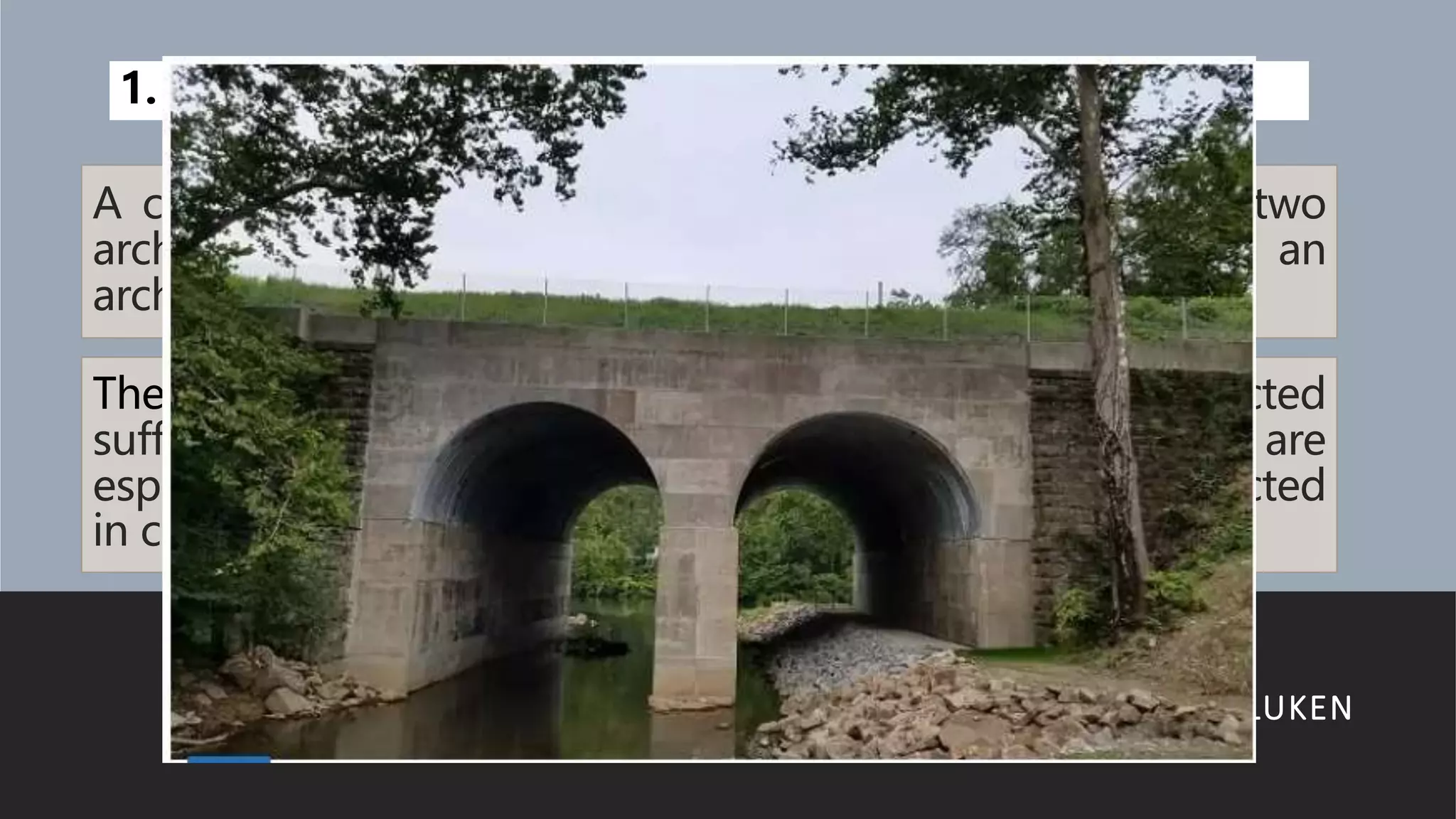
A culvert having its superstructure consisting of one or two
arches constructed of any suitable masonry is known as an
arch culvert.
1. Arch Culvert
PREPARED BY ABEL MULUKEN
The abutments and piers or these arches are constructed
sufficiently strong to take their lateral thrust Arch culverts are
especially suitable where the approaches are to be constructed
in cutting.
The culvert, having its superstructure consisting of RCC slab
which carries the bridge floor, is known as slab culvert.
2.OpenorSlabCulvert
Slab culverts are suitable where the bed of the canal or stream
is sufficiently firm. These are provided up to a maximum span of
3 m.
PREPARED BY ABEL MULUKEN
These types of culverts consist of one or more pipes placed
side by side over a concrete base below the embankment of a
roadway or railway track.
In this type of culvert, one or more pipes consisting of cast
iron, steel or RCC are held in position over a concrete base by
fixing both ends into masonry walls.
PREPARED BY ABEL MULUKEN
3.PipeCulvert
In pipe culverts, generally, more than one pipe, of
diameter not less than 30 cm is used. However, their
exact number and diameter depend upon the
discharge and height of the bank.
As far as possible the gradient of the pipe should
not be less than 1 in 1000. Pipe culverts are suitable
where the flow of water in the stream is very small.
PREPARED BY ABEL MULUKEN
Cont
…
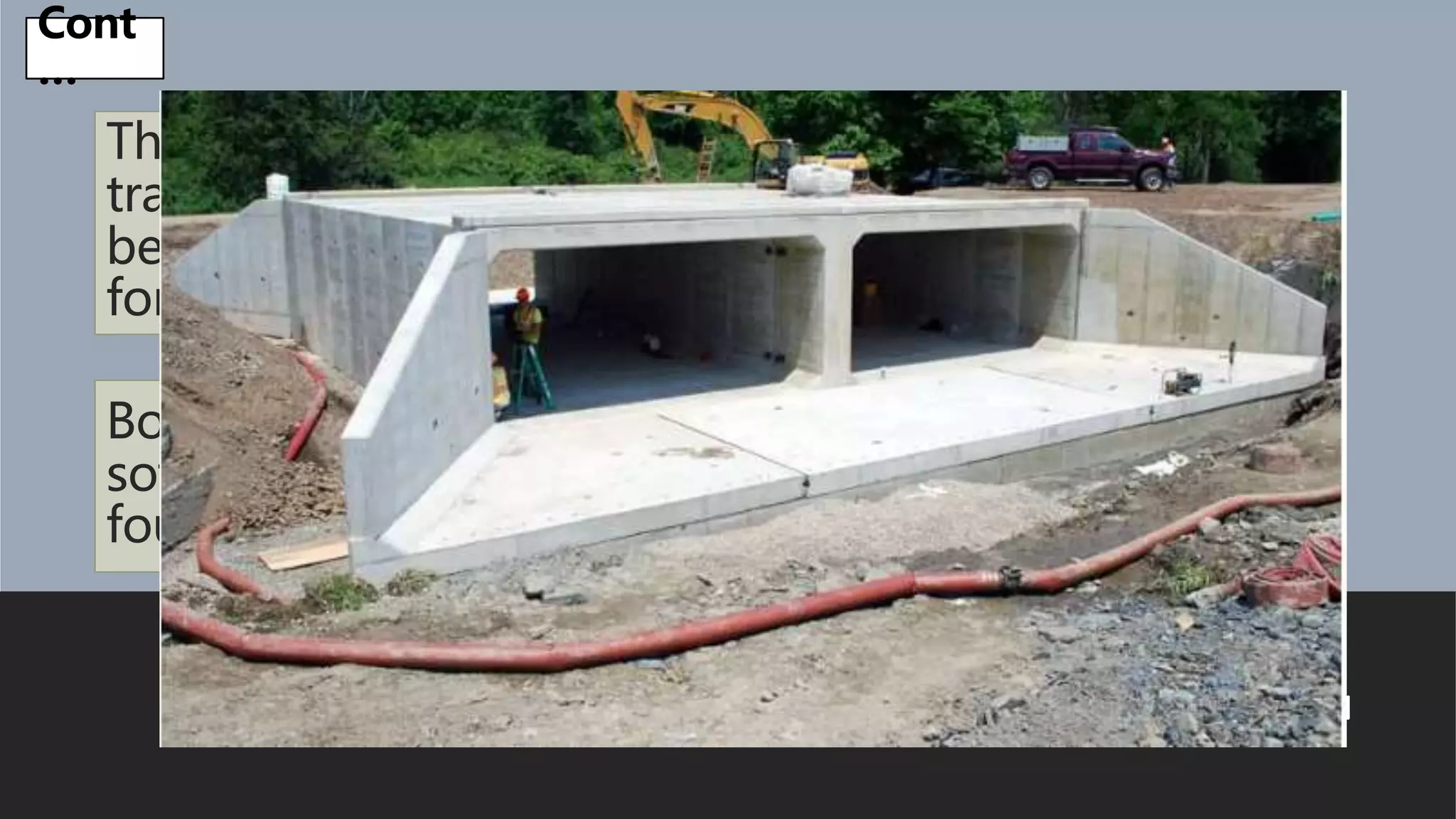
A culvert consisting of one or more numbers of rectangular or
square openings, having their floor and top slabs constructed
monolithically with abutments and pier, is known as box
culvert.
Box culvert is usually constructed of precast RCC slabs. Small
span box culverts may be constructed of stone slabs,
supported on masonry abutments, with brick or stone
flooring.
PREPARED BY ABEL MULUKEN
3.BoxCulvert
These culverts provide the least interference to
traffic during construction. This type of culvert can
be conventionally used for a single span of 3 m or
for double span of 6 m.
Box culverts are mainly constructed where the soil is
soft and the load has to be distributed over a wider
foundation area.
PREPARED BY ABEL MULUKEN
Cont
…
Culverts Requirements
PREPARED BY ABEL MULUKEN
Culverts are Structures designed to allow the flow of water under
roads, railways, or other obstructions. They play a crucial role in
managing drainage and preventing flooding. When designing a
culvert, several factors need to be considered to ensure its
effectiveness and structural integrity. Here are some key points to
consider in culvert design:
PREPARED BY ABEL MULUKEN
1.Hydraulic Considerations: The hydraulic design of a culvert involves
determining the expected flow rates, water levels, and velocities. This
information helps determine the appropriate size and shape of the culvert to
accommodate the expected water flow. Hydraulic calculations consider
factors such as the design storm event, drainage area, and allowable
headwater (maximum water height upstream of the culvert).
2. Site Conditions: The site conditions impact the culvert design. Factors to
consider include the slope of the terrain, soil characteristics, groundwater
levels, and presence of any nearby structures or utilities that may affect the
culvert's installation or performance.
PREPARED BY ABEL MULUKEN
3. Culvert Type and Shape: Culverts come in various shapes and
materials, including circular, box, elliptical, or arch-shaped. The selection of
the culvert type depends on factors such as the flow characteristics, site
constraints, and anticipated loads. The choice of material (e.g., concrete,
corrugated metal, or plastic) depends on factors like durability, cost, and the
environment in which the culvert will be installed.
4. Size and Capacity: The size of the culvert should be determined based
on the anticipated flow rates and the hydraulic calculations. It is important to
ensure that the culvert can handle the expected volume of water without
causing excessive headwater or flow velocities. Proper sizing ensures
efficient drainage and minimizes the risk of flooding or damage to the culvert.
PREPARED BY ABEL MULUKEN
5.Installation and Construction: The design should consider the
practical aspects of culvert installation and construction. This
includes factors such as the required excavation, backfill materials,
and the need for any protective measures to prevent erosion or
scouring around the culvert.
6. Structural Integrity: The culvert design should be structurally
sound to withstand the anticipated loads, including the weight of
traffic, soil pressures, and any additional loads such as live loads or
water pressure. Structural design considerations include the
determination of appropriate wall thickness, reinforcement, and
anchoring methods.
PREPARED BY ABEL MULUKEN
7. Environmental Considerations: Culvert design should also
take into account any environmental considerations, such as the
preservation of aquatic habitats or the need for fish passage. In
some cases, additional features like baffles or fish ladders may be
incorporated into the design to facilitate the movement of aquatic
species.
Culvert Design.pptx
Culvert Design.pptx

Culvert Design.pptx

  • 1.
  • 2.
    A small bridgehaving a total length of 6 m or less than 6 m between the faces of abutments is known as a culvert. A culvert is a permanent drainage structure mainly constructed to carry roadway or railway track over small streams or channels. In this article, different types of culverts are discussed PREPARED BY ABEL MULUKEN
  • 3.
    Culverts are classifiedinto the following four types: TYPES OF CULVERTS 1. Arch Culvert 2. Open or Slab Culvert 3. Pipe Culvert 3. Box Culvert PREPARED BY ABEL MULUKEN
  • 4.
    A culvert havingits superstructure consisting of one or two arches constructed of any suitable masonry is known as an arch culvert. 1. Arch Culvert PREPARED BY ABEL MULUKEN The abutments and piers or these arches are constructed sufficiently strong to take their lateral thrust Arch culverts are especially suitable where the approaches are to be constructed in cutting.
  • 5.
    The culvert, havingits superstructure consisting of RCC slab which carries the bridge floor, is known as slab culvert. 2.OpenorSlabCulvert Slab culverts are suitable where the bed of the canal or stream is sufficiently firm. These are provided up to a maximum span of 3 m. PREPARED BY ABEL MULUKEN
  • 6.
    These types ofculverts consist of one or more pipes placed side by side over a concrete base below the embankment of a roadway or railway track. In this type of culvert, one or more pipes consisting of cast iron, steel or RCC are held in position over a concrete base by fixing both ends into masonry walls. PREPARED BY ABEL MULUKEN 3.PipeCulvert
  • 7.
    In pipe culverts,generally, more than one pipe, of diameter not less than 30 cm is used. However, their exact number and diameter depend upon the discharge and height of the bank. As far as possible the gradient of the pipe should not be less than 1 in 1000. Pipe culverts are suitable where the flow of water in the stream is very small. PREPARED BY ABEL MULUKEN Cont …
  • 8.
    A culvert consistingof one or more numbers of rectangular or square openings, having their floor and top slabs constructed monolithically with abutments and pier, is known as box culvert. Box culvert is usually constructed of precast RCC slabs. Small span box culverts may be constructed of stone slabs, supported on masonry abutments, with brick or stone flooring. PREPARED BY ABEL MULUKEN 3.BoxCulvert
  • 9.
    These culverts providethe least interference to traffic during construction. This type of culvert can be conventionally used for a single span of 3 m or for double span of 6 m. Box culverts are mainly constructed where the soil is soft and the load has to be distributed over a wider foundation area. PREPARED BY ABEL MULUKEN Cont …
  • 10.
    Culverts Requirements PREPARED BYABEL MULUKEN Culverts are Structures designed to allow the flow of water under roads, railways, or other obstructions. They play a crucial role in managing drainage and preventing flooding. When designing a culvert, several factors need to be considered to ensure its effectiveness and structural integrity. Here are some key points to consider in culvert design:
  • 11.
    PREPARED BY ABELMULUKEN 1.Hydraulic Considerations: The hydraulic design of a culvert involves determining the expected flow rates, water levels, and velocities. This information helps determine the appropriate size and shape of the culvert to accommodate the expected water flow. Hydraulic calculations consider factors such as the design storm event, drainage area, and allowable headwater (maximum water height upstream of the culvert). 2. Site Conditions: The site conditions impact the culvert design. Factors to consider include the slope of the terrain, soil characteristics, groundwater levels, and presence of any nearby structures or utilities that may affect the culvert's installation or performance.
  • 12.
    PREPARED BY ABELMULUKEN 3. Culvert Type and Shape: Culverts come in various shapes and materials, including circular, box, elliptical, or arch-shaped. The selection of the culvert type depends on factors such as the flow characteristics, site constraints, and anticipated loads. The choice of material (e.g., concrete, corrugated metal, or plastic) depends on factors like durability, cost, and the environment in which the culvert will be installed. 4. Size and Capacity: The size of the culvert should be determined based on the anticipated flow rates and the hydraulic calculations. It is important to ensure that the culvert can handle the expected volume of water without causing excessive headwater or flow velocities. Proper sizing ensures efficient drainage and minimizes the risk of flooding or damage to the culvert.
  • 13.
    PREPARED BY ABELMULUKEN 5.Installation and Construction: The design should consider the practical aspects of culvert installation and construction. This includes factors such as the required excavation, backfill materials, and the need for any protective measures to prevent erosion or scouring around the culvert. 6. Structural Integrity: The culvert design should be structurally sound to withstand the anticipated loads, including the weight of traffic, soil pressures, and any additional loads such as live loads or water pressure. Structural design considerations include the determination of appropriate wall thickness, reinforcement, and anchoring methods.
  • 14.
    PREPARED BY ABELMULUKEN 7. Environmental Considerations: Culvert design should also take into account any environmental considerations, such as the preservation of aquatic habitats or the need for fish passage. In some cases, additional features like baffles or fish ladders may be incorporated into the design to facilitate the movement of aquatic species.