Cultures of the Internet
The Internet in Britain 2013

Bill Dutton
Professor of Internet Studies
Oxford Internet Institute
University of Oxford and Balliol College
Presentation forSocitm Seminar at Business Design Centre, Islington,
London, Socitm 2013 Conference, 10 December 2013.
Oxford Internet Surveys
•
•
•
•
•
•
•

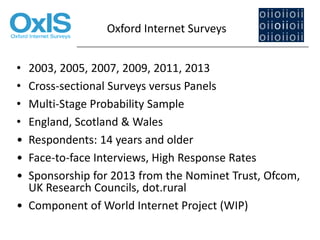
2003, 2005, 2007, 2009, 2011, 2013
Cross-sectional Surveys versus Panels
Multi-Stage Probability Sample
England, Scotland & Wales
Respondents: 14 years and older
Face-to-face Interviews, High Response Rates
Sponsorship for 2013 from the Nominet Trust, Ofcom,
UK Research Councils, dot.rural
• Component of World Internet Project (WIP)
Highlights of OxIS 2013 Report

Digital
Divides

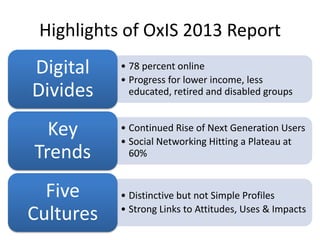
• 78 percent online
• Progress for lower income, less
educated, retired and disabled groups

Key
Trends

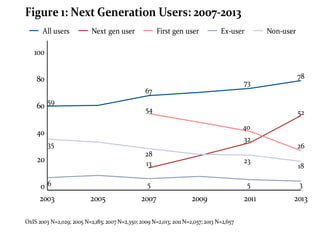
• Continued Rise of Next Generation Users
• Social Networking Hitting a Plateau at
60%

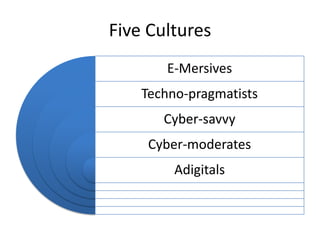
Five
Cultures

• Distinctive but not Simple Profiles
• Strong Links to Attitudes, Uses & Impacts
Figure 1: Next Generation Users: 2007-2013
All users

Next gen user

First gen user

Ex-user

Non-user

100
80

73

78

67

60

59
54

52
40

40

32

35
28
13

2005

23

5

20
06
2003

26

5

3

2011

2013

2007

2009

OxIS 2003 N=2,029; 2005 N=2,185; 2007 N=2,350; 2009 N=2,013; 2011 N=2,057; 2013 N=2,657

18
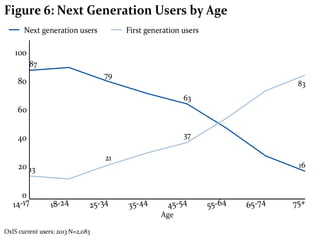
Figure 6: Next Generation Users by Age
Next generation users

First generation users

100
87
79

80

83
63

60
37

40
21

20 13
0
14-17

18-24

25-34

16

35-44

45-54
Age

OxIS current users: 2013 N=2,083

55-64

65-74

75+
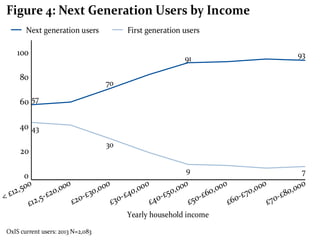
Figure 4: Next Generation Users by Income
Next generation users

First generation users

100

91

9

80

93

7

70

60 57
40 43
30

20

<£

0
00
2 ,5
1

2,5
£1

0
,00
£20

£
20£

0
,00
30

0
0
0
0
0
,00
,00
,00
,00
,00
0
0
0
0
0
-£5
-£7
-£6
-£8
-£4
£30
£40
£50
£60
£70
Yearly household income

OxIS current users: 2013 N=2,083
Social Networking Question
QC8. Now I’d like you to think about the different
things people do online. How often do you go online
for the following purposes?
[READ OUT EACH STATEMENT. CODE ONE PER ROW]

“Check or update your profile on a social network site
such as Facebook, LinkedIn or Twitter”
Several times a day, Daily, Weekly, Monthly, Less than
monthly, Never, DK
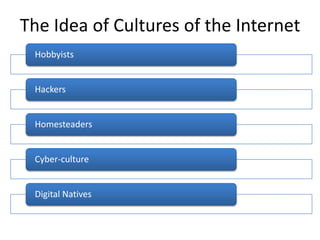
The Idea of Cultures of the Internet
Hobbyists

Hackers

Homesteaders

Cyber-culture

Digital Natives
Five Cultures
E-Mersives
Techno-pragmatists

Cyber-savvy
Cyber-moderates
Adigitals
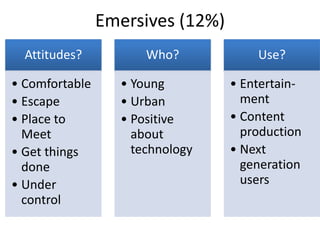
Emersives (12%)
Attitudes?
• Comfortable
• Escape
• Place to
Meet
• Get things
done
• Under
control

Who?
• Young
• Urban
• Positive
about
technology

Use?
• Entertainment
• Content
production
• Next
generation
users
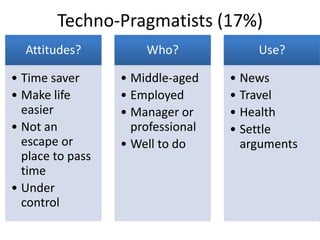
Techno-Pragmatists (17%)
Attitudes?

Who?

• Time saver
• Make life
easier
• Not an
escape or
place to pass
time
• Under
control

• Middle-aged
• Employed
• Manager or
professional
• Well to do

Use?
• News
• Travel
• Health
• Settle
arguments
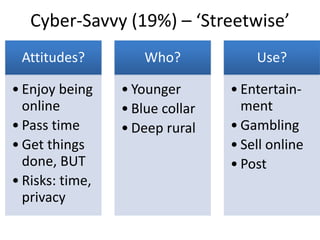
Cyber-Savvy (19%) – ‘Streetwise’
Attitudes?

Who?

• Enjoy being
online
• Pass time
• Get things
done, BUT
• Risks: time,
privacy

• Younger
• Blue collar
• Deep rural

Use?
• Entertainment
• Gambling
• Sell online
• Post
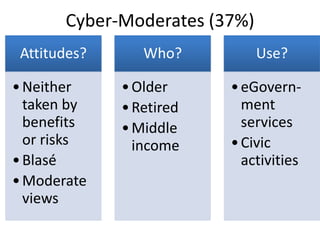
Cyber-Moderates (37%)
Attitudes?

Who?

• Neither
taken by
benefits
or risks
• Blasé
• Moderate
views

• Older
• Retired
• Middle
income

Use?
• eGovernment
services
• Civic
activities
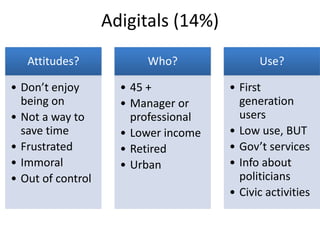
Adigitals (14%)
Attitudes?

Who?

Use?

• Don’t enjoy
being on
• Not a way to
save time
• Frustrated
• Immoral
• Out of control

• 45 +
• Manager or
professional
• Lower income
• Retired
• Urban

• First
generation
users
• Low use, BUT
• Gov’t services
• Info about
politicians
• Civic activities
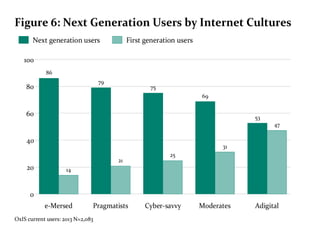
Figure 6: Next Generation Users by Internet Cultures
Next generation users

First generation users

100
86
79

80

75
69

60

53
47

40

31
21

20

25

14

0
e-Mersed

Pragmatists

OxIS current users: 2013 N=2,083

Cyber-savvy

Moderates

Adigital
Cultures of the Internet
The Internet in Britain 2013

Bill Dutton
Professor of Internet Studies
Oxford Internet Institute
University of Oxford and Balliol College
Presentation forSocitm Seminar at Business Design
Centre, Islington, London, Socitm 2013 Conference, 10 December 2013.

Cultures socitm-2013

  • 1.
    Cultures of theInternet The Internet in Britain 2013 Bill Dutton Professor of Internet Studies Oxford Internet Institute University of Oxford and Balliol College Presentation forSocitm Seminar at Business Design Centre, Islington, London, Socitm 2013 Conference, 10 December 2013.
  • 2.
    Oxford Internet Surveys • • • • • • • 2003,2005, 2007, 2009, 2011, 2013 Cross-sectional Surveys versus Panels Multi-Stage Probability Sample England, Scotland & Wales Respondents: 14 years and older Face-to-face Interviews, High Response Rates Sponsorship for 2013 from the Nominet Trust, Ofcom, UK Research Councils, dot.rural • Component of World Internet Project (WIP)
  • 3.
    Highlights of OxIS2013 Report Digital Divides • 78 percent online • Progress for lower income, less educated, retired and disabled groups Key Trends • Continued Rise of Next Generation Users • Social Networking Hitting a Plateau at 60% Five Cultures • Distinctive but not Simple Profiles • Strong Links to Attitudes, Uses & Impacts
  • 4.
    Figure 1: NextGeneration Users: 2007-2013 All users Next gen user First gen user Ex-user Non-user 100 80 73 78 67 60 59 54 52 40 40 32 35 28 13 2005 23 5 20 06 2003 26 5 3 2011 2013 2007 2009 OxIS 2003 N=2,029; 2005 N=2,185; 2007 N=2,350; 2009 N=2,013; 2011 N=2,057; 2013 N=2,657 18
  • 5.
    Figure 6: NextGeneration Users by Age Next generation users First generation users 100 87 79 80 83 63 60 37 40 21 20 13 0 14-17 18-24 25-34 16 35-44 45-54 Age OxIS current users: 2013 N=2,083 55-64 65-74 75+
  • 6.
    Figure 4: NextGeneration Users by Income Next generation users First generation users 100 91 9 80 93 7 70 60 57 40 43 30 20 <£ 0 00 2 ,5 1 2,5 £1 0 ,00 £20 £ 20£ 0 ,00 30 0 0 0 0 0 ,00 ,00 ,00 ,00 ,00 0 0 0 0 0 -£5 -£7 -£6 -£8 -£4 £30 £40 £50 £60 £70 Yearly household income OxIS current users: 2013 N=2,083
  • 8.
    Social Networking Question QC8.Now I’d like you to think about the different things people do online. How often do you go online for the following purposes? [READ OUT EACH STATEMENT. CODE ONE PER ROW] “Check or update your profile on a social network site such as Facebook, LinkedIn or Twitter” Several times a day, Daily, Weekly, Monthly, Less than monthly, Never, DK
  • 9.
    The Idea ofCultures of the Internet Hobbyists Hackers Homesteaders Cyber-culture Digital Natives
  • 10.
  • 11.
    Emersives (12%) Attitudes? • Comfortable •Escape • Place to Meet • Get things done • Under control Who? • Young • Urban • Positive about technology Use? • Entertainment • Content production • Next generation users
  • 12.
    Techno-Pragmatists (17%) Attitudes? Who? • Timesaver • Make life easier • Not an escape or place to pass time • Under control • Middle-aged • Employed • Manager or professional • Well to do Use? • News • Travel • Health • Settle arguments
  • 13.
    Cyber-Savvy (19%) –‘Streetwise’ Attitudes? Who? • Enjoy being online • Pass time • Get things done, BUT • Risks: time, privacy • Younger • Blue collar • Deep rural Use? • Entertainment • Gambling • Sell online • Post
  • 14.
    Cyber-Moderates (37%) Attitudes? Who? • Neither takenby benefits or risks • Blasé • Moderate views • Older • Retired • Middle income Use? • eGovernment services • Civic activities
  • 15.
    Adigitals (14%) Attitudes? Who? Use? • Don’tenjoy being on • Not a way to save time • Frustrated • Immoral • Out of control • 45 + • Manager or professional • Lower income • Retired • Urban • First generation users • Low use, BUT • Gov’t services • Info about politicians • Civic activities
  • 18.
    Figure 6: NextGeneration Users by Internet Cultures Next generation users First generation users 100 86 79 80 75 69 60 53 47 40 31 21 20 25 14 0 e-Mersed Pragmatists OxIS current users: 2013 N=2,083 Cyber-savvy Moderates Adigital
  • 19.
    Cultures of theInternet The Internet in Britain 2013 Bill Dutton Professor of Internet Studies Oxford Internet Institute University of Oxford and Balliol College Presentation forSocitm Seminar at Business Design Centre, Islington, London, Socitm 2013 Conference, 10 December 2013.