





CHAPTER 5: CULTURE SHOCK
&
CHAPTER 6: ADAPTATION

By: 

Teddy Fiktorius (F5221 2025)
Angela Genoveva (F5221 2028)
Postgraduate Study of English Language
Education
Teacher Training and Education Faculty
University of Tanjungpura
Pontianak
2013
?????????
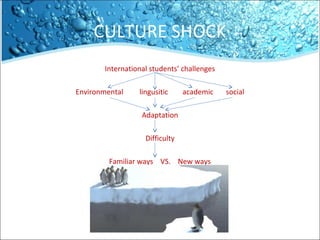
CULTURE SHOCK
International students’ challenges
Environmental

lingusitic

academic

Adaptation
Difficulty
Familiar ways VS. New ways

social
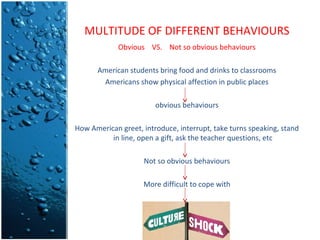
MULTITUDE OF DIFFERENT BEHAVIOURS
Obvious VS. Not so obvious behaviours
American students bring food and drinks to classrooms
Americans show physical affection in public places
obvious behaviours
How American greet, introduce, interrupt, take turns speaking, stand
in line, open a gift, ask the teacher questions, etc
Not so obvious behaviours
More difficult to cope with
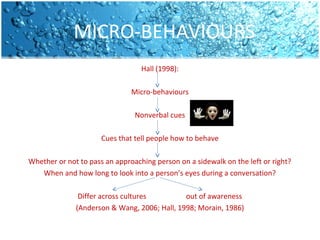
MICRO-BEHAVIOURS
Hall (1998):
Micro-behaviours
Nonverbal cues
Cues that tell people how to behave
Whether or not to pass an approaching person on a sidewalk on the left or right?
When and how long to look into a person’s eyes during a conversation?
Differ across cultures
out of awareness
(Anderson & Wang, 2006; Hall, 1998; Morain, 1986)
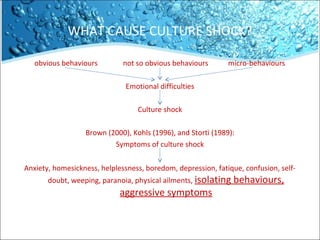
WHAT CAUSE CULTURE SHOCK?
obvious behaviours

not so obvious behaviours

micro-behaviours

Emotional difficulties
Culture shock
Brown (2000), Kohls (1996), and Storti (1989):
Symptoms of culture shock
Anxiety, homesickness, helplessness, boredom, depression, fatique, confusion, selfdoubt, weeping, paranoia, physical ailments, isolating

aggressive symptoms

behaviours,
Isolating behaviours
- Stay alone in the room
- read and study excessively
- avoid contact with Americans
- solely befriend with people from their own
homeland
AGGRESIVE SYMPTOMS
- Compulsive eating
- obsessive drinking
- exaggerated cleanliness
- hostility towards Americans
How culture shock can affect a student’s behaviour and attitude
Narrative 1: What happened to Roger?
An American student sees behavioural changes in her Malaysian boyfriend
Roger: A Malaysian fitness trainer who went to the United States to study Physical therapy
Roger’s girlfriend (the narrative writer): An American women strength trainer
who have similar interests
Frequented the movie theatre
Did aerobics
Went cycling, running, swimming, and dancing
Enjoyed listening to the ‘80s music

A beautiful life romance, huh???????
AFTER SOME TIME IN THE U.S.
…entering a stage of

…

Roger started to complain about
The snow-covered terrain
A freezing apartment
The food
Grueling semesters of classes
“What have I done? I had a good life (in Malaysia), I think I really made a

mistake”
WHAT IS NEXT???
Roger identified it as STRESS
depression related to culture shock
emotional and physical hardship of living in another country
…A happy ending narrative…
Roger finally worked through his depression and regained his ‘life’
Roger’s girlfriend now understands more about
cultural adjustment & culture shock

IS

THE CURE?????
NARRATIVE II: Stranger at My Door-A Married

Indian Student’s feeling of Isolation Sparks Her Wild
Imagination
How loneliness and isolation triggers

….

Husband: An Indian graduate student in the U.S.
Wife (the narrative write): An Indian undergraduate student in the U.S.

How it starts….
Arriving at a new, quiet home far away from the city….
A perfect place that would inspire anyone to study???
YET,…
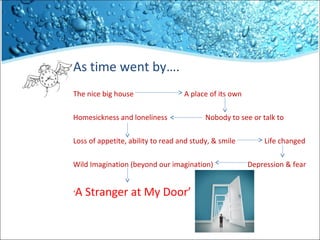
As time went by….
The nice big house

A place of its own

Homesickness and loneliness

Nobody to see or talk to

Loss of appetite, ability to read and study, & smile
Wild Imagination (beyond our imagination)
‘A

Stranger at My Door’

Life changed
Depression & fear
HOW IT ENDS….
After spending a good deal of time in the
U.S. and living in that house….
…becoming used to life there
Making a lot of friends
Being able to

AGAIN, IS

adapt to the quiet country life…

THE CURE????
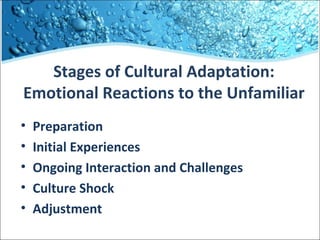
Stages of Cultural Adaptation:
Emotional Reactions to the Unfamiliar
•
•
•
•
•

Preparation
Initial Experiences
Ongoing Interaction and Challenges
Culture Shock
Adjustment
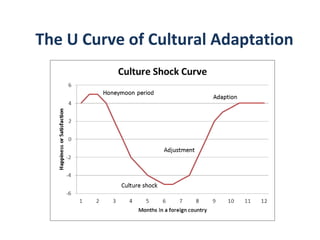
The U Curve of Cultural Adaptation
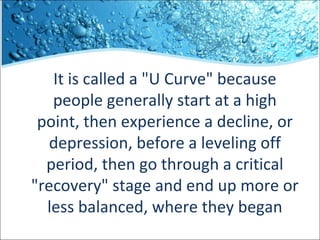
It is called a "U Curve" because
people generally start at a high
point, then experience a decline, or
depression, before a leveling off
period, then go through a critical
"recovery" stage and end up more or
less balanced, where they began
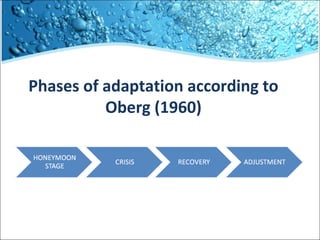
Phases of adaptation according to
Oberg (1960)
Honeymoon Stage

(Happiness and fascination)
•
•
•
•

Have high hopes and expect great things
Feel this is a very exciting time
Feel everything is new and interesting
Feel confident and that you can easily cope
with problems and stress
• Tend to focus on what is similar between the
host country and the culture and country you
come from
The Crisis

(Disappointment, confusing feelings,
frustration and irritation)
• Feel happy about the challenges you have overcome
• Feel frustrated, confused and disappointed
• Feel very positive one day & very negative the next
day
• Focus on the differences between yourself & natives
• Miss your family & feel no connection to the host
country
• Feel loneliness for your country and loved ones
• Feel guilty about leaving family members behind
Recovery

(Gradual adjustment)
• Feel more in control of your life as you gain a
better understanding of the host country
• Feel more confident in your language skills
• Gradually get involved in the community
• Have a better understanding of how to adapt
to live in the host country
• Have a better sense of what you need to do to
get what you want
Adjustment
(Acceptance)
• Feel more comfortable in the host country
• Have made some friends and be more
involved in your new community
• Understand better how things are done in
that new country
• Be studying, planning to return to school or
working at better jobs
• Generally feel content about having come to
the country
Adjustment
• Some have too many conflicts with values and
ways of behaving and cannot fully adjust
• Some do adjust enough to participate in the
culture, but they become comfortable and do
not want to go much beyond the minimum
• Other international students move into larger
community (make friends, adapt the values)
• Some even become bicultural (function in two
cultures with confidence)
Thank you

Culture shock

  • 1.
    CHAPTER 5: CULTURESHOCK & CHAPTER 6: ADAPTATION By:  Teddy Fiktorius (F5221 2025) Angela Genoveva (F5221 2028) Postgraduate Study of English Language Education Teacher Training and Education Faculty University of Tanjungpura Pontianak 2013
  • 2.
  • 3.
    CULTURE SHOCK International students’challenges Environmental lingusitic academic Adaptation Difficulty Familiar ways VS. New ways social
  • 4.
    MULTITUDE OF DIFFERENTBEHAVIOURS Obvious VS. Not so obvious behaviours American students bring food and drinks to classrooms Americans show physical affection in public places obvious behaviours How American greet, introduce, interrupt, take turns speaking, stand in line, open a gift, ask the teacher questions, etc Not so obvious behaviours More difficult to cope with
  • 5.
    MICRO-BEHAVIOURS Hall (1998): Micro-behaviours Nonverbal cues Cuesthat tell people how to behave Whether or not to pass an approaching person on a sidewalk on the left or right? When and how long to look into a person’s eyes during a conversation? Differ across cultures out of awareness (Anderson & Wang, 2006; Hall, 1998; Morain, 1986)
  • 6.
    WHAT CAUSE CULTURESHOCK? obvious behaviours not so obvious behaviours micro-behaviours Emotional difficulties Culture shock Brown (2000), Kohls (1996), and Storti (1989): Symptoms of culture shock Anxiety, homesickness, helplessness, boredom, depression, fatique, confusion, selfdoubt, weeping, paranoia, physical ailments, isolating aggressive symptoms behaviours,
  • 7.
    Isolating behaviours - Stayalone in the room - read and study excessively - avoid contact with Americans - solely befriend with people from their own homeland
  • 8.
    AGGRESIVE SYMPTOMS - Compulsiveeating - obsessive drinking - exaggerated cleanliness - hostility towards Americans
  • 9.
    How culture shockcan affect a student’s behaviour and attitude Narrative 1: What happened to Roger? An American student sees behavioural changes in her Malaysian boyfriend Roger: A Malaysian fitness trainer who went to the United States to study Physical therapy Roger’s girlfriend (the narrative writer): An American women strength trainer who have similar interests Frequented the movie theatre Did aerobics Went cycling, running, swimming, and dancing Enjoyed listening to the ‘80s music A beautiful life romance, huh???????
  • 10.
    AFTER SOME TIMEIN THE U.S. …entering a stage of … Roger started to complain about The snow-covered terrain A freezing apartment The food Grueling semesters of classes “What have I done? I had a good life (in Malaysia), I think I really made a mistake”
  • 11.
    WHAT IS NEXT??? Rogeridentified it as STRESS depression related to culture shock emotional and physical hardship of living in another country …A happy ending narrative… Roger finally worked through his depression and regained his ‘life’ Roger’s girlfriend now understands more about cultural adjustment & culture shock IS THE CURE?????
  • 12.
    NARRATIVE II: Strangerat My Door-A Married Indian Student’s feeling of Isolation Sparks Her Wild Imagination How loneliness and isolation triggers …. Husband: An Indian graduate student in the U.S. Wife (the narrative write): An Indian undergraduate student in the U.S. How it starts…. Arriving at a new, quiet home far away from the city…. A perfect place that would inspire anyone to study??? YET,…
  • 13.
    As time wentby…. The nice big house A place of its own Homesickness and loneliness Nobody to see or talk to Loss of appetite, ability to read and study, & smile Wild Imagination (beyond our imagination) ‘A Stranger at My Door’ Life changed Depression & fear
  • 14.
    HOW IT ENDS…. Afterspending a good deal of time in the U.S. and living in that house…. …becoming used to life there Making a lot of friends Being able to AGAIN, IS adapt to the quiet country life… THE CURE????
  • 15.
    Stages of CulturalAdaptation: Emotional Reactions to the Unfamiliar • • • • • Preparation Initial Experiences Ongoing Interaction and Challenges Culture Shock Adjustment
  • 16.
    The U Curveof Cultural Adaptation
  • 17.
    It is calleda "U Curve" because people generally start at a high point, then experience a decline, or depression, before a leveling off period, then go through a critical "recovery" stage and end up more or less balanced, where they began
  • 18.
    Phases of adaptationaccording to Oberg (1960)
  • 19.
  • 20.
    • • • • Have high hopesand expect great things Feel this is a very exciting time Feel everything is new and interesting Feel confident and that you can easily cope with problems and stress • Tend to focus on what is similar between the host country and the culture and country you come from
  • 21.
    The Crisis (Disappointment, confusingfeelings, frustration and irritation)
  • 22.
    • Feel happyabout the challenges you have overcome • Feel frustrated, confused and disappointed • Feel very positive one day & very negative the next day • Focus on the differences between yourself & natives • Miss your family & feel no connection to the host country • Feel loneliness for your country and loved ones • Feel guilty about leaving family members behind
  • 23.
  • 24.
    • Feel morein control of your life as you gain a better understanding of the host country • Feel more confident in your language skills • Gradually get involved in the community • Have a better understanding of how to adapt to live in the host country • Have a better sense of what you need to do to get what you want
  • 25.
  • 26.
    • Feel morecomfortable in the host country • Have made some friends and be more involved in your new community • Understand better how things are done in that new country • Be studying, planning to return to school or working at better jobs • Generally feel content about having come to the country
  • 27.
    Adjustment • Some havetoo many conflicts with values and ways of behaving and cannot fully adjust • Some do adjust enough to participate in the culture, but they become comfortable and do not want to go much beyond the minimum • Other international students move into larger community (make friends, adapt the values) • Some even become bicultural (function in two cultures with confidence)
  • 28.