SIJO.A
CULTIVATION OF WHITE
BUTTON MUSHROOM
WHITE BUTTON MUSHROOM
 White button mushroom,Agaricus bisporus tiny
thumbnail sized mushrooms with smooth rounded
caps and short truncated stems.
 Depending on when they are harvested they are
either stark white in color or earthern brown like a
crimini mushroom.
 Their flavour is mild when raw and more fragnant
and meaty when cooked.
Systematic position
• Kingdom: Fungi
• Phylum: Basidiomycota
• Class: Agaricomycetes
• Order: Agaricales
• Family: Agaricaceae
• Genus: Agaricus
• Species: A.bisporus
 Mushrooms are 90% water and virtually
calorie free.
 They are also rich in
1)Potassium
2)Selenium
3)Protein
and cancer preventing antioxidants.
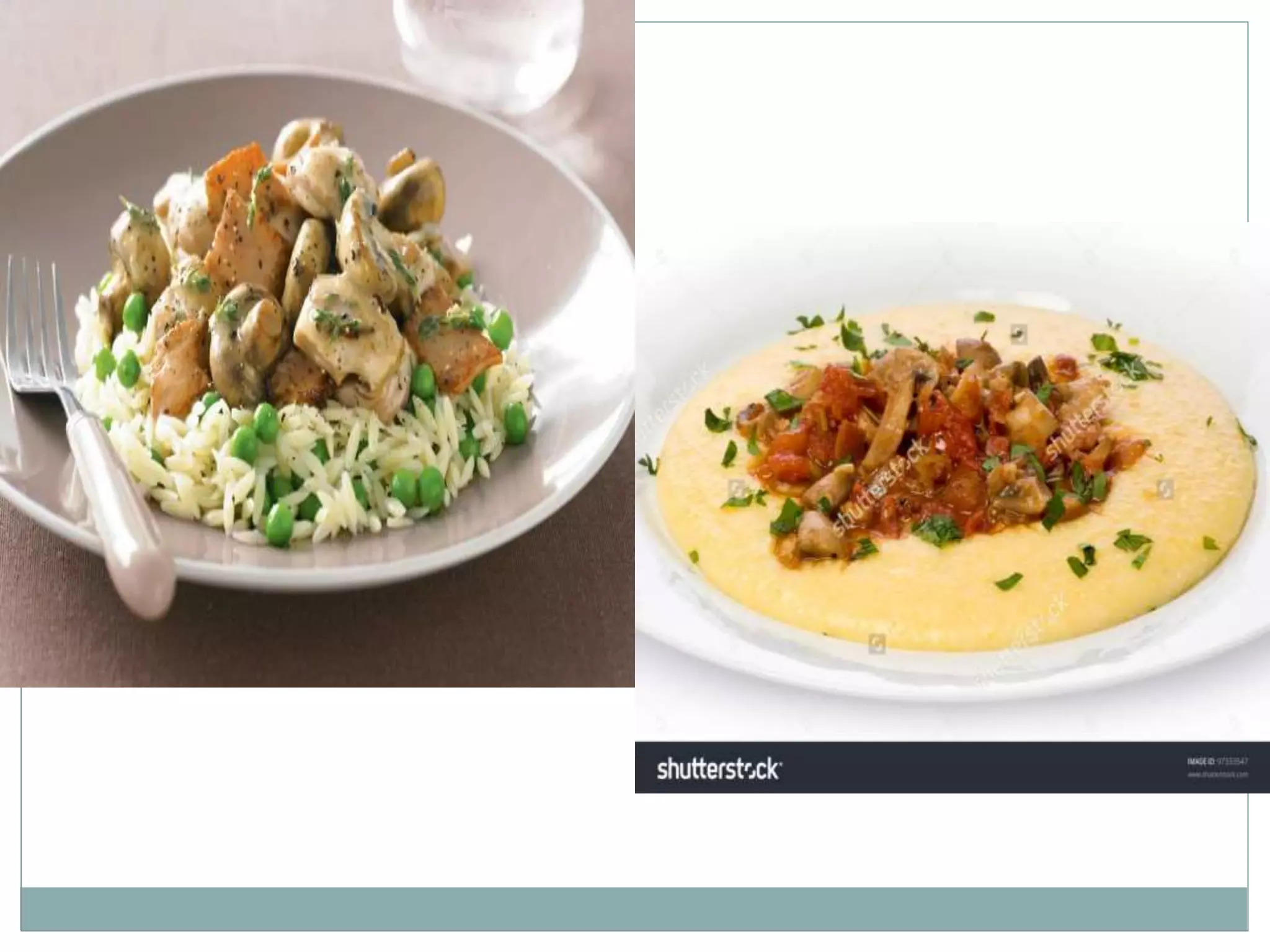
 Button mushrooms may be eated fresh or
cooked.
 Their small size makes them ideal for
skewers, serving whole in soups and stews or
salads.
 They take on the flavour of other ingredients
well;pair with strong cheeses, herbs,meats,
wines or cream based sauces.
 Geography/History
 The first documented cultivation of
Agaricus bisporus was made by
French botanist Joseph Pitton de
Tournefort in 1707.
 Modern commercial production of
white button mushroom is an
intricate process that starts with
careful preparation of nutritionally
rich compost material, seeding the
compost with mushroom spores and
careful monitoring the temperature
and humidity of grow houses.
Cultivation
1) Spawning and spawn run
2) Casing and case run
3) Case run and pin head formation
Spawning and spawn run
• Good quality compost with temperature of 25
degree celcius
• Mixing of grain based spawn of A.bisporus
under clean conditions(i.e. with clean hands
and presterilised area)
• Filling of spawned compost into polythene
bags(12-15’’ depth) or beds(6-8’’ depth)
• Little compressing and levelling of spawned
compost.
• Loosley closing the mouth of polythene bags
filled with spawned compost(covering with a
clean news paper/plastic sheet)
• Shifting the compost filled bags in cropping
rooms with a
• Temperature:23± 1°C
• RH:95%
• CO2 concentration:1.0-1.5%
and keeping the bags
under above conditions for 12-14 days.
then completion of spawn run(change of dark
brown compost into light brown colour).
 Use of fresh pure culture spawn
 Proper treatment of spawning area and tools
with formalin and cleaning of hnds with
dettol.
 Maintaining good hygienic conditiond during
spaawning by keeping all the doors and
windows closed.
CASING AND CASE RUN
 Casing is a 3-4 thick layer of soil applied on
the top of spawn run compost and is a pre-
requisite for fructification in A.bisporus.
 Presently peat is the most desirable casing
material world wide with excellent mushroom
yields and superior fruit body quality.
 However it is not available in india. So other
alternative recommended materials are,
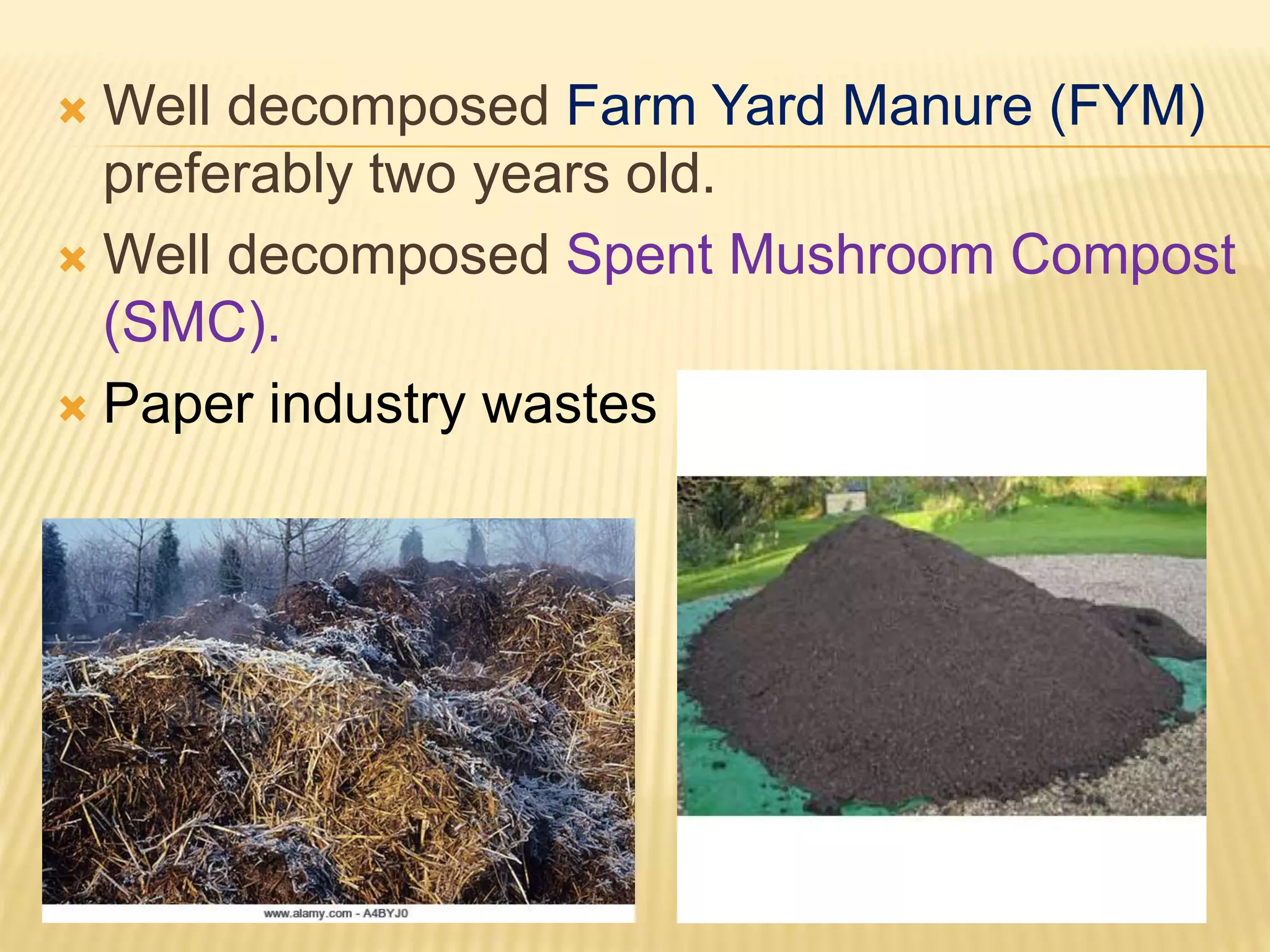
 Well decomposed Farm Yard Manure (FYM)
preferably two years old.
 Well decomposed Spent Mushroom Compost
(SMC).
 Paper industry wastes
Quality of casing material
 Soft texture
 Light weight
 High water holding capacity
 High porosity
 Deficient in available form of C and N
 Neutral pH (7.0-7.5)
 Low conductivity (400-600 µ moh)
Casing application
 Unfold the fully spawn run bag and
make the top surface even by gentle
pressing with hands.
 Light spray of water on spawn run
compost.
 Application of 4-5cm thick layer of
casing uniformly using iron rings of
4cm height or wooden blocks.
 Water spray in installments
immediately after casing application.
Case run and pinhead formation
• Case run is done at a temperature of 24± 1˚C,
RH-95% and Co2>7500 ppm.
• There is no requirement for fresh air
introducton during case run.
• After case run, the environmental conditions are
changed by bringing down the
• temperature :15-17 ˚C
• RH-85%
Co2:800-1000 ppm
• This change in environmental parameters
induces pinhead formation in 3-4 days.
• Pinhead--------------solid button shaped
mushroom.(after 3-4 days).
• Protein rich supplements such as cotton seed
meal, soybean meal, feather meal etc. are used to
increase the mushroom yield.
Harvesting and after care
 Mushrooms with 4-5cm dia., with hard pileus
and closed veil are ready for the harvest.
 Mushrooms are harvested by holding them
between forefinger and thumb and rotating in
clockwise 0r anticlockwise direction.
 The soiled stem portion is cut with sharp knife
and are collected in gradewise in baskets.
 Button mushroom can be stored at 4 ˚C for a few
days without any deterioration in its quality but
it is desirable to consume/market fresh
mushrooms.
 The properly processed mushrooms stay in
good condition for over a period of 1 year.
 It is possible to transport cannedmushrooms
over longer distances without any
deterioration in their quality.
 But fresh mushrooms can only transported
short distances in refrigerated vans by air to
reach up to a remunerative market.
Cultivation of white button mushroom

Cultivation of white button mushroom

  • 1.
  • 2.
    WHITE BUTTON MUSHROOM White button mushroom,Agaricus bisporus tiny thumbnail sized mushrooms with smooth rounded caps and short truncated stems.  Depending on when they are harvested they are either stark white in color or earthern brown like a crimini mushroom.  Their flavour is mild when raw and more fragnant and meaty when cooked.
  • 3.
    Systematic position • Kingdom:Fungi • Phylum: Basidiomycota • Class: Agaricomycetes • Order: Agaricales • Family: Agaricaceae • Genus: Agaricus • Species: A.bisporus
  • 4.
     Mushrooms are90% water and virtually calorie free.  They are also rich in 1)Potassium 2)Selenium 3)Protein and cancer preventing antioxidants.
  • 5.
     Button mushroomsmay be eated fresh or cooked.  Their small size makes them ideal for skewers, serving whole in soups and stews or salads.  They take on the flavour of other ingredients well;pair with strong cheeses, herbs,meats, wines or cream based sauces.
  • 10.
     Geography/History  Thefirst documented cultivation of Agaricus bisporus was made by French botanist Joseph Pitton de Tournefort in 1707.  Modern commercial production of white button mushroom is an intricate process that starts with careful preparation of nutritionally rich compost material, seeding the compost with mushroom spores and careful monitoring the temperature and humidity of grow houses.
  • 11.
    Cultivation 1) Spawning andspawn run 2) Casing and case run 3) Case run and pin head formation
  • 12.
    Spawning and spawnrun • Good quality compost with temperature of 25 degree celcius • Mixing of grain based spawn of A.bisporus under clean conditions(i.e. with clean hands and presterilised area) • Filling of spawned compost into polythene bags(12-15’’ depth) or beds(6-8’’ depth) • Little compressing and levelling of spawned compost.
  • 13.
    • Loosley closingthe mouth of polythene bags filled with spawned compost(covering with a clean news paper/plastic sheet) • Shifting the compost filled bags in cropping rooms with a • Temperature:23± 1°C • RH:95% • CO2 concentration:1.0-1.5% and keeping the bags under above conditions for 12-14 days. then completion of spawn run(change of dark brown compost into light brown colour).
  • 15.
     Use offresh pure culture spawn  Proper treatment of spawning area and tools with formalin and cleaning of hnds with dettol.  Maintaining good hygienic conditiond during spaawning by keeping all the doors and windows closed.
  • 16.
    CASING AND CASERUN  Casing is a 3-4 thick layer of soil applied on the top of spawn run compost and is a pre- requisite for fructification in A.bisporus.  Presently peat is the most desirable casing material world wide with excellent mushroom yields and superior fruit body quality.  However it is not available in india. So other alternative recommended materials are,
  • 17.
     Well decomposedFarm Yard Manure (FYM) preferably two years old.  Well decomposed Spent Mushroom Compost (SMC).  Paper industry wastes
  • 18.
    Quality of casingmaterial  Soft texture  Light weight  High water holding capacity  High porosity  Deficient in available form of C and N  Neutral pH (7.0-7.5)  Low conductivity (400-600 µ moh)
  • 19.
    Casing application  Unfoldthe fully spawn run bag and make the top surface even by gentle pressing with hands.  Light spray of water on spawn run compost.  Application of 4-5cm thick layer of casing uniformly using iron rings of 4cm height or wooden blocks.  Water spray in installments immediately after casing application.
  • 20.
    Case run andpinhead formation • Case run is done at a temperature of 24± 1˚C, RH-95% and Co2>7500 ppm. • There is no requirement for fresh air introducton during case run. • After case run, the environmental conditions are changed by bringing down the • temperature :15-17 ˚C • RH-85% Co2:800-1000 ppm
  • 22.
    • This changein environmental parameters induces pinhead formation in 3-4 days. • Pinhead--------------solid button shaped mushroom.(after 3-4 days). • Protein rich supplements such as cotton seed meal, soybean meal, feather meal etc. are used to increase the mushroom yield.
  • 23.
    Harvesting and aftercare  Mushrooms with 4-5cm dia., with hard pileus and closed veil are ready for the harvest.  Mushrooms are harvested by holding them between forefinger and thumb and rotating in clockwise 0r anticlockwise direction.  The soiled stem portion is cut with sharp knife and are collected in gradewise in baskets.  Button mushroom can be stored at 4 ˚C for a few days without any deterioration in its quality but it is desirable to consume/market fresh mushrooms.
  • 24.
     The properlyprocessed mushrooms stay in good condition for over a period of 1 year.  It is possible to transport cannedmushrooms over longer distances without any deterioration in their quality.  But fresh mushrooms can only transported short distances in refrigerated vans by air to reach up to a remunerative market.