CS304PC:Computer Organization
and Architecture (R18 II(I sem))
Department of computer science and engineering (AI/ML)
Session 25
by
Asst.Prof.M.Gokilavani
VITS
2/28/2023 Department of CSE (AI/ML) 1
TEXTBOOK:
• 1. Computer System Architecture – M. Moris Mano,
Third Edition, Pearson/PHI.
REFERENCES:
• Computer Organization – Car Hamacher, Zvonks
Vranesic, Safea Zaky, Vth Edition, McGraw Hill.
• Computer Organization and Architecture – William
Stallings Sixth Edition, Pearson/PHI.
• Structured Computer Organization – Andrew S.
Tanenbaum, 4th Edition, PHI/Pearson.
2/28/2023 Department of CSE (AI/ML) 2
Unit IV
Input-Output Organization: Input-Output
Interface, Asynchronous data transfer, Modes of
transfer, Priority Interrupt Direct memory
Access.
Memory Organization: Memory Hierarchy,
Main memory, Auxiliary memory, Associate
memory, cache memory.
2/28/2023 Department of CSE (AI/ML) 3
Topics covered in session 25
2/28/2023 Department of CSE (AI/ML) 4
•Input-Output Organization
•Input-Output Interface
• Asynchronous data transfer
•Modes of transfer
•Priority Interrupt Direct memory Access.
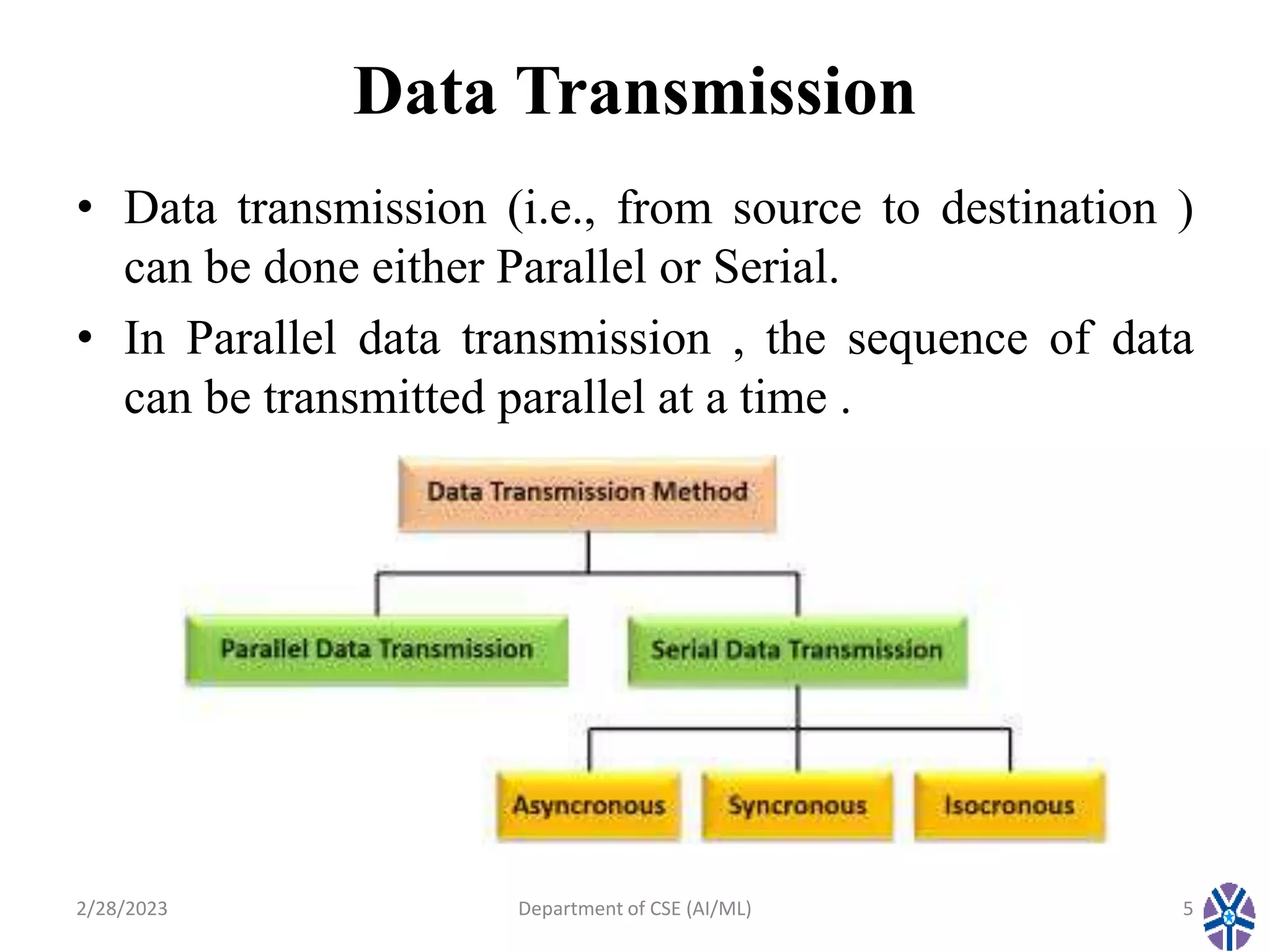
Data Transmission
• Data transmission (i.e., from source to destination )
can be done either Parallel or Serial.
• In Parallel data transmission , the sequence of data
can be transmitted parallel at a time .
2/28/2023 5
Department of CSE (AI/ML)
Synchronous Data Transfer
• The device which sends
data & the device which
receives data are
synchronized with the
same clock.
Asynchronous Data Transfer
• Data transfer is not based on
the predetermined timing
pattern.
• This technique of data
transfer is used , when the
speed of an I/O device is not
match with the speed of
CPU & the timing
characteristics of I/O device
is not predictable.
2/28/2023 Department of CSE (AI/ML) 6
Asynchronous Data Transfer
• In a computer system , CPU & I/O interfaces are designed
independently of each other.
• When the internal timing in each unit is independent from the
other and the registers in Interface & registers of CPU uses its
own private clock, Asynchronous data transfer can be used to
coordinate the speed & its timing characteristics.
• The Asynchronous data transfer between two independent units
requires that control signals transmitted between the
communicating units , so that the time can be indicated at which
they send data.
• The Asynchronous way of data transfer can be achieved by two
methods.
» Strobe control
» Handshaking
2/28/2023 7
Department of CSE (AI/ML)
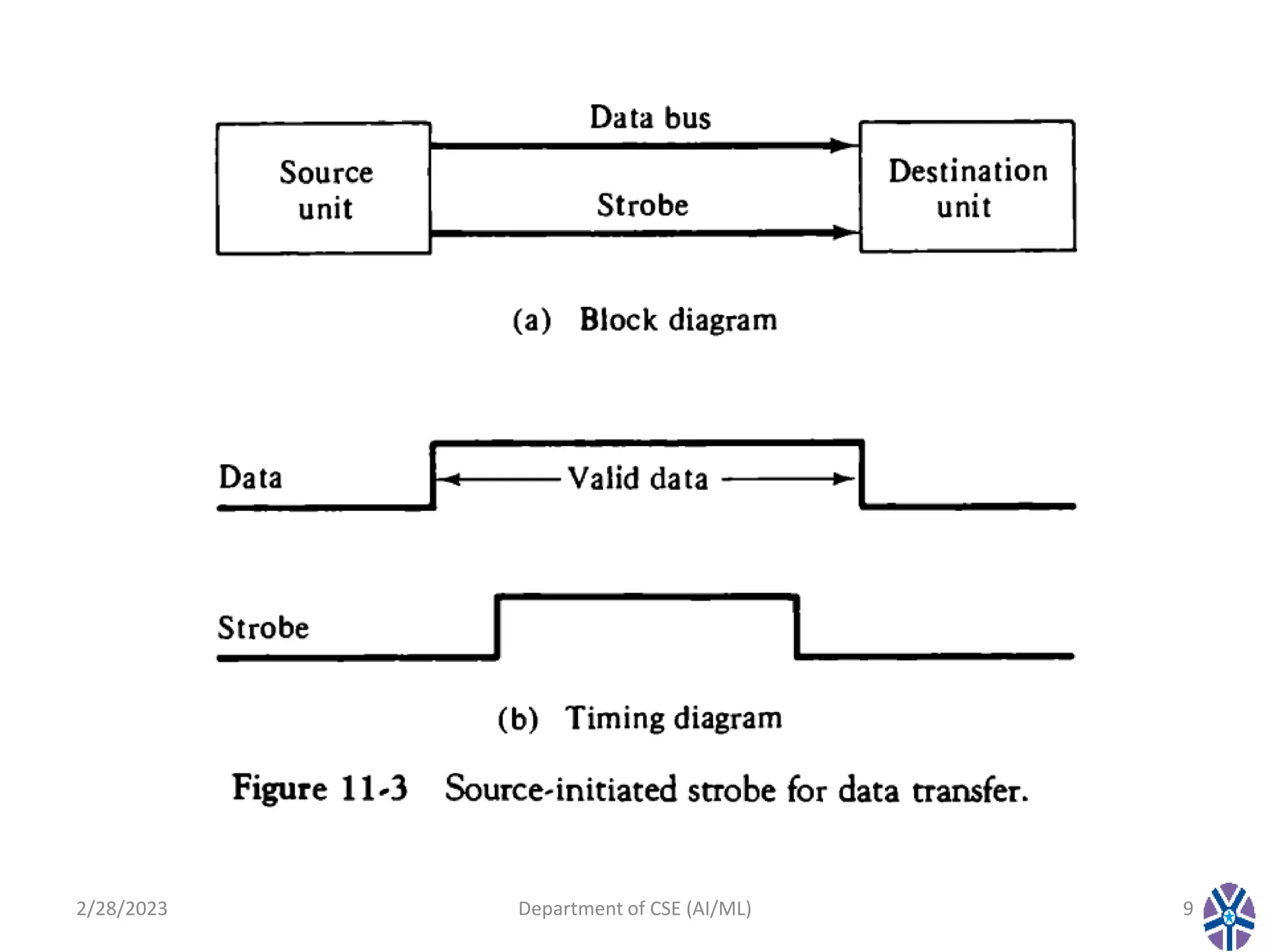
Strobe Control
• The strobe control method of asynchronous
data transfer employs a single control line to
time each transfer, which is known as strobe.
• It may be achieved either by source or
destination.
2/28/2023 8
Department of CSE (AI/ML)
2/28/2023 Department of CSE (AI/ML) 9
• The data bus carries the binary information from source
unit to the destination unit.
• The strobe is a single line that informs the destination
unit when a valid data word is available in the bus.
• The source unit first places the data on the bus.
• After a brief delay (to ensure that the data settle to a
steady value), the source activates the strobe pulse.
• The information of the data bus and the strobe signal
remain in the active state for sufficient time period to
allow the destination unit to receive the data.
• The source removes the data from the bus for a brief
period of time after it disables its strobe pulse.
2/28/2023 10
Department of CSE (AI/ML)
2/28/2023 Department of CSE (AI/ML) 11
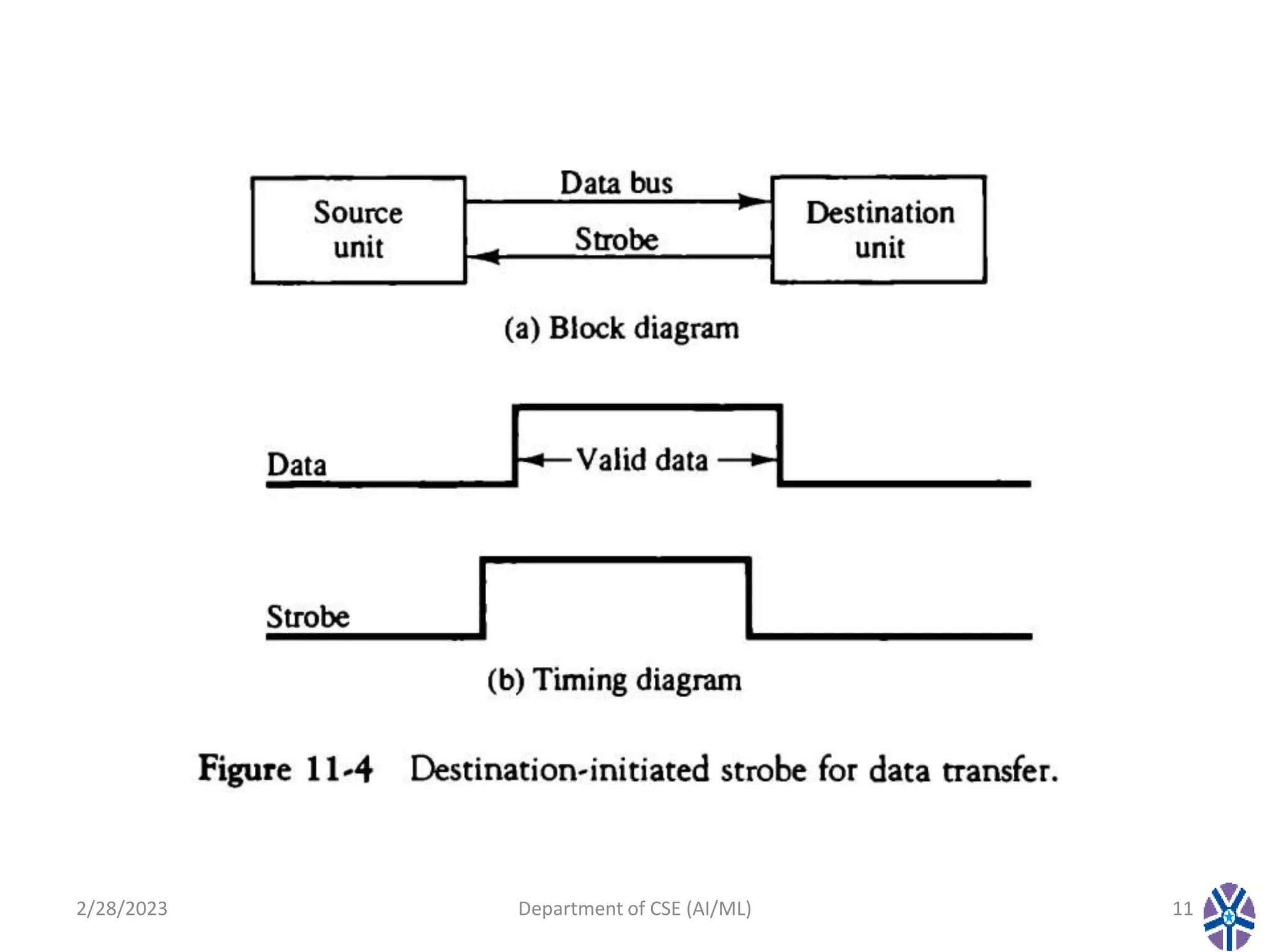
• The destination unit activates hr strobe pulse ,
informing the source to provide the data.
• The source unit responds by placing the required
binary information on the unit to accept it.
• The data must be valid and remain in the bus long
enough for destination unit to accept it.
• The falling edge of strobe pulse can be used again
to trigger a destination register.
• The destination unit then disables the strobe.
• The source removes the data from the bus after a
predetermined time interval.
2/28/2023 Department of CSE (AI/ML) 12
Disadvantage of strobe method
• The source unit that initiates the transfer has
no way of knowing whether the destination
unit has actually received the data item that
was placed in bus.
• The destination unit that initiates the transfer
has no way knowing whether the source unit
has actually placed the data on the bus.
2/28/2023 Department of CSE (AI/ML) 13
Handshaking Method
• The Handshaking method solves the problems raised
in strobe method, by introducing a second control
signal that provides a reply to the unit that initiates
the transfer.
• The data transfer can be occur as
• Source initiated Transfer
• Destination initiated Transfer
2/28/2023 Department of CSE (AI/ML) 14
Source Initiated transfer using
Handshake
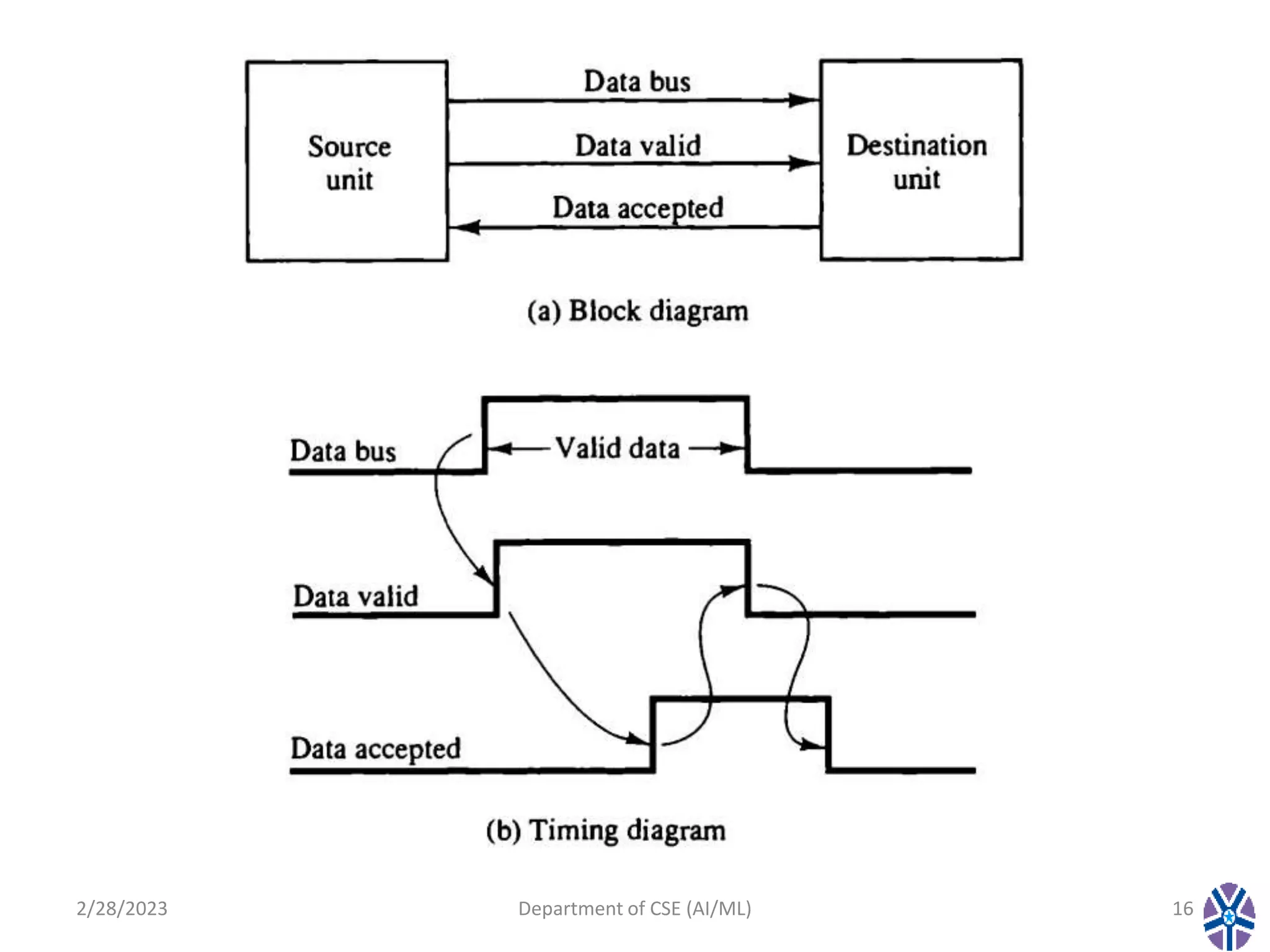
• The Two Handshaking lines generated from
the source are,
– Data Valid - Source to Destination to inform,
whether there are valid data in the bus.
– Data Accept -Destination to source to inform,
whether it can accept data.
2/28/2023 Department of CSE (AI/ML) 15
2/28/2023 Department of CSE (AI/ML) 16
2/28/2023 Department of CSE (AI/ML) 17
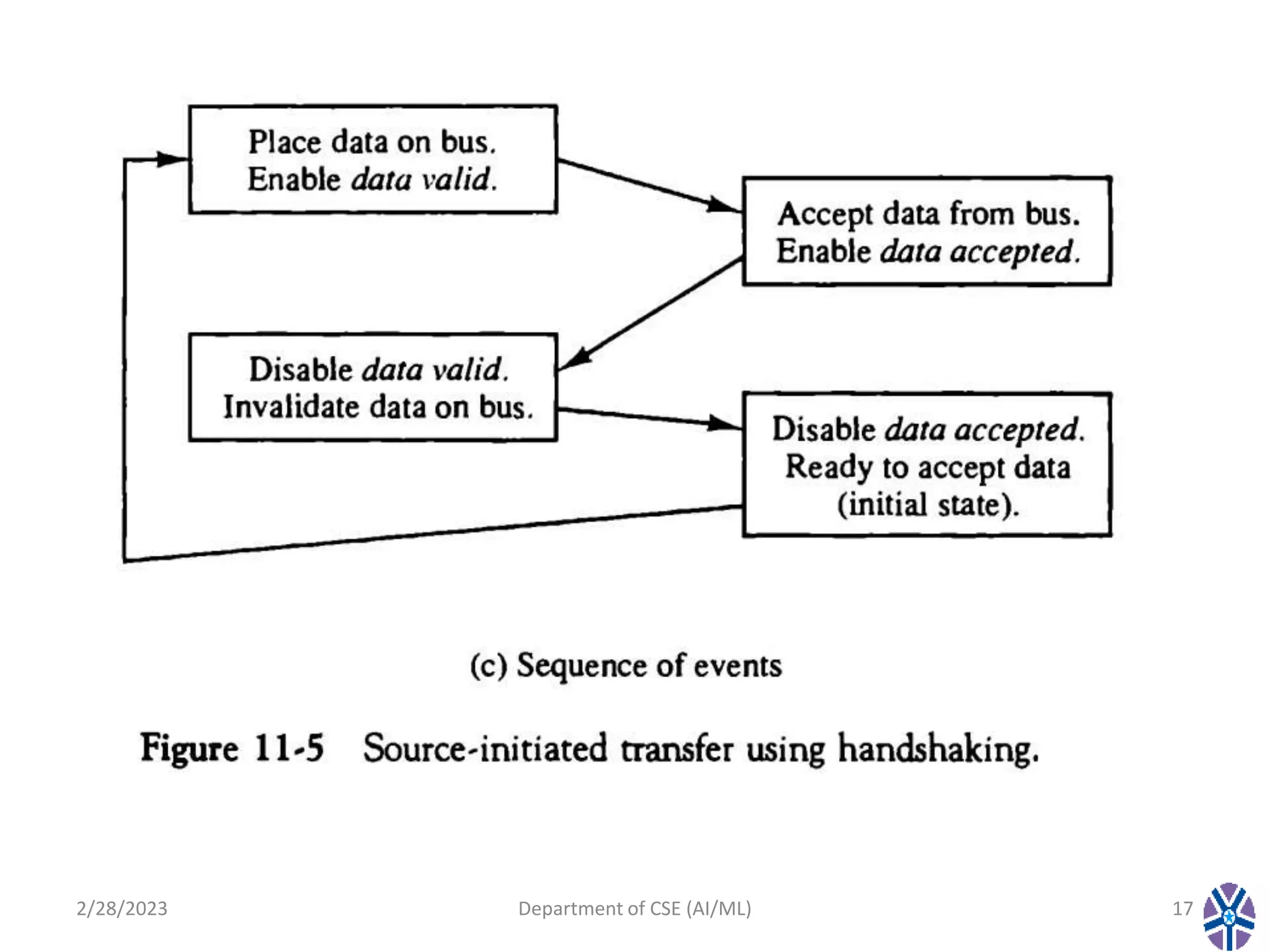
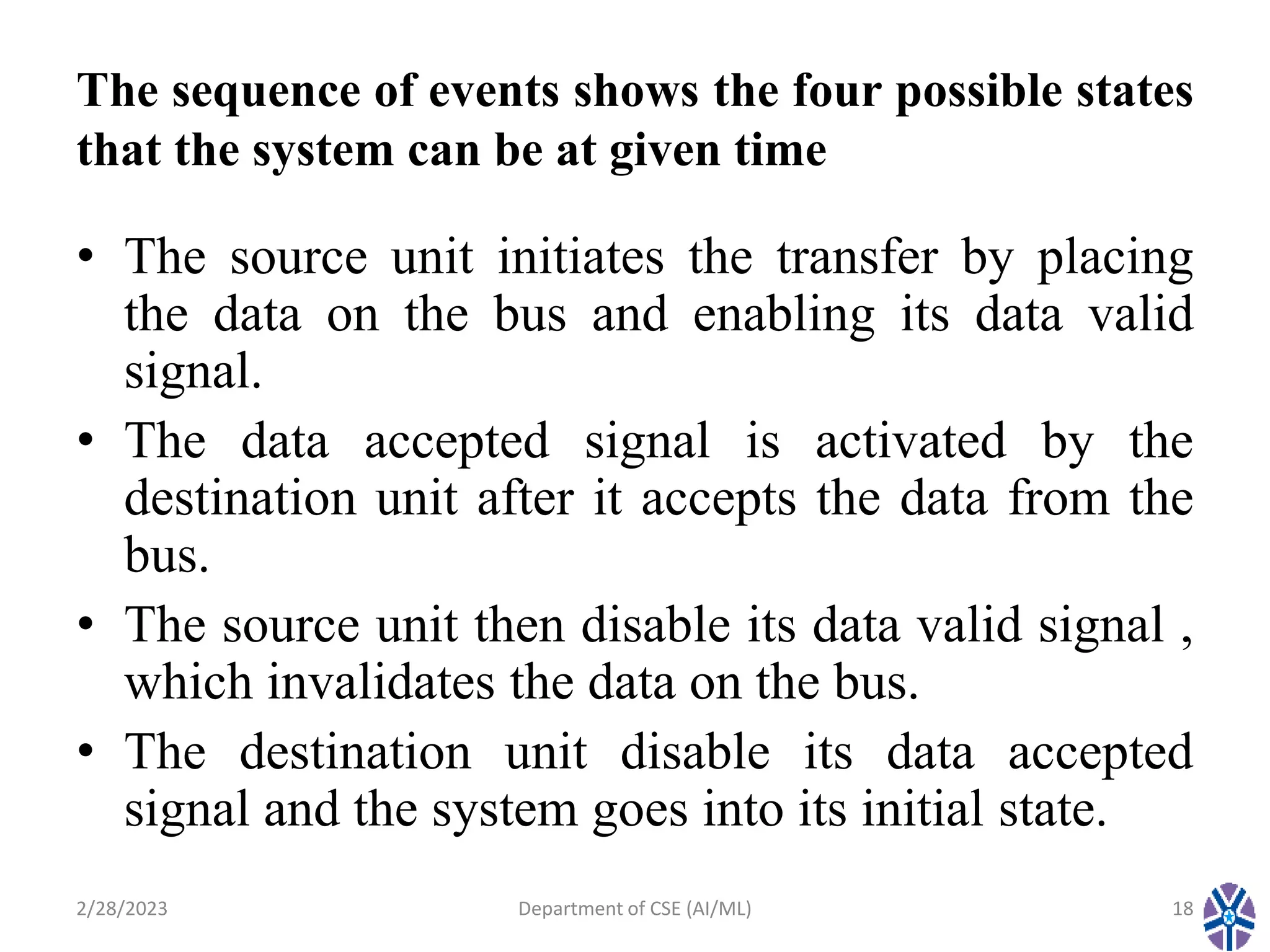
The sequence of events shows the four possible states
that the system can be at given time
• The source unit initiates the transfer by placing
the data on the bus and enabling its data valid
signal.
• The data accepted signal is activated by the
destination unit after it accepts the data from the
bus.
• The source unit then disable its data valid signal ,
which invalidates the data on the bus.
• The destination unit disable its data accepted
signal and the system goes into its initial state.
2/28/2023 Department of CSE (AI/ML) 18
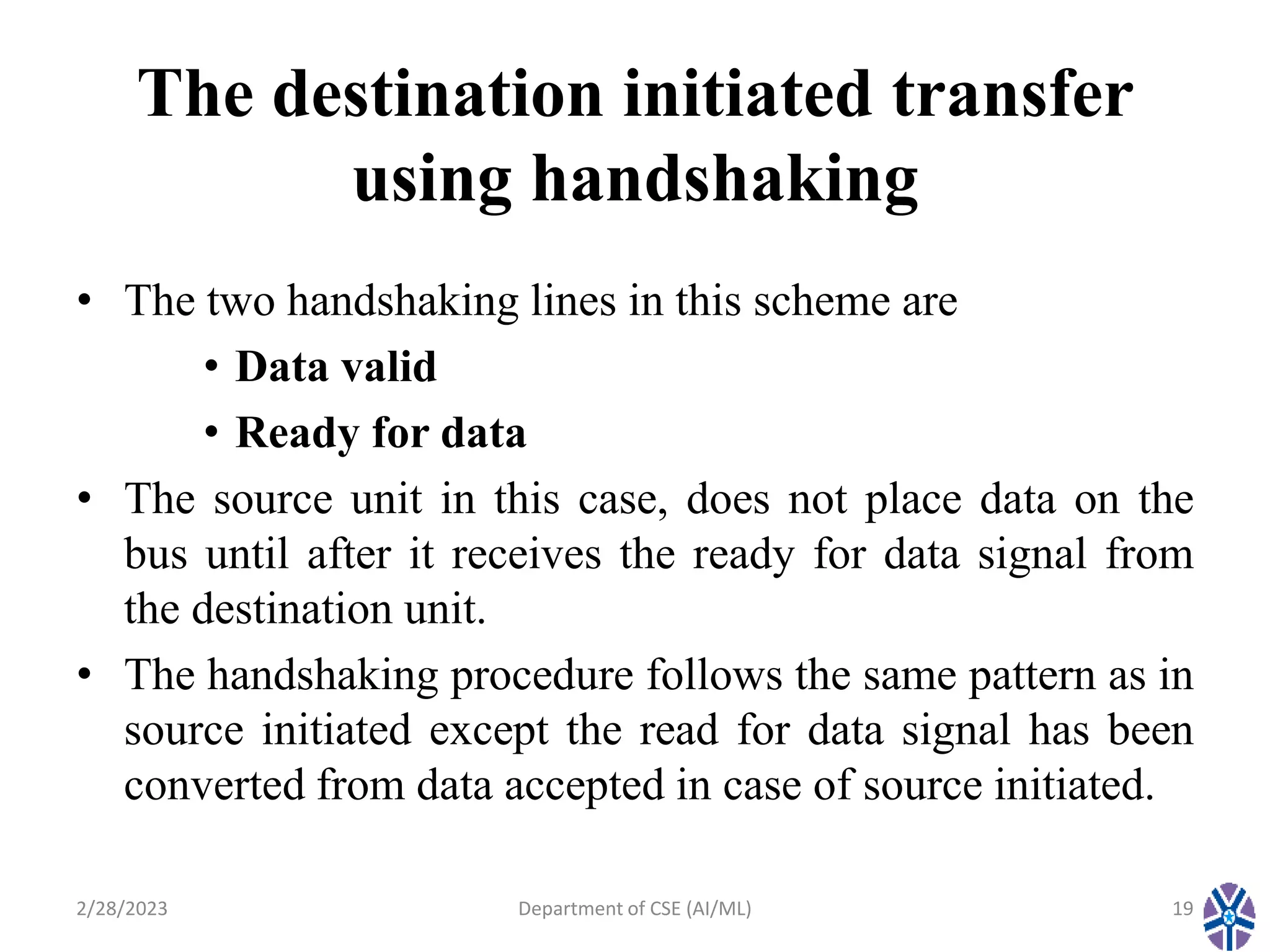
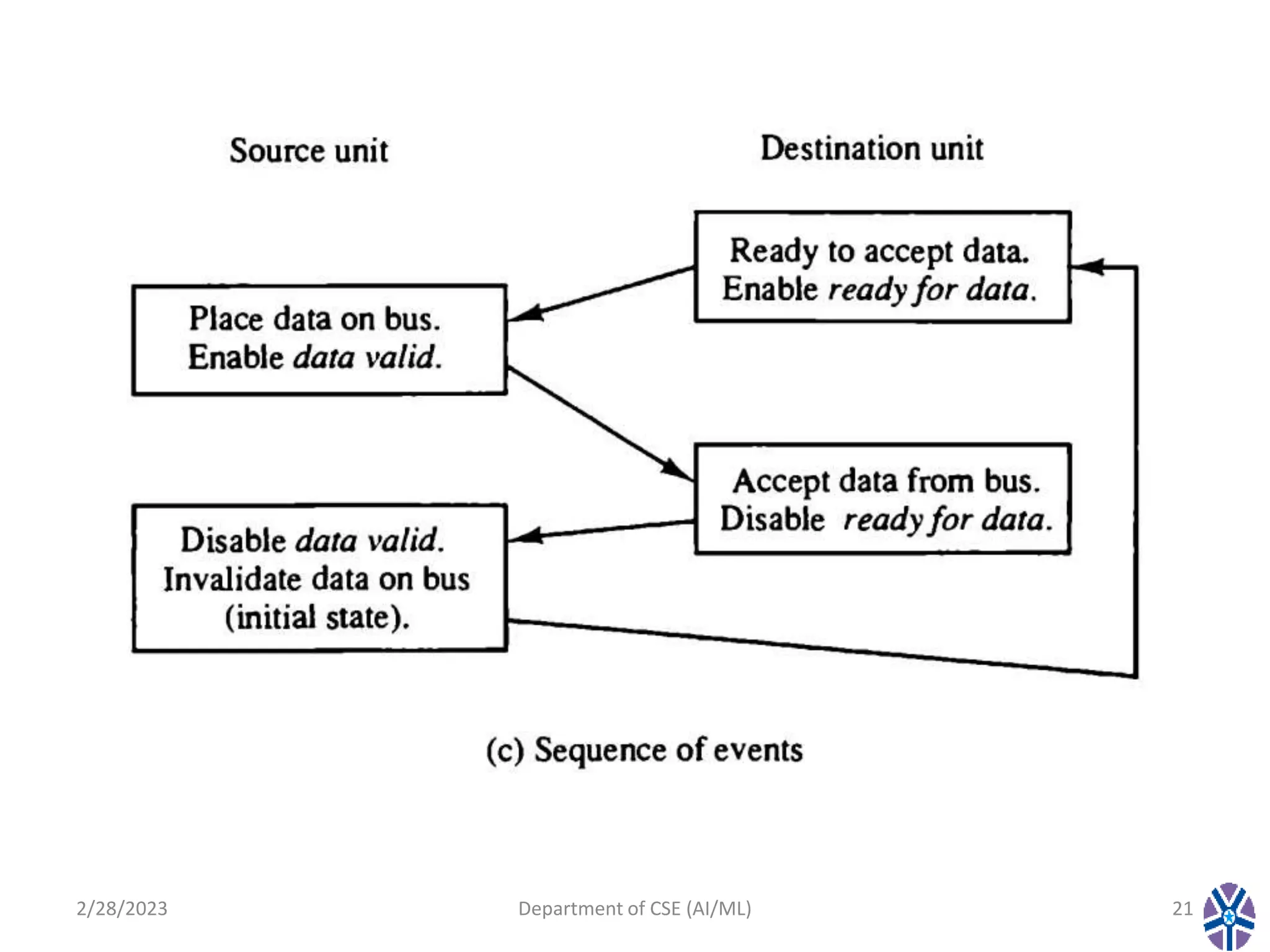
The destination initiated transfer
using handshaking
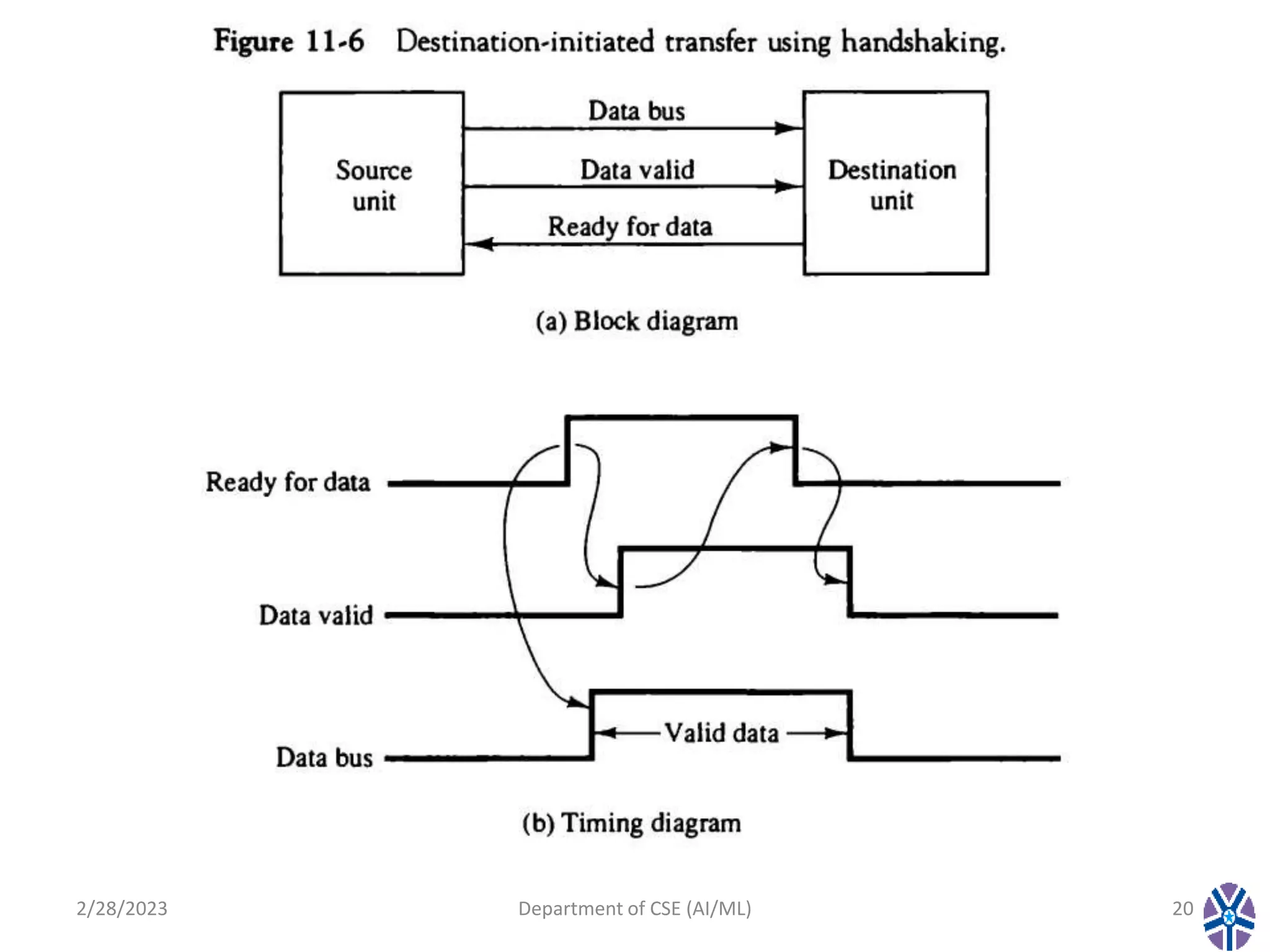
• The two handshaking lines in this scheme are
• Data valid
• Ready for data
• The source unit in this case, does not place data on the
bus until after it receives the ready for data signal from
the destination unit.
• The handshaking procedure follows the same pattern as in
source initiated except the read for data signal has been
converted from data accepted in case of source initiated.
2/28/2023 Department of CSE (AI/ML) 19
2/28/2023 Department of CSE (AI/ML) 20
2/28/2023 Department of CSE (AI/ML) 21
Topics to be covered in next session 26
• Modes of transfer
2/28/2023 Department of CSE (AI/ML) 22
Thank you!!!

CS304PC:Computer Organization and Architecture Session 25 Asynchronous data transfer.pptx

  • 1.
    CS304PC:Computer Organization and Architecture(R18 II(I sem)) Department of computer science and engineering (AI/ML) Session 25 by Asst.Prof.M.Gokilavani VITS 2/28/2023 Department of CSE (AI/ML) 1
  • 2.
    TEXTBOOK: • 1. ComputerSystem Architecture – M. Moris Mano, Third Edition, Pearson/PHI. REFERENCES: • Computer Organization – Car Hamacher, Zvonks Vranesic, Safea Zaky, Vth Edition, McGraw Hill. • Computer Organization and Architecture – William Stallings Sixth Edition, Pearson/PHI. • Structured Computer Organization – Andrew S. Tanenbaum, 4th Edition, PHI/Pearson. 2/28/2023 Department of CSE (AI/ML) 2
  • 3.
    Unit IV Input-Output Organization:Input-Output Interface, Asynchronous data transfer, Modes of transfer, Priority Interrupt Direct memory Access. Memory Organization: Memory Hierarchy, Main memory, Auxiliary memory, Associate memory, cache memory. 2/28/2023 Department of CSE (AI/ML) 3
  • 4.
    Topics covered insession 25 2/28/2023 Department of CSE (AI/ML) 4 •Input-Output Organization •Input-Output Interface • Asynchronous data transfer •Modes of transfer •Priority Interrupt Direct memory Access.
  • 5.
    Data Transmission • Datatransmission (i.e., from source to destination ) can be done either Parallel or Serial. • In Parallel data transmission , the sequence of data can be transmitted parallel at a time . 2/28/2023 5 Department of CSE (AI/ML)
  • 6.
    Synchronous Data Transfer •The device which sends data & the device which receives data are synchronized with the same clock. Asynchronous Data Transfer • Data transfer is not based on the predetermined timing pattern. • This technique of data transfer is used , when the speed of an I/O device is not match with the speed of CPU & the timing characteristics of I/O device is not predictable. 2/28/2023 Department of CSE (AI/ML) 6
  • 7.
    Asynchronous Data Transfer •In a computer system , CPU & I/O interfaces are designed independently of each other. • When the internal timing in each unit is independent from the other and the registers in Interface & registers of CPU uses its own private clock, Asynchronous data transfer can be used to coordinate the speed & its timing characteristics. • The Asynchronous data transfer between two independent units requires that control signals transmitted between the communicating units , so that the time can be indicated at which they send data. • The Asynchronous way of data transfer can be achieved by two methods. » Strobe control » Handshaking 2/28/2023 7 Department of CSE (AI/ML)
  • 8.
    Strobe Control • Thestrobe control method of asynchronous data transfer employs a single control line to time each transfer, which is known as strobe. • It may be achieved either by source or destination. 2/28/2023 8 Department of CSE (AI/ML)
  • 9.
  • 10.
    • The databus carries the binary information from source unit to the destination unit. • The strobe is a single line that informs the destination unit when a valid data word is available in the bus. • The source unit first places the data on the bus. • After a brief delay (to ensure that the data settle to a steady value), the source activates the strobe pulse. • The information of the data bus and the strobe signal remain in the active state for sufficient time period to allow the destination unit to receive the data. • The source removes the data from the bus for a brief period of time after it disables its strobe pulse. 2/28/2023 10 Department of CSE (AI/ML)
  • 11.
  • 12.
    • The destinationunit activates hr strobe pulse , informing the source to provide the data. • The source unit responds by placing the required binary information on the unit to accept it. • The data must be valid and remain in the bus long enough for destination unit to accept it. • The falling edge of strobe pulse can be used again to trigger a destination register. • The destination unit then disables the strobe. • The source removes the data from the bus after a predetermined time interval. 2/28/2023 Department of CSE (AI/ML) 12
  • 13.
    Disadvantage of strobemethod • The source unit that initiates the transfer has no way of knowing whether the destination unit has actually received the data item that was placed in bus. • The destination unit that initiates the transfer has no way knowing whether the source unit has actually placed the data on the bus. 2/28/2023 Department of CSE (AI/ML) 13
  • 14.
    Handshaking Method • TheHandshaking method solves the problems raised in strobe method, by introducing a second control signal that provides a reply to the unit that initiates the transfer. • The data transfer can be occur as • Source initiated Transfer • Destination initiated Transfer 2/28/2023 Department of CSE (AI/ML) 14
  • 15.
    Source Initiated transferusing Handshake • The Two Handshaking lines generated from the source are, – Data Valid - Source to Destination to inform, whether there are valid data in the bus. – Data Accept -Destination to source to inform, whether it can accept data. 2/28/2023 Department of CSE (AI/ML) 15
  • 16.
  • 17.
  • 18.
    The sequence ofevents shows the four possible states that the system can be at given time • The source unit initiates the transfer by placing the data on the bus and enabling its data valid signal. • The data accepted signal is activated by the destination unit after it accepts the data from the bus. • The source unit then disable its data valid signal , which invalidates the data on the bus. • The destination unit disable its data accepted signal and the system goes into its initial state. 2/28/2023 Department of CSE (AI/ML) 18
  • 19.
    The destination initiatedtransfer using handshaking • The two handshaking lines in this scheme are • Data valid • Ready for data • The source unit in this case, does not place data on the bus until after it receives the ready for data signal from the destination unit. • The handshaking procedure follows the same pattern as in source initiated except the read for data signal has been converted from data accepted in case of source initiated. 2/28/2023 Department of CSE (AI/ML) 19
  • 20.
  • 21.
  • 22.
    Topics to becovered in next session 26 • Modes of transfer 2/28/2023 Department of CSE (AI/ML) 22 Thank you!!!