

“SCIENCE 4 ALL”
Teacher: Andreia Lourenço
“How to make cross-curricular
teaching a reality in our schools”
“The flexible management curriculum project aims to promote a
gradual change in curriculum management practices. It aims at
improving the effectiveness of the educacional response to
problems arising from the diversity of school contexts and
ensure that all students learn more and more significantly.”
D.E.B, Ministry of Education, 1999
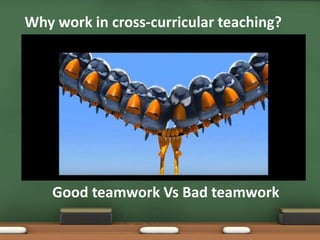
Why work in cross-curricular teaching?
Good teamwork Vs Bad teamwork
Why work in cross-curricular teaching?
It provides a set of skills that prepare students to:
 Solve problems;
 Ask questions;
 Search appropriate answers;
 Manage conflicts;
 Team work;
 Make decisions.
How?
By developing multidisciplinary projects.
They allow the acquisition of knowledge and
development of skills in scientific, artistic,
technological, social and sports subjects.
How?
Multidisciplinary projects
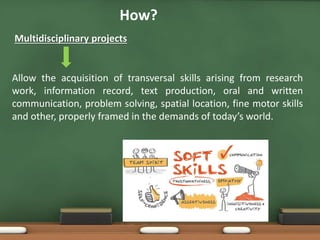
Allow the acquisition of transversal skills arising from research
work, information record, text production, oral and written
communication, problem solving, spatial location, fine motor skills
and other, properly framed in the demands of today’s world.
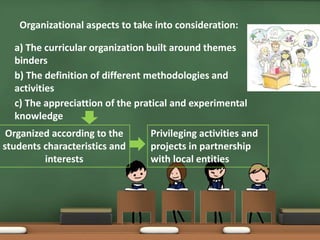
Organizational aspects to take into consideration:
a) The curricular organization built around themes
binders
b) The definition of different methodologies and
activities
c) The appreciattion of the pratical and experimental
knowledge
Organized according to the
students characteristics and
interests
Privileging activities and
projects in partnership
with local entities
Teachers:
 Set the boundaries;
 Supervise the work;
 Prepare the pedagogical project.
Players
Students:
 Search information by themselves;
 Do research;
 Collect data.
Final Product
Players
Identifying a topic
Step 1
More than just to “look
nice” it is necessary to
encourage the
participacion of all.
What do we do?
Interdisciplinarity
What contribution can
my subject give?
Which contents can
enrich the project?
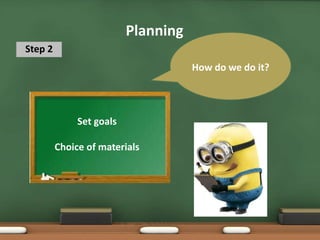
Planning
Step 2
Set goals
Choice of materials
How do we do it?
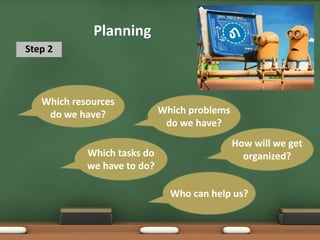
Planning
Step 2
Who can help us?
Which resources
do we have? Which problems
do we have?
Which tasks do
we have to do?
How will we get
organized?
Project work
Step 3
 Topic development
Establishment of working groups
Distributions of tasks
Research work, organization and task
accomplishment
Lets do it?
Intermediate evaluation
Step 4
 Exchange of ideas
Assess the degree of task accomplishment
Identification of obstacles and problems
Evaluate the group progress and behavior
How are we
doing?
Final Product
Step 5
 Presentation of the project to
the educational community
What have we
accomplished?
Final Evaluation
Step 6
 Self-assessment of the work
produced and group functioning;
How was the
work?
 Evaluate the work produced by
other groups.
Our project
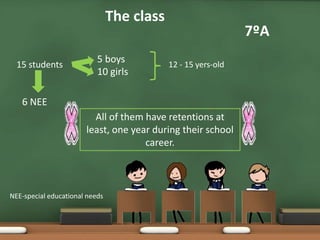
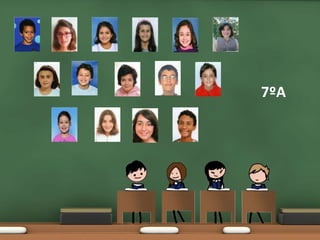
15 students
7ºA
The class
5 boys
10 girls
12 - 15 yers-old
6 NEE
All of them have retentions at
least, one year during their school
career.
NEE-special educational needs
7ºA
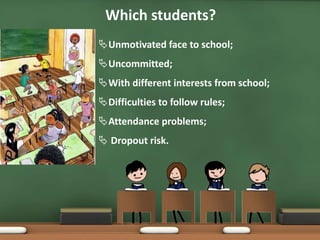
Which students?
Unmotivated face to school;
Uncommitted;
With different interests from school;
Difficulties to follow rules;
Attendance problems;
 Dropout risk.
Our goals
To overcome repeated school retention situations;
To overcome integration problems in the educational
community;
To motivate students towards school.
Our goals
Develop skills in the following fields:
 teamwork;
 rules compliance;
 Adoption of healthy lifestyles;
 ethics and values.
The project – Newspaper wall
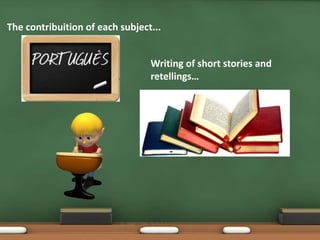
Writing of short stories and
retellings…
The contribuition of each subject...
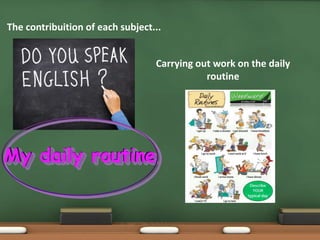
Carrying out work on the daily
routine
The contribuition of each subject...
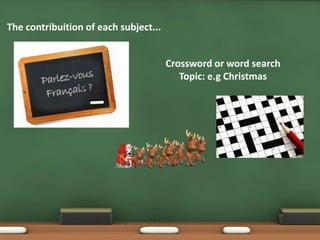
Crossword or word search
Topic: e.g Christmas
The contribuition of each subject...
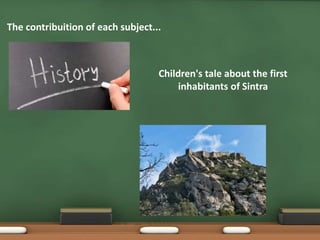
Children's tale about the first
inhabitants of Sintra
The contribuition of each subject...
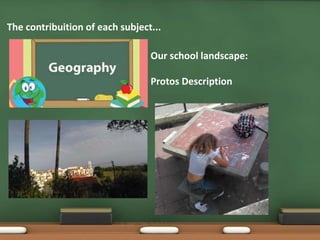
Our school landscape:
Protos Description
The contribuition of each subject...
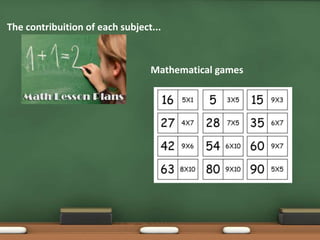
Mathematical games
The contribuition of each subject...
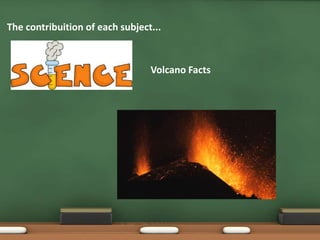
Volcano Facts
The contribuition of each subject...
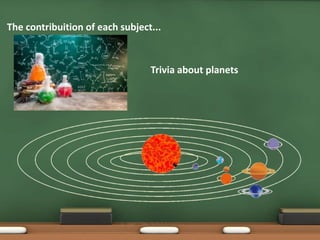
Trivia about planets
The contribuition of each subject...
Artwork
The contribuition of each subject...
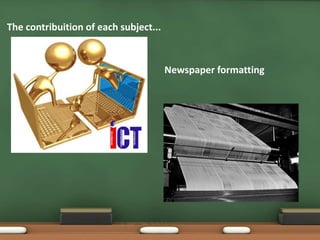
Newspaper formatting
The contribuition of each subject...
Meetings of the pedagogical team
every 2 weeks to assess strategies
Cross curricular teaching

Cross curricular teaching

  • 1.
    “SCIENCE 4 ALL” Teacher:Andreia Lourenço “How to make cross-curricular teaching a reality in our schools”
  • 2.
    “The flexible managementcurriculum project aims to promote a gradual change in curriculum management practices. It aims at improving the effectiveness of the educacional response to problems arising from the diversity of school contexts and ensure that all students learn more and more significantly.” D.E.B, Ministry of Education, 1999
  • 3.
    Why work incross-curricular teaching? Good teamwork Vs Bad teamwork
  • 4.
    Why work incross-curricular teaching? It provides a set of skills that prepare students to:  Solve problems;  Ask questions;  Search appropriate answers;  Manage conflicts;  Team work;  Make decisions.
  • 5.
    How? By developing multidisciplinaryprojects. They allow the acquisition of knowledge and development of skills in scientific, artistic, technological, social and sports subjects.
  • 6.
    How? Multidisciplinary projects Allow theacquisition of transversal skills arising from research work, information record, text production, oral and written communication, problem solving, spatial location, fine motor skills and other, properly framed in the demands of today’s world.
  • 7.
    Organizational aspects totake into consideration: a) The curricular organization built around themes binders b) The definition of different methodologies and activities c) The appreciattion of the pratical and experimental knowledge Organized according to the students characteristics and interests Privileging activities and projects in partnership with local entities
  • 8.
    Teachers:  Set theboundaries;  Supervise the work;  Prepare the pedagogical project. Players
  • 9.
    Students:  Search informationby themselves;  Do research;  Collect data. Final Product Players
  • 10.
    Identifying a topic Step1 More than just to “look nice” it is necessary to encourage the participacion of all. What do we do?
  • 11.
    Interdisciplinarity What contribution can mysubject give? Which contents can enrich the project?
  • 12.
    Planning Step 2 Set goals Choiceof materials How do we do it?
  • 13.
    Planning Step 2 Who canhelp us? Which resources do we have? Which problems do we have? Which tasks do we have to do? How will we get organized?
  • 14.
    Project work Step 3 Topic development Establishment of working groups Distributions of tasks Research work, organization and task accomplishment Lets do it?
  • 15.
    Intermediate evaluation Step 4 Exchange of ideas Assess the degree of task accomplishment Identification of obstacles and problems Evaluate the group progress and behavior How are we doing?
  • 16.
    Final Product Step 5 Presentation of the project to the educational community What have we accomplished?
  • 17.
    Final Evaluation Step 6 Self-assessment of the work produced and group functioning; How was the work?  Evaluate the work produced by other groups.
  • 18.
  • 19.
    15 students 7ºA The class 5boys 10 girls 12 - 15 yers-old 6 NEE All of them have retentions at least, one year during their school career. NEE-special educational needs
  • 20.
  • 21.
    Which students? Unmotivated faceto school; Uncommitted; With different interests from school; Difficulties to follow rules; Attendance problems;  Dropout risk.
  • 22.
    Our goals To overcomerepeated school retention situations; To overcome integration problems in the educational community; To motivate students towards school.
  • 23.
    Our goals Develop skillsin the following fields:  teamwork;  rules compliance;  Adoption of healthy lifestyles;  ethics and values.
  • 24.
    The project –Newspaper wall
  • 25.
    Writing of shortstories and retellings… The contribuition of each subject...
  • 26.
    Carrying out workon the daily routine The contribuition of each subject...
  • 27.
    Crossword or wordsearch Topic: e.g Christmas The contribuition of each subject...
  • 28.
    Children's tale aboutthe first inhabitants of Sintra The contribuition of each subject...
  • 29.
    Our school landscape: ProtosDescription The contribuition of each subject...
  • 30.
  • 31.
  • 32.
    Trivia about planets Thecontribuition of each subject...
  • 33.
  • 34.
  • 35.
    Meetings of thepedagogical team every 2 weeks to assess strategies