MMDU MULLANA
AMBALA
Name
Class
Roll No.
Sem/year
Seminar Topic
__
__
__
__
Prince
M. Sc. Agronomy (Ag.)
26207006
2nd /1st
__Impact
of Crop Residual
Managment On Soil Fertility and
Productivity
Presentation By
Introduction
> Once a crop is harvested, farmers have to decide
what to do with the remaining crop residue (the above
ground biomass that is cut but not harvested). Residues
can be either exported and valorised as co-products
(e.g., animal fodder, biogas production), or restored to
the soil as such or after being burnt. Returning straw
directly to the field has been promoted as a source of
organic matter and a way to increase soil water holding
capacity and its overall quality. As such, it is thought to
help maintain, or even to some extent restore, soil
fertility .
Impact of Crop Residue Managment
> If the residues are returned to the soil, farmers have to
choose how to manage them using either conventional tillage
or alternatives such as reduced tillage.
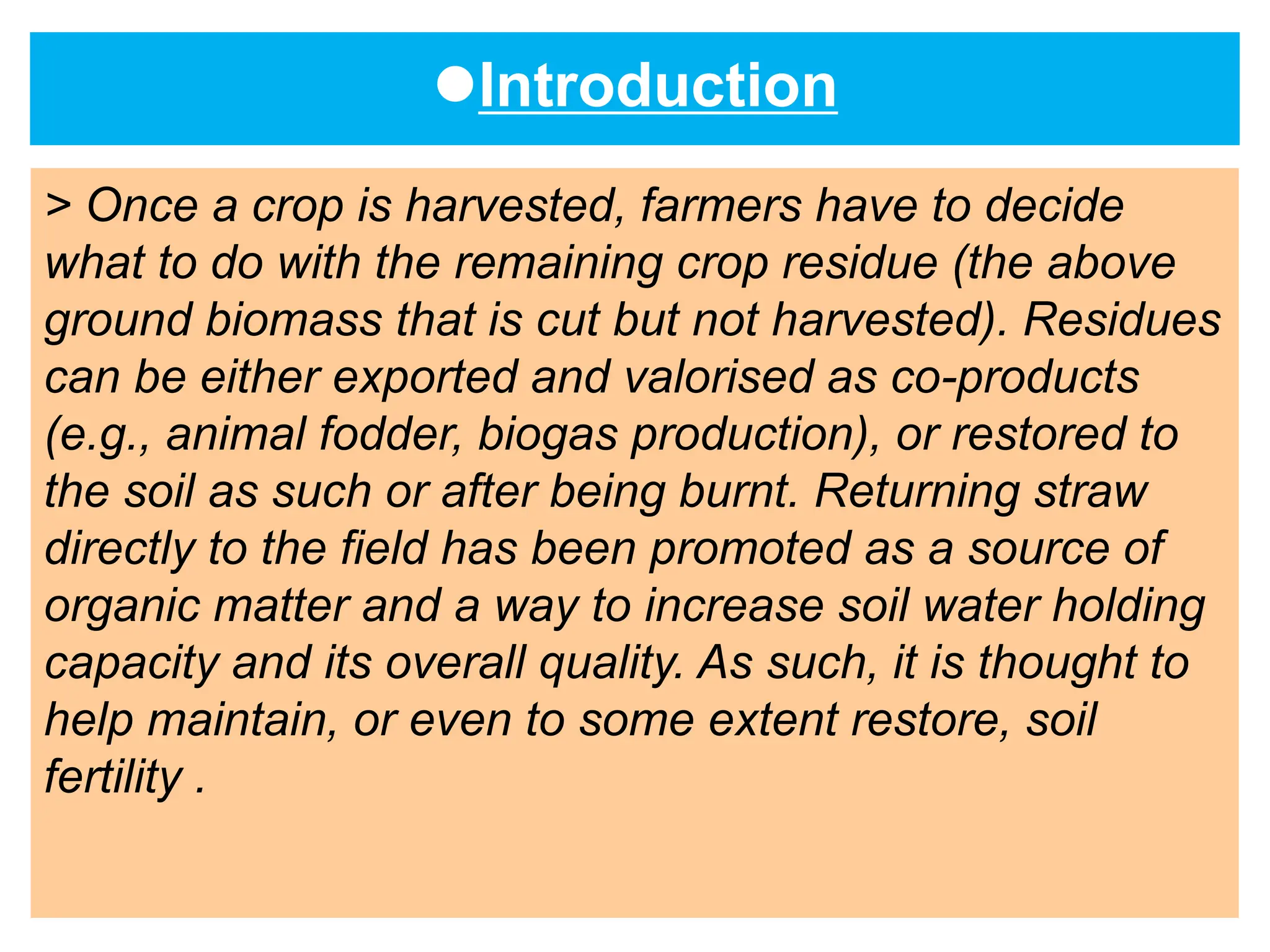
>We define conventional
tillage as a tillage based on
mouldboard ploughing
which is commonly used in
temperate regions and
reduced tillage as a tillage
with reduced intensity
and/or depth
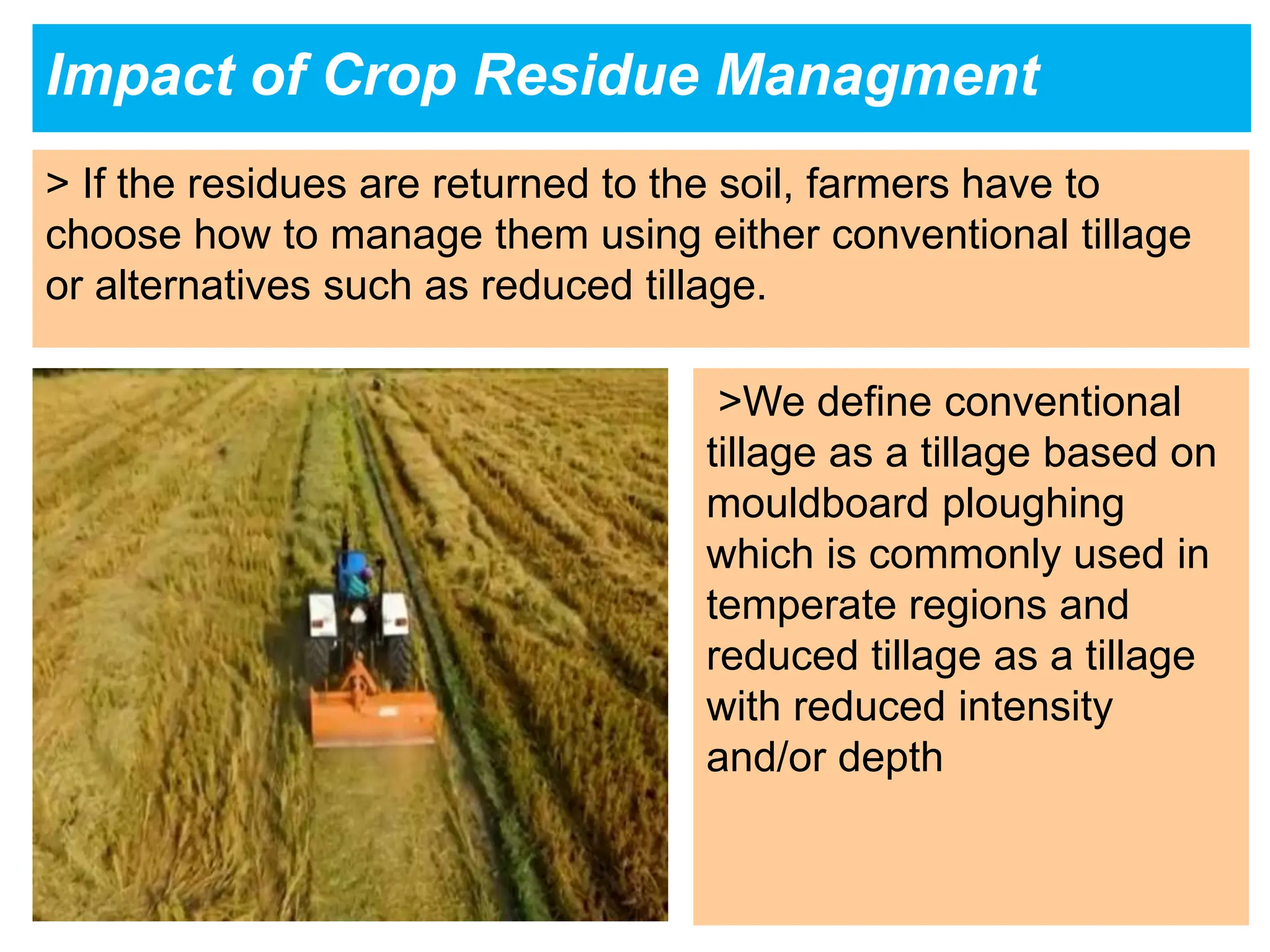
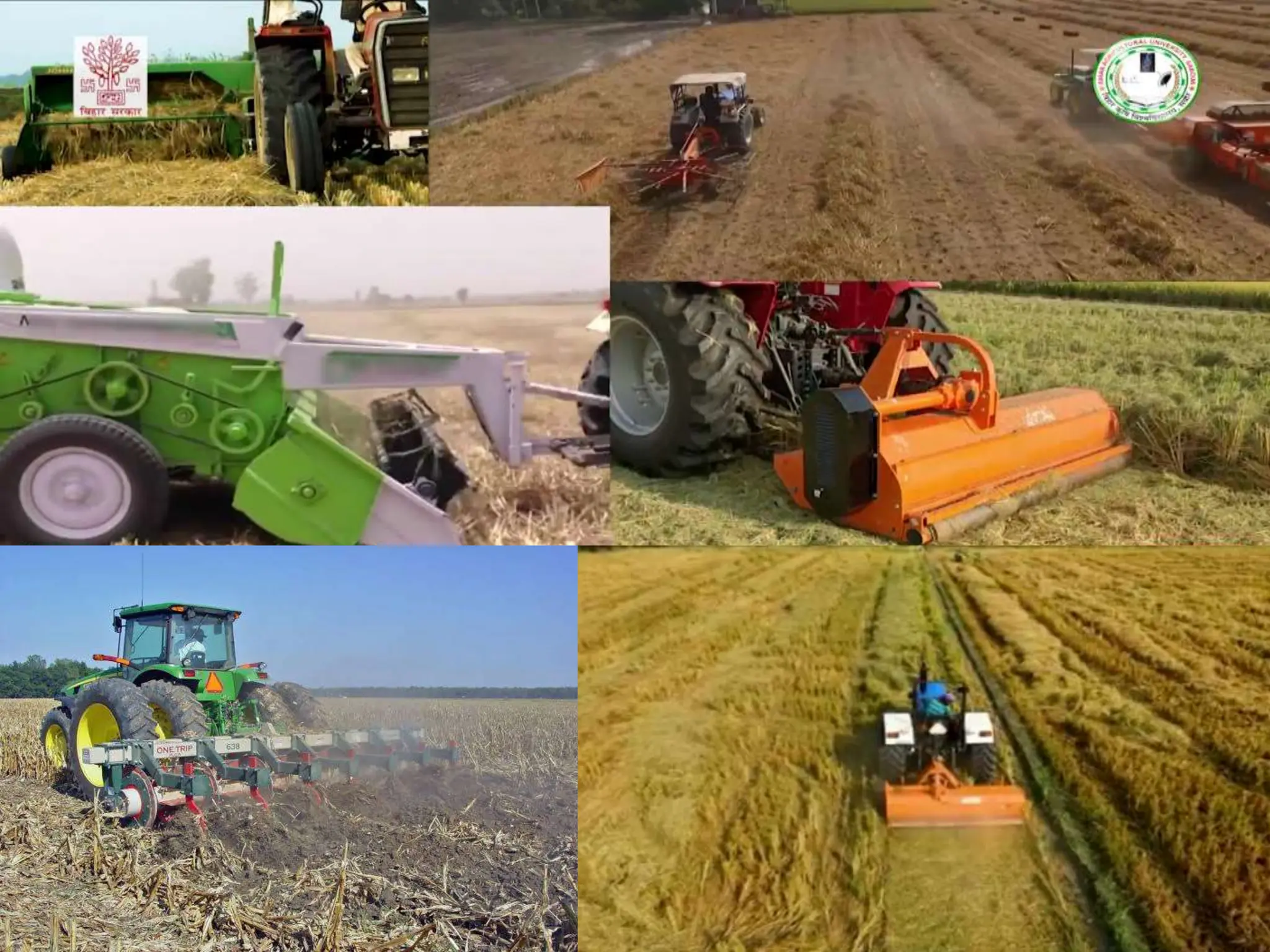
Crop Residues Managment Techniques
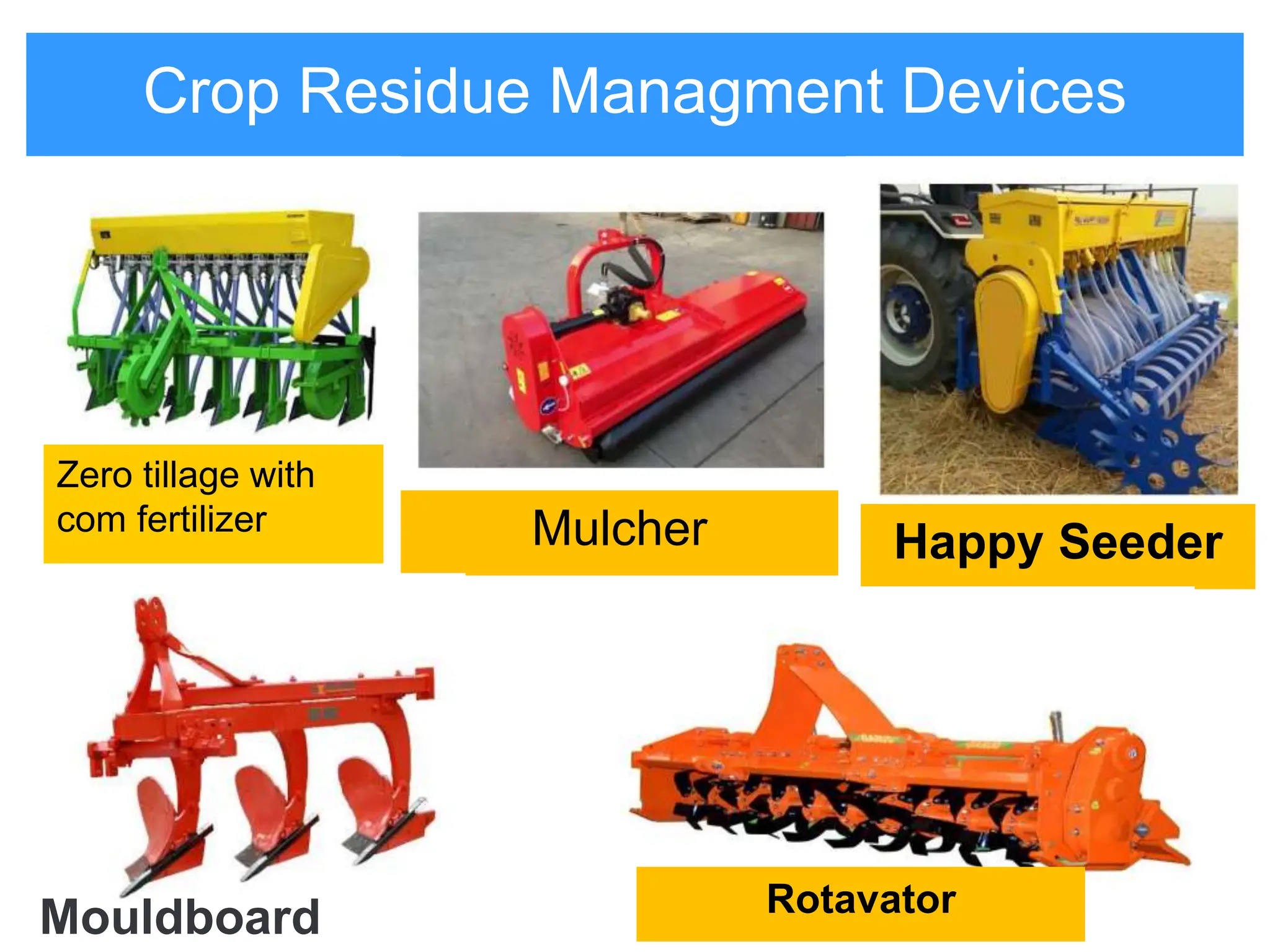
Crop Residue Managment Devices
Zero tillage with
com fertilizer Mulcher Happy Seeder
Mouldboard Rotavator
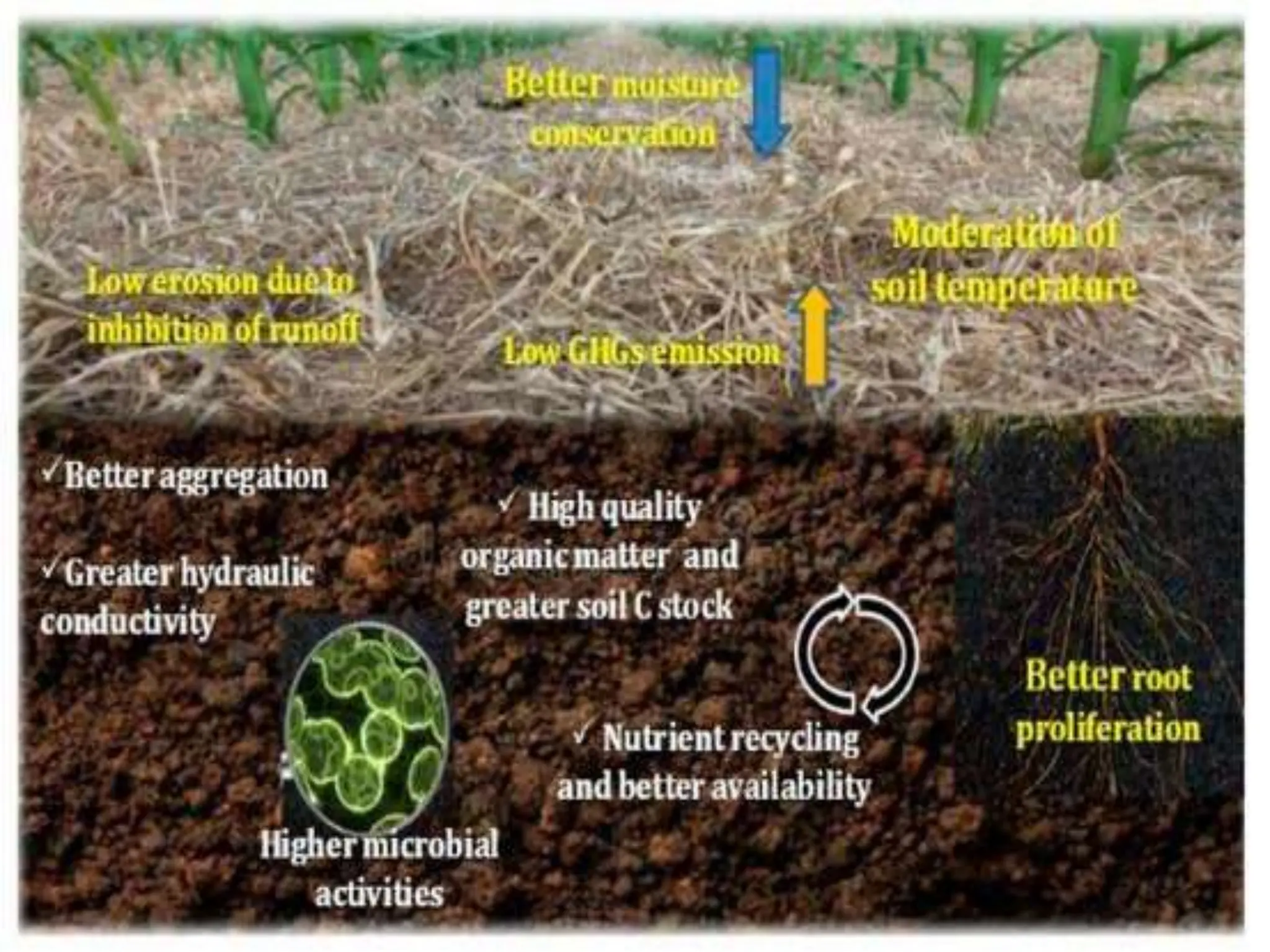
Benefits of Crop Residues Managment
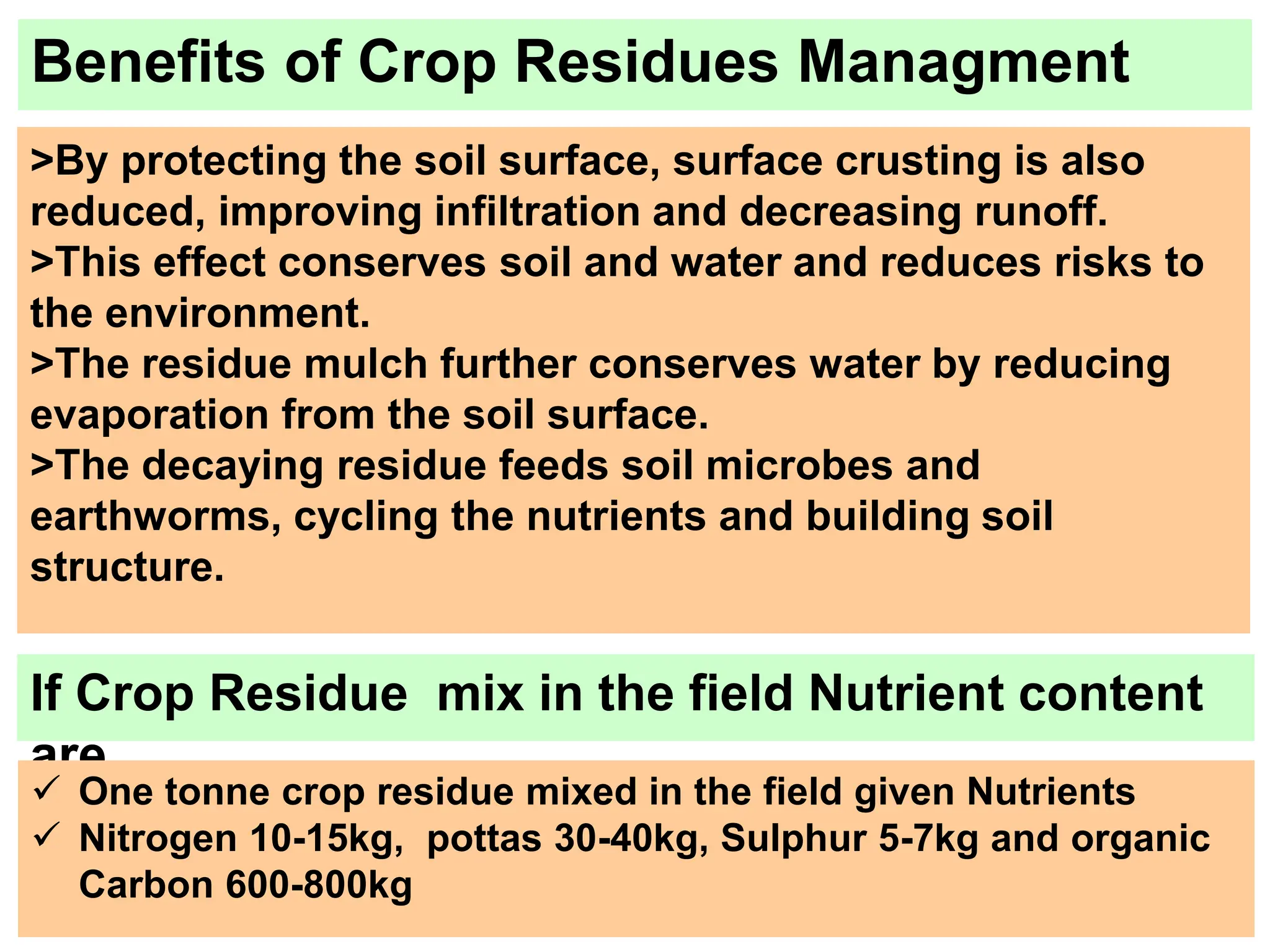
If Crop Residue mix in the field Nutrient content
are
>By protecting the soil surface, surface crusting is also
reduced, improving infiltration and decreasing runoff.
>This effect conserves soil and water and reduces risks to
the environment.
>The residue mulch further conserves water by reducing
evaporation from the soil surface.
>The decaying residue feeds soil microbes and
earthworms, cycling the nutrients and building soil
structure.
 One tonne crop residue mixed in the field given Nutrients
 Nitrogen 10-15kg, pottas 30-40kg, Sulphur 5-7kg and organic
Carbon 600-800kg
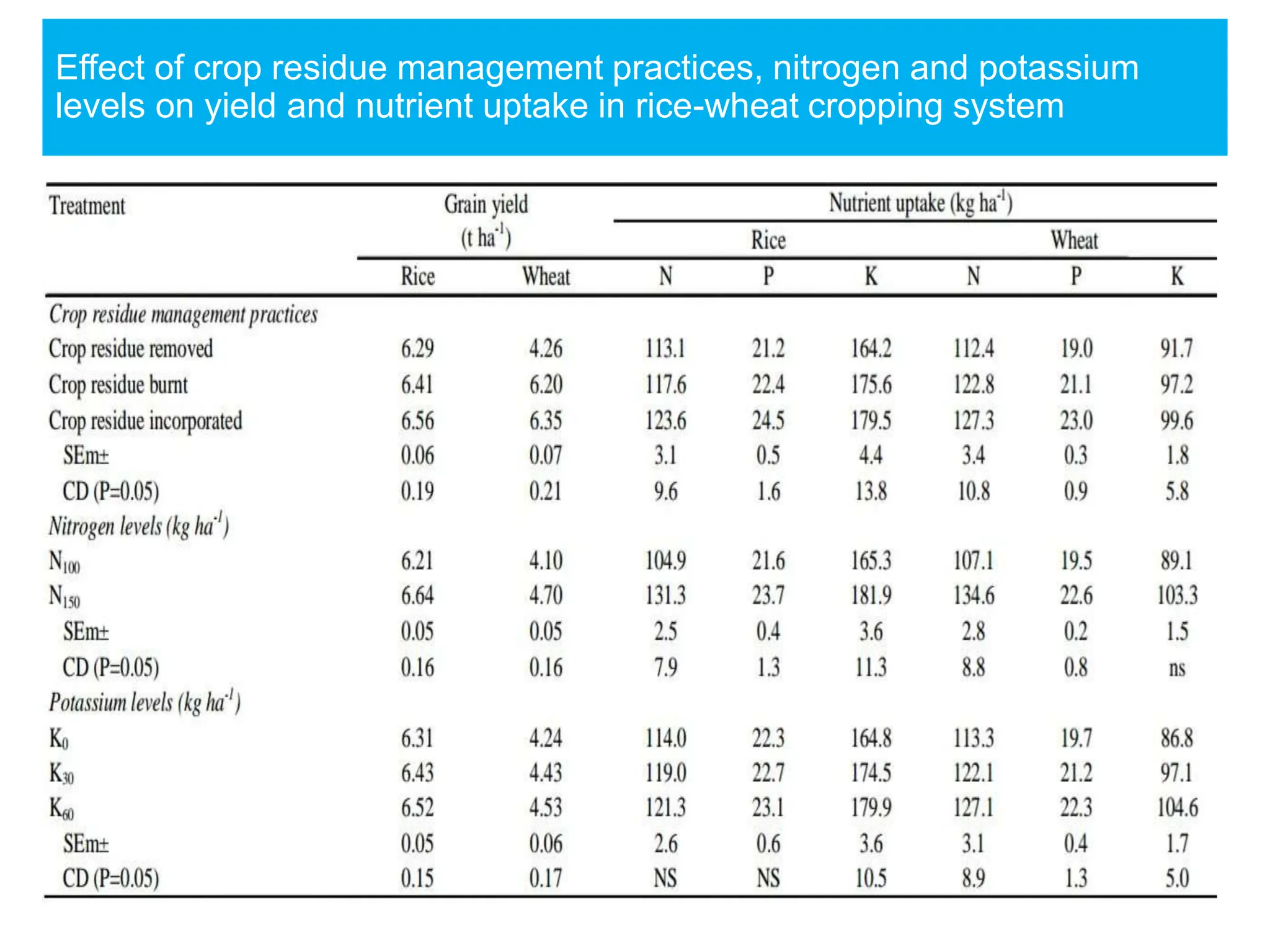
Effect of crop residue management practices, nitrogen and potassium
levels on yield and nutrient uptake in rice-wheat cropping system
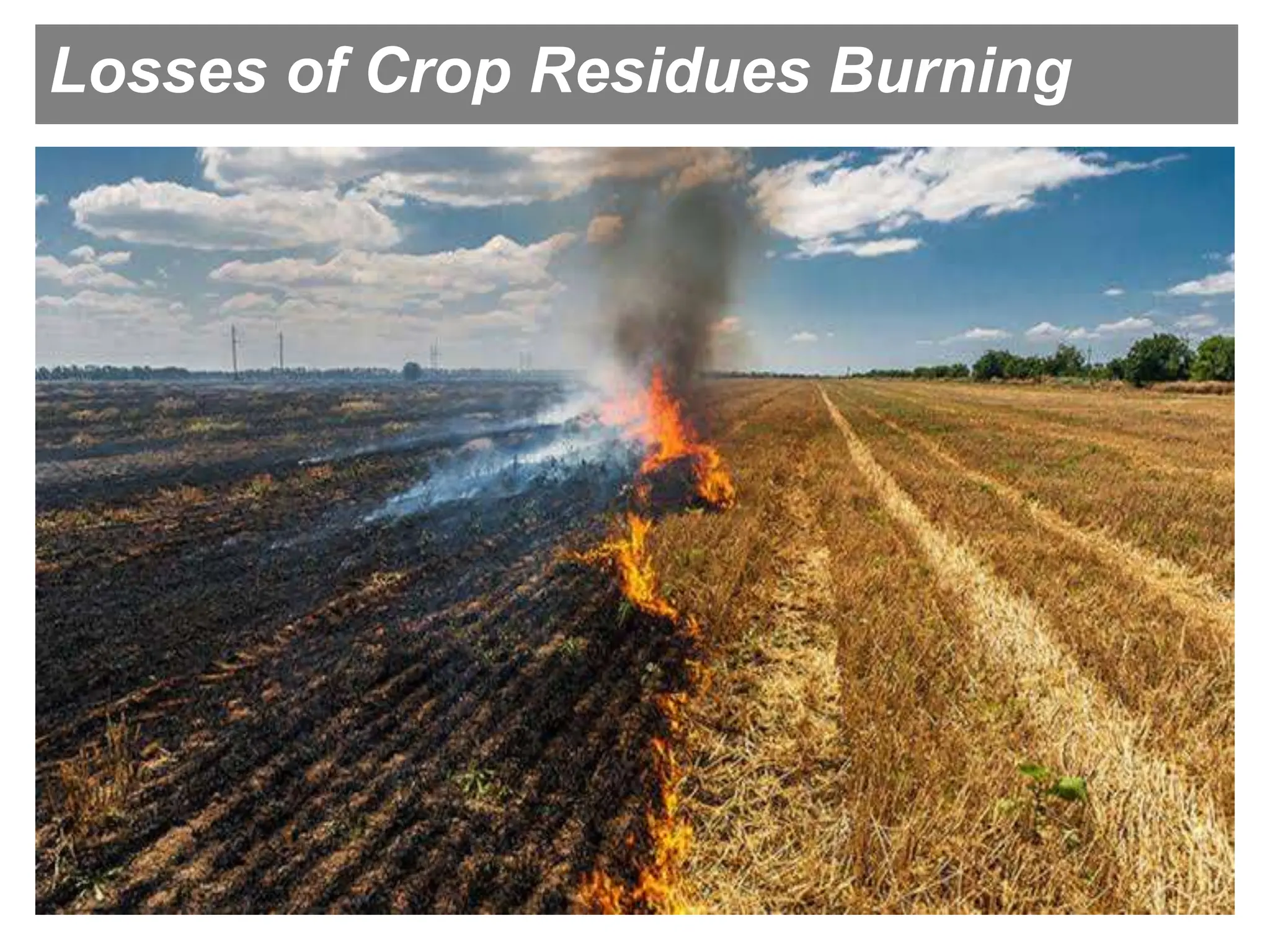
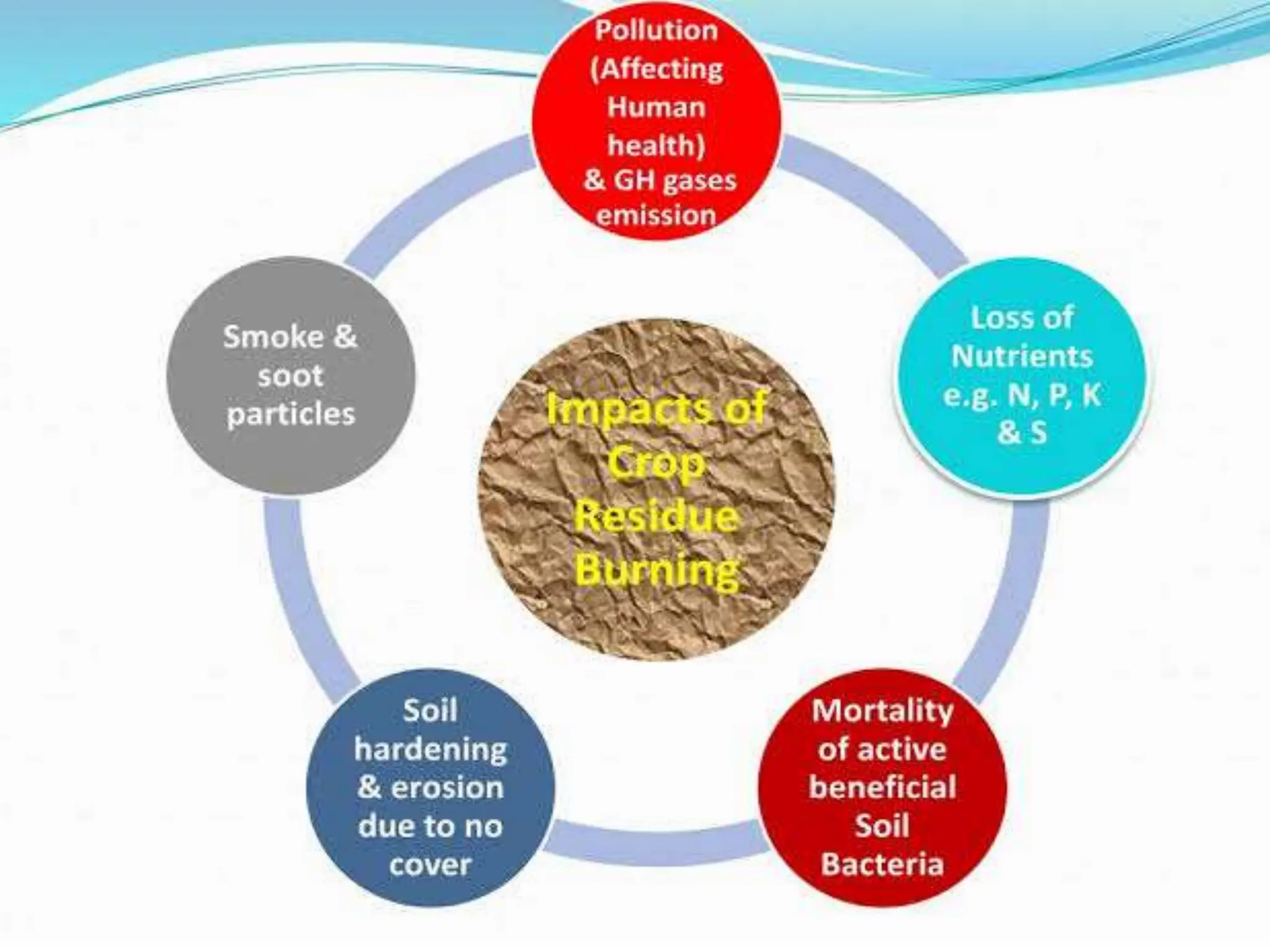
Losses of Crop Residues Burning
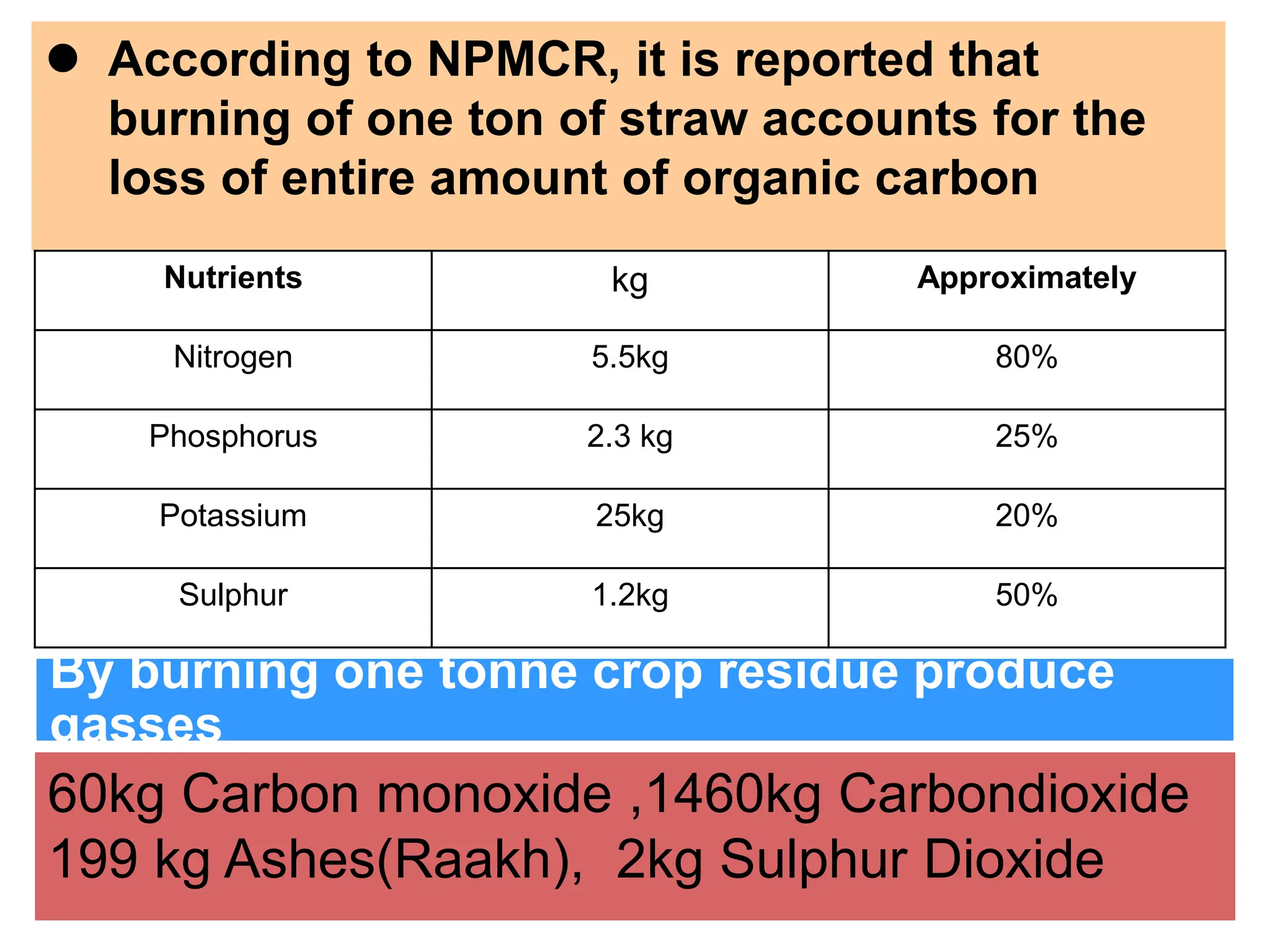
By burning one tonne crop residue produce
gasses
 According to NPMCR, it is reported that
burning of one ton of straw accounts for the
loss of entire amount of organic carbon
Nutrients kg Approximately
Nitrogen 5.5kg 80%
Phosphorus 2.3 kg 25%
Potassium 25kg 20%
Sulphur 1.2kg 50%
60kg Carbon monoxide ,1460kg Carbondioxide
199 kg Ashes(Raakh), 2kg Sulphur Dioxide
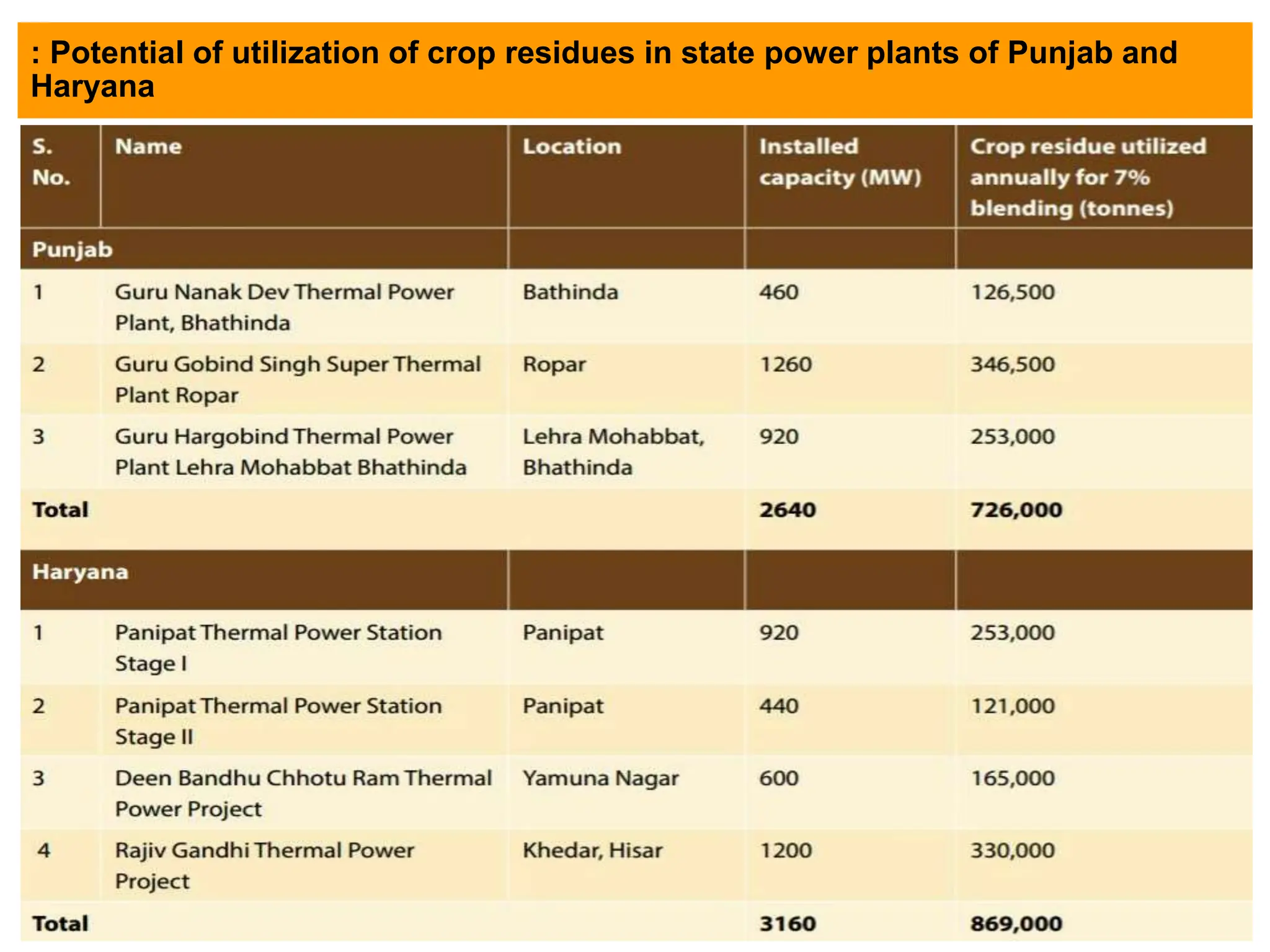
: Potential of utilization of crop residues in state power plants of Punjab and
Haryana
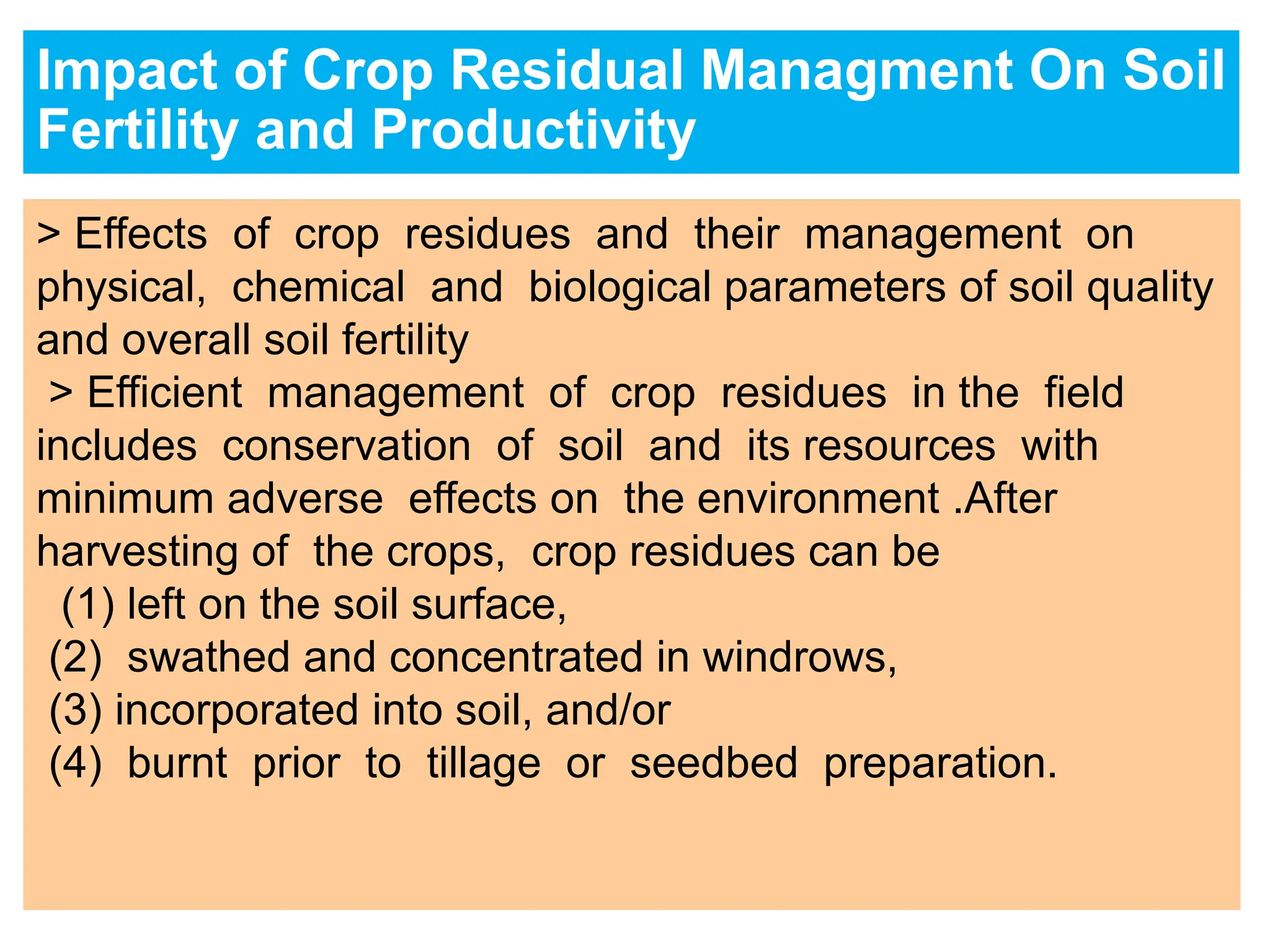
Impact of Crop Residual Managment On Soil
Fertility and Productivity
> Effects of crop residues and their management on
physical, chemical and biological parameters of soil quality
and overall soil fertility
> Efficient management of crop residues in the field
includes conservation of soil and its resources with
minimum adverse effects on the environment .After
harvesting of the crops, crop residues can be
(1) left on the soil surface,
(2) swathed and concentrated in windrows,
(3) incorporated into soil, and/or
(4) burnt prior to tillage or seedbed preparation.
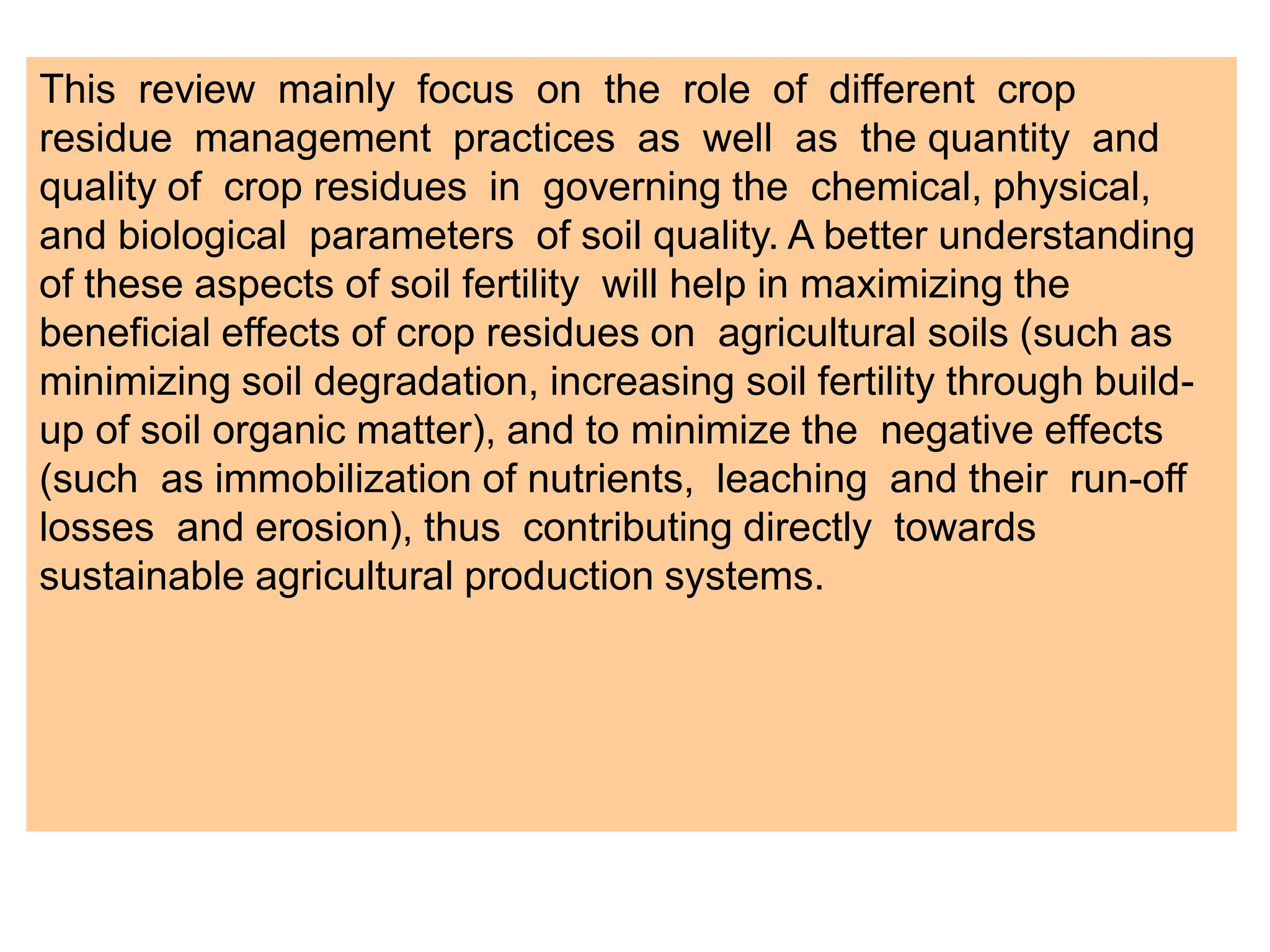
This review mainly focus on the role of different crop
residue management practices as well as the quantity and
quality of crop residues in governing the chemical, physical,
and biological parameters of soil quality. A better understanding
of these aspects of soil fertility will help in maximizing the
beneficial effects of crop residues on agricultural soils (such as
minimizing soil degradation, increasing soil fertility through build-
up of soil organic matter), and to minimize the negative effects
(such as immobilization of nutrients, leaching and their run-off
losses and erosion), thus contributing directly towards
sustainable agricultural production systems.
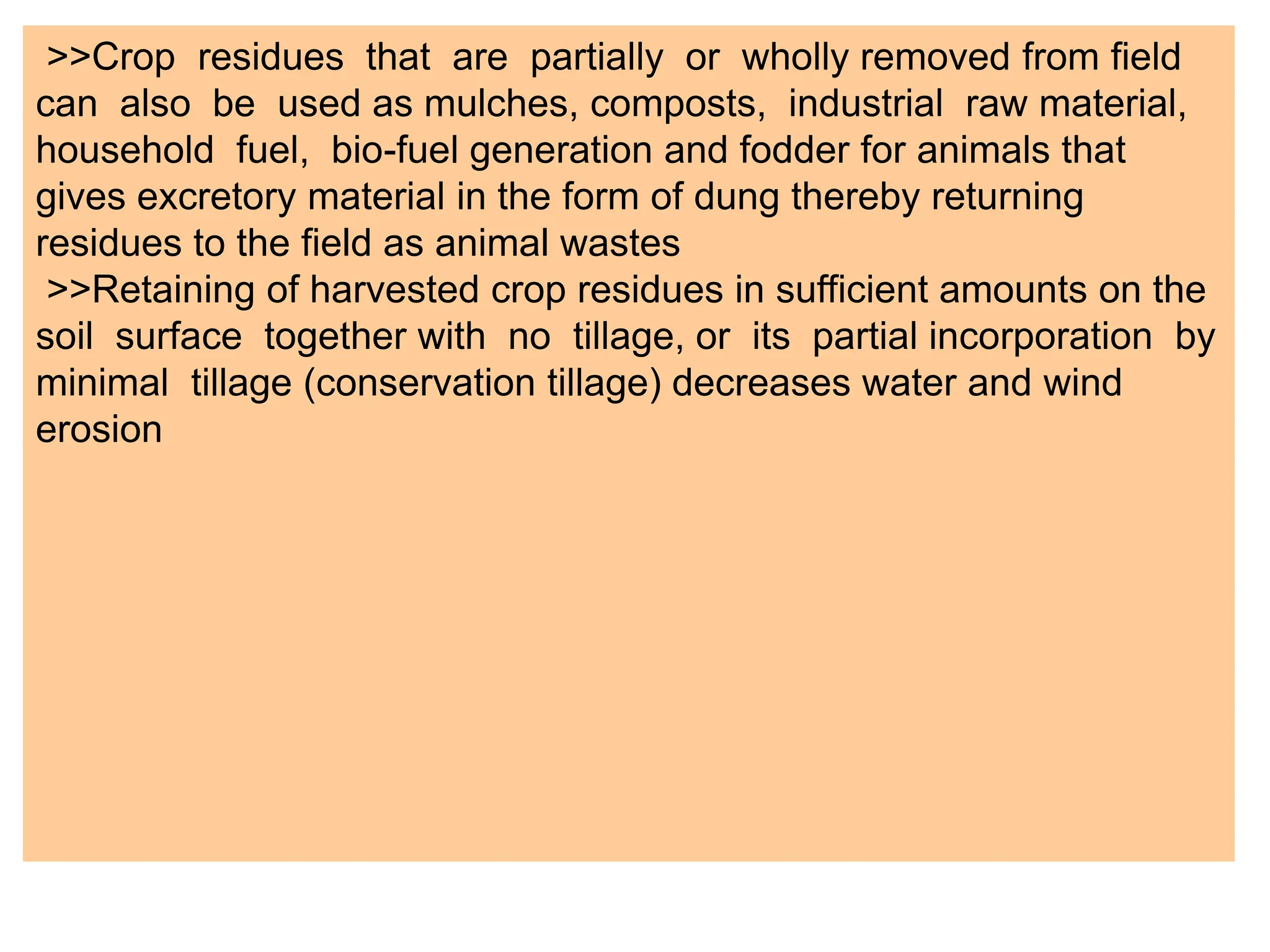
>>Crop residues that are partially or wholly removed from field
can also be used as mulches, composts, industrial raw material,
household fuel, bio-fuel generation and fodder for animals that
gives excretory material in the form of dung thereby returning
residues to the field as animal wastes
>>Retaining of harvested crop residues in sufficient amounts on the
soil surface together with no tillage, or its partial incorporation by
minimal tillage (conservation tillage) decreases water and wind
erosion
Crop Residue Managment In Rice Crop
Field experiments were conducted on a sandy clay loam soil (deep
aquic ustorthent) for five consecutive seasons from wet season
(WS) 1998 to WS 2000 with a permanent layout at the Directorate of
Rice Research (DRR) farm, ICRISAT (International Crop Research
Institute for the Semi-Arid Tropics) campus, India, to study the
influence of incorporation of rice straw residues alone
> Combination with in situ grown green manure (GM) and straw
burning on soil fertility, irrigated rice productivity and pest incidence
in comparison with only fertiliser application (control). The residue
treatments received uniform doses of N, K, Zn at the same level as
that in control plots. The crop residue treatments favourably
influenced some of the soil parameters over control.
>Recycling of crop residues by incorporation or
burning increased soil available K and organic
carbon significantly over control, while total N
content increased by residue incorporation.
> Bulk density decreased with residue
incorporation as compared to control and
burning treatments.
>Yellow stem borer was the only pest observed,
with higher white ear damage recorded during
wet seasons ranging from 14.2–31.3% in 1999
and 16.8–29.7% in 2000.
>The damage was higher with straw + green
manure, apparently reflecting the quantum of N
applied through crop residues and fertilisers.
>The influence of crop residue treatments on
yield parameters like panicle and spikelet
number was more apparent after two cycles of
residue incorporation, recording significant
effects on rice productivity in the dry and wet
seasons of 2000. Rice yield increased by 1.0 to
1.2 t/ha in DS and 0.4 to 0.8 t/ha in WS.
Thank you

crop residue management in different crops .ppt

  • 1.
    MMDU MULLANA AMBALA Name Class Roll No. Sem/year SeminarTopic __ __ __ __ Prince M. Sc. Agronomy (Ag.) 26207006 2nd /1st __Impact of Crop Residual Managment On Soil Fertility and Productivity Presentation By
  • 2.
    Introduction > Once acrop is harvested, farmers have to decide what to do with the remaining crop residue (the above ground biomass that is cut but not harvested). Residues can be either exported and valorised as co-products (e.g., animal fodder, biogas production), or restored to the soil as such or after being burnt. Returning straw directly to the field has been promoted as a source of organic matter and a way to increase soil water holding capacity and its overall quality. As such, it is thought to help maintain, or even to some extent restore, soil fertility .
  • 3.
    Impact of CropResidue Managment > If the residues are returned to the soil, farmers have to choose how to manage them using either conventional tillage or alternatives such as reduced tillage. >We define conventional tillage as a tillage based on mouldboard ploughing which is commonly used in temperate regions and reduced tillage as a tillage with reduced intensity and/or depth
  • 4.
  • 5.
    Crop Residue ManagmentDevices Zero tillage with com fertilizer Mulcher Happy Seeder Mouldboard Rotavator
  • 8.
    Benefits of CropResidues Managment If Crop Residue mix in the field Nutrient content are >By protecting the soil surface, surface crusting is also reduced, improving infiltration and decreasing runoff. >This effect conserves soil and water and reduces risks to the environment. >The residue mulch further conserves water by reducing evaporation from the soil surface. >The decaying residue feeds soil microbes and earthworms, cycling the nutrients and building soil structure.  One tonne crop residue mixed in the field given Nutrients  Nitrogen 10-15kg, pottas 30-40kg, Sulphur 5-7kg and organic Carbon 600-800kg
  • 9.
    Effect of cropresidue management practices, nitrogen and potassium levels on yield and nutrient uptake in rice-wheat cropping system
  • 10.
    Losses of CropResidues Burning
  • 12.
    By burning onetonne crop residue produce gasses  According to NPMCR, it is reported that burning of one ton of straw accounts for the loss of entire amount of organic carbon Nutrients kg Approximately Nitrogen 5.5kg 80% Phosphorus 2.3 kg 25% Potassium 25kg 20% Sulphur 1.2kg 50% 60kg Carbon monoxide ,1460kg Carbondioxide 199 kg Ashes(Raakh), 2kg Sulphur Dioxide
  • 13.
    : Potential ofutilization of crop residues in state power plants of Punjab and Haryana
  • 14.
    Impact of CropResidual Managment On Soil Fertility and Productivity > Effects of crop residues and their management on physical, chemical and biological parameters of soil quality and overall soil fertility > Efficient management of crop residues in the field includes conservation of soil and its resources with minimum adverse effects on the environment .After harvesting of the crops, crop residues can be (1) left on the soil surface, (2) swathed and concentrated in windrows, (3) incorporated into soil, and/or (4) burnt prior to tillage or seedbed preparation.
  • 15.
    This review mainlyfocus on the role of different crop residue management practices as well as the quantity and quality of crop residues in governing the chemical, physical, and biological parameters of soil quality. A better understanding of these aspects of soil fertility will help in maximizing the beneficial effects of crop residues on agricultural soils (such as minimizing soil degradation, increasing soil fertility through build- up of soil organic matter), and to minimize the negative effects (such as immobilization of nutrients, leaching and their run-off losses and erosion), thus contributing directly towards sustainable agricultural production systems.
  • 16.
    >>Crop residues thatare partially or wholly removed from field can also be used as mulches, composts, industrial raw material, household fuel, bio-fuel generation and fodder for animals that gives excretory material in the form of dung thereby returning residues to the field as animal wastes >>Retaining of harvested crop residues in sufficient amounts on the soil surface together with no tillage, or its partial incorporation by minimal tillage (conservation tillage) decreases water and wind erosion
  • 17.
    Crop Residue ManagmentIn Rice Crop Field experiments were conducted on a sandy clay loam soil (deep aquic ustorthent) for five consecutive seasons from wet season (WS) 1998 to WS 2000 with a permanent layout at the Directorate of Rice Research (DRR) farm, ICRISAT (International Crop Research Institute for the Semi-Arid Tropics) campus, India, to study the influence of incorporation of rice straw residues alone > Combination with in situ grown green manure (GM) and straw burning on soil fertility, irrigated rice productivity and pest incidence in comparison with only fertiliser application (control). The residue treatments received uniform doses of N, K, Zn at the same level as that in control plots. The crop residue treatments favourably influenced some of the soil parameters over control.
  • 18.
    >Recycling of cropresidues by incorporation or burning increased soil available K and organic carbon significantly over control, while total N content increased by residue incorporation. > Bulk density decreased with residue incorporation as compared to control and burning treatments. >Yellow stem borer was the only pest observed, with higher white ear damage recorded during wet seasons ranging from 14.2–31.3% in 1999 and 16.8–29.7% in 2000.
  • 19.
    >The damage washigher with straw + green manure, apparently reflecting the quantum of N applied through crop residues and fertilisers. >The influence of crop residue treatments on yield parameters like panicle and spikelet number was more apparent after two cycles of residue incorporation, recording significant effects on rice productivity in the dry and wet seasons of 2000. Rice yield increased by 1.0 to 1.2 t/ha in DS and 0.4 to 0.8 t/ha in WS.
  • 20.