CROP RESIDUE MANAGEMENT
DEFINITION
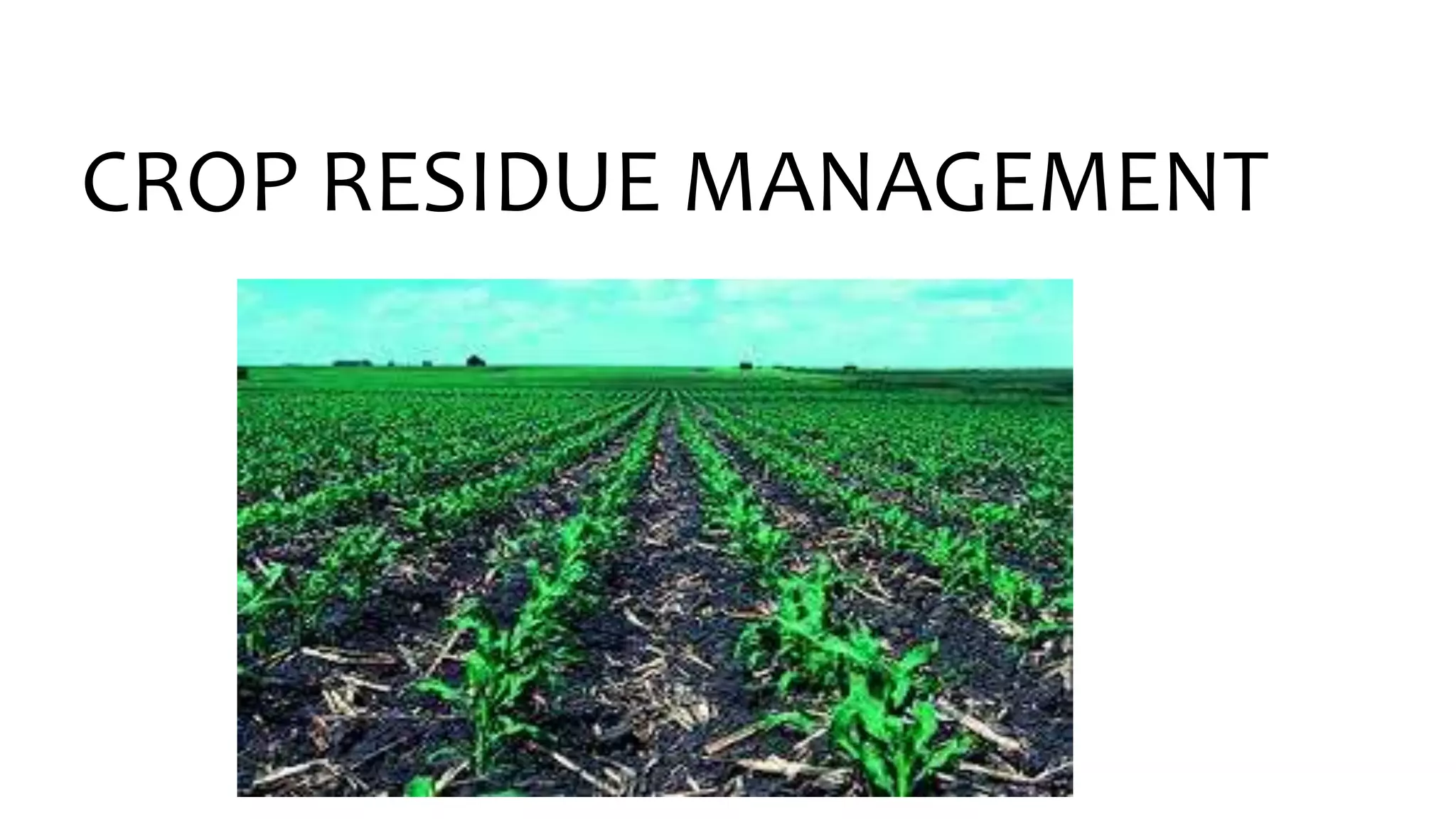
• Crop residue management means maintaining cover on
60% of the soil surface at planting to protect water quality.
• It also provides seasonal soil protection from wind and
rain erosion and adds organic matter to the soil.
• It conserves soil moisture, improves infiltration, aeration
and tilth.
INTRODUCTION
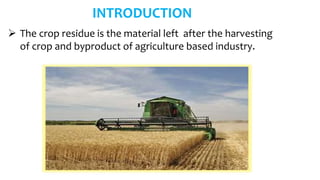
 The crop residue is the material left after the harvesting
of crop and byproduct of agriculture based industry.
PRESENT STATUS OF CROP RESIDUE MANAGEMENT
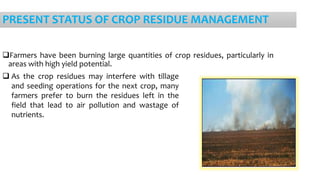
Farmers have been burning large quantities of crop residues, particularly in
areas with high yield potential.
 As the crop residues may interfere with tillage
and seeding operations for the next crop, many
farmers prefer to burn the residues left in the
field that lead to air pollution and wastage of
nutrients.
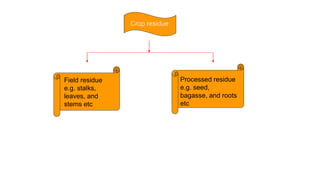
Crop residue
Field residue
e.g. stalks,
leaves, and
stems etc
Processed residue
e.g. seed,
bagasse, and roots
etc
Field residue:-
Good management of field residue can
increase efficiency of irrigation and
control of erosion.
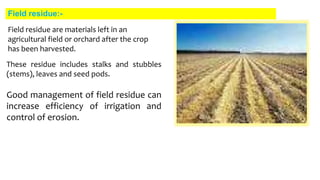
Field residue are materials left in an
agricultural field or orchard after the crop
has been harvested.
These residue includes stalks and stubbles
(stems), leaves and seed pods.
Process residues
They can be used as animal
fodder and manufacture of
organic manure .
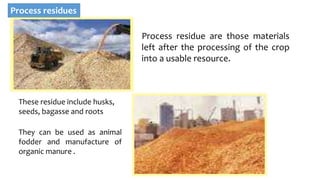
Process residue are those materials
left after the processing of the crop
into a usable resource.
These residue include husks,
seeds, bagasse and roots
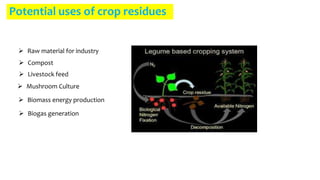
Potential uses of crop residues
 Biomass energy production
 Livestock feed
 Compost
 Biogas generation
 Mushroom Culture
 Raw material for industry
EFFICIENCY OF NUTRIENT UPTAKE
The efficiency of nutrient uptake by crops from fertilizers
or residue release is generally thought to be similar.
It has a great economic value, mineralogist nutrient
uptake .
Due the crop residue management the yield and quality
will be good.
It also improves soil quality and crop productivity.
Residue managment

Residue managment

  • 1.
  • 2.
    DEFINITION • Crop residuemanagement means maintaining cover on 60% of the soil surface at planting to protect water quality. • It also provides seasonal soil protection from wind and rain erosion and adds organic matter to the soil. • It conserves soil moisture, improves infiltration, aeration and tilth.
  • 3.
    INTRODUCTION  The cropresidue is the material left after the harvesting of crop and byproduct of agriculture based industry.
  • 4.
    PRESENT STATUS OFCROP RESIDUE MANAGEMENT Farmers have been burning large quantities of crop residues, particularly in areas with high yield potential.  As the crop residues may interfere with tillage and seeding operations for the next crop, many farmers prefer to burn the residues left in the field that lead to air pollution and wastage of nutrients.
  • 5.
    Crop residue Field residue e.g.stalks, leaves, and stems etc Processed residue e.g. seed, bagasse, and roots etc
  • 6.
    Field residue:- Good managementof field residue can increase efficiency of irrigation and control of erosion. Field residue are materials left in an agricultural field or orchard after the crop has been harvested. These residue includes stalks and stubbles (stems), leaves and seed pods.
  • 7.
    Process residues They canbe used as animal fodder and manufacture of organic manure . Process residue are those materials left after the processing of the crop into a usable resource. These residue include husks, seeds, bagasse and roots
  • 8.
    Potential uses ofcrop residues  Biomass energy production  Livestock feed  Compost  Biogas generation  Mushroom Culture  Raw material for industry
  • 9.
    EFFICIENCY OF NUTRIENTUPTAKE The efficiency of nutrient uptake by crops from fertilizers or residue release is generally thought to be similar. It has a great economic value, mineralogist nutrient uptake . Due the crop residue management the yield and quality will be good. It also improves soil quality and crop productivity.