Presented by
Md.Habib Ullah
ID No. 1401078
Sec. A Group. D
OUTLINE
 Defination
 Predisposing factors
 Etiology
 Clinical signs
 Diagnosis
 Treatment
 Management
DEFINITION
ENDOMETRITIS
Inflammation of endometrium is called
endometritis.
CHRONIC ENDOMETRITIS
Chronic inflammation of endometrium is called
chronic endometritis
PREDISPOSING FACTORS
 Retained fetal membranes
 Dystocia
 Multiple birth
 Abortion
 Induced calving
 Unsanitary calving condition
ETIOLOGY
The principal micro-organisms associated with endometritis
are:
• Actinomyces pyogenes
• Fusobacterium necrophorum
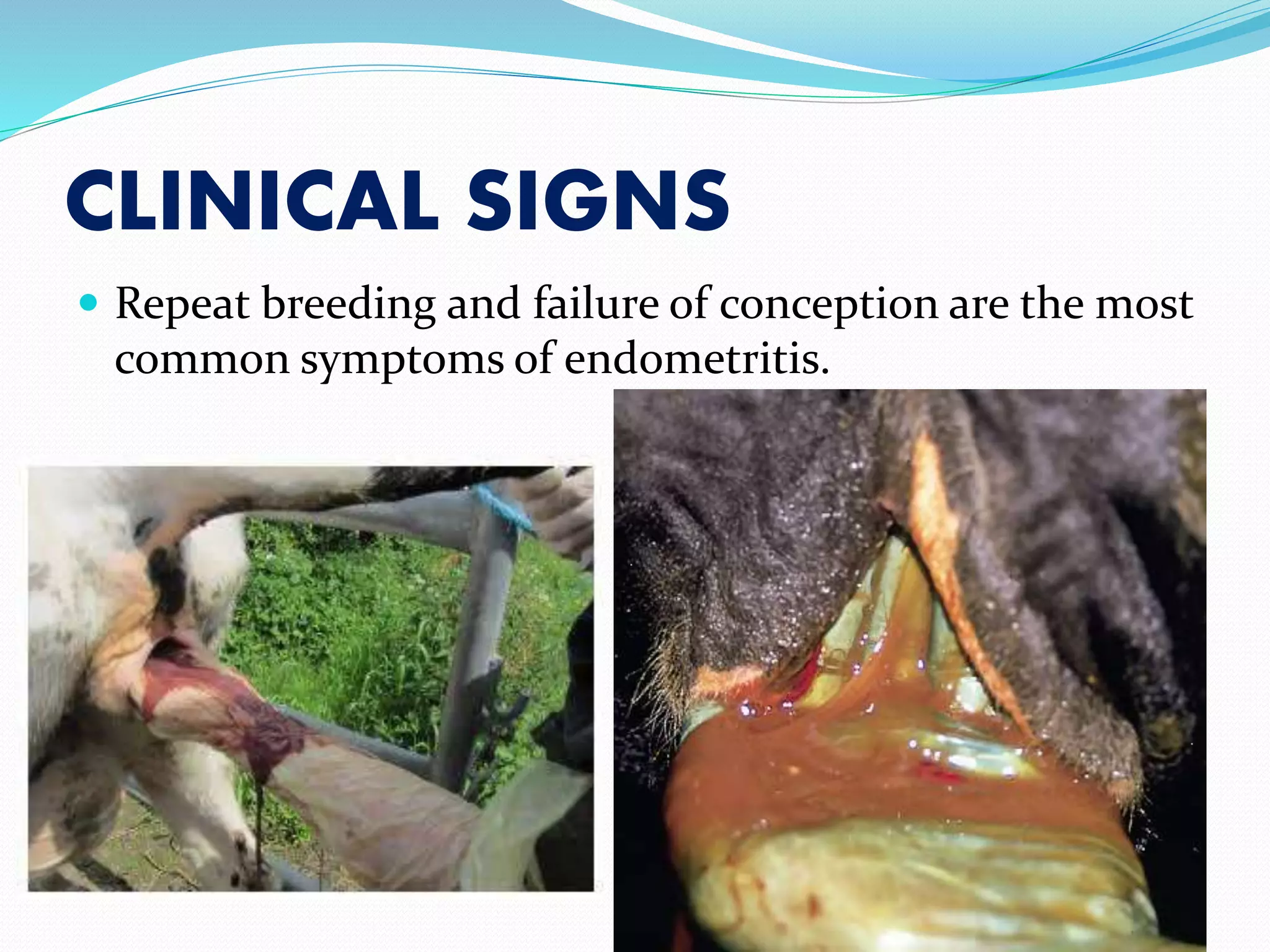
CLINICAL SIGNS
 White or whitish-yellow
mucopurulent vaginal
discharge comes out
when a diseased cow sit
down.
 Copious mucopurulent
discharge at the time of
oestrus.
 No signs of systemic
illness like septic
puerperal metritis.
CLINICAL SIGNS
 Repeat breeding and failure of conception are the most
common symptoms of endometritis.
DIAGNOSIS
 History of the patient.
 Clinical signs.
 Rectal palpation.
 Endometrial culture and biopsy.
 White side test.
 Microscopic examination of the vaginal discharge.
TREATMENT
(1)Antimicrobial therapy:
Intrauterine route
• Penicillin: Intrauterine infusion of 10 to 15 lakhs IU of
penicillin in the lumen and entire wall of the uterus.
• Oxytetracycline: 2 gm daily for 3 to 5 days.
Parenteral administration
• Penicillins: 8,000-10,000 IU per kg. body weight at 24
hours intervals for 3-5 days deep IM route
• Oxytetracycline: 22 mg/kg IM
TREATMENT( continue)
(2)Hormonal therapy
(a) Oestradiol valerate: 3-10 mg IM. This treatment can
be repeated at an interval of 7 days if required.
(b) Oxytocin: 10-20 IU within 4-6 hours of the oestrogen
injection.
(c) PGF2α analogues: Vetmate 2 ml I/M
(3)Supportive therapy
• Levamisole@ 2.5 mg/ body weight i.e. 10-15ml s/c
• Mineral mixture containing vit. A , D & E helps in
regeneration of endometrium and enhanches immunity .
MANAGEMENT
 Animal should be kept in hygienic environment.
 Animal should be cleaned regularlly.
 Bedding material should be dry and clean.
 Balanced diet should be provided.
 Anal region should be kept dry and clean.
THANKS
TO
ALL

Cronic Endometritis in Cow

  • 1.
    Presented by Md.Habib Ullah IDNo. 1401078 Sec. A Group. D
  • 2.
    OUTLINE  Defination  Predisposingfactors  Etiology  Clinical signs  Diagnosis  Treatment  Management
  • 3.
    DEFINITION ENDOMETRITIS Inflammation of endometriumis called endometritis. CHRONIC ENDOMETRITIS Chronic inflammation of endometrium is called chronic endometritis
  • 4.
    PREDISPOSING FACTORS  Retainedfetal membranes  Dystocia  Multiple birth  Abortion  Induced calving  Unsanitary calving condition
  • 5.
    ETIOLOGY The principal micro-organismsassociated with endometritis are: • Actinomyces pyogenes • Fusobacterium necrophorum
  • 6.
    CLINICAL SIGNS  Whiteor whitish-yellow mucopurulent vaginal discharge comes out when a diseased cow sit down.  Copious mucopurulent discharge at the time of oestrus.  No signs of systemic illness like septic puerperal metritis.
  • 7.
    CLINICAL SIGNS  Repeatbreeding and failure of conception are the most common symptoms of endometritis.
  • 8.
    DIAGNOSIS  History ofthe patient.  Clinical signs.  Rectal palpation.  Endometrial culture and biopsy.  White side test.  Microscopic examination of the vaginal discharge.
  • 9.
    TREATMENT (1)Antimicrobial therapy: Intrauterine route •Penicillin: Intrauterine infusion of 10 to 15 lakhs IU of penicillin in the lumen and entire wall of the uterus. • Oxytetracycline: 2 gm daily for 3 to 5 days. Parenteral administration • Penicillins: 8,000-10,000 IU per kg. body weight at 24 hours intervals for 3-5 days deep IM route • Oxytetracycline: 22 mg/kg IM
  • 10.
    TREATMENT( continue) (2)Hormonal therapy (a)Oestradiol valerate: 3-10 mg IM. This treatment can be repeated at an interval of 7 days if required. (b) Oxytocin: 10-20 IU within 4-6 hours of the oestrogen injection. (c) PGF2α analogues: Vetmate 2 ml I/M (3)Supportive therapy • Levamisole@ 2.5 mg/ body weight i.e. 10-15ml s/c • Mineral mixture containing vit. A , D & E helps in regeneration of endometrium and enhanches immunity .
  • 11.
    MANAGEMENT  Animal shouldbe kept in hygienic environment.  Animal should be cleaned regularlly.  Bedding material should be dry and clean.  Balanced diet should be provided.  Anal region should be kept dry and clean.
  • 12.