C.R.M
Scott Wilson
JISC-CETIS
CRM areas
• Analytics
• Contacts
• Sales
• Campaigns
• Service Design
What is CRM?
• Customer Relationship Management
• Focus on communications and
services to deliver a personalised
experience
• Aims:
– increase understanding of customers
– enhance relationships with customers
– effect business change e.g. upsell, cross-
sell, re-sell
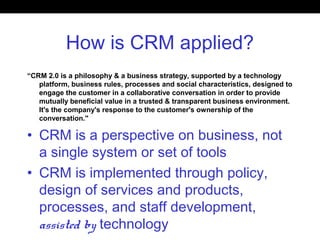
How is CRM applied?
“CRM 2.0 is a philosophy & a business strategy, supported by a technology
platform, business rules, processes and social characteristics, designed to
engage the customer in a collaborative conversation in order to provide
mutually beneficial value in a trusted & transparent business environment.
It's the company's response to the customer's ownership of the
conversation."
• CRM is a perspective on business, not
a single system or set of tools
• CRM is implemented through policy,
design of services and products,
processes, and staff development,
assisted by technology
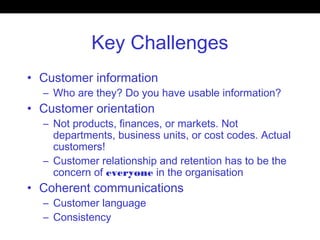
Key Challenges
• Customer information
– Who are they? Do you have usable information?
• Customer orientation
– Not products, finances, or markets. Not
departments, business units, or cost codes. Actual
customers!
– Customer relationship and retention has to be the
concern of everyone in the organisation
• Coherent communications
– Customer language
– Consistency
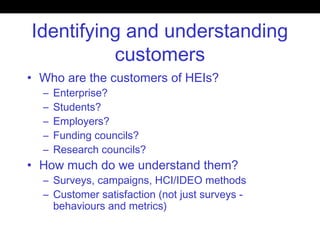
Identifying and understanding
customers
• Who are the customers of HEIs?
– Enterprise?
– Students?
– Employers?
– Funding councils?
– Research councils?
• How much do we understand them?
– Surveys, campaigns, HCI/IDEO methods
– Customer satisfaction (not just surveys -
behaviours and metrics)
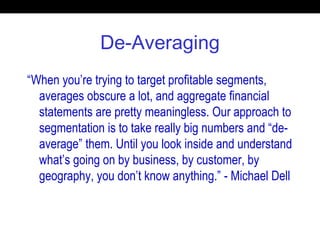
De-Averaging
“When you’re trying to target profitable segments,
averages obscure a lot, and aggregate financial
statements are pretty meaningless. Our approach to
segmentation is to take really big numbers and “de-
average” them. Until you look inside and understand
what’s going on by business, by customer, by
geography, you don’t know anything.” - Michael Dell
Segmentation
• “Segmentation should be based on
customer needs not on demographics”
– Are customer segments and campaigns
targeted to customer behaviour?
• “When segments grow, re-segment”
Customer Value
• CRM looks beyond the value of transactions
to the value of the customer relationship
• E.g.:
– Lifetime revenue potential on repeat sales and
cross/up sales
– Customers selling your products for you through
their personal networks
– Customers promoting your brand
• Value of customers increases over time due
to high acquisition cost versus initial margins
Thinking about value
• Managing customer
relationships so
that the customers
can provide value to
the company based
on the company’s
value to the
customer (quid pro
quo)
• Engaging customers
in collaborative
activity for mutually
created value
Traditional CRM Tools
• Account Management
• Contact Management
• Market Opportunity Management
(Leads)
• Campaign Management
• Sales Management
• Service Management
• Analytics & Monitoring
The Risk
• Temptation to go for a big system and
massive data management exercise
rather than focus on pain points and
capturing strategic information
• “Comprehensive” CRM is difficult,
expensive, and yields big systems
• Need to focus on high-yield
interventions
The Payoff
• Effective CRM engages customers, and
can make them passionate
ambassadors for your organisation
• Effective CRM turns one-off purchases
into relationships that deliver increasing
value to both customer and provider
CRM 2.0
• CRM 1.0 focussed on company-customer relationship
• CRM 2.0 recognises the importance of customer
networks
QuickTime™ and a
decompressor
are needed to see this picture.
Social CRM Tools
• Brand presence management
• Customer network analysis
• Customer intelligence capture
• Customer support networks
• Feedback and participation channels
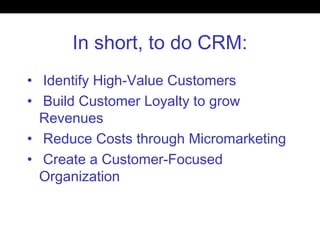
In short, to do CRM:
• Identify High-Value Customers
• Build Customer Loyalty to grow
Revenues
• Reduce Costs through Micromarketing
• Create a Customer-Focused
Organization
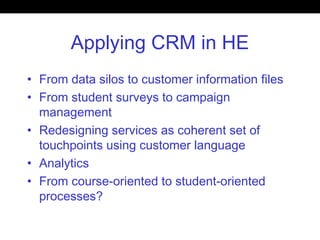
Applying CRM in HE
• From data silos to customer information files
• From student surveys to campaign
management
• Redesigning services as coherent set of
touchpoints using customer language
• Analytics
• From course-oriented to student-oriented
processes?
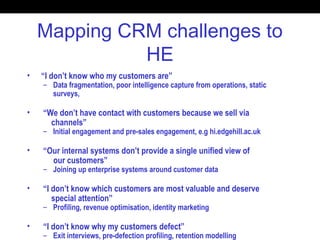
Mapping CRM challenges to
HE
• “I don’t know who my customers are”
– Data fragmentation, poor intelligence capture from operations, static
surveys,
• “We don’t have contact with customers because we sell via
channels”
– Initial engagement and pre-sales engagement, e.g hi.edgehill.ac.uk
• “Our internal systems don’t provide a single unified view of
our customers”
– Joining up enterprise systems around customer data
• “I don’t know which customers are most valuable and deserve
special attention”
– Profiling, revenue optimisation, identity marketing
• “I don’t know why my customers defect”
– Exit interviews, pre-defection profiling, retention modelling
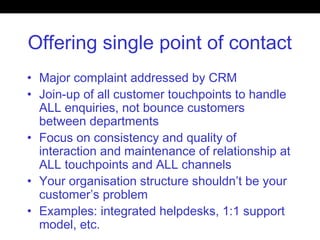
Offering single point of contact
• Major complaint addressed by CRM
• Join-up of all customer touchpoints to handle
ALL enquiries, not bounce customers
between departments
• Focus on consistency and quality of
interaction and maintenance of relationship at
ALL touchpoints and ALL channels
• Your organisation structure shouldn’t be your
customer’s problem
• Examples: integrated helpdesks, 1:1 support
model, etc.
JISC CRM study - use of CRM
in BCE
• Operational
– Using the information to manage contacts
– Logging of relationship transactions (e.g. projects, visits, telephone
calls, events, customer needs, customer satisfaction)
• Tactical
– Using the information to inform service delivery and Improvement
– Interrogating the data to enable customer segmentation, targeted
marketing, key account management, market analysis, cross-selling
etc.
• Strategic
– Using the information to make better informed strategic decision on
an institutional wide basis
– Interrogating the data to enable market analysis, product/service
appraisal, information management/reporting (internally/externally)
etc
Business Transformation
• What would a customer-focussed HEI
really look like?
• What would you give away, what would
you monetize, who would you create
relationships with?
• How would you create long-term
customer relationships delivering
increasing value?
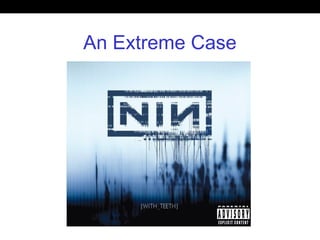
An Extreme Case
NIN CRM
• “Reznor has pioneered a new, fan-centered business model that
radically breaks with the practices of the struggling music industry. His
embrace of "freemium" pricing, torrent distribution, fan remixes and
social media seem to be paying off financially even as they have helped
him forge deeper connections with the Nine Inch Nails faithful.”
• "Anyone who’s an executive at a record label does not understand what
the internet is, how it works, how people use it, how fans and
consumers interact - no idea," he declares. "I’m surprised they know
how to use e-mail. They have built a business around selling plastic
discs, and nobody wants plastic discs any more.”
• “So everything we’ve tried to do has been from the point of view of,
‘What would I want if I were a fan? How would I want to be treated?’
Now let’s work back from that. Let’s find a way for that to make sense
and monetize it.”
• "I doubt I’ll ever pay someone to do a remix again"

CRM & HE

  • 1.
  • 2.
    CRM areas • Analytics •Contacts • Sales • Campaigns • Service Design
  • 3.
    What is CRM? •Customer Relationship Management • Focus on communications and services to deliver a personalised experience • Aims: – increase understanding of customers – enhance relationships with customers – effect business change e.g. upsell, cross- sell, re-sell
  • 4.
    How is CRMapplied? “CRM 2.0 is a philosophy & a business strategy, supported by a technology platform, business rules, processes and social characteristics, designed to engage the customer in a collaborative conversation in order to provide mutually beneficial value in a trusted & transparent business environment. It's the company's response to the customer's ownership of the conversation." • CRM is a perspective on business, not a single system or set of tools • CRM is implemented through policy, design of services and products, processes, and staff development, assisted by technology
  • 5.
    Key Challenges • Customerinformation – Who are they? Do you have usable information? • Customer orientation – Not products, finances, or markets. Not departments, business units, or cost codes. Actual customers! – Customer relationship and retention has to be the concern of everyone in the organisation • Coherent communications – Customer language – Consistency
  • 6.
    Identifying and understanding customers •Who are the customers of HEIs? – Enterprise? – Students? – Employers? – Funding councils? – Research councils? • How much do we understand them? – Surveys, campaigns, HCI/IDEO methods – Customer satisfaction (not just surveys - behaviours and metrics)
  • 7.
    De-Averaging “When you’re tryingto target profitable segments, averages obscure a lot, and aggregate financial statements are pretty meaningless. Our approach to segmentation is to take really big numbers and “de- average” them. Until you look inside and understand what’s going on by business, by customer, by geography, you don’t know anything.” - Michael Dell
  • 8.
    Segmentation • “Segmentation shouldbe based on customer needs not on demographics” – Are customer segments and campaigns targeted to customer behaviour? • “When segments grow, re-segment”
  • 9.
    Customer Value • CRMlooks beyond the value of transactions to the value of the customer relationship • E.g.: – Lifetime revenue potential on repeat sales and cross/up sales – Customers selling your products for you through their personal networks – Customers promoting your brand • Value of customers increases over time due to high acquisition cost versus initial margins
  • 10.
    Thinking about value •Managing customer relationships so that the customers can provide value to the company based on the company’s value to the customer (quid pro quo) • Engaging customers in collaborative activity for mutually created value
  • 11.
    Traditional CRM Tools •Account Management • Contact Management • Market Opportunity Management (Leads) • Campaign Management • Sales Management • Service Management • Analytics & Monitoring
  • 12.
    The Risk • Temptationto go for a big system and massive data management exercise rather than focus on pain points and capturing strategic information • “Comprehensive” CRM is difficult, expensive, and yields big systems • Need to focus on high-yield interventions
  • 13.
    The Payoff • EffectiveCRM engages customers, and can make them passionate ambassadors for your organisation • Effective CRM turns one-off purchases into relationships that deliver increasing value to both customer and provider
  • 14.
    CRM 2.0 • CRM1.0 focussed on company-customer relationship • CRM 2.0 recognises the importance of customer networks QuickTime™ and a decompressor are needed to see this picture.
  • 15.
    Social CRM Tools •Brand presence management • Customer network analysis • Customer intelligence capture • Customer support networks • Feedback and participation channels
  • 16.
    In short, todo CRM: • Identify High-Value Customers • Build Customer Loyalty to grow Revenues • Reduce Costs through Micromarketing • Create a Customer-Focused Organization
  • 17.
    Applying CRM inHE • From data silos to customer information files • From student surveys to campaign management • Redesigning services as coherent set of touchpoints using customer language • Analytics • From course-oriented to student-oriented processes?
  • 18.
    Mapping CRM challengesto HE • “I don’t know who my customers are” – Data fragmentation, poor intelligence capture from operations, static surveys, • “We don’t have contact with customers because we sell via channels” – Initial engagement and pre-sales engagement, e.g hi.edgehill.ac.uk • “Our internal systems don’t provide a single unified view of our customers” – Joining up enterprise systems around customer data • “I don’t know which customers are most valuable and deserve special attention” – Profiling, revenue optimisation, identity marketing • “I don’t know why my customers defect” – Exit interviews, pre-defection profiling, retention modelling
  • 19.
    Offering single pointof contact • Major complaint addressed by CRM • Join-up of all customer touchpoints to handle ALL enquiries, not bounce customers between departments • Focus on consistency and quality of interaction and maintenance of relationship at ALL touchpoints and ALL channels • Your organisation structure shouldn’t be your customer’s problem • Examples: integrated helpdesks, 1:1 support model, etc.
  • 20.
    JISC CRM study- use of CRM in BCE • Operational – Using the information to manage contacts – Logging of relationship transactions (e.g. projects, visits, telephone calls, events, customer needs, customer satisfaction) • Tactical – Using the information to inform service delivery and Improvement – Interrogating the data to enable customer segmentation, targeted marketing, key account management, market analysis, cross-selling etc. • Strategic – Using the information to make better informed strategic decision on an institutional wide basis – Interrogating the data to enable market analysis, product/service appraisal, information management/reporting (internally/externally) etc
  • 21.
    Business Transformation • Whatwould a customer-focussed HEI really look like? • What would you give away, what would you monetize, who would you create relationships with? • How would you create long-term customer relationships delivering increasing value?
  • 22.
  • 23.
    NIN CRM • “Reznorhas pioneered a new, fan-centered business model that radically breaks with the practices of the struggling music industry. His embrace of "freemium" pricing, torrent distribution, fan remixes and social media seem to be paying off financially even as they have helped him forge deeper connections with the Nine Inch Nails faithful.” • "Anyone who’s an executive at a record label does not understand what the internet is, how it works, how people use it, how fans and consumers interact - no idea," he declares. "I’m surprised they know how to use e-mail. They have built a business around selling plastic discs, and nobody wants plastic discs any more.” • “So everything we’ve tried to do has been from the point of view of, ‘What would I want if I were a fan? How would I want to be treated?’ Now let’s work back from that. Let’s find a way for that to make sense and monetize it.” • "I doubt I’ll ever pay someone to do a remix again"