Why an Customer Lifecycle Management?


  Cost of a Dis-satisfied Customer or a Retention
  Challenges faced by the Organization
  CRM – Mission as set by CEO
  Customer Lifecycle Management – An Overview
  Initiatives Undertaken by Me
Cost of a Dis-satisfied Customer or a Retention

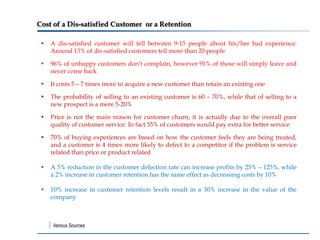
 •   A dis-satisfied customer will tell between 9-15 people about his/her bad experience.
     Around 13% of dis-satisfied customers tell more than 20 people

 •   96% of unhappy customers don’t complain, however 91% of those will simply leave and
     never come back

 •   It costs 5 – 7 times more to acquire a new customer than retain an existing one

 •   The probability of selling to an existing customer is 60 – 70%, while that of selling to a
     new prospect is a mere 5-20%

 •   Price is not the main reason for customer churn; it is actually due to the overall poor
     quality of customer service. In fact 55% of customers would pay extra for better service

 •   70% of buying experiences are based on how the customer feels they are being treated,
     and a customer is 4 times more likely to defect to a competitor if the problem is service
     related than price or product related

 •   A 5% reduction in the customer defection rate can increase profits by 25% – 125%, while
     a 2% increase in customer retention has the same effect as decreasing costs by 10%

 •   10% increase in customer retention levels result in a 30% increase in the value of the
     company


     Various Sources
Challenges faced by the Organization

•   Inability to measure the customers’ satisfaction or dis-satisfaction levels, loyalty etc (you
    can’t improve what you can’t measure).

•   No defined experience for the customers during any stage or touch point (letting it to just
    happen), processes were defined inside out (not what really mattered most to the customers)

• Existing systems were independent and didn't talk to each other (Customer Service, Sales
  in ERP, Marketing etc.), often frustrating the customer (most felt as if talking to different
  organization every time).

•   Existing customer service processes and software only added on to customers’ dis-
    satisfaction (no tracking, escalations or acknowledgements).

•   Sales team answered all prospects thereby less focus on quality leads resulting in lower
    conversions and lost opportunities.

•   No engagements with existing customers (no emotional connect) and no cross sell or
    referral programs existed.
CRM – Mission as set by CEO

Driving customer centricity in the organization required a cultural change, and this
would not have been possible without the involvement and support from CEO.

Mission - Purpose of adopting CRM as a strategy was to bring a customer centric focus
in the organization, enabling us to better understand & meet our customers’ needs &
preferences, and thus build & maintain strong customer loyalty.

  Customer Centricity & Delight: Ensure complete satisfaction (fulfill basic hygiene
requirements) and provide delightful experience to our customers at every touch point.

 Drive two way engagement to build emotional relationship with our customers and
make them our loyal customers.

  Use feedback / suggestions, surveys & complaints to systematically drive
improvements across the organization.

  Become the trusted and preferred brand for our customers such that they do repeat
purchases, are willing to pay a premium price and provide potential referrals thereby
enhancing our revenues and profitability.
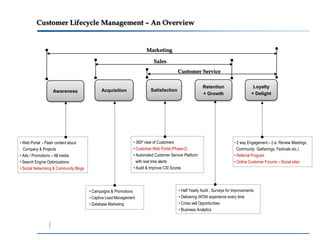
Customer Lifecycle Management – An Overview


                                                                       Marketing

                                                                           Sales
                                                                                         Customer Service

                                                                                                        Retention                      Loyalty
                   Awareness                  Acquisition                Satisfaction
                                                                                                        + Growth                      + Delight


• Web Portal - Flash content about                              • 360º view of Customers                                    • 2 way Engagement – (i.e. Review Meetings,
  Company & Projects                                            • Customer Web Portal (Phase-2)                               Community Gatherings, Festivals etc.)
• Ads / Promotions – All media                                  • Automated Customer Service Platform                       • Referral Program
• Search Engine Optimizations                                     with real time alerts                                     • Online Customer Forums – Social sites
• Social Networking & Community Blogs                           • Audit & Improve CSI Scores


                                        • Campaigns & Promotions                          • Half Yearly Audit , Surveys for Improvements
                                        • Captive Lead Management                         • Delivering WOW experience every time
                                        • Database Marketing                              • Cross sell Opportunities
                                                                                          • Business Analytics
Initiatives Undertaken by Me

•   Conceptualized and implemented ‘Customer Lifecycle Management’ for the
    organization to deliver an consistent, personalised and delightful customer experience at
    each stage with dashboard view of real time metrics for the management.

•   Acted core member to collate requirements from each department and implemented
    Microsoft CRM platform for the organization. Technology enabled processes now
    interconnected all departments thereby having access to 360◦ view of each customer.

•   Enhanced customer service processes (with real time tracking, resolutions within defined
    TAT, auto escalations and detailed analytics for prevention and/or follow up actions.)

•   By way of surveys assessed the prevailing customer experience at each touch point
    thereby arriving at base metrics (or CSI scores for periodical audits & improvements) and
    accordingly improvised processes from the customers’ perspective.

•   Conceptualized and implemented ‘Lead Management’ to efficiently capture and qualify
    leads – resulting for sales to focus on qualified leads thereby increasing conversions &
    revenues, high ROI on marketing spend and detailed analytics as strategic inputs.

•   Periodical engagements with customers for emotional connect (meetings, festivals etc.)

•   In process of deploying R&R program (employee motivation) and referral programs
    (enhance customer loyalty)

Customer Lifecycle Management

  • 1.
    Why an CustomerLifecycle Management? Cost of a Dis-satisfied Customer or a Retention Challenges faced by the Organization CRM – Mission as set by CEO Customer Lifecycle Management – An Overview Initiatives Undertaken by Me
  • 2.
    Cost of aDis-satisfied Customer or a Retention • A dis-satisfied customer will tell between 9-15 people about his/her bad experience. Around 13% of dis-satisfied customers tell more than 20 people • 96% of unhappy customers don’t complain, however 91% of those will simply leave and never come back • It costs 5 – 7 times more to acquire a new customer than retain an existing one • The probability of selling to an existing customer is 60 – 70%, while that of selling to a new prospect is a mere 5-20% • Price is not the main reason for customer churn; it is actually due to the overall poor quality of customer service. In fact 55% of customers would pay extra for better service • 70% of buying experiences are based on how the customer feels they are being treated, and a customer is 4 times more likely to defect to a competitor if the problem is service related than price or product related • A 5% reduction in the customer defection rate can increase profits by 25% – 125%, while a 2% increase in customer retention has the same effect as decreasing costs by 10% • 10% increase in customer retention levels result in a 30% increase in the value of the company Various Sources
  • 3.
    Challenges faced bythe Organization • Inability to measure the customers’ satisfaction or dis-satisfaction levels, loyalty etc (you can’t improve what you can’t measure). • No defined experience for the customers during any stage or touch point (letting it to just happen), processes were defined inside out (not what really mattered most to the customers) • Existing systems were independent and didn't talk to each other (Customer Service, Sales in ERP, Marketing etc.), often frustrating the customer (most felt as if talking to different organization every time). • Existing customer service processes and software only added on to customers’ dis- satisfaction (no tracking, escalations or acknowledgements). • Sales team answered all prospects thereby less focus on quality leads resulting in lower conversions and lost opportunities. • No engagements with existing customers (no emotional connect) and no cross sell or referral programs existed.
  • 4.
    CRM – Missionas set by CEO Driving customer centricity in the organization required a cultural change, and this would not have been possible without the involvement and support from CEO. Mission - Purpose of adopting CRM as a strategy was to bring a customer centric focus in the organization, enabling us to better understand & meet our customers’ needs & preferences, and thus build & maintain strong customer loyalty. Customer Centricity & Delight: Ensure complete satisfaction (fulfill basic hygiene requirements) and provide delightful experience to our customers at every touch point. Drive two way engagement to build emotional relationship with our customers and make them our loyal customers. Use feedback / suggestions, surveys & complaints to systematically drive improvements across the organization. Become the trusted and preferred brand for our customers such that they do repeat purchases, are willing to pay a premium price and provide potential referrals thereby enhancing our revenues and profitability.
  • 5.
    Customer Lifecycle Management– An Overview Marketing Sales Customer Service Retention Loyalty Awareness Acquisition Satisfaction + Growth + Delight • Web Portal - Flash content about • 360º view of Customers • 2 way Engagement – (i.e. Review Meetings, Company & Projects • Customer Web Portal (Phase-2) Community Gatherings, Festivals etc.) • Ads / Promotions – All media • Automated Customer Service Platform • Referral Program • Search Engine Optimizations with real time alerts • Online Customer Forums – Social sites • Social Networking & Community Blogs • Audit & Improve CSI Scores • Campaigns & Promotions • Half Yearly Audit , Surveys for Improvements • Captive Lead Management • Delivering WOW experience every time • Database Marketing • Cross sell Opportunities • Business Analytics
  • 6.
    Initiatives Undertaken byMe • Conceptualized and implemented ‘Customer Lifecycle Management’ for the organization to deliver an consistent, personalised and delightful customer experience at each stage with dashboard view of real time metrics for the management. • Acted core member to collate requirements from each department and implemented Microsoft CRM platform for the organization. Technology enabled processes now interconnected all departments thereby having access to 360◦ view of each customer. • Enhanced customer service processes (with real time tracking, resolutions within defined TAT, auto escalations and detailed analytics for prevention and/or follow up actions.) • By way of surveys assessed the prevailing customer experience at each touch point thereby arriving at base metrics (or CSI scores for periodical audits & improvements) and accordingly improvised processes from the customers’ perspective. • Conceptualized and implemented ‘Lead Management’ to efficiently capture and qualify leads – resulting for sales to focus on qualified leads thereby increasing conversions & revenues, high ROI on marketing spend and detailed analytics as strategic inputs. • Periodical engagements with customers for emotional connect (meetings, festivals etc.) • In process of deploying R&R program (employee motivation) and referral programs (enhance customer loyalty)