Creative Production
Chapter Authors: Patricia G. Lange and Mizuko Ito
         Report by: Katherine Bernard
Participatory Culture


In what Henry Jenkins and his colleagues have described as
“participatory culture,” budding creators can develop their
voices and identities as media creators through ongoing
interaction with engaged peers and audiences (Jenkins 1992;
Jenkins et al. 2006).
Participatory Culture

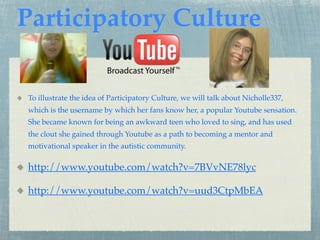
To illustrate the idea of Participatory Culture, we will talk about Nicholle337,
which is the username by which her fans know her, a popular Youtube sensation.
She became known for being an awkward teen who loved to sing, and has used
the clout she gained through Youtube as a path to becoming a mentor and
motivational speaker in the autistic community.

http://www.youtube.com/watch?v=7BVvNE78lyc

http://www.youtube.com/watch?v=uud3CtpMbEA
The focus of this chapter is on the social processes of interest
driven genres of participation, but we also describe how kids
get involved in messing around with new media through
friendship-driven practices.
Creative Production in
the Digital Age
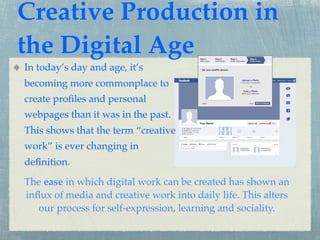
In today’s day and age, it’s
becoming more commonplace to
create profiles and personal
webpages than it was in the past.
This shows that the term “creative
work” is ever changing in
definition.
The ease in which digital work can be created has shown an
influx of media and creative work into daily life. This alters
   our process for self-expression, learning and sociality.
Creative Production in
the Digital Age


Access to media production tools is easy. Most computers
come with stock software that allows for creation of videos,
editing photos, music and more. This changes the game
because most people have access to these types of production
software thus their capabilities are changing.
Everyday Media Production
Many young people are now well versed in the
  media production world. They may not call
   themselves producers because things like
making accounts/profiles on social networking
sites are now very common occurrences, but a
 lot of them are capable of advanced forms of
                    media.
Personal Photos
Digital photography and videotaping
grow out of existing practices of self-
archiving (such as journaling,
scrapbooking, and keeping photograph
albums) and are propelled by the growth
in avenues to share these media with
friends and family.
Sharing Personal Media
                                        Sharing is one of the
The capabilities of                       primary drives
sharing within new                      behind the power of
forms of social                            social media.
media give new
meaning to the term
social life.

Sharing photos blurs the line between
  creative production and personal
           communication.
Profiles
  As teens create their profiles, and post and
 link on their own profiles and their friends’
  profiles, they are engaged in acts of social
communication and everyday media sharing
 and “consumption” that also entail creating
           their own digital media.
                                   These observations provide a
                                      window onto how youth
                                  engage with profile creation as
                                   a form of creative production
                                   embedded in their everyday
                                          social relations.
Getting Started
Tinkering with new media
 production can lead to a
greater interest in the field.

                                    Mother-daughter youtube
                                  sensation Lola and Ashley got
                                started because Ashley wanted to
                                 go to film school. It was a great
                                 way for her to practice her craft
                                 and a great way for her mother,
                                   Lola, to grow closer with her
                                             daughter.
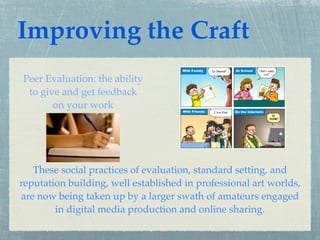
Improving the Craft
Peer Evaluation: the ability
 to give and get feedback
       on your work


   These social practices of evaluation, standard setting, and
reputation building, well established in professional art worlds,
are now being taken up by a larger swath of amateurs engaged
        in digital media production and online sharing.
Gaining Audience
  The desire for sharing,
visibility, and reputation is
   a powerful driver for
creative production in the
        online world.

                                 While fellow creators provide
                                the feedback that improves the
                                  craft, audiences provide the
                                 recognition and validation of
                                     the work that is highly
                                          motivational.
Aspirational Trajectories
 In most cases, young people who create
    digital media are not aspiring to be
  professionals or to get famous through
            their creative work.
They engage in digital media production as a social activity, a fun
  extracurricular hobby, or maybe even a serious lifelong one.
              Young people can begin by modeling
   more accessible and amateur forms of creative production.
  Even if they end there, with practices that never turn toward
   professionalism, they still can gain status, validation, and
  reputation within specific creative communities and smaller
                           audiences.
Conclusion
  All of the topics we’ve discussed
demonstrate the growing centrality of
media creation in the everyday social
      communication of youth.


  Whether it is everyday photography or machinima, youth are
using media they create as a way of documenting their lives and
 as a means of self-expression. These cases also demonstrate the
 centrality of peer-based exchange in motivating creative work
                 and providing a learning context.

Creative production

  • 1.
    Creative Production Chapter Authors:Patricia G. Lange and Mizuko Ito Report by: Katherine Bernard
  • 2.
    Participatory Culture In whatHenry Jenkins and his colleagues have described as “participatory culture,” budding creators can develop their voices and identities as media creators through ongoing interaction with engaged peers and audiences (Jenkins 1992; Jenkins et al. 2006).
  • 3.
    Participatory Culture To illustratethe idea of Participatory Culture, we will talk about Nicholle337, which is the username by which her fans know her, a popular Youtube sensation. She became known for being an awkward teen who loved to sing, and has used the clout she gained through Youtube as a path to becoming a mentor and motivational speaker in the autistic community. http://www.youtube.com/watch?v=7BVvNE78lyc http://www.youtube.com/watch?v=uud3CtpMbEA
  • 4.
    The focus ofthis chapter is on the social processes of interest driven genres of participation, but we also describe how kids get involved in messing around with new media through friendship-driven practices.
  • 5.
    Creative Production in theDigital Age In today’s day and age, it’s becoming more commonplace to create profiles and personal webpages than it was in the past. This shows that the term “creative work” is ever changing in definition. The ease in which digital work can be created has shown an influx of media and creative work into daily life. This alters our process for self-expression, learning and sociality.
  • 6.
    Creative Production in theDigital Age Access to media production tools is easy. Most computers come with stock software that allows for creation of videos, editing photos, music and more. This changes the game because most people have access to these types of production software thus their capabilities are changing.
  • 7.
    Everyday Media Production Manyyoung people are now well versed in the media production world. They may not call themselves producers because things like making accounts/profiles on social networking sites are now very common occurrences, but a lot of them are capable of advanced forms of media.
  • 8.
    Personal Photos Digital photographyand videotaping grow out of existing practices of self- archiving (such as journaling, scrapbooking, and keeping photograph albums) and are propelled by the growth in avenues to share these media with friends and family.
  • 9.
    Sharing Personal Media Sharing is one of the The capabilities of primary drives sharing within new behind the power of forms of social social media. media give new meaning to the term social life. Sharing photos blurs the line between creative production and personal communication.
  • 10.
    Profiles Asteens create their profiles, and post and link on their own profiles and their friends’ profiles, they are engaged in acts of social communication and everyday media sharing and “consumption” that also entail creating their own digital media. These observations provide a window onto how youth engage with profile creation as a form of creative production embedded in their everyday social relations.
  • 11.
    Getting Started Tinkering withnew media production can lead to a greater interest in the field. Mother-daughter youtube sensation Lola and Ashley got started because Ashley wanted to go to film school. It was a great way for her to practice her craft and a great way for her mother, Lola, to grow closer with her daughter.
  • 12.
    Improving the Craft PeerEvaluation: the ability to give and get feedback on your work These social practices of evaluation, standard setting, and reputation building, well established in professional art worlds, are now being taken up by a larger swath of amateurs engaged in digital media production and online sharing.
  • 13.
    Gaining Audience The desire for sharing, visibility, and reputation is a powerful driver for creative production in the online world. While fellow creators provide the feedback that improves the craft, audiences provide the recognition and validation of the work that is highly motivational.
  • 14.
    Aspirational Trajectories Inmost cases, young people who create digital media are not aspiring to be professionals or to get famous through their creative work. They engage in digital media production as a social activity, a fun extracurricular hobby, or maybe even a serious lifelong one. Young people can begin by modeling more accessible and amateur forms of creative production. Even if they end there, with practices that never turn toward professionalism, they still can gain status, validation, and reputation within specific creative communities and smaller audiences.
  • 15.
    Conclusion Allof the topics we’ve discussed demonstrate the growing centrality of media creation in the everyday social communication of youth. Whether it is everyday photography or machinima, youth are using media they create as a way of documenting their lives and as a means of self-expression. These cases also demonstrate the centrality of peer-based exchange in motivating creative work and providing a learning context.