Creating value in-storewhy and howPpt by Asha Krishnan IInd year MBAPondicherry University
# Retail shelf will be the forward position inthe battle for consumer spending. #   Many brand owners have mistakenly treated the in-store experience as yet another operational function.                    And…Whyit matters?
# When consumers feel pain in the pocketbook,    they react differently inside the store.Unfortunately, it is this in-store decision   moment that is chronically misunderstood   and under-resourced.# 70 percent or more of purchase    decisions are made in-store
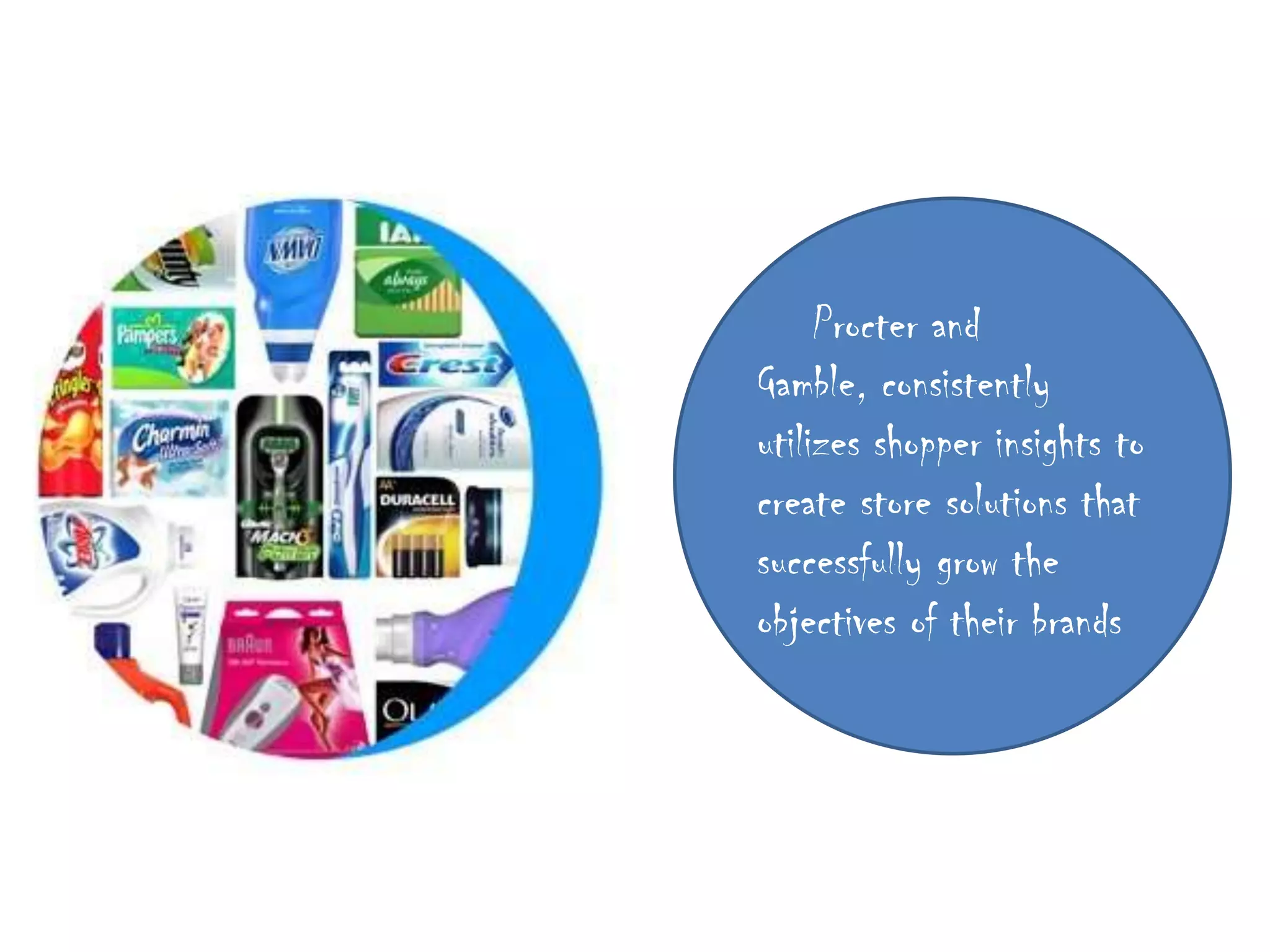
Procter and Gamble, consistently utilizes shopper insights to create store solutions that successfully grow the objectives of their brands
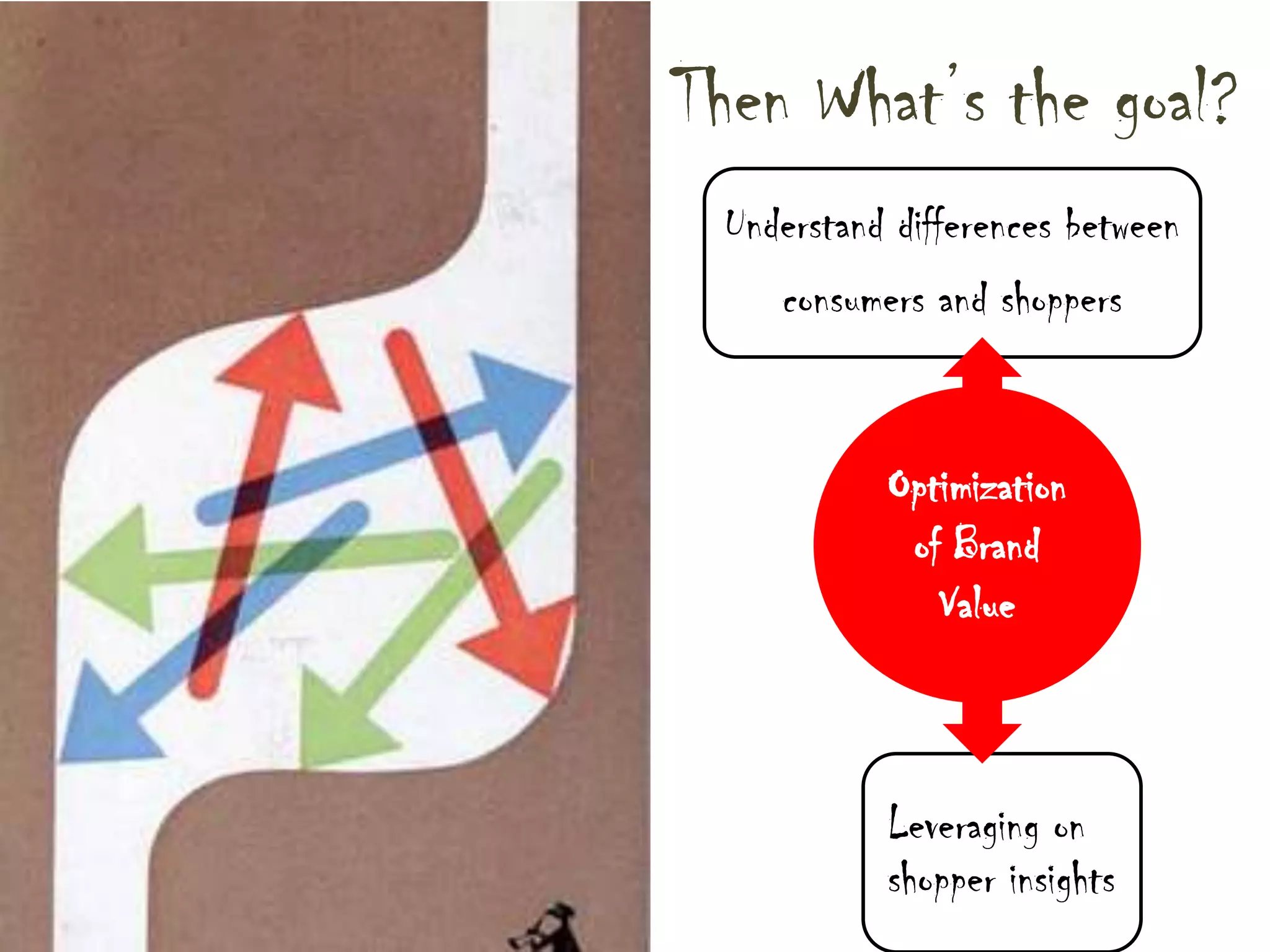
Understand differences between consumers and shoppersThen What’s the goal?Leveraging on shopper insights1Optimization of Brand Value
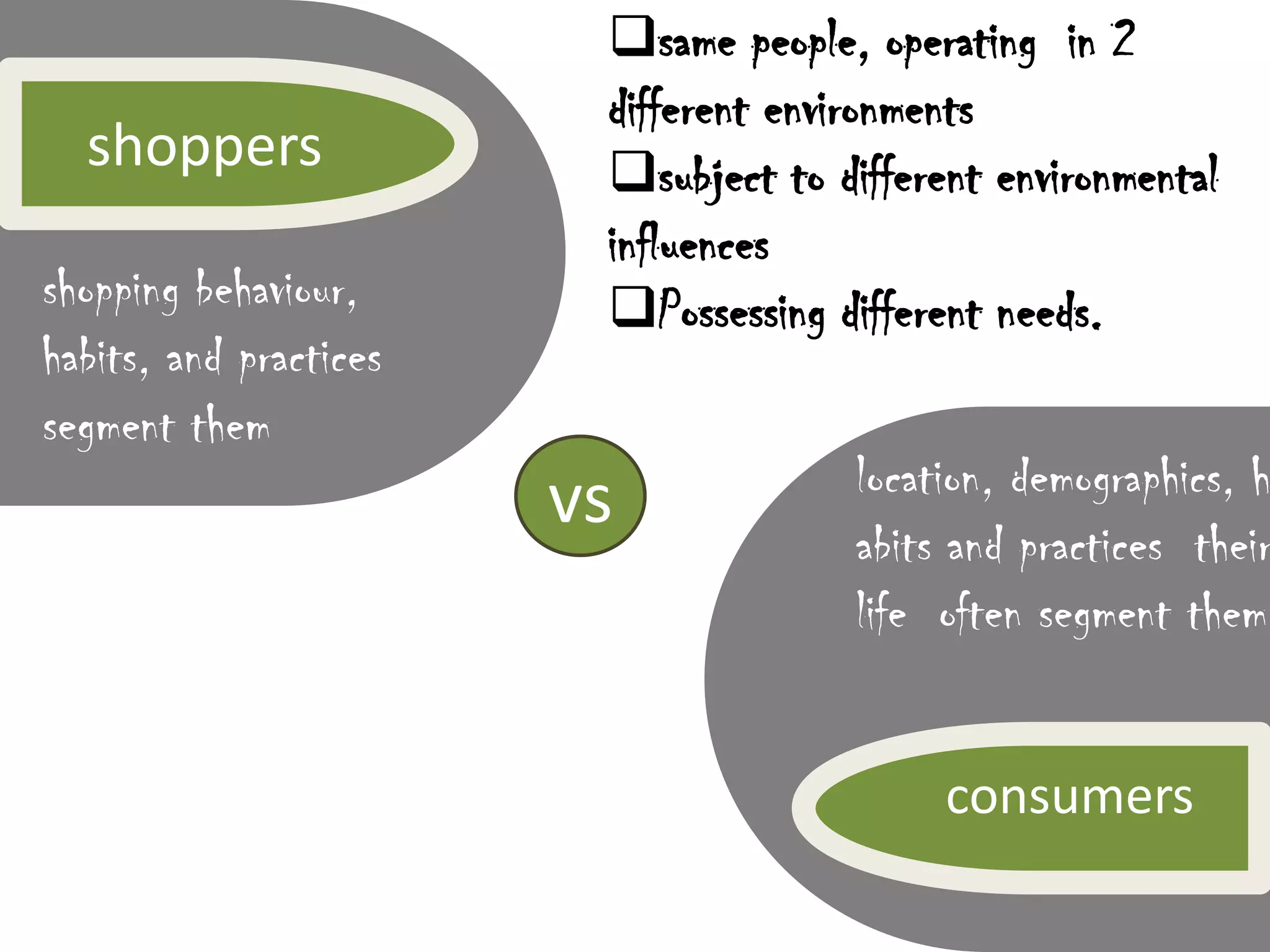
same people, operating  in 2 different environments
subject to different environmental influences
Possessing different needs.Shoppersshoppersshopping behaviour, habits, and practices segment themlocation, demographics, habits and practices  their life  often segment themvs.consumersCONSUMERS
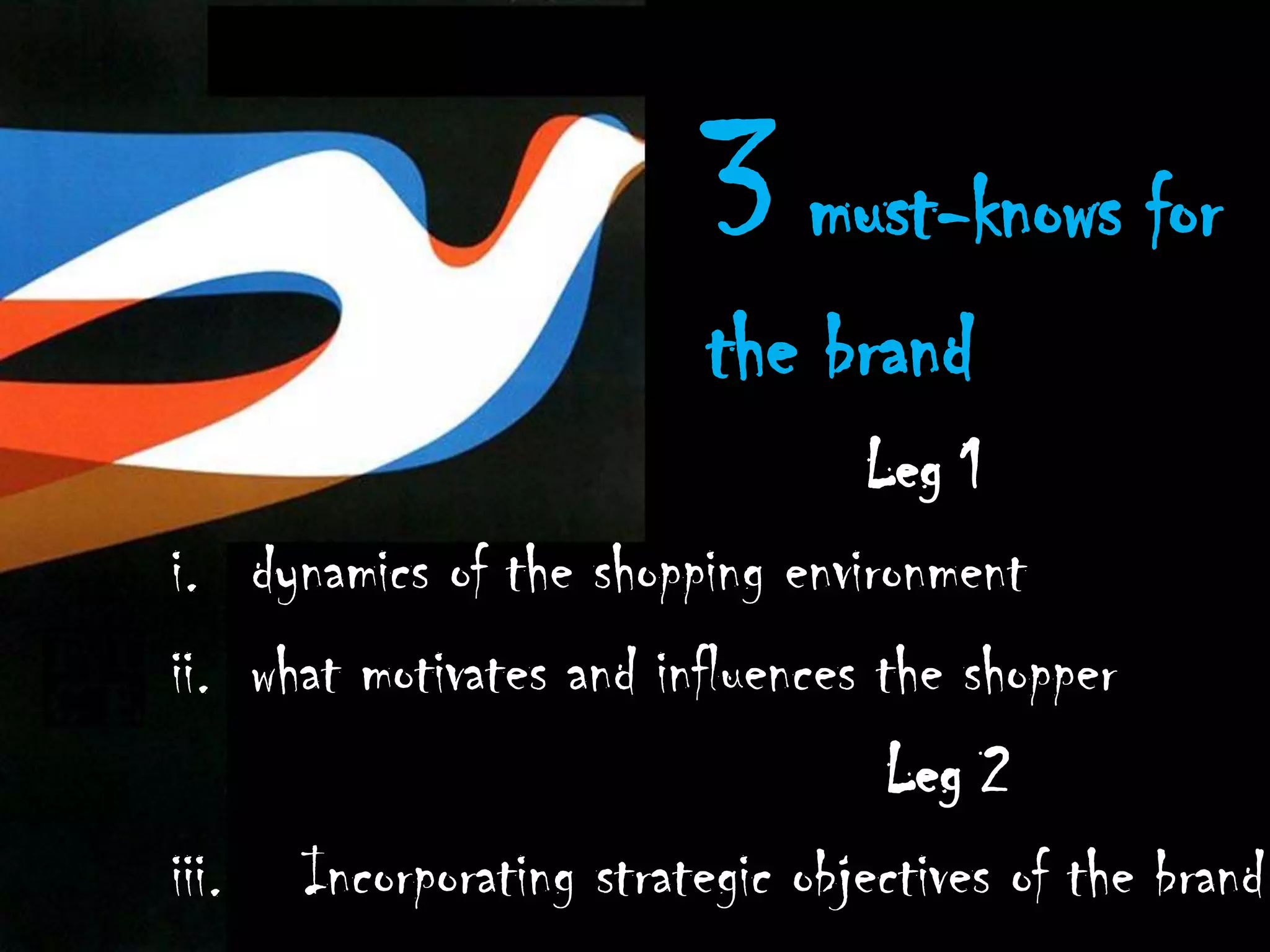
3 must-knows for the brand Leg 1dynamics of the shopping environment   what motivates and influences the shopper                                    Leg 2iii.    Incorporating strategic objectives of the brand
LEG 1Understanding  dynamics of the shopping environment
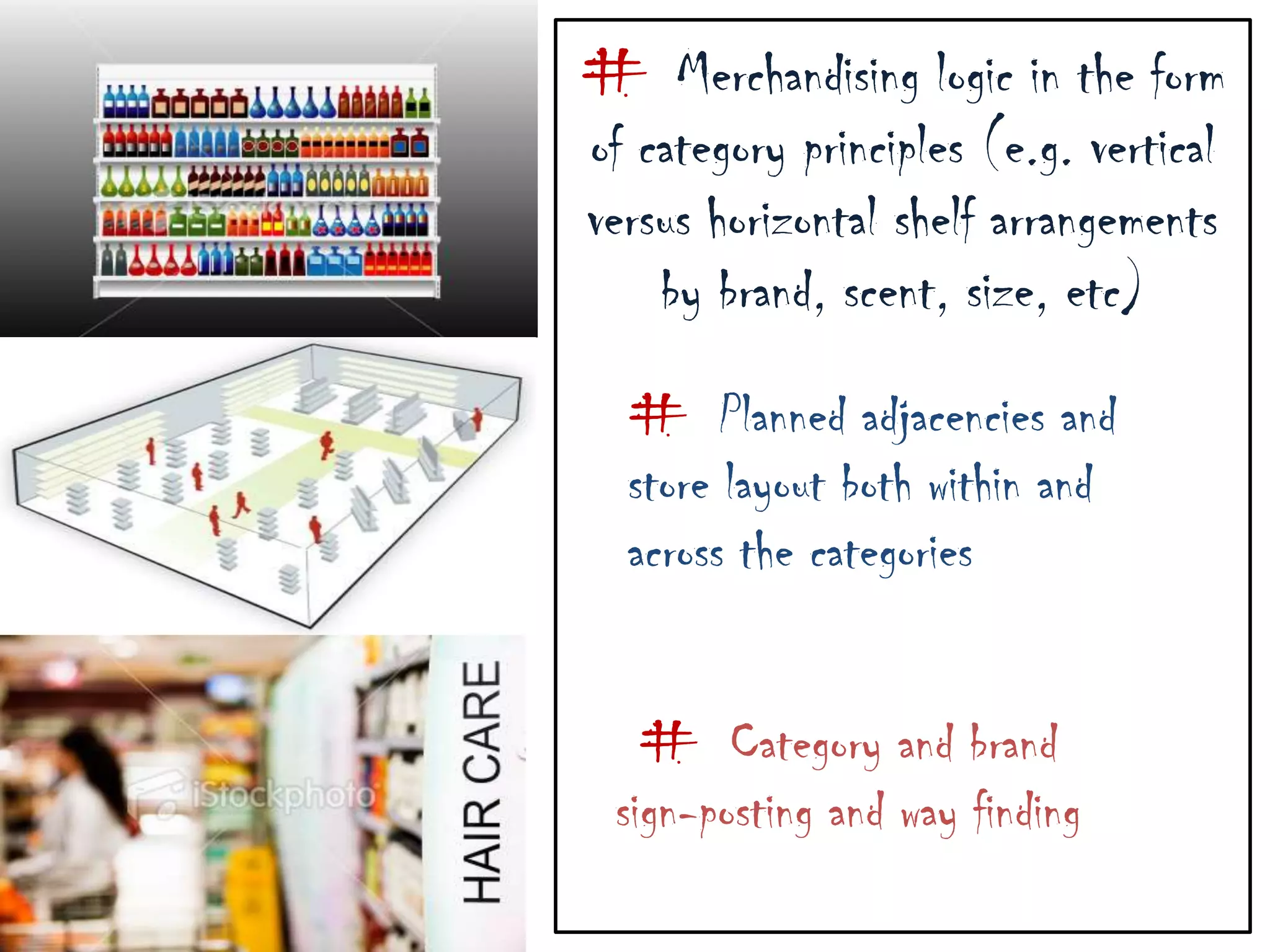
#Merchandising logic in the form of category principles (e.g. vertical versus horizontal shelf arrangements by brand, scent, size, etc)#Planned adjacencies and store layout both within and across the categories#Category and brand sign-posting and way finding
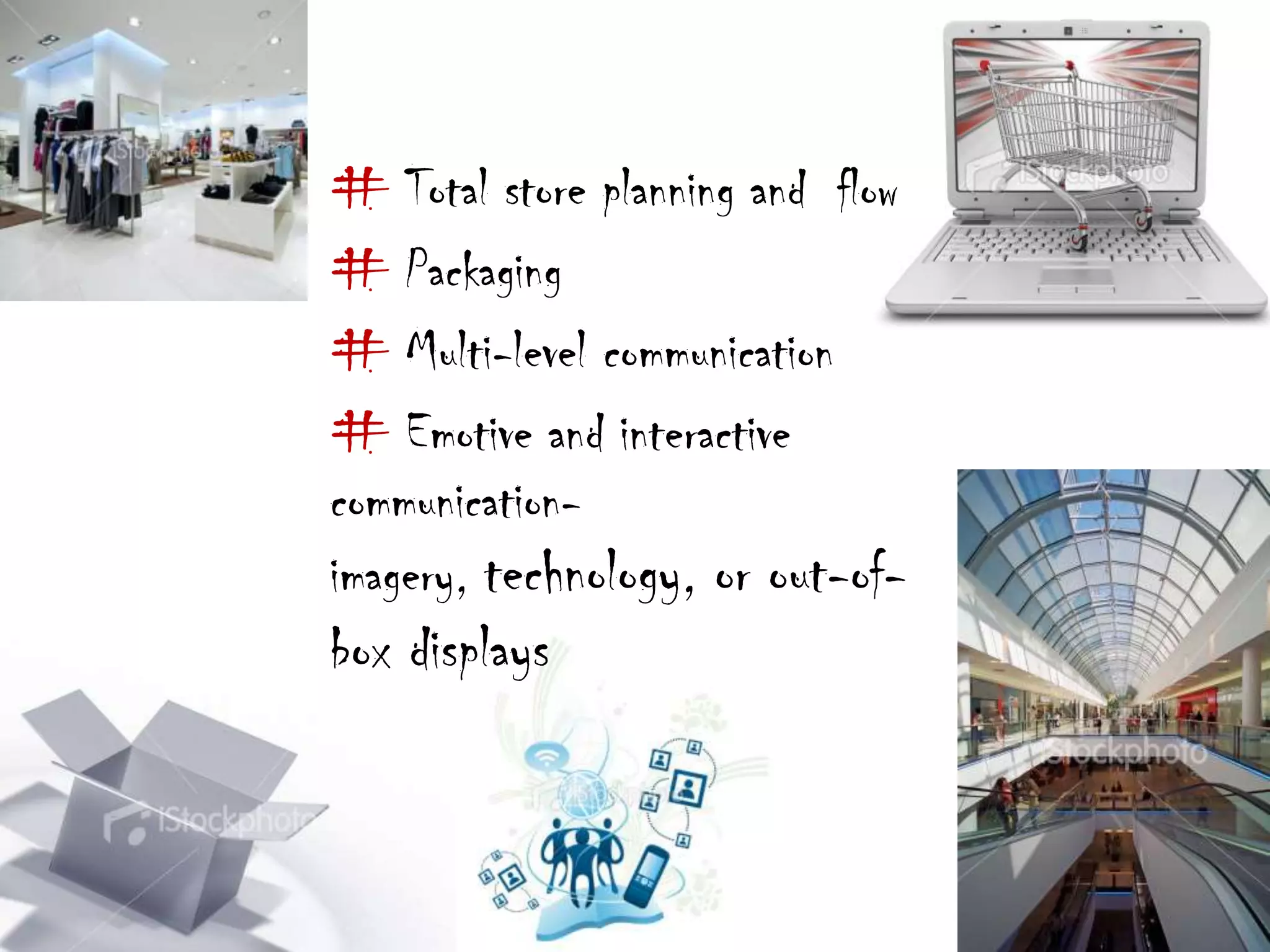
Contd..# Total store planning and  flow# Packaging# Multi-level communication# Emotive and interactive communication- imagery, technology, or out-of-box displays
Understanding what motivates and influences the shopper
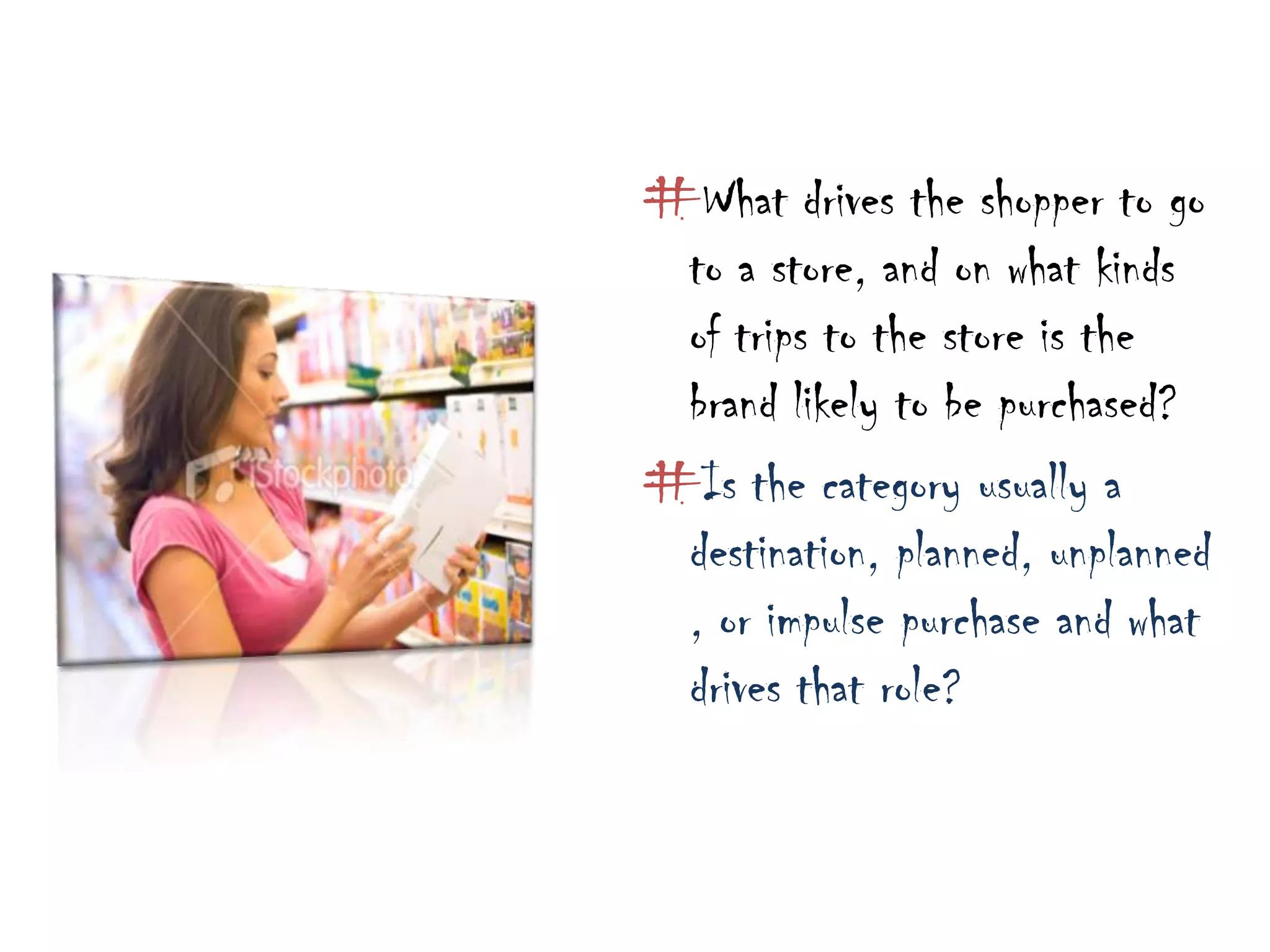
#What drives the shopper to go to a store, and on what kinds of trips to the store is the brand likely to be purchased?#Is the category usually a destination, planned, unplanned, or impulse purchase and what drives that role?
#What are the current purchase drivers and barriers in-store?#What information do shoppers seek in the store, specifically?
#How do shoppers select and de-select options and what are the decision hierarchies?#How do shoppers want to interact with products? What interaction do they need?
#How do shoppers orient themselves in the     category? In the store?
2nd Leg to unlocking in store valueIncorporating strategic objectives of the brandbesides understanding shoppers, brands must also be clear about what they want to achieve with shoppers
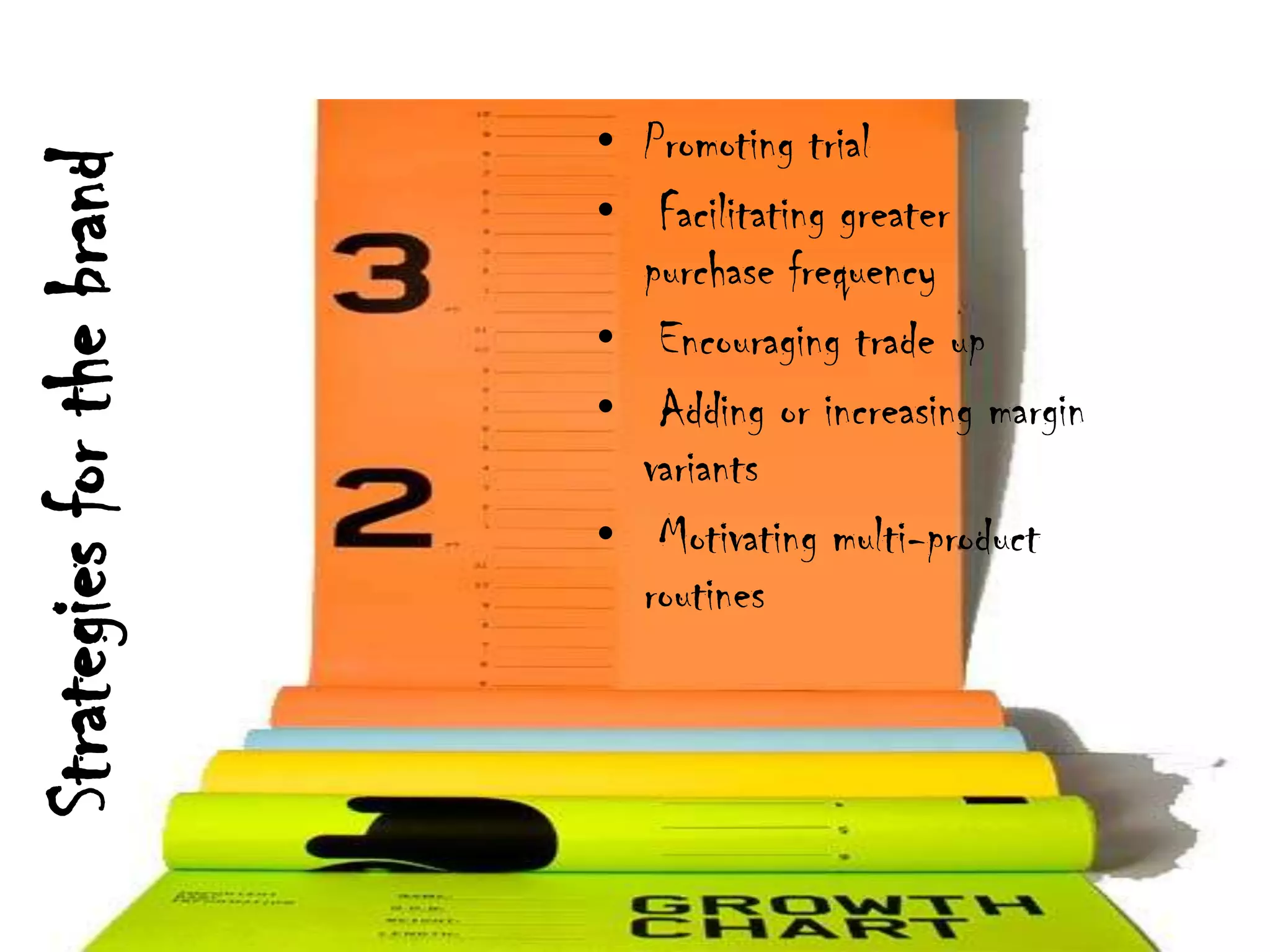
Promoting trialFacilitating greater purchase frequencyEncouraging trade upAdding or increasing margin variantsMotivating multi-product routinesStrategies for the brand
Summary Brands must get to know shoppers, not just consumers.The store environment is a brand opportunity, not just a point of tactical operations.As the competition for share and loyalty continues to get more intense, brands that manage the shopper aspect of their brand differentiate and create meaningful value as a brand and retailer partner.

Creating in-storevalue - Why& how

  • 1.
    Creating value in-storewhyand howPpt by Asha Krishnan IInd year MBAPondicherry University
  • 2.
    # Retail shelfwill be the forward position inthe battle for consumer spending. # Many brand owners have mistakenly treated the in-store experience as yet another operational function. And…Whyit matters?
  • 3.
    # When consumersfeel pain in the pocketbook, they react differently inside the store.Unfortunately, it is this in-store decision moment that is chronically misunderstood and under-resourced.# 70 percent or more of purchase decisions are made in-store
  • 4.
    Procter and Gamble,consistently utilizes shopper insights to create store solutions that successfully grow the objectives of their brands
  • 5.
    Understand differences betweenconsumers and shoppersThen What’s the goal?Leveraging on shopper insights1Optimization of Brand Value
  • 6.
    same people, operating in 2 different environments
  • 7.
    subject to differentenvironmental influences
  • 8.
    Possessing different needs.Shoppersshoppersshoppingbehaviour, habits, and practices segment themlocation, demographics, habits and practices their life often segment themvs.consumersCONSUMERS
  • 9.
    3 must-knows forthe brand Leg 1dynamics of the shopping environment what motivates and influences the shopper Leg 2iii. Incorporating strategic objectives of the brand
  • 10.
    LEG 1Understanding dynamics of the shopping environment
  • 11.
    #Merchandising logic inthe form of category principles (e.g. vertical versus horizontal shelf arrangements by brand, scent, size, etc)#Planned adjacencies and store layout both within and across the categories#Category and brand sign-posting and way finding
  • 12.
    Contd..# Total storeplanning and flow# Packaging# Multi-level communication# Emotive and interactive communication- imagery, technology, or out-of-box displays
  • 13.
    Understanding what motivatesand influences the shopper
  • 14.
    #What drives theshopper to go to a store, and on what kinds of trips to the store is the brand likely to be purchased?#Is the category usually a destination, planned, unplanned, or impulse purchase and what drives that role?
  • 15.
    #What are thecurrent purchase drivers and barriers in-store?#What information do shoppers seek in the store, specifically?
  • 16.
    #How do shoppersselect and de-select options and what are the decision hierarchies?#How do shoppers want to interact with products? What interaction do they need?
  • 17.
    #How do shoppersorient themselves in the category? In the store?
  • 18.
    2nd Leg tounlocking in store valueIncorporating strategic objectives of the brandbesides understanding shoppers, brands must also be clear about what they want to achieve with shoppers
  • 19.
    Promoting trialFacilitating greaterpurchase frequencyEncouraging trade upAdding or increasing margin variantsMotivating multi-product routinesStrategies for the brand
  • 20.
    Summary Brands mustget to know shoppers, not just consumers.The store environment is a brand opportunity, not just a point of tactical operations.As the competition for share and loyalty continues to get more intense, brands that manage the shopper aspect of their brand differentiate and create meaningful value as a brand and retailer partner.
  • 21.
    ReferencesArticleUnderstanding and Profitingfrom the Differences BetweenShoppers and Consumers - Kelly Crouch and Emily Grantwww.iStockphoto.com
  • 22.
    Leave your commentsand criticisms below without failThank you