China and clean technology implications for Australia Nigel Hennessy
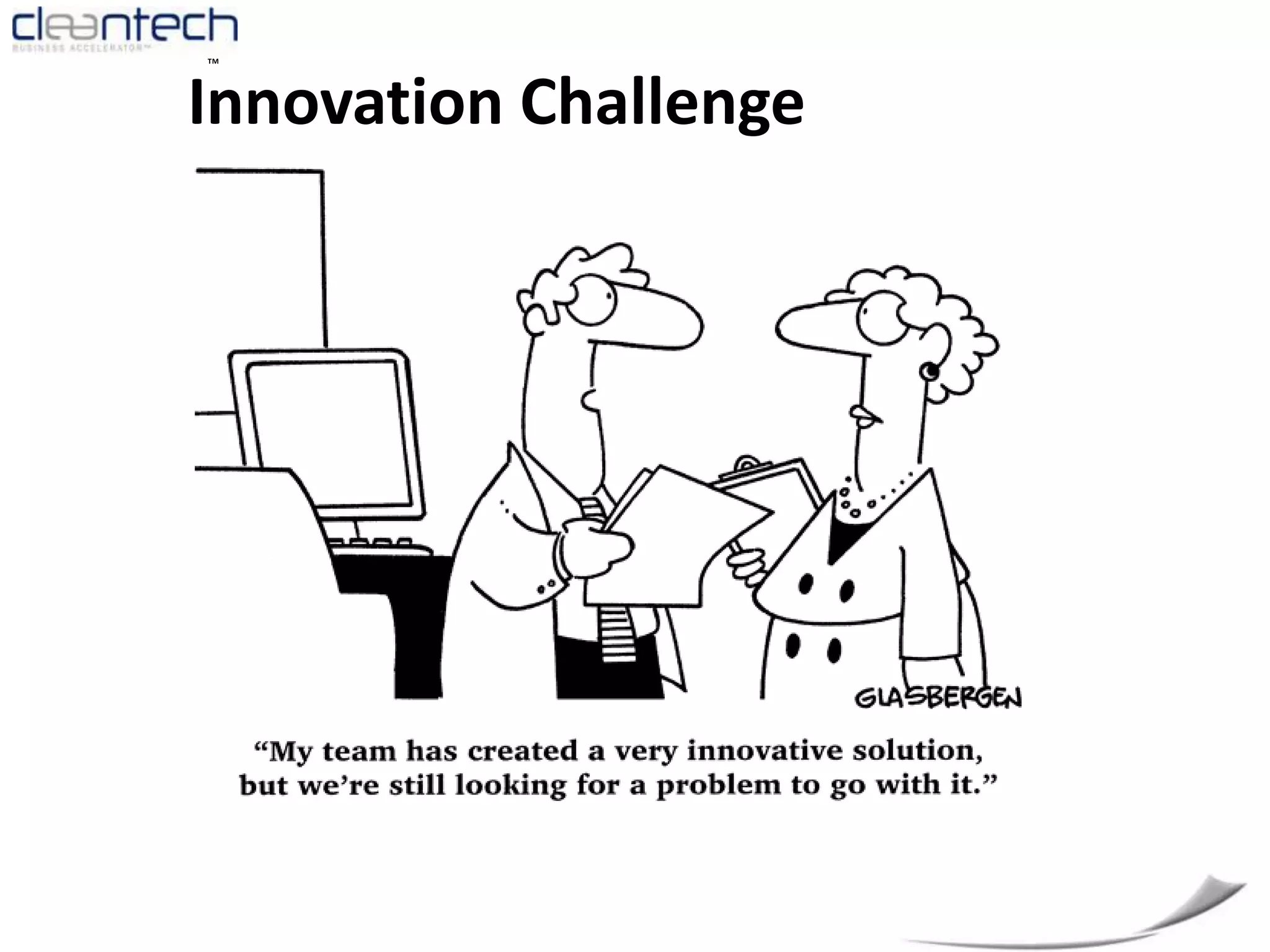
Innovation Challenge
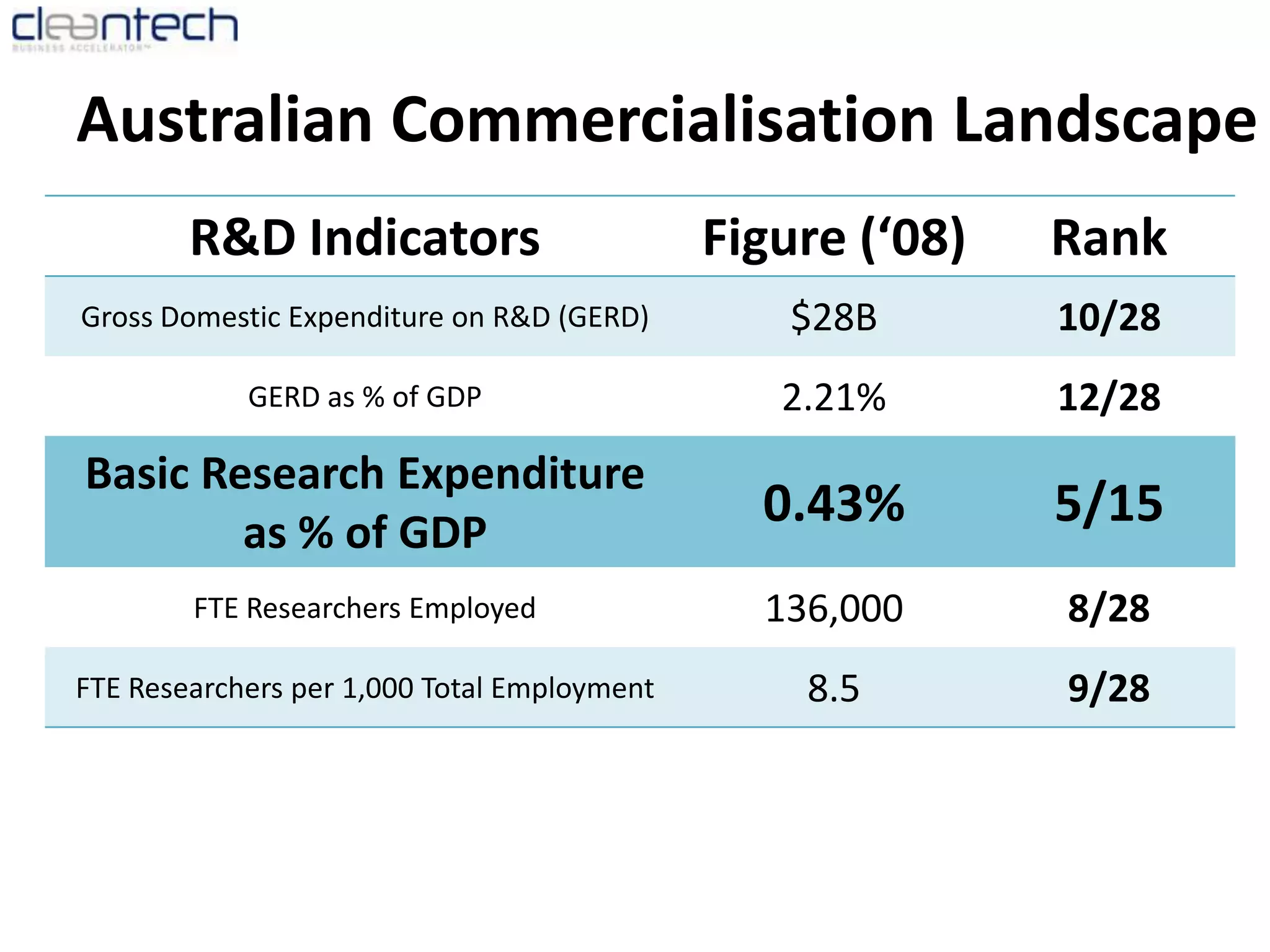
Australian Commercialisation LandscapeSource: OECD, Main Science & Technology Indicators, Vol 2010/1
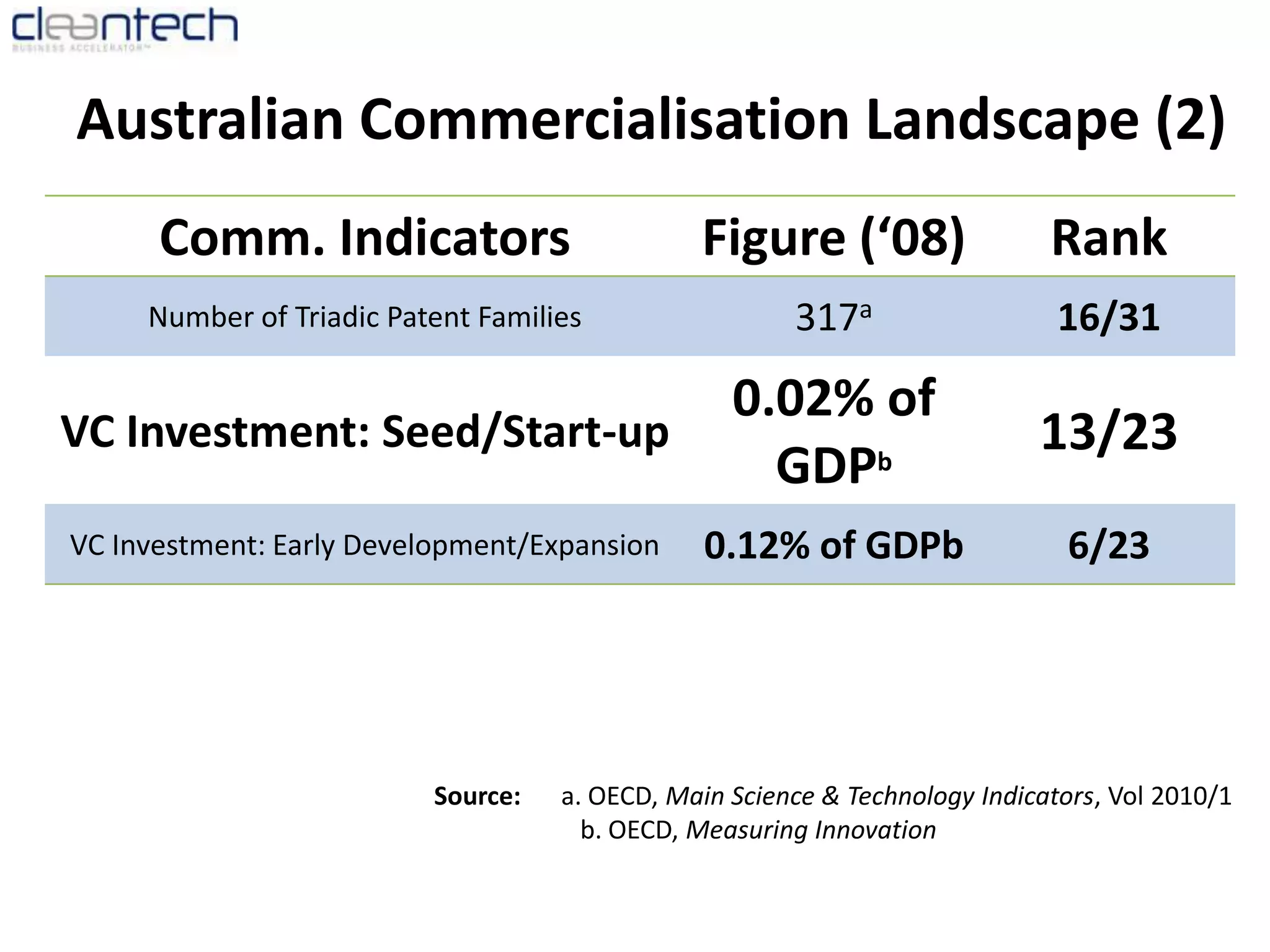
Australian Commercialisation Landscape (2)Source: 	a. OECD, Main Science & Technology Indicators, Vol 2010/1b. OECD, Measuring Innovation: A New Perspective, 2010Source: 	a. OECD, Main Science & Technology Indicators, Vol 2010/1b. OECD, Measuring Innovation: A New Perspective, 2010
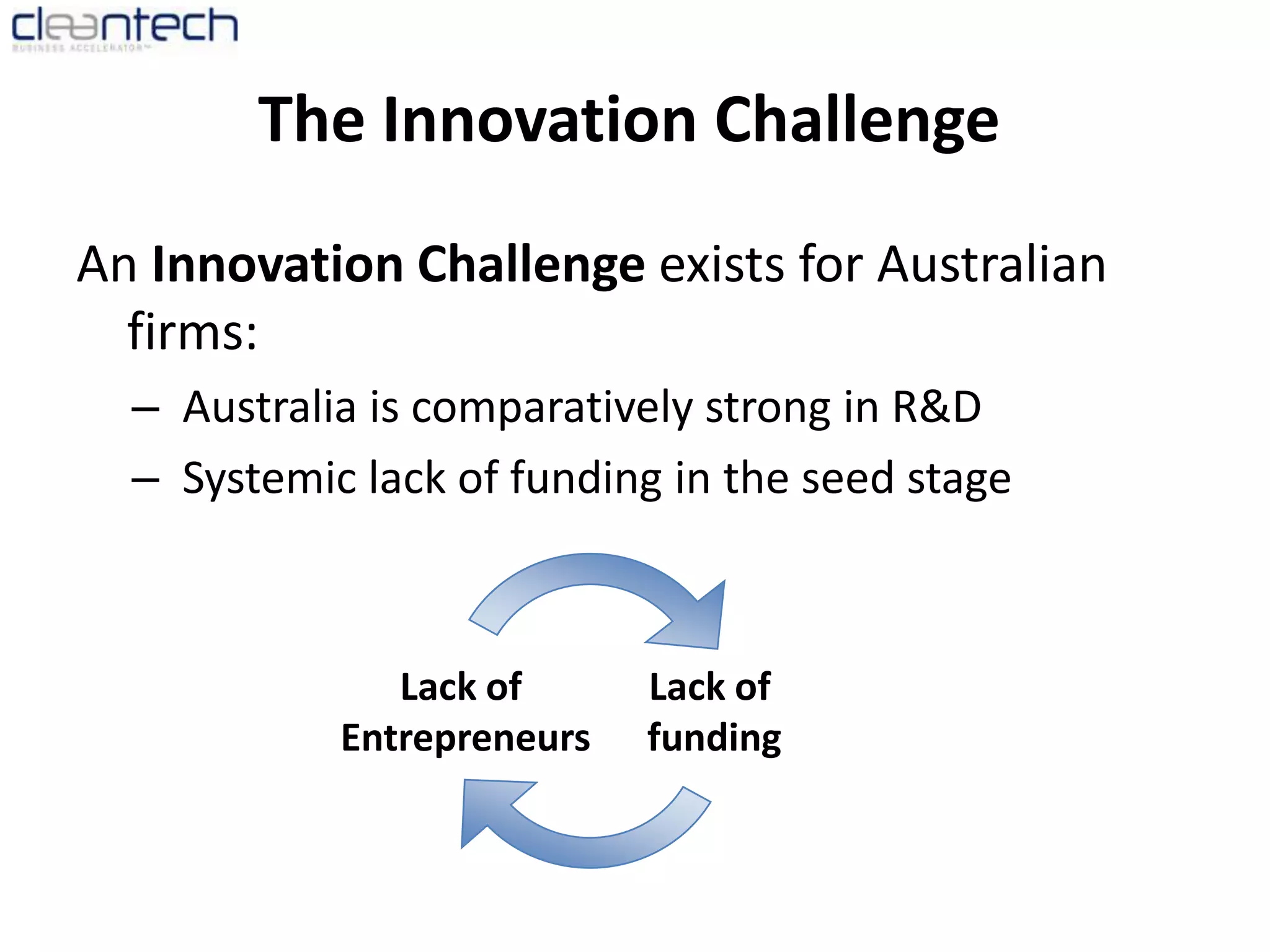
An Innovation Challenge exists for Australian firms:Australia is comparatively strong in R&DSystemic lack of funding in the seed stageLack of fundingLack of EntrepreneursThe Innovation Challenge
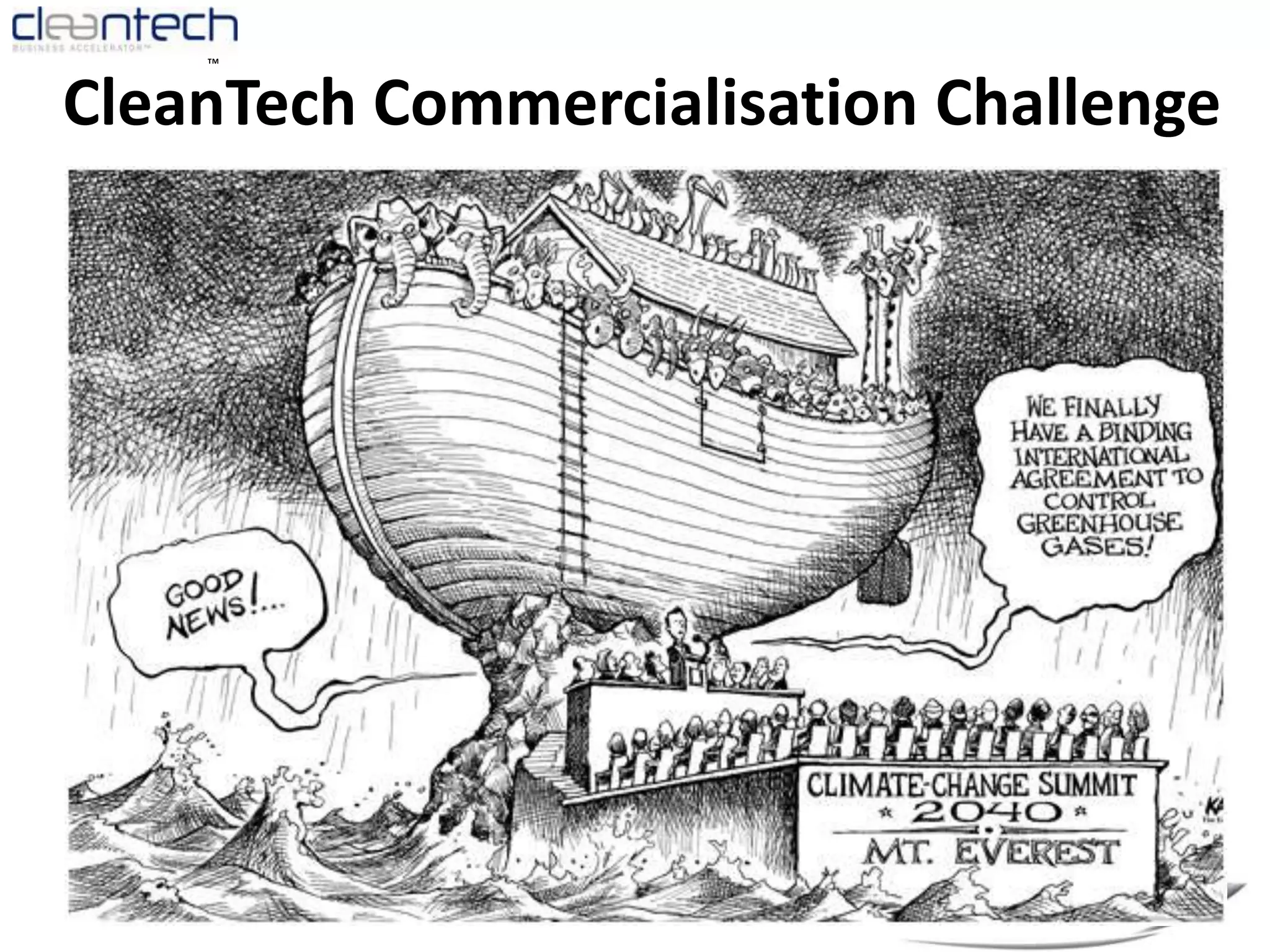
CleanTech Commercialisation Challenge
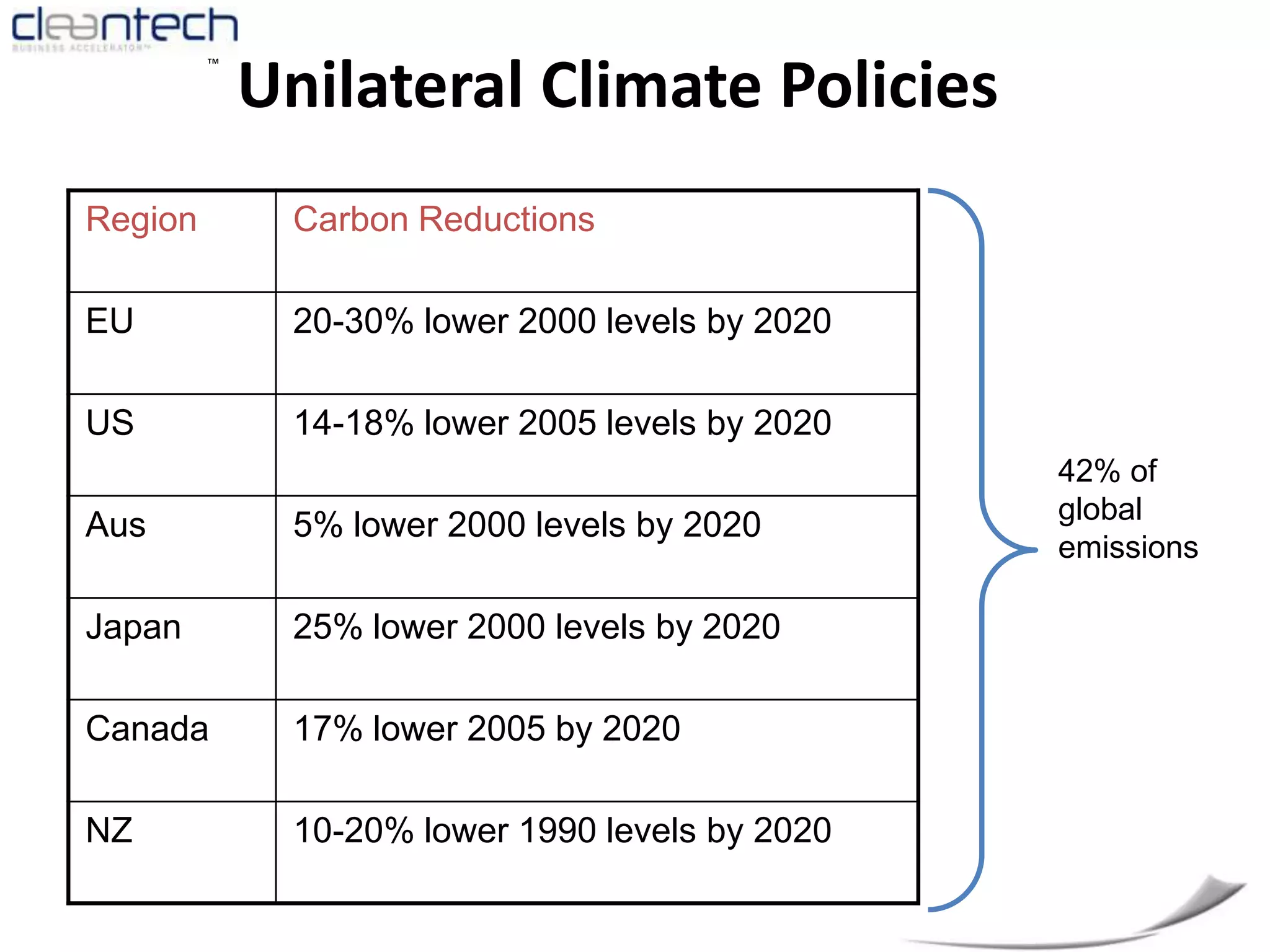
42% of global emissionsUnilateral Climate Policies
The CleanTech OpportunitiesGlobal Clean-tech Needs for a Low-carbon EconomyLow carbon materials/plastics/carbon fibre, low carbon steelBiofuels, waste recycling, efficient home design, Agricultural/food seeds and technologiesEfficient Transport/Logistics - cars, planes, trains, shipsClean energy (biomass, geothermal, wind, solar, thermal, wave/tidal) Energy storage technology, advanced battery technologyInfrastructure for low carbon economy (rail, roads, gas networks, transmission grids..) Water purification technology, energy efficiency/automated systems/IT softwareCarbon financial markets
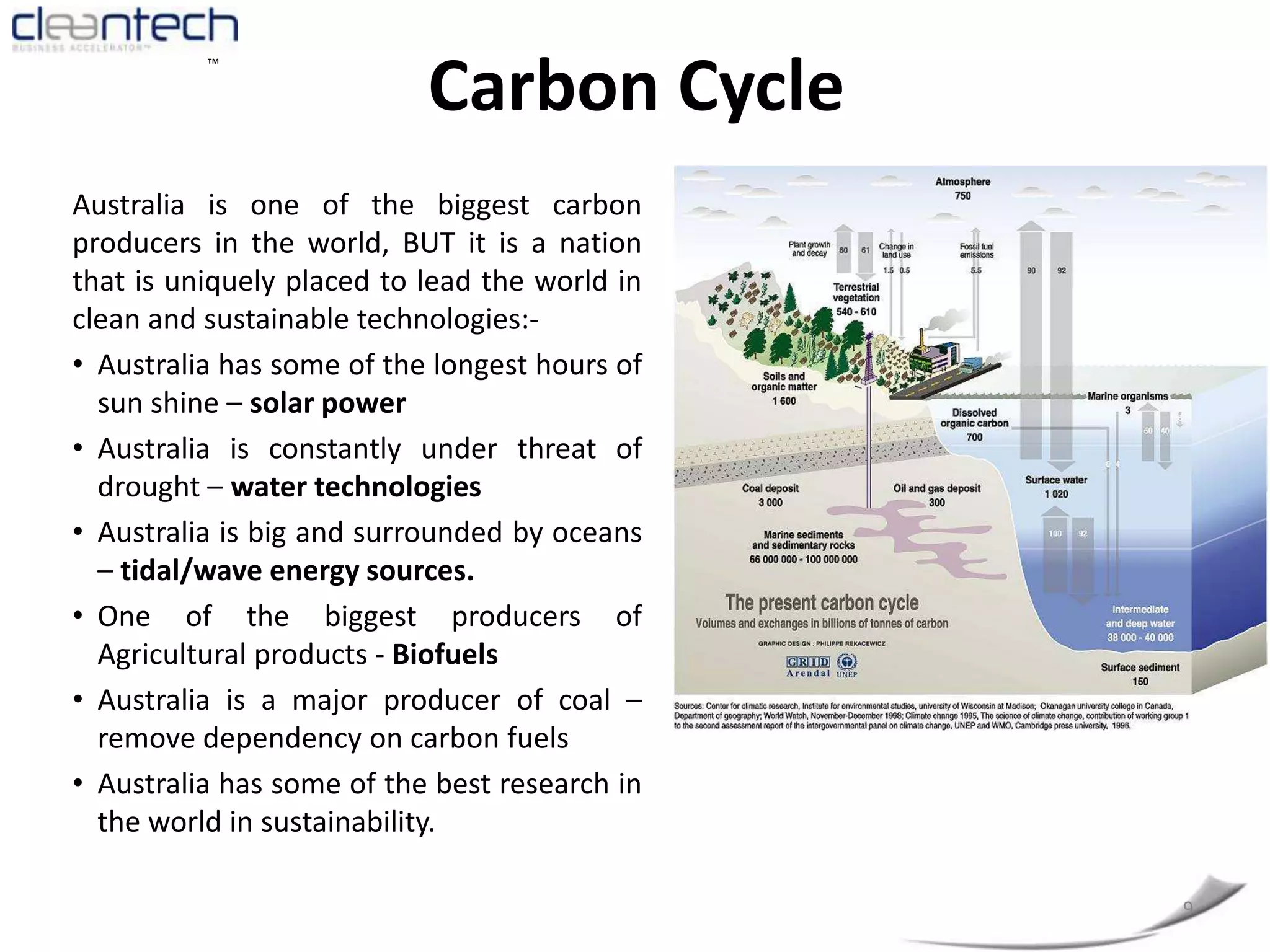
Carbon CycleAustralia is one of the biggest carbon producers in the world, BUT it is a nation that is uniquely placed to lead the world in clean and sustainable technologies:-Australia has some of the longest hours of sun shine – solar powerAustralia is constantly under threat of drought – water technologiesAustralia is big and surrounded by oceans – tidal/wave energy sources.One of the biggest producers of Agricultural products - BiofuelsAustralia is a major producer of coal – remove dependency on carbon fuelsAustralia has some of the best research in the world in sustainability.9
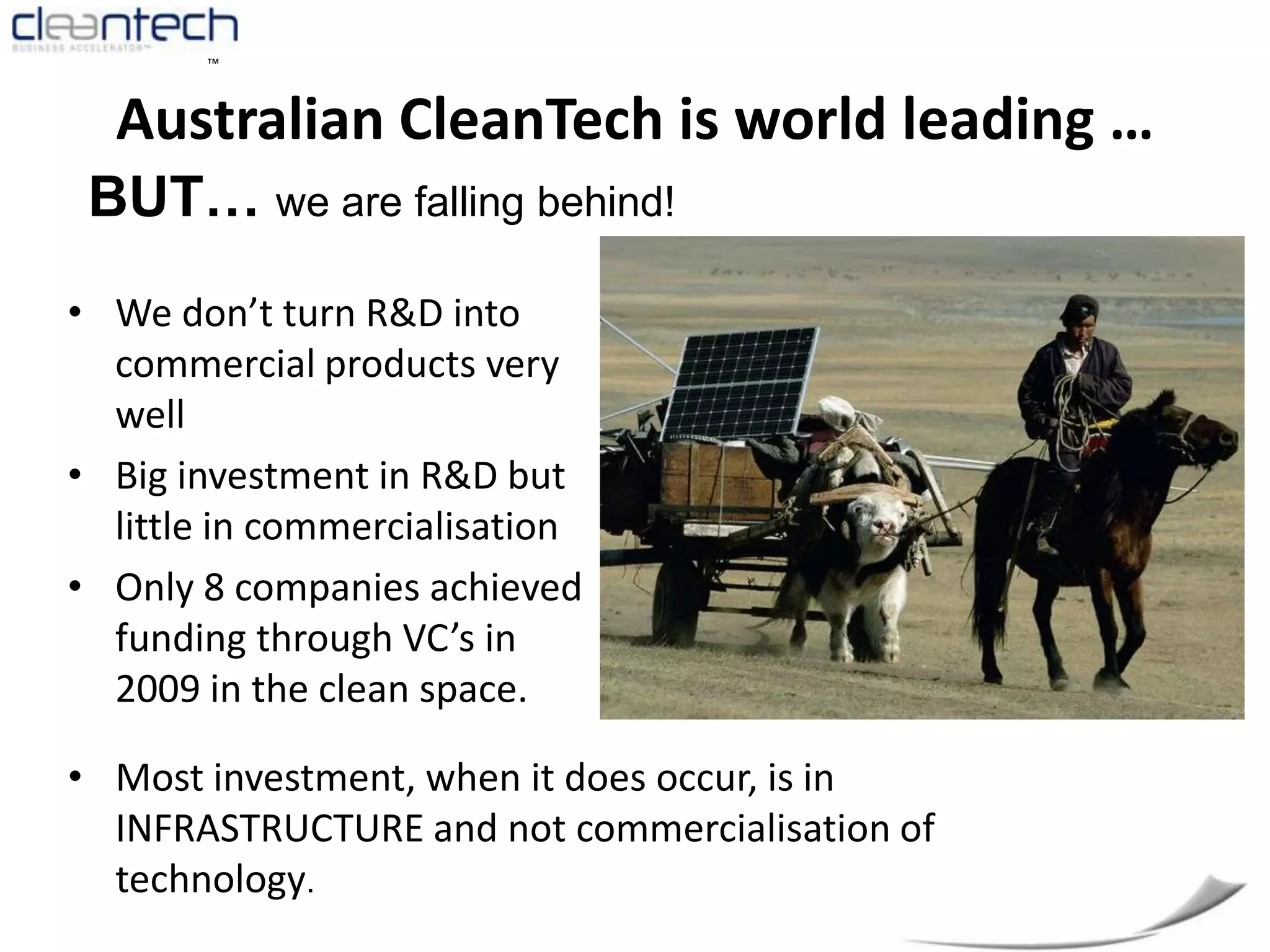
Australian CleanTech is world leading …BUT… we are falling behind!We don’t turn R&D into commercial products very wellBig investment in R&D but little in commercialisation Only 8 companies achieved funding through VC’s in 2009 in the clean space.Most investment, when it does occur, is in INFRASTRUCTURE and not commercialisation of technology.China’s Clean Technology
China’s CommitmentsObjective: 45% carbon intensity reduction by 2020Carbon intensity = carbon emissions per unit of GDPBackground: Since 2003 China’s carbon intensity was going up - meaning carbon was growing faster than economy!How are they to achieve this?15% renewable energy target
Just became 2nd largest wind power producer and among the top solar producers
First electric car company
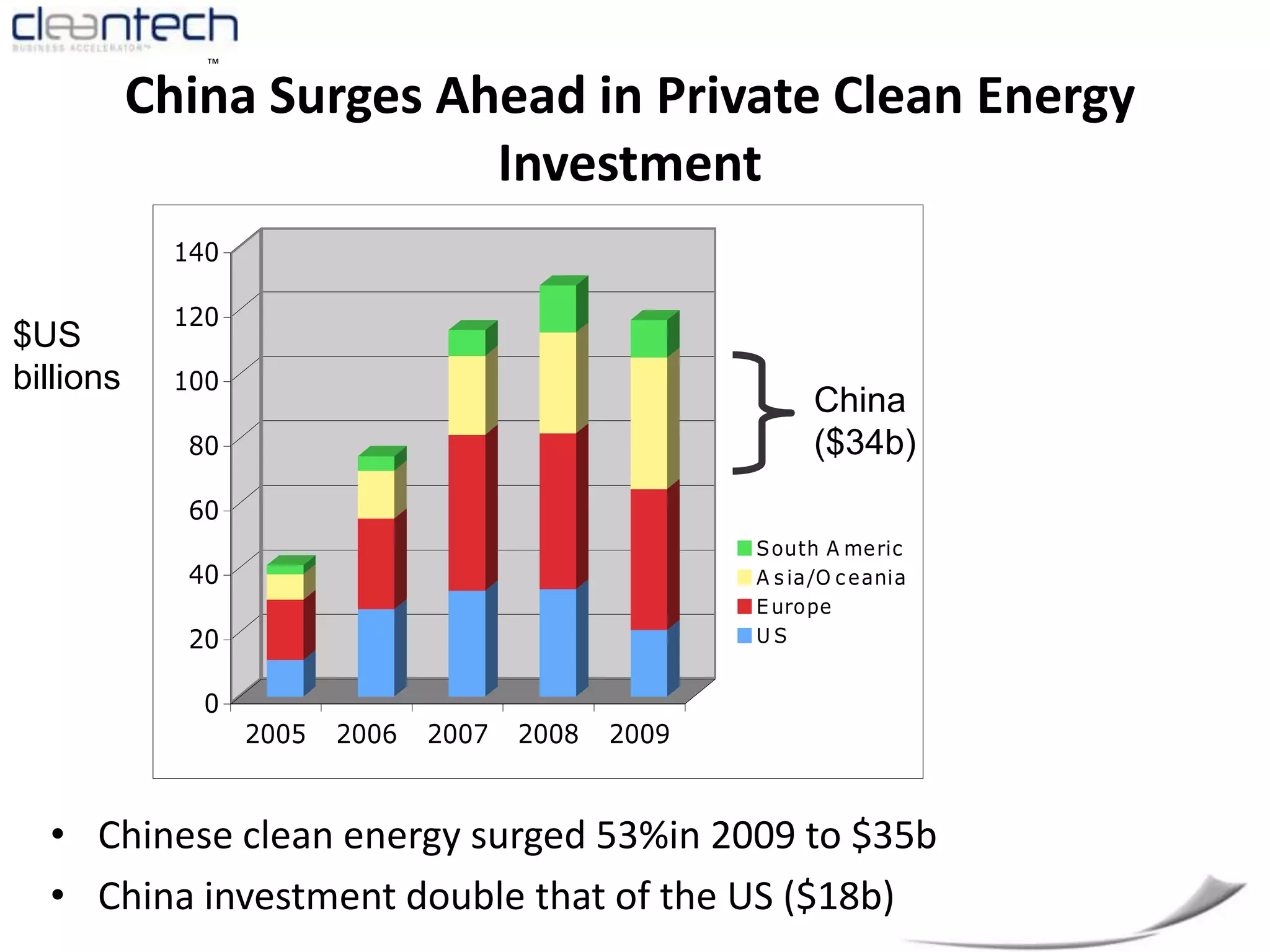
Diversify away from coal (renewables, hydro, gas and nuclear)China Surges Ahead in Private Clean Energy Investment$US billionsChina ($34b)Chinese clean energy surged 53%in 2009 to $35b China investment double that of the US ($18b)
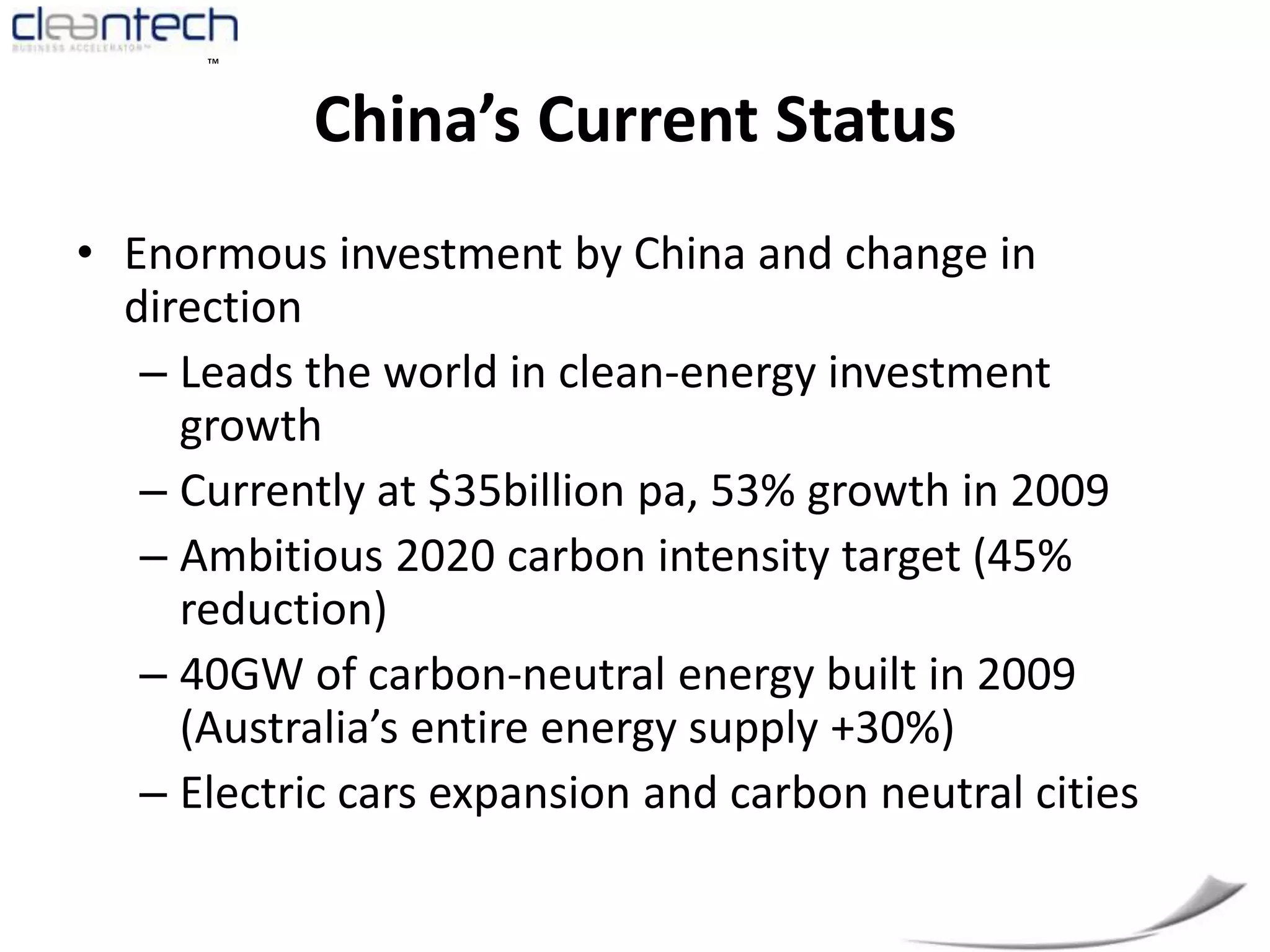
China’s Current StatusEnormous investment by China and change in directionLeads the world in clean-energy investment growthCurrently at $35billion pa, 53% growth in 2009Ambitious 2020 carbon intensity target (45% reduction)40GW of carbon-neutral energy built in 2009 (Australia’s entire energy supply +30%)Electric cars expansion and carbon neutral cities
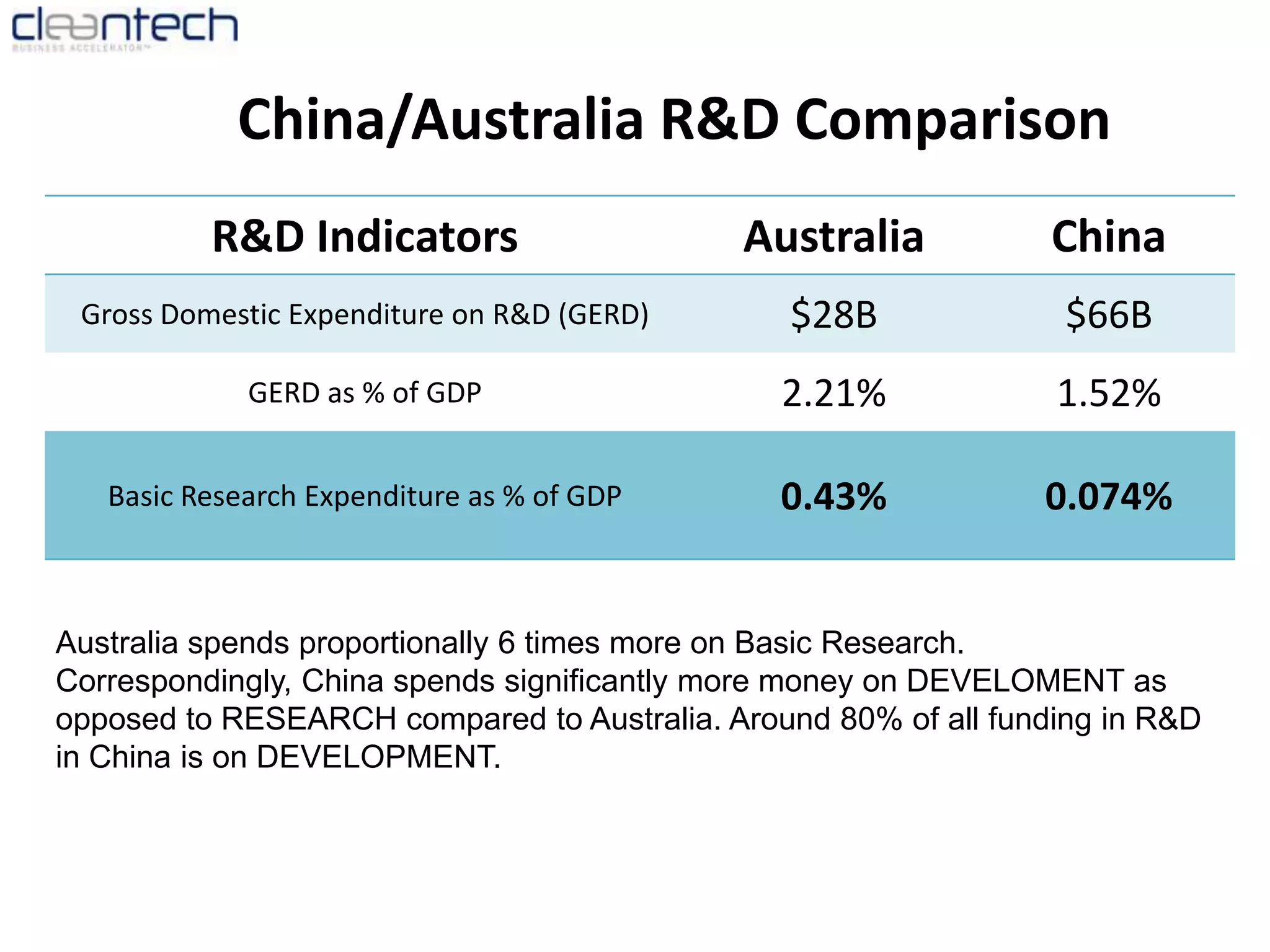
China/Australia R&D ComparisonSource: OECD, Main Science & Technology Indicators, Vol 2010/1Australia spends proportionally 6 times more on Basic Research. Correspondingly, China spends significantly more money on DEVELOMENT as opposed to RESEARCH compared to Australia. Around 80% of all funding in R&D in China is on DEVELOPMENT.
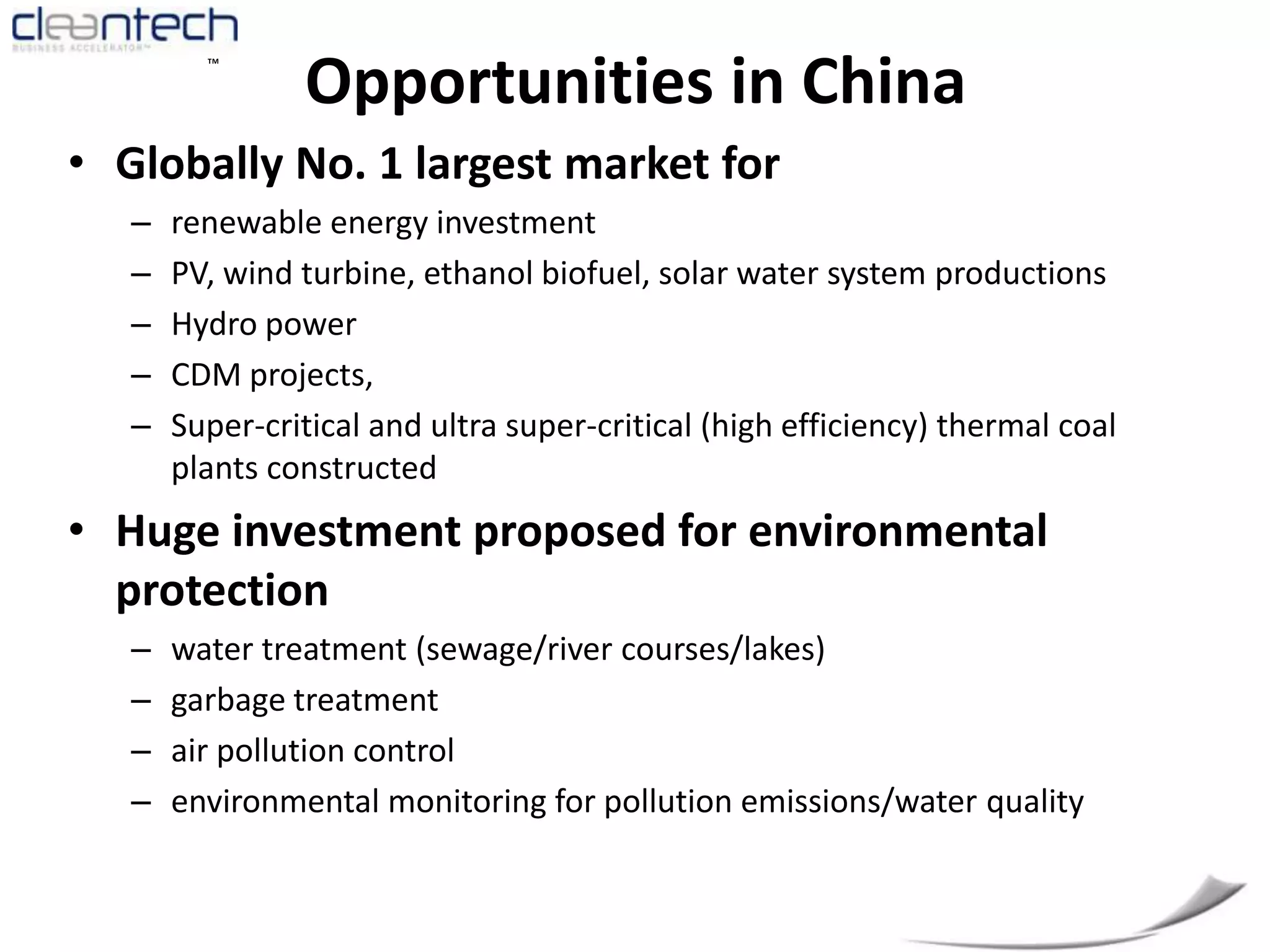
Opportunities in ChinaGlobally No. 1 largest market for renewable energy investment PV, wind turbine, ethanol biofuel, solar water system productionsHydro powerCDM projects, Super-critical and ultra super-critical (high efficiency) thermal coal plants constructedHuge investment proposed for environmental protection water treatment (sewage/river courses/lakes) garbage treatment air pollution control environmental monitoring for pollution emissions/water quality
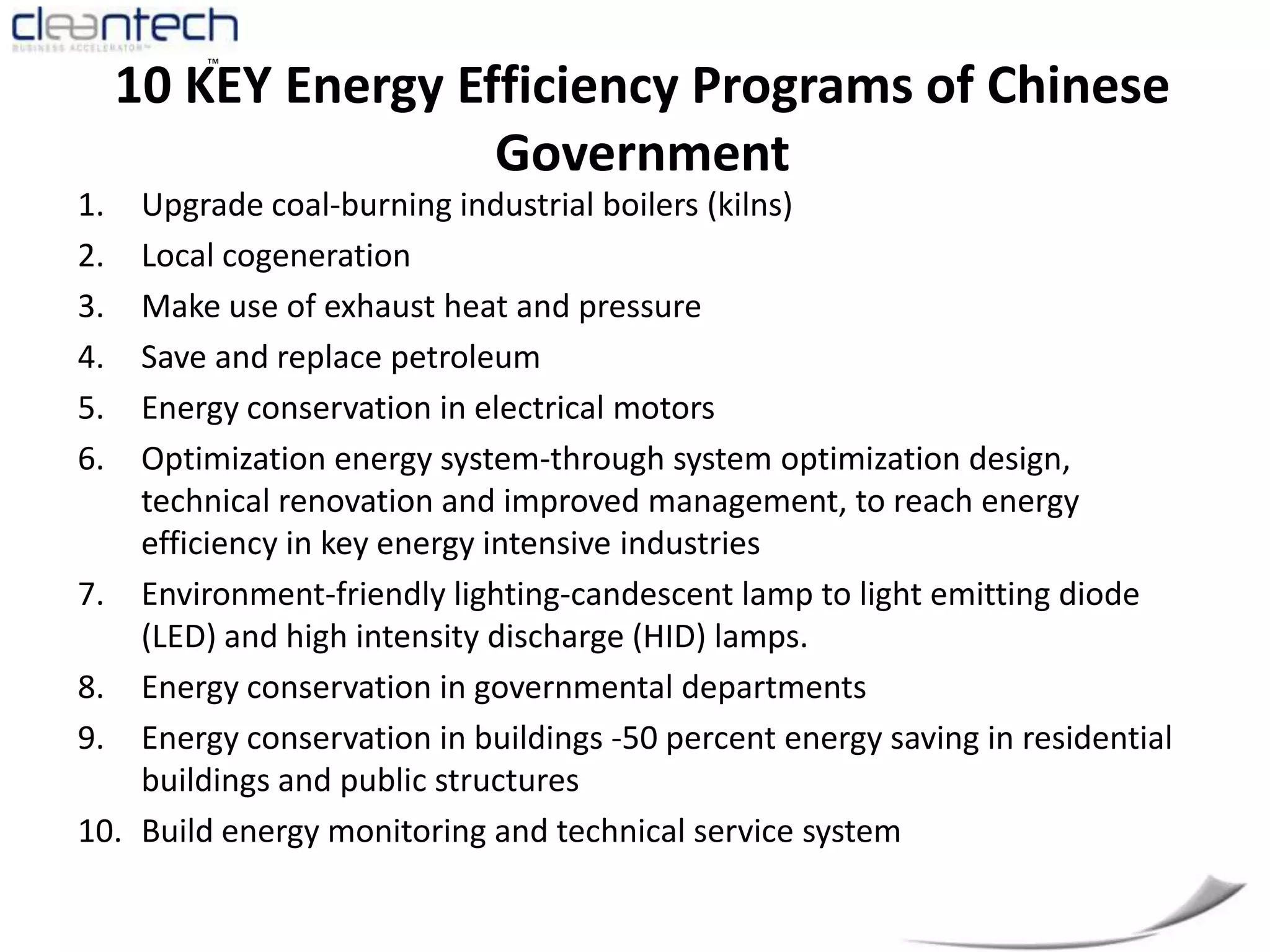
10 KEY Energy Efficiency Programs of Chinese GovernmentUpgrade coal-burning industrial boilers (kilns) Local cogenerationMake use of exhaust heat and pressure Save and replace petroleum Energy conservation in electrical motors Optimization energy system-through system optimization design, technical renovation and improved management, to reach energy efficiency in key energy intensive industriesEnvironment-friendly lighting-candescent lamp to light emitting diode (LED) and high intensity discharge (HID) lamps. Energy conservation in governmental departments Energy conservation in buildings -50 percent energy saving in residential buildings and public structuresBuild energy monitoring and technical service system
Future CleanTech Investments
 Clean Tech?The Accidental EnvironmentalistCleanTech InvestmentsThe world is accelerating towards a low-carbon economy. China is today in the driving seat.IF Australia doesn’t try and take advantage of the new technologies we will be left behind.
CleanTech Business Accelerator (CTechBA)
Formation of CTechBAThe Australian market suffered with:-Lack of InvestmentLack of capabilitiesLack of understandingLack of commitmentRecognising the problems, CTechBA was formed by a group of concerned senior executives with skills in:-Clean TechnologyExecutive ManagementInternational Sales and MarketingInvestment Banking
Our Differentiators
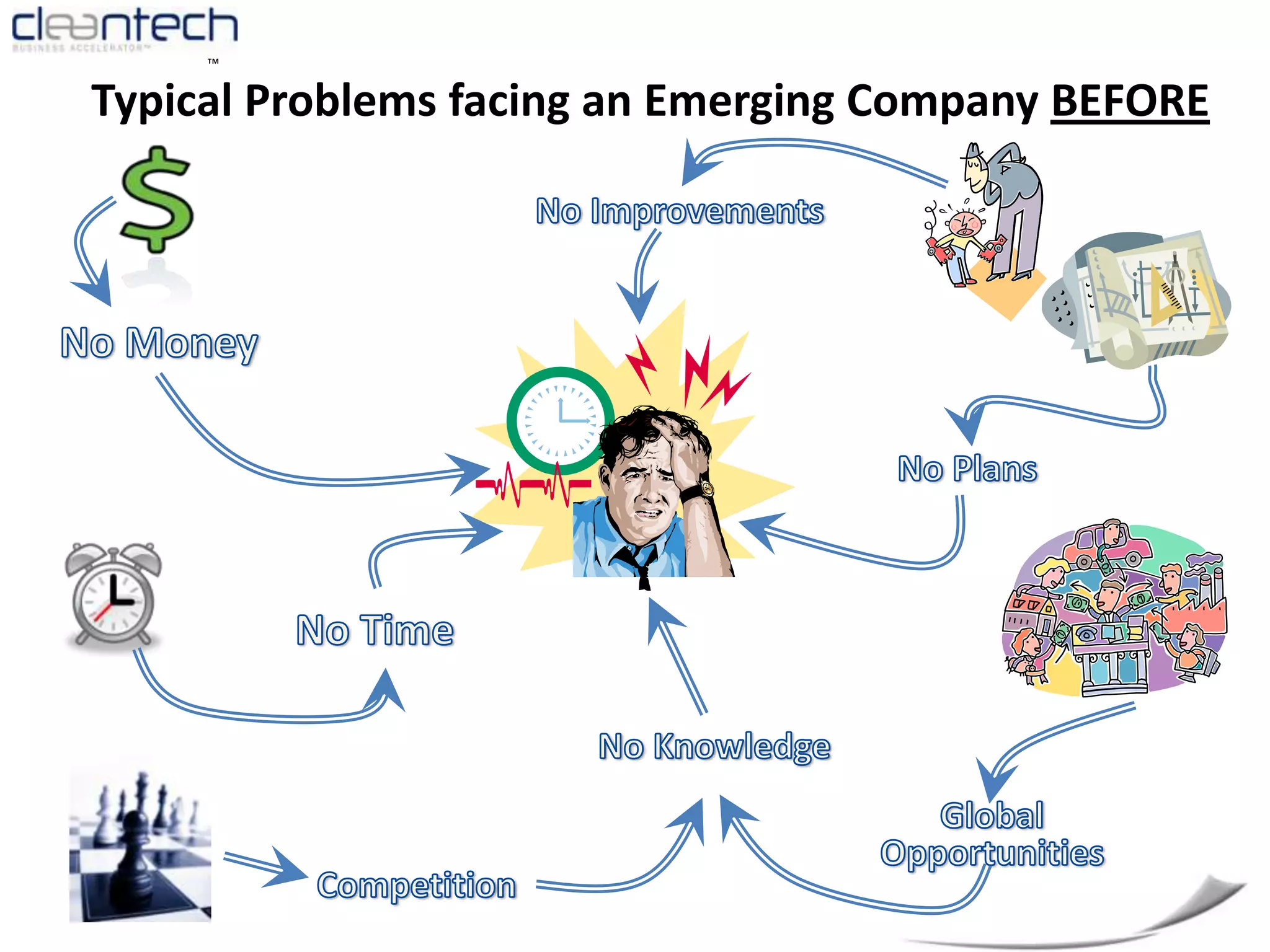
Typical Problems facing an Emerging Company BEFORENo ImprovementsNo MoneyNo PlansNo TimeNo KnowledgeGlobal OpportunitiesCompetition
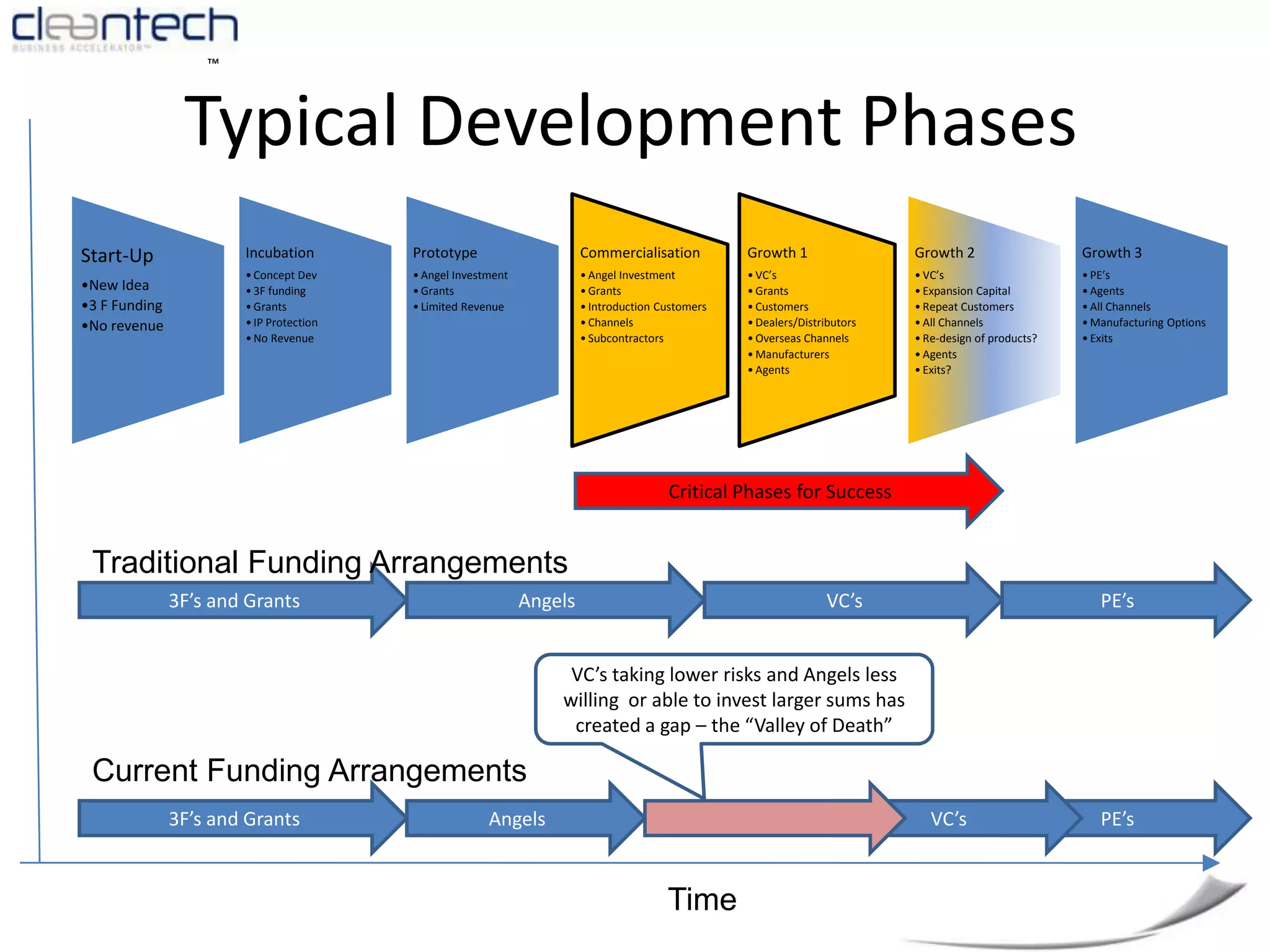
Typical Development PhasesCritical Phases for SuccessTraditional Funding Arrangements3F’s and GrantsAngelsVC’sPE’sVC’s taking lower risks and Angels less willing  or able to invest larger sums has created a gap – the “Valley of Death” Current Funding Arrangements3F’s and GrantsAngelsPE’sVC’sStart-UpNew Idea
3 F Funding
No revenueTime
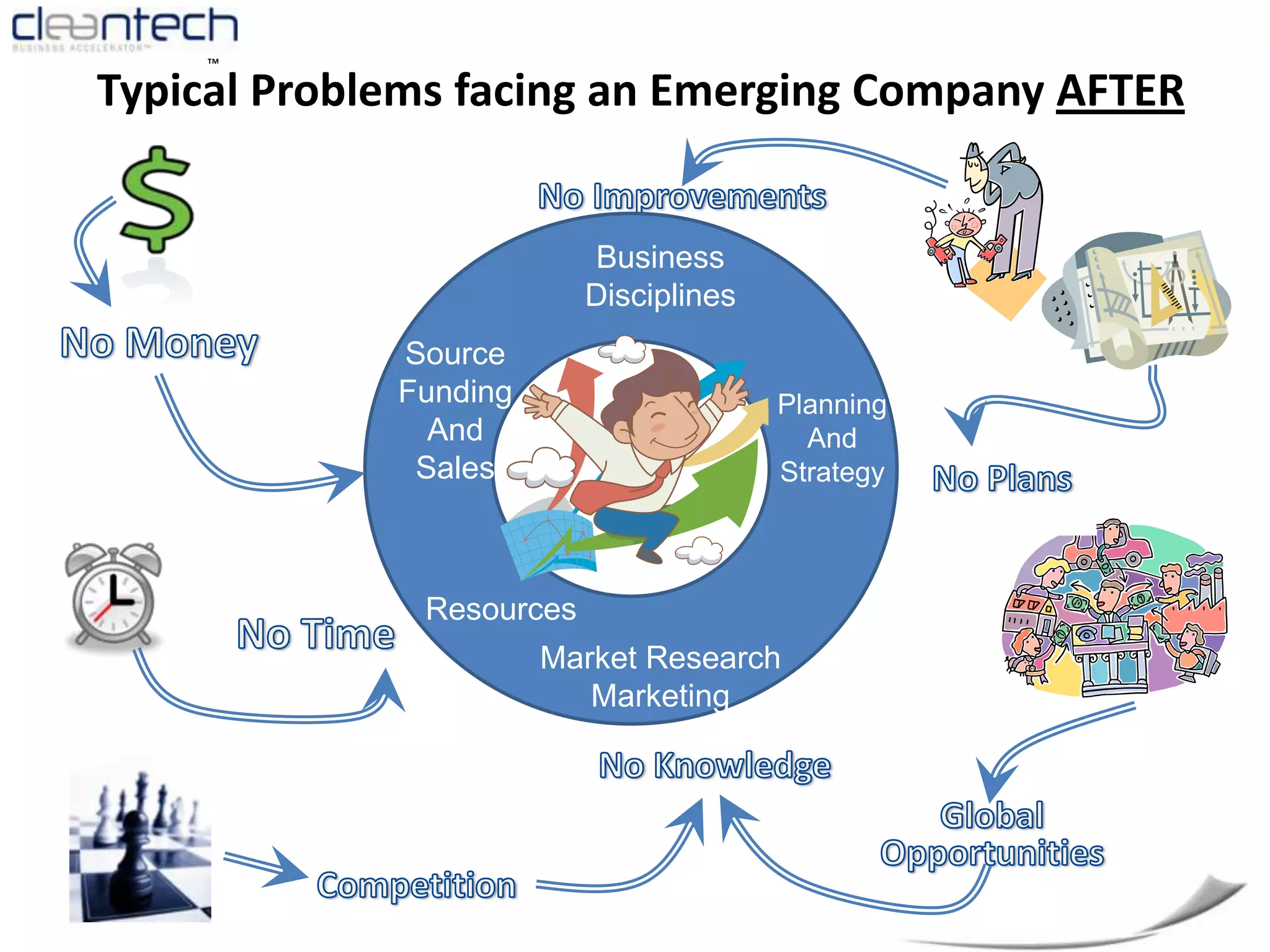
Typical Problems facing an Emerging Company AFTERNo ImprovementsBusiness  DisciplinesNo MoneySource FundingAndSalesPlanningAndStrategyNo PlansResourcesNo TimeMarket ResearchMarketingNo KnowledgeGlobal OpportunitiesCompetition
Some Client Examples…All of these will be looking towards China for investment, sales and partners.
Solar PaintOrganic PV (OPV) material can be made into a paint or into a thin film. As a film it can be used to tint windows and create energy at the same time. Expected cost will be around $0.15 per kwh compared to $0.70 for silicon based PV.Current market for PV is $32B per year.Product is still at prototype stage and is pre-commercial
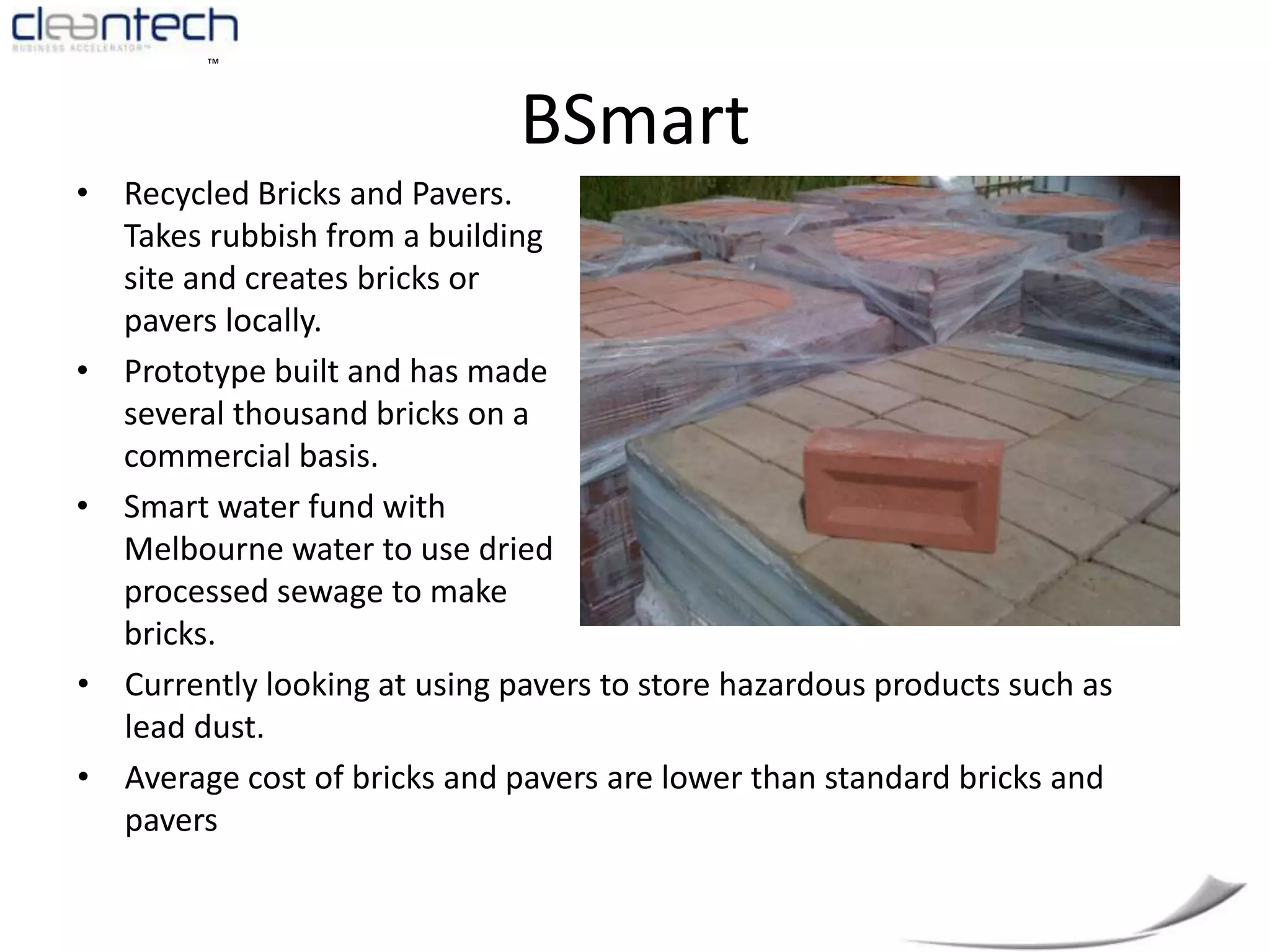
BSmartRecycled Bricks and Pavers. Takes rubbish from a building site and creates bricks or pavers locally.Prototype built and has made several thousand bricks on a commercial basis. Smart water fund with Melbourne water to use dried processed sewage to make bricks.Currently looking at using pavers to store hazardous products such as lead dust.
Average cost of bricks and pavers are lower than standard bricks and pavers WindesalInnovative Wind and diesel driven RO based Desalination system.Hybrid power control system using wind and a diesel motor reduces carbon emissions by as much as 85% compared to conventional desalination systems. Current test site is expected to create drinking water from an aquifer at a rate of 3-5GL per year.With water security an issue world wide, Windesal provides a localised solution.

China Cleantech

  • 1.
    China and cleantechnology implications for Australia Nigel Hennessy
  • 2.
  • 3.
    Australian Commercialisation LandscapeSource:OECD, Main Science & Technology Indicators, Vol 2010/1
  • 4.
    Australian Commercialisation Landscape(2)Source: a. OECD, Main Science & Technology Indicators, Vol 2010/1b. OECD, Measuring Innovation: A New Perspective, 2010Source: a. OECD, Main Science & Technology Indicators, Vol 2010/1b. OECD, Measuring Innovation: A New Perspective, 2010
  • 5.
    An Innovation Challengeexists for Australian firms:Australia is comparatively strong in R&DSystemic lack of funding in the seed stageLack of fundingLack of EntrepreneursThe Innovation Challenge
  • 6.
  • 7.
    42% of globalemissionsUnilateral Climate Policies
  • 8.
    The CleanTech OpportunitiesGlobalClean-tech Needs for a Low-carbon EconomyLow carbon materials/plastics/carbon fibre, low carbon steelBiofuels, waste recycling, efficient home design, Agricultural/food seeds and technologiesEfficient Transport/Logistics - cars, planes, trains, shipsClean energy (biomass, geothermal, wind, solar, thermal, wave/tidal) Energy storage technology, advanced battery technologyInfrastructure for low carbon economy (rail, roads, gas networks, transmission grids..) Water purification technology, energy efficiency/automated systems/IT softwareCarbon financial markets
  • 9.
    Carbon CycleAustralia isone of the biggest carbon producers in the world, BUT it is a nation that is uniquely placed to lead the world in clean and sustainable technologies:-Australia has some of the longest hours of sun shine – solar powerAustralia is constantly under threat of drought – water technologiesAustralia is big and surrounded by oceans – tidal/wave energy sources.One of the biggest producers of Agricultural products - BiofuelsAustralia is a major producer of coal – remove dependency on carbon fuelsAustralia has some of the best research in the world in sustainability.9
  • 10.
    Australian CleanTech isworld leading …BUT… we are falling behind!We don’t turn R&D into commercial products very wellBig investment in R&D but little in commercialisation Only 8 companies achieved funding through VC’s in 2009 in the clean space.Most investment, when it does occur, is in INFRASTRUCTURE and not commercialisation of technology.China’s Clean Technology
  • 11.
    China’s CommitmentsObjective: 45%carbon intensity reduction by 2020Carbon intensity = carbon emissions per unit of GDPBackground: Since 2003 China’s carbon intensity was going up - meaning carbon was growing faster than economy!How are they to achieve this?15% renewable energy target
  • 12.
    Just became 2ndlargest wind power producer and among the top solar producers
  • 13.
  • 14.
    Diversify away fromcoal (renewables, hydro, gas and nuclear)China Surges Ahead in Private Clean Energy Investment$US billionsChina ($34b)Chinese clean energy surged 53%in 2009 to $35b China investment double that of the US ($18b)
  • 15.
    China’s Current StatusEnormousinvestment by China and change in directionLeads the world in clean-energy investment growthCurrently at $35billion pa, 53% growth in 2009Ambitious 2020 carbon intensity target (45% reduction)40GW of carbon-neutral energy built in 2009 (Australia’s entire energy supply +30%)Electric cars expansion and carbon neutral cities
  • 16.
    China/Australia R&D ComparisonSource:OECD, Main Science & Technology Indicators, Vol 2010/1Australia spends proportionally 6 times more on Basic Research. Correspondingly, China spends significantly more money on DEVELOMENT as opposed to RESEARCH compared to Australia. Around 80% of all funding in R&D in China is on DEVELOPMENT.
  • 17.
    Opportunities in ChinaGloballyNo. 1 largest market for renewable energy investment PV, wind turbine, ethanol biofuel, solar water system productionsHydro powerCDM projects, Super-critical and ultra super-critical (high efficiency) thermal coal plants constructedHuge investment proposed for environmental protection water treatment (sewage/river courses/lakes) garbage treatment air pollution control environmental monitoring for pollution emissions/water quality
  • 18.
    10 KEY EnergyEfficiency Programs of Chinese GovernmentUpgrade coal-burning industrial boilers (kilns) Local cogenerationMake use of exhaust heat and pressure Save and replace petroleum Energy conservation in electrical motors Optimization energy system-through system optimization design, technical renovation and improved management, to reach energy efficiency in key energy intensive industriesEnvironment-friendly lighting-candescent lamp to light emitting diode (LED) and high intensity discharge (HID) lamps. Energy conservation in governmental departments Energy conservation in buildings -50 percent energy saving in residential buildings and public structuresBuild energy monitoring and technical service system
  • 19.
  • 20.
    Clean Tech?TheAccidental EnvironmentalistCleanTech InvestmentsThe world is accelerating towards a low-carbon economy. China is today in the driving seat.IF Australia doesn’t try and take advantage of the new technologies we will be left behind.
  • 21.
  • 22.
    Formation of CTechBATheAustralian market suffered with:-Lack of InvestmentLack of capabilitiesLack of understandingLack of commitmentRecognising the problems, CTechBA was formed by a group of concerned senior executives with skills in:-Clean TechnologyExecutive ManagementInternational Sales and MarketingInvestment Banking
  • 23.
  • 24.
    Typical Problems facingan Emerging Company BEFORENo ImprovementsNo MoneyNo PlansNo TimeNo KnowledgeGlobal OpportunitiesCompetition
  • 25.
    Typical Development PhasesCriticalPhases for SuccessTraditional Funding Arrangements3F’s and GrantsAngelsVC’sPE’sVC’s taking lower risks and Angels less willing or able to invest larger sums has created a gap – the “Valley of Death” Current Funding Arrangements3F’s and GrantsAngelsPE’sVC’sStart-UpNew Idea
  • 26.
  • 27.
  • 28.
    Typical Problems facingan Emerging Company AFTERNo ImprovementsBusiness DisciplinesNo MoneySource FundingAndSalesPlanningAndStrategyNo PlansResourcesNo TimeMarket ResearchMarketingNo KnowledgeGlobal OpportunitiesCompetition
  • 29.
    Some Client Examples…Allof these will be looking towards China for investment, sales and partners.
  • 30.
    Solar PaintOrganic PV(OPV) material can be made into a paint or into a thin film. As a film it can be used to tint windows and create energy at the same time. Expected cost will be around $0.15 per kwh compared to $0.70 for silicon based PV.Current market for PV is $32B per year.Product is still at prototype stage and is pre-commercial
  • 31.
    BSmartRecycled Bricks andPavers. Takes rubbish from a building site and creates bricks or pavers locally.Prototype built and has made several thousand bricks on a commercial basis. Smart water fund with Melbourne water to use dried processed sewage to make bricks.Currently looking at using pavers to store hazardous products such as lead dust.
  • 32.
    Average cost ofbricks and pavers are lower than standard bricks and pavers WindesalInnovative Wind and diesel driven RO based Desalination system.Hybrid power control system using wind and a diesel motor reduces carbon emissions by as much as 85% compared to conventional desalination systems. Current test site is expected to create drinking water from an aquifer at a rate of 3-5GL per year.With water security an issue world wide, Windesal provides a localised solution.
  • 33.
    PixaluxLED based lightingfor Advertising Boards and specialty lighting.Unique lighting solution based on 12V LED lights and acrylic with a diffuser matrix printed on the surface provides homogenous lighting panels ideal for display boards as well as shelving and back-panels for desks and furniture.Already sold products to the Australian Museum and have a number of other clients and partners under discussion.
  • 34.
    CTechBA’s ‘Real Value’Sincewe manage a diverse and varied portfolio often we get synergies between own clients which can be exploited:-We are speaking to a biofuels company using algae. Windesal can use brine from the discharge of their RO system to feed an algae lake to make biofuels.We are using Bsmart and Pixalux in a proposal for eco-housing design. We also have a ‘green’ cement company in our portfolio as well. Later, we shall include Solar Paint and another client in Water Storage.As our portfolio gets bigger we look for synergies and opportunities for all our clients to create ‘total solutions’.China we see as an important part of our overall strategy for developing the businesses as well as sourcing capital.
  • 35.
    SummaryHistorically not beengood at commercialisation, although CTechBA will make progress in this area.Clean Technology provides a new opportunity for Australian technology and for entrepreneurs to develop world-leading technology markets.China is a substantial player in the clean technology space which is likely to grow a lot more than the rest of the world over the next 10 years and more.Therefore there are GOOD opportunities for Australian Clean Technology companies in China and for cooperation with Chinese companies BUT we cant afford to be complacent.

Editor's Notes

  • #2 Good afternoon, a great pleasure to be here today. IMy name is Nigel Hennessy and I am the Chief Executive Officer of CleanTech Business Accelerator. My presentation today is made up of many pieces and I hope you are all going to learn a lot from my talk and hopefully stimulate a discussion with the illustrious panel made up of Ian Higgins – ex head of Green Peace and a paid-up environmentalist. He is supported by Peter Beaumont, a well respected Merchant Banker. These two people are Executive Directors of CleanTech Business Accelerator.
  • #7 So a problem exists in commercialisation of technologies in general – so what about cleantech – how are things going in that space…?CLICKSadly our problems here are almost as frustrating as the Innovation Challenge before.
  • #10 From Australia’s perspective there is a wondrous opportunity to take on a leading industrial role and become a world power.
  • #11 But the truth is we are just lagging behind. We just aren’t good at Commercialisation – good at research, good at digging holes in the ground and good at buying overseas made products to fulfil our local needs. Just not good at creating a new industry and the companies that go with that!
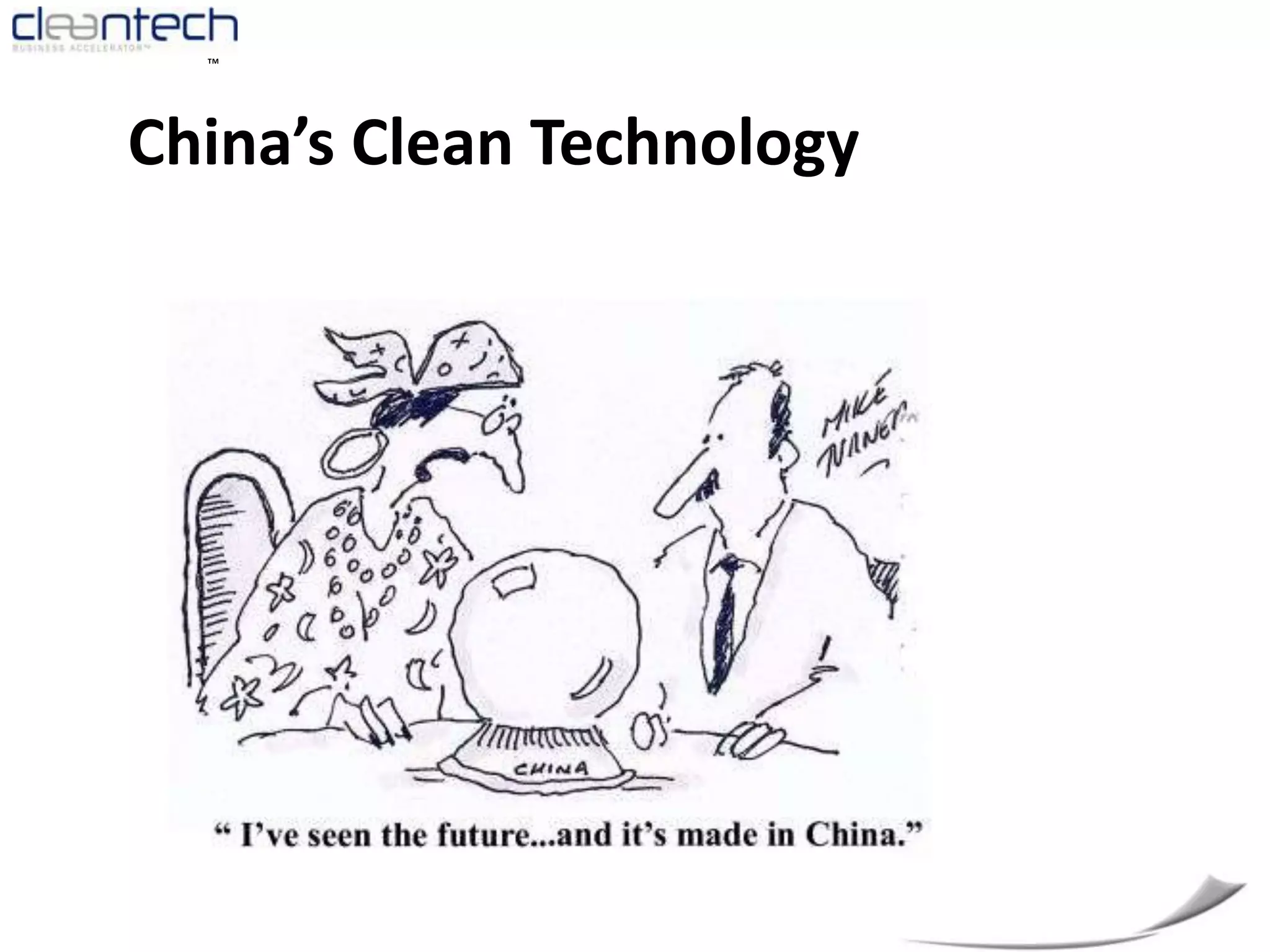
  • #12 So what about China? We know they are one of our biggest customers for resources…
  • #13 This is quite a commitment into clean energy. It doesn’t mean 45% reduction on 2000 figures – it actually means the carbon is going up BUT it is being managed consistent with its growth rate less 45%.
  • #19 Plenty of opportunities for Australian technology in China. BUT we must look forward and develop some technologies which would otherwise languish.
  • #21 So what is the CleanTech Business Accelerator and how does it fits into the future of the country?Firstly is the change in understanding…Then comes a commitment from a number of different people and groups…
  • #22 CTechBA was formed by a bunch of diverse and successful business people supported by a couple of academics to try and make a difference. If the market isnt going to spend on commercialisation what can we do to help? We recognised the problems ……and we developed a solution which became CTechBA.
  • #23 We aren’t a VC or an Advisory Firm or any firm any of you have seen before. We are a professional management team with a track record in BUSINESS DEVELOPMENT. We are also willing to take some of the risk with the right opportunities.
  • #24 The standard entrepreneur (and in this case I mean Entrepreneur) has real heachache…
  • #25 In the development space, as we have already highlighted, it is very hard to source funding for an emerging business. HOWEVER, generally money isn’t the problem. It is getting all the necessary skills and opportunities and the resources (which includes money) to get the company across the Valley of Death. The area where an emerging company has little or no sales and must somehow get his business on the map in order to survive. In Australia, with VC’s having a series of problems over the years and seeing big returns coming from Private Equity have tended to move up maret leaving a void in investment and support which today is partly taken up by the Angel groups and High Net Worth and CTechBA.
  • #26 Our difference is however that we embed an experienced and capable management and executive team with our clients. We may help as the Interim CEO and also by having an executive business development panel, but our real skill and capability is in providing all the missing skills and capabilities that small and emerging companies just cant have. Collectively CTechBA has over 200 man years of corporate experience plus we have a wealth of contacts in Australia and around the world. We focus on BUSINESS DEVELOPMENT and SALES to make sure the company is well placed to create business and hopefully in so doing may not need as much capital investment. Most companies want money so they can bring in skills – well in our case we use our skills to help the company grow and be successful with much or any need for venture capital.