Creating enabling environment
    for M&E Community of
           Practice
    LeaderNet Seminar: Jan 30 – Feb 3
     Summary of results and lessons
Overview of Presentation

 Strategic goals of CoP
 What is LeaderNet?
 Conceptual framework for the seminar
 Seminar content
 Seminar evaluation
 Next Steps
Strategic Goals
 Dissemination of existing Organization
  Development thinking, materials, approaches,
  experiences with an optic to their use in
  strengthening M&E performance
 Solutions corner for sharing, review and revision
  of field practices that address OD-related issues
 Sharing platform for MEval partners and
  collaborating individuals, groups and
  organizations of OD-related issues in their
  work
What is LeaderNet?

 Developed in 2003
 A global virtual learning platform for leaders and
  managers of health programs
 LeaderNet provides participants with
  opportunities to continue to strengthen their
  leadership and management skills and
  capacities, and to exchange information and
  ideas with practitioners all over the world.
 Over 5,000 members worldwide
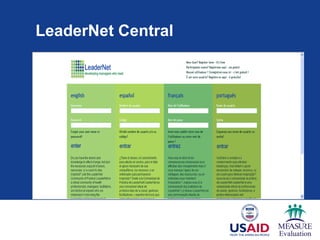
LeaderNet Central
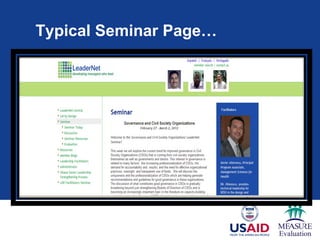
Typical Seminar Page…
Conceptual Framework

 “We created organizations, why
  can’t we change or improve them?”


  Participant from the Philippines
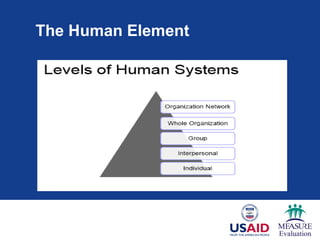
Organizational Development is…..

 A mindset
 A set of value-based perspectives
 A philosophy of organizing, managing
  and changing organizations, that
  include the human element
 A field of study and practice
The Human Element
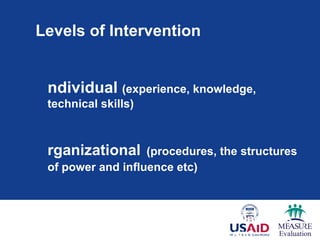
Levels of Intervention


 ndividual (experience, knowledge,
 technical skills)


 rganizational     (procedures, the structures
 of power and influence etc)


 nabling Environment        (prevailing rules,
 norms and incentives for change and
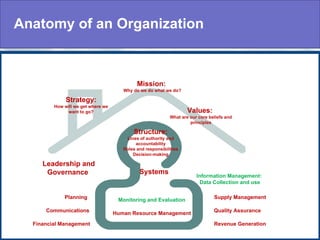
Anatomy of an Organization


                                             Mission:
                                       Why do we do what we do?

              Strategy:
         How will we get where we
              want to go?                                            Values:
                                                             What are our core beliefs and
                                                                      principles

                                           Structure:
                                        Lines of authority and
                                            accountability
                                       Roles and responsibilities
                                           Decision-making

     Leadership and
      Governance                              Systems
                                                                         Information Management:
                                                                          Data Collection and use

             Planning                                                            Supply Management
                                     Monitoring and Evaluation

      Communications                                                             Quality Assurance
                                    Human Resource Management

  Financial Management                                                           Revenue Generation
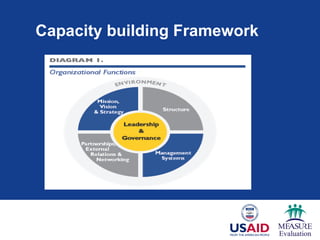
Capacity building Framework
Seminar Content – Day 1
 Introduction to the Organizational Capacity
  Building Framework
 What will happen to monitoring and evaluation units
  or departments if we fail to create an enabling
  organizational environment or do not invest
  sufficiently in this area?
 Select one or two organizational functions in the
  framework that you feel are important and need to be
  strengthened in your own monitoring and evaluation
  unit. Why are they important?
Day 2

 Fostering enabling environment: Who Owns
  M&E?
 Think of a time in the past when you belonged to
  an M&E team that successfully implemented its
  roles and functions:
 What were some of the factors that made this
  particular M&E team successful?
 Scavenger Hunt: CBKEN
Day 3: Abunesia              Case Study
 Using a systems-approach to avoid
  breakdowns in epidemiological surveillance
 What are some of the human resource, leadership,
  organizational and administrative changes that need
  to be introduced and implemented to foster an
  enabling environment for effective disease
  surveillance and reporting system in Abunesia?
 At what level of Abunesia’s health system are
  changes most needed to maximize efficiency
  and positive results around data collection,
  sharing and reporting within the system?
Day 4

 Monitoring, Evaluating and Learning
 What types of technical assistance and
  change efforts are needed to strengthen and
  institutionalize “country led and country
  owned, learning oriented M&E practices?
 Reading: Strategies for More Effective Monitoring
  and Evaluation Systems in HIV Programmatic
  Scale up in Resource-limited Settings:
  Implications for Health System Strengthening.
  http://www.globalhivmeinfo.org/DigitalLibrary/Digital%20Library/Strate
Day 5

 Realizing a functional M&E system:
  Reflections on what we have learned and how
  to apply it in our work
 As a responsible citizen of your national or
  organizational M&E system, what steps are you
  going to take to ensure that your institution
  creates an enabling organizational environment
  to realize a fully functional M&E system?
 How are you going to apply some of the ideas
  and practices from this week’s seminar in your
  own work? Please be specific.
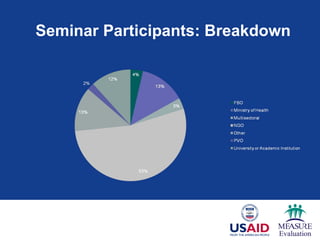
Seminar Participants: Breakdown
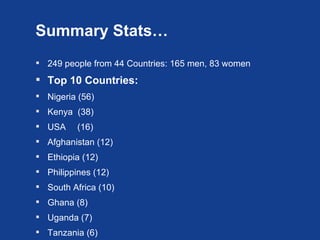
Summary Stats…
 249 people from 44 Countries: 165 men, 83 women
 Top 10 Countries:
 Nigeria (56)
 Kenya (38)
 USA     (16)
 Afghanistan (12)
 Ethiopia (12)
 Philippines (12)
 South Africa (10)
 Ghana (8)
 Uganda (7)
 Tanzania (6)
General Suggestions

 Making M&E everyone’s business
 Technical M&E skills and competencies not the
  main barrier
 Environments, systems, structures and socio-
  technical principles to inform and guide change
 Leadership that values use of data and diagnosis
Next Steps

 Coalesce the CEEME CoP – based on existing
  profiles of participants
 Create a low cost mechanism to keep the group
  active and engaged
 Send bi-weekly alerts on topical issues/questions
  or share a pertinent article or resource material
MEASURE Evaluation is funded by the U.S. Agency for
International Development (USAID) through Cooperative
Agreement GHA-A-00-08-00003-00 and is
implemented by the Carolina Population Center at the
University of North Carolina at Chapel Hill, in partnership
With Futures Group International, John Snow, Inc., Macro
International Inc., Management Sciences for Health, and
Tulane University. The views expressed in this presentation
do not necessarily reflect the views of USAID or the United
States Government.

Creating Enabling Environments for M&E (CEEME) Seminar

  • 1.
    Creating enabling environment for M&E Community of Practice LeaderNet Seminar: Jan 30 – Feb 3 Summary of results and lessons
  • 2.
    Overview of Presentation Strategic goals of CoP  What is LeaderNet?  Conceptual framework for the seminar  Seminar content  Seminar evaluation  Next Steps
  • 3.
    Strategic Goals  Disseminationof existing Organization Development thinking, materials, approaches, experiences with an optic to their use in strengthening M&E performance  Solutions corner for sharing, review and revision of field practices that address OD-related issues  Sharing platform for MEval partners and collaborating individuals, groups and organizations of OD-related issues in their work
  • 4.
    What is LeaderNet? Developed in 2003  A global virtual learning platform for leaders and managers of health programs  LeaderNet provides participants with opportunities to continue to strengthen their leadership and management skills and capacities, and to exchange information and ideas with practitioners all over the world.  Over 5,000 members worldwide
  • 5.
  • 6.
  • 7.
    Conceptual Framework  “Wecreated organizations, why can’t we change or improve them?” Participant from the Philippines
  • 8.
    Organizational Development is….. A mindset  A set of value-based perspectives  A philosophy of organizing, managing and changing organizations, that include the human element  A field of study and practice
  • 9.
  • 10.
    Levels of Intervention ndividual (experience, knowledge, technical skills) rganizational (procedures, the structures of power and influence etc) nabling Environment (prevailing rules, norms and incentives for change and
  • 11.
    Anatomy of anOrganization Mission: Why do we do what we do? Strategy: How will we get where we want to go? Values: What are our core beliefs and principles Structure: Lines of authority and accountability Roles and responsibilities Decision-making Leadership and Governance Systems Information Management: Data Collection and use Planning Supply Management Monitoring and Evaluation Communications Quality Assurance Human Resource Management Financial Management Revenue Generation
  • 12.
  • 13.
    Seminar Content –Day 1  Introduction to the Organizational Capacity Building Framework  What will happen to monitoring and evaluation units or departments if we fail to create an enabling organizational environment or do not invest sufficiently in this area?  Select one or two organizational functions in the framework that you feel are important and need to be strengthened in your own monitoring and evaluation unit. Why are they important?
  • 14.
    Day 2  Fosteringenabling environment: Who Owns M&E?  Think of a time in the past when you belonged to an M&E team that successfully implemented its roles and functions:  What were some of the factors that made this particular M&E team successful?  Scavenger Hunt: CBKEN
  • 15.
    Day 3: Abunesia Case Study  Using a systems-approach to avoid breakdowns in epidemiological surveillance  What are some of the human resource, leadership, organizational and administrative changes that need to be introduced and implemented to foster an enabling environment for effective disease surveillance and reporting system in Abunesia?  At what level of Abunesia’s health system are changes most needed to maximize efficiency and positive results around data collection, sharing and reporting within the system?
  • 16.
    Day 4  Monitoring,Evaluating and Learning  What types of technical assistance and change efforts are needed to strengthen and institutionalize “country led and country owned, learning oriented M&E practices?  Reading: Strategies for More Effective Monitoring and Evaluation Systems in HIV Programmatic Scale up in Resource-limited Settings: Implications for Health System Strengthening. http://www.globalhivmeinfo.org/DigitalLibrary/Digital%20Library/Strate
  • 17.
    Day 5  Realizinga functional M&E system: Reflections on what we have learned and how to apply it in our work  As a responsible citizen of your national or organizational M&E system, what steps are you going to take to ensure that your institution creates an enabling organizational environment to realize a fully functional M&E system?  How are you going to apply some of the ideas and practices from this week’s seminar in your own work? Please be specific.
  • 18.
  • 19.
    Summary Stats…  249people from 44 Countries: 165 men, 83 women  Top 10 Countries:  Nigeria (56)  Kenya (38)  USA (16)  Afghanistan (12)  Ethiopia (12)  Philippines (12)  South Africa (10)  Ghana (8)  Uganda (7)  Tanzania (6)
  • 20.
    General Suggestions  MakingM&E everyone’s business  Technical M&E skills and competencies not the main barrier  Environments, systems, structures and socio- technical principles to inform and guide change  Leadership that values use of data and diagnosis
  • 21.
    Next Steps  Coalescethe CEEME CoP – based on existing profiles of participants  Create a low cost mechanism to keep the group active and engaged  Send bi-weekly alerts on topical issues/questions or share a pertinent article or resource material
  • 22.
    MEASURE Evaluation isfunded by the U.S. Agency for International Development (USAID) through Cooperative Agreement GHA-A-00-08-00003-00 and is implemented by the Carolina Population Center at the University of North Carolina at Chapel Hill, in partnership With Futures Group International, John Snow, Inc., Macro International Inc., Management Sciences for Health, and Tulane University. The views expressed in this presentation do not necessarily reflect the views of USAID or the United States Government.