CRANIOPHARYNGIOMA
Cushing - “the kaleidoscopic tumors, solid and
cystic …” whose management is “one of the most
baffling problems to the neurosurgeon
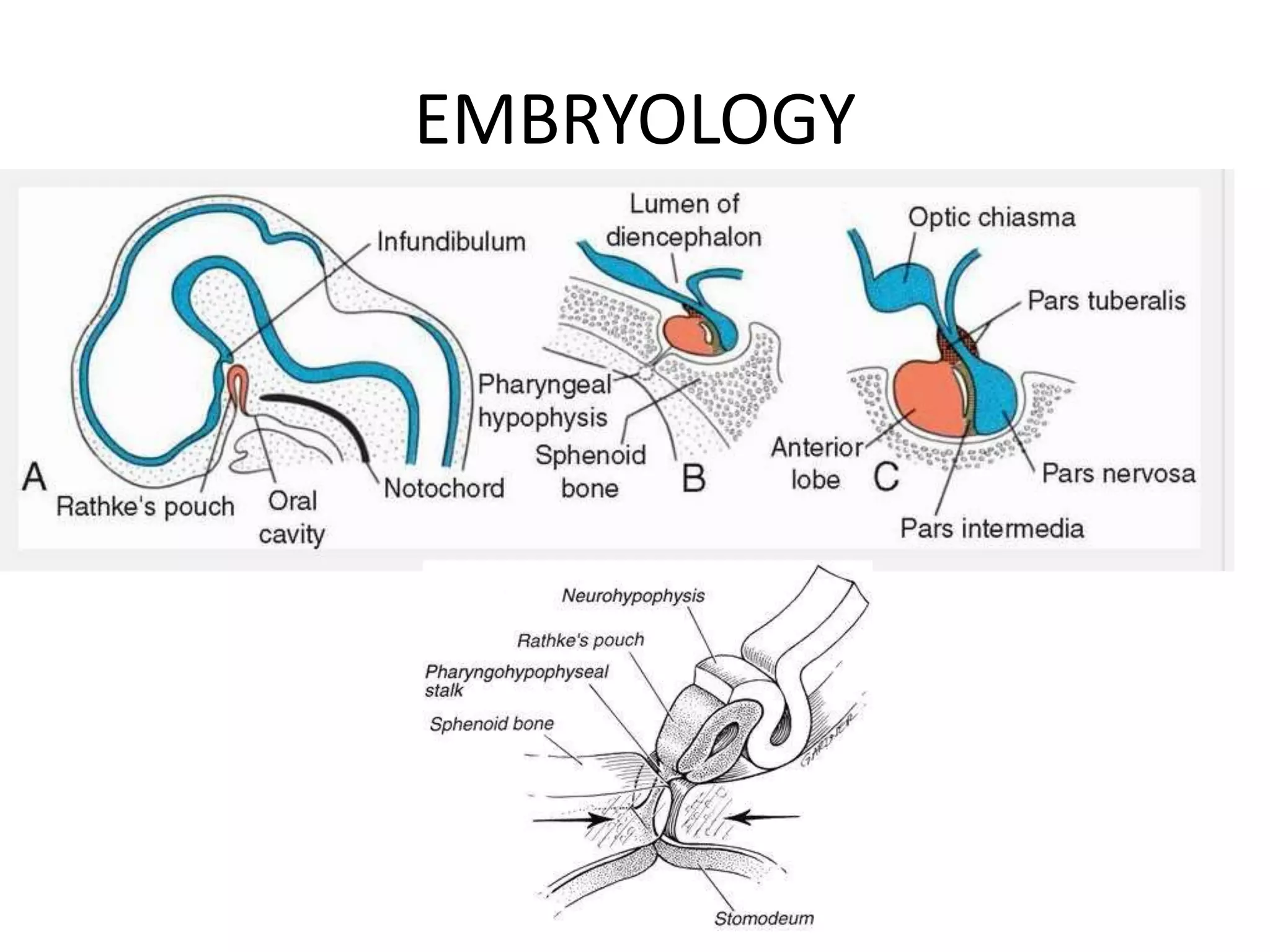
EMBRYOLOGY
EPIDEMIOLOGY
• 3% of all intracranial neoplasms
• Bimodal distribution by age
• 6% to 9% of all pediatric brain tumors
• Most common nonglial tumor of childhood
• Incidence greatest at 6 to 10 years, followed
by 11 to 15 years
• Males > Females
PATHOLOGY
• From epithelial nests - Remnant of Rathke’s
pouch
• Extends from the sella turcica along the pituitary
stalk to the hypothalamus and the floor of the
third ventricle
• Craniopharyngiomas
– Adamantinomatous
– Papillary
– Mixed
– Craniopharyngioma and Rathke’s cleft cysts
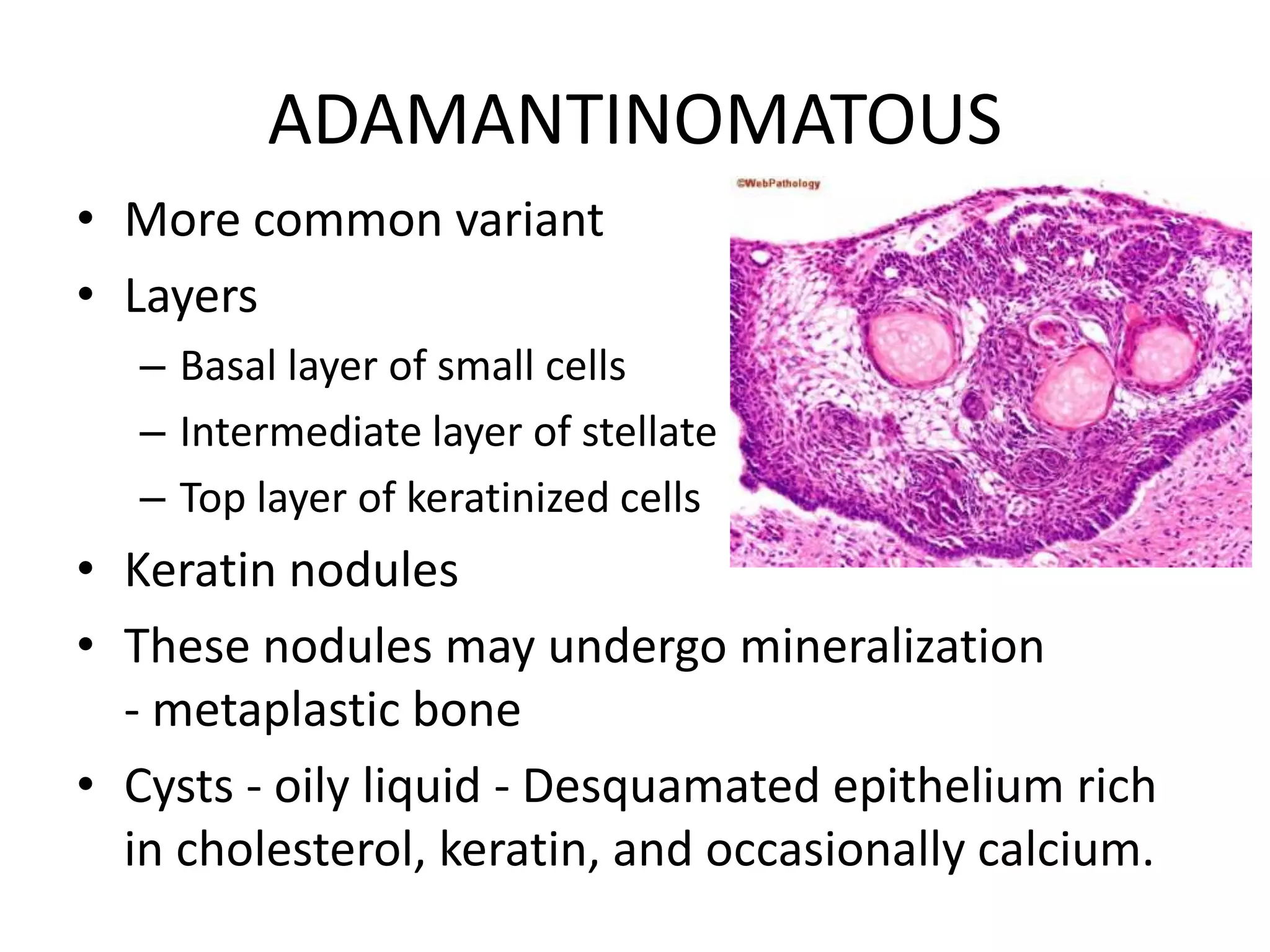
ADAMANTINOMATOUS
• More common variant
• Layers
– Basal layer of small cells
– Intermediate layer of stellate
– Top layer of keratinized cells
• Keratin nodules
• These nodules may undergo mineralization
- metaplastic bone
• Cysts - oily liquid - Desquamated epithelium rich
in cholesterol, keratin, and occasionally calcium.
• Microscopic islets or “fingers” of tumor
embedded in densely gliotic parenchyma are
seen when tumor arises in the region of the
tuber cinereum, hypothalamus, and floor of
the third ventricle
• The gliotic reaction of Rosenthal fibers and
fibrillary astrocytes - Separates tumor from
the brain – Surgical plane
• Decreased risk of recurrence
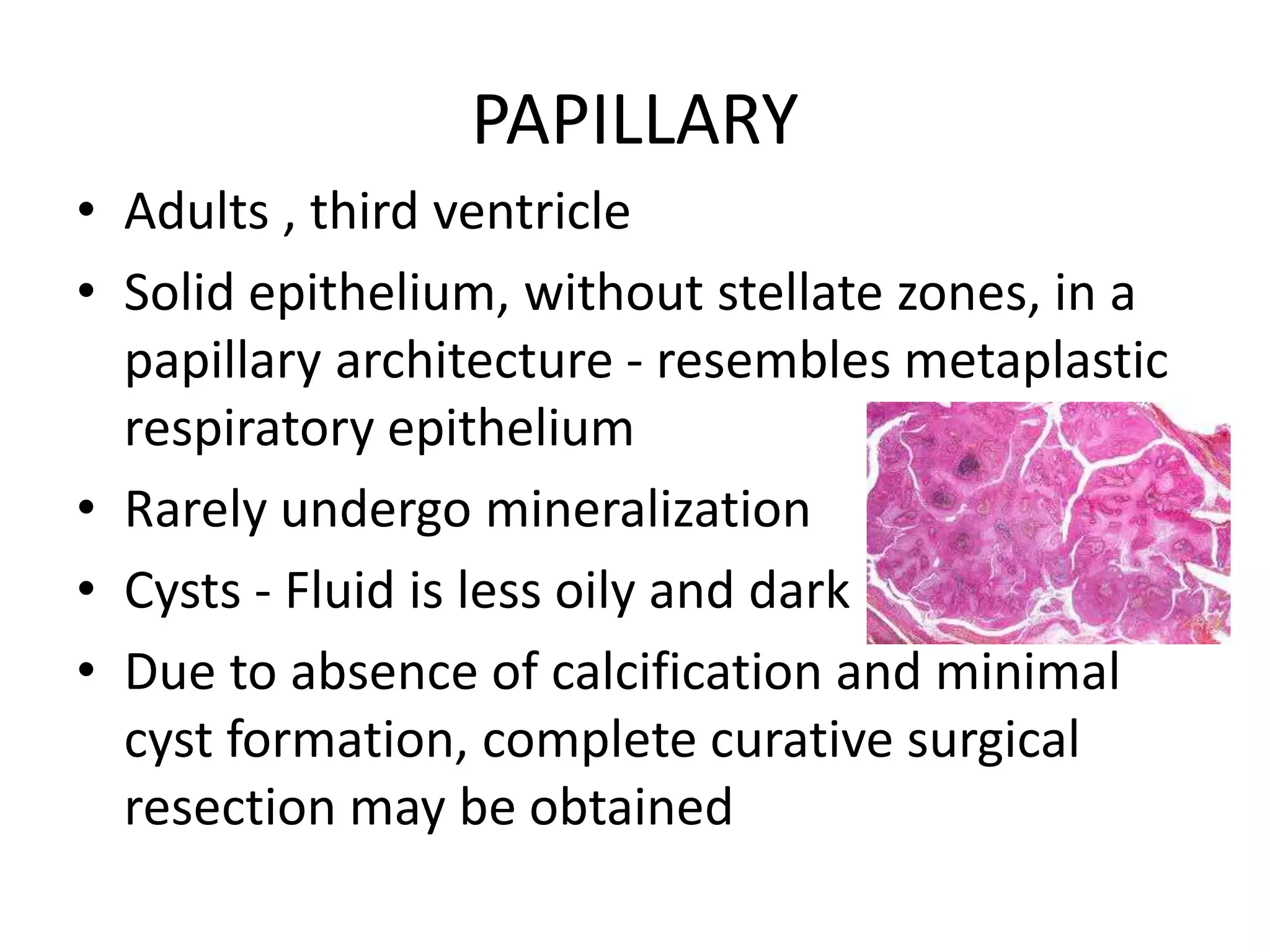
PAPILLARY
• Adults , third ventricle
• Solid epithelium, without stellate zones, in a
papillary architecture - resembles metaplastic
respiratory epithelium
• Rarely undergo mineralization
• Cysts - Fluid is less oily and dark
• Due to absence of calcification and minimal
cyst formation, complete curative surgical
resection may be obtained
CLINICAL FEATURES
• Prodrome of 1 to 2 years
• Headache from raised ICP (MC)
• Visual symptoms
• Hypothalamic and endocrine dysfunction
– growth failure (short stature)
– delayed sexual maturation (20% to 50%)
– excessive weight gain
– Diabetes insipidus (DI)
Preoperative evaluation and
management
• Complete endocrinological evaluation to
uncover hypopituitarism particularly
Growth hormone
Cortisol
Thyroid hormone deficiencies.
• GH deficiency is the most common finding
(75%)
• Gonadotropin deficiency (60%)
• Thyroid or adrenal dysfunction (30%)
• DI (9% to 17%)
RADIOLOGY
X - ray
• Irregular speckled calcification seen just above
the sella turcica.
• The semicircular shell outlining the wall of
cystic lesion.
– Fine flaky calcium -fast growing tumours.
– Dense calcification -slow growing tumours.
• Mostly suprasellar.
• Calcification may be in cyst wall and/or solid
component.
CT
• Calcifications (90% in children)
• 20 changes in the skull base
– Enlargement of the sella turcica
– Erosion of the dorsum sella
• Noncalcified solid craniopharyngiomas Vs
Chiasmatic hypothalamic gliomas,
germinomas, and pituitary adenomas
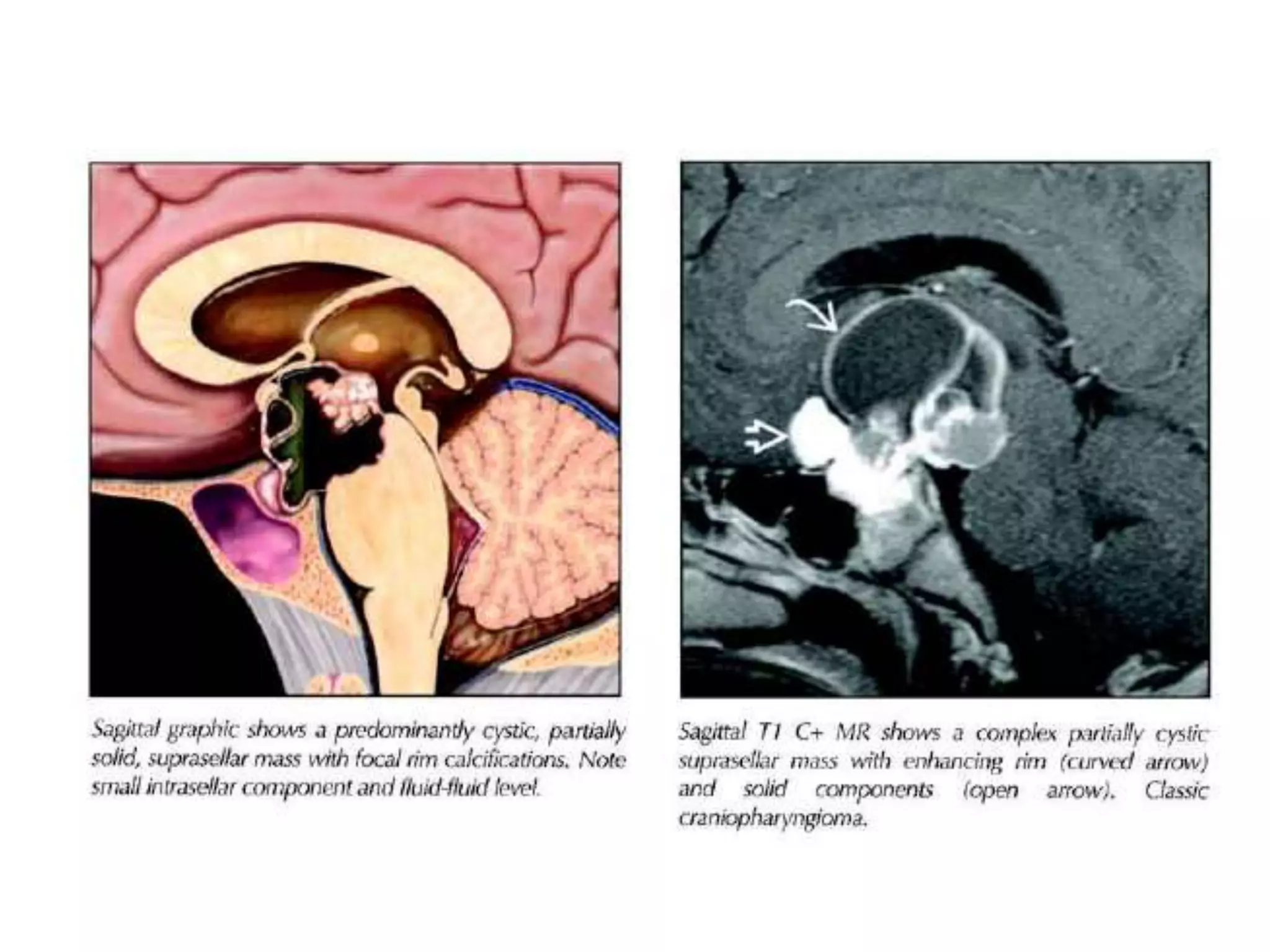
MRI
• Hypo on T1,hyper on T2WI
• Multilobular
• Multicystic
• Enhances strongly/ heterogenously
• Often both cyst walls and solid
components enhance
• Completely solid (rare)
MRS
• Craniopharyngioma - Lactate or lipids and only
trace amount of other metabolites.
• Gliomas demonstrate - Choline, N-acetyl
aspartate, and creatine peaks with an
increased ratio of choline to NAA
• Pituitary adenomas - Choline peaks or no
metabolites at all
Samii and Tatagiba - Tumor extension
GRADE
I: Intrasellar or infradiaphragm
II: Occupying the cistern with/without an
intrasellar component
III: Lower half of the third ventricle
IV: Upper half of the third ventricle
V: Reaching the septum pellucidum or lateral
ventricles
• Postoperative scans - within 48 hours
• Residual tumor – Hoffman grading
THERAPUETIC GOALS
• Cure of disease with functional
preservation and restoration.
Surgical Approaches
• Ideal approach – Varies.
• Influenced by the tumour location with
respect to the sella, chiasm and third
ventricle.
Anterior Midline Approach
Trans-sphenoidal
• Grade I and II
• Decreased risk of visual injury
• Difficult in young children (non-
pneumatised sphenoid sinus)
• CSF leak
Anterior Midline Approach
Subfrontal
• Grade III and IV
• Pre-chiasmatic dissection of the tumour
• Potential violation of the frontal sinus
• Damage to the olfactory tract
• Technically more complicated (pre-fixed
chiasm)
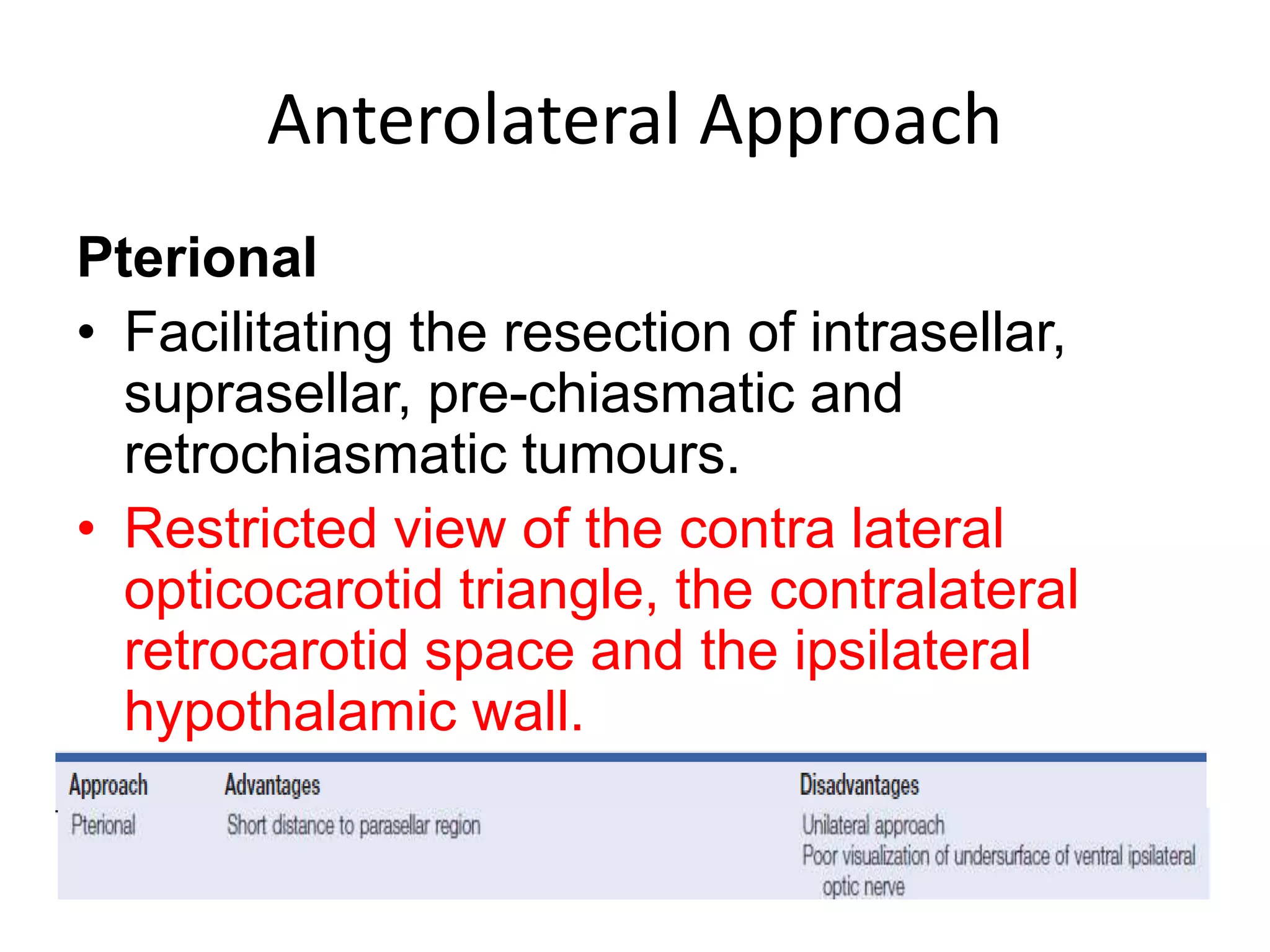
Anterolateral Approach
Pterional
• Facilitating the resection of intrasellar,
suprasellar, pre-chiasmatic and
retrochiasmatic tumours.
• Restricted view of the contra lateral
opticocarotid triangle, the contralateral
retrocarotid space and the ipsilateral
hypothalamic wall.
Anterolateral Approach
Orbitozygomatic
• Expands on the pterional approach
• Significant suprasellar extension
Transpetrosal Approach
• Large retrochiasmatic tumors
Intraventricular Approaches
Transcallosal –transventricular
• Foramen of Monro is dilated by a tumour
projecting into the lateral ventricle
• Frontal lobe retraction injury
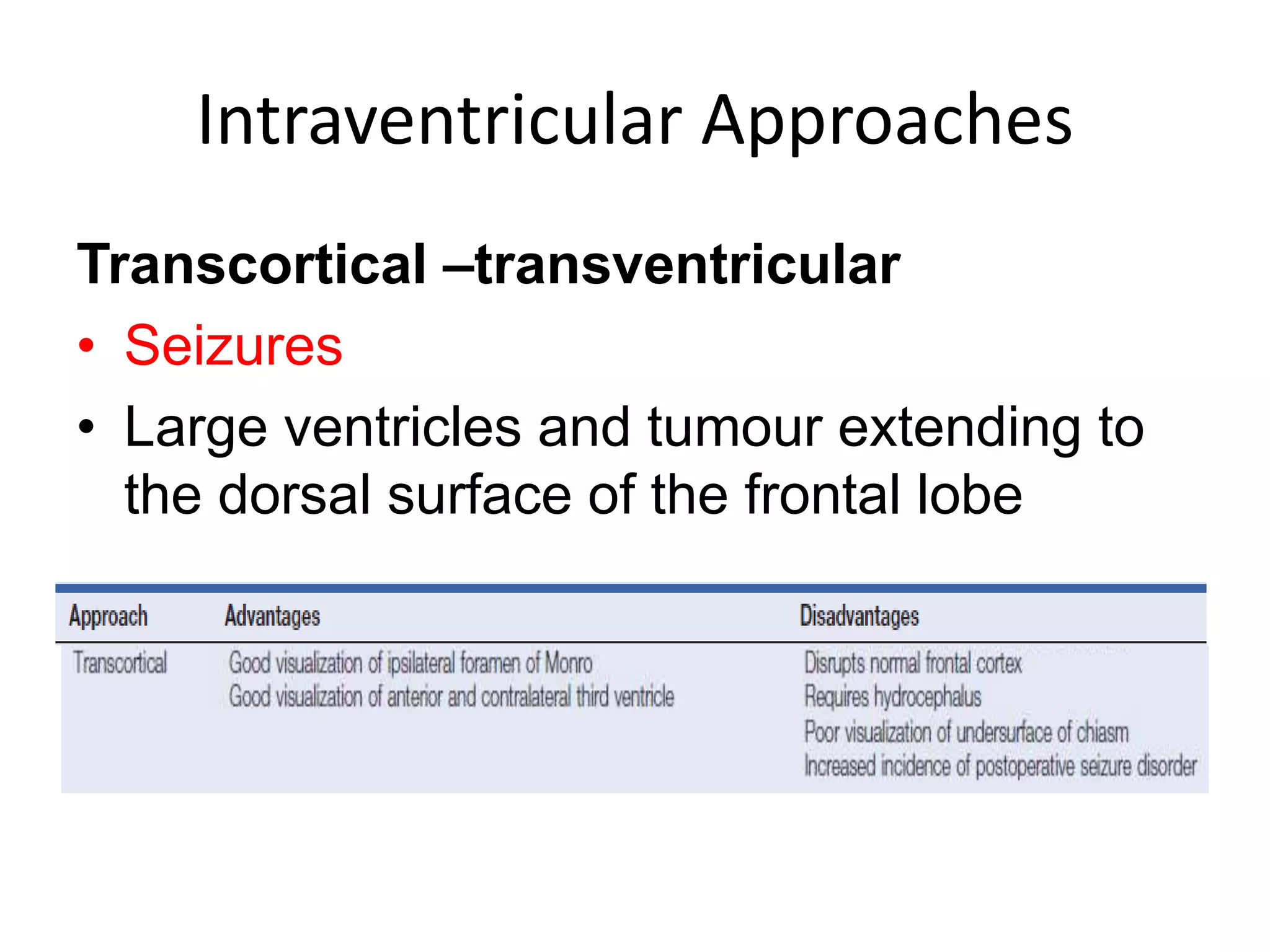
Intraventricular Approaches
Transcortical –transventricular
• Seizures
• Large ventricles and tumour extending to
the dorsal surface of the frontal lobe
Intraventricular Approaches
Trans lamina Terminalis
• Intraventricular tumors
• Pterional or a subfrontal approach to
access the lamina terminalis
Combined Approaches
• Subtemporal –transpetrosal –
– Primarily retrochiasmatic unilateral tumors extending to the
posterior fossa along the clivus.
• Pterional –transcallosal –
– Aid removal of adherent and calcified tumor within the third
ventricle.
• In transcallosal + pterional approach, intraventricular portions of
the tumour should be removed first, with the pterional approach
only being performed if basal portions of the tumor remain
inaccessible.
Radical surgery
• Possible in:
– Small or prechiasmatic
• Difficult in:
– Proximity and adherence of the lesion to the optic pathways and
adjacent neurovascular structures
– Reterochiasmatic
– Large
– Multicompartmental
Radical surgery
Advantage
• One treatment then only follow-up
Disadvantages
• Limited number of surgeons with adequate
expertise
• Difficult to assess true risks to individual
child
• Impaired quality of life
• Diabetes insipidus (95%)
Limited surgery
Goals
• Diagnosis
• Drain cysts
• Limit field of radiation
• Control hydrocephalus
• Improve vision
• Decompress chiasm
Limited surgery + radiation
Advantages
• Surgery can be performed with limited
experience
Disadvantages
• Decrease in IQ
• Cyst management (often multiple cyst
procedures)
• Complications of radiation
• Diabetes insipidus (5%)
Endoscopy
• Grade 1 and 2 tumors
– Transnasal
– Trans -sphenoidal
– Transethmoidal
– Transmaxillary
• Advantages :
– No brain retraction and the cosmetic deficit
– Less invasive
• Not appropriate
– When the lateral extent of the tumor passes more than 1cm beyond the lateral limits of
the exposure
– Epicentre of the tumour does not lie within the midline
• GTR rate 100%
Radiation Therapy
• Radiosensitive tumors
• STR alone- rec. rates of 55% to 85%.
• Postop radiotherapy in GRT- rec.rate to 15% to
20%
• The target for RT - tumor + margin of 5 to 10
mm
• If the cysts drained - target volume - based on
the decompressed volume
Radiation Therapy
• GTR not possible
– Conventional RT
– Intracavitary radiation
– Fractionated radiotherapy
– Stereotactic radiosurgery
• DOSE : 54 to 55.8 Gy (in 1.8-Gy daily fractions)
Stereotactic Radiosurgery
• Gamma Knife
• Best suited for
– Smaller tumors (<3 cm) with
– Predominant solid component
– Few mm away from the optic apparatus
– Small cystic or mixed tumors near the optic
apparatus
• Mean marginal dose - 12 Gy
Intracavitary brachytherapy
• Most effective - Primary monocystic tumors
with relatively thin walls
Aspiration
• Aspiration + Ommaya reservoir into the cyst -
never indicated as primary therapy in children
• To control cyst volume while waiting for the
therapeutic effect of intracavitary irradiation.
Intracavitary Irradiation
• Induces gradual, progressive shrinkage of the
cyst over the course of weeks to months.
• Minimum dose - 200 Gy
• The first radioisotope in literature -
Phosphorus 32 (32P), radiation range of 0.9
mm, t 1/2 14 days
• Yttrium 90 (90Y) t 1/2 - 3 days
• Cyst regression over several months
• Does not control solid tumor growth, nor does
it prevent the development of new cysts
• Can be used in combination with SRS for
tumors with larger cystic component and a
smaller residual solid component
Intracavitary Bleomycin
• At 1- to 2-day intervals depending on the cyst
volume, 1.5 to 10 mg of bleomycin
• Leakage of bleomycin into the subarachnoid
space or ventricles - ventriculitis, meningitis,
or vasospasm
• Involution of cyst - over several months
• Produces thick, tough cyst wall, resistant to
tearing - easier dissect
• Does not induce arachnoidal scarring or
damage the gliotic plane
Intracavitary Interferon
• Both systemic and intracavitary
• Cavalheiro and colleagues – 60 patients
– 78% - Short-term disease control
– 13% - New endocrine deficiencies
– 30% - Mild side effects
– 3 of the responders with tumor progression after
bleomycin but were salvaged
• No information on long-term outcome
RECURRENT CRANIOPHARYNGIOMAS
• Most common complication
• Presentation –
– most often visual deterioration
– Others - progressive headaches, hydrocephalus,
hormonal disturbances, and seizures
• Single factor closely associated - Extent of
resection at initial surgery
• Median time - 2 to 8 years
• Clinical factors for recurrence
– Larger tumors (>5 cm)
– Highly calcified tumors
– Tumors that extend beyond the suprasellar space
• Molecular factors – increased expression of
– Osteonectin
– Ki-67
– P53
– Epithelial cell adhesion molecule
– Pituitary transforming gene (PTTG-1)
RECURRENT CRANIOPHARYNGIOMAS
• Ectopic recurrence of craniopharyngioma –
adamantinomatous
• Contamination of tumor cells
• Surgical resection can be curative because of
preserved arachnoidal planes
• Reoperation, intracystic therapy, adjuvant
irradiation or re-irradiation, and SRS are all
potential options
• Reoperation for tumor resection should be
considered whenever possible both for
recurrences after GTR as well as after STR and
RT.
• Not candidates for reoperation
– Relatively asymptomatic
– Predominantly cystic tumor recurrence
Craniopharyngioma

Craniopharyngioma

  • 1.
    CRANIOPHARYNGIOMA Cushing - “thekaleidoscopic tumors, solid and cystic …” whose management is “one of the most baffling problems to the neurosurgeon
  • 2.
  • 3.
    EPIDEMIOLOGY • 3% ofall intracranial neoplasms • Bimodal distribution by age • 6% to 9% of all pediatric brain tumors • Most common nonglial tumor of childhood • Incidence greatest at 6 to 10 years, followed by 11 to 15 years • Males > Females
  • 4.
    PATHOLOGY • From epithelialnests - Remnant of Rathke’s pouch • Extends from the sella turcica along the pituitary stalk to the hypothalamus and the floor of the third ventricle • Craniopharyngiomas – Adamantinomatous – Papillary – Mixed – Craniopharyngioma and Rathke’s cleft cysts
  • 5.
    ADAMANTINOMATOUS • More commonvariant • Layers – Basal layer of small cells – Intermediate layer of stellate – Top layer of keratinized cells • Keratin nodules • These nodules may undergo mineralization - metaplastic bone • Cysts - oily liquid - Desquamated epithelium rich in cholesterol, keratin, and occasionally calcium.
  • 6.
    • Microscopic isletsor “fingers” of tumor embedded in densely gliotic parenchyma are seen when tumor arises in the region of the tuber cinereum, hypothalamus, and floor of the third ventricle • The gliotic reaction of Rosenthal fibers and fibrillary astrocytes - Separates tumor from the brain – Surgical plane • Decreased risk of recurrence
  • 7.
    PAPILLARY • Adults ,third ventricle • Solid epithelium, without stellate zones, in a papillary architecture - resembles metaplastic respiratory epithelium • Rarely undergo mineralization • Cysts - Fluid is less oily and dark • Due to absence of calcification and minimal cyst formation, complete curative surgical resection may be obtained
  • 8.
    CLINICAL FEATURES • Prodromeof 1 to 2 years • Headache from raised ICP (MC) • Visual symptoms • Hypothalamic and endocrine dysfunction – growth failure (short stature) – delayed sexual maturation (20% to 50%) – excessive weight gain – Diabetes insipidus (DI)
  • 9.
    Preoperative evaluation and management •Complete endocrinological evaluation to uncover hypopituitarism particularly Growth hormone Cortisol Thyroid hormone deficiencies.
  • 10.
    • GH deficiencyis the most common finding (75%) • Gonadotropin deficiency (60%) • Thyroid or adrenal dysfunction (30%) • DI (9% to 17%)
  • 11.
  • 12.
    X - ray •Irregular speckled calcification seen just above the sella turcica. • The semicircular shell outlining the wall of cystic lesion. – Fine flaky calcium -fast growing tumours. – Dense calcification -slow growing tumours. • Mostly suprasellar. • Calcification may be in cyst wall and/or solid component.
  • 14.
    CT • Calcifications (90%in children) • 20 changes in the skull base – Enlargement of the sella turcica – Erosion of the dorsum sella • Noncalcified solid craniopharyngiomas Vs Chiasmatic hypothalamic gliomas, germinomas, and pituitary adenomas
  • 16.
    MRI • Hypo onT1,hyper on T2WI • Multilobular • Multicystic • Enhances strongly/ heterogenously • Often both cyst walls and solid components enhance • Completely solid (rare)
  • 18.
    MRS • Craniopharyngioma -Lactate or lipids and only trace amount of other metabolites. • Gliomas demonstrate - Choline, N-acetyl aspartate, and creatine peaks with an increased ratio of choline to NAA • Pituitary adenomas - Choline peaks or no metabolites at all
  • 19.
    Samii and Tatagiba- Tumor extension GRADE I: Intrasellar or infradiaphragm II: Occupying the cistern with/without an intrasellar component III: Lower half of the third ventricle IV: Upper half of the third ventricle V: Reaching the septum pellucidum or lateral ventricles
  • 20.
    • Postoperative scans- within 48 hours • Residual tumor – Hoffman grading
  • 21.
    THERAPUETIC GOALS • Cureof disease with functional preservation and restoration.
  • 22.
    Surgical Approaches • Idealapproach – Varies. • Influenced by the tumour location with respect to the sella, chiasm and third ventricle.
  • 24.
    Anterior Midline Approach Trans-sphenoidal •Grade I and II • Decreased risk of visual injury • Difficult in young children (non- pneumatised sphenoid sinus) • CSF leak
  • 25.
    Anterior Midline Approach Subfrontal •Grade III and IV • Pre-chiasmatic dissection of the tumour • Potential violation of the frontal sinus • Damage to the olfactory tract • Technically more complicated (pre-fixed chiasm)
  • 26.
    Anterolateral Approach Pterional • Facilitatingthe resection of intrasellar, suprasellar, pre-chiasmatic and retrochiasmatic tumours. • Restricted view of the contra lateral opticocarotid triangle, the contralateral retrocarotid space and the ipsilateral hypothalamic wall.
  • 27.
    Anterolateral Approach Orbitozygomatic • Expandson the pterional approach • Significant suprasellar extension
  • 28.
    Transpetrosal Approach • Largeretrochiasmatic tumors
  • 29.
    Intraventricular Approaches Transcallosal –transventricular •Foramen of Monro is dilated by a tumour projecting into the lateral ventricle • Frontal lobe retraction injury
  • 30.
    Intraventricular Approaches Transcortical –transventricular •Seizures • Large ventricles and tumour extending to the dorsal surface of the frontal lobe
  • 31.
    Intraventricular Approaches Trans laminaTerminalis • Intraventricular tumors • Pterional or a subfrontal approach to access the lamina terminalis
  • 32.
    Combined Approaches • Subtemporal–transpetrosal – – Primarily retrochiasmatic unilateral tumors extending to the posterior fossa along the clivus. • Pterional –transcallosal – – Aid removal of adherent and calcified tumor within the third ventricle. • In transcallosal + pterional approach, intraventricular portions of the tumour should be removed first, with the pterional approach only being performed if basal portions of the tumor remain inaccessible.
  • 33.
    Radical surgery • Possiblein: – Small or prechiasmatic • Difficult in: – Proximity and adherence of the lesion to the optic pathways and adjacent neurovascular structures – Reterochiasmatic – Large – Multicompartmental
  • 34.
    Radical surgery Advantage • Onetreatment then only follow-up Disadvantages • Limited number of surgeons with adequate expertise • Difficult to assess true risks to individual child • Impaired quality of life • Diabetes insipidus (95%)
  • 35.
    Limited surgery Goals • Diagnosis •Drain cysts • Limit field of radiation • Control hydrocephalus • Improve vision • Decompress chiasm
  • 36.
    Limited surgery +radiation Advantages • Surgery can be performed with limited experience Disadvantages • Decrease in IQ • Cyst management (often multiple cyst procedures) • Complications of radiation • Diabetes insipidus (5%)
  • 37.
    Endoscopy • Grade 1and 2 tumors – Transnasal – Trans -sphenoidal – Transethmoidal – Transmaxillary • Advantages : – No brain retraction and the cosmetic deficit – Less invasive • Not appropriate – When the lateral extent of the tumor passes more than 1cm beyond the lateral limits of the exposure – Epicentre of the tumour does not lie within the midline • GTR rate 100%
  • 38.
    Radiation Therapy • Radiosensitivetumors • STR alone- rec. rates of 55% to 85%. • Postop radiotherapy in GRT- rec.rate to 15% to 20% • The target for RT - tumor + margin of 5 to 10 mm • If the cysts drained - target volume - based on the decompressed volume
  • 39.
    Radiation Therapy • GTRnot possible – Conventional RT – Intracavitary radiation – Fractionated radiotherapy – Stereotactic radiosurgery • DOSE : 54 to 55.8 Gy (in 1.8-Gy daily fractions)
  • 40.
    Stereotactic Radiosurgery • GammaKnife • Best suited for – Smaller tumors (<3 cm) with – Predominant solid component – Few mm away from the optic apparatus – Small cystic or mixed tumors near the optic apparatus • Mean marginal dose - 12 Gy
  • 41.
    Intracavitary brachytherapy • Mosteffective - Primary monocystic tumors with relatively thin walls
  • 42.
    Aspiration • Aspiration +Ommaya reservoir into the cyst - never indicated as primary therapy in children • To control cyst volume while waiting for the therapeutic effect of intracavitary irradiation.
  • 43.
    Intracavitary Irradiation • Inducesgradual, progressive shrinkage of the cyst over the course of weeks to months. • Minimum dose - 200 Gy • The first radioisotope in literature - Phosphorus 32 (32P), radiation range of 0.9 mm, t 1/2 14 days • Yttrium 90 (90Y) t 1/2 - 3 days
  • 44.
    • Cyst regressionover several months • Does not control solid tumor growth, nor does it prevent the development of new cysts • Can be used in combination with SRS for tumors with larger cystic component and a smaller residual solid component
  • 45.
    Intracavitary Bleomycin • At1- to 2-day intervals depending on the cyst volume, 1.5 to 10 mg of bleomycin • Leakage of bleomycin into the subarachnoid space or ventricles - ventriculitis, meningitis, or vasospasm • Involution of cyst - over several months
  • 46.
    • Produces thick,tough cyst wall, resistant to tearing - easier dissect • Does not induce arachnoidal scarring or damage the gliotic plane
  • 47.
    Intracavitary Interferon • Bothsystemic and intracavitary • Cavalheiro and colleagues – 60 patients – 78% - Short-term disease control – 13% - New endocrine deficiencies – 30% - Mild side effects – 3 of the responders with tumor progression after bleomycin but were salvaged • No information on long-term outcome
  • 48.
    RECURRENT CRANIOPHARYNGIOMAS • Mostcommon complication • Presentation – – most often visual deterioration – Others - progressive headaches, hydrocephalus, hormonal disturbances, and seizures • Single factor closely associated - Extent of resection at initial surgery • Median time - 2 to 8 years
  • 49.
    • Clinical factorsfor recurrence – Larger tumors (>5 cm) – Highly calcified tumors – Tumors that extend beyond the suprasellar space • Molecular factors – increased expression of – Osteonectin – Ki-67 – P53 – Epithelial cell adhesion molecule – Pituitary transforming gene (PTTG-1) RECURRENT CRANIOPHARYNGIOMAS
  • 50.
    • Ectopic recurrenceof craniopharyngioma – adamantinomatous • Contamination of tumor cells • Surgical resection can be curative because of preserved arachnoidal planes • Reoperation, intracystic therapy, adjuvant irradiation or re-irradiation, and SRS are all potential options
  • 51.
    • Reoperation fortumor resection should be considered whenever possible both for recurrences after GTR as well as after STR and RT. • Not candidates for reoperation – Relatively asymptomatic – Predominantly cystic tumor recurrence