CPR ALTERNATE ASSESMENT
Mrs. Rives 06/19/2013
CPR ON ADULTS
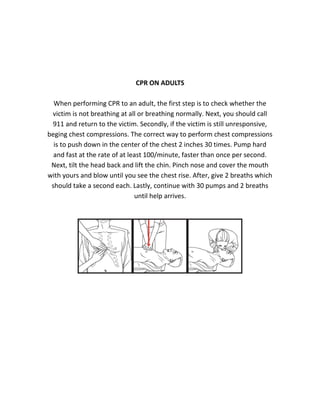
When performing CPR to an adult, the first step is to check whether the
victim is not breathing at all or breathing normally. Next, you should call
911 and return to the victim. Secondly, if the victim is still unresponsive,
beging chest compressions. The correct way to perform chest compressions
is to push down in the center of the chest 2 inches 30 times. Pump hard
and fast at the rate of at least 100/minute, faster than once per second.
Next, tilt the head back and lift the chin. Pinch nose and cover the mouth
with yours and blow until you see the chest rise. After, give 2 breaths which
should take a second each. Lastly, continue with 30 pumps and 2 breaths
until help arrives.
CPR ON INFANTS
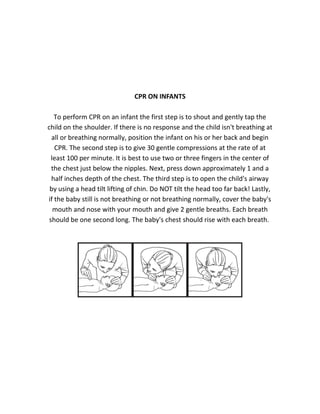
To perform CPR on an infant the first step is to shout and gently tap the
child on the shoulder. If there is no response and the child isn't breathing at
all or breathing normally, position the infant on his or her back and begin
CPR. The second step is to give 30 gentle compressions at the rate of at
least 100 per minute. It is best to use two or three fingers in the center of
the chest just below the nipples. Next, press down approximately 1 and a
half inches depth of the chest. The third step is to open the child's airway
by using a head tilt lifting of chin. Do NOT tilt the head too far back! Lastly,
if the baby still is not breathing or not breathing normally, cover the baby's
mouth and nose with your mouth and give 2 gentle breaths. Each breath
should be one second long. The baby's chest should rise with each breath.
CPR ON CHILDREN
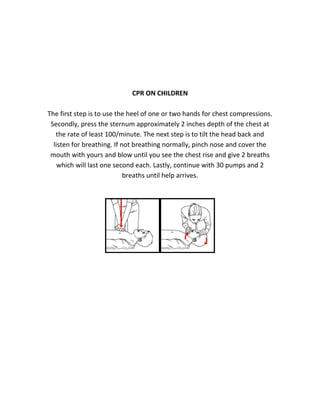
The first step is to use the heel of one or two hands for chest compressions.
Secondly, press the sternum approximately 2 inches depth of the chest at
the rate of least 100/minute. The next step is to tilt the head back and
listen for breathing. If not breathing normally, pinch nose and cover the
mouth with yours and blow until you see the chest rise and give 2 breaths
which will last one second each. Lastly, continue with 30 pumps and 2
breaths until help arrives.
Here's advice from the American Heart Association:
If you're not trained in CPR, then provide hands-only CPR. That means
uninterrupted chest compressions of about 100 a minute until paramedics
arrive (described in more detail below). You don't need to try rescue
breathing.
If you're well trained and confident in your ability, begin with chest
compressions instead of first checking the airway and doing rescue
breathing. Start CPR with 30 chest compressions before checking the
airway and giving rescue breaths.
If you've previously received CPR training but you're not confident in your
abilities, then just do chest compressions at a rate of about 100 a minute.
CREDITS: www.mayoclinic.com & http://depts.washington.edu/
Here's advice from the American Heart Association:
If you're not trained in CPR, then provide hands-only CPR. That means
uninterrupted chest compressions of about 100 a minute until paramedics
arrive (described in more detail below). You don't need to try rescue
breathing.
If you're well trained and confident in your ability, begin with chest
compressions instead of first checking the airway and doing rescue
breathing. Start CPR with 30 chest compressions before checking the
airway and giving rescue breaths.
If you've previously received CPR training but you're not confident in your
abilities, then just do chest compressions at a rate of about 100 a minute.
CREDITS: www.mayoclinic.com & http://depts.washington.edu/

Cprslideshow

  • 1.
  • 2.
    CPR ON ADULTS Whenperforming CPR to an adult, the first step is to check whether the victim is not breathing at all or breathing normally. Next, you should call 911 and return to the victim. Secondly, if the victim is still unresponsive, beging chest compressions. The correct way to perform chest compressions is to push down in the center of the chest 2 inches 30 times. Pump hard and fast at the rate of at least 100/minute, faster than once per second. Next, tilt the head back and lift the chin. Pinch nose and cover the mouth with yours and blow until you see the chest rise. After, give 2 breaths which should take a second each. Lastly, continue with 30 pumps and 2 breaths until help arrives.
  • 3.
    CPR ON INFANTS Toperform CPR on an infant the first step is to shout and gently tap the child on the shoulder. If there is no response and the child isn't breathing at all or breathing normally, position the infant on his or her back and begin CPR. The second step is to give 30 gentle compressions at the rate of at least 100 per minute. It is best to use two or three fingers in the center of the chest just below the nipples. Next, press down approximately 1 and a half inches depth of the chest. The third step is to open the child's airway by using a head tilt lifting of chin. Do NOT tilt the head too far back! Lastly, if the baby still is not breathing or not breathing normally, cover the baby's mouth and nose with your mouth and give 2 gentle breaths. Each breath should be one second long. The baby's chest should rise with each breath.
  • 4.
    CPR ON CHILDREN Thefirst step is to use the heel of one or two hands for chest compressions. Secondly, press the sternum approximately 2 inches depth of the chest at the rate of least 100/minute. The next step is to tilt the head back and listen for breathing. If not breathing normally, pinch nose and cover the mouth with yours and blow until you see the chest rise and give 2 breaths which will last one second each. Lastly, continue with 30 pumps and 2 breaths until help arrives.
  • 5.
    Here's advice fromthe American Heart Association: If you're not trained in CPR, then provide hands-only CPR. That means uninterrupted chest compressions of about 100 a minute until paramedics arrive (described in more detail below). You don't need to try rescue breathing. If you're well trained and confident in your ability, begin with chest compressions instead of first checking the airway and doing rescue breathing. Start CPR with 30 chest compressions before checking the airway and giving rescue breaths. If you've previously received CPR training but you're not confident in your abilities, then just do chest compressions at a rate of about 100 a minute. CREDITS: www.mayoclinic.com & http://depts.washington.edu/
  • 6.
    Here's advice fromthe American Heart Association: If you're not trained in CPR, then provide hands-only CPR. That means uninterrupted chest compressions of about 100 a minute until paramedics arrive (described in more detail below). You don't need to try rescue breathing. If you're well trained and confident in your ability, begin with chest compressions instead of first checking the airway and doing rescue breathing. Start CPR with 30 chest compressions before checking the airway and giving rescue breaths. If you've previously received CPR training but you're not confident in your abilities, then just do chest compressions at a rate of about 100 a minute. CREDITS: www.mayoclinic.com & http://depts.washington.edu/