@SkeabostHotel
#COSHH
#SonasAcademy
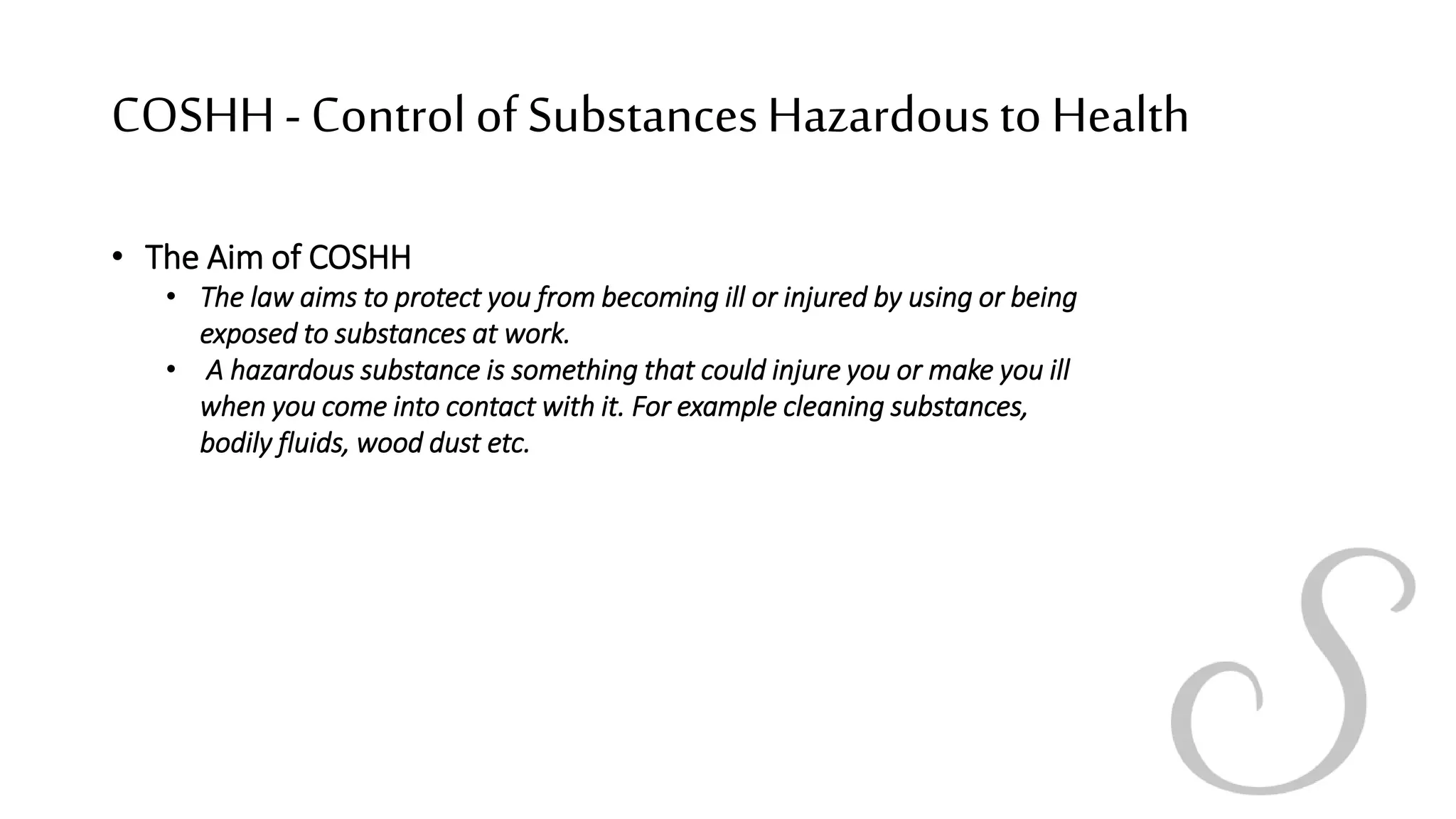
COSHH
• What COSHH is
• People’s responsibilities for hazardous substances
• What hazardous substances are and what they can do to you
• Why substances need to be assessed
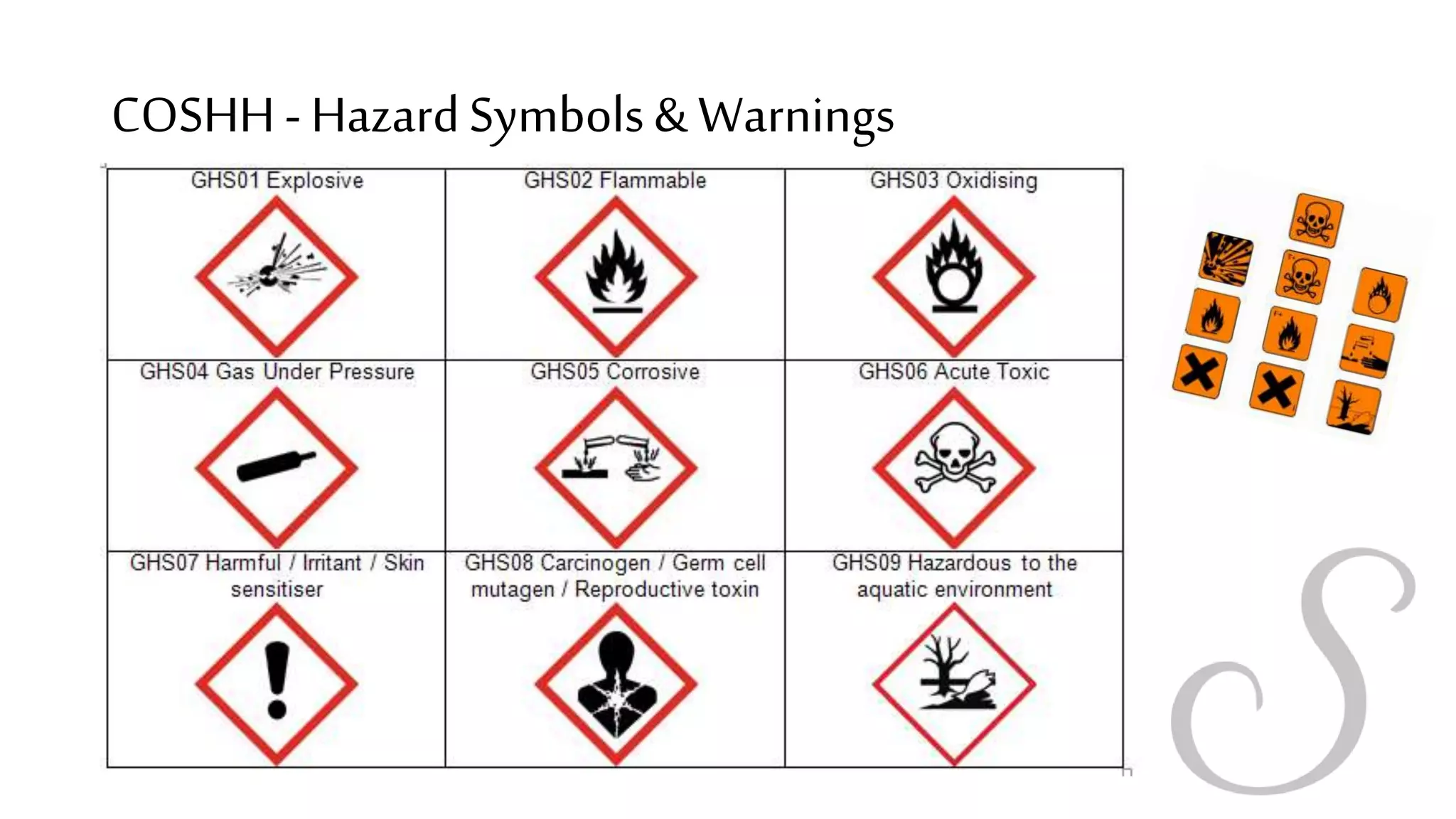
• The different hazard warning symbols and what they mean
• What you can do to reduce the risks from substances
COSHH- Controlof SubstancesHazardousto Health
• The Aim of COSHH
• The law aims to protect you from becoming ill or injured by using or being
exposed to substances at work.
• A hazardous substance is something that could injure you or make you ill
when you come into contact with it. For example cleaning substances,
bodily fluids, wood dust etc.
COSHH- ManagersDuties for SubstanceSafety
• By Law your manager has a duty to:
• Look at the risks to your health and the health of other people
from using substances at work.
• Make working with substances as safe as possible.
• Monitor your health when using substances.
• Give you information, instruction, supervision and training on the
safe use of substances at work.
COSHH- Your Dutiesfor Substance Safety
• By Law you, as an employee, have a duty to:
• Co-operate with your manager when using hazardous substances
at work
• Where required use your protective clothing or equipment (eg
rubber gloves) and take care of it
• Report any faults with your protective clothing or equipment to
your supervisor
• Attend for medical examinations if you are asked to (eg a visit to
see the Occupational Health nurse about a skin reaction)
COSHH- HazardousSubstances
Hazardous substances are not just cleaning chemicals. They can
come in any of these three forms:
• Chemical substances eg oven cleaner
• Physical substances eg wood dust
• Biological hazards eg Hepatitis B
You need to make sure that if you find any of these where you work,
you inform your manager. They can then look at what the substances
can do to you, how they are used and what needs to be done to make
it safer to work with them.
COSHH- How Does aSubstanceGet
Into Your Body?
Some substances can get onto and into your body
and cause damage by:
• Breathing them in through your nose or mouth
• Swallowing them through your mouth into your stomach
• Absorbing through coming into contact with your skin or eyes
• Entry through breaks in your skin (cuts & abrasions)
Some substances can injure you straight away, eg irritated eyes if you
splash bleach into them. For other substances it takes repeated
exposures before you see anything, eg dermatitis on your hands that
happens over a long time.
COSHH- What Harmor InjuriesCan HazardousSubstances
Cause?
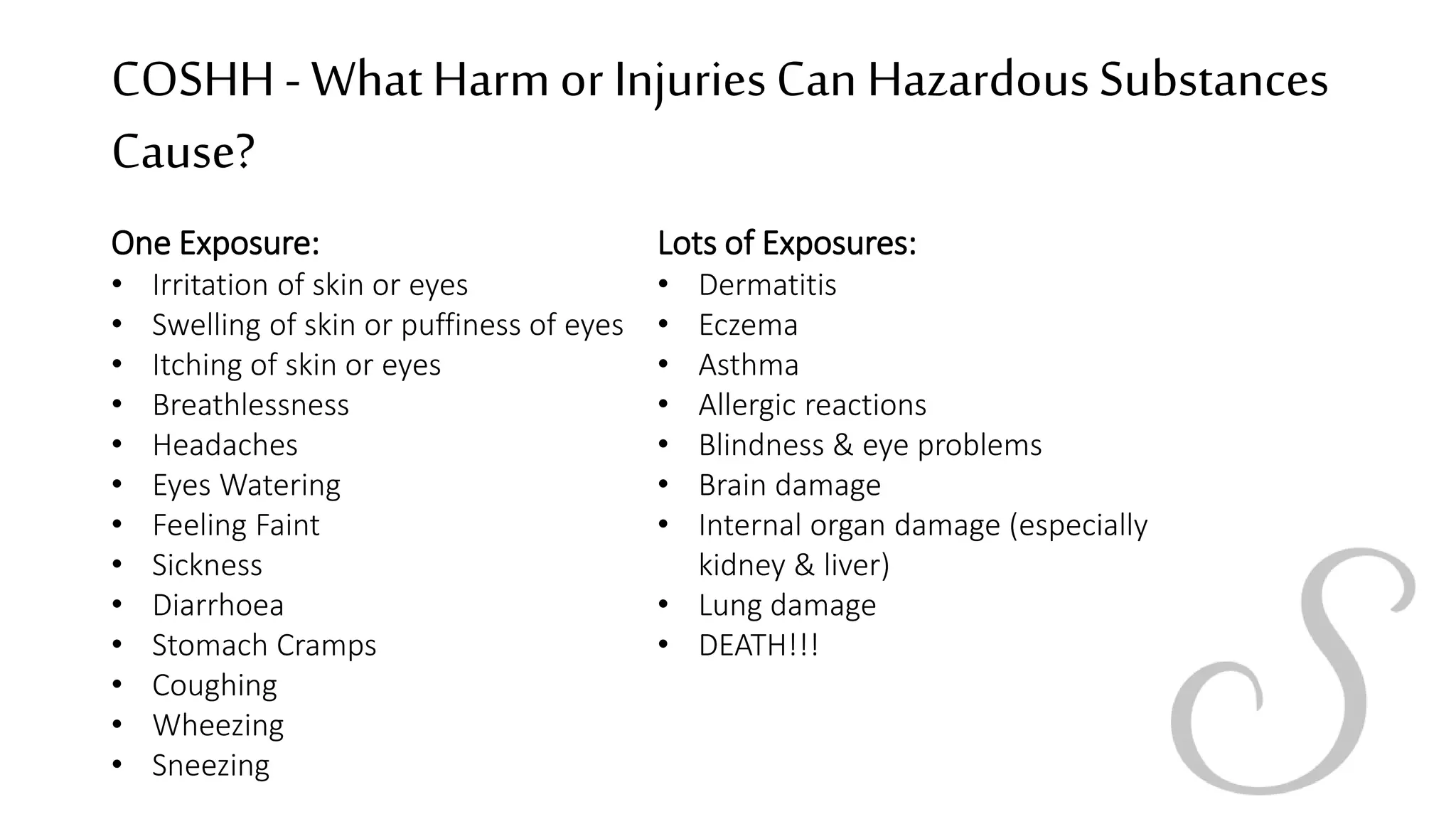
One Exposure:
• Irritation of skin or eyes
• Swelling of skin or puffiness of eyes
• Itching of skin or eyes
• Breathlessness
• Headaches
• Eyes Watering
• Feeling Faint
• Sickness
• Diarrhoea
• Stomach Cramps
• Coughing
• Wheezing
• Sneezing
Lots of Exposures:
• Dermatitis
• Eczema
• Asthma
• Allergic reactions
• Blindness & eye problems
• Brain damage
• Internal organ damage (especially
kidney & liver)
• Lung damage
• DEATH!!!
COSHH- In What CircumstancesCan AccidentsHappen?
Accidents could be caused by:
• Splashing substances about or messing around
• Not following the manufacturer’s instructions
• Not having or wearing the correct protective clothing
• Mixing substances together that should not be mixed eg bleach and other
cleaner (see also “safe use of bleach”)
• Not taking the correct precautions (eg using a substance in a confined
space when label says “use in only in a well ventilated area”).
• Using the substance for something you are not supposed to (eg cleaning
toilets with oven cleaner).
• Not rinsing away detergents properly before using bleach
• Incorrect storage or disposal of substances or waste products
• Spillages not being cleaned up straight away, causing slips or falls or
contact with substance spilled
COSHH- HazardSymbols& Warnings
COSHH- ReducingRisks
If you find that you have a hazardous substance, you need to
look at:
• What can you do to make working with it safer and to protect you against
any ill effects?
• Don’t use the substance - do you really need to do that particular job?
• Is there anything else you could use which is safer? Eg if you have a
substance marked “IRRITANT”, could you use a substance that does not
have this warning instead?
If you can’t do this then:-
• You need to use protective clothing or equipment, but don’t rely only on
protective clothing. You should always try to find a safer substance first.
COSHH–DO’S & DON’TS
DO:
• Read the COSHH Assessment – to find out how to use the product safely
• Follow any safe working procedures that are in place
• Read the warnings on the label before you use the substance and follow the advice
given
• Report any problems with your protective clothing to your Supervisor
• Wash your hands thoroughly before touching food, drinks, cigarettes or make-up
• Work in a sensible and safe way
DON’T:
• Don’t mix cleaning substances together
• Don’t use anything in an unmarked bottle. You don’t know what’s in it - it could turn
out to be an oven cleaner that could burn you
• Don’t splash cleaning products about. You stand more chance of getting them on
you or into you
• Don’t use any substance you are unsure about. If you are unsure, ask your Supervisor
for advice
• Don’t forget to use your personal protective equipment. It’s your body - look after it!
PPE –PersonalProtectiveEquipment
PPE–DO’S & DON’TS
Personal protective equipment (PPE) refers to protective clothing, helmets,
goggles, or other garments or equipment designed to protect the wearer's body
from injury or infection. The hazards addressed by protective equipment include
physical, electrical, heat, chemicals, biohazards, and airborne particulate matter.
• PPE should be used properly. All the staff should be trained even the staff that may
not need to use the equipment personally, but they do need to ensure their
colleagues are using it correctly.
• It is important that users wear PPE all the time they are exposed to the risk. Never
allow exemptions for those jobs which take ‘just a few minutes’.
• Never use damaged PPE and never attempt to fix the PPE. Always ask for
replacement and stop the task immediately until the PPE is replaced.
Thank you..
@SkeabostHotel
#COSHH
#SonasAcademy

COSHH Staff Training

  • 1.
  • 2.
    COSHH • What COSHHis • People’s responsibilities for hazardous substances • What hazardous substances are and what they can do to you • Why substances need to be assessed • The different hazard warning symbols and what they mean • What you can do to reduce the risks from substances
  • 3.
    COSHH- Controlof SubstancesHazardoustoHealth • The Aim of COSHH • The law aims to protect you from becoming ill or injured by using or being exposed to substances at work. • A hazardous substance is something that could injure you or make you ill when you come into contact with it. For example cleaning substances, bodily fluids, wood dust etc.
  • 4.
    COSHH- ManagersDuties forSubstanceSafety • By Law your manager has a duty to: • Look at the risks to your health and the health of other people from using substances at work. • Make working with substances as safe as possible. • Monitor your health when using substances. • Give you information, instruction, supervision and training on the safe use of substances at work.
  • 5.
    COSHH- Your DutiesforSubstance Safety • By Law you, as an employee, have a duty to: • Co-operate with your manager when using hazardous substances at work • Where required use your protective clothing or equipment (eg rubber gloves) and take care of it • Report any faults with your protective clothing or equipment to your supervisor • Attend for medical examinations if you are asked to (eg a visit to see the Occupational Health nurse about a skin reaction)
  • 6.
    COSHH- HazardousSubstances Hazardous substancesare not just cleaning chemicals. They can come in any of these three forms: • Chemical substances eg oven cleaner • Physical substances eg wood dust • Biological hazards eg Hepatitis B You need to make sure that if you find any of these where you work, you inform your manager. They can then look at what the substances can do to you, how they are used and what needs to be done to make it safer to work with them.
  • 7.
    COSHH- How DoesaSubstanceGet Into Your Body? Some substances can get onto and into your body and cause damage by: • Breathing them in through your nose or mouth • Swallowing them through your mouth into your stomach • Absorbing through coming into contact with your skin or eyes • Entry through breaks in your skin (cuts & abrasions) Some substances can injure you straight away, eg irritated eyes if you splash bleach into them. For other substances it takes repeated exposures before you see anything, eg dermatitis on your hands that happens over a long time.
  • 8.
    COSHH- What HarmorInjuriesCan HazardousSubstances Cause? One Exposure: • Irritation of skin or eyes • Swelling of skin or puffiness of eyes • Itching of skin or eyes • Breathlessness • Headaches • Eyes Watering • Feeling Faint • Sickness • Diarrhoea • Stomach Cramps • Coughing • Wheezing • Sneezing Lots of Exposures: • Dermatitis • Eczema • Asthma • Allergic reactions • Blindness & eye problems • Brain damage • Internal organ damage (especially kidney & liver) • Lung damage • DEATH!!!
  • 9.
    COSHH- In WhatCircumstancesCan AccidentsHappen? Accidents could be caused by: • Splashing substances about or messing around • Not following the manufacturer’s instructions • Not having or wearing the correct protective clothing • Mixing substances together that should not be mixed eg bleach and other cleaner (see also “safe use of bleach”) • Not taking the correct precautions (eg using a substance in a confined space when label says “use in only in a well ventilated area”). • Using the substance for something you are not supposed to (eg cleaning toilets with oven cleaner). • Not rinsing away detergents properly before using bleach • Incorrect storage or disposal of substances or waste products • Spillages not being cleaned up straight away, causing slips or falls or contact with substance spilled
  • 10.
  • 11.
    COSHH- ReducingRisks If youfind that you have a hazardous substance, you need to look at: • What can you do to make working with it safer and to protect you against any ill effects? • Don’t use the substance - do you really need to do that particular job? • Is there anything else you could use which is safer? Eg if you have a substance marked “IRRITANT”, could you use a substance that does not have this warning instead? If you can’t do this then:- • You need to use protective clothing or equipment, but don’t rely only on protective clothing. You should always try to find a safer substance first.
  • 12.
    COSHH–DO’S & DON’TS DO: •Read the COSHH Assessment – to find out how to use the product safely • Follow any safe working procedures that are in place • Read the warnings on the label before you use the substance and follow the advice given • Report any problems with your protective clothing to your Supervisor • Wash your hands thoroughly before touching food, drinks, cigarettes or make-up • Work in a sensible and safe way DON’T: • Don’t mix cleaning substances together • Don’t use anything in an unmarked bottle. You don’t know what’s in it - it could turn out to be an oven cleaner that could burn you • Don’t splash cleaning products about. You stand more chance of getting them on you or into you • Don’t use any substance you are unsure about. If you are unsure, ask your Supervisor for advice • Don’t forget to use your personal protective equipment. It’s your body - look after it!
  • 13.
  • 14.
    PPE–DO’S & DON’TS Personalprotective equipment (PPE) refers to protective clothing, helmets, goggles, or other garments or equipment designed to protect the wearer's body from injury or infection. The hazards addressed by protective equipment include physical, electrical, heat, chemicals, biohazards, and airborne particulate matter. • PPE should be used properly. All the staff should be trained even the staff that may not need to use the equipment personally, but they do need to ensure their colleagues are using it correctly. • It is important that users wear PPE all the time they are exposed to the risk. Never allow exemptions for those jobs which take ‘just a few minutes’. • Never use damaged PPE and never attempt to fix the PPE. Always ask for replacement and stop the task immediately until the PPE is replaced.
  • 15.