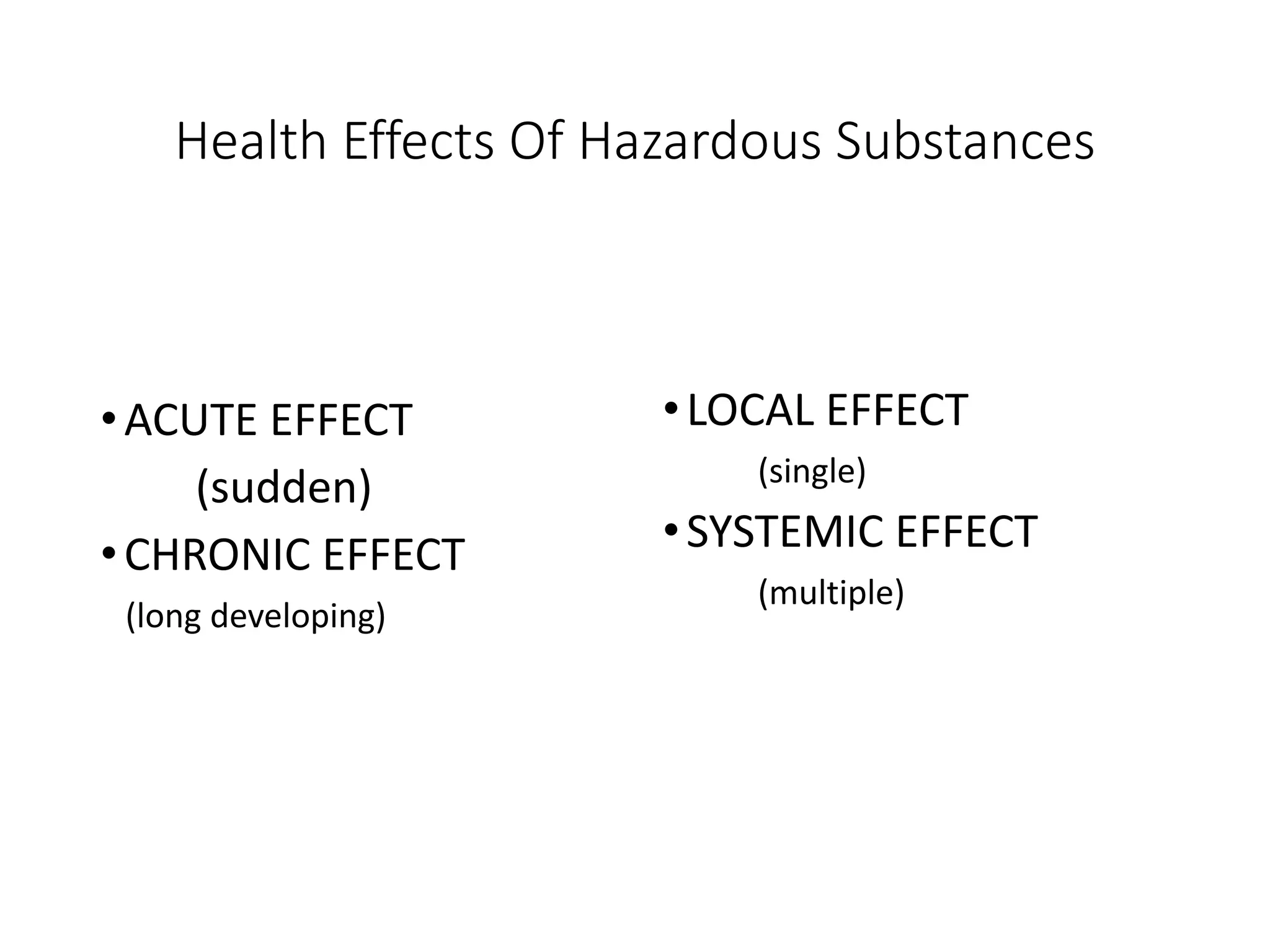
This document provides an introduction to the Control of Substances Hazardous to Health Regulations 2004 (COSHH) in the UK. It defines what substances are considered hazardous to health under five categories. It describes how hazardous substances can enter the body and their potential health effects. It outlines the key aspects that employers must address under COSHH, including risk assessment, control measures, health monitoring and training. Employers must eliminate or reduce risks from hazardous substances and monitor exposure if necessary. Employees must cooperate with control measures and properly use personal protective equipment.
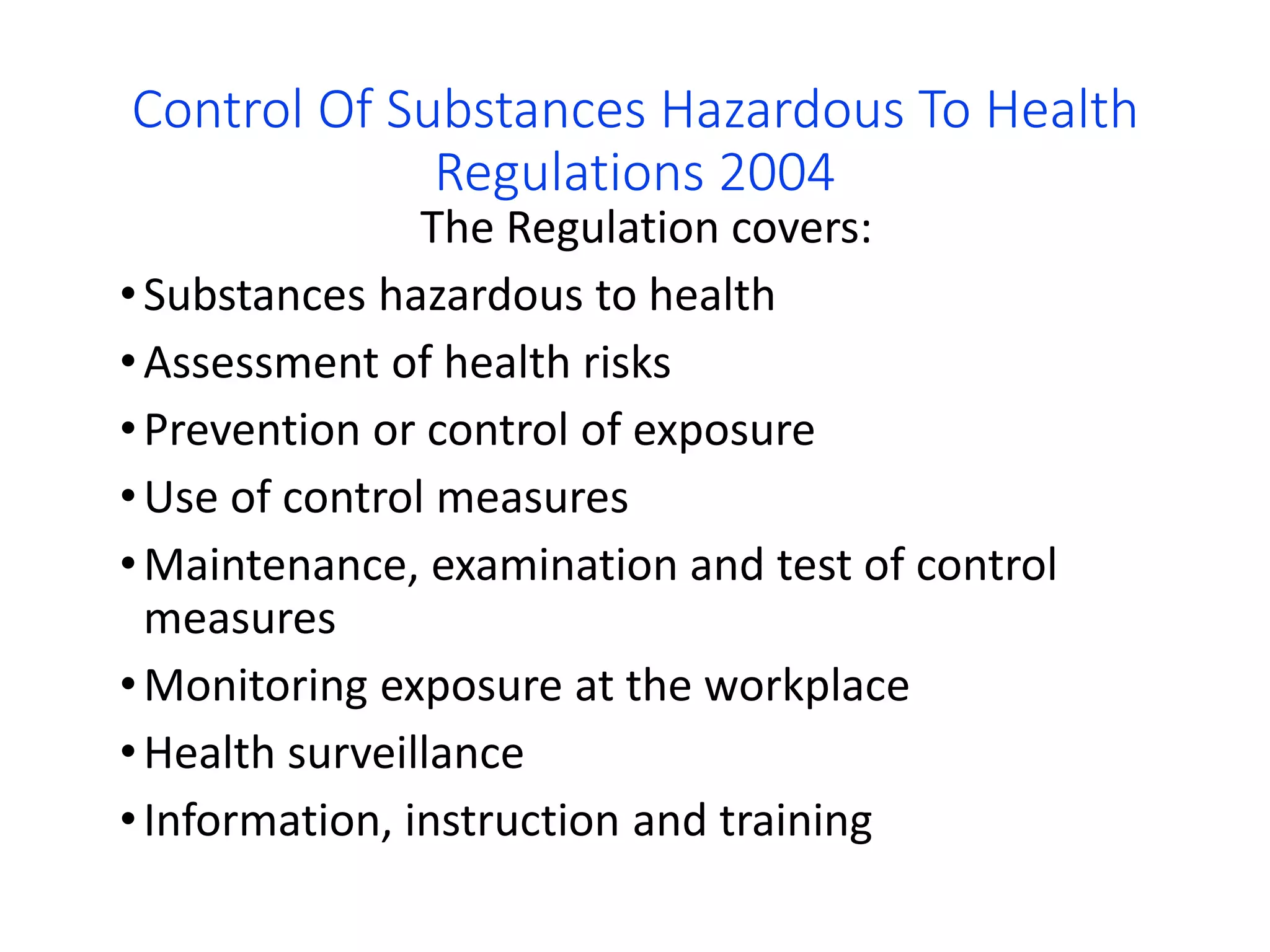
Control Of SubstancesHazardous To Health
Regulations 2004
The Regulation covers:
•Substances hazardous to health
•Assessment of health risks
•Prevention or control of exposure
•Use of control measures
•Maintenance, examination and test of control
measures
•Monitoring exposure at the workplace
•Health surveillance
•Information, instruction and training
11.
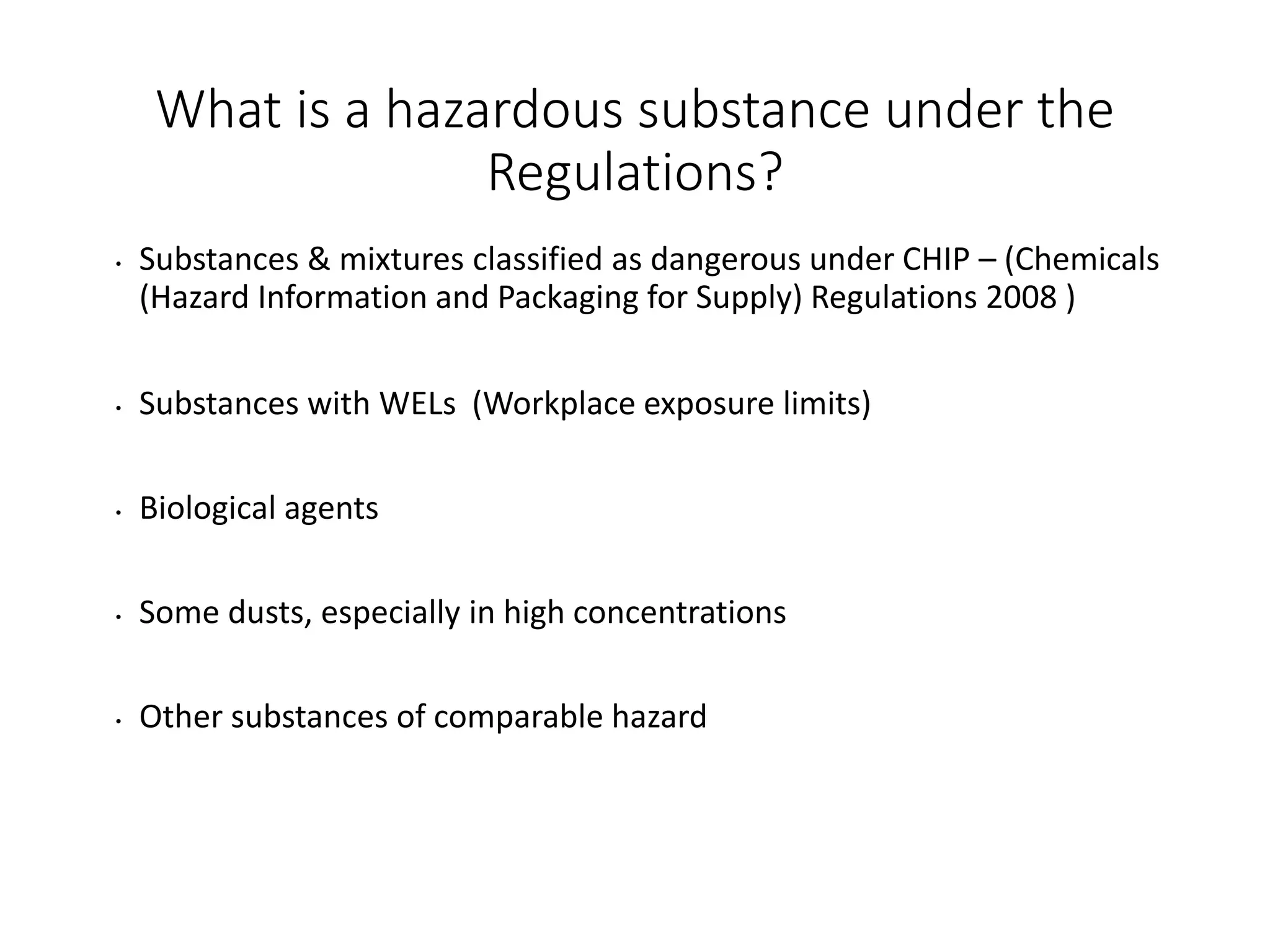
What is ahazardous substance under the
Regulations?
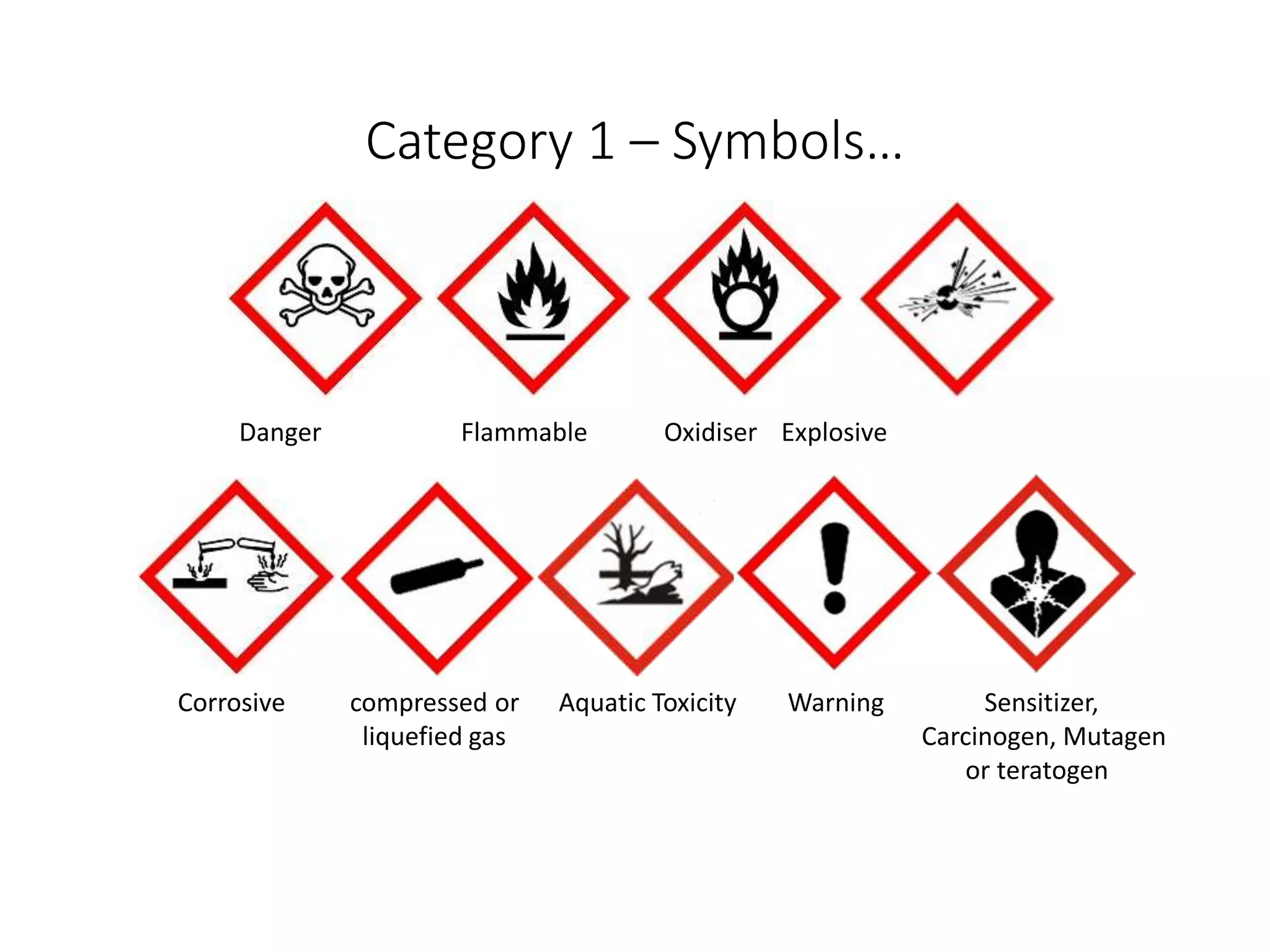
• Substances & mixtures classified as dangerous under CHIP – (Chemicals
(Hazard Information and Packaging for Supply) Regulations 2008 )
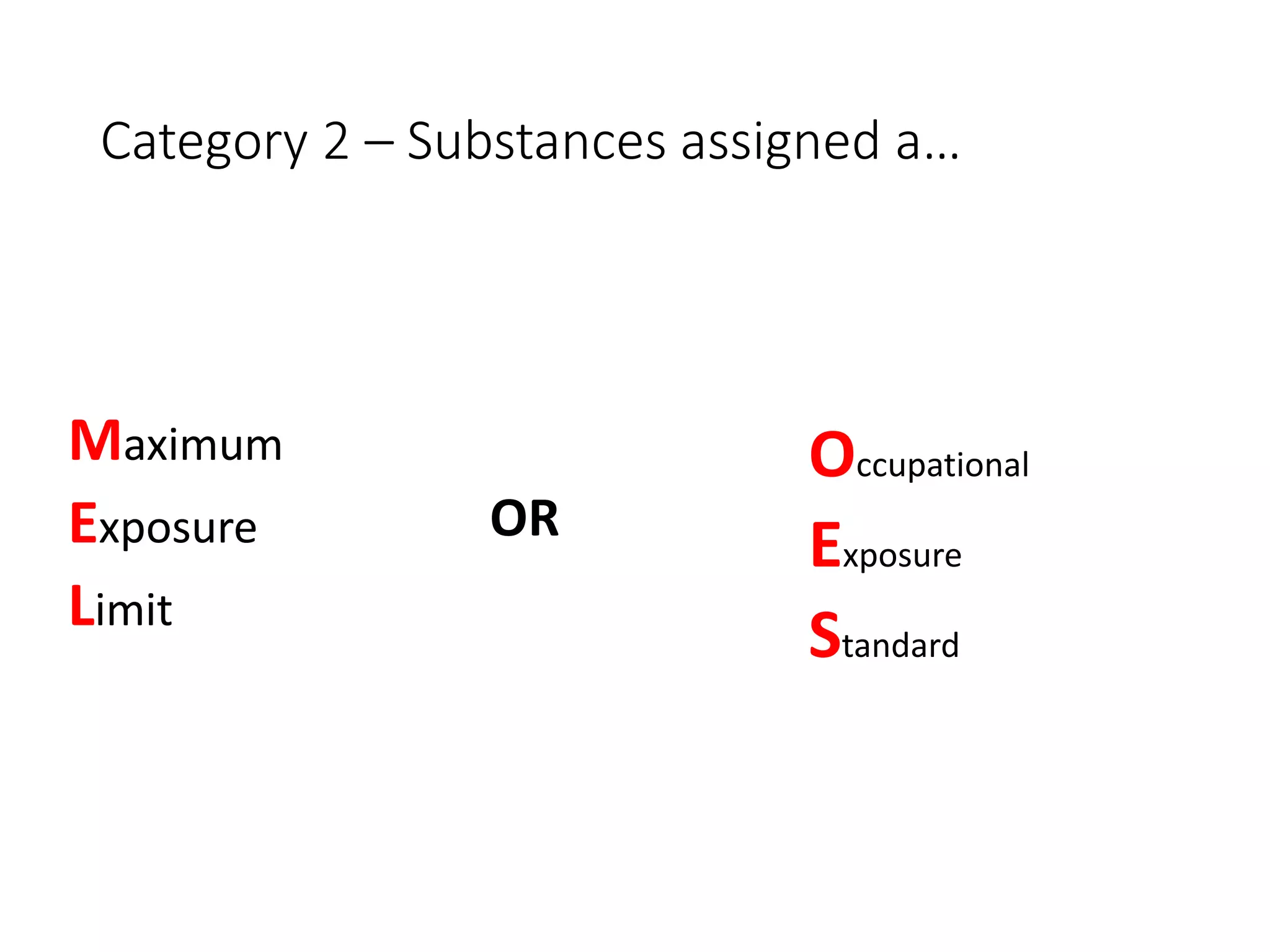
• Substances with WELs (Workplace exposure limits)
• Biological agents
• Some dusts, especially in high concentrations
• Other substances of comparable hazard
12.
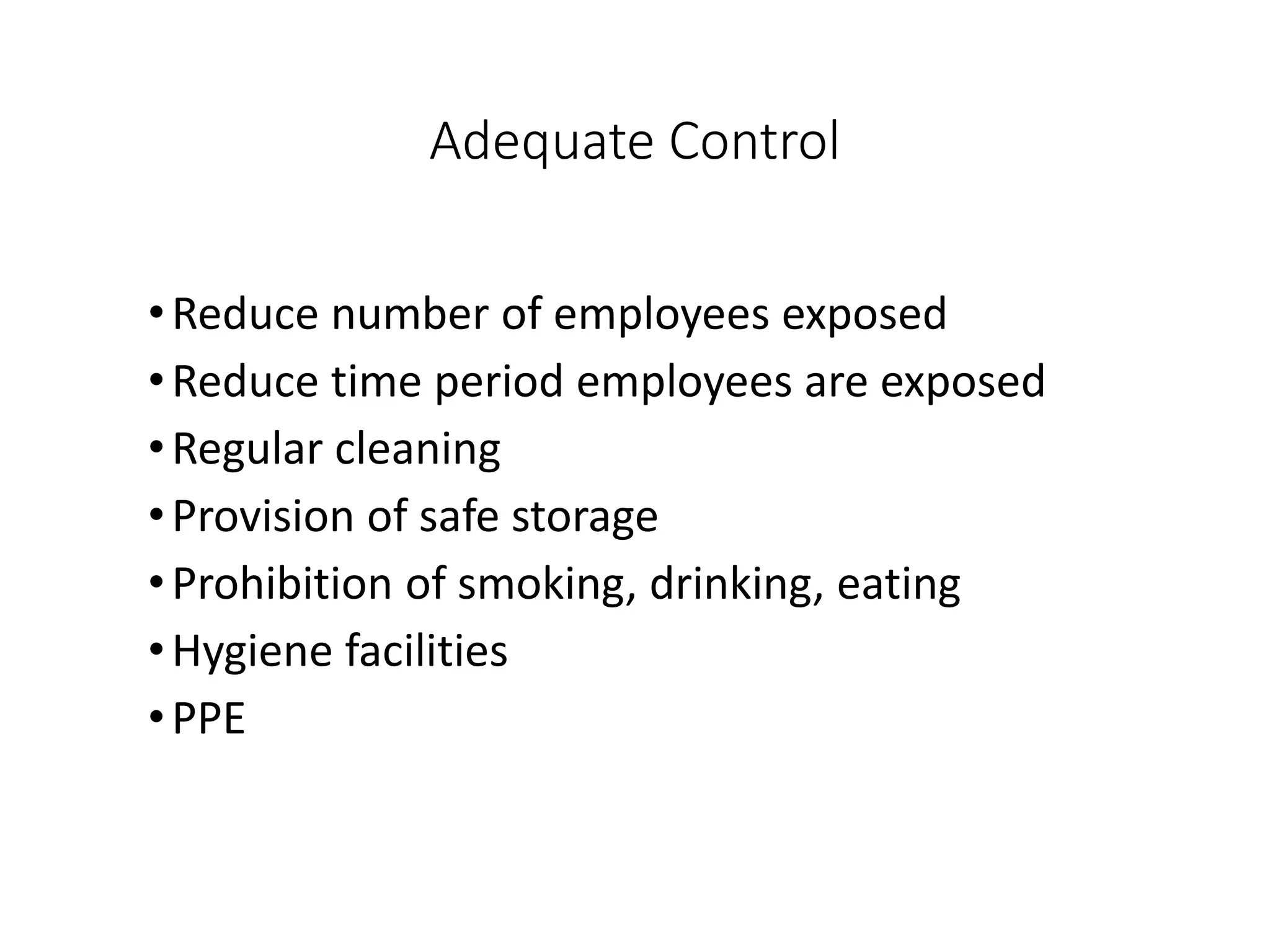
Adequate Control
•Reduce numberof employees exposed
•Reduce time period employees are exposed
•Regular cleaning
•Provision of safe storage
•Prohibition of smoking, drinking, eating
•Hygiene facilities
•PPE
13.
Assessment (Regulation 6)
Regulation6 states that:-
•An employer shall not carry out any work that is
liable to expose employees to any substance that
is hazardous to health
UNLESS
•He has made a suitable and sufficient assessment
of the risks to health and of the steps that need to
be taken to meet the requirements of the
Regulations
14.
What must anemployer do?
• Eliminate or reduce risks from
hazardous substances
• This is achieved by:
— Risk assessment
— Control measures
— Monitoring health &
exposure if necessary
— Information, training and
supervision
15.
What must anemployee do?
• Take reasonable care of our own safety
and not endanger others
• Cooperate with our employer
• Make full and proper use of control
measure
This is Just reiterating our
duties under HSAWA
16.
What does aRisk Assessment for CoSHH do?
Identifies the hazardous substance(s)
e.g.
Chemicals
• Biological materials
• Mixtures
• Proprietary products
• Reaction products and intermediates
Evaluates the Risk e.g.
• Toxicity
• Form (gas, spray, dust, liquid, solid)
• Solubility
• Amount (weight &/or volume)
• Nature of the operation
• Length of exposure
• Number of people involved
Decide who is at risk…
Employees
Contractor
Visitors
Members of the public
Considers their current training (if any) and their
background
Decide how…
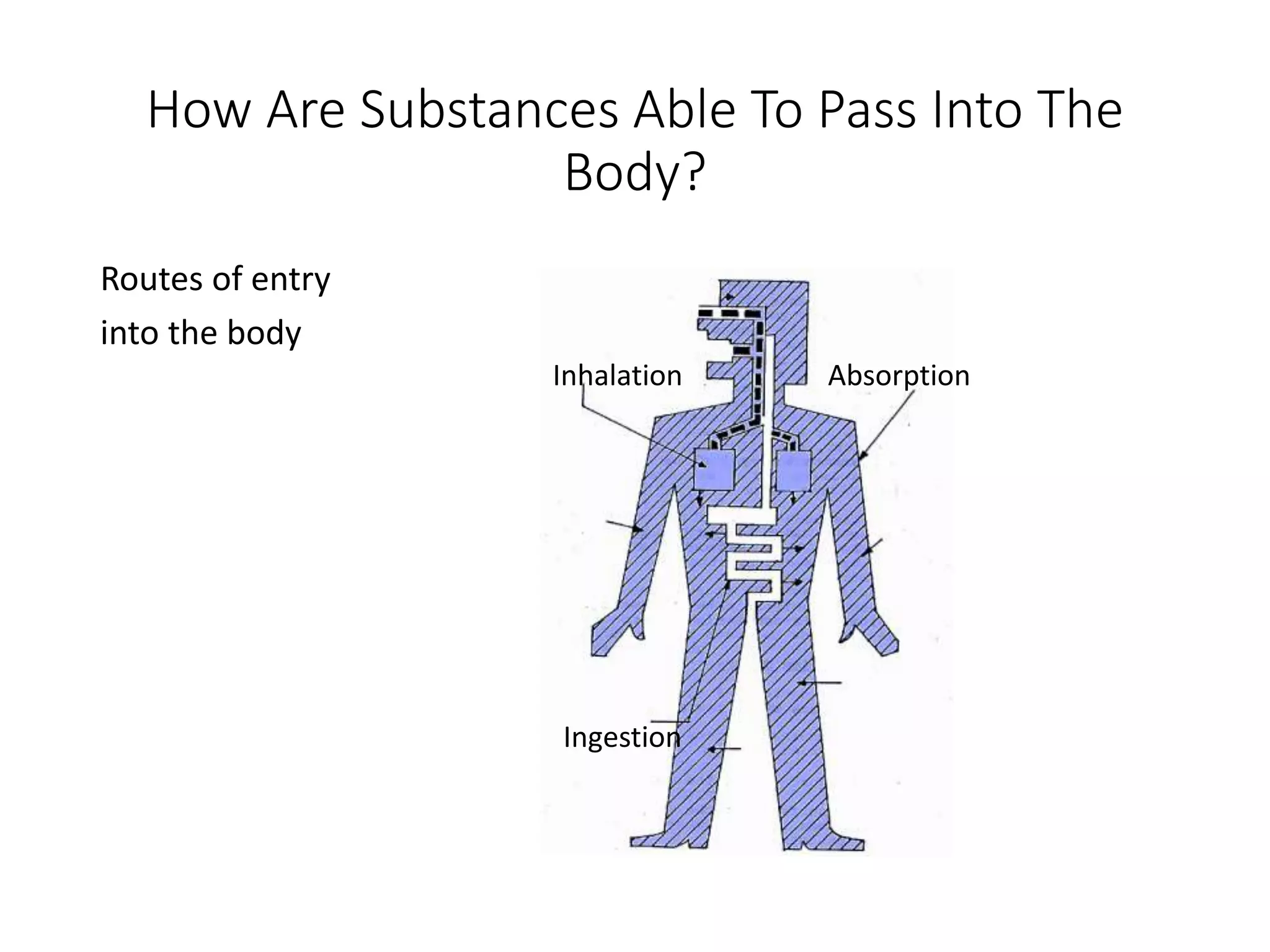
Inhalation
Skin or eye contamination
Ingestion
Injection
17.
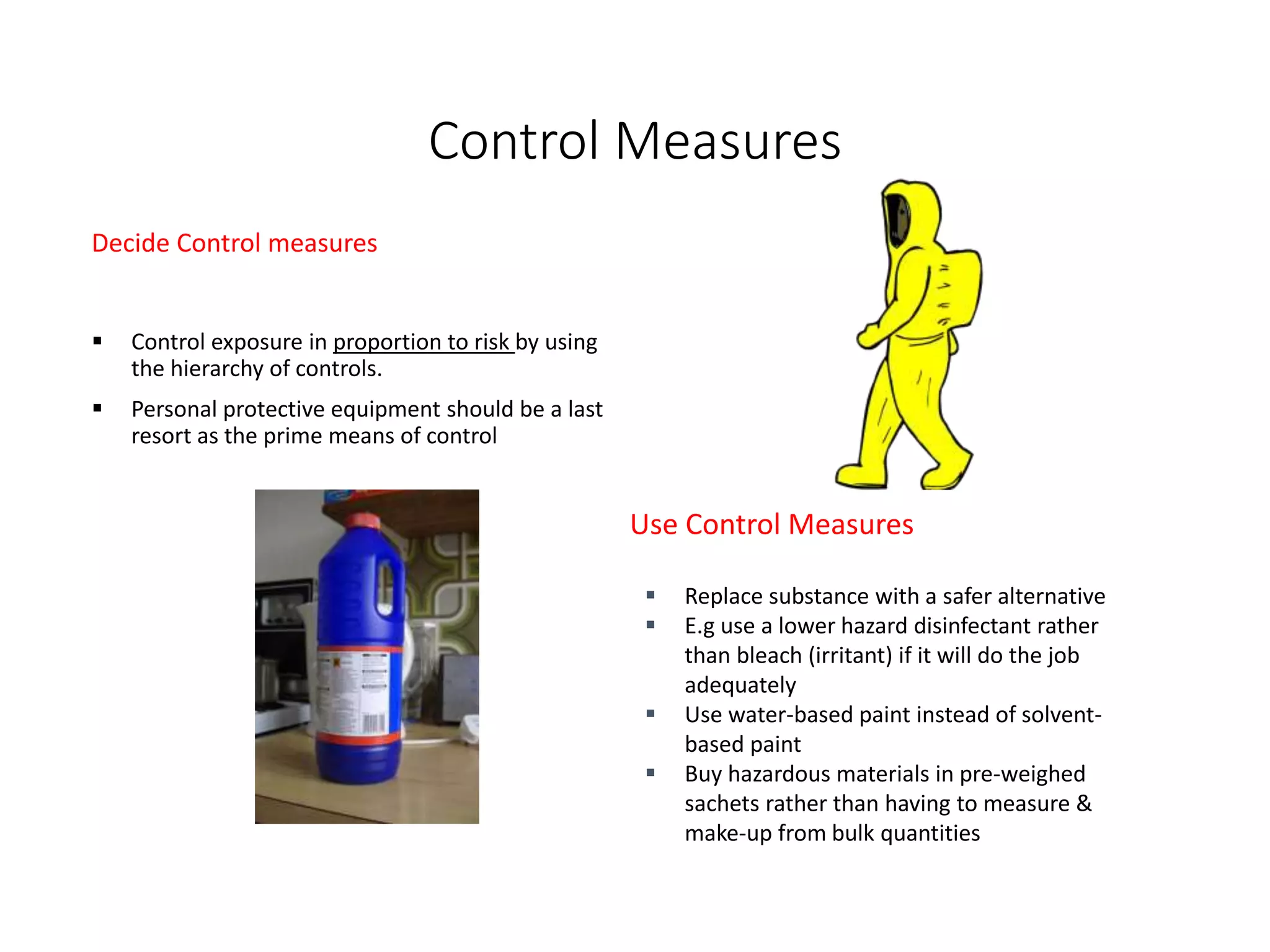
Control Measures
Decide Controlmeasures
Control exposure in proportion to risk by using
the hierarchy of controls.
Personal protective equipment should be a last
resort as the prime means of control
Use Control Measures
Replace substance with a safer alternative
E.g use a lower hazard disinfectant rather
than bleach (irritant) if it will do the job
adequately
Use water-based paint instead of solvent-
based paint
Buy hazardous materials in pre-weighed
sachets rather than having to measure &
make-up from bulk quantities
18.
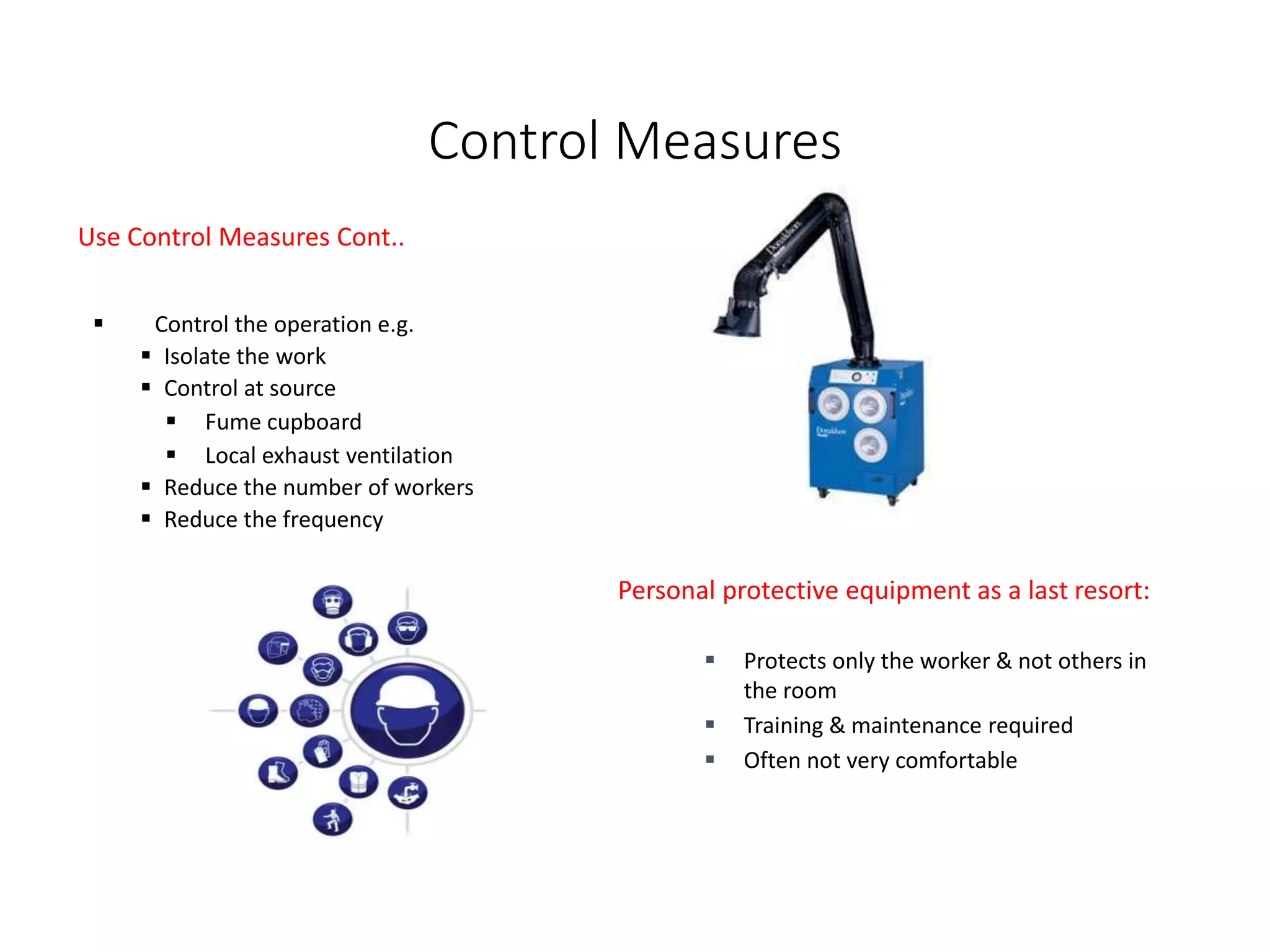
Control Measures
Use ControlMeasures Cont..
Control the operation e.g.
Isolate the work
Control at source
Fume cupboard
Local exhaust ventilation
Reduce the number of workers
Reduce the frequency
Personal protective equipment as a last resort:
Protects only the worker & not others in
the room
Training & maintenance required
Often not very comfortable
19.
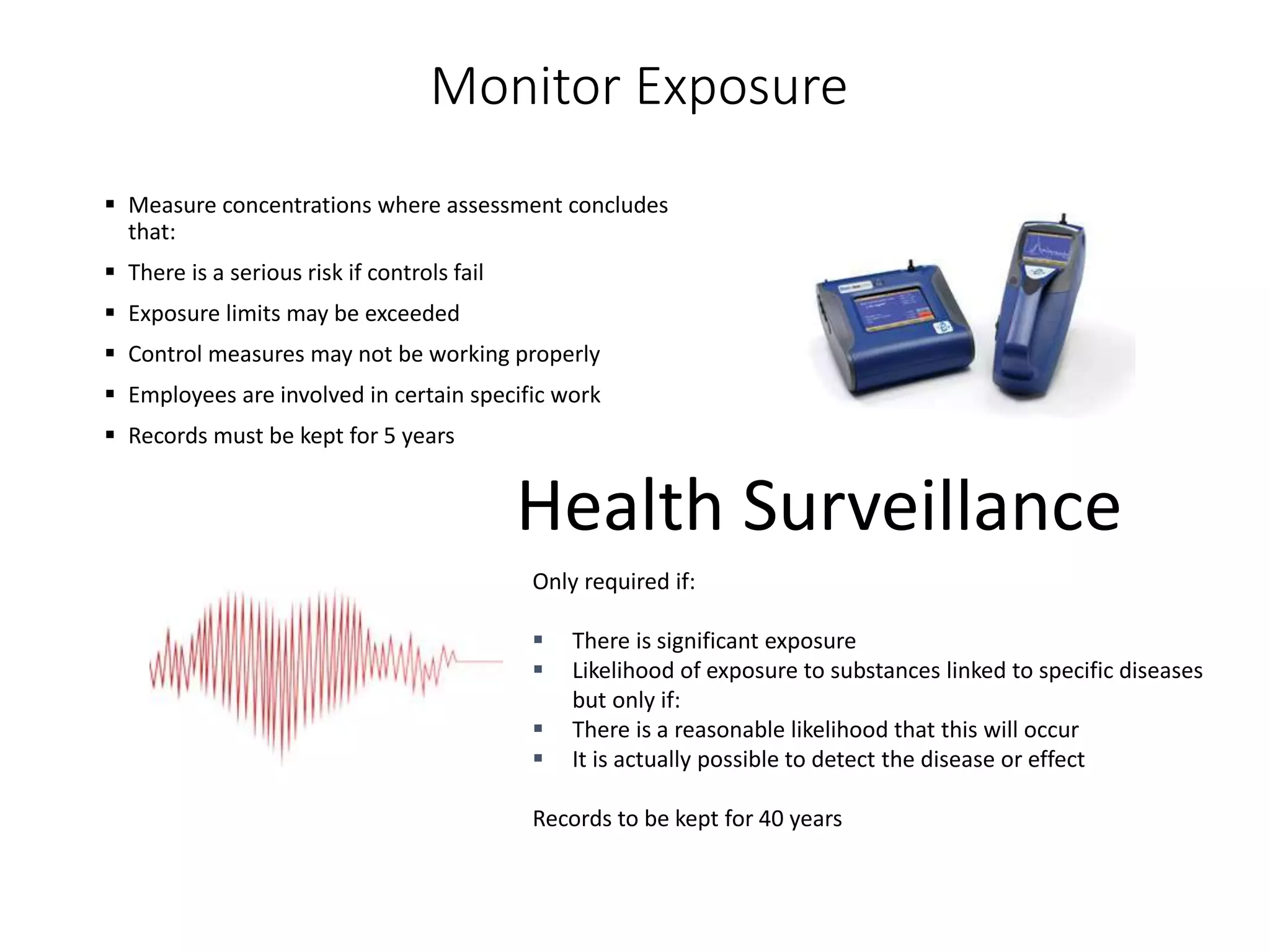
Monitor Exposure
Measureconcentrations where assessment concludes
that:
There is a serious risk if controls fail
Exposure limits may be exceeded
Control measures may not be working properly
Employees are involved in certain specific work
Records must be kept for 5 years
Health Surveillance
Only required if:
There is significant exposure
Likelihood of exposure to substances linked to specific diseases
but only if:
There is a reasonable likelihood that this will occur
It is actually possible to detect the disease or effect
Records to be kept for 40 years
20.
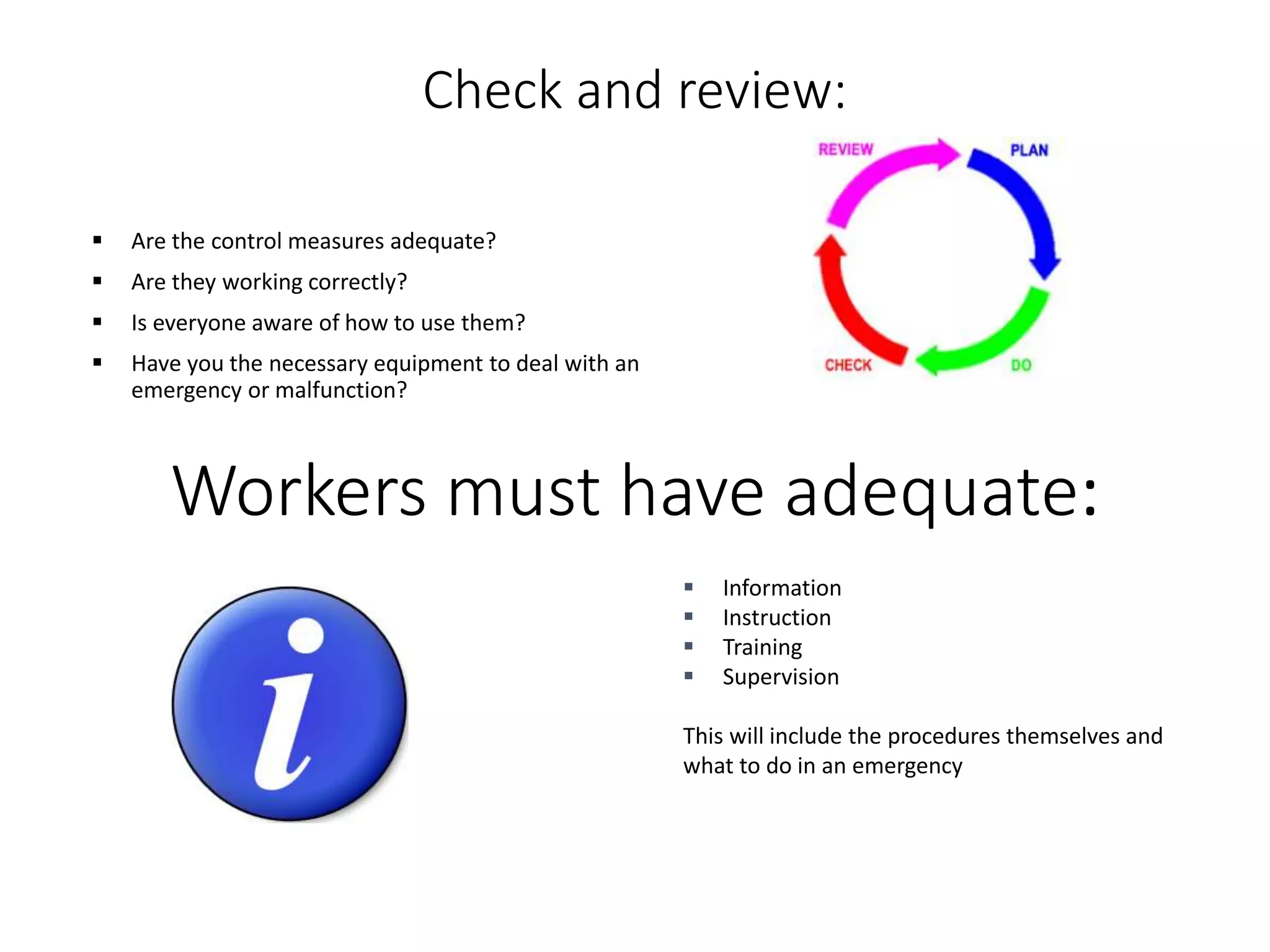
Check and review:
Are the control measures adequate?
Are they working correctly?
Is everyone aware of how to use them?
Have you the necessary equipment to deal with an
emergency or malfunction?
Workers must have adequate:
Information
Instruction
Training
Supervision
This will include the procedures themselves and
what to do in an emergency
21.
INTERSOLIA/ICHEMISTRY
• TAVS HASPURCHASED A SOFTWARE SYSTEM WHICH WILL ENABLES US TO PRODUCE COSHH RISK ASSESSEMNTS AS
REQUIRED BY LAW.
• THIS WAS BE A BIG TASK AND WILL REQUIRED THE ASSISTANCE OF SUPERVISORS / TEAM LEADERS.
• SUPERVISORS / TEAM LEADERS WERE GIVEN A SHOP FLOOR RISK ASSESSEMENT SHEET FOR THEIR AREA, AND WERE
REQIURED TO COMPLETE AS ACCURATELY AS POSSIBLE.
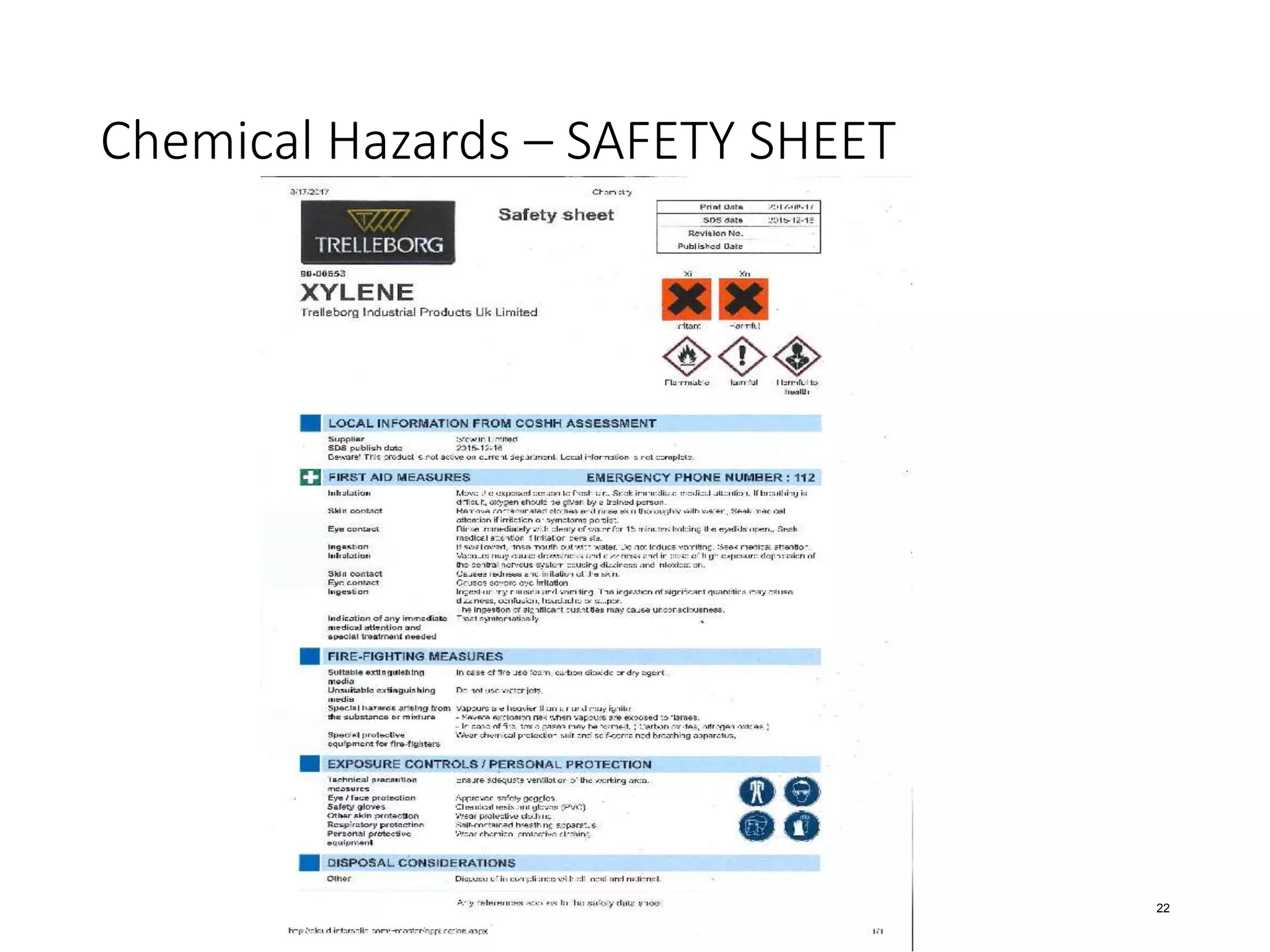
• ONCE COMPLETED THE INFORMATION GIVEN WAS BE ENTERED INTO THE INTERSOLIA SYSTEM AND A RISK ASSESSEMENT
PRODUCED ALONG WITH A SAFETY SHEET FOR THE SHOP FLOOR.
• SAFETY SHEETS FOR ALL SUBSATNCES ARE AVAILBLE EITHER IN SUPERVISORS OFFICE OR DEPARTMENTAL OFFICE: READ
THE SAFETYU SHEET FOR THE SUBSTANCE YOU ARE ABOUT TO USE THIS WILL GIVE YOU INFORMATION REQUIRED TO USE
IT SAFELY
What now?
• Thistraining will have given you a better understanding of CoSHH and what procedures are in place to keep
you safe!
• Thank you for taking the time to complete this Training.
• ANY QUESTIONS??