CORTICAL AREAS OF BRAIN
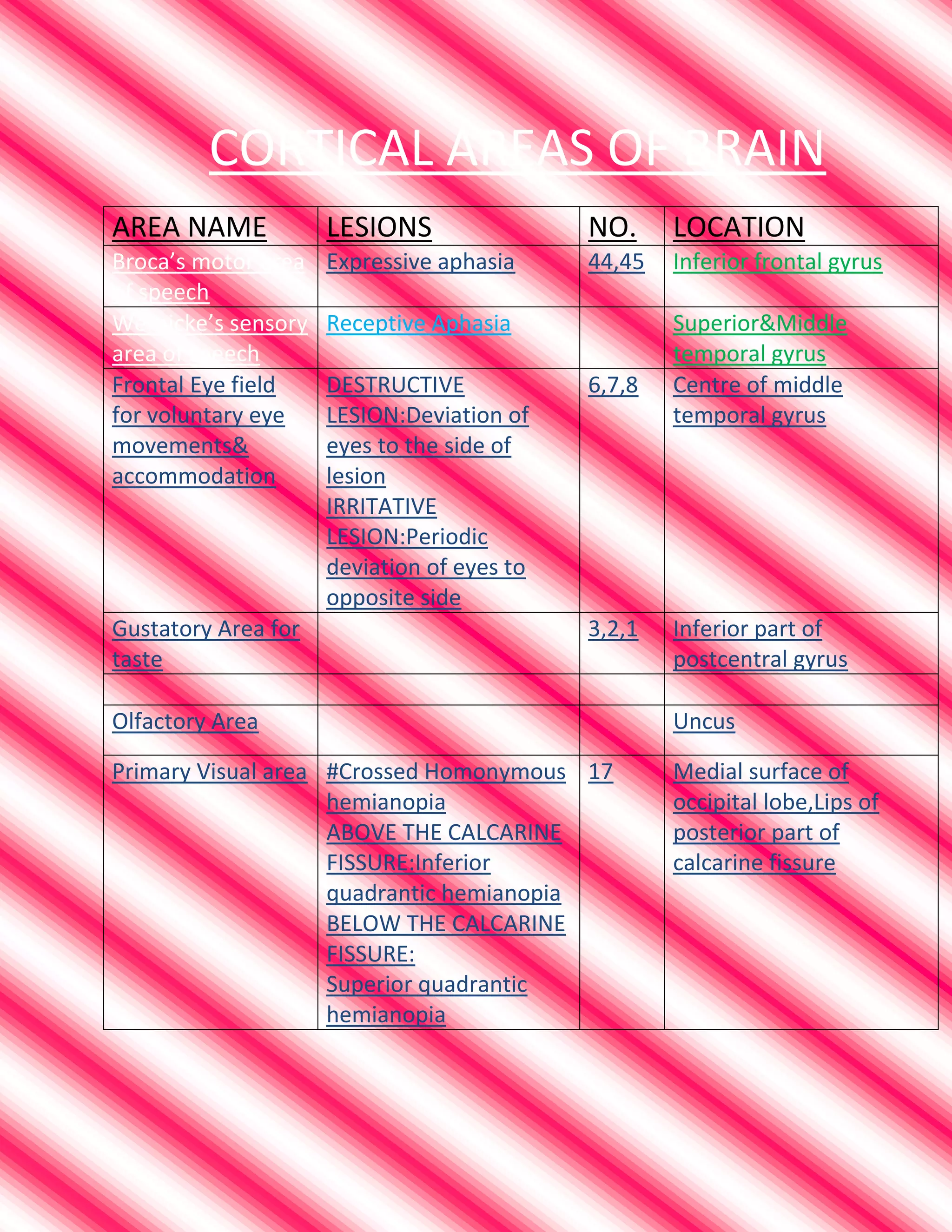
AREA NAME LESIONS NO. LOCATION
Broca’s motor area
of speech
Expressive aphasia 44,45 Inferior frontal gyrus
Wernicke’s sensory
area of speech
Receptive Aphasia Superior&Middle
temporal gyrus
Frontal Eye field
for voluntary eye
movements&
accommodation
DESTRUCTIVE
LESION:Deviation of
eyes to the side of
lesion
IRRITATIVE
LESION:Periodic
deviation of eyes to
opposite side
6,7,8 Centre of middle
temporal gyrus
Gustatory Area for
taste
3,2,1 Inferior part of
postcentral gyrus
Olfactory Area Uncus
Primary Visual area #Crossed Homonymous
hemianopia
ABOVE THE CALCARINE
FISSURE:Inferior
quadrantic hemianopia
BELOW THE CALCARINE
FISSURE:
Superior quadrantic
hemianopia
17 Medial surface of
occipital lobe,Lips of
posterior part of
calcarine fissure
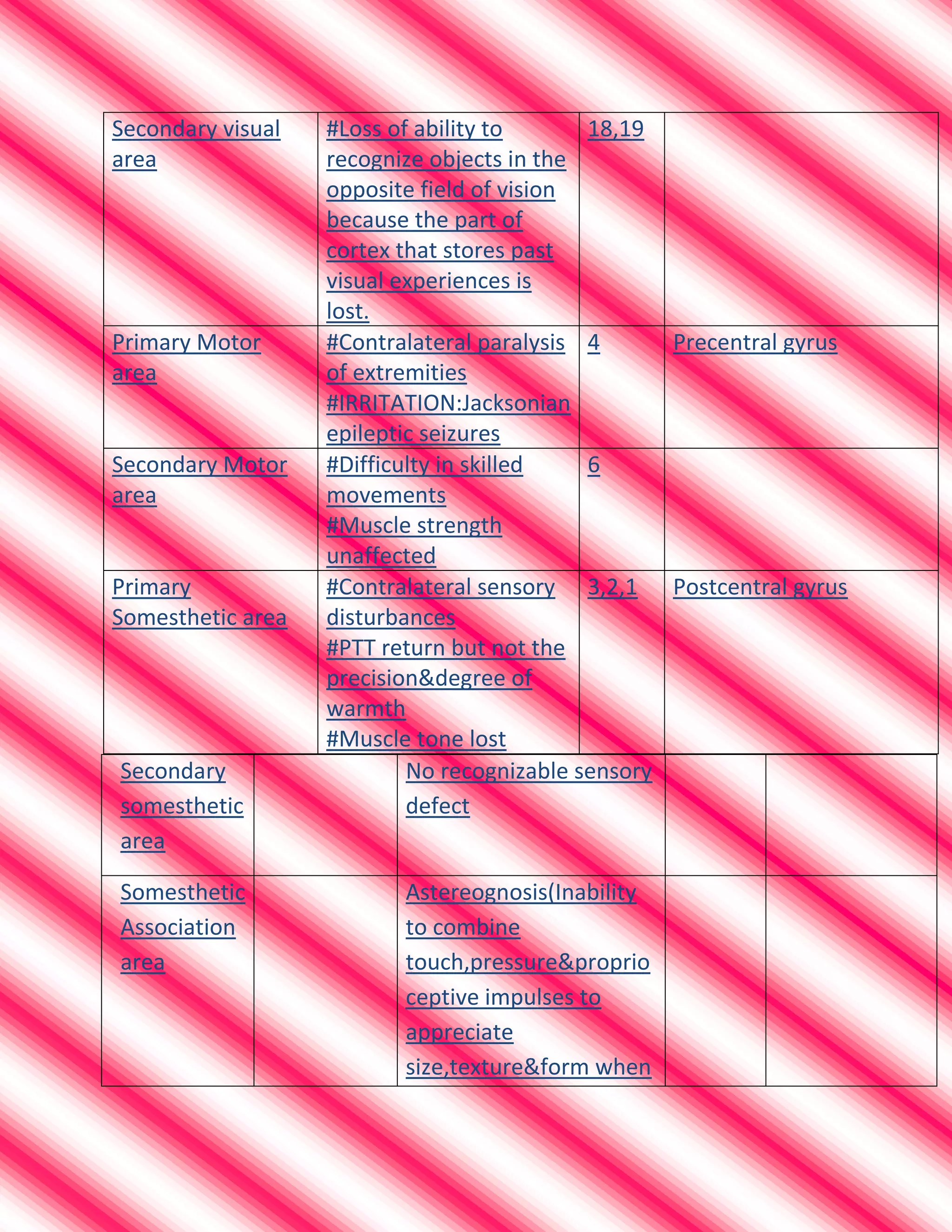
Secondary visual
area
#Loss of ability to
recognize objects in the
opposite field of vision
because the part of
cortex that stores past
visual experiences is
lost.
18,19
Primary Motor
area
#Contralateral paralysis
of extremities
#IRRITATION:Jacksonian
epileptic seizures
4 Precentral gyrus
Secondary Motor
area
#Difficulty in skilled
movements
#Muscle strength
unaffected
6
Primary
Somesthetic area
#Contralateral sensory
disturbances
#PTT return but not the
precision&degree of
warmth
#Muscle tone lost
3,2,1 Postcentral gyrus
Secondary
somesthetic
area
No recognizable sensory
defect
Somesthetic
Association
area
Astereognosis(Inability
to combine
touch,pressure&proprio
ceptive impulses to
appreciate
size,texture&form when
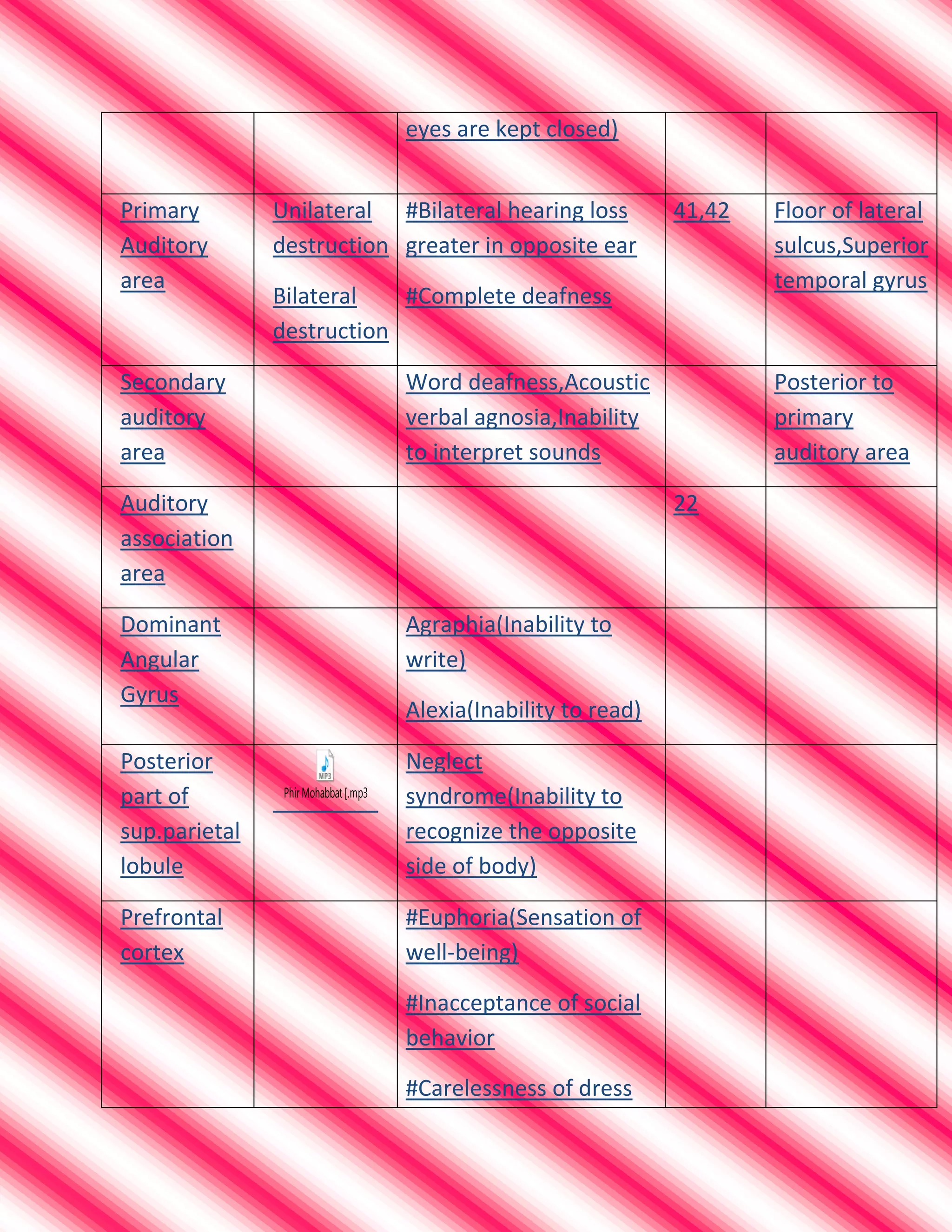
eyes are kept closed)
Primary
Auditory
area
Unilateral
destruction
Bilateral
destruction
#Bilateral hearing loss
greater in opposite ear
#Complete deafness
41,42 Floor of lateral
sulcus,Superior
temporal gyrus
Secondary
auditory
area
Word deafness,Acoustic
verbal agnosia,Inability
to interpret sounds
Posterior to
primary
auditory area
Auditory
association
area
22
Dominant
Angular
Gyrus
Agraphia(Inability to
write)
Alexia(Inability to read)
Posterior
part of
sup.parietal
lobule
PhirMohabbat [.mp3
Neglect
syndrome(Inability to
recognize the opposite
side of body)
Prefrontal
cortex
#Euphoria(Sensation of
well-being)
#Inacceptance of social
behavior
#Carelessness of dress
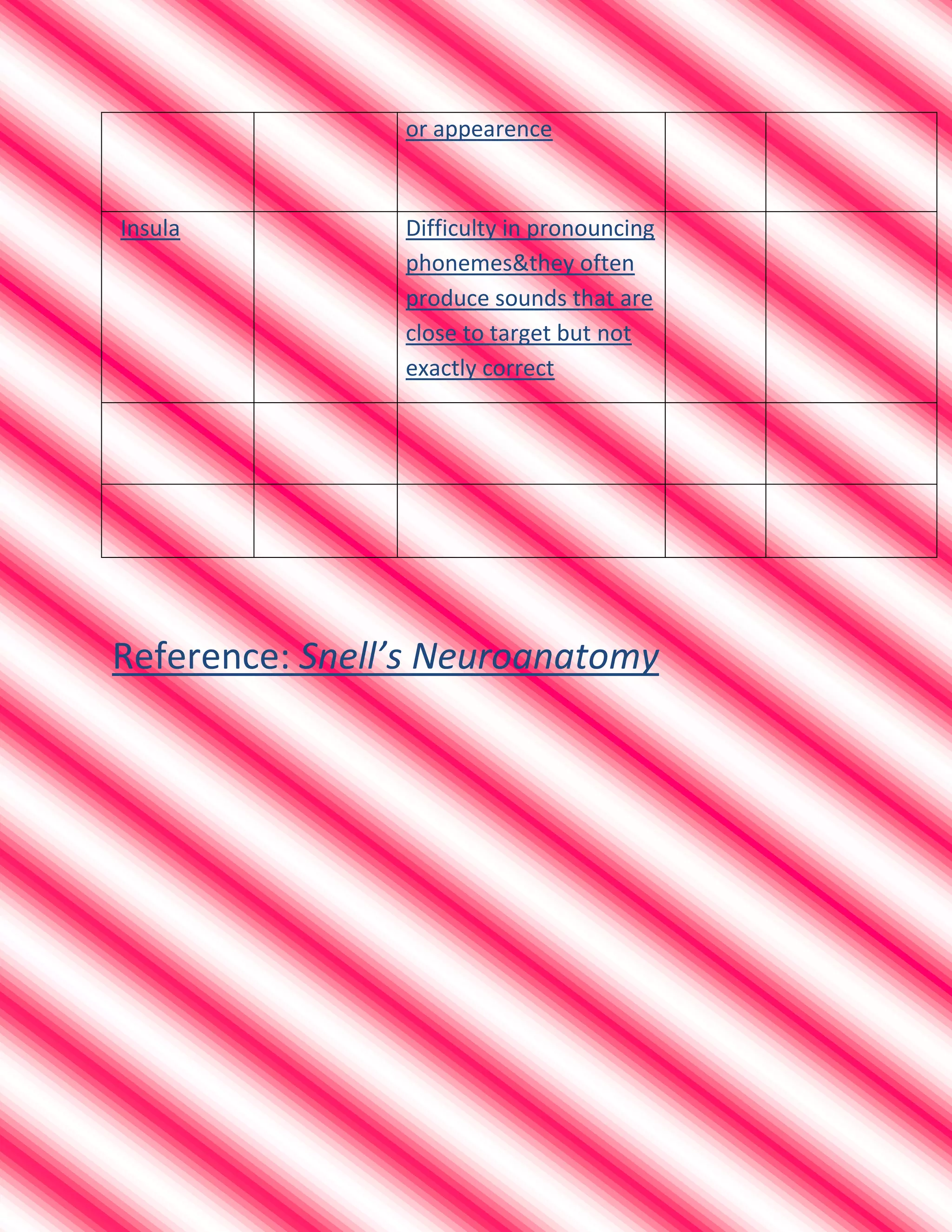
or appearence
Insula Difficulty in pronouncing
phonemes&they often
produce sounds that are
close to target but not
exactly correct
Reference: Snell’s Neuroanatomy

Cortical areas of brain and their lesions

  • 1.
    CORTICAL AREAS OFBRAIN AREA NAME LESIONS NO. LOCATION Broca’s motor area of speech Expressive aphasia 44,45 Inferior frontal gyrus Wernicke’s sensory area of speech Receptive Aphasia Superior&Middle temporal gyrus Frontal Eye field for voluntary eye movements& accommodation DESTRUCTIVE LESION:Deviation of eyes to the side of lesion IRRITATIVE LESION:Periodic deviation of eyes to opposite side 6,7,8 Centre of middle temporal gyrus Gustatory Area for taste 3,2,1 Inferior part of postcentral gyrus Olfactory Area Uncus Primary Visual area #Crossed Homonymous hemianopia ABOVE THE CALCARINE FISSURE:Inferior quadrantic hemianopia BELOW THE CALCARINE FISSURE: Superior quadrantic hemianopia 17 Medial surface of occipital lobe,Lips of posterior part of calcarine fissure
  • 2.
    Secondary visual area #Loss ofability to recognize objects in the opposite field of vision because the part of cortex that stores past visual experiences is lost. 18,19 Primary Motor area #Contralateral paralysis of extremities #IRRITATION:Jacksonian epileptic seizures 4 Precentral gyrus Secondary Motor area #Difficulty in skilled movements #Muscle strength unaffected 6 Primary Somesthetic area #Contralateral sensory disturbances #PTT return but not the precision&degree of warmth #Muscle tone lost 3,2,1 Postcentral gyrus Secondary somesthetic area No recognizable sensory defect Somesthetic Association area Astereognosis(Inability to combine touch,pressure&proprio ceptive impulses to appreciate size,texture&form when
  • 3.
    eyes are keptclosed) Primary Auditory area Unilateral destruction Bilateral destruction #Bilateral hearing loss greater in opposite ear #Complete deafness 41,42 Floor of lateral sulcus,Superior temporal gyrus Secondary auditory area Word deafness,Acoustic verbal agnosia,Inability to interpret sounds Posterior to primary auditory area Auditory association area 22 Dominant Angular Gyrus Agraphia(Inability to write) Alexia(Inability to read) Posterior part of sup.parietal lobule PhirMohabbat [.mp3 Neglect syndrome(Inability to recognize the opposite side of body) Prefrontal cortex #Euphoria(Sensation of well-being) #Inacceptance of social behavior #Carelessness of dress
  • 4.
    or appearence Insula Difficultyin pronouncing phonemes&they often produce sounds that are close to target but not exactly correct Reference: Snell’s Neuroanatomy