Coronary
Circulation
An Overview
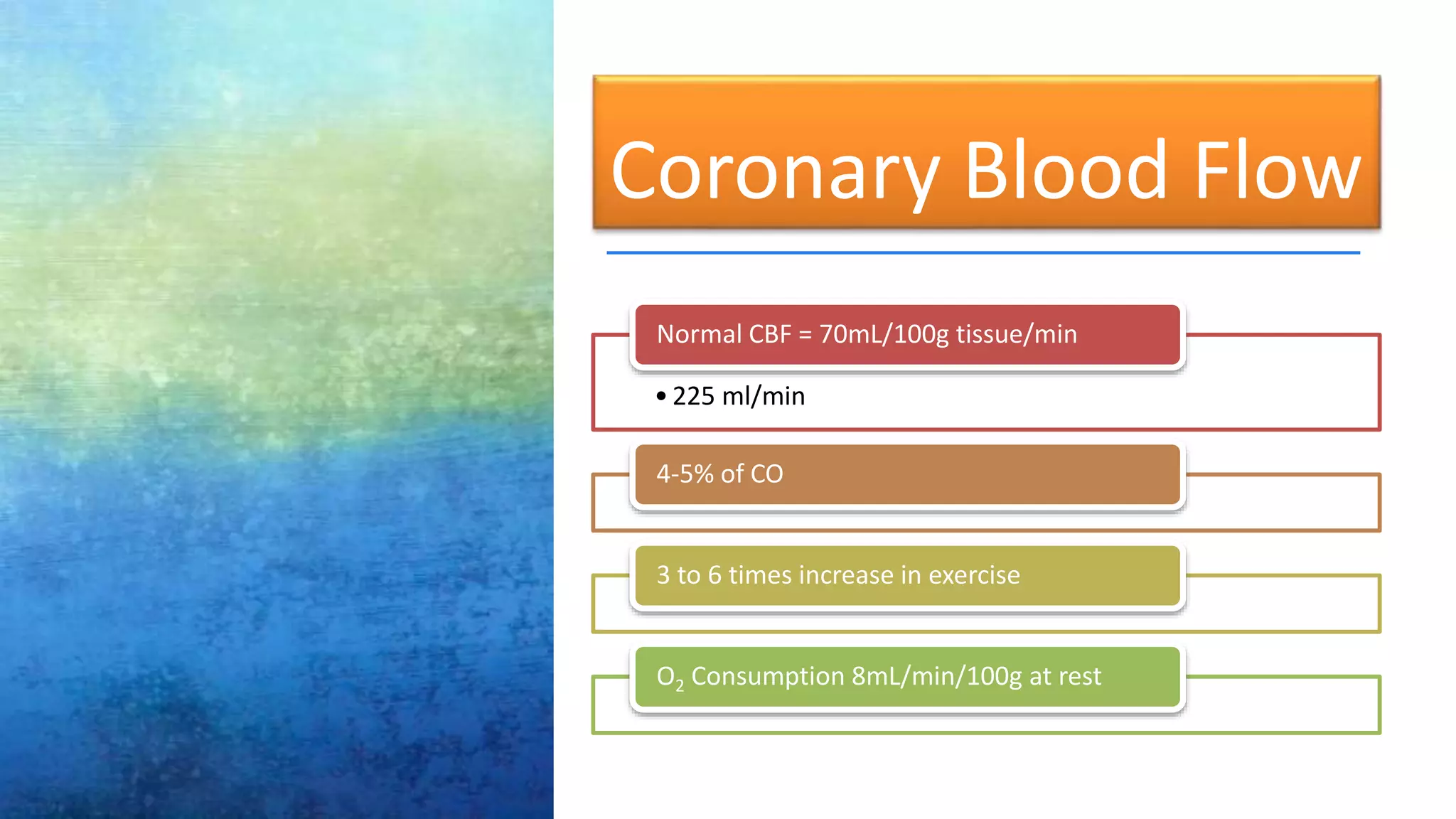
Coronary Blood Flow
•225 ml/min
Normal CBF = 70mL/100g tissue/min
4-5% of CO
3 to 6 times increase in exercise
O2 Consumption 8mL/min/100g at rest
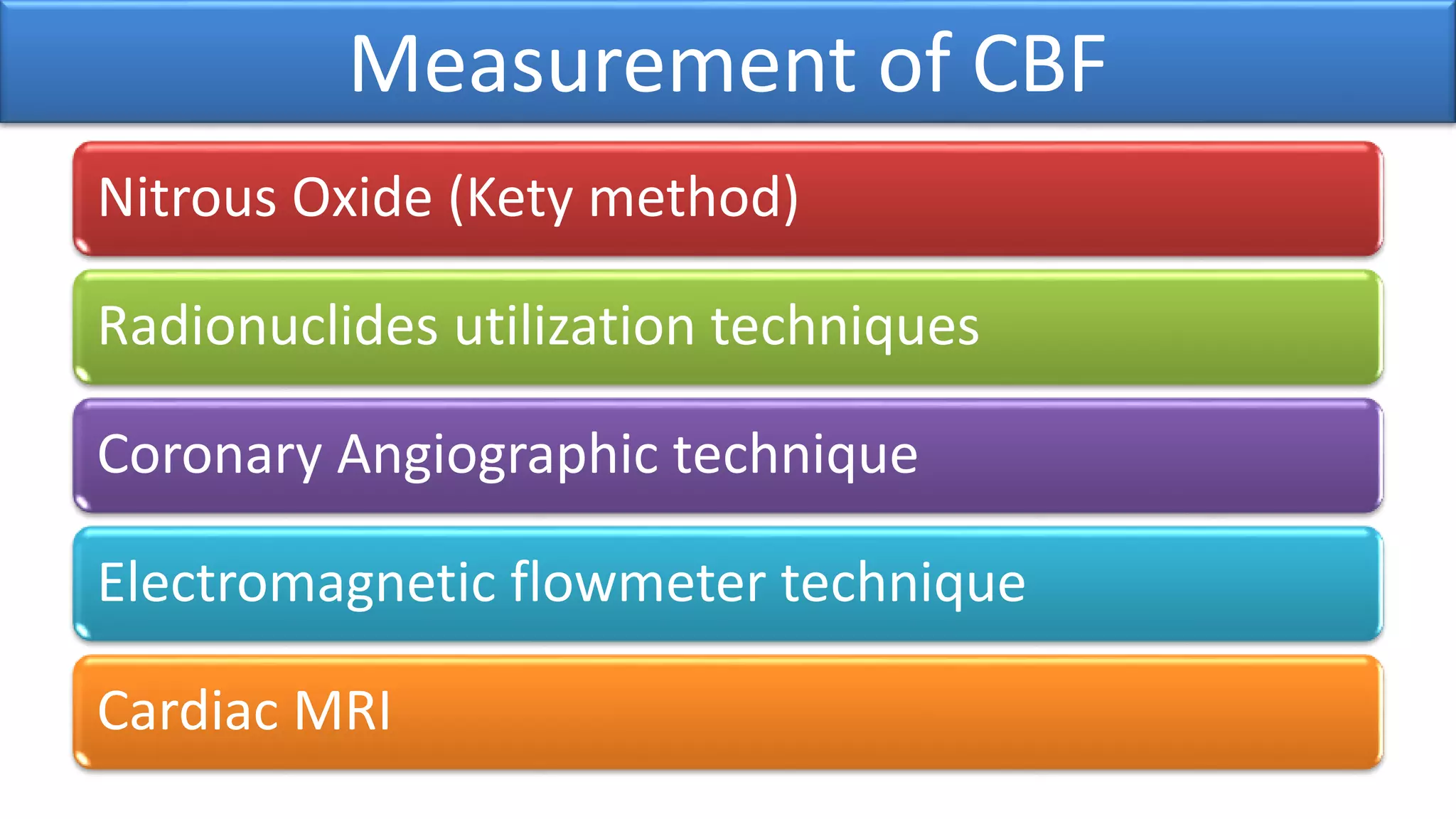
Measurement of CBF
Nitrous Oxide (Kety method)
Radionuclides utilization techniques
Coronary Angiographic technique
Electromagnetic flowmeter technique
Cardiac MRI
Factors
That
Influence
Coronary
Blood Flow
Physical Factors
Neural and
Neurohumoral Factors
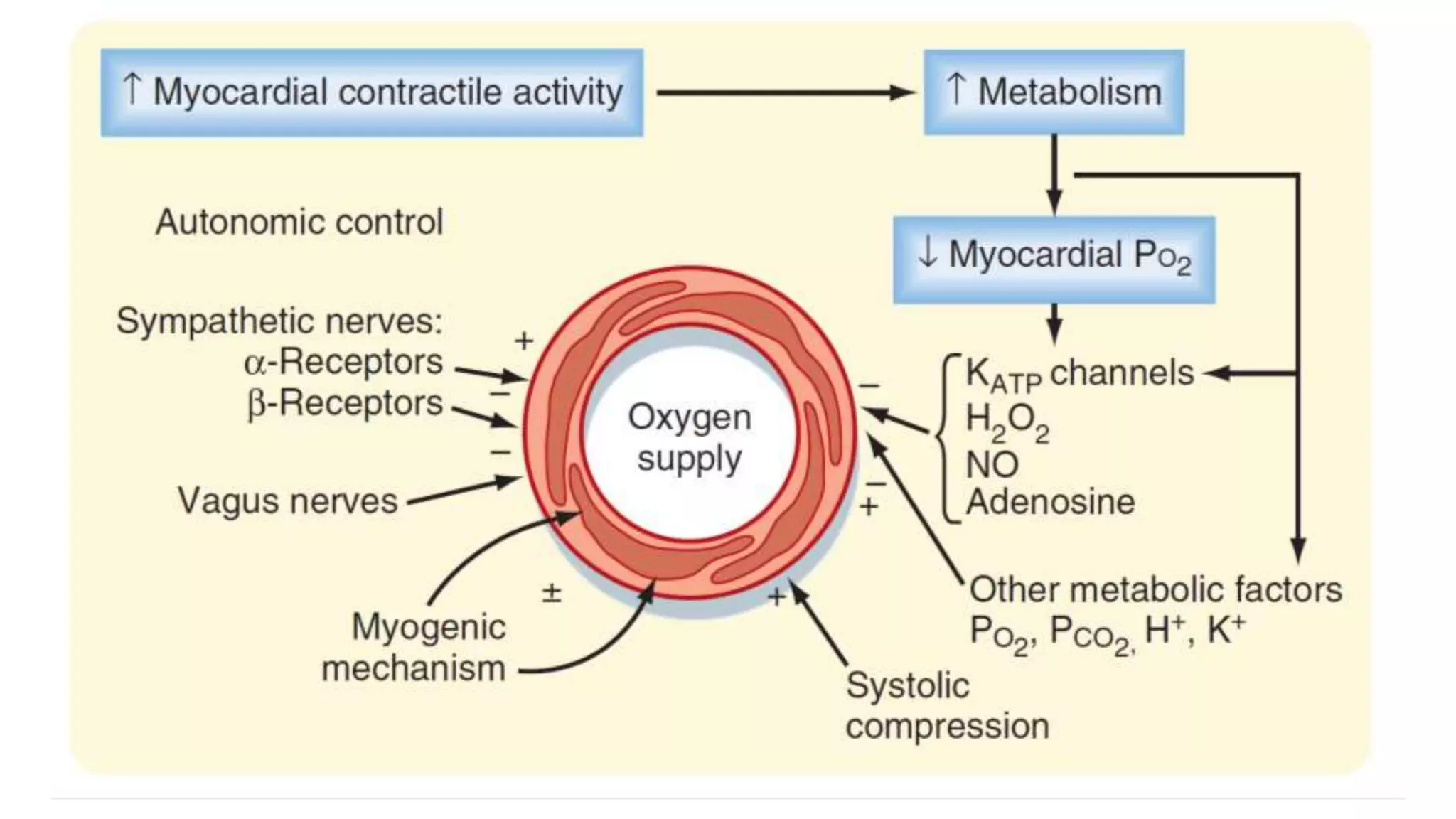
Metabolic Factors
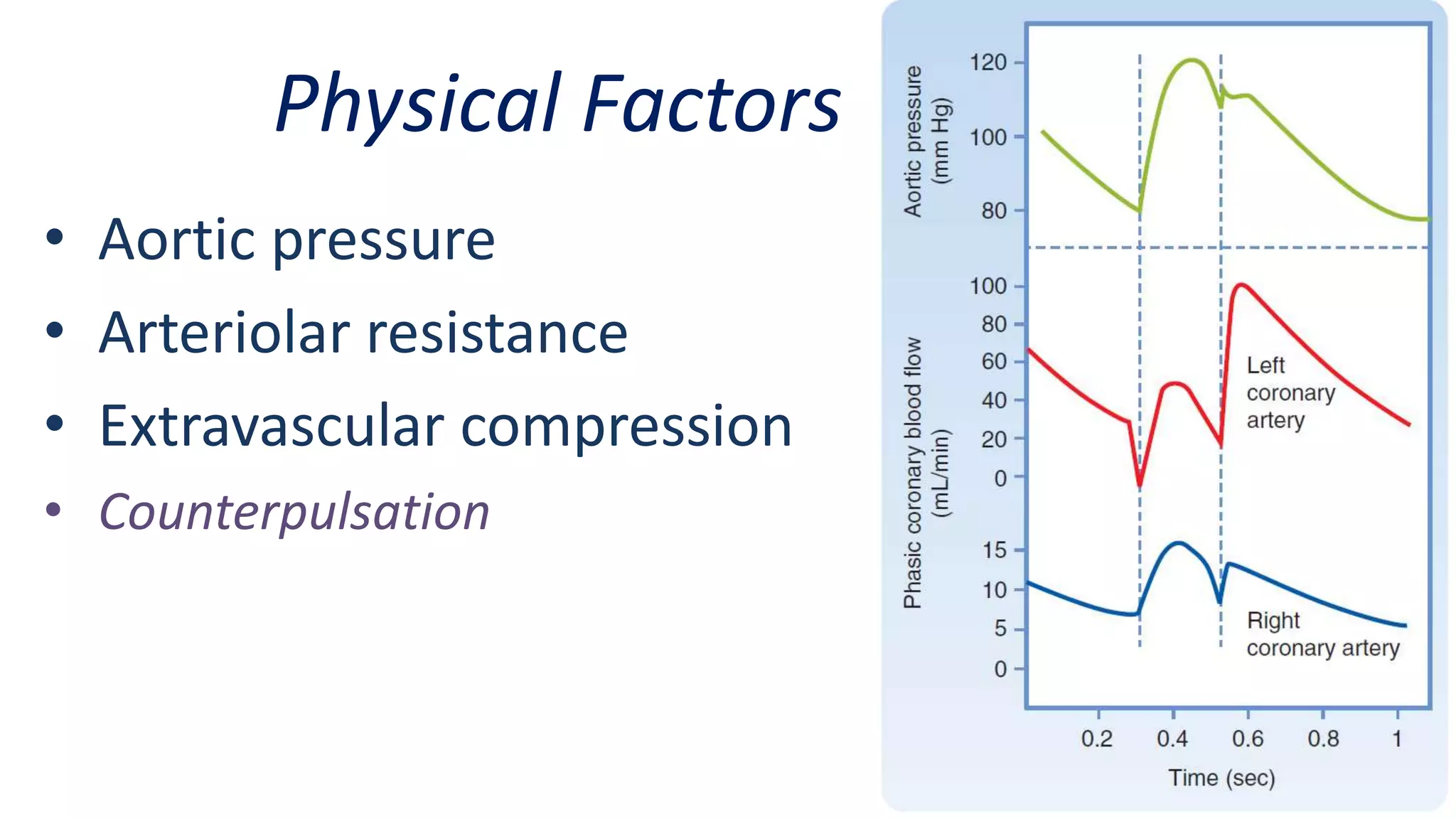
Physical Factors
• Aortic pressure
• Arteriolar resistance
• Extravascular compression
• Counterpulsation
Neural and
Neurohumoral
Factors
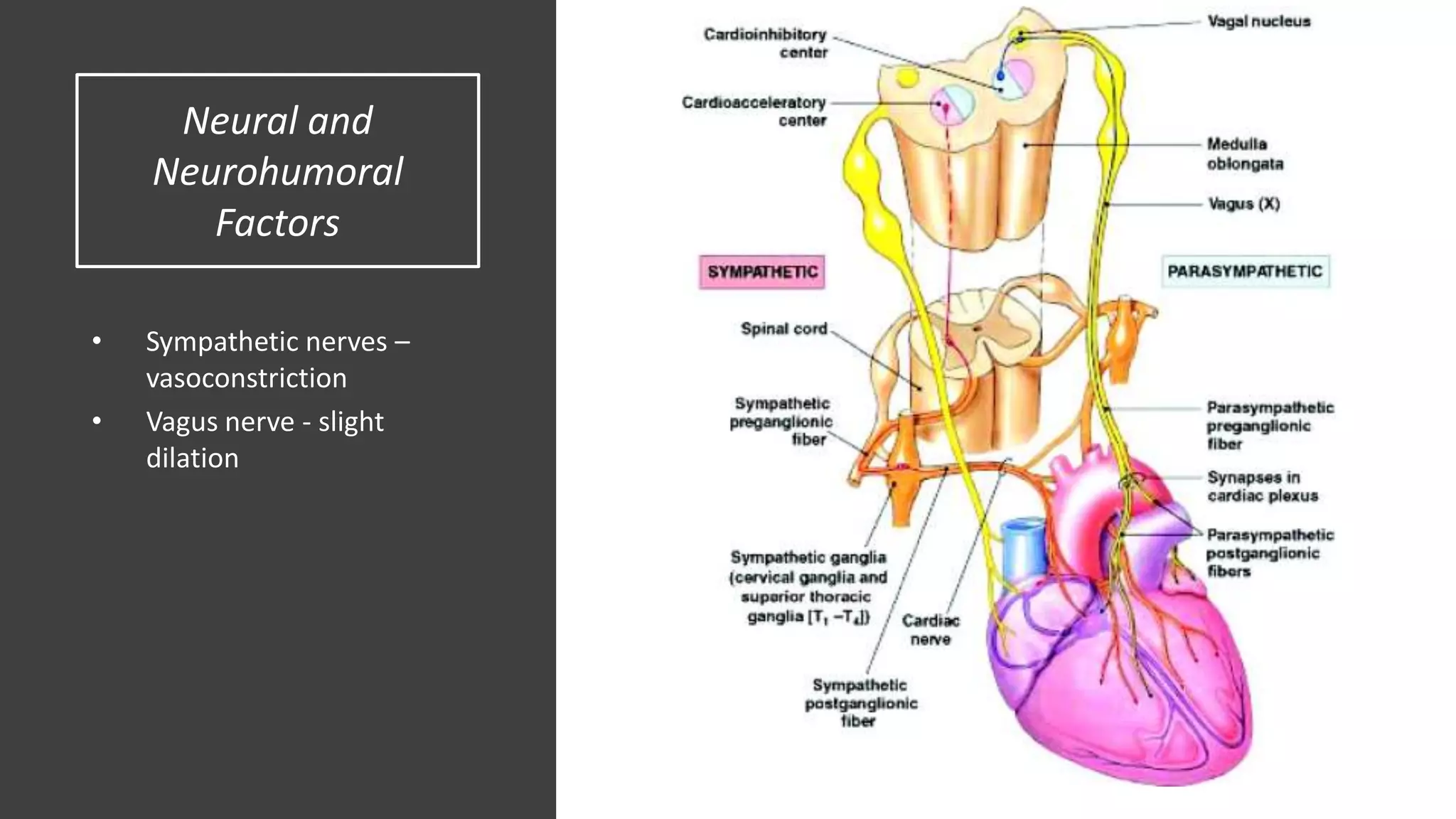
• Sympathetic nerves –
vasoconstriction
• Vagus nerve - slight
dilation
Metabolic
Factors
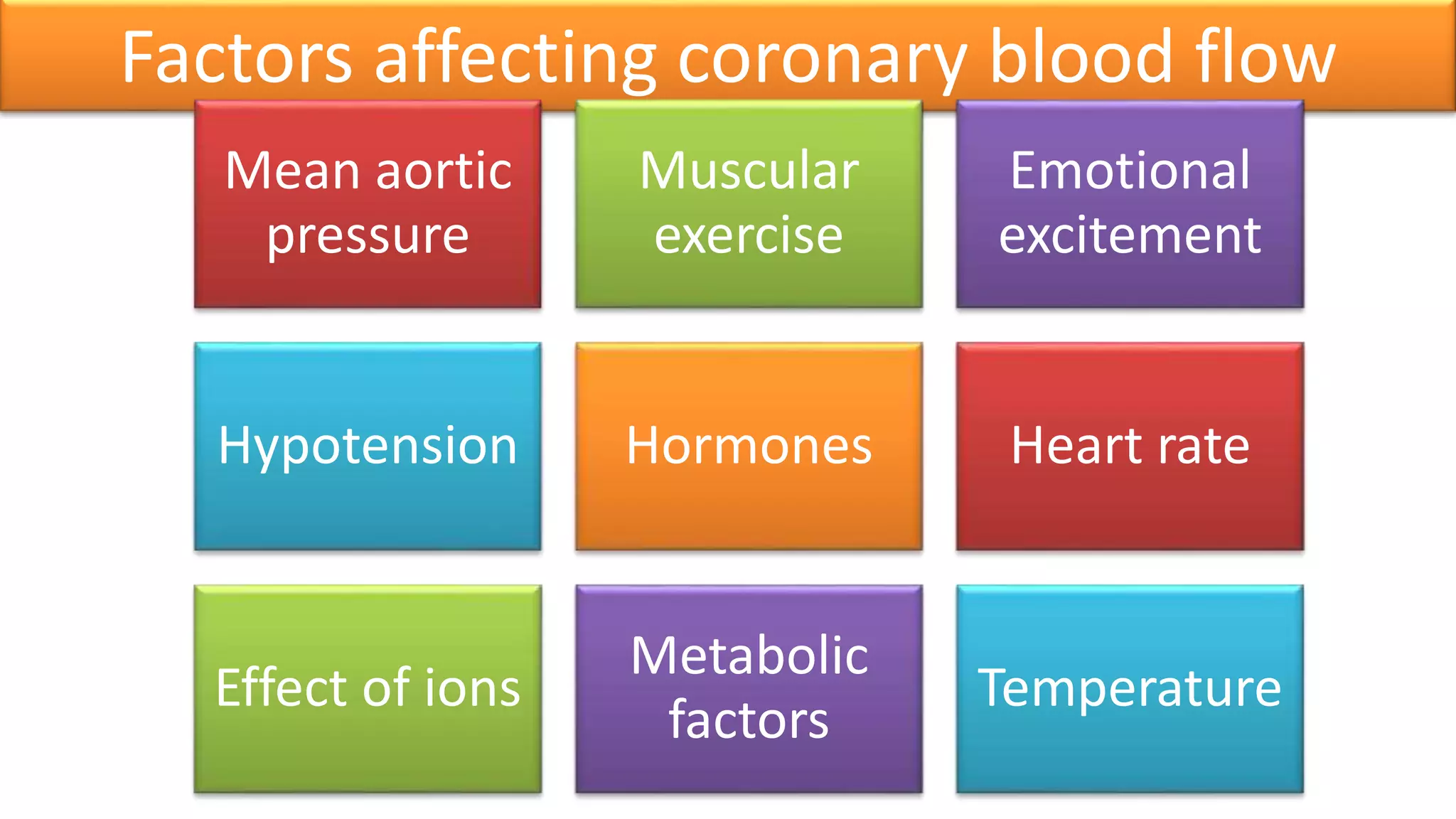
Factors affecting coronary blood flow
Mean aortic
pressure
Muscular
exercise
Emotional
excitement
Hypotension Hormones Heart rate
Effect of ions
Metabolic
factors
Temperature
Value of
collateral
circulation
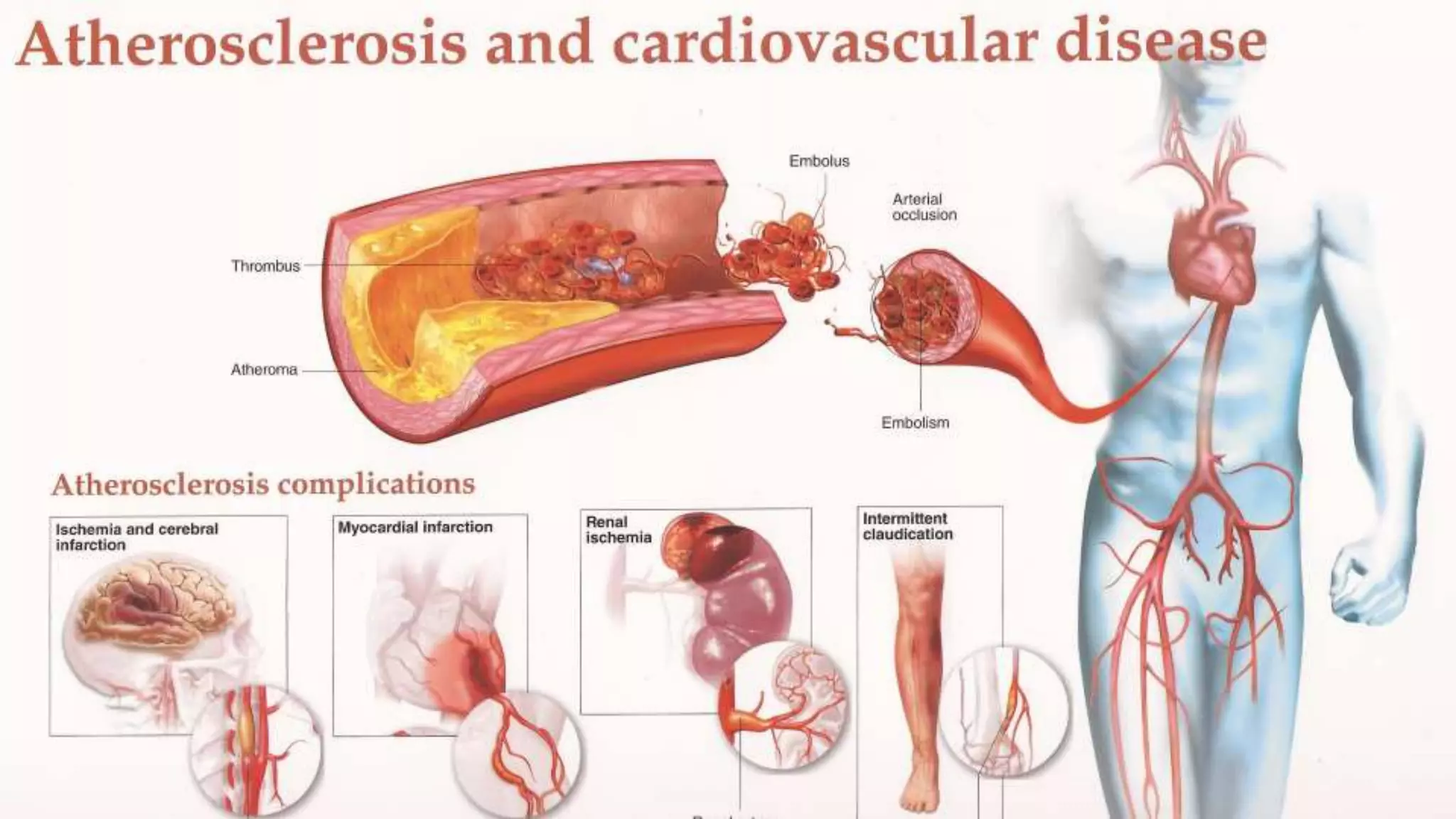
Coronary artery disease
• Leading cause
of death in the
world
• Atherosclerosis
– Plaques
Angina Pectoris
The sensation of chest pain, pressure, or squeezing, often
due to ischemia of the heart muscle from obstruction or
spasm of the coronary arteries
Myocardial
Infarction
Coronary
occlusion leading
to loss of function
of myocardium
Causes of Death after Acute
Coronary Occlusion
Decreased Cardiac Output
Damning of Blood in
Pulmonary vessels
Pulmonary edema
Fibrillation of Heart
Rupture of heart
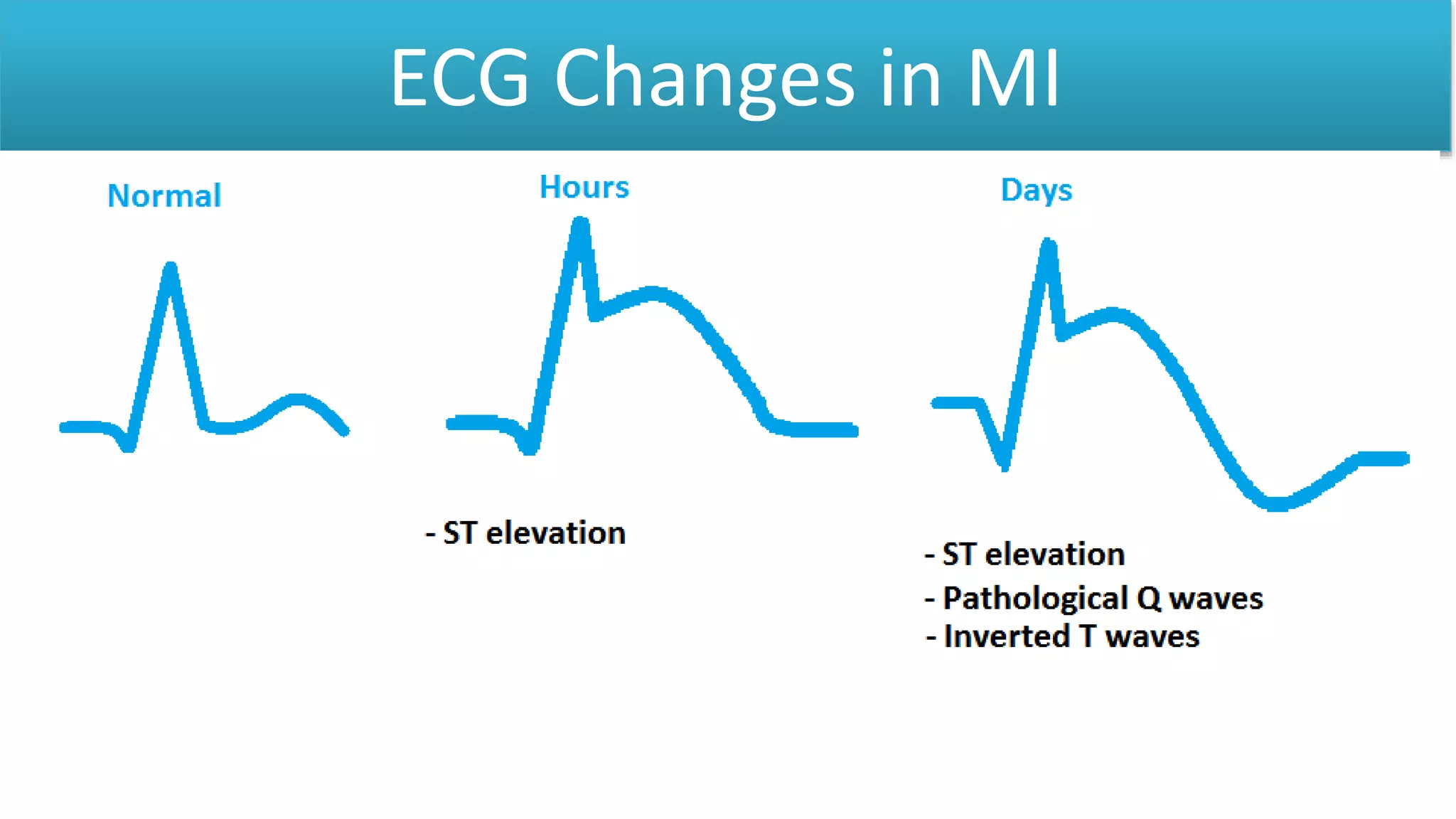
ECG Changes in MI
ECG Changes in MI
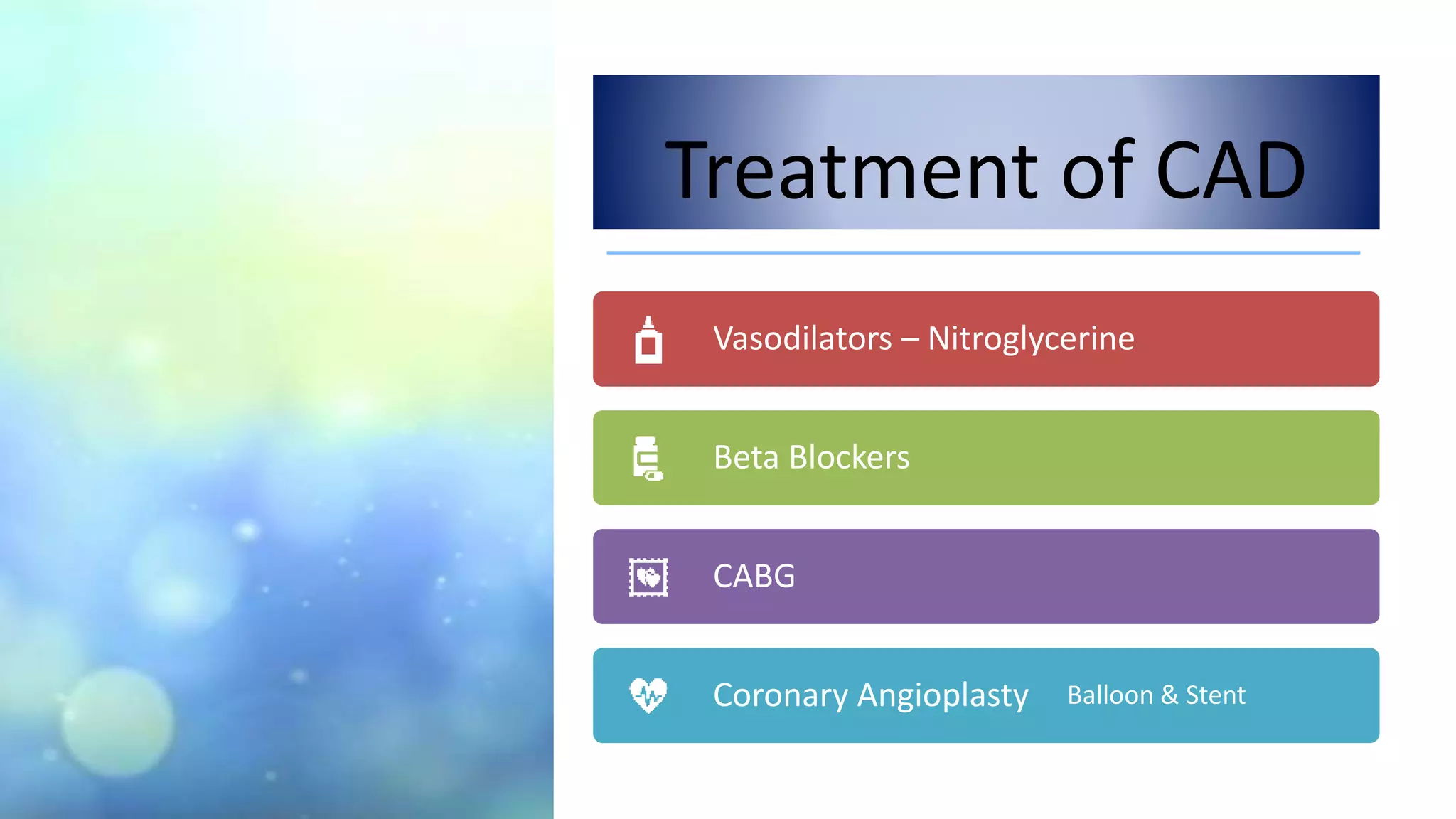
Treatment of CAD
Vasodilators – Nitroglycerine
Beta Blockers
CABG
Coronary Angioplasty Balloon & Stent
PTCA
CABG
CEREBRAL CIRCULATION
Measurement and regulation
Circle of Willis
Normal
Blood Flow
Continuous Blood Flow
Stop 5-10 s Unconscious
Stop 3-4 min Brain Damage
15% of Tot Blood flow
18mL/100g tissue Critical flow level
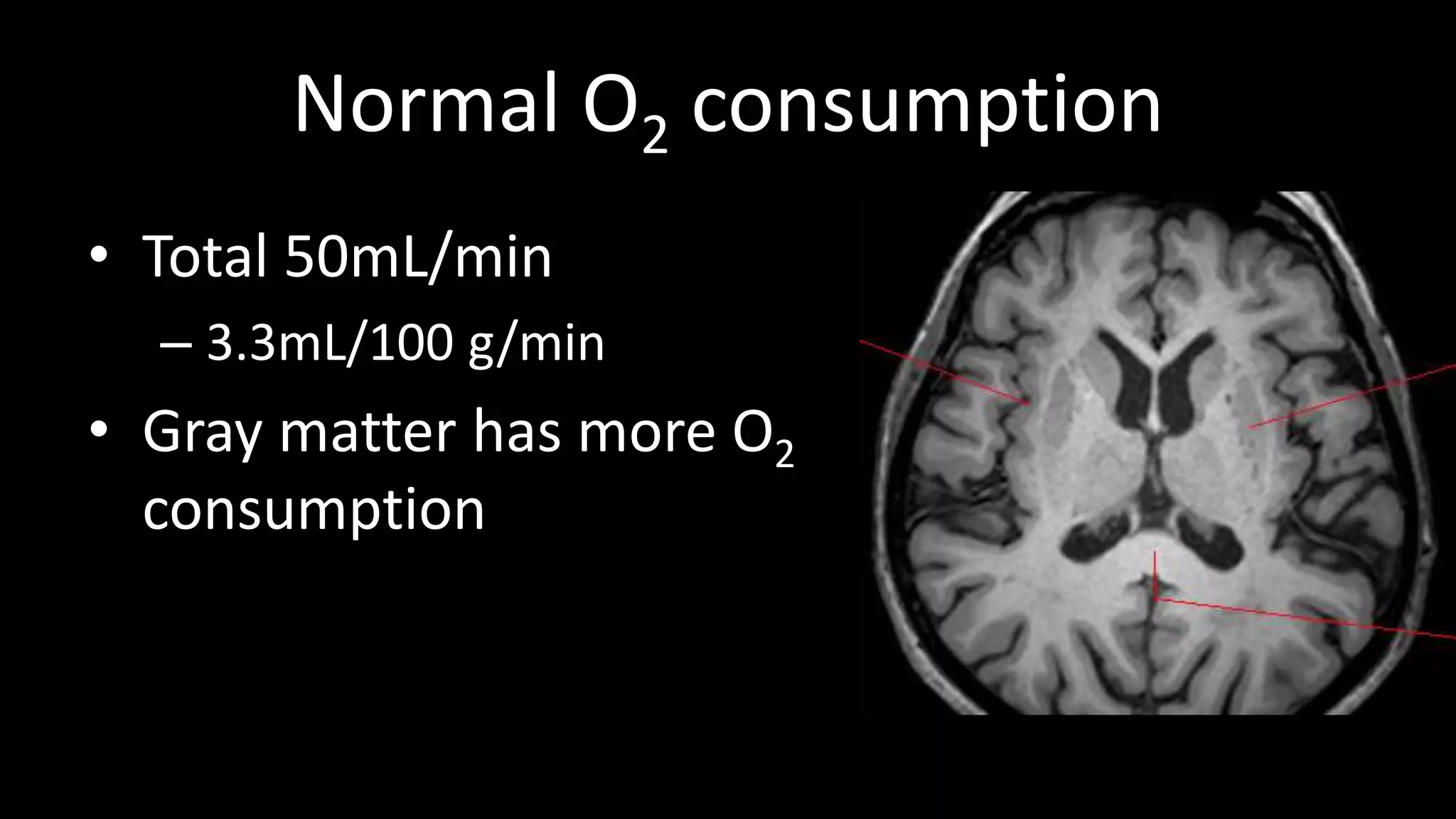
Normal O2 consumption
• Total 50mL/min
– 3.3mL/100 g/min
• Gray matter has more O2
consumption
Measurement of Cerebral Blood Flow
1. Kety method
2. SPECT
1. Single Photon Emission Computed Tomography
3. PET
1. Positron Emission tomography
4. MRI
1. Magnetic Resonance Imaging
Kety method
• Fick’s principle using 15 % N2O for 10 min
• Cerebral blood flow (CBF) =
– N2O taken by brain tissue per min
/ A-V diff of [N2O ]
• Single-Photon
Emission Computed
Tomography
(SPECT)
• PET
• MRI
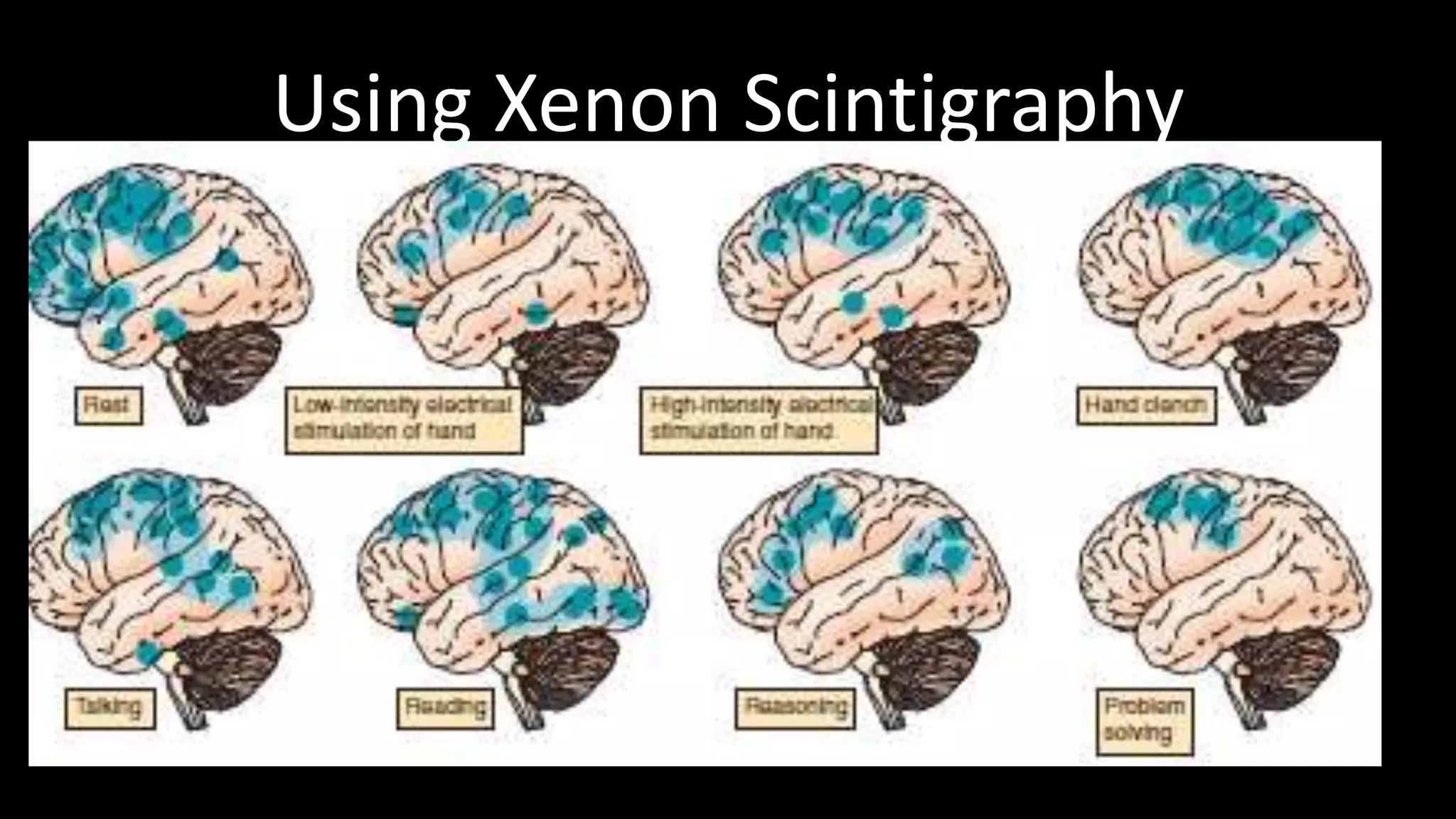
Using Xenon Scintigraphy
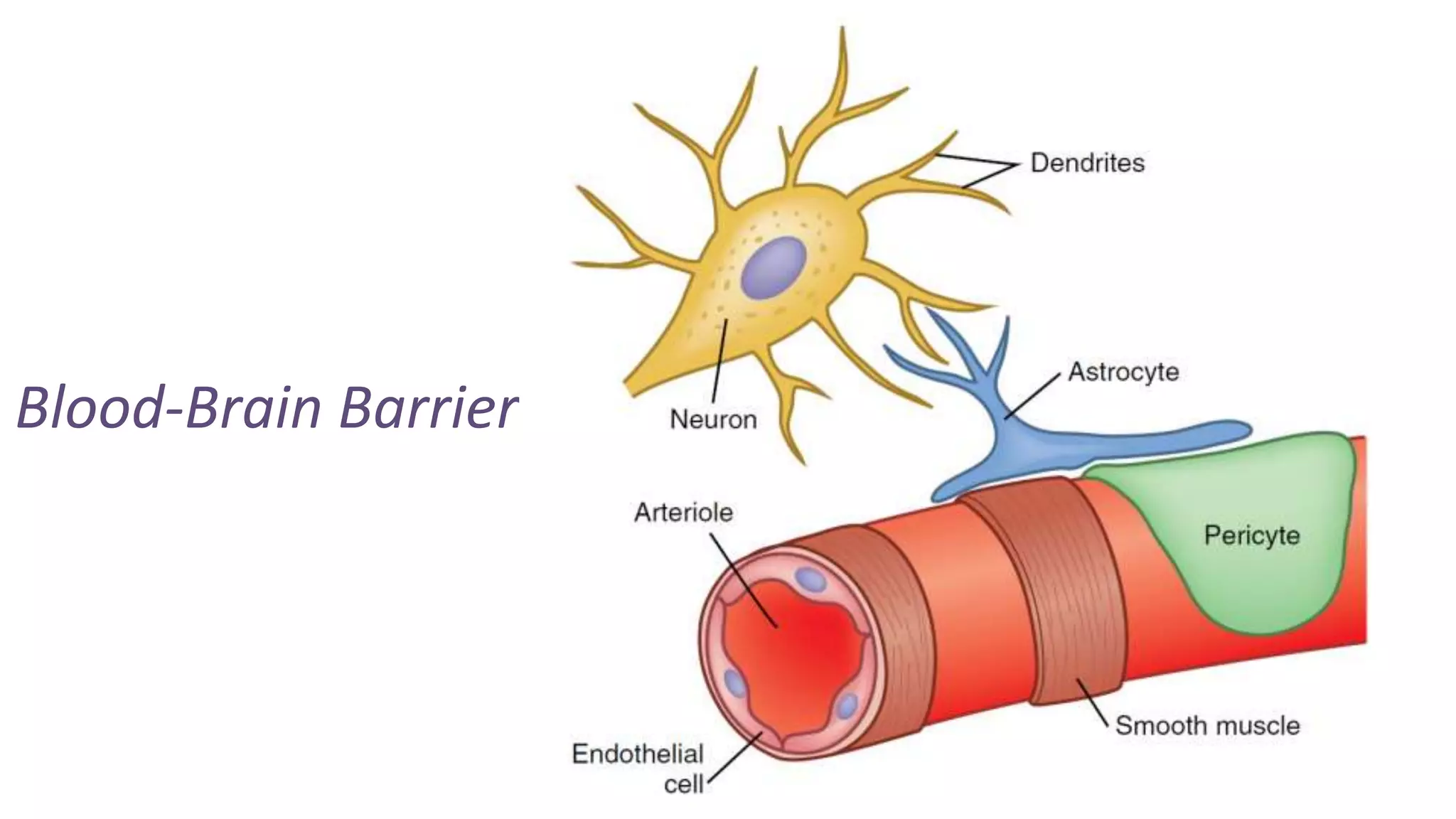
BLOOD
BRAIN
BARRIER
Blood-Brain Barrier
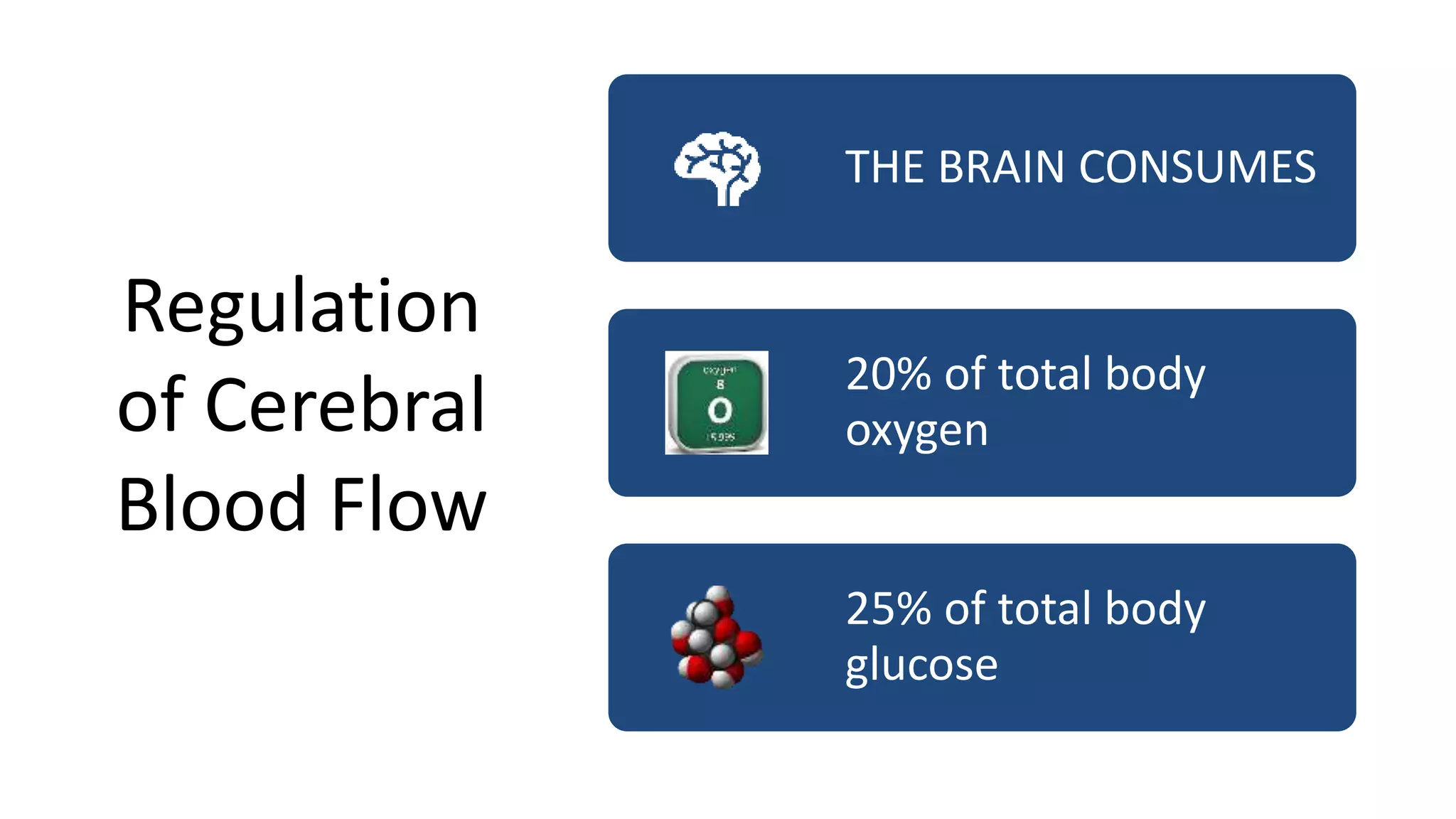
Regulation
of Cerebral
Blood Flow
THE BRAIN CONSUMES
20% of total body
oxygen
25% of total body
glucose
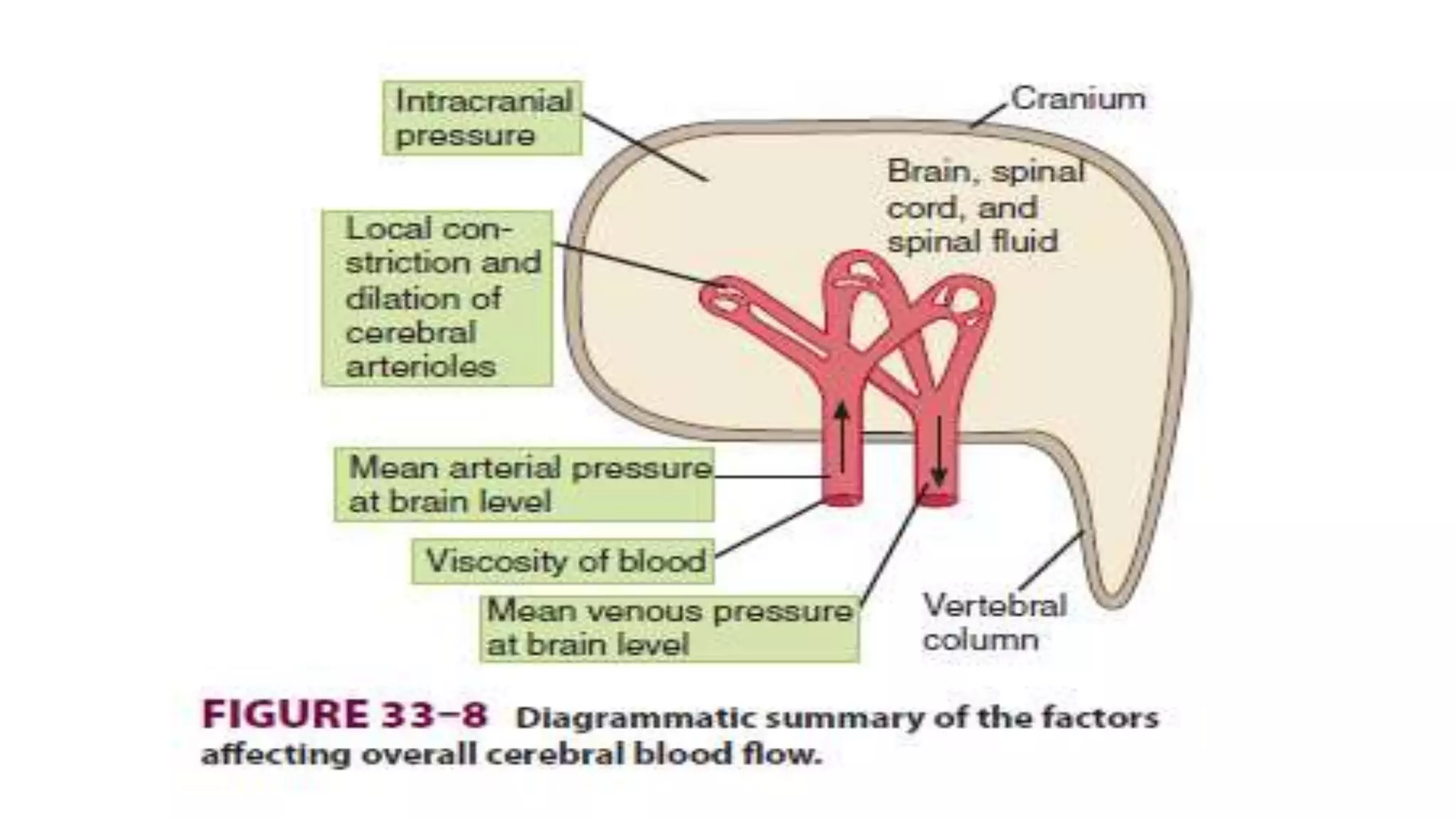
REGULATION OF CEREBRAL BLOOD FLOW
• Metabolic regulation
• Auto-regulation of CBF
• ICP in regulation of CBF
– Monro Kellie Doctrine
– Cushing reflex
• Nervous regulation of CBF
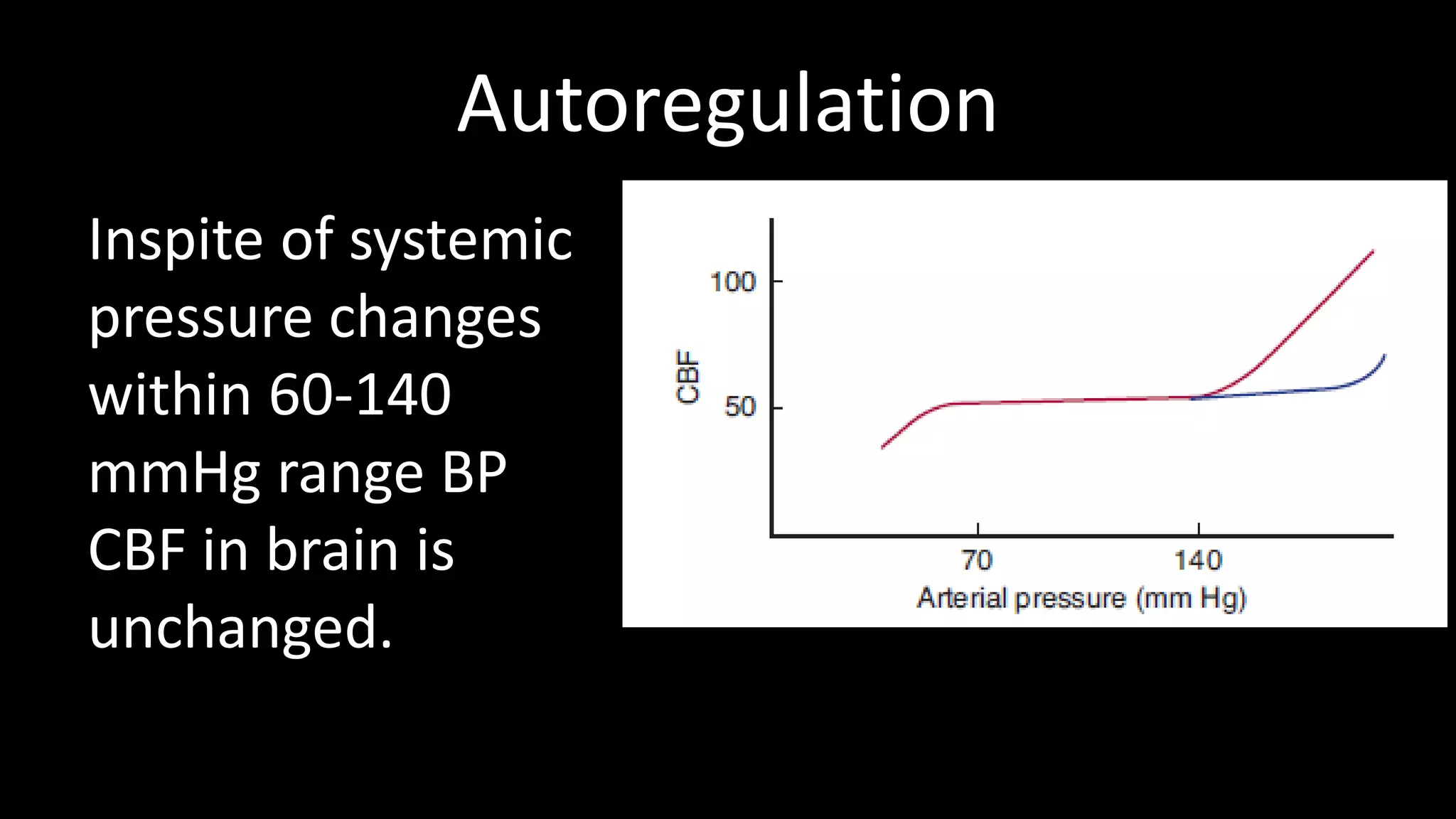
Autoregulation
Inspite of systemic
pressure changes
within 60-140
mmHg range BP
CBF in brain is
unchanged.
Monro-Kellie doctrine
Brain tissue and spinal
fluid are essentially
incompressible, the
volume of blood, spinal
fluid, and brain in the
cranium at any time must
be relatively constant.
Cushing Reflex
• Cushing's triad of
– increased blood pressure,
– irregular breathing,
– reduction of the heart rate
Cushing
reaction
Stroke
Stroke, also known as
cerebrovascular accident
(CVA), cerebrovascular
insult (CVI), or brain attack,
is when poor blood flow to
the brain results in cell
death.
Coronary circulation1903

Coronary circulation1903