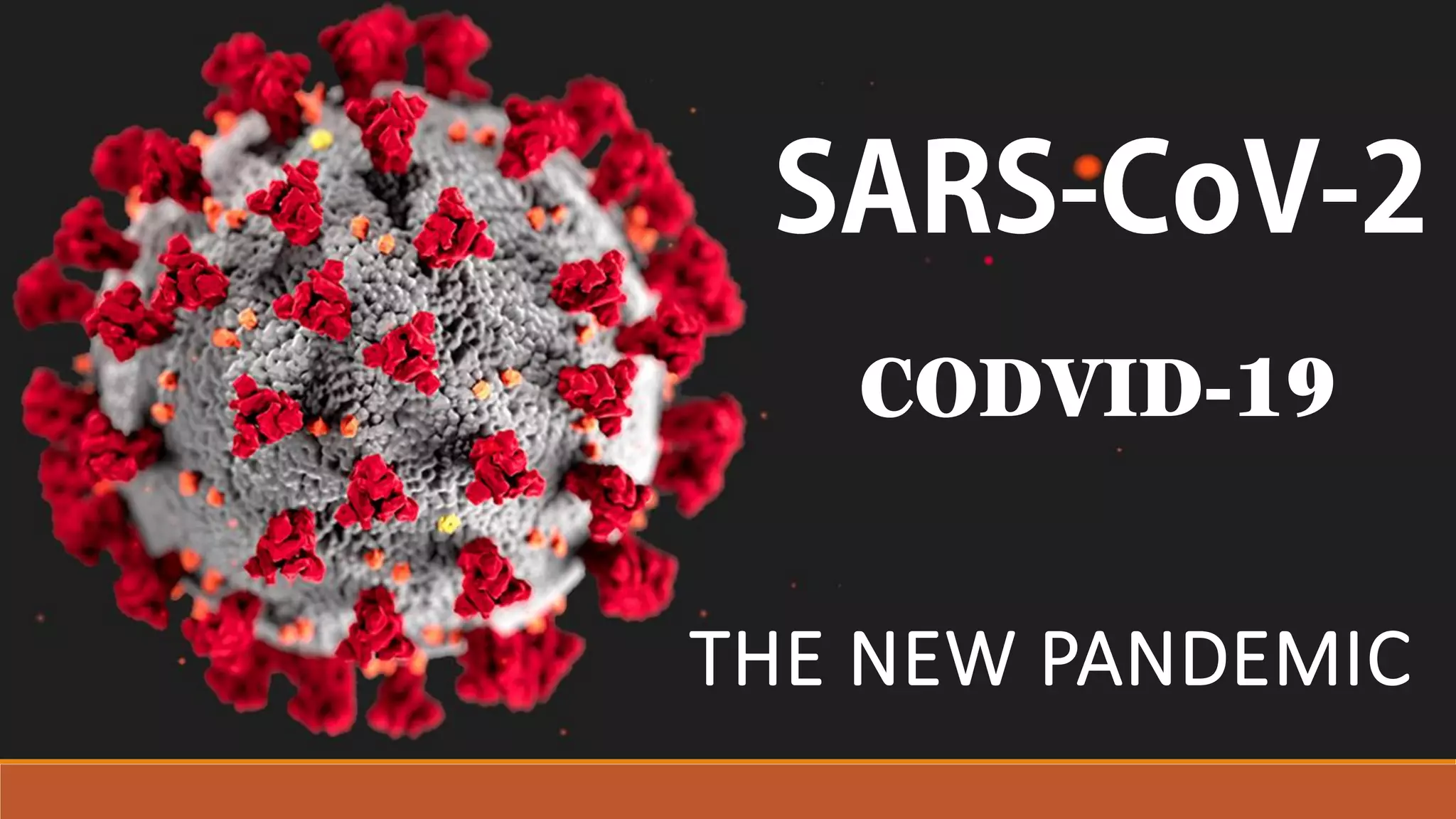
THE NEW PANDEMIC
CODVID-19
What is the difference
between pandemic and
epidemic?
Epidemic disease
▪ Epidemic disease affects many persons
▪ It is locally spread from person to person
Pandemic disease
▪ Spread globally
▪ Has higher fatalities comparing to
epidemic diseases
Epidemic Flu:
In USA between 2018 and 2019
34,200 deaths
16.5 million infected
Can flu be a pandemic disease?
In the 20th century only three times.
In 1918 Spanish flu killed 50 to 100 million
people.
Between 2009 to 2010 Swine Flu, a new strain
of the Spanish flu H1N1, around 700 million to
1.4billion were infected and about 150,000 to
575,000 fatalities.
COVID-19 Origin
▪ Wuhan market (China) during 2019 winter
from animal to human
▪ On January 21, 2020 WHO declared the
spread of the virus between humans
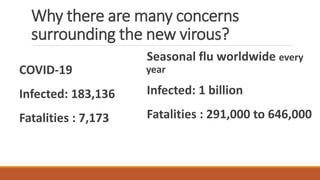
Why there are many concerns
surrounding the new virous?
COVID-19
Infected: 183,136
Fatalities : 7,173
Seasonal flu worldwide every
year
Infected: 1 billion
Fatalities : 291,000 to 646,000
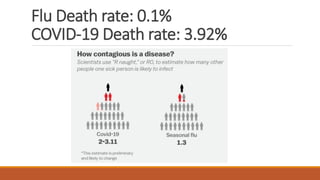
Flu Death rate: 0.1%
COVID-19 Death rate: 3.92%
Virus mutation can lead to worst
cases ever seen since Spanish flu
1918 and 1347 plague
What do we know about the new
coronavirus?
From the same family as:
▪ (MERS-CoV) responsible for Middle East
Respiratory Syndrome during 2012
▪ (SARS-CoV) that outbreak between 2002 and
2003, responsible for Severe Acute
Respiratory Syndrome
The COVID-19 newly named
SARS-CoV-2
▪ Characterized by protein spikes protruding
from their spherical shapes.
▪ These spikes latch onto human cells, then
undergo a structural change that allows the
viral membrane to fuse with the cell
membrane.
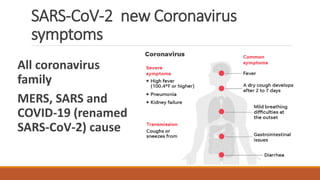
SARS-CoV-2 new Coronavirus
symptoms
All coronavirus
family
MERS, SARS and
COVID-19 (renamed
SARS-CoV-2) cause
All coronavirus family spares children
Who at risk?
▪ people with compromised immune systems
▪ elderly people
▪ people with chronic medical conditions
▪ people in group residential settings
▪ people in detention facilities
A most efficient method to fight the
spread of the virus is to lock down cities,
but for how long?
Major differences:
MERS, SARS and COVID-19 cause Severe Acute
Respiratory Syndrome.
MERS and SARS were easily contained.
Infection happens after 10 days after person shows
symptoms.
COVID-19 patients with mild condition don’t show
any symptoms but still infecting others.
▪ The virus is estimated to last till July.
▪ Virus does not survive temperature above
30oC.
▪ First person to receive coronavirus vaccine in
UAS on Monday the 16th of March 2020
"Survival of the healthiest“
Is pandemics the nature practice for selection?
▪ SARS-CoV-2 patients maybe attacked by the
virus after recovery.
▪ Nature elimination of genetic diseases.

Corona virus the new panademic

  • 1.
  • 2.
    What is thedifference between pandemic and epidemic?
  • 3.
    Epidemic disease ▪ Epidemicdisease affects many persons ▪ It is locally spread from person to person
  • 4.
    Pandemic disease ▪ Spreadglobally ▪ Has higher fatalities comparing to epidemic diseases
  • 5.
    Epidemic Flu: In USAbetween 2018 and 2019 34,200 deaths 16.5 million infected
  • 6.
    Can flu bea pandemic disease? In the 20th century only three times. In 1918 Spanish flu killed 50 to 100 million people. Between 2009 to 2010 Swine Flu, a new strain of the Spanish flu H1N1, around 700 million to 1.4billion were infected and about 150,000 to 575,000 fatalities.
  • 7.
    COVID-19 Origin ▪ Wuhanmarket (China) during 2019 winter from animal to human ▪ On January 21, 2020 WHO declared the spread of the virus between humans
  • 8.
    Why there aremany concerns surrounding the new virous? COVID-19 Infected: 183,136 Fatalities : 7,173 Seasonal flu worldwide every year Infected: 1 billion Fatalities : 291,000 to 646,000
  • 9.
    Flu Death rate:0.1% COVID-19 Death rate: 3.92%
  • 10.
    Virus mutation canlead to worst cases ever seen since Spanish flu 1918 and 1347 plague
  • 11.
    What do weknow about the new coronavirus? From the same family as: ▪ (MERS-CoV) responsible for Middle East Respiratory Syndrome during 2012 ▪ (SARS-CoV) that outbreak between 2002 and 2003, responsible for Severe Acute Respiratory Syndrome
  • 12.
    The COVID-19 newlynamed SARS-CoV-2 ▪ Characterized by protein spikes protruding from their spherical shapes. ▪ These spikes latch onto human cells, then undergo a structural change that allows the viral membrane to fuse with the cell membrane.
  • 13.
    SARS-CoV-2 new Coronavirus symptoms Allcoronavirus family MERS, SARS and COVID-19 (renamed SARS-CoV-2) cause
  • 14.
    All coronavirus familyspares children
  • 15.
    Who at risk? ▪people with compromised immune systems ▪ elderly people ▪ people with chronic medical conditions ▪ people in group residential settings ▪ people in detention facilities
  • 16.
    A most efficientmethod to fight the spread of the virus is to lock down cities, but for how long?
  • 17.
    Major differences: MERS, SARSand COVID-19 cause Severe Acute Respiratory Syndrome. MERS and SARS were easily contained. Infection happens after 10 days after person shows symptoms. COVID-19 patients with mild condition don’t show any symptoms but still infecting others.
  • 18.
    ▪ The virusis estimated to last till July. ▪ Virus does not survive temperature above 30oC. ▪ First person to receive coronavirus vaccine in UAS on Monday the 16th of March 2020
  • 19.
    "Survival of thehealthiest“ Is pandemics the nature practice for selection? ▪ SARS-CoV-2 patients maybe attacked by the virus after recovery. ▪ Nature elimination of genetic diseases.