Understanding a
Pandemic: COVID-19
Alex L. Sterling
An American social-distancing in
San Luis Obispo County, CA
Disclaimer
I have a Bachelors of Science in Biochemistry from California Polytechnic State University, San Luis
Obispo. Additionally, I have the following work experience, all of which has some involvement in a
pandemic crisis.
1. Hospital – Five years of community hospital experience working at two hospital labs while in
college (Sierra Vista Regional, French Hospital).
2. Research – Four month internship working in development, such as vaccines (Genentech).
3. Military – Four years as an Army medic assigned to a combat field hospital (MASH unit).
Deployed for 7 months to Haiti, Operation Uphold Democracy (Jan, 1995).
4. Reference Lab – Five years working for a regional reference lab that served physician offices
and three years for a national reference lab that provided advance testing for hospitals and
manufactured some reference products (Central Coast Pathology, Focus Diagnostics).
5. Public Health – Three years experience for a company that developed a blood test for latent
tuberculosis, which allowed me to partner very closely with State and County public health
labs and their outreach clinics (Cellestis).
6. Molecular Diagnostics & Commercial Manufacturing – 10 years experience in molecular
diagnostics, of which 7 years selling respiratory infectious disease testing products to hospitals
and labs throughout California (Focus Diagnostics, QIAGEN, BioFire).
7. Pandemics – Experience working for two diagnostic companies that received FDA “emergency
use authorization” (EUA) to manufacture products during a pandemic (Focus Diagnostics –
H1N1, BioFire, COVID-19).
Author’s Purpose
It is unfathomable to the majority of US citizens in this lifetime to digest the
threat of a global pandemic. Free of war, famine, or economic collapse, the
notion that a virus could bring a country to its knees is inconceivable.
Yet, here we are…..
I prepared this slide deck for family and friends who struggle to understand our
current measures to address the COVID-19 pandemic (March 21, 2020). I’ve
provided references for many of my comments, most of which are extracted
entirely from the author or site references on each slide.
The creation of this slide deck is an effort to understand the global pandemic
crisis based on current data (Mar 21th, 2020) and share my forecast for the near
future on mathematical projections and reasonable comparisons. Any claims or
calculations in this presentation are my opinion.
COVID-19: A Novel Virus
 “Novel virus” refers to a virus not seen before.
 It can be a virus that is isolated from its natural reservoir or isolated as the
result of spread to an animal (i.e. bat, bird) or human host where the virus
had not been identified before.
 It can be an emergent virus, one that represents a new strain, but it can also
be an extant virus, one not previously identified.
https://en.wikipedia.org/
Definition: Outbreak
 In epidemiology, an outbreak is a sudden increase in occurrences of a disease
in a particular time and place.
 It may affect a small, localized group or impact thousands across an entire
continent.
 Four linked cases of a rare infectious disease may be sufficient to constitute
an outbreak.
https://en.wikipedia.org/
Definition: Epidemic
 An epidemic is the rapid spread of disease to a large number of people in a
given population within a short period of time.
 Generally, an epidemic occurs when immunity to either an established
pathogen or newly emerging novel pathogen is suddenly reduced below that
found in the endemic equilibrium and the transmission threshold is exceeded.
 The declaration of an epidemic usually requires a good understanding of a
baseline rate of incidence.
 Epidemics for common diseases, such as influenza or cholera, are defined as
reaching some increase in incidence above this baseline.
https://en.wikipedia.org/
Definition: Pandemic
 A pandemic is a disease epidemic that has spread across a large region, for
instance multiple continents, or worldwide.
 Throughout history, there have been a number of pandemics of diseases, such
as smallpox and tuberculosis. Flu pandemics generally exclude recurrences of
seasonal flu.
 One of the most devastating pandemics was the Black Death, which killed an
estimated 75–200 million people in the 14th century.
 Current pandemics include HIV/AIDS and the 2019 coronavirus disease.
https://en.wikipedia.org/
Definition: Seasonal Flu
 Flu season is an annually recurring time period characterized by the
prevalence of outbreaks of influenza (flu).
 The season occurs during the cold half of the year within each hemisphere.
 Influenza activity can sometimes be predicted and even tracked
geographically. For instance, the United States can predict flu prevalence for
an upcoming winter based on Australia’s incidence from their previous winter
season.
 While the beginning of major flu activity in each season varies by location, in
any specific location these minor “epidemics” usually take about three weeks
to peak, and an additional three weeks to significantly diminish.
https://en.wikipedia.org/
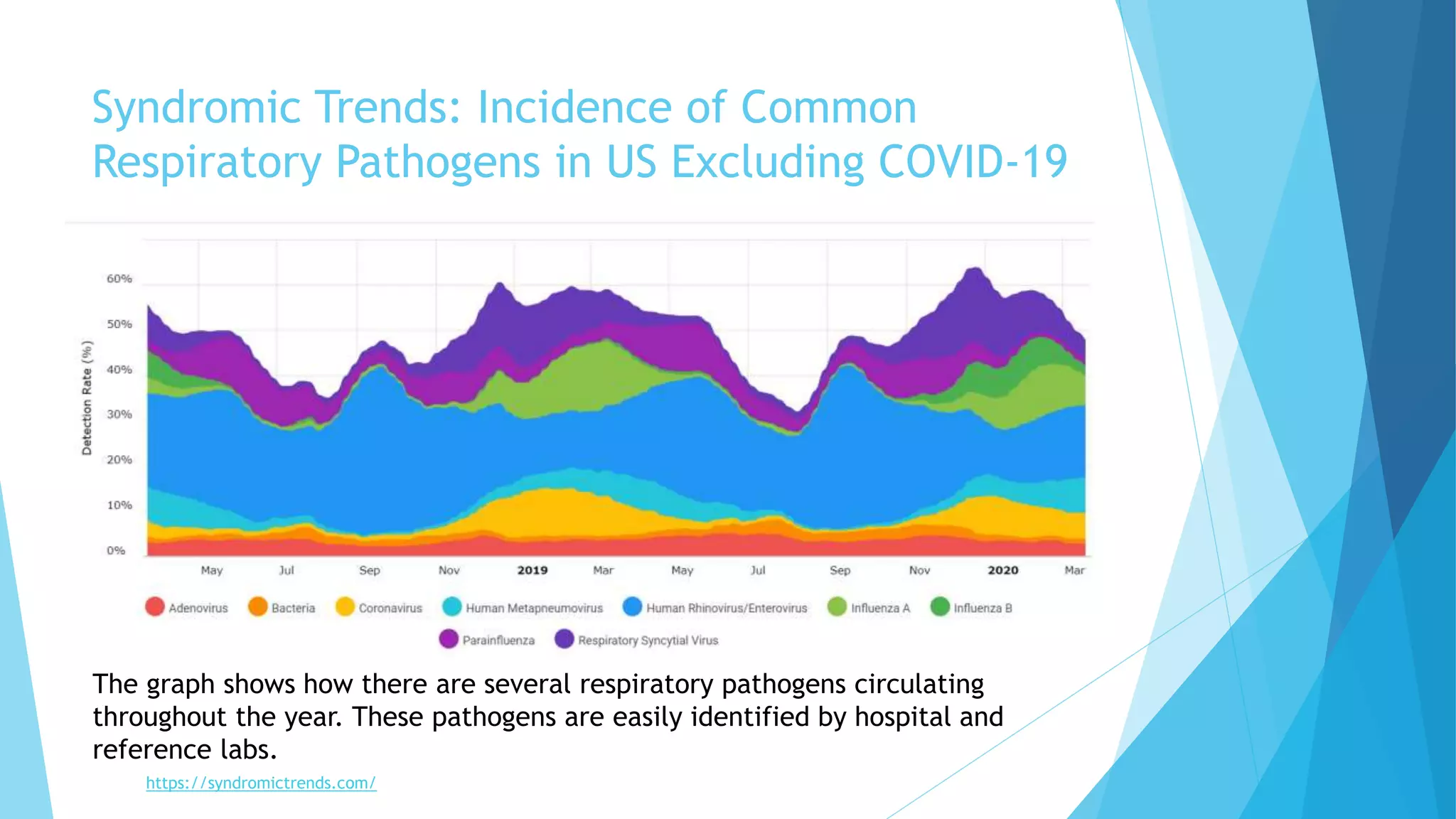
Syndromic Trends: Incidence of Common
Respiratory Pathogens in US Excluding COVID-19
https://syndromictrends.com/
The graph shows how there are several respiratory pathogens circulating
throughout the year. These pathogens are easily identified by hospital and
reference labs.
Syndromic Trends: Incidence of Respiratory
Pathogens in Eastern US Excluding COVID-19
https://syndromictrends.com/
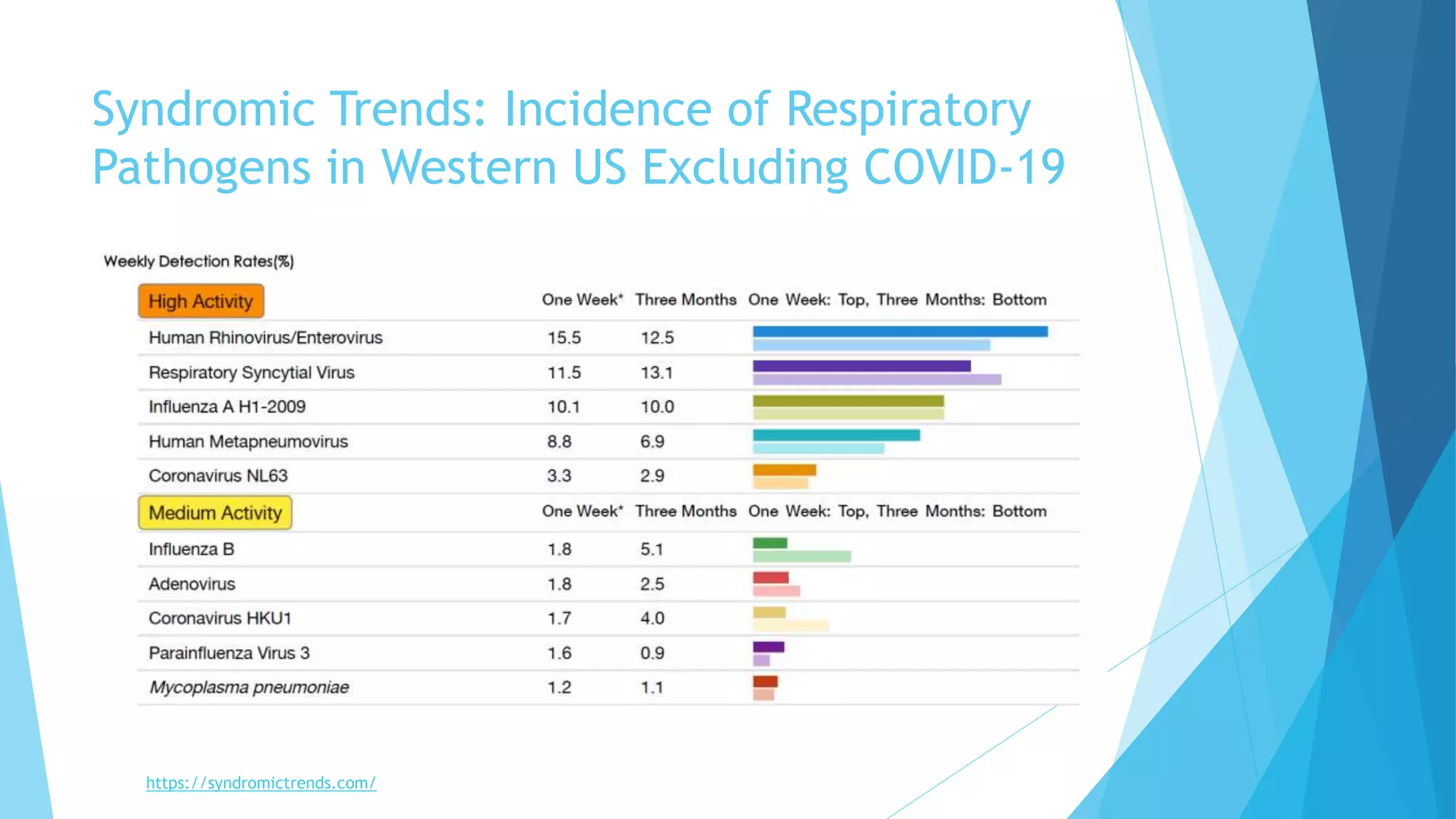
Syndromic Trends: Incidence of Respiratory
Pathogens in Western US Excluding COVID-19
https://syndromictrends.com/
Patient Groups: Immune Status
 Healthy - The World Health Organization (WHO) defines health as “complete
physical, mental, and social well-being - and not merely the absence of disease or
infirmity.”
 Young - When children reach the age of 7 or 8, most of their immune system
development is complete.
 Elderly - Elderly people succumb to respiratory illness more often than the young
because they have weakened immune systems.
 Underlying/ Preexisting Conditions - Conditions like diabetes, COPD, cancer, and
sleep apnea, may be examples of pre-existing health conditions. They tend to be
chronic or long-term.
 Immunosuppressed – Defined as suppression of the immune system and its ability
to fight infection. Immunosuppression may result from certain diseases, such as
AIDS or lymphoma, or from certain drugs, such as some of those used to treat
cancer.
Coronavirus Facts: What Are They?
 Coronaviruses are a group of related viruses that cause diseases in mammals and
birds.
 In humans, coronaviruses cause respiratory tract infections that can be mild, such
as the common cold. (among other possible causes, predominantly rhinoviruses),
and others that can be lethal, such as SARS, MERS, and COVID-19.
 Four known coronaviruses (OC43, HKU1, NL63, 229E) cause a third of common colds.
 In some cases, animal coronaviruses that infect animals have emerged to infect
people and can spread between people. This is suspected to have occurred for the
virus that causes COVID-19.
 Two previously known coronaviruses can be lethal: Middle East Respiratory
Syndrome (MERS) and Severe Acute Respiratory Syndrome (SARS). Both MERS and
SARS are two examples of coronaviruses that originated from animals and then
spread to people.
https://www.theatlantic.com/science/archive/2020/03/biography-new-coronavirus/608338/
https://en.wikipedia.org/wiki/Coronavirus
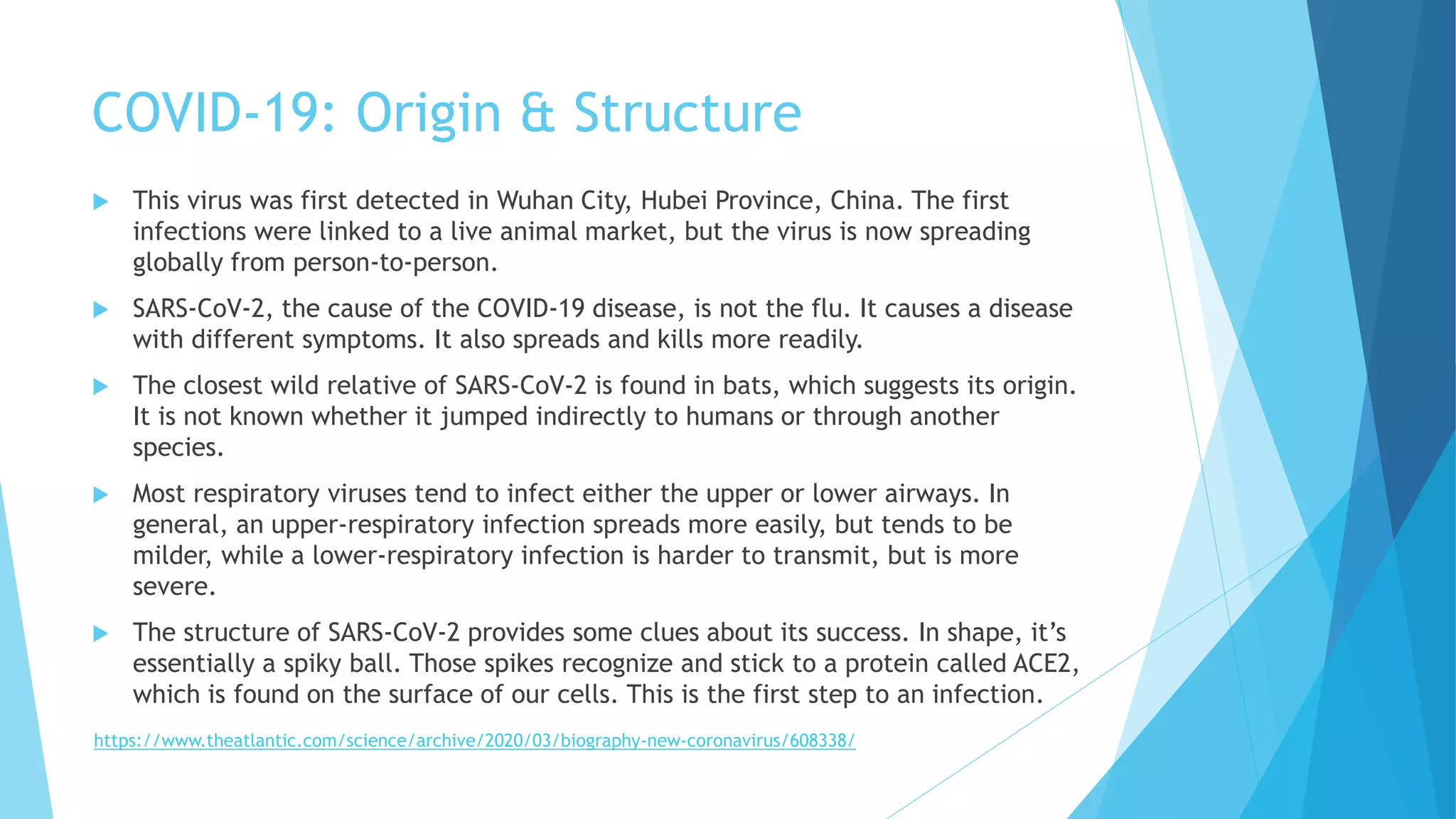
COVID-19: Origin & Structure
 This virus was first detected in Wuhan City, Hubei Province, China. The first
infections were linked to a live animal market, but the virus is now spreading
globally from person-to-person.
 SARS-CoV-2, the cause of the COVID-19 disease, is not the flu. It causes a disease
with different symptoms. It also spreads and kills more readily.
 The closest wild relative of SARS-CoV-2 is found in bats, which suggests its origin.
It is not known whether it jumped indirectly to humans or through another
species.
 Most respiratory viruses tend to infect either the upper or lower airways. In
general, an upper-respiratory infection spreads more easily, but tends to be
milder, while a lower-respiratory infection is harder to transmit, but is more
severe.
 The structure of SARS-CoV-2 provides some clues about its success. In shape, it’s
essentially a spiky ball. Those spikes recognize and stick to a protein called ACE2,
which is found on the surface of our cells. This is the first step to an infection.
https://www.theatlantic.com/science/archive/2020/03/biography-new-coronavirus/608338/
COVID-19: Mode of Infection
 The second step is due to another important feature. Coronavirus spikes consist
of two connected halves, and the spike activates when those halves are
cleaved. Only then can the virus enter a host cell.
 SARS-CoV-2 seems to infect both upper and lower airways, perhaps because it
can exploit the ubiquitous human protein, Furin.
 Furin is found in all body cells. Some human proteins are inactive when they
are first synthesized, and must have sections removed in order to become
active. Furin cleaves these sections and activates the proteins.
 In the presence of a SARS-CoV-2 virus stuck to the surface of a cell, Furin
cleaves the bridge that connects the two spike halves.
 Scientists hypothesize these two steps might be why the virus can spread
between people before symptoms show up.
https://www.theatlantic.com/science/archive/2020/03/biography-new-coronavirus/608338/
COVID-19: Pneumonia
 Once in the body, the viris likely attacks the ACE2-bearing cells that line our
airways. Dying cells slough away, filling the airways with junk and carrying the
virus deeper into the body, down toward the lungs.
 As the infection progresses, the lungs clog with dead cells and fluid, making
breathing more difficult.
 The immune system fights back and attacks the virus, developing inflammation
and fever in the patient. But in extreme cases, the immune system goes
berserk, causing more damage to the host than the actual virus.
 For example, blood vessels might open up to allow defensive white cells to
reach the site of an infection. However, if the vessels become too leaky, the
lungs fill with fluid, leading to pneumonia.
 These damaging overreactions caused by the immune system are called
cytokine storms. They were historically responsible for many deaths during the
1918 flu pandemic, H5N1 bird flu outbreaks, and the 2003 SARS outbreak.
https://www.theatlantic.com/science/archive/2020/03/biography-new-coronavirus/608338/
COVID-19: Cytokine Storms & Death
 During a cytokine storm, the immune system attacks at will without hitting
the right targets. When this happens, people become more susceptible to
infectious bacteria.
 The storms can also affect other organs besides the lungs, especially if people
already have chronic diseases.
 Elderly people are at risk of more severe infections possibly because their
immune system can’t mount an effective initial defense, while children are
less affected because their immune system is less likely to progress to a
cytokine storm.
 But other factors—a person’s genes, the vagaries of their immune system, the
amount of virus they’re exposed to, the other microbes in their bodies—might
play a role too.
https://www.theatlantic.com/science/archive/2020/03/biography-new-coronavirus/608338/
COVID-19: Is It Seasonal?
 Coronaviruses, like influenza, tend to be winter viruses. In cold and dry air,
the thin layers of liquid that coat our lungs and airways become even thinner,
and the beating hairs that rest in those layers struggle to evict viruses and
other foreign particles.
 Dry air also seems to dampen some aspects of the immune response to those
trapped viruses. In the heat and humidity of summer, both trends reverse,
and respiratory viruses struggle to get a foothold.
 Unfortunately, warm climates might not matter for the COVID-19 pandemic.
At the moment, the virus is tearing through a world of immunologically naïve
people, and that vulnerability is likely to supersede any seasonal variations.
The new virus is transmitting readily in countries like Singapore (which is in
the tropics) and Australia (which is still in summer).
https://www.theatlantic.com/science/archive/2020/03/biography-new-coronavirus/608338/
COVID-19: How Is The Virus Spread?
 The virus that causes COVID-19 is spreading from person-to-person. Someone who
is actively sick with COVID-19 can spread the illness to others.
 Someone released from COVID-19 quarantine is not considered a risk for spreading
the virus to others because they have not developed the illness during the
incubation period.
 Coronaviruses are generally thought to be spread from person-to-person through
respiratory droplets. Currently there is no evidence to support transmission of
COVID-19 associated with food.
 It may be possible that a person can get COVID-19 by touching a surface or object
that has the virus on it and then touching their own mouth, nose, or possibly their
eyes, but this is not thought to be the primary way the virus spreads.
 Because of poor survivability of most coronaviruses on surfaces, there is likely very
low risk of spread from food products or packaging that are shipped over a period
of days or weeks at ambient, refrigerated, or frozen temperatures.
https://www.cdc.gov/coronavirus/2019-ncov/index.html
COVID-19: Fomites Research
 Fomites are objects (such as a dish or a doorknob) that may be contaminated
with infectious organisms and serve in their transmission.
 Research about COVID-19 transmission via surfaces has been conflicting, with
reports from Hong Kong and Singapore showing varied results.
 Vincent Munster, PhD, of the National Institute of Allergy and Infectious Diseases
in Hamilton, Montana, writes in a New England Journal of Medicine letter that
SARS-C0V-2 can remain viable for hours while airborne and for days on surfaces.
 Munster’s research suggested SARS-C0V-2 was viable in aerosols for 3 hours and
remained detectable on plastic and stainless steel surfaces for up to 72 hours.
 The authors concluded aerosol and fomite transmission of SARS-C0V-2 was
"plausible" and may help inform COVID-19 mitigation efforts.
https://www.merriam-webster.com/dictionary/fomite
https://www.medpagetoday.com/infectiousdisease/covid19/85466
COVID-19: Quarantine Recommendations
 CDC recommends that infected patients be isolated either in the hospital or
at home (depending on how sick they are) until they are better and no longer
pose a risk of infecting others.
 Quarantine is usually established for the incubation period of the
communicable disease, which is the span of time during which people have
developed illness after exposure.
 For COVID-19, the period of quarantine is 14 days from the last date of
exposure, because 14 days is the longest incubation period seen for similar
coronaviruses.
 Anyone released from COVID-19 quarantine is not considered a risk for
spreading the virus to others because they have not developed illness during
the incubation period.
https://www.cdc.gov/coronavirus/2019-ncov/index.html
COVID-19: Estimating a Contagion’s
Spread
 In epidemiology, the basic reproduction number (denoted R0, pronounced R
nought) of an infection can be thought of as the expected number of cases
directly generated by one case in a population where all individuals are
susceptible to infection.
 More importantly, a disease’s R0 value only applies when everyone in a
population is completely vulnerable to the disease. This means:
 no one has been vaccinated
 no one has had the disease before
 there’s no way to control the spread of the disease
https://en.wikipedia.org/
COVID-19: What the R0 Value Means
Three possibilities exist for the potential spread or decline of a disease,
depending on its R0 value:
 If R0 is less than 1, each existing infection causes less than one new infection. In
this case, the disease will decline and eventually die out.
 If R0 equals 1, each existing infection causes one new infection. The disease will
stay alive and stable, but there won’t be an outbreak or an epidemic.
 If R0 is more than 1, each existing infection causes more than one new infection.
The disease will spread between people, and there may be an outbreak or
epidemic.
COVID-19: R0 Spread Diagram
COVID-19: Comparing Contagions
SARS-CoV-2 appears to have an R0 value between 2 – 4.
https://en.wikipedia.org/
COVID-19: Global & US Data
 Global Statistics (March 21, 2020)
 184 countries
 267,013 contacts
 11,201 deaths
 Estimate 4.2% deaths/contacts
 United State Statistics (March 21, 2020)
 50 states
 15,219 contacts
 201 deaths
 Estimate 1.3% deaths/contacts
https://experience.arcgis.com/experience/685d0ace521648f8a5beeeee1b9125cd
COVID-19: US Cases by Day of Report
https://experience.arcgis.com/experience/685d0ace521648f8a5beeeee1b9125cd
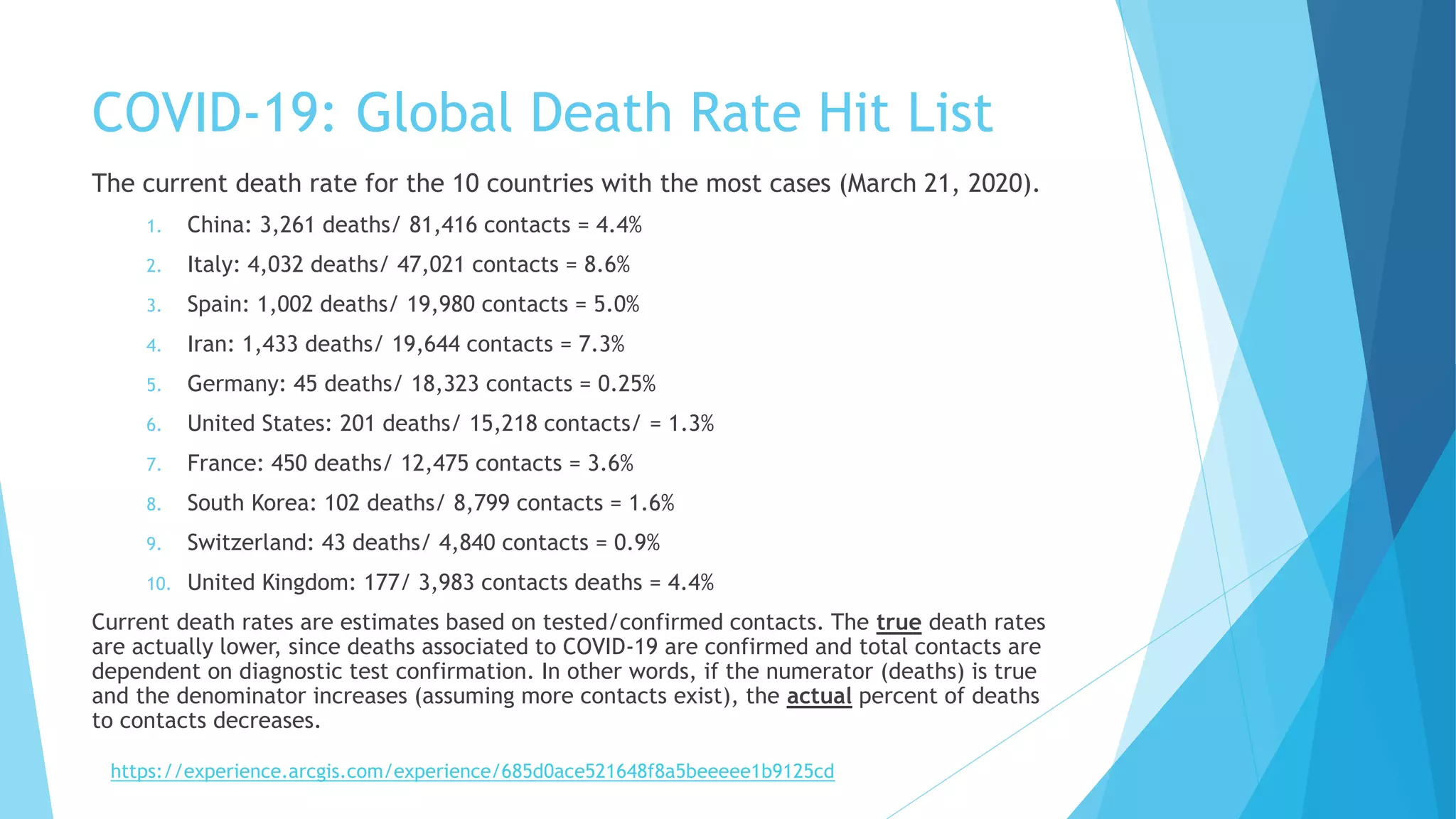
COVID-19: Global Death Rate Hit List
The current death rate for the 10 countries with the most cases (March 21, 2020).
1. China: 3,261 deaths/ 81,416 contacts = 4.4%
2. Italy: 4,032 deaths/ 47,021 contacts = 8.6%
3. Spain: 1,002 deaths/ 19,980 contacts = 5.0%
4. Iran: 1,433 deaths/ 19,644 contacts = 7.3%
5. Germany: 45 deaths/ 18,323 contacts = 0.25%
6. United States: 201 deaths/ 15,218 contacts/ = 1.3%
7. France: 450 deaths/ 12,475 contacts = 3.6%
8. South Korea: 102 deaths/ 8,799 contacts = 1.6%
9. Switzerland: 43 deaths/ 4,840 contacts = 0.9%
10. United Kingdom: 177/ 3,983 contacts deaths = 4.4%
Current death rates are estimates based on tested/confirmed contacts. The true death rates
are actually lower, since deaths associated to COVID-19 are confirmed and total contacts are
dependent on diagnostic test confirmation. In other words, if the numerator (deaths) is true
and the denominator increases (assuming more contacts exist), the actual percent of deaths
to contacts decreases.
https://experience.arcgis.com/experience/685d0ace521648f8a5beeeee1b9125cd
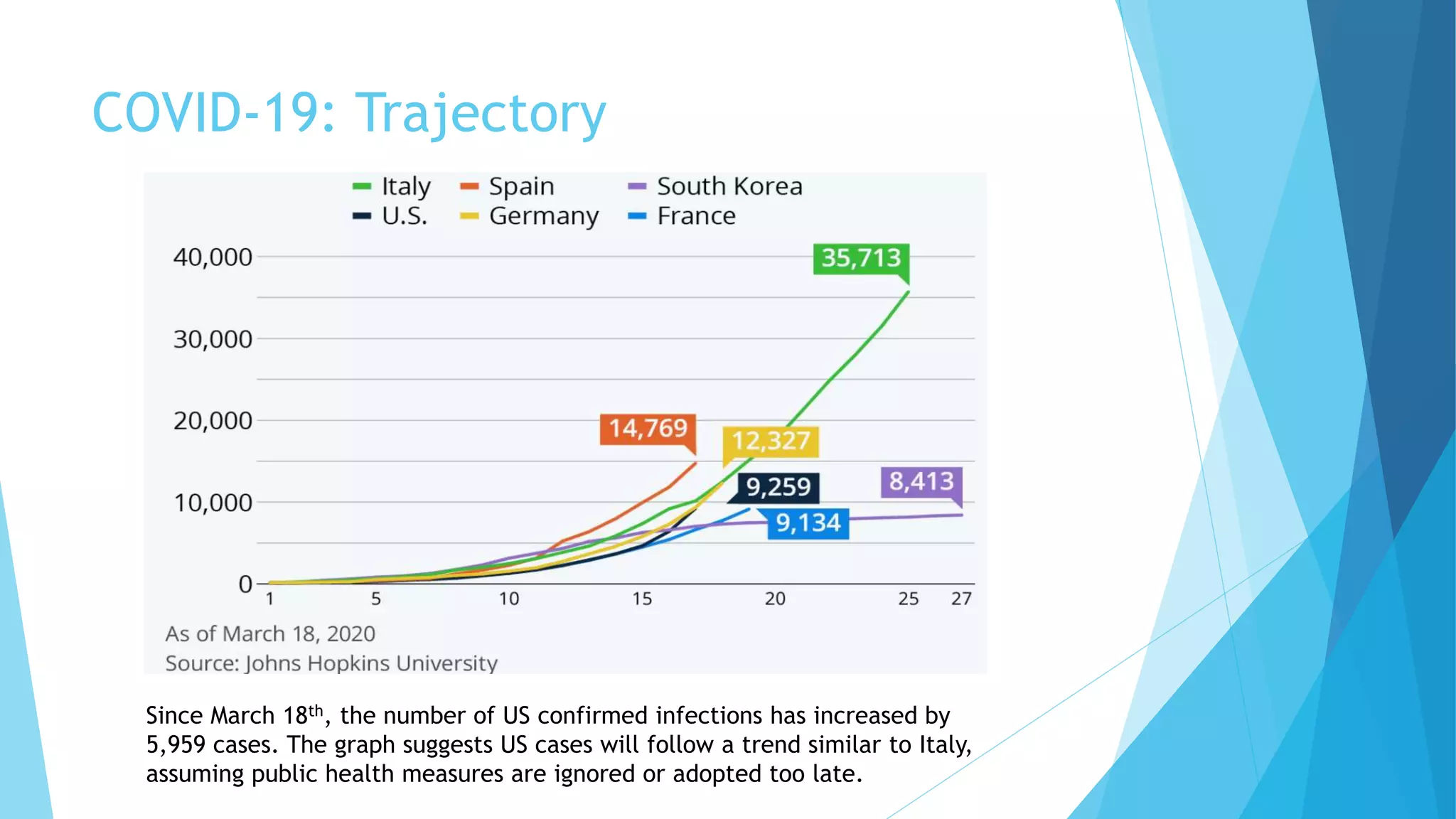
COVID-19: Trajectory
Since March 18th, the number of US confirmed infections has increased by
5,959 cases. The graph suggests US cases will follow a trend similar to Italy,
assuming public health measures are ignored or adopted too late.
COVID-19: Assessing the Data
What do we know?
 Without rapid, accessible testing, we don’t know how many true contacts exist in
the US.
 The number of US deaths relative to cases doesn’t inform the public of the number
of potential hospitalizations.
 The small number of patients who died isn’t large enough to discern which patient
groups are most at risk.
COVID-19: Impact on US Healthcare
 Consider the burden COVID-19 poses to the US Healthcare System
 Diagnostic Detection – currently, hospital labs do not have a rapid test available
 Isolation – infection control measures are challenged by limited space and staff
 Intensive Care – staff required to care for pneumonia patients
 Personal Protective Equipment (PPE) – supplies such as gowns, gloves, and masks are
limited in supply
 Ventilators – estimates suggest the US has 160,000 available
 CDC reports as of March 16, a total of 4,226 COVID-19 cases had been reported in
the United States. Among 508 (12%) patients known to have been hospitalized and
121 patients (2.8) had been admitted to an ICU.
https://www.cdc.gov/mmwr/volumes/69/wr/mm6912e2.htm?s_cid=mm6912e2_w
https://www.latimes.com/politics/story/2020-03-20/disaster-foretold-shortages-ventilators-medical-supplies-warned-about
COVID-19: Forecast on US Healthcare
 The current population of the United States of America is 330,451,770.
 Centers for Disease Control and Prevention (CDC) estimates 30.3 million Americans
– 9.4 percent of the U.S. population –have diabetes.
 CDC estimates more than 25 million Americans have asthma.
 On Thursday, March 19th, 2020, Gov. Gavin Newson declared a mandate for the
state of California to “shelter in place.” Newson claimed infection rates are
doubling every four days in some parts of the state and issued the dire prediction
that 56% of California's population could contract the virus over the next eight
weeks. The estimated 2018 population of California was 39.56 million.
 The number of US individuals aged 62 and over is estimated to be 41,256,029.
 If we assume COVID-19 infects 56% of California’s population (22,153,600), and 5%
of those infected require hospitalization, the burden on US hospitals will be 1.1M
admissions.
 If we assume 2% of hospitalized COVID-19 patients will require critical care, the
burden on US hospitals will be 22,153 admissions.
https://abc7news.com/6029302/
COVID-19: US Hospital Landscape
 From the American Hospital Association –
 Total Number of All U.S. Hospitals 6,146
 Number of U.S. Community Hospitals 5,198
 Total Staffed Beds in All U.S. Hospitals 924,107
 Staffed Beds in Community Hospitals 792,417
 Intensive Care Beds in Community Hospitals 7,323
 From the previous slide, 1.1 million hospital admissions exceeds the number of all
US hospital staffed beds. Additionally, the number of COVID-19 patients that may
require critical care will be 3 times more than available beds/ staff.
 The consequence of these limits will compel health leaders to triage patients
based on local medical priorities. Simply stated, a person 45 years old may take
priority over a 60 year old patient when only one ventilator is available.
https://www.aha.org/statistics/fast-facts-us-hospitals
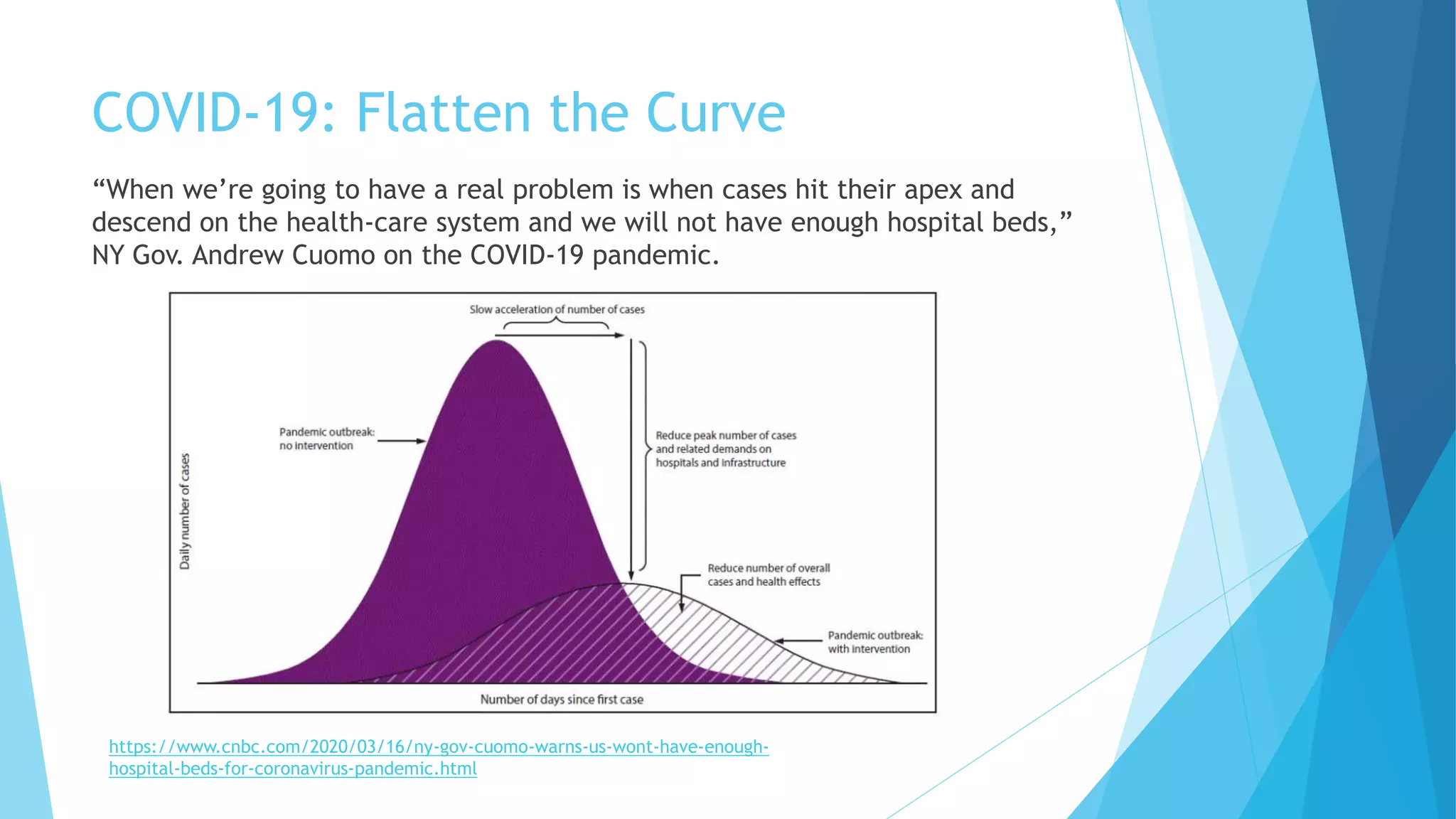
COVID-19: Flatten the Curve
“When we’re going to have a real problem is when cases hit their apex and
descend on the health-care system and we will not have enough hospital beds,”
NY Gov. Andrew Cuomo on the COVID-19 pandemic.
https://www.cnbc.com/2020/03/16/ny-gov-cuomo-warns-us-wont-have-enough-
hospital-beds-for-coronavirus-pandemic.html
COVID-19: Tuberculosis Control Measures
 In its history, the United States has experience dealing with widespread
epidemics. As we engage COVID-19, we can apply measures known to be
successful with the management of tuberculosis.
 Tuberculosis Control Measures - Administrative controls are the most
important TB infection control measure and encompass the screening of
patients and early isolation, diagnosis, and treatment.
 Proper isolation and treatment requires detection of the infection.
 Clinicians cannot diagnose a respiratory illness without a rapid, reliable test.
 With limited testing capabilities, administrative controls will require
stringent public health measures to limit transmission and manage known
contacts.
https://www.cdc.gov/mmwr/preview/mmwrhtml/rr5417a1.htm
COVID-19: Eastern versus Western Data
 As of March 21, 2020, the four Eastern countries with the highest number of cases
are China, South Korea, Malaysia, and Japan. Their death rates are 4.4%, 1.6%,
0.3%, and 3.5%, respectively.
 As of March 21, 2020, the four Western countries with the highest number of cases
are Italy, Spain, Germany, and the United States. Their death rates are 8.6%, 5.0%,
0.25%, and 1.3%, respectively.
 Of the five counties with the most COVID-19 contacts, three are Western
countries: Italy, Spain, and Germany.
 Amongst Western countries, there are too many variables (i.e., culture, politics,
geography, population) which make it difficult to forecast a likely death rate.
 The mean death rate between the above Western countries is 3.8%.
 If a minimum of 5% of the US population is infected by COVID-19 (16,522,589
contacts), the mean death rate at 3.8% would result in 627,858 deaths.
https://experience.arcgis.com/experience/685d0ace521648f8a5beeeee1b9125cd
COVID-19: What Could Western Countries
Learn From Asia
 The outbreak hit many countries in Asia several weeks earlier than the rest of the world -
and some have been praised for containing the number of infections. For example,
Singapore, Hong Kong and Taiwan all kept case numbers relatively low - despite their
proximity to mainland China.
 Lesson one: Take it seriously - and act quickly - Health experts agree on the same
measures for containing the outbreak - test widely, isolate those infected, and encourage
social distancing.
 Lesson two: Make tests extensive, and affordable - Cases in South Korea spiked initially.
However, it swiftly developed a test for the virus - and has now tested more than 290,000
people. It conducts about 10,000 tests daily for free.
 Lesson three: Trace and isolate - In Singapore, detectives have contact-traced more than
6,000 people - locating individuals with CCTV footage, testing them, and ordering them to
self-isolate until their results are clear. In Hong Kong, contact tracing goes back to two days
before someone develops symptoms.
 Lesson four: Early social distancing - Social distancing is considered one of the best ways
of containing an outbreak. Social distancing is affected by government decisions to ban
gatherings or close schools, but it also depends on people being willing to take part. That's
why public messaging - and individual attitudes - matter.
https://www.bbc.com/news/world-asia-51970379
COVID-19: Suffer the US Economy or
Healthcare System - Catch-22
Catch -22: a dilemma or difficult circumstance from which there is no escape
because of mutually conflicting or dependent conditions.
 The data on emerging cases (reflected on slides 26, 28, and 33), suggest the
United States was unprepared for a threat like COVID-19. In contrast,
countries like South Korea and Singapore deployed countermeasures based
on lessons they learned from previous epidemics, like SARS.
 The United States (FDA, CDC) was late to encourage commercial diagnostic
companies to develop a test for COVID-19 under Emergency Use Guidelines
(EUA).
 Thus, state and local public health organizations were forced to recommend
strict containment measures that would slow the rate of transmission (i.e.,
social distancing, closure of restaurants and bars, shelter in place
mandates).
https://www.aljazeera.com/programmes/upfront/2020/03/testing-times-south-korea-covid-19-strategy-
working-200320051718670.html
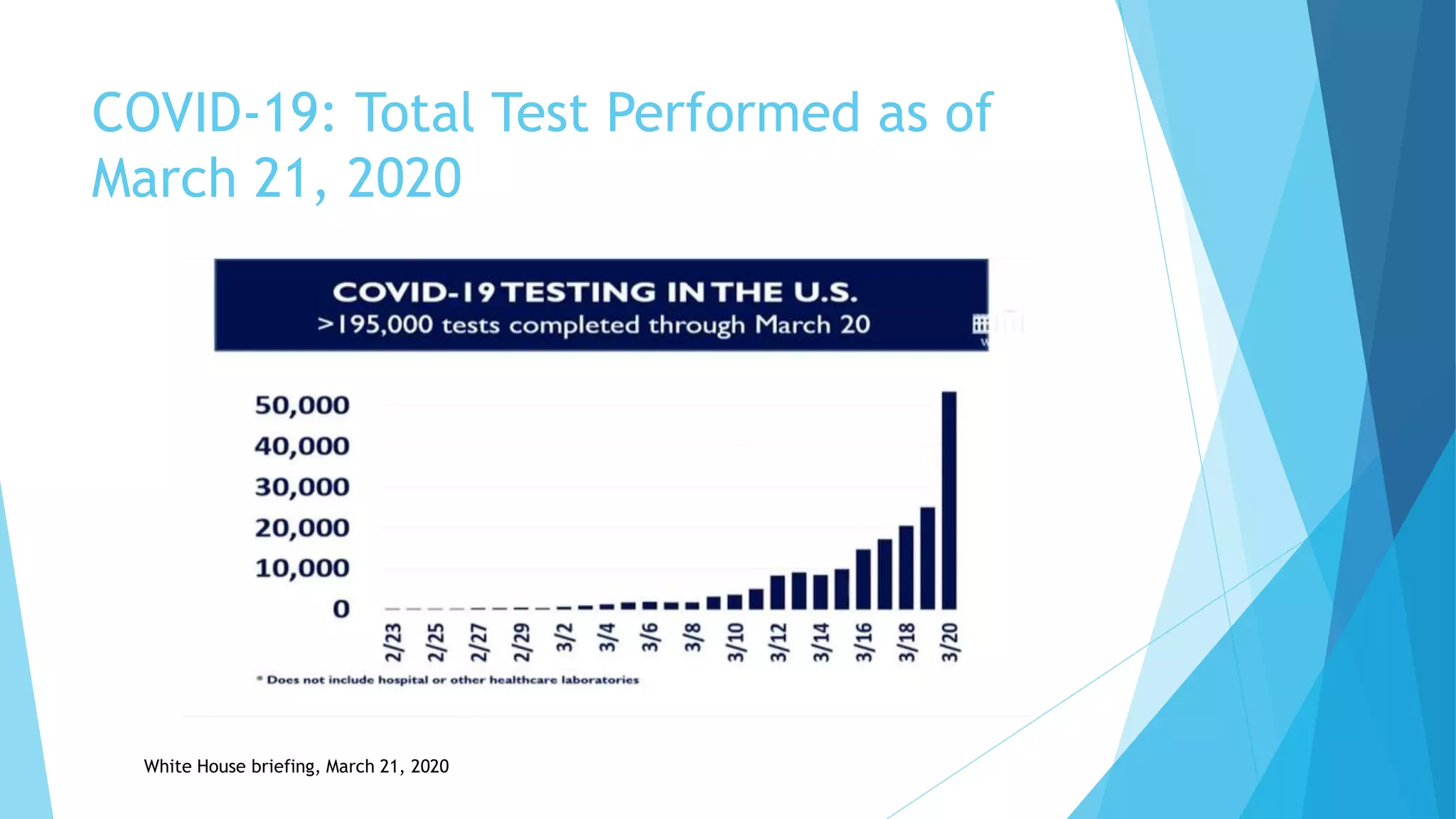
COVID-19: Total Test Performed as of
March 21, 2020
White House briefing, March 21, 2020
COVID-19: US Testing Sites as of March
21, 2020
White House briefing, March 21, 2020
Community hospital labs are not reflected in this graph because
they are not able to run a test at this time.
COVID-19: Going to War
"You go to war with the Army you have, not the Army you might want or wish to
have at a later time.” – Donald Rumsfeld, Secretary of Defense from January
2001 to December 2006 under George W. Bush
 The pandemic exposed many vulnerabilities in the United States healthcare
system as it pertains to medical supply lines and laboratory diagnostics.
 US healthcare workers are potentially in peril. Thousands were infected in
China and more than 3,000 have been infected in Italy. Protective equipment
is in short supply in the United States. As the healthcare system becomes
overwhelmed, risks to healthcare workers will increase.
 When a new strain of influenza virus with pandemic potential is identified and
isolated, it takes approximately five to six months for an approved vaccine to
become available. Thus, the American public should not expect a vaccine will
be available before this timeline.
https://www.cnn.com/2020/03/20/health/coronavirus-response-must-adapt-frieden-analysis/index.html
https://www.who.int/csr/disease/swineflu/notes/h1n1_vaccine_20090806/en/
COVID-19: Military Support & Challenges
MASH: The Mobile Army Surgical Hospital (MASH) refers to a United States Army
medical unit serving as a fully functional hospital in a combat area of operations.
 The pandemic exposed many vulnerabilities in the United States as it pertains to
medical supply lines, public health logistics, and laboratory diagnostics.
 With a projected volume of patients needing hospitalization, the US Federal
Government indicated the US Army may activate several combat hospitals to
support the burden on the civilian hospital system.
 One challenge with this option concerns the Army’s scope of practice. The mission
for a military hospital is to manage combat trauma, not infectious disease.
 The second challenge involves integration with a local or state hospital system. In
what capacity will a military hospital support a population of COVID-19 contacts
requiring hospitalization (i.e., isolation without ventilation, mild hospital care)?
https://www.capjournal.com/news/coronavirus/trump-says-army-to-build-mash-hospitals-for-covid-
/article_b61e5a94-68b0-11ea-969e-ebc1984a0448.html
COVID-19: Politics and the Media
 A major challenge for the United States concerns communication. With a lack
of knowledge and understanding of the various organizations tasked to
address a pandemic (i.e., public health, hospitals, reference labs, local
physicians), the media and government (State and Federal) struggle to convey
accurate details and explanations related to the crisis.
 Another challenge is the public’s perception to compare COVID-19 to seasonal
flu. In the U.S. alone, the flu has caused an estimated 36 million illnesses,
370,000 hospitalizations and 22,000 deaths this season, according to the
Centers for Disease Control and Prevention (CDC).
 Contrary to seasonal flu, COVID-19 is a novel threat upon a naïve host. Little
to no one is immune and there is no vaccine. It is highly contagious and a
higher percentage of infected contacts will require hospitalization or die
compared to seasonal flu. The numbers are coming.
https://www.livescience.com/new-coronavirus-compare-with-flu.html
Final Thoughts
Benjamin Jowett, a theologian and translator of Plato, said “Precautions are always
blamed. When successful they are said to be unnecessary.”
I do not know what will happen in the coming months. I suspect I’ll remain self-
quarantined (supporting social distancing) for at least three months, as a precaution
to exposure. I imagine the government will adopt tighter public health restrictions
throughout the country, which will be necessary to limit transmission. I predict our
healthcare system will cripple, but not collapse. I also believe many Americans will
die…and I will be a witness in my lifetime to seeing Americans buried in mass graves. I
hope I’m wrong.
The COVID-19 pandemic is an evolving crisis. As such, situations will change over time
for the better or worse. Experiences and stories from different parts of the globe may
not reflect what we see within our own communities. Thus, I acknowledge the
likelihood that some of my claims or projections may not be entirely accurate.
Nevertheless, my intent was to increase awareness related to the gravity of the
pandemic situation. My effort to create some clarity would not be wasted if this slide
deck convinces the reader to take the crisis seriously.
Protect yourself, your family, and your community. Stay home. And good luck.
Alex L. Sterling

Understanding A Pandemic: COVID-19

  • 1.
    Understanding a Pandemic: COVID-19 AlexL. Sterling An American social-distancing in San Luis Obispo County, CA
  • 2.
    Disclaimer I have aBachelors of Science in Biochemistry from California Polytechnic State University, San Luis Obispo. Additionally, I have the following work experience, all of which has some involvement in a pandemic crisis. 1. Hospital – Five years of community hospital experience working at two hospital labs while in college (Sierra Vista Regional, French Hospital). 2. Research – Four month internship working in development, such as vaccines (Genentech). 3. Military – Four years as an Army medic assigned to a combat field hospital (MASH unit). Deployed for 7 months to Haiti, Operation Uphold Democracy (Jan, 1995). 4. Reference Lab – Five years working for a regional reference lab that served physician offices and three years for a national reference lab that provided advance testing for hospitals and manufactured some reference products (Central Coast Pathology, Focus Diagnostics). 5. Public Health – Three years experience for a company that developed a blood test for latent tuberculosis, which allowed me to partner very closely with State and County public health labs and their outreach clinics (Cellestis). 6. Molecular Diagnostics & Commercial Manufacturing – 10 years experience in molecular diagnostics, of which 7 years selling respiratory infectious disease testing products to hospitals and labs throughout California (Focus Diagnostics, QIAGEN, BioFire). 7. Pandemics – Experience working for two diagnostic companies that received FDA “emergency use authorization” (EUA) to manufacture products during a pandemic (Focus Diagnostics – H1N1, BioFire, COVID-19).
  • 3.
    Author’s Purpose It isunfathomable to the majority of US citizens in this lifetime to digest the threat of a global pandemic. Free of war, famine, or economic collapse, the notion that a virus could bring a country to its knees is inconceivable. Yet, here we are….. I prepared this slide deck for family and friends who struggle to understand our current measures to address the COVID-19 pandemic (March 21, 2020). I’ve provided references for many of my comments, most of which are extracted entirely from the author or site references on each slide. The creation of this slide deck is an effort to understand the global pandemic crisis based on current data (Mar 21th, 2020) and share my forecast for the near future on mathematical projections and reasonable comparisons. Any claims or calculations in this presentation are my opinion.
  • 4.
    COVID-19: A NovelVirus  “Novel virus” refers to a virus not seen before.  It can be a virus that is isolated from its natural reservoir or isolated as the result of spread to an animal (i.e. bat, bird) or human host where the virus had not been identified before.  It can be an emergent virus, one that represents a new strain, but it can also be an extant virus, one not previously identified. https://en.wikipedia.org/
  • 5.
    Definition: Outbreak  Inepidemiology, an outbreak is a sudden increase in occurrences of a disease in a particular time and place.  It may affect a small, localized group or impact thousands across an entire continent.  Four linked cases of a rare infectious disease may be sufficient to constitute an outbreak. https://en.wikipedia.org/
  • 6.
    Definition: Epidemic  Anepidemic is the rapid spread of disease to a large number of people in a given population within a short period of time.  Generally, an epidemic occurs when immunity to either an established pathogen or newly emerging novel pathogen is suddenly reduced below that found in the endemic equilibrium and the transmission threshold is exceeded.  The declaration of an epidemic usually requires a good understanding of a baseline rate of incidence.  Epidemics for common diseases, such as influenza or cholera, are defined as reaching some increase in incidence above this baseline. https://en.wikipedia.org/
  • 7.
    Definition: Pandemic  Apandemic is a disease epidemic that has spread across a large region, for instance multiple continents, or worldwide.  Throughout history, there have been a number of pandemics of diseases, such as smallpox and tuberculosis. Flu pandemics generally exclude recurrences of seasonal flu.  One of the most devastating pandemics was the Black Death, which killed an estimated 75–200 million people in the 14th century.  Current pandemics include HIV/AIDS and the 2019 coronavirus disease. https://en.wikipedia.org/
  • 8.
    Definition: Seasonal Flu Flu season is an annually recurring time period characterized by the prevalence of outbreaks of influenza (flu).  The season occurs during the cold half of the year within each hemisphere.  Influenza activity can sometimes be predicted and even tracked geographically. For instance, the United States can predict flu prevalence for an upcoming winter based on Australia’s incidence from their previous winter season.  While the beginning of major flu activity in each season varies by location, in any specific location these minor “epidemics” usually take about three weeks to peak, and an additional three weeks to significantly diminish. https://en.wikipedia.org/
  • 9.
    Syndromic Trends: Incidenceof Common Respiratory Pathogens in US Excluding COVID-19 https://syndromictrends.com/ The graph shows how there are several respiratory pathogens circulating throughout the year. These pathogens are easily identified by hospital and reference labs.
  • 10.
    Syndromic Trends: Incidenceof Respiratory Pathogens in Eastern US Excluding COVID-19 https://syndromictrends.com/
  • 11.
    Syndromic Trends: Incidenceof Respiratory Pathogens in Western US Excluding COVID-19 https://syndromictrends.com/
  • 12.
    Patient Groups: ImmuneStatus  Healthy - The World Health Organization (WHO) defines health as “complete physical, mental, and social well-being - and not merely the absence of disease or infirmity.”  Young - When children reach the age of 7 or 8, most of their immune system development is complete.  Elderly - Elderly people succumb to respiratory illness more often than the young because they have weakened immune systems.  Underlying/ Preexisting Conditions - Conditions like diabetes, COPD, cancer, and sleep apnea, may be examples of pre-existing health conditions. They tend to be chronic or long-term.  Immunosuppressed – Defined as suppression of the immune system and its ability to fight infection. Immunosuppression may result from certain diseases, such as AIDS or lymphoma, or from certain drugs, such as some of those used to treat cancer.
  • 13.
    Coronavirus Facts: WhatAre They?  Coronaviruses are a group of related viruses that cause diseases in mammals and birds.  In humans, coronaviruses cause respiratory tract infections that can be mild, such as the common cold. (among other possible causes, predominantly rhinoviruses), and others that can be lethal, such as SARS, MERS, and COVID-19.  Four known coronaviruses (OC43, HKU1, NL63, 229E) cause a third of common colds.  In some cases, animal coronaviruses that infect animals have emerged to infect people and can spread between people. This is suspected to have occurred for the virus that causes COVID-19.  Two previously known coronaviruses can be lethal: Middle East Respiratory Syndrome (MERS) and Severe Acute Respiratory Syndrome (SARS). Both MERS and SARS are two examples of coronaviruses that originated from animals and then spread to people. https://www.theatlantic.com/science/archive/2020/03/biography-new-coronavirus/608338/ https://en.wikipedia.org/wiki/Coronavirus
  • 14.
    COVID-19: Origin &Structure  This virus was first detected in Wuhan City, Hubei Province, China. The first infections were linked to a live animal market, but the virus is now spreading globally from person-to-person.  SARS-CoV-2, the cause of the COVID-19 disease, is not the flu. It causes a disease with different symptoms. It also spreads and kills more readily.  The closest wild relative of SARS-CoV-2 is found in bats, which suggests its origin. It is not known whether it jumped indirectly to humans or through another species.  Most respiratory viruses tend to infect either the upper or lower airways. In general, an upper-respiratory infection spreads more easily, but tends to be milder, while a lower-respiratory infection is harder to transmit, but is more severe.  The structure of SARS-CoV-2 provides some clues about its success. In shape, it’s essentially a spiky ball. Those spikes recognize and stick to a protein called ACE2, which is found on the surface of our cells. This is the first step to an infection. https://www.theatlantic.com/science/archive/2020/03/biography-new-coronavirus/608338/
  • 15.
    COVID-19: Mode ofInfection  The second step is due to another important feature. Coronavirus spikes consist of two connected halves, and the spike activates when those halves are cleaved. Only then can the virus enter a host cell.  SARS-CoV-2 seems to infect both upper and lower airways, perhaps because it can exploit the ubiquitous human protein, Furin.  Furin is found in all body cells. Some human proteins are inactive when they are first synthesized, and must have sections removed in order to become active. Furin cleaves these sections and activates the proteins.  In the presence of a SARS-CoV-2 virus stuck to the surface of a cell, Furin cleaves the bridge that connects the two spike halves.  Scientists hypothesize these two steps might be why the virus can spread between people before symptoms show up. https://www.theatlantic.com/science/archive/2020/03/biography-new-coronavirus/608338/
  • 16.
    COVID-19: Pneumonia  Oncein the body, the viris likely attacks the ACE2-bearing cells that line our airways. Dying cells slough away, filling the airways with junk and carrying the virus deeper into the body, down toward the lungs.  As the infection progresses, the lungs clog with dead cells and fluid, making breathing more difficult.  The immune system fights back and attacks the virus, developing inflammation and fever in the patient. But in extreme cases, the immune system goes berserk, causing more damage to the host than the actual virus.  For example, blood vessels might open up to allow defensive white cells to reach the site of an infection. However, if the vessels become too leaky, the lungs fill with fluid, leading to pneumonia.  These damaging overreactions caused by the immune system are called cytokine storms. They were historically responsible for many deaths during the 1918 flu pandemic, H5N1 bird flu outbreaks, and the 2003 SARS outbreak. https://www.theatlantic.com/science/archive/2020/03/biography-new-coronavirus/608338/
  • 17.
    COVID-19: Cytokine Storms& Death  During a cytokine storm, the immune system attacks at will without hitting the right targets. When this happens, people become more susceptible to infectious bacteria.  The storms can also affect other organs besides the lungs, especially if people already have chronic diseases.  Elderly people are at risk of more severe infections possibly because their immune system can’t mount an effective initial defense, while children are less affected because their immune system is less likely to progress to a cytokine storm.  But other factors—a person’s genes, the vagaries of their immune system, the amount of virus they’re exposed to, the other microbes in their bodies—might play a role too. https://www.theatlantic.com/science/archive/2020/03/biography-new-coronavirus/608338/
  • 18.
    COVID-19: Is ItSeasonal?  Coronaviruses, like influenza, tend to be winter viruses. In cold and dry air, the thin layers of liquid that coat our lungs and airways become even thinner, and the beating hairs that rest in those layers struggle to evict viruses and other foreign particles.  Dry air also seems to dampen some aspects of the immune response to those trapped viruses. In the heat and humidity of summer, both trends reverse, and respiratory viruses struggle to get a foothold.  Unfortunately, warm climates might not matter for the COVID-19 pandemic. At the moment, the virus is tearing through a world of immunologically naïve people, and that vulnerability is likely to supersede any seasonal variations. The new virus is transmitting readily in countries like Singapore (which is in the tropics) and Australia (which is still in summer). https://www.theatlantic.com/science/archive/2020/03/biography-new-coronavirus/608338/
  • 19.
    COVID-19: How IsThe Virus Spread?  The virus that causes COVID-19 is spreading from person-to-person. Someone who is actively sick with COVID-19 can spread the illness to others.  Someone released from COVID-19 quarantine is not considered a risk for spreading the virus to others because they have not developed the illness during the incubation period.  Coronaviruses are generally thought to be spread from person-to-person through respiratory droplets. Currently there is no evidence to support transmission of COVID-19 associated with food.  It may be possible that a person can get COVID-19 by touching a surface or object that has the virus on it and then touching their own mouth, nose, or possibly their eyes, but this is not thought to be the primary way the virus spreads.  Because of poor survivability of most coronaviruses on surfaces, there is likely very low risk of spread from food products or packaging that are shipped over a period of days or weeks at ambient, refrigerated, or frozen temperatures. https://www.cdc.gov/coronavirus/2019-ncov/index.html
  • 20.
    COVID-19: Fomites Research Fomites are objects (such as a dish or a doorknob) that may be contaminated with infectious organisms and serve in their transmission.  Research about COVID-19 transmission via surfaces has been conflicting, with reports from Hong Kong and Singapore showing varied results.  Vincent Munster, PhD, of the National Institute of Allergy and Infectious Diseases in Hamilton, Montana, writes in a New England Journal of Medicine letter that SARS-C0V-2 can remain viable for hours while airborne and for days on surfaces.  Munster’s research suggested SARS-C0V-2 was viable in aerosols for 3 hours and remained detectable on plastic and stainless steel surfaces for up to 72 hours.  The authors concluded aerosol and fomite transmission of SARS-C0V-2 was "plausible" and may help inform COVID-19 mitigation efforts. https://www.merriam-webster.com/dictionary/fomite https://www.medpagetoday.com/infectiousdisease/covid19/85466
  • 21.
    COVID-19: Quarantine Recommendations CDC recommends that infected patients be isolated either in the hospital or at home (depending on how sick they are) until they are better and no longer pose a risk of infecting others.  Quarantine is usually established for the incubation period of the communicable disease, which is the span of time during which people have developed illness after exposure.  For COVID-19, the period of quarantine is 14 days from the last date of exposure, because 14 days is the longest incubation period seen for similar coronaviruses.  Anyone released from COVID-19 quarantine is not considered a risk for spreading the virus to others because they have not developed illness during the incubation period. https://www.cdc.gov/coronavirus/2019-ncov/index.html
  • 22.
    COVID-19: Estimating aContagion’s Spread  In epidemiology, the basic reproduction number (denoted R0, pronounced R nought) of an infection can be thought of as the expected number of cases directly generated by one case in a population where all individuals are susceptible to infection.  More importantly, a disease’s R0 value only applies when everyone in a population is completely vulnerable to the disease. This means:  no one has been vaccinated  no one has had the disease before  there’s no way to control the spread of the disease https://en.wikipedia.org/
  • 23.
    COVID-19: What theR0 Value Means Three possibilities exist for the potential spread or decline of a disease, depending on its R0 value:  If R0 is less than 1, each existing infection causes less than one new infection. In this case, the disease will decline and eventually die out.  If R0 equals 1, each existing infection causes one new infection. The disease will stay alive and stable, but there won’t be an outbreak or an epidemic.  If R0 is more than 1, each existing infection causes more than one new infection. The disease will spread between people, and there may be an outbreak or epidemic.
  • 24.
  • 25.
    COVID-19: Comparing Contagions SARS-CoV-2appears to have an R0 value between 2 – 4. https://en.wikipedia.org/
  • 26.
    COVID-19: Global &US Data  Global Statistics (March 21, 2020)  184 countries  267,013 contacts  11,201 deaths  Estimate 4.2% deaths/contacts  United State Statistics (March 21, 2020)  50 states  15,219 contacts  201 deaths  Estimate 1.3% deaths/contacts https://experience.arcgis.com/experience/685d0ace521648f8a5beeeee1b9125cd
  • 27.
    COVID-19: US Casesby Day of Report https://experience.arcgis.com/experience/685d0ace521648f8a5beeeee1b9125cd
  • 28.
    COVID-19: Global DeathRate Hit List The current death rate for the 10 countries with the most cases (March 21, 2020). 1. China: 3,261 deaths/ 81,416 contacts = 4.4% 2. Italy: 4,032 deaths/ 47,021 contacts = 8.6% 3. Spain: 1,002 deaths/ 19,980 contacts = 5.0% 4. Iran: 1,433 deaths/ 19,644 contacts = 7.3% 5. Germany: 45 deaths/ 18,323 contacts = 0.25% 6. United States: 201 deaths/ 15,218 contacts/ = 1.3% 7. France: 450 deaths/ 12,475 contacts = 3.6% 8. South Korea: 102 deaths/ 8,799 contacts = 1.6% 9. Switzerland: 43 deaths/ 4,840 contacts = 0.9% 10. United Kingdom: 177/ 3,983 contacts deaths = 4.4% Current death rates are estimates based on tested/confirmed contacts. The true death rates are actually lower, since deaths associated to COVID-19 are confirmed and total contacts are dependent on diagnostic test confirmation. In other words, if the numerator (deaths) is true and the denominator increases (assuming more contacts exist), the actual percent of deaths to contacts decreases. https://experience.arcgis.com/experience/685d0ace521648f8a5beeeee1b9125cd
  • 29.
    COVID-19: Trajectory Since March18th, the number of US confirmed infections has increased by 5,959 cases. The graph suggests US cases will follow a trend similar to Italy, assuming public health measures are ignored or adopted too late.
  • 30.
    COVID-19: Assessing theData What do we know?  Without rapid, accessible testing, we don’t know how many true contacts exist in the US.  The number of US deaths relative to cases doesn’t inform the public of the number of potential hospitalizations.  The small number of patients who died isn’t large enough to discern which patient groups are most at risk.
  • 31.
    COVID-19: Impact onUS Healthcare  Consider the burden COVID-19 poses to the US Healthcare System  Diagnostic Detection – currently, hospital labs do not have a rapid test available  Isolation – infection control measures are challenged by limited space and staff  Intensive Care – staff required to care for pneumonia patients  Personal Protective Equipment (PPE) – supplies such as gowns, gloves, and masks are limited in supply  Ventilators – estimates suggest the US has 160,000 available  CDC reports as of March 16, a total of 4,226 COVID-19 cases had been reported in the United States. Among 508 (12%) patients known to have been hospitalized and 121 patients (2.8) had been admitted to an ICU. https://www.cdc.gov/mmwr/volumes/69/wr/mm6912e2.htm?s_cid=mm6912e2_w https://www.latimes.com/politics/story/2020-03-20/disaster-foretold-shortages-ventilators-medical-supplies-warned-about
  • 32.
    COVID-19: Forecast onUS Healthcare  The current population of the United States of America is 330,451,770.  Centers for Disease Control and Prevention (CDC) estimates 30.3 million Americans – 9.4 percent of the U.S. population –have diabetes.  CDC estimates more than 25 million Americans have asthma.  On Thursday, March 19th, 2020, Gov. Gavin Newson declared a mandate for the state of California to “shelter in place.” Newson claimed infection rates are doubling every four days in some parts of the state and issued the dire prediction that 56% of California's population could contract the virus over the next eight weeks. The estimated 2018 population of California was 39.56 million.  The number of US individuals aged 62 and over is estimated to be 41,256,029.  If we assume COVID-19 infects 56% of California’s population (22,153,600), and 5% of those infected require hospitalization, the burden on US hospitals will be 1.1M admissions.  If we assume 2% of hospitalized COVID-19 patients will require critical care, the burden on US hospitals will be 22,153 admissions. https://abc7news.com/6029302/
  • 33.
    COVID-19: US HospitalLandscape  From the American Hospital Association –  Total Number of All U.S. Hospitals 6,146  Number of U.S. Community Hospitals 5,198  Total Staffed Beds in All U.S. Hospitals 924,107  Staffed Beds in Community Hospitals 792,417  Intensive Care Beds in Community Hospitals 7,323  From the previous slide, 1.1 million hospital admissions exceeds the number of all US hospital staffed beds. Additionally, the number of COVID-19 patients that may require critical care will be 3 times more than available beds/ staff.  The consequence of these limits will compel health leaders to triage patients based on local medical priorities. Simply stated, a person 45 years old may take priority over a 60 year old patient when only one ventilator is available. https://www.aha.org/statistics/fast-facts-us-hospitals
  • 34.
    COVID-19: Flatten theCurve “When we’re going to have a real problem is when cases hit their apex and descend on the health-care system and we will not have enough hospital beds,” NY Gov. Andrew Cuomo on the COVID-19 pandemic. https://www.cnbc.com/2020/03/16/ny-gov-cuomo-warns-us-wont-have-enough- hospital-beds-for-coronavirus-pandemic.html
  • 35.
    COVID-19: Tuberculosis ControlMeasures  In its history, the United States has experience dealing with widespread epidemics. As we engage COVID-19, we can apply measures known to be successful with the management of tuberculosis.  Tuberculosis Control Measures - Administrative controls are the most important TB infection control measure and encompass the screening of patients and early isolation, diagnosis, and treatment.  Proper isolation and treatment requires detection of the infection.  Clinicians cannot diagnose a respiratory illness without a rapid, reliable test.  With limited testing capabilities, administrative controls will require stringent public health measures to limit transmission and manage known contacts. https://www.cdc.gov/mmwr/preview/mmwrhtml/rr5417a1.htm
  • 36.
    COVID-19: Eastern versusWestern Data  As of March 21, 2020, the four Eastern countries with the highest number of cases are China, South Korea, Malaysia, and Japan. Their death rates are 4.4%, 1.6%, 0.3%, and 3.5%, respectively.  As of March 21, 2020, the four Western countries with the highest number of cases are Italy, Spain, Germany, and the United States. Their death rates are 8.6%, 5.0%, 0.25%, and 1.3%, respectively.  Of the five counties with the most COVID-19 contacts, three are Western countries: Italy, Spain, and Germany.  Amongst Western countries, there are too many variables (i.e., culture, politics, geography, population) which make it difficult to forecast a likely death rate.  The mean death rate between the above Western countries is 3.8%.  If a minimum of 5% of the US population is infected by COVID-19 (16,522,589 contacts), the mean death rate at 3.8% would result in 627,858 deaths. https://experience.arcgis.com/experience/685d0ace521648f8a5beeeee1b9125cd
  • 37.
    COVID-19: What CouldWestern Countries Learn From Asia  The outbreak hit many countries in Asia several weeks earlier than the rest of the world - and some have been praised for containing the number of infections. For example, Singapore, Hong Kong and Taiwan all kept case numbers relatively low - despite their proximity to mainland China.  Lesson one: Take it seriously - and act quickly - Health experts agree on the same measures for containing the outbreak - test widely, isolate those infected, and encourage social distancing.  Lesson two: Make tests extensive, and affordable - Cases in South Korea spiked initially. However, it swiftly developed a test for the virus - and has now tested more than 290,000 people. It conducts about 10,000 tests daily for free.  Lesson three: Trace and isolate - In Singapore, detectives have contact-traced more than 6,000 people - locating individuals with CCTV footage, testing them, and ordering them to self-isolate until their results are clear. In Hong Kong, contact tracing goes back to two days before someone develops symptoms.  Lesson four: Early social distancing - Social distancing is considered one of the best ways of containing an outbreak. Social distancing is affected by government decisions to ban gatherings or close schools, but it also depends on people being willing to take part. That's why public messaging - and individual attitudes - matter. https://www.bbc.com/news/world-asia-51970379
  • 38.
    COVID-19: Suffer theUS Economy or Healthcare System - Catch-22 Catch -22: a dilemma or difficult circumstance from which there is no escape because of mutually conflicting or dependent conditions.  The data on emerging cases (reflected on slides 26, 28, and 33), suggest the United States was unprepared for a threat like COVID-19. In contrast, countries like South Korea and Singapore deployed countermeasures based on lessons they learned from previous epidemics, like SARS.  The United States (FDA, CDC) was late to encourage commercial diagnostic companies to develop a test for COVID-19 under Emergency Use Guidelines (EUA).  Thus, state and local public health organizations were forced to recommend strict containment measures that would slow the rate of transmission (i.e., social distancing, closure of restaurants and bars, shelter in place mandates). https://www.aljazeera.com/programmes/upfront/2020/03/testing-times-south-korea-covid-19-strategy- working-200320051718670.html
  • 39.
    COVID-19: Total TestPerformed as of March 21, 2020 White House briefing, March 21, 2020
  • 40.
    COVID-19: US TestingSites as of March 21, 2020 White House briefing, March 21, 2020 Community hospital labs are not reflected in this graph because they are not able to run a test at this time.
  • 41.
    COVID-19: Going toWar "You go to war with the Army you have, not the Army you might want or wish to have at a later time.” – Donald Rumsfeld, Secretary of Defense from January 2001 to December 2006 under George W. Bush  The pandemic exposed many vulnerabilities in the United States healthcare system as it pertains to medical supply lines and laboratory diagnostics.  US healthcare workers are potentially in peril. Thousands were infected in China and more than 3,000 have been infected in Italy. Protective equipment is in short supply in the United States. As the healthcare system becomes overwhelmed, risks to healthcare workers will increase.  When a new strain of influenza virus with pandemic potential is identified and isolated, it takes approximately five to six months for an approved vaccine to become available. Thus, the American public should not expect a vaccine will be available before this timeline. https://www.cnn.com/2020/03/20/health/coronavirus-response-must-adapt-frieden-analysis/index.html https://www.who.int/csr/disease/swineflu/notes/h1n1_vaccine_20090806/en/
  • 42.
    COVID-19: Military Support& Challenges MASH: The Mobile Army Surgical Hospital (MASH) refers to a United States Army medical unit serving as a fully functional hospital in a combat area of operations.  The pandemic exposed many vulnerabilities in the United States as it pertains to medical supply lines, public health logistics, and laboratory diagnostics.  With a projected volume of patients needing hospitalization, the US Federal Government indicated the US Army may activate several combat hospitals to support the burden on the civilian hospital system.  One challenge with this option concerns the Army’s scope of practice. The mission for a military hospital is to manage combat trauma, not infectious disease.  The second challenge involves integration with a local or state hospital system. In what capacity will a military hospital support a population of COVID-19 contacts requiring hospitalization (i.e., isolation without ventilation, mild hospital care)? https://www.capjournal.com/news/coronavirus/trump-says-army-to-build-mash-hospitals-for-covid- /article_b61e5a94-68b0-11ea-969e-ebc1984a0448.html
  • 43.
    COVID-19: Politics andthe Media  A major challenge for the United States concerns communication. With a lack of knowledge and understanding of the various organizations tasked to address a pandemic (i.e., public health, hospitals, reference labs, local physicians), the media and government (State and Federal) struggle to convey accurate details and explanations related to the crisis.  Another challenge is the public’s perception to compare COVID-19 to seasonal flu. In the U.S. alone, the flu has caused an estimated 36 million illnesses, 370,000 hospitalizations and 22,000 deaths this season, according to the Centers for Disease Control and Prevention (CDC).  Contrary to seasonal flu, COVID-19 is a novel threat upon a naïve host. Little to no one is immune and there is no vaccine. It is highly contagious and a higher percentage of infected contacts will require hospitalization or die compared to seasonal flu. The numbers are coming. https://www.livescience.com/new-coronavirus-compare-with-flu.html
  • 44.
    Final Thoughts Benjamin Jowett,a theologian and translator of Plato, said “Precautions are always blamed. When successful they are said to be unnecessary.” I do not know what will happen in the coming months. I suspect I’ll remain self- quarantined (supporting social distancing) for at least three months, as a precaution to exposure. I imagine the government will adopt tighter public health restrictions throughout the country, which will be necessary to limit transmission. I predict our healthcare system will cripple, but not collapse. I also believe many Americans will die…and I will be a witness in my lifetime to seeing Americans buried in mass graves. I hope I’m wrong. The COVID-19 pandemic is an evolving crisis. As such, situations will change over time for the better or worse. Experiences and stories from different parts of the globe may not reflect what we see within our own communities. Thus, I acknowledge the likelihood that some of my claims or projections may not be entirely accurate. Nevertheless, my intent was to increase awareness related to the gravity of the pandemic situation. My effort to create some clarity would not be wasted if this slide deck convinces the reader to take the crisis seriously. Protect yourself, your family, and your community. Stay home. And good luck. Alex L. Sterling