Download as PDF, PPTX
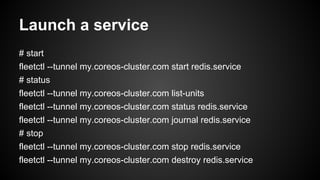
![Unit file
[Unit]
Description=A Redis Server
[Service]
TimeoutStartSec=0
EnvironmentFile=/etc/environment
Environment="IMAGE=teemow/redis"
ExecStartPre=/usr/bin/docker pull $IMAGE
ExecStart=/bin/bash -c "exec /usr/bin/docker run --rm -p
$COREOS_PRIVATE_IPV4::6379 --name %n $IMAGE"
ExecStop=-/usr/bin/docker kill %n](https://image.slidesharecdn.com/coreosintro-140526033631-phpapp01/85/CoreOS-intro-9-320.jpg)
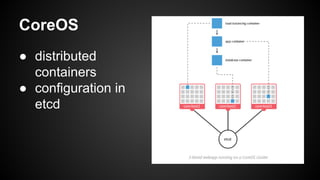
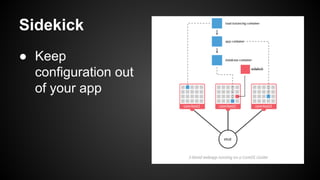

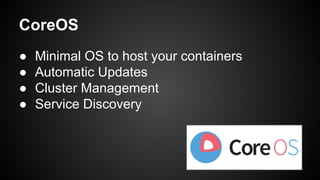
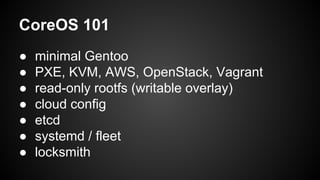
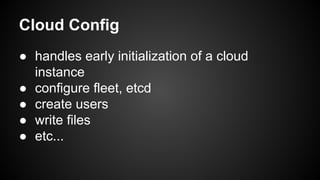
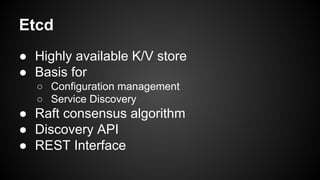
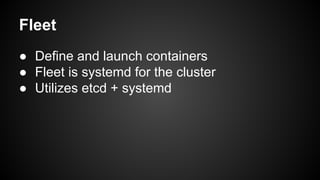
CoreOS is a minimal OS designed to host containers. It uses automatic updates and cluster management via tools like Fleet and etcd. CoreOS clusters are configured in etcd, a highly available key-value store. Services are defined and launched across the cluster using Fleet and systemd unit files. Cloud config handles early initialization and configuration of instances.


![[2C4]Clustered computing with CoreOS, fleet and etcd](https://cdn.slidesharecdn.com/ss_thumbnails/2c4clusteredcomputingwithcoreosfleetandetcd-140929235711-phpapp01-thumbnail.jpg?width=640&height=640&fit=bounds)


