Copyright, Fair Use &
Creative Commons
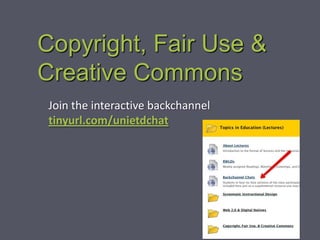
 Join the interactive backchannel
 tinyurl.com/unietdchat
Questions
 Do I need permission to use this?
 If it’s on the web, can anyone use it?
 Should I cite the source?
 If there’s no © symbol, can I copy it?
 I’m in education, so isn’t everything I do
  considered fair use?

         See “Brief Notes: Copyright for Students” at http://tinyurl.com/briefnotes
Four Concepts Guide
Decisions
Copyright Law                    Public Domain


flickr.com/photos/kimberlyfaye   flickr.com/photos/library_of_congress


Fair Use                         Creative Commons

                                 www.creativecommons.org


    stljfl.org
Why Should You Care?
 Ethical Decision
   Modeling the ethical use of media &
    technology for students
 It’s the Law
   Criminal penalties up to 1 yr in jail
   Civil liability for damages & profits
    • judge’s discretion up to $50,000
   Personal liability–your job
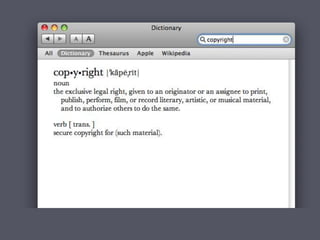
Copyright
Exclusive legal right to decide how, when, and
where a work can be reproduced.

  Covers text, music, pictures, video, computer code,
  sculpture, architecture, & other intellectual works
    • Established as soon as a work becomes tangible
    • Does not cover facts or ideas, but does protect the “unique
      expression” of them


           Files On Record: http://www.loc.gov/teachers/copyrightmystery
Copyright Protection
 Does not require registration
 Does not require the display of © symbol
 Was not intended to stifle creativity
 Does not exempt teachers or students
   “Fair Use” applies to limited portions & circumstances
Ownership
as defined by the 1976 Copyright Act:
 Author’s life + 70 years
 Work For Hire:
   120 years from creation
   95 years from publication

 Works published prior to 1978
   28 years; can be renewed up to 95 years


              Copyright Basics: http://www.copyright.gov/circs/circ1.pdf
Public Domain
 Can be used freely & without permission
   Works for which copyright ownership has expired
   Facts or ideas (but not their unique expression)
   Works by US government employees as part of their job
    (includes .gov sites such as nasa.gov or noaa.gov)
The Commons on Flickr


   www.flickr.com/commons
Fair Use
    stljfl.org


     Concepts & guidelines
as defined by 1976 Copyright Act
“Fair Use” of Media
A legal concept that applies to…
 Personal use (like iTunes & its DRM)
 Teaching & learning
 News reporting
 Parody
 Critical comment
   www.copyright.gov
Purpose of Fair Use Guidelines
 Balance the rights of individuals
   Recognize different needs

 Define legitimate use without permission
   Not simply to avoid purchasing

 Define acceptable terms of use
 Specify portion limitations
Updated: Teach Act of 2002
 1998: congress asked to facilitate digital
  technologies in distance education
 2002: law allows fair use over a secure network
  such as ICN or Learning Management Systems
 Distribution via open networks still prohibited


  ICN images from iptv.org
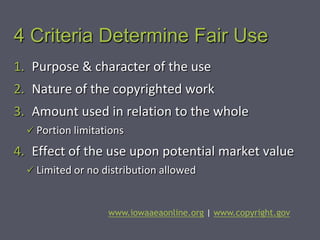
4 Criteria Determine Fair Use
1. Purpose & character of the use
2. Nature of the copyrighted work
3. Amount used in relation to the whole
   Portion limitations

4. Effect of the use upon potential market value
   Limited or no distribution allowed


                   www.iowaaeaonline.org | www.copyright.gov
Fair Use applies when…
...using without permission,
…portions,
...of lawfully acquired works,
...in educational multimedia projects,
...created by teachers or students,
...as part of systematic instruction,
...within nonprofit educational institution,
…with limited or no distribution.
Portion Limitations
 The amount of a copyrighted
  work that can be used in a project
 Limits apply cumulatively to each project
  for the academic term.
 Recognizes that K–6 students might not be able
  to adhere rigidly when working independently.


      “Brief Notes: Copyright for Students” at http://tinyurl.com/briefnotes
BriefNotes: Copyright for
Students
http://tinyurl.com/briefnotes
Examples
of Portion Limitations
Fair Use Guidelines for Teachers & Students


Refer to your own copy of
BriefNotes: Copyright for Students
Text Material
 Up to 10% or 1000 words (whichever less)
 10% or 2 pages from short children’s book
 Poems
   Up to 250 words (entire poem if <250 words)
   No more than 3 poems by one poet or 5 poems from
    single anthology.
Photos & Illustrations
 No more than 5 images by one artist
 No more than 10% or 15 images (whichever less)
  from one collection
 Can alter if it supports instructional outcome
 Must cite the source where
  image is used – on the same page
  Linktribute!

                       Image used with permission from pics4learning.com
Audio & Video
Audio or music video
 10% or 30 seconds (whichever less)


Video
 10% or 3 minutes (whichever less)
Videotaping
 Only open broadcast or basic cable television
   No premium cable channels

 10/45 day rule
 Transmission only via secure network
Summary Points: Fair Use
 Open distribution generally prohibited (www)
 Using portion of work in limited circumstances
 Projects may be reused for instructional
  purposes for 2 years after initial use
   Students & teachers can retain longer for portfolios

 Assume something is copyright-protected
 Look for terms of use statement
Creative
                 Commons


Copyright                                Public
                                         Domain


               creativecommons.org
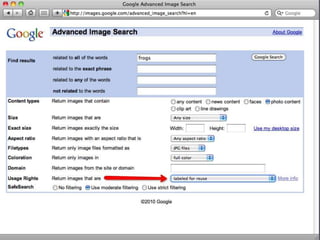
            search.creativecommons.org
Creative Commons
Licenses grant permission to:
 copy the work
 make derivative works
 distribute the work
 profit from the work


                                www.creativecommons.org/about
Creators choose conditions


               www.creativecommons.org/about/licenses
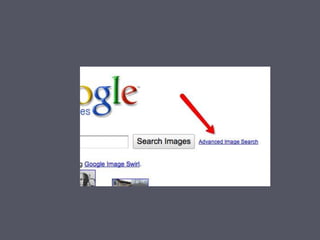
Flickr.com – Compare the
licenses
www.iowaaeaonline.org
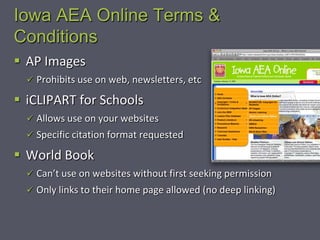
Iowa AEA Online Terms &
Conditions
 AP Images
   Prohibits use on web, newsletters, etc

 iCLIPART for Schools
   Allows use on your websites
   Specific citation format requested

 World Book
   Can’t use on websites without first seeking permission
   Only links to their home page allowed (no deep linking)
You can always request to do
more
 Obtain written consent from copyright owner
 May not be a time-consuming process (e-mail)
 Be specific, don’t request blanket permission
   Templates:
   http://tinyurl.com/2dznwj
   http://tinyurl.com/24okpx
Summary
 Copyright Law
   Protection assumed once tangible form exists

 Fair Use Guidelines for Teachers & Students
   Portions of works may be used in limited circumstances
   Does not permit distribution on an open network

 Creative Commons
   Some rights reserved, consult the individual license

 Iowa AEA Online (and other sources)
   Consult individual terms & conditions

Copyright

  • 1.
    Copyright, Fair Use& Creative Commons Join the interactive backchannel tinyurl.com/unietdchat
  • 3.
    Questions  Do Ineed permission to use this?  If it’s on the web, can anyone use it?  Should I cite the source?  If there’s no © symbol, can I copy it?  I’m in education, so isn’t everything I do considered fair use? See “Brief Notes: Copyright for Students” at http://tinyurl.com/briefnotes
  • 4.
    Four Concepts Guide Decisions CopyrightLaw Public Domain flickr.com/photos/kimberlyfaye flickr.com/photos/library_of_congress Fair Use Creative Commons www.creativecommons.org stljfl.org
  • 5.
    Why Should YouCare?  Ethical Decision  Modeling the ethical use of media & technology for students  It’s the Law  Criminal penalties up to 1 yr in jail  Civil liability for damages & profits • judge’s discretion up to $50,000  Personal liability–your job
  • 7.
    Copyright Exclusive legal rightto decide how, when, and where a work can be reproduced. Covers text, music, pictures, video, computer code, sculpture, architecture, & other intellectual works • Established as soon as a work becomes tangible • Does not cover facts or ideas, but does protect the “unique expression” of them Files On Record: http://www.loc.gov/teachers/copyrightmystery
  • 8.
    Copyright Protection  Doesnot require registration  Does not require the display of © symbol  Was not intended to stifle creativity  Does not exempt teachers or students  “Fair Use” applies to limited portions & circumstances
  • 9.
    Ownership as defined bythe 1976 Copyright Act:  Author’s life + 70 years  Work For Hire:  120 years from creation  95 years from publication  Works published prior to 1978  28 years; can be renewed up to 95 years Copyright Basics: http://www.copyright.gov/circs/circ1.pdf
  • 10.
    Public Domain  Canbe used freely & without permission  Works for which copyright ownership has expired  Facts or ideas (but not their unique expression)  Works by US government employees as part of their job (includes .gov sites such as nasa.gov or noaa.gov)
  • 11.
    The Commons onFlickr www.flickr.com/commons
  • 12.
    Fair Use stljfl.org Concepts & guidelines as defined by 1976 Copyright Act
  • 13.
    “Fair Use” ofMedia A legal concept that applies to…  Personal use (like iTunes & its DRM)  Teaching & learning  News reporting  Parody  Critical comment www.copyright.gov
  • 14.
    Purpose of FairUse Guidelines  Balance the rights of individuals  Recognize different needs  Define legitimate use without permission  Not simply to avoid purchasing  Define acceptable terms of use  Specify portion limitations
  • 15.
    Updated: Teach Actof 2002  1998: congress asked to facilitate digital technologies in distance education  2002: law allows fair use over a secure network such as ICN or Learning Management Systems  Distribution via open networks still prohibited ICN images from iptv.org
  • 16.
    4 Criteria DetermineFair Use 1. Purpose & character of the use 2. Nature of the copyrighted work 3. Amount used in relation to the whole  Portion limitations 4. Effect of the use upon potential market value  Limited or no distribution allowed www.iowaaeaonline.org | www.copyright.gov
  • 17.
    Fair Use applieswhen… ...using without permission, …portions, ...of lawfully acquired works, ...in educational multimedia projects, ...created by teachers or students, ...as part of systematic instruction, ...within nonprofit educational institution, …with limited or no distribution.
  • 18.
    Portion Limitations  Theamount of a copyrighted work that can be used in a project  Limits apply cumulatively to each project for the academic term.  Recognizes that K–6 students might not be able to adhere rigidly when working independently. “Brief Notes: Copyright for Students” at http://tinyurl.com/briefnotes
  • 19.
  • 20.
    Examples of Portion Limitations FairUse Guidelines for Teachers & Students Refer to your own copy of BriefNotes: Copyright for Students
  • 21.
    Text Material  Upto 10% or 1000 words (whichever less)  10% or 2 pages from short children’s book  Poems  Up to 250 words (entire poem if <250 words)  No more than 3 poems by one poet or 5 poems from single anthology.
  • 22.
    Photos & Illustrations No more than 5 images by one artist  No more than 10% or 15 images (whichever less) from one collection  Can alter if it supports instructional outcome  Must cite the source where image is used – on the same page Linktribute! Image used with permission from pics4learning.com
  • 23.
    Audio & Video Audioor music video  10% or 30 seconds (whichever less) Video  10% or 3 minutes (whichever less)
  • 24.
    Videotaping  Only openbroadcast or basic cable television  No premium cable channels  10/45 day rule  Transmission only via secure network
  • 25.
    Summary Points: FairUse  Open distribution generally prohibited (www)  Using portion of work in limited circumstances  Projects may be reused for instructional purposes for 2 years after initial use  Students & teachers can retain longer for portfolios  Assume something is copyright-protected  Look for terms of use statement
  • 26.
    Creative Commons Copyright Public Domain creativecommons.org search.creativecommons.org
  • 27.
    Creative Commons Licenses grantpermission to:  copy the work  make derivative works  distribute the work  profit from the work www.creativecommons.org/about
  • 28.
    Creators choose conditions www.creativecommons.org/about/licenses
  • 29.
  • 33.
  • 34.
  • 35.
    Iowa AEA OnlineTerms & Conditions  AP Images  Prohibits use on web, newsletters, etc  iCLIPART for Schools  Allows use on your websites  Specific citation format requested  World Book  Can’t use on websites without first seeking permission  Only links to their home page allowed (no deep linking)
  • 36.
    You can alwaysrequest to do more  Obtain written consent from copyright owner  May not be a time-consuming process (e-mail)  Be specific, don’t request blanket permission  Templates: http://tinyurl.com/2dznwj http://tinyurl.com/24okpx
  • 37.
    Summary  Copyright Law  Protection assumed once tangible form exists  Fair Use Guidelines for Teachers & Students  Portions of works may be used in limited circumstances  Does not permit distribution on an open network  Creative Commons  Some rights reserved, consult the individual license  Iowa AEA Online (and other sources)  Consult individual terms & conditions

Editor's Notes

  • #36 Follow link, show how to access individual terms &amp; conditions.