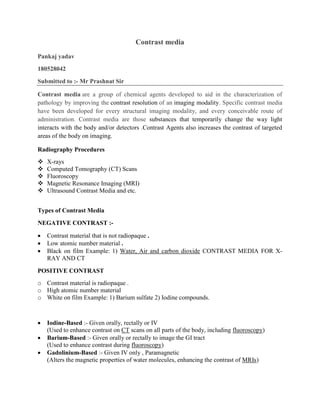
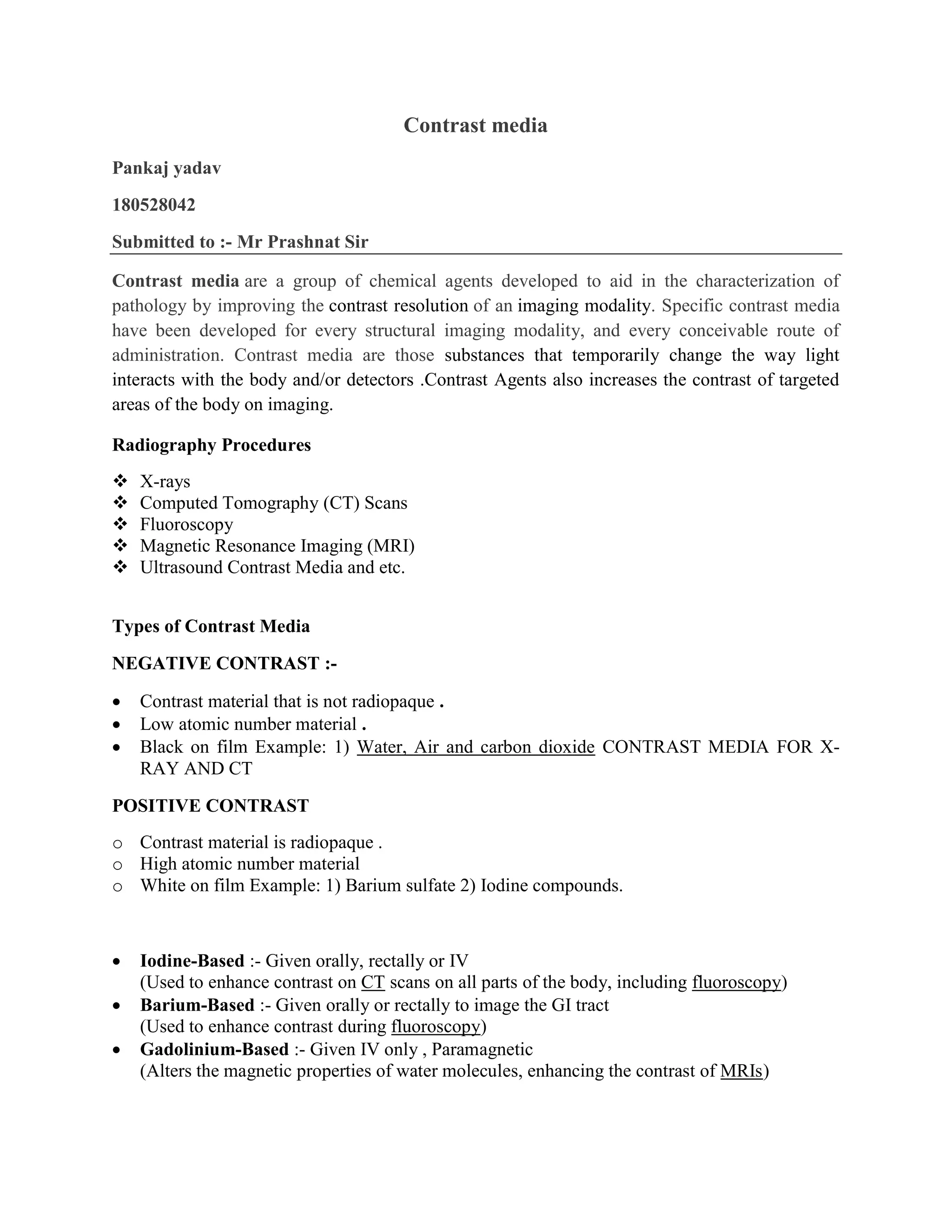
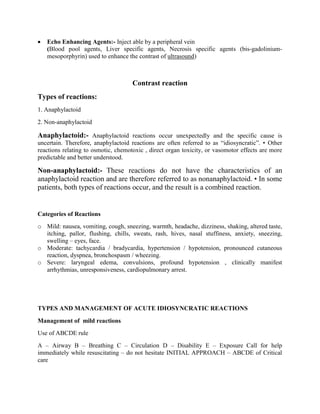
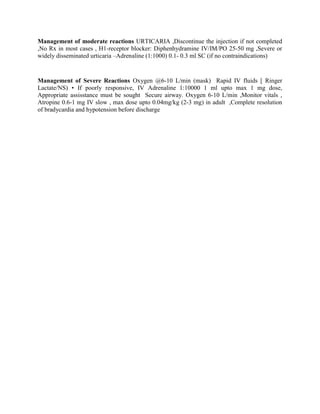
Contrast media are chemical agents used to improve the visualization of structures in medical imaging. They work by temporarily changing how light or other detectors interact with the body. Specific contrast media have been developed for each imaging modality and administration route. Contrast media can be negative or positive, with negative media appearing dark and positive appearing bright. Common types include iodine-based agents for x-ray and CT, barium-based for gastrointestinal imaging, gadolinium-based for MRI, and echo-enhancing agents for ultrasound. Reactions to contrast media can be mild, moderate, or severe and are managed differently depending on symptoms, from discontinuing injection to providing oxygen, IV fluids, epinephrine, and securing the air