HOW CAN FARMER’S INCOME BE INCREASED ?
Under the mentorship of
Prof. Om Prakash Mishra
Professor & Head
Dr. Basavaprabhu Jirli
Associate Professor
Akanksha Singh
B.Sc (Ag) Part IV, ID- 14009
Department of Extension Education, Institute of Agricultural Sciences
❑The history of agriculture in India dates back to the Rigveda.
❑ Today India ranks second worldwide in farm output.
❑About 67% of Indian population undergoes agriculture.
❑India exported $39 billion worth of agricultural products in 2013,
making it the seventh largest agricultural exporter worldwide and
the sixth largest net exporter.
BUT TODAY…..
Although agriculture employs about
half the country's workforce, growth in
the sector has lagged that in the rest of
the economy. As the majority are small
and marginal farmers who lack funds,
equipment and the technical know-how
to boost farm productivity.
❑As per Central Statistics Office (CSO) the share of
agricultural products/Agriculture and Allied Sectors in
Gross Domestic Product (GDP) of the country was 51.9
per cent in 1950-51, which has now come down to
17.32 per cent in 2016-17
WHY? WHAT IS HAPPENING?
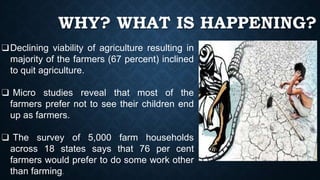
❑Declining viability of agriculture resulting in
majority of the farmers (67 percent) inclined
to quit agriculture.
❑ Micro studies reveal that most of the
farmers prefer not to see their children end
up as farmers.
❑ The survey of 5,000 farm households
across 18 states says that 76 per cent
farmers would prefer to do some work other
than farming.
❑Over 78% of Country’s hydro power
capacity is still remained unexploited.
❑ And the governments always considered
agriculture as a Social sector rather than
a contemplating, competitive industry,
Farmers as mere vote banks.
❑Always involved in appeasement policies
and short term benefits rather than a long
term plan.
PROBLEMS
➢ Inadequate linkages with markets.
➢ Presence of fragmented land holdings .
➢ Lack of capital, poor infrastructure,
inadequate information dissemination, etc
➢ Loss/ wastage of large quantities of fruits and vegetables.
➢ Changing in food habit
➢ Raising population
➢ Middle Man’s influence
➢ Inadequate infrastructure and services.
The above reasons made us to study on Indian agriculture
with the outcome on the current topic:
CONTRACT
FARMING
❑Contract farming can be defined
as agricultural production carried
out according to an agreement
between a buyer and farmers,
which establishes conditions for
the production and marketing of
a farm product or products.
The most common clauses concern
➢ The overall responsibilities of the contracting partners.
➢ Specification of the agricultural product to be produced / sold under the
contractual obligation.
➢ Production technology to be used, involving items such as seed variety,
soil preparation and cultivation methods, plant or animal disease
controls,
➢ transportation procedures, storage and quality standards, among others.
➢ Conditions for purchase, payment obligations, timing, and modality of
➢ The system to determine the final prices to be paid to farmers,
frequently considering effects of variations in product quality and any
applicable loan repayments associated with the provision of inputs or
services .
➢ Choice of a jurisdiction to govern the contract, from the legal
standpoint.
➢ If the two parties are located in states or municipalities that are not in
the same legal jurisdiction, then only one should be chosen to be
applied
The Key Functions Rendered by Corporate in
Contract Farming
➢ Technology transfer
➢ Selection of Farmer & Contracting
➢ Farmer Training & Education
➢ Provision of Implements
➢ Provision of Agricultural Inputs
➢ Nursery & Seed Supplies
➢ Post Transplantation Care
➢ Farmer Training on Harvesting & Quality Control
➢ Management of the Quota Slip System.
➢ Produce Collection
➢ Quality Inspection
➢ Transportation of the produce to the Processing unit
➢ Management Information System
➢ Management of Farmer Payments
➢ Maturity & Harvest Prediction
IMPORTANCE
➢ The present farm-firm linkages of contract farming model integrates production and
marketing and are very critical for high value agricultural commodities
➢ Overcome inadequate linkages with markets
➢ Presence of fragmented land holdings
➢ Lack of capital, poor infrastructure, inadequate information dissemination,
➢ Loss/wastage of large quantities of fruits and vegetable
➢ Agri-based and food industry’s inability to acquire timely and adequate good quality
agricultural produce
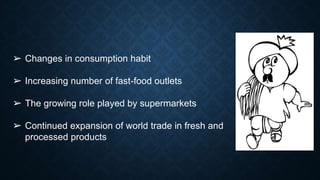
➢ Changes in consumption habit
➢ Increasing number of fast-food outlets
➢ The growing role played by supermarkets
➢ Continued expansion of world trade in fresh and
processed products
ADVANTAGES
➢ Effective in linking the small farm sector to sources of
extension advice, mechanization, seeds, fertilizer and credit,
and to guaranteed and profitable markets for produce
➢ Private agribusiness will usually offer technology more
effectively than government agricultural extension services,
because it has a direct economic interest in improving
farmers' production
➢ Skills transferred can include the efficient use of farm
resources, carrying out field activities according to a strict
timetable, improved methods of applying chemicals and
fertilizers, and a knowledge of the importance of quality and of
the demands of export markets and good record keeping
➢ Reduce price uncertainty to farmers.
➢ Companies gain access to crop production on land that would otherwise
be unavailable, with the additional advantage of not having to buy or
lease it.
➢ Enables them to share risks, find reliable supplies of raw materials for
processing plants, and guarantee that their products conform to quality
standards
➢ Can contribute to both increased income for farmers and higher
profitability for sponsors
RISKS FOR FARMERS
➢Uncertainty involved in growing new,
unfamiliar crops.
➢significant changes in market conditions, or
a company's failure to honor contracts
➢Loss of bargaining power
➢monopolistic market power
➢Manipulation of quality standards by the
sponsor in order to reduce purchases.
RISKS FOR SPONSORS
➢ Insecurity of the access to land
➢ Farmers’ inability to meet strict timetables and regulations because of social
obligations or religious practices
➢ Extra-contractual marketing - farmers breaking the contract and selling their produce
on alternative markets – sometimes encouraged by rival sponsors
Future Strategies of Contract Farming
➢ Involvement of Panchayat or Gram sabha
➢ Improve bargaining power of the farmers.
➢ The selection of appropriate plant genotype
➢ Minimum necessary infrastructure facilities
➢ Bank finance to small and marginal farmers
➢Contracts should be managed in clear and participatory manner
➢Legalization of tenancy
➢Does not grow beyond certain limit which will destroy biodiversity and
agricultural ecology
➢Updated database of contract farmers along with other relevant details
➢Agreements written in vernacular language Liability of the contractor
for any environmental losses should be fixed by the government
CASE STUDY
PEPSI CO. INDIA
PepsiCo partners with the different state governments to provide access to the latest
varieties and agronomic practices for the farming community in multiple crops across the
country
PepsiCo is a world leader in convenient foods and beverages, with 2006 revenues of
more than USD 35.1 billion and 168,000 employees.
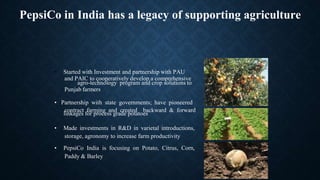
PepsiCo in India has a legacy of supporting agriculture
and PAIC to cooperatively develop a comprehensive
Punjab farmers
contract farming and created backward & forward
storage, agronomy to increase farm productivity
Paddy & Barley
• Started with Investment and partnership with PAU
agro-technology program and crop solutions to
• Partnership with state governments; have pioneered
linkages for process grade potatoes
• Made investments in R&D in varietal introductions,
• PepsiCo India is focusing on Potato, Citrus, Corn,
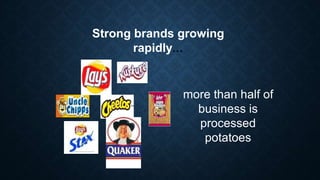
Strong brands growing
rapidly…
more than half of
business is
processed
potatoes
CONCLUSION
➢ India, given the diverse agro climatic zones, can be a
competitive producer of a large number of crops.
➢ Need to convert our factor price advantage into sustainable
competitive advantage. Contract farming offers one
possible
Well this is not end but
beginning, a lot has to be
done in the era of contract
farming, let’s join hand
together, start thinking about
global food & agri system
ANY QUESTIONS ?
THANK YOU!!!!

Contract farming

  • 1.
    HOW CAN FARMER’SINCOME BE INCREASED ? Under the mentorship of Prof. Om Prakash Mishra Professor & Head Dr. Basavaprabhu Jirli Associate Professor Akanksha Singh B.Sc (Ag) Part IV, ID- 14009 Department of Extension Education, Institute of Agricultural Sciences
  • 2.
    ❑The history ofagriculture in India dates back to the Rigveda. ❑ Today India ranks second worldwide in farm output. ❑About 67% of Indian population undergoes agriculture. ❑India exported $39 billion worth of agricultural products in 2013, making it the seventh largest agricultural exporter worldwide and the sixth largest net exporter. BUT TODAY…..
  • 3.
    Although agriculture employsabout half the country's workforce, growth in the sector has lagged that in the rest of the economy. As the majority are small and marginal farmers who lack funds, equipment and the technical know-how to boost farm productivity.
  • 4.
    ❑As per CentralStatistics Office (CSO) the share of agricultural products/Agriculture and Allied Sectors in Gross Domestic Product (GDP) of the country was 51.9 per cent in 1950-51, which has now come down to 17.32 per cent in 2016-17
  • 5.
    WHY? WHAT ISHAPPENING? ❑Declining viability of agriculture resulting in majority of the farmers (67 percent) inclined to quit agriculture. ❑ Micro studies reveal that most of the farmers prefer not to see their children end up as farmers. ❑ The survey of 5,000 farm households across 18 states says that 76 per cent farmers would prefer to do some work other than farming.
  • 6.
    ❑Over 78% ofCountry’s hydro power capacity is still remained unexploited. ❑ And the governments always considered agriculture as a Social sector rather than a contemplating, competitive industry, Farmers as mere vote banks. ❑Always involved in appeasement policies and short term benefits rather than a long term plan.
  • 7.
    PROBLEMS ➢ Inadequate linkageswith markets. ➢ Presence of fragmented land holdings . ➢ Lack of capital, poor infrastructure, inadequate information dissemination, etc
  • 8.
    ➢ Loss/ wastageof large quantities of fruits and vegetables. ➢ Changing in food habit ➢ Raising population ➢ Middle Man’s influence ➢ Inadequate infrastructure and services.
  • 9.
    The above reasonsmade us to study on Indian agriculture with the outcome on the current topic: CONTRACT FARMING
  • 10.
    ❑Contract farming canbe defined as agricultural production carried out according to an agreement between a buyer and farmers, which establishes conditions for the production and marketing of a farm product or products.
  • 11.
    The most commonclauses concern ➢ The overall responsibilities of the contracting partners. ➢ Specification of the agricultural product to be produced / sold under the contractual obligation. ➢ Production technology to be used, involving items such as seed variety, soil preparation and cultivation methods, plant or animal disease controls, ➢ transportation procedures, storage and quality standards, among others. ➢ Conditions for purchase, payment obligations, timing, and modality of
  • 12.
    ➢ The systemto determine the final prices to be paid to farmers, frequently considering effects of variations in product quality and any applicable loan repayments associated with the provision of inputs or services . ➢ Choice of a jurisdiction to govern the contract, from the legal standpoint. ➢ If the two parties are located in states or municipalities that are not in the same legal jurisdiction, then only one should be chosen to be applied
  • 13.
    The Key FunctionsRendered by Corporate in Contract Farming ➢ Technology transfer ➢ Selection of Farmer & Contracting ➢ Farmer Training & Education ➢ Provision of Implements ➢ Provision of Agricultural Inputs ➢ Nursery & Seed Supplies ➢ Post Transplantation Care
  • 14.
    ➢ Farmer Trainingon Harvesting & Quality Control ➢ Management of the Quota Slip System. ➢ Produce Collection ➢ Quality Inspection ➢ Transportation of the produce to the Processing unit ➢ Management Information System ➢ Management of Farmer Payments ➢ Maturity & Harvest Prediction
  • 15.
    IMPORTANCE ➢ The presentfarm-firm linkages of contract farming model integrates production and marketing and are very critical for high value agricultural commodities ➢ Overcome inadequate linkages with markets ➢ Presence of fragmented land holdings ➢ Lack of capital, poor infrastructure, inadequate information dissemination, ➢ Loss/wastage of large quantities of fruits and vegetable ➢ Agri-based and food industry’s inability to acquire timely and adequate good quality agricultural produce
  • 16.
    ➢ Changes inconsumption habit ➢ Increasing number of fast-food outlets ➢ The growing role played by supermarkets ➢ Continued expansion of world trade in fresh and processed products
  • 17.
    ADVANTAGES ➢ Effective inlinking the small farm sector to sources of extension advice, mechanization, seeds, fertilizer and credit, and to guaranteed and profitable markets for produce ➢ Private agribusiness will usually offer technology more effectively than government agricultural extension services, because it has a direct economic interest in improving farmers' production ➢ Skills transferred can include the efficient use of farm resources, carrying out field activities according to a strict timetable, improved methods of applying chemicals and fertilizers, and a knowledge of the importance of quality and of the demands of export markets and good record keeping
  • 18.
    ➢ Reduce priceuncertainty to farmers. ➢ Companies gain access to crop production on land that would otherwise be unavailable, with the additional advantage of not having to buy or lease it. ➢ Enables them to share risks, find reliable supplies of raw materials for processing plants, and guarantee that their products conform to quality standards ➢ Can contribute to both increased income for farmers and higher profitability for sponsors
  • 19.
    RISKS FOR FARMERS ➢Uncertaintyinvolved in growing new, unfamiliar crops. ➢significant changes in market conditions, or a company's failure to honor contracts ➢Loss of bargaining power ➢monopolistic market power ➢Manipulation of quality standards by the sponsor in order to reduce purchases.
  • 20.
    RISKS FOR SPONSORS ➢Insecurity of the access to land ➢ Farmers’ inability to meet strict timetables and regulations because of social obligations or religious practices ➢ Extra-contractual marketing - farmers breaking the contract and selling their produce on alternative markets – sometimes encouraged by rival sponsors
  • 21.
    Future Strategies ofContract Farming ➢ Involvement of Panchayat or Gram sabha ➢ Improve bargaining power of the farmers. ➢ The selection of appropriate plant genotype ➢ Minimum necessary infrastructure facilities ➢ Bank finance to small and marginal farmers
  • 22.
    ➢Contracts should bemanaged in clear and participatory manner ➢Legalization of tenancy ➢Does not grow beyond certain limit which will destroy biodiversity and agricultural ecology ➢Updated database of contract farmers along with other relevant details ➢Agreements written in vernacular language Liability of the contractor for any environmental losses should be fixed by the government
  • 23.
    CASE STUDY PEPSI CO.INDIA PepsiCo partners with the different state governments to provide access to the latest varieties and agronomic practices for the farming community in multiple crops across the country PepsiCo is a world leader in convenient foods and beverages, with 2006 revenues of more than USD 35.1 billion and 168,000 employees.
  • 24.
    PepsiCo in Indiahas a legacy of supporting agriculture and PAIC to cooperatively develop a comprehensive Punjab farmers contract farming and created backward & forward storage, agronomy to increase farm productivity Paddy & Barley • Started with Investment and partnership with PAU agro-technology program and crop solutions to • Partnership with state governments; have pioneered linkages for process grade potatoes • Made investments in R&D in varietal introductions, • PepsiCo India is focusing on Potato, Citrus, Corn,
  • 25.
    Strong brands growing rapidly… morethan half of business is processed potatoes
  • 26.
    CONCLUSION ➢ India, giventhe diverse agro climatic zones, can be a competitive producer of a large number of crops. ➢ Need to convert our factor price advantage into sustainable competitive advantage. Contract farming offers one possible
  • 27.
    Well this isnot end but beginning, a lot has to be done in the era of contract farming, let’s join hand together, start thinking about global food & agri system
  • 28.