




GROUP 11
Group Member:

Angelina
Muhammad Haryando
Suci Hanifah
Nanda Ramadani
Siti Sarah
TODAY’S LESSON
CONTEXTS AND
CONDITION IN 20TH
CENTURY (AFTER 1945)
DRAMA AFTER 1945
CONTEXT AND CONDITION IN 20TH CENTURY
WORLD WAR I

1916

Happened in 1916, The two sides of the war consisted of the

Allied Powers (France, Great Britain, Russia, the United States, and
other smaller countries) and the Central Powers (Germany, AustriaHungary,

and Turkey/Ottoman Empire, along with other smaller

country support).
•

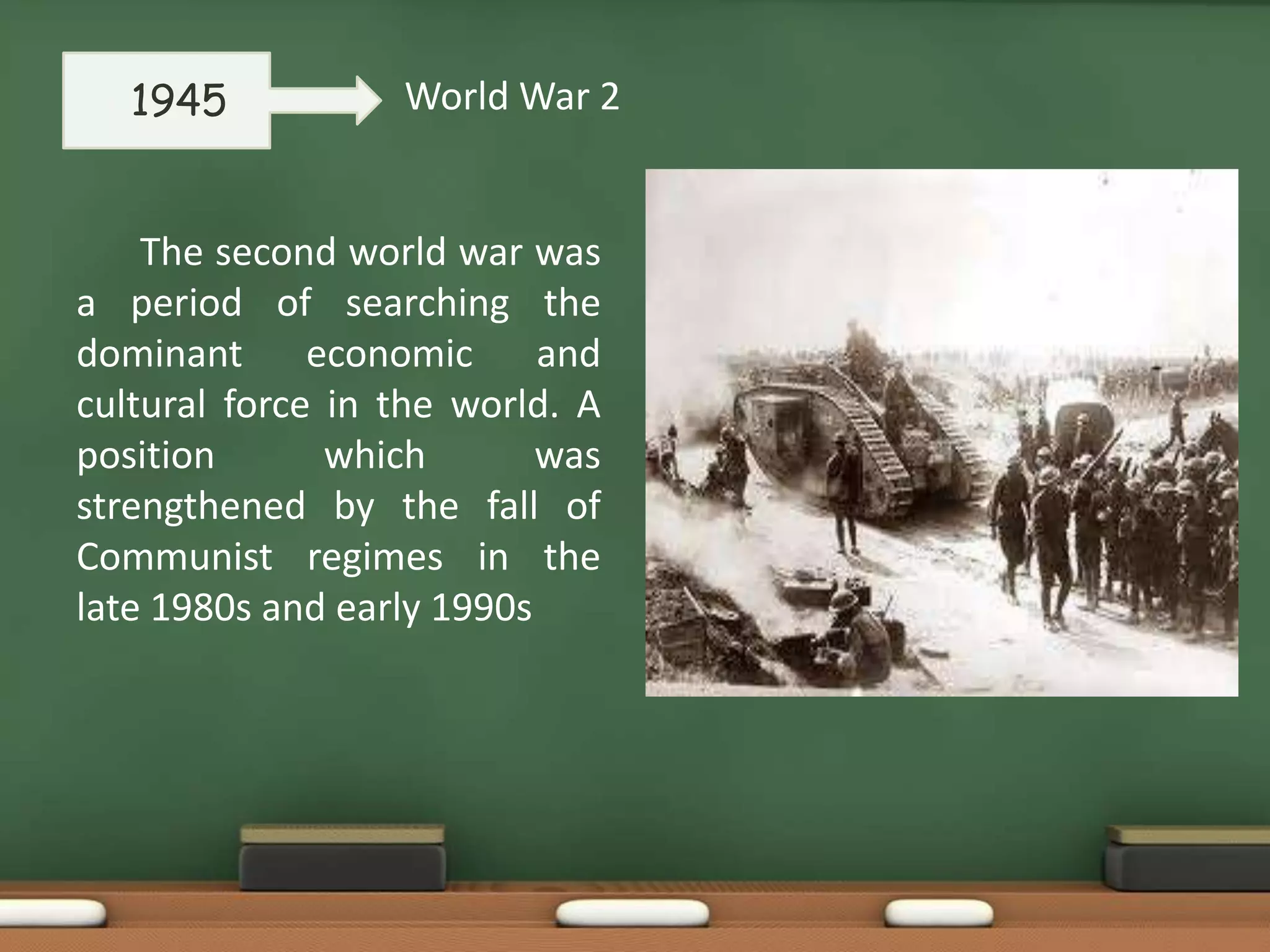
1945

World War 2

The second world war was
a period of searching the
dominant economic and
cultural force in the world. A
position
which
was
strengthened by the fall of
Communist regimes in the
late 1980s and early 1990s
During the World War
•

The 20th century was a period of great artistic change, and it is
dominated by the impact of World War.

•

Several impact of this world war :



Culture mixture

Competition
New

in technology

popular ideology in society (such as : nationality, imperialist
Literature After the Second World War


The changes in society in ways of though and in Literature were every

bit as deep and far reaching as they were after the First World War


The mix of realism, romance, fable , satire, parody, play with form and
philosophical intelligence.



The richness time of English writing
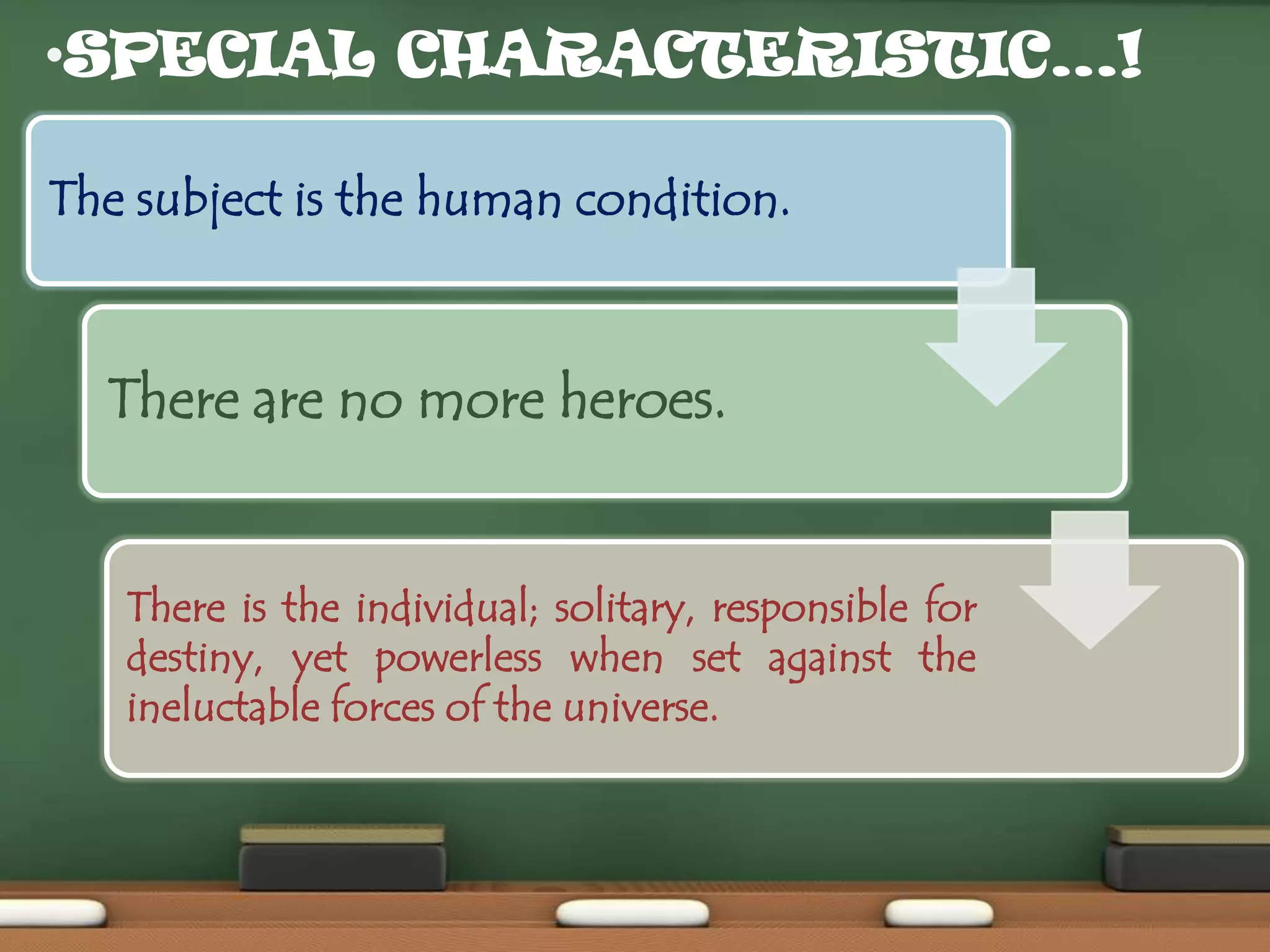
•SPECIAL CHARACTERISTIC…!
The subject is the human condition.

There are no more heroes.

There is the individual; solitary, responsible for
destiny, yet powerless when set against the
ineluctable forces of the universe.
THEME
Identity is a common theme :
•Sexual identity
•Local identity
•National identity
•Racial identity
•Spiritual identity
•Intellectual identity

All of these, and more, recur.
20TH CENTURY DRAMA
The end of the 19th and beginning

of the 20th century is quite a weak
period. The most important authors

started to appear mostly after the
Second World War.
BRITISH
DRAMA
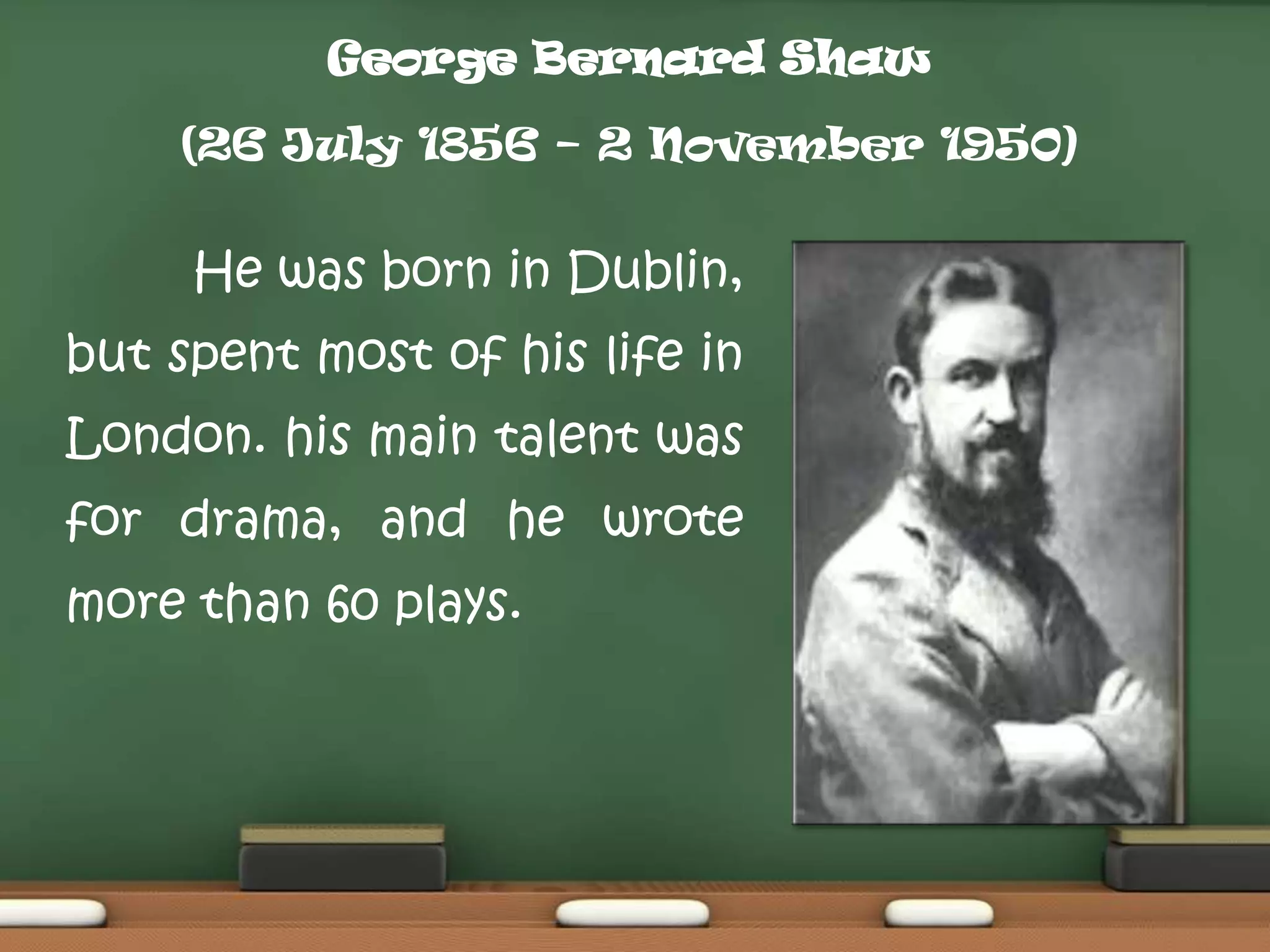
George Bernard Shaw

(26 July 1856 – 2 November 1950)

He was born in Dublin,

but spent most of his life in
London. his main talent was
for drama, and he wrote
more than 60 plays.
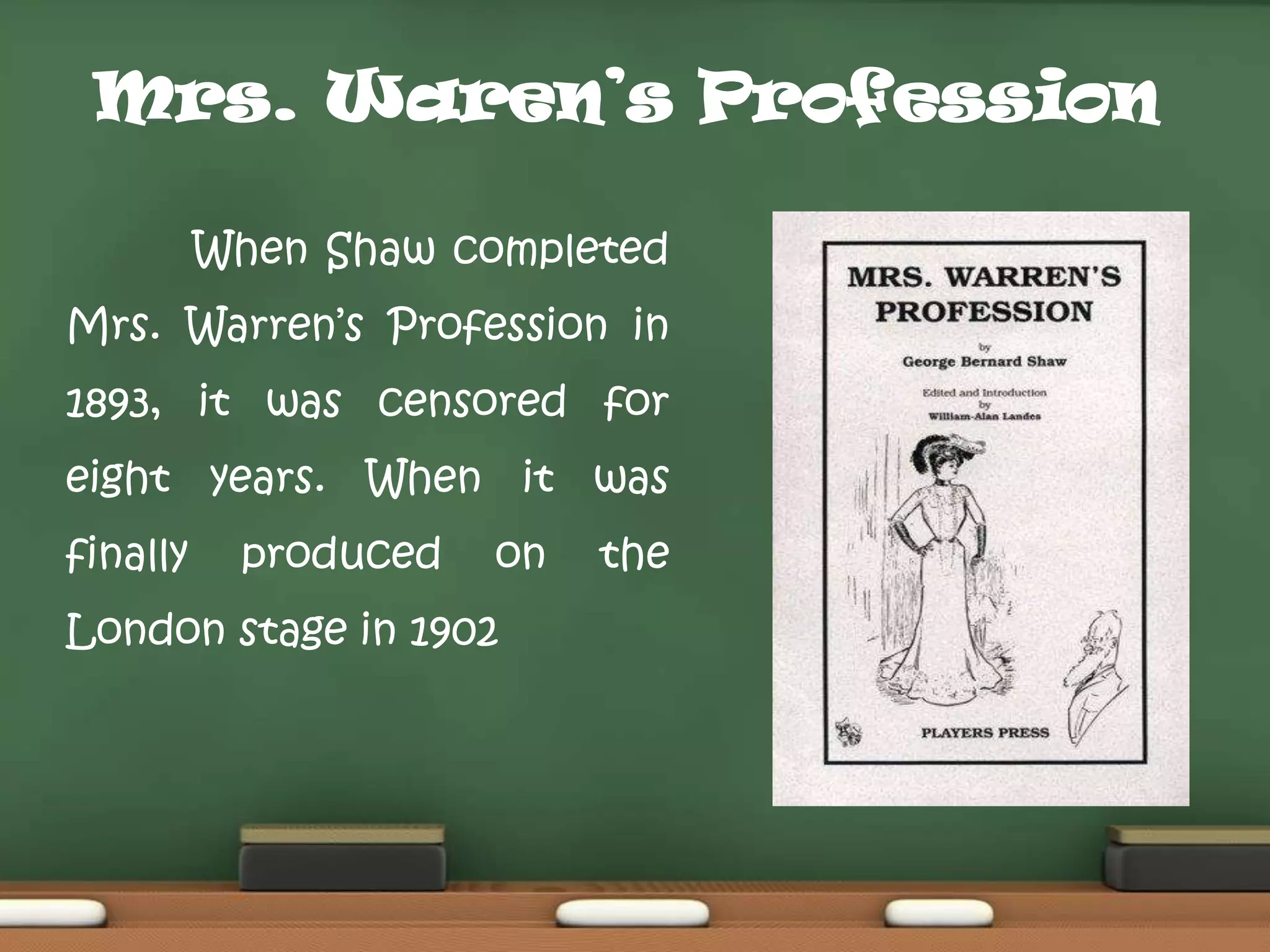
Mrs. Waren’s Profession
When Shaw completed

Mrs. Warren‟s Profession in
1893, it was censored for
eight years. When it was

finally

produced

on

London stage in 1902

the
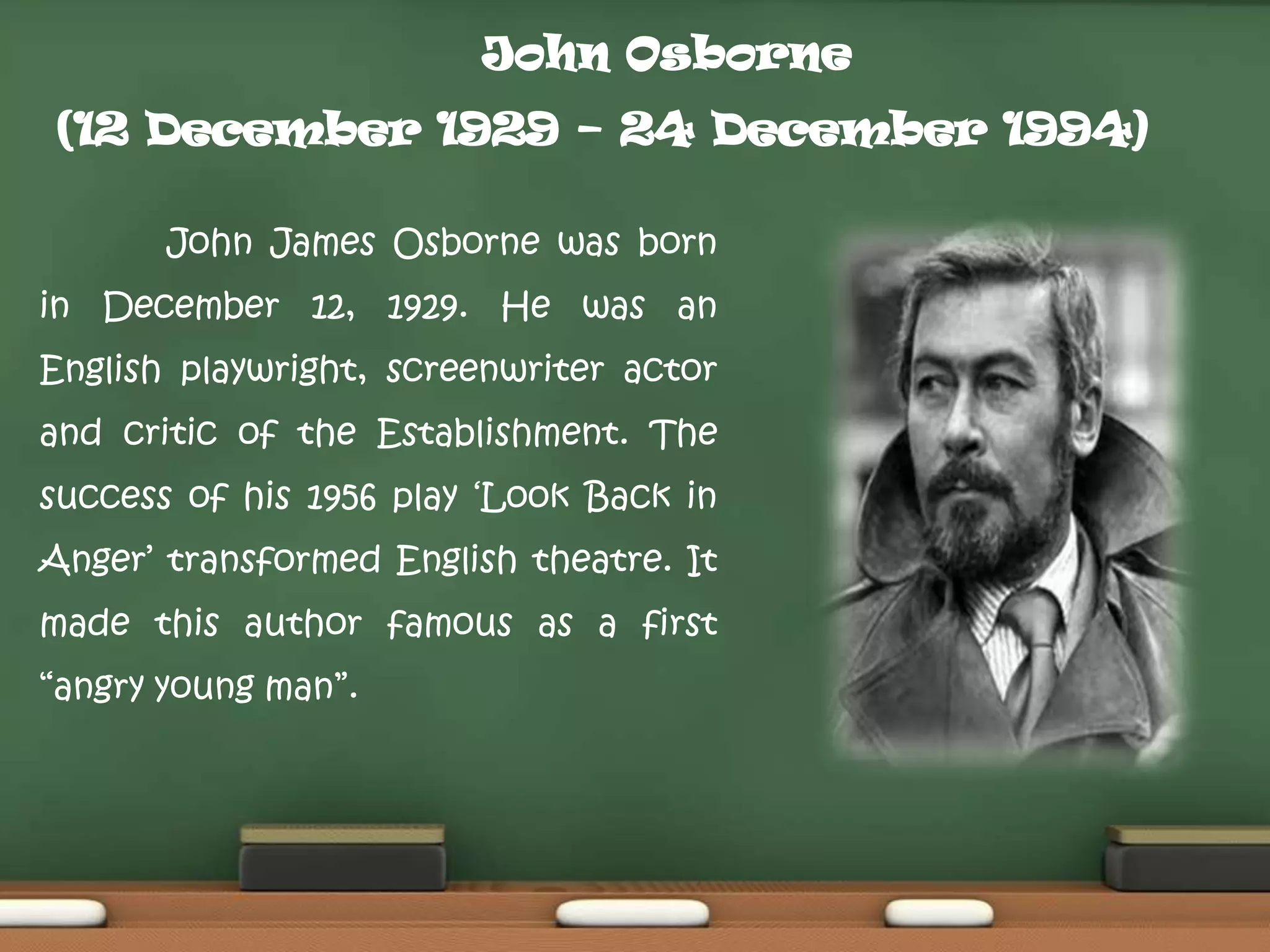
John Osborne
(12 December 1929 – 24 December 1994)
John James Osborne was born
in December 12, 1929. He was an
English playwright, screenwriter actor
and critic of the Establishment. The
success of his 1956 play „Look Back in

Anger‟ transformed English theatre. It
made this author famous as a first
“angry young man”.
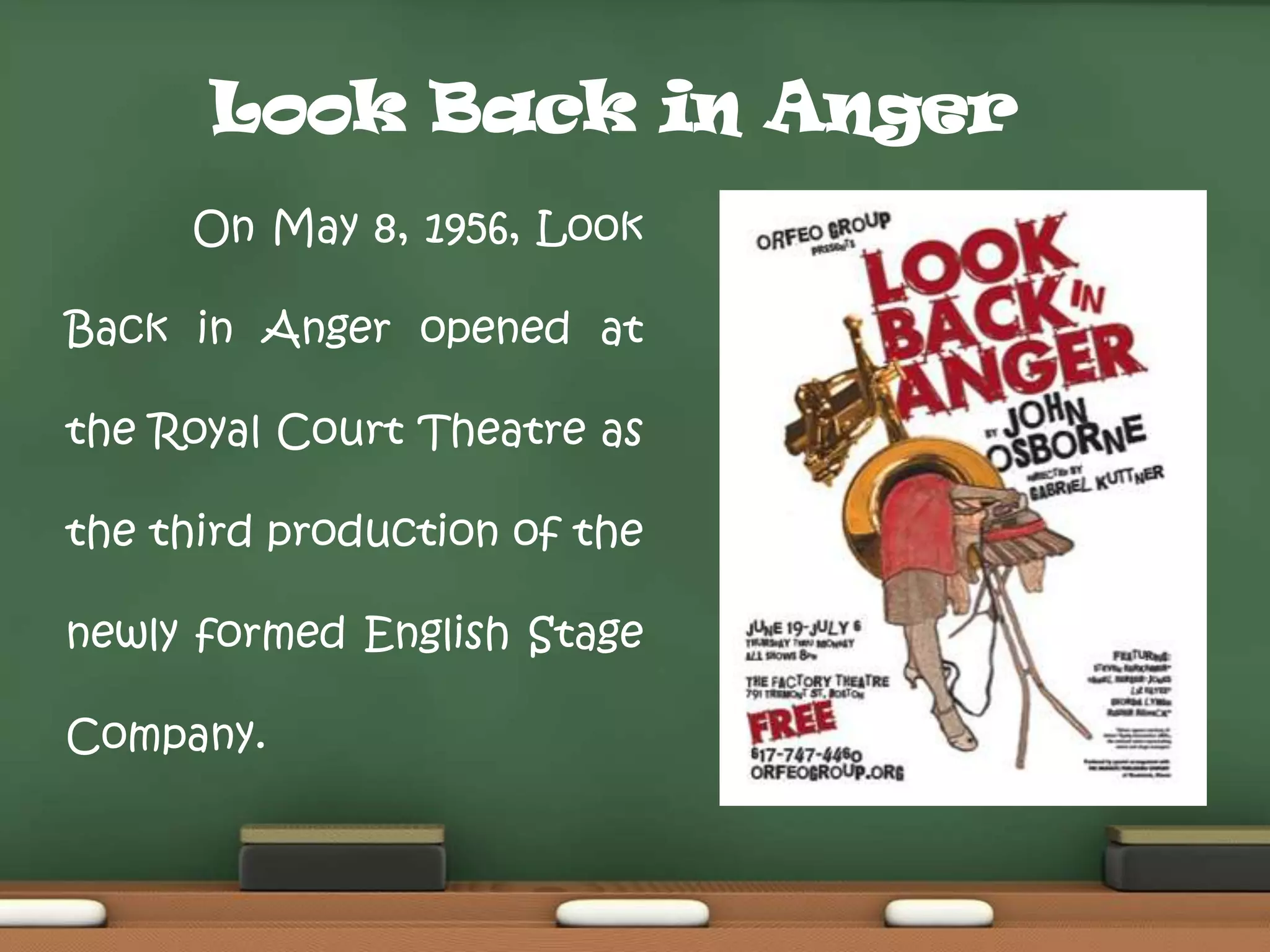
Look Back in Anger
On May 8, 1956, Look
Back in Anger opened at
the Royal Court Theatre as
the third production of the
newly formed English Stage
Company.
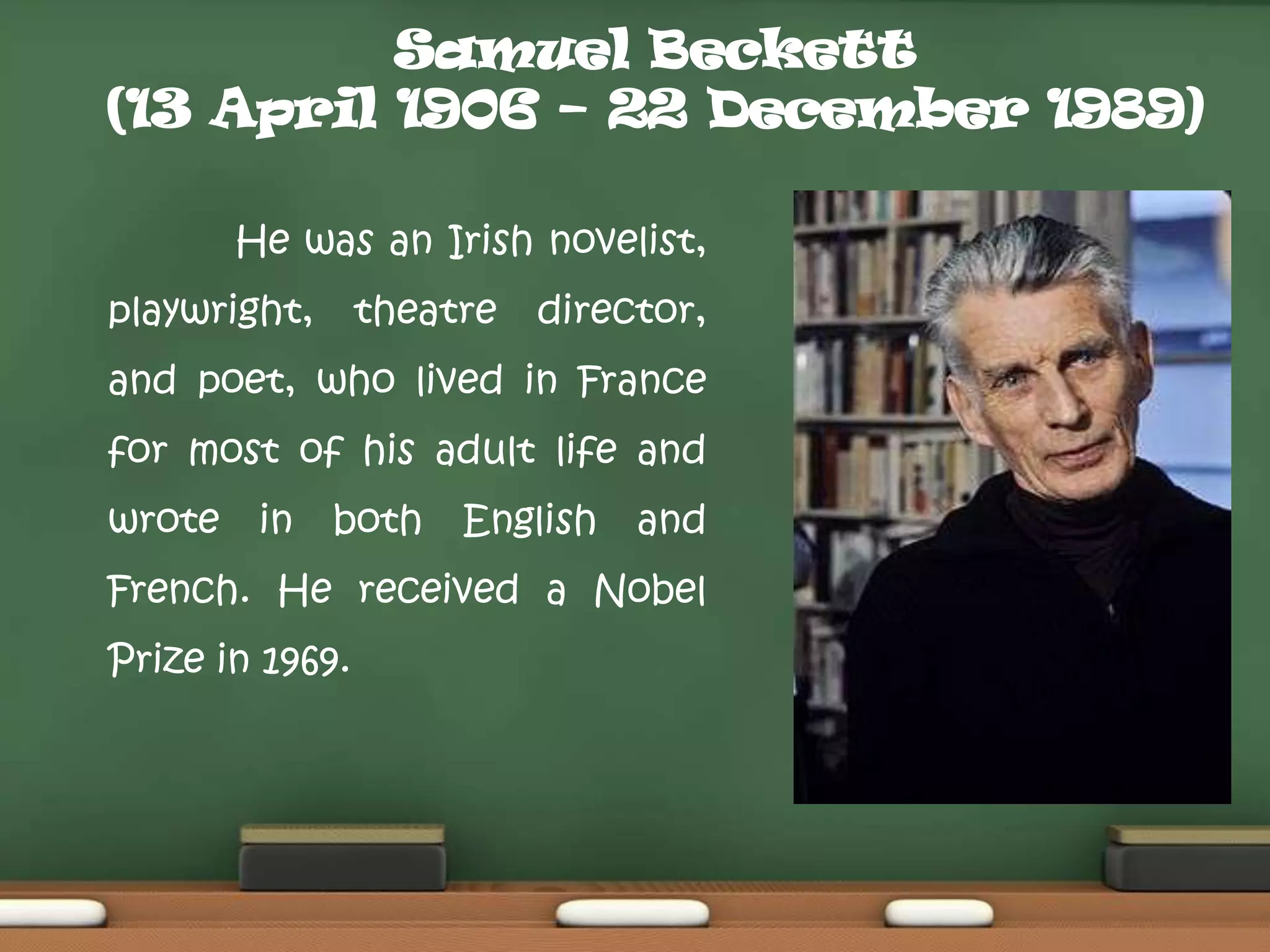
Samuel Beckett
(13 April 1906 – 22 December 1989)
He was an Irish novelist,
playwright,

theatre

director,

and poet, who lived in France
for most of his adult life and
wrote

in

both

English

and

French. He received a Nobel
Prize in 1969.
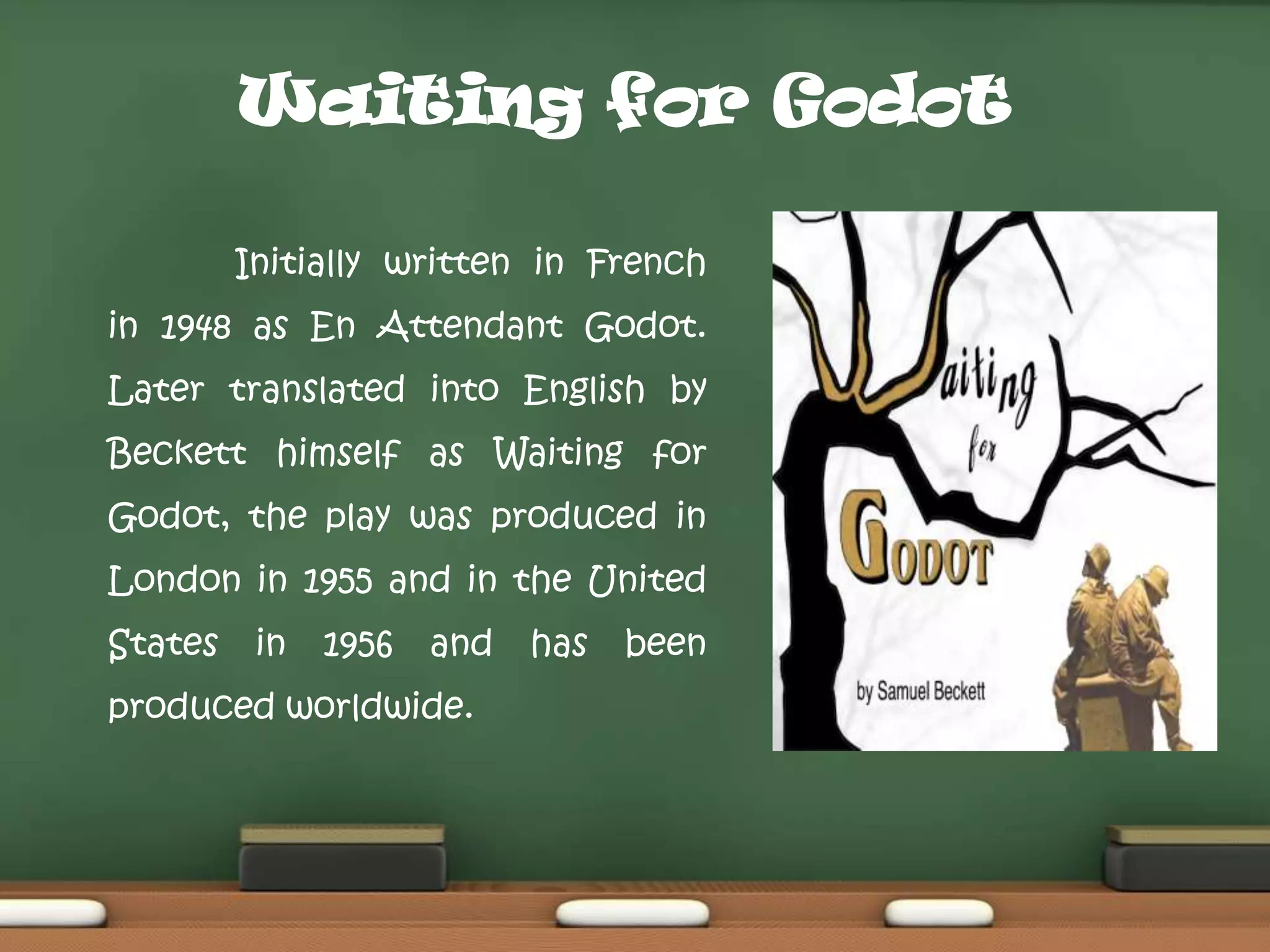
Waiting for Godot
Initially written in French

in 1948 as En Attendant Godot.
Later translated into English by
Beckett himself as Waiting for
Godot, the play was produced in
London in 1955 and in the United
States

in

1956

and

produced worldwide.

has

been
AMERICAN
DRAMA
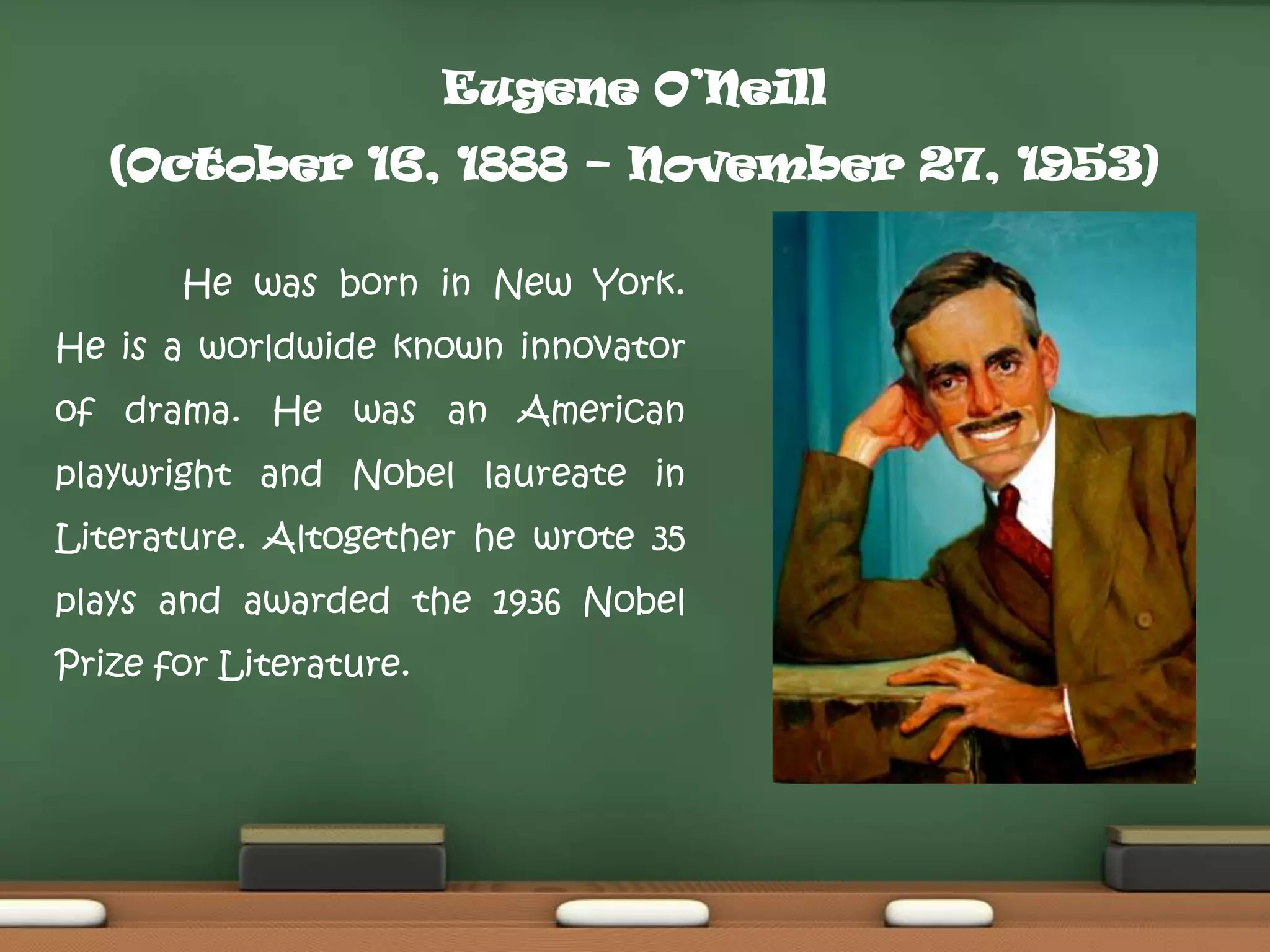
Eugene O’Neill
(October 16, 1888 – November 27, 1953)
He was born in New York.

He is a worldwide known innovator
of drama. He was an American
playwright and Nobel laureate in
Literature. Altogether he wrote 35
plays and awarded the 1936 Nobel
Prize for Literature.
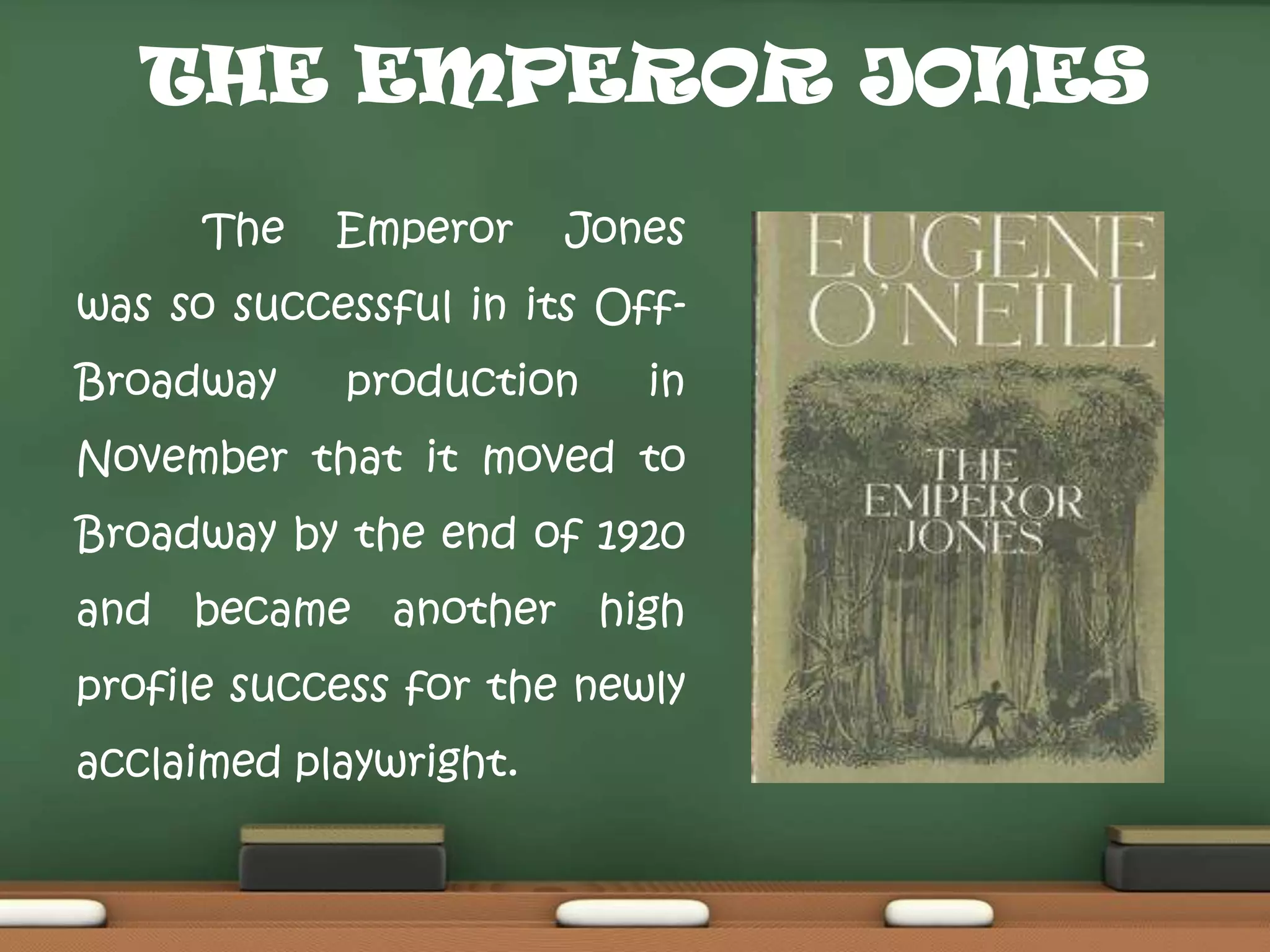
THE EMPEROR JONES
The

Emperor

Jones

was so successful in its OffBroadway

production

in

November that it moved to
Broadway by the end of 1920
and became another high
profile success for the newly

acclaimed playwright.
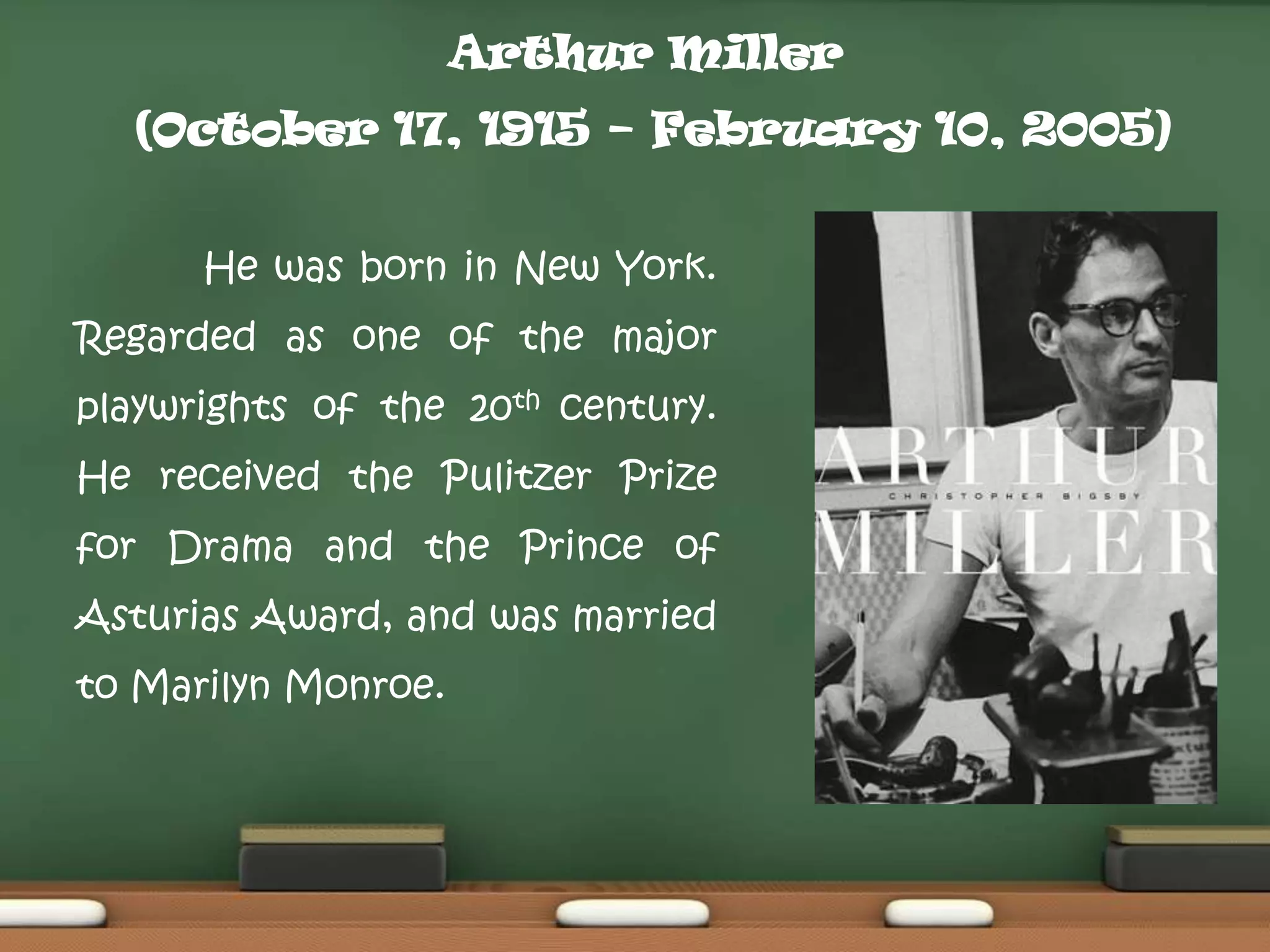
Arthur Miller
(October 17, 1915 – February 10, 2005)
He was born in New York.

Regarded as one of the major
playwrights of the 20th century.
He received the Pulitzer Prize

for Drama and the Prince of
Asturias Award, and was married
to Marilyn Monroe.
Death of a Salesman
The

play

performances

ran
on

for

745

Broadway,

winning both the Tony Award
and the Pulitzer Prize for drama.
The

work

garnered

numerous

honors and awards, including the
Pulitzer Prize and the New York
Drama Critics Circle Award.
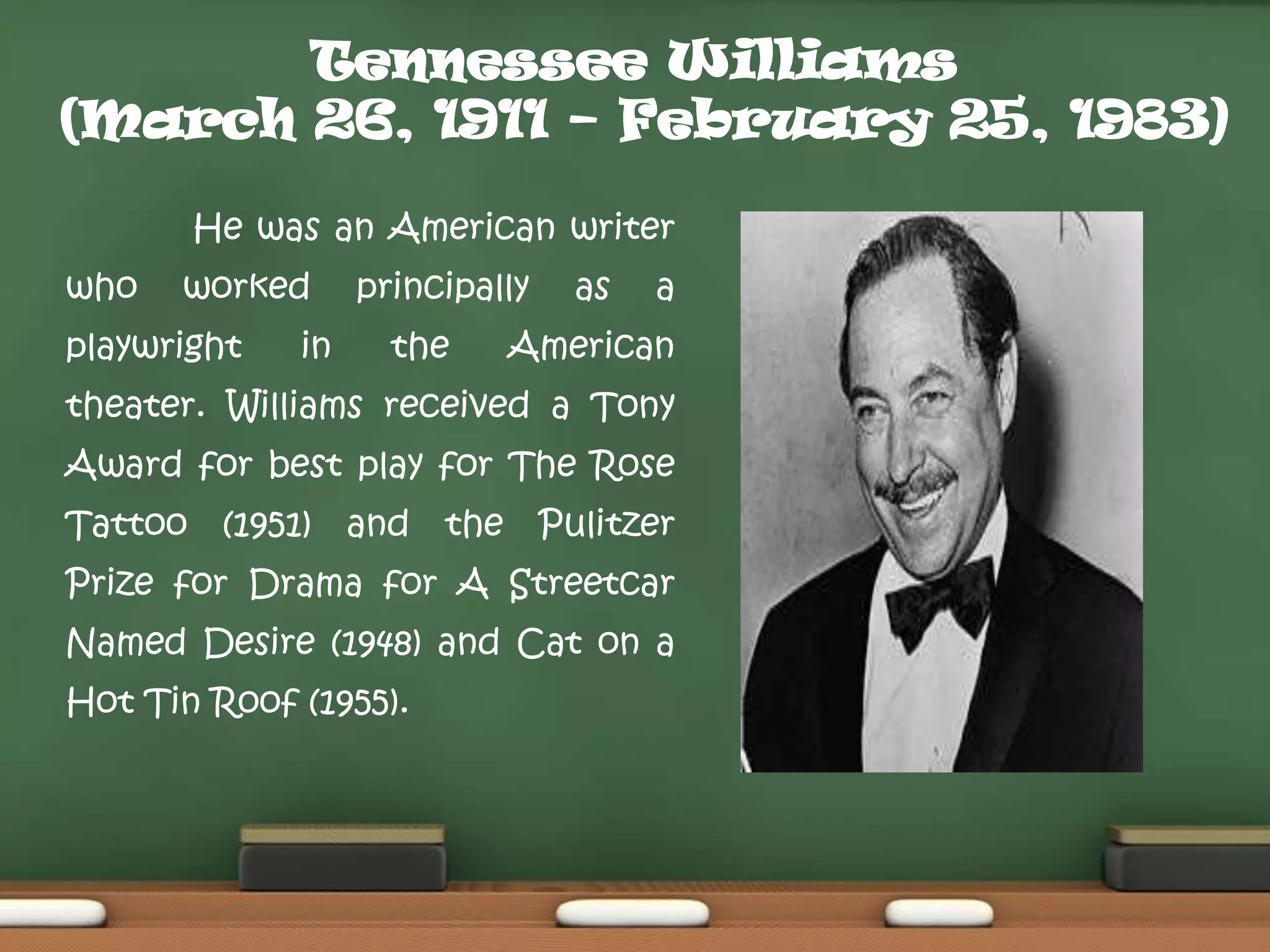
Tennessee Williams
(March 26, 1911 – February 25, 1983)
He was an American writer
who

worked

playwright

in

principally

the

as

a

American

theater. Williams received a Tony
Award for best play for The Rose
Tattoo (1951) and the Pulitzer
Prize for Drama for A Streetcar
Named Desire (1948) and Cat on a
Hot Tin Roof (1955).
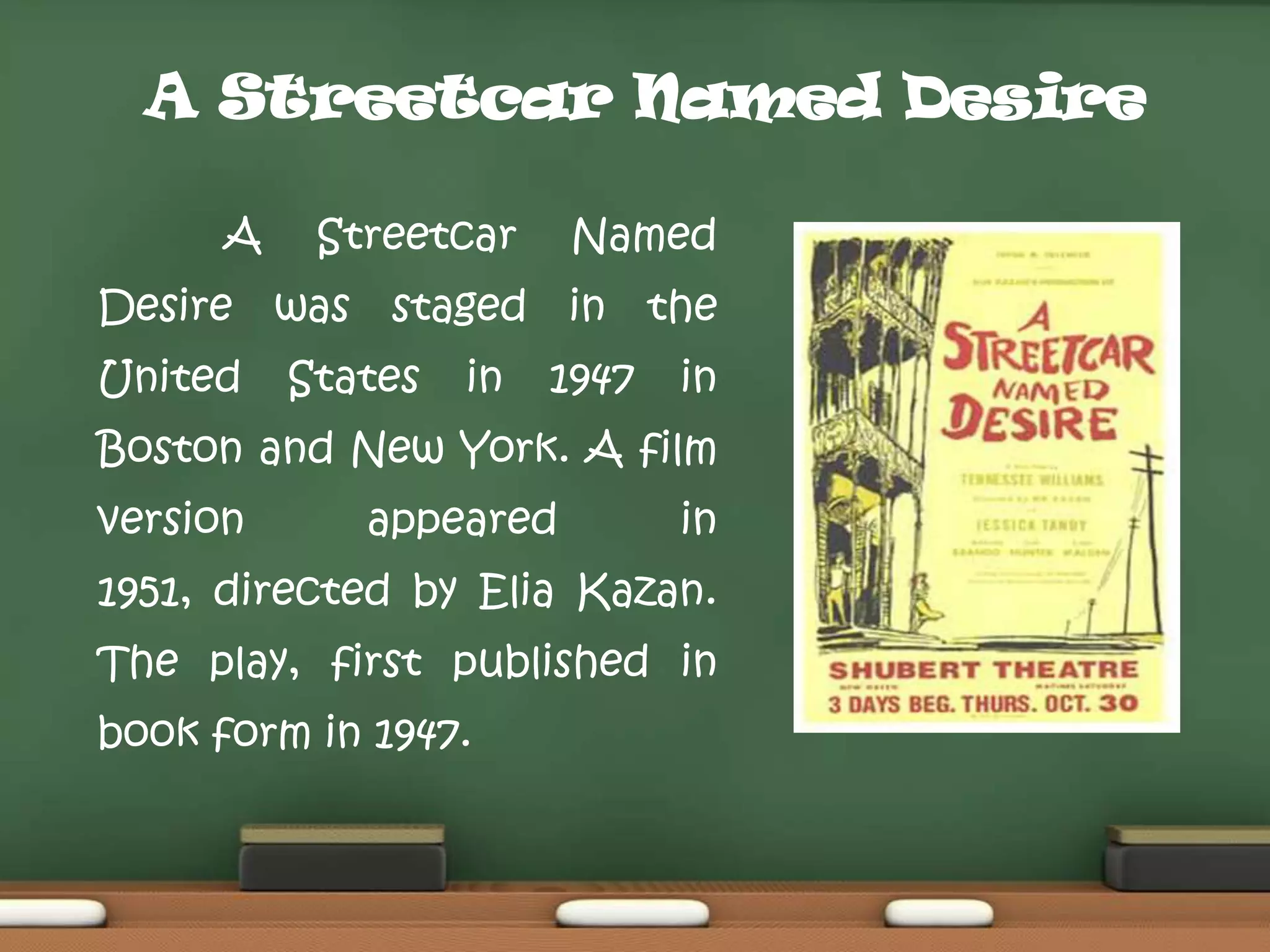
A Streetcar Named Desire
A

Streetcar

Named

Desire was staged in the
United

States

in

1947

in

Boston and New York. A film
version

appeared

in

1951, directed by Elia Kazan.
The play, first published in
book form in 1947.
references
(The Article of First world war : 2009)
( encyclopedia farlex : 2012)
( wikipedia )

( e-notes )
( infoplease )

CONTEXTS AND CONDITION IN 20TH CENTURY (AFTER 1945) AND DRAMA AFTER 1945

  • 1.
    GROUP 11 Group Member: Angelina MuhammadHaryando Suci Hanifah Nanda Ramadani Siti Sarah
  • 2.
    TODAY’S LESSON CONTEXTS AND CONDITIONIN 20TH CENTURY (AFTER 1945) DRAMA AFTER 1945
  • 3.
    CONTEXT AND CONDITIONIN 20TH CENTURY WORLD WAR I 1916 Happened in 1916, The two sides of the war consisted of the Allied Powers (France, Great Britain, Russia, the United States, and other smaller countries) and the Central Powers (Germany, AustriaHungary, and Turkey/Ottoman Empire, along with other smaller country support).
  • 4.
    • 1945 World War 2 Thesecond world war was a period of searching the dominant economic and cultural force in the world. A position which was strengthened by the fall of Communist regimes in the late 1980s and early 1990s
  • 5.
    During the WorldWar • The 20th century was a period of great artistic change, and it is dominated by the impact of World War. • Several impact of this world war :  Culture mixture Competition New in technology popular ideology in society (such as : nationality, imperialist
  • 6.
    Literature After theSecond World War  The changes in society in ways of though and in Literature were every bit as deep and far reaching as they were after the First World War  The mix of realism, romance, fable , satire, parody, play with form and philosophical intelligence.  The richness time of English writing
  • 7.
    •SPECIAL CHARACTERISTIC…! The subjectis the human condition. There are no more heroes. There is the individual; solitary, responsible for destiny, yet powerless when set against the ineluctable forces of the universe.
  • 8.
    THEME Identity is acommon theme : •Sexual identity •Local identity •National identity •Racial identity •Spiritual identity •Intellectual identity All of these, and more, recur.
  • 9.
    20TH CENTURY DRAMA Theend of the 19th and beginning of the 20th century is quite a weak period. The most important authors started to appear mostly after the Second World War.
  • 10.
  • 11.
    George Bernard Shaw (26July 1856 – 2 November 1950) He was born in Dublin, but spent most of his life in London. his main talent was for drama, and he wrote more than 60 plays.
  • 12.
    Mrs. Waren’s Profession WhenShaw completed Mrs. Warren‟s Profession in 1893, it was censored for eight years. When it was finally produced on London stage in 1902 the
  • 13.
    John Osborne (12 December1929 – 24 December 1994) John James Osborne was born in December 12, 1929. He was an English playwright, screenwriter actor and critic of the Establishment. The success of his 1956 play „Look Back in Anger‟ transformed English theatre. It made this author famous as a first “angry young man”.
  • 14.
    Look Back inAnger On May 8, 1956, Look Back in Anger opened at the Royal Court Theatre as the third production of the newly formed English Stage Company.
  • 15.
    Samuel Beckett (13 April1906 – 22 December 1989) He was an Irish novelist, playwright, theatre director, and poet, who lived in France for most of his adult life and wrote in both English and French. He received a Nobel Prize in 1969.
  • 16.
    Waiting for Godot Initiallywritten in French in 1948 as En Attendant Godot. Later translated into English by Beckett himself as Waiting for Godot, the play was produced in London in 1955 and in the United States in 1956 and produced worldwide. has been
  • 17.
  • 18.
    Eugene O’Neill (October 16,1888 – November 27, 1953) He was born in New York. He is a worldwide known innovator of drama. He was an American playwright and Nobel laureate in Literature. Altogether he wrote 35 plays and awarded the 1936 Nobel Prize for Literature.
  • 19.
    THE EMPEROR JONES The Emperor Jones wasso successful in its OffBroadway production in November that it moved to Broadway by the end of 1920 and became another high profile success for the newly acclaimed playwright.
  • 20.
    Arthur Miller (October 17,1915 – February 10, 2005) He was born in New York. Regarded as one of the major playwrights of the 20th century. He received the Pulitzer Prize for Drama and the Prince of Asturias Award, and was married to Marilyn Monroe.
  • 21.
    Death of aSalesman The play performances ran on for 745 Broadway, winning both the Tony Award and the Pulitzer Prize for drama. The work garnered numerous honors and awards, including the Pulitzer Prize and the New York Drama Critics Circle Award.
  • 22.
    Tennessee Williams (March 26,1911 – February 25, 1983) He was an American writer who worked playwright in principally the as a American theater. Williams received a Tony Award for best play for The Rose Tattoo (1951) and the Pulitzer Prize for Drama for A Streetcar Named Desire (1948) and Cat on a Hot Tin Roof (1955).
  • 23.
    A Streetcar NamedDesire A Streetcar Named Desire was staged in the United States in 1947 in Boston and New York. A film version appeared in 1951, directed by Elia Kazan. The play, first published in book form in 1947.
  • 24.
    references (The Article ofFirst world war : 2009) ( encyclopedia farlex : 2012) ( wikipedia ) ( e-notes ) ( infoplease )