Contemporary Issues

By: Gurpreet Kaur
Lovely Professional University
Reverse Mentoring
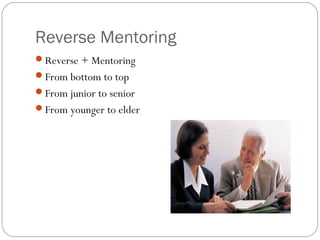
Reverse + Mentoring
From bottom to top
From junior to senior
From younger to elder
Young People+ Older People
=
Social Media + Business
Experience
Evolution
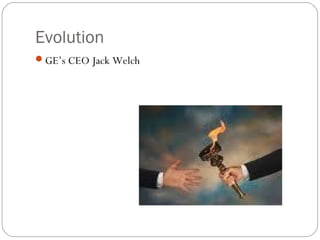
GE’s CEO Jack Welch
What does reverse mentoring involve?
Clear set of objectives
Communication
Time
Benefits
For mentor (junior)
For mentee (senior)
Problems
Ego clashes
Not ready to learn
Organisational structure
Not clear about the advantages
Big Question:
“Would Top-level executives put their

egos aside to accept being mentored by a
twenty something??”
For successful reverse mentoring
Hire future leaders
Survey new employees after two-three months on the job
Set up a regular “View from the Front Lines” meeting
Set goals
Training is essential
Reverse mentoring program
Some examples:
Center for Coaching and Mentoring in
Bartlesville, Oklahoma
Matt Starcevich, CEO says "Reverse mentoring can provide

substantial benefits for an organization”
Wharton School of Business at the
University of Pennsylvania
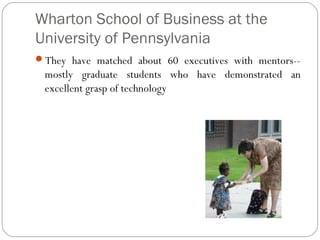
They have matched about 60 executives with mentors--

mostly graduate students who have demonstrated an
excellent grasp of technology
Procter & Gamble
A couple of years ago, CIO Steve David--a 30-plus-year

veteran of the company and a longtime mentoring advocate-began a reverse-mentoring relationship with a staff scientist
Emerging Future Organizations


Charles Handy
 He believes the new organizations will need to treat
people as assets to be developed and motivated
Handy identifies 3 types of organizations :
1. The Shamrock organizations
2. The federal organizations
3. The Triple I organizations
The Shamrock Organizations
Composed of 3 distinct groups :
1. The core workers
2. The contractual fringe
3. The flexible labor force
Example: Rank Xerox and F. International


The Federal Organization
A organizations as network of individual organizations allied
together under a common flag with some shape identity

The Triple I Organization
Triple I based on Intelligence, Information and Ideas
In future, the equation organizations will be Triple I = AV
(Added Value) and have
1. Invest in smart machines to remain competitive and
effective
2. Recruit skilled and smart people to control the
machines
3. Ensure that this group of skilled people is rewarded
equitably
HR JARGONS
You work you take
COMPETITIVE SALARY
You can implement your knowledge right from today
JOIN OUR FAST-PACED COMPANY
Be happy you have a family atmosphere people are warm,

friendly
CASUAL WORK ATMOSPHERE
Plan and perform you will be perfect
MUST BE DEADLINE-ORIENTED
To earn more name and money
SOME OVERTIME REQUIRED
You should be king of one and jack of many 
DUTIES WILL VARY
You will become perfect
MUST HAVE AN EYE FOR DETAIL
Female Applicants must be focused both officially and

personally
'CAREER-MINDED'
THANKS

Contemporary issues in HR

  • 1.
    Contemporary Issues By: GurpreetKaur Lovely Professional University
  • 2.
    Reverse Mentoring Reverse +Mentoring From bottom to top From junior to senior From younger to elder
  • 3.
    Young People+ OlderPeople = Social Media + Business Experience
  • 4.
  • 5.
    What does reversementoring involve? Clear set of objectives Communication Time
  • 6.
  • 7.
    Problems Ego clashes Not readyto learn Organisational structure Not clear about the advantages
  • 8.
    Big Question: “Would Top-levelexecutives put their egos aside to accept being mentored by a twenty something??”
  • 9.
    For successful reversementoring Hire future leaders Survey new employees after two-three months on the job Set up a regular “View from the Front Lines” meeting Set goals Training is essential Reverse mentoring program
  • 10.
    Some examples: Center forCoaching and Mentoring in Bartlesville, Oklahoma Matt Starcevich, CEO says "Reverse mentoring can provide substantial benefits for an organization”
  • 11.
    Wharton School ofBusiness at the University of Pennsylvania They have matched about 60 executives with mentors-- mostly graduate students who have demonstrated an excellent grasp of technology
  • 12.
    Procter & Gamble Acouple of years ago, CIO Steve David--a 30-plus-year veteran of the company and a longtime mentoring advocate-began a reverse-mentoring relationship with a staff scientist
  • 13.
    Emerging Future Organizations  CharlesHandy  He believes the new organizations will need to treat people as assets to be developed and motivated Handy identifies 3 types of organizations : 1. The Shamrock organizations 2. The federal organizations 3. The Triple I organizations
  • 15.
    The Shamrock Organizations Composedof 3 distinct groups : 1. The core workers 2. The contractual fringe 3. The flexible labor force Example: Rank Xerox and F. International  The Federal Organization A organizations as network of individual organizations allied together under a common flag with some shape identity 
  • 16.
    The Triple IOrganization Triple I based on Intelligence, Information and Ideas In future, the equation organizations will be Triple I = AV (Added Value) and have 1. Invest in smart machines to remain competitive and effective 2. Recruit skilled and smart people to control the machines 3. Ensure that this group of skilled people is rewarded equitably
  • 17.
  • 18.
    You work youtake COMPETITIVE SALARY You can implement your knowledge right from today JOIN OUR FAST-PACED COMPANY Be happy you have a family atmosphere people are warm, friendly CASUAL WORK ATMOSPHERE
  • 19.
    Plan and performyou will be perfect MUST BE DEADLINE-ORIENTED To earn more name and money SOME OVERTIME REQUIRED You should be king of one and jack of many  DUTIES WILL VARY You will become perfect MUST HAVE AN EYE FOR DETAIL Female Applicants must be focused both officially and personally 'CAREER-MINDED'
  • 20.