Safety @ Construction
         Site
SAFETY PROGRAM DEVELOPMENT
 Assignment of responsibility
 Hazard identification and control
 Training and communication
 Documentation and enforcement of safety rules
SAFETY PROGRAM
 Maintenance of safe working conditions
 Setting performance goals
 Rewarding safety performance
 Reviewing circumstances involved in incidents
 Taking appropriate correction actions
PERSONAL SAFETY EQUIPMENTS
SAFETY PROGRAM                (CONTINUED)


Establishing Safety performance objectives for all levels of management
Including safety as part of management performance reviews
Measuring effectiveness
BENEFITS OF A SAFETY PROGRAM
 Reduced workers’ compensation claims
 Reduced expenses related to injuries and illnesses
 Reduced absenteeism
 Lower employee complaints
 Improved employee morale and satisfaction
 Increased productivity
 Reduction of hidden cost
 Reduced insurance cost
HIDDEN COST
 Workers Compensation Cost
 Replacement and training cost for new or substitute employee
 Poor Quality
 Penalties for non-compliance
PLANNING A PROJECT
 Develop goals and objectives
 Define project team
 Project manager
 Site Supervisor
 Site Safety
 Other Programs
ROLES AND RESPONSIBILITIES
Supervisors/Management
 Establish safe work practices
 Enforce safety rules and regulations
 Train employees how to avoid hazards
 Enforce reporting work-related injuries, illnesses, and near
  misses
  Investigate causes of incidents or near misses
  Take the appropriate action to prevent recurrence
 Ensure prompt medical attention
ROLES AND RESPONSIBILITIES        (CONTINUED)


Safety Coordinator
Develop and implement accident prevention
 programs
Advise management on company policies and
 governmental regulations
Evaluate effectiveness of existing safety programs
Train management in safety observation
 techniques
POOR SAFETY PRACTICES
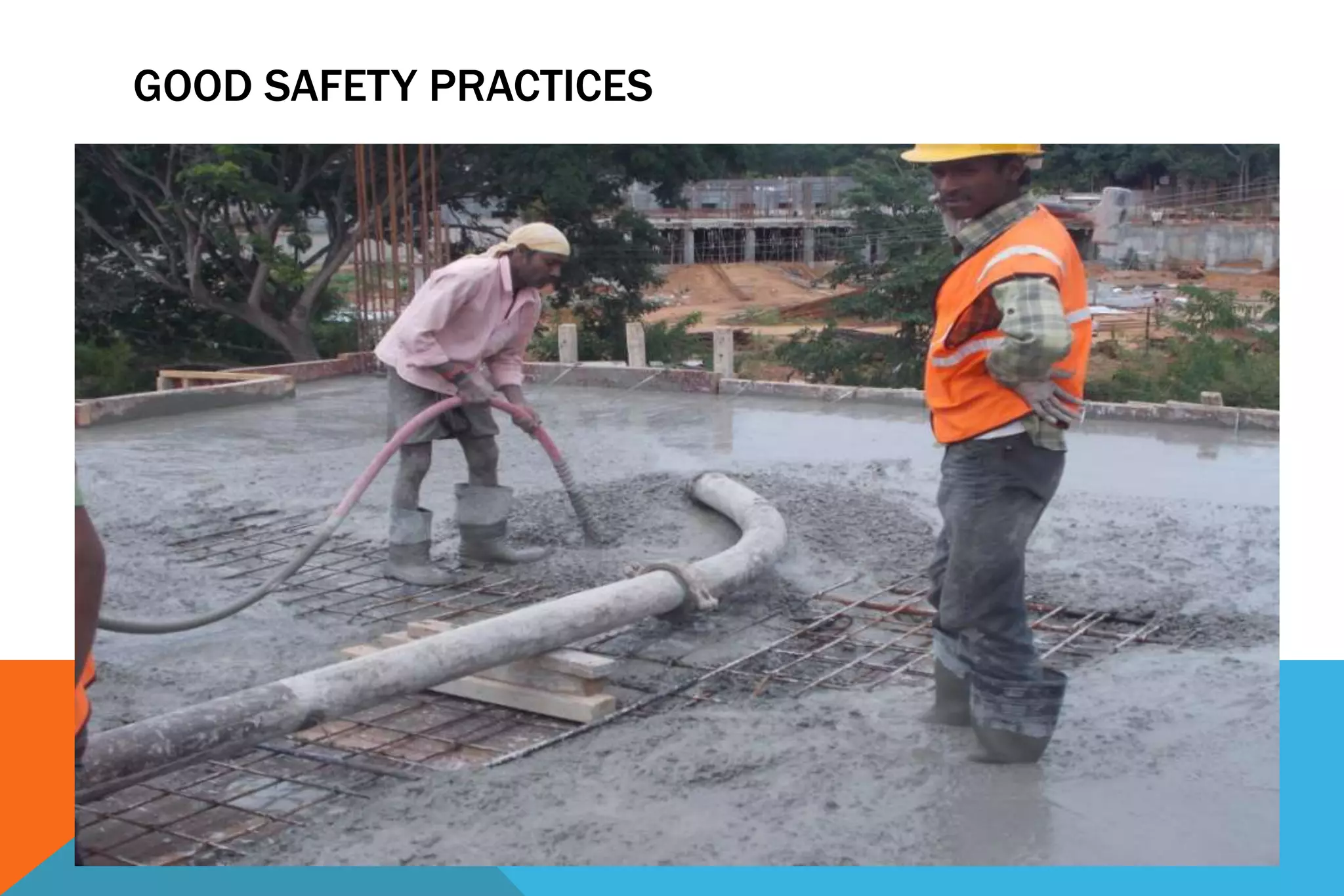
GOOD SAFETY PRACTICES
IMPLEMENTING THE WORK PLAN

 Essential in reducing injuries and illnesses
 Maintains a safe environment
 Designed to protect employees, company’s
  facilities, and local community
WORK PLAN (CONTINUED)
Pre-entry briefing to alert personnel of hazards
Conduct Job Hazard Analysis as appropriate
Periodic safety inspection
Correct known deficiencies
Must be available for review and updated as
 required
GENERAL REQUIREMENTS
 Company Policies
 Site Description, Background
 Site Security
 Emergency Response
IDENTIFYING PROJECT-SPECIFIC
REQUIREMENTS

Job Hazard Analysis
 Select activities with highest risk
 Break activity into individual components
 Identify potential hazards in each component
 Develop procedures to eliminate/reduce hazard
CONTRACTOR PREQUALIFICATION
Must complete prequalification
 Incident rates
 OSHA recordable cases
 General company information
 Safety programs
 Medical surveillance programs
 Management philosophy

Construction safety management

  • 1.
  • 2.
    SAFETY PROGRAM DEVELOPMENT Assignment of responsibility  Hazard identification and control  Training and communication  Documentation and enforcement of safety rules
  • 3.
    SAFETY PROGRAM  Maintenanceof safe working conditions  Setting performance goals  Rewarding safety performance  Reviewing circumstances involved in incidents  Taking appropriate correction actions
  • 4.
  • 6.
    SAFETY PROGRAM (CONTINUED) Establishing Safety performance objectives for all levels of management Including safety as part of management performance reviews Measuring effectiveness
  • 7.
    BENEFITS OF ASAFETY PROGRAM  Reduced workers’ compensation claims  Reduced expenses related to injuries and illnesses  Reduced absenteeism  Lower employee complaints  Improved employee morale and satisfaction  Increased productivity  Reduction of hidden cost  Reduced insurance cost
  • 8.
    HIDDEN COST  WorkersCompensation Cost  Replacement and training cost for new or substitute employee  Poor Quality  Penalties for non-compliance
  • 9.
    PLANNING A PROJECT Develop goals and objectives  Define project team  Project manager  Site Supervisor  Site Safety  Other Programs
  • 10.
    ROLES AND RESPONSIBILITIES Supervisors/Management Establish safe work practices  Enforce safety rules and regulations  Train employees how to avoid hazards  Enforce reporting work-related injuries, illnesses, and near misses Investigate causes of incidents or near misses Take the appropriate action to prevent recurrence  Ensure prompt medical attention
  • 11.
    ROLES AND RESPONSIBILITIES (CONTINUED) Safety Coordinator Develop and implement accident prevention programs Advise management on company policies and governmental regulations Evaluate effectiveness of existing safety programs Train management in safety observation techniques
  • 12.
  • 13.
  • 14.
    IMPLEMENTING THE WORKPLAN  Essential in reducing injuries and illnesses  Maintains a safe environment  Designed to protect employees, company’s facilities, and local community
  • 15.
    WORK PLAN (CONTINUED) Pre-entrybriefing to alert personnel of hazards Conduct Job Hazard Analysis as appropriate Periodic safety inspection Correct known deficiencies Must be available for review and updated as required
  • 16.
    GENERAL REQUIREMENTS  CompanyPolicies  Site Description, Background  Site Security  Emergency Response
  • 17.
    IDENTIFYING PROJECT-SPECIFIC REQUIREMENTS Job HazardAnalysis  Select activities with highest risk  Break activity into individual components  Identify potential hazards in each component  Develop procedures to eliminate/reduce hazard
  • 18.
    CONTRACTOR PREQUALIFICATION Must completeprequalification  Incident rates  OSHA recordable cases  General company information  Safety programs  Medical surveillance programs  Management philosophy