 For More Slides Visit
 https://www.slideshare.net/adeel02
 https://chauhantricks.blogspot.com/
Adeel Rasheed
Connection Establishment
 A connection is a requirement of a reliable data
delivery service.
 It is set up before the actual data exchange takes place.
 The connection is used to acknowledge the receipt of
packets and retransmit those that are lost.
Requirement
 Required by connection-oriented transport protocols
like TCP
 Need connection establishment procedures to allow:
each end to know the other exists
negotiation of optional parameters
triggers allocation of transport entity resources
Ways of Establish the connection
 Two-Way Handshake
 Three-Way Handshake
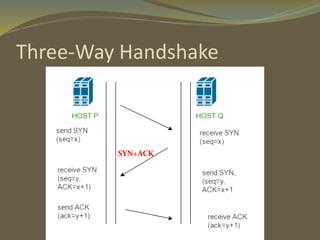
Three-Way Handshake
SYN+ACK
 SYN:
 It is for synchronization of sequence numbers
 It consumes 1 sequence number
 Carries no real data
 SYN+ACK:
 SYN segment for communication in other direction and
 ACK for the received SYN
 It consumes 1 sequence number
 ACK
 Just an ACK segment
 Does not consume any sequence number
 three way handshake
SYN, SYN-ACK, ACK
 connection determined by source and destination
sockets (host, port)
 can only have a single connection between any unique
pairs of ports
 but one port can connect to multiple ports
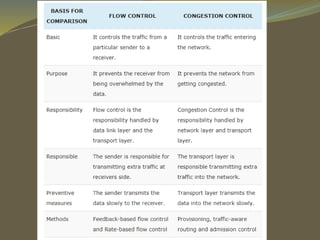
Flow Control
 Flow control is the mechanism that ensures the rate at
which a sender is transmitting is in proportion with
the receiver’s receiving capabilities.
Flow Control Method
 Stop-and-wait
 Sliding-window
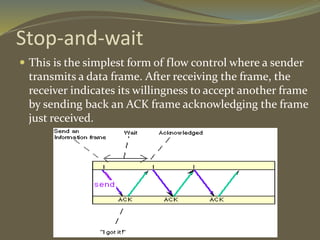
Stop-and-wait
 This is the simplest form of flow control where a sender
transmits a data frame. After receiving the frame, the
receiver indicates its willingness to accept another frame
by sending back an ACK frame acknowledging the frame
just received.
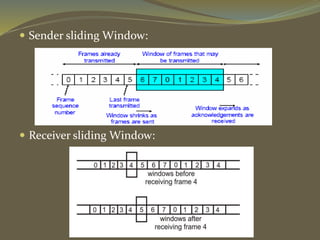
Sliding-window
 With the use of multiple frames for a single message,
the stop-and-wait protocol does not perform well.
Only one frame at a time can be in transit. In stop-
and-wait flow control, if a > 1, serious inefficiencies
result.
 Sender sliding Window:
 Receiver sliding Window:
Congestion Control
 Congestion is a situation in Communication Networks
in which too many packets are present in a part of the
subnet, performance degrades. Congestion in a
network may occur when the load on the
network (i.e. the number of packets sent to the
network) is greater than the capacity of the
network (i.e. the number of packets a network can
handle.). Network congestion occurs in case of traffic
overloading.
Causes Of Congestion
 if all of a sudden a stream of packets arrive on several
input lines and need to be out on the same output line.
 Slow processors also cause Congestion. If the router
CPU is slow at performing the task.
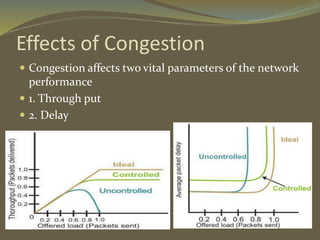
Effects of Congestion
 Congestion affects two vital parameters of the network
performance
 1. Through put
 2. Delay
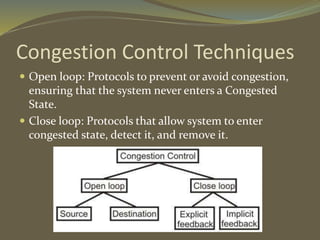
Congestion Control Techniques
 Open loop: Protocols to prevent or avoid congestion,
ensuring that the system never enters a Congested
State.
 Close loop: Protocols that allow system to enter
congested state, detect it, and remove it.
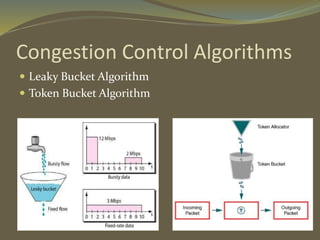
Congestion Control Algorithms
 Leaky Bucket Algorithm
 Token Bucket Algorithm
connectionestablishmentflowandcongestioncontrol-190130165746.pdf

connectionestablishmentflowandcongestioncontrol-190130165746.pdf

  • 2.
     For MoreSlides Visit  https://www.slideshare.net/adeel02  https://chauhantricks.blogspot.com/ Adeel Rasheed
  • 3.
    Connection Establishment  Aconnection is a requirement of a reliable data delivery service.  It is set up before the actual data exchange takes place.  The connection is used to acknowledge the receipt of packets and retransmit those that are lost.
  • 4.
    Requirement  Required byconnection-oriented transport protocols like TCP  Need connection establishment procedures to allow: each end to know the other exists negotiation of optional parameters triggers allocation of transport entity resources
  • 5.
    Ways of Establishthe connection  Two-Way Handshake  Three-Way Handshake
  • 6.
  • 7.
     SYN:  Itis for synchronization of sequence numbers  It consumes 1 sequence number  Carries no real data  SYN+ACK:  SYN segment for communication in other direction and  ACK for the received SYN  It consumes 1 sequence number  ACK  Just an ACK segment  Does not consume any sequence number
  • 8.
     three wayhandshake SYN, SYN-ACK, ACK  connection determined by source and destination sockets (host, port)  can only have a single connection between any unique pairs of ports  but one port can connect to multiple ports
  • 9.
    Flow Control  Flowcontrol is the mechanism that ensures the rate at which a sender is transmitting is in proportion with the receiver’s receiving capabilities.
  • 10.
    Flow Control Method Stop-and-wait  Sliding-window
  • 11.
    Stop-and-wait  This isthe simplest form of flow control where a sender transmits a data frame. After receiving the frame, the receiver indicates its willingness to accept another frame by sending back an ACK frame acknowledging the frame just received.
  • 12.
    Sliding-window  With theuse of multiple frames for a single message, the stop-and-wait protocol does not perform well. Only one frame at a time can be in transit. In stop- and-wait flow control, if a > 1, serious inefficiencies result.
  • 13.
     Sender slidingWindow:  Receiver sliding Window:
  • 14.
    Congestion Control  Congestionis a situation in Communication Networks in which too many packets are present in a part of the subnet, performance degrades. Congestion in a network may occur when the load on the network (i.e. the number of packets sent to the network) is greater than the capacity of the network (i.e. the number of packets a network can handle.). Network congestion occurs in case of traffic overloading.
  • 15.
    Causes Of Congestion if all of a sudden a stream of packets arrive on several input lines and need to be out on the same output line.  Slow processors also cause Congestion. If the router CPU is slow at performing the task.
  • 16.
    Effects of Congestion Congestion affects two vital parameters of the network performance  1. Through put  2. Delay
  • 17.
    Congestion Control Techniques Open loop: Protocols to prevent or avoid congestion, ensuring that the system never enters a Congested State.  Close loop: Protocols that allow system to enter congested state, detect it, and remove it.
  • 18.
    Congestion Control Algorithms Leaky Bucket Algorithm  Token Bucket Algorithm