NEW METHODOLOGIES FOR
IDENTIFYING CUSTOMER NEEDS
FROM USER-GENERATED CONTENTS
Introduction
• COVID-19
• E-Commerce
• Traditional Methods
• User-Generated Content (UGC)
• Marketing Issues
• NLP in Marketing
Research Gaps
• Review-based Recommendation Approaches
• Biased Reviews
• Imbalanced Classification Problem
• Context-dependent Customer Demands
• Best Class Weight for Minority Groups
Goal and Objectives
• Creating processes that allow businesses to keep an eye on the
constantly changing User Generated Contents
• To improve analysts capacity to deduce what customers require from
educational and non-repetitive user-generated content.
• To introduce and create new methods for encoding the qualities of
reviews to improve their usefulness by including more details.
Goal and Objectives
• To create models for different review qualities so that knowledge of
reviews can be enhanced according to various reviews' features.
• To provide an appropriate evaluation measure or procedure for
minimizing potential biases so that accurate and fraudulent review
data may be distinguished to lessen social injustice or inequality
issues.
Methodology
• Data Gathering
Reviews data for chosen companies will be crawled, and event-based data will
be gathered via events calendars.
• Data Pre-Processing
1. Data Cleaning
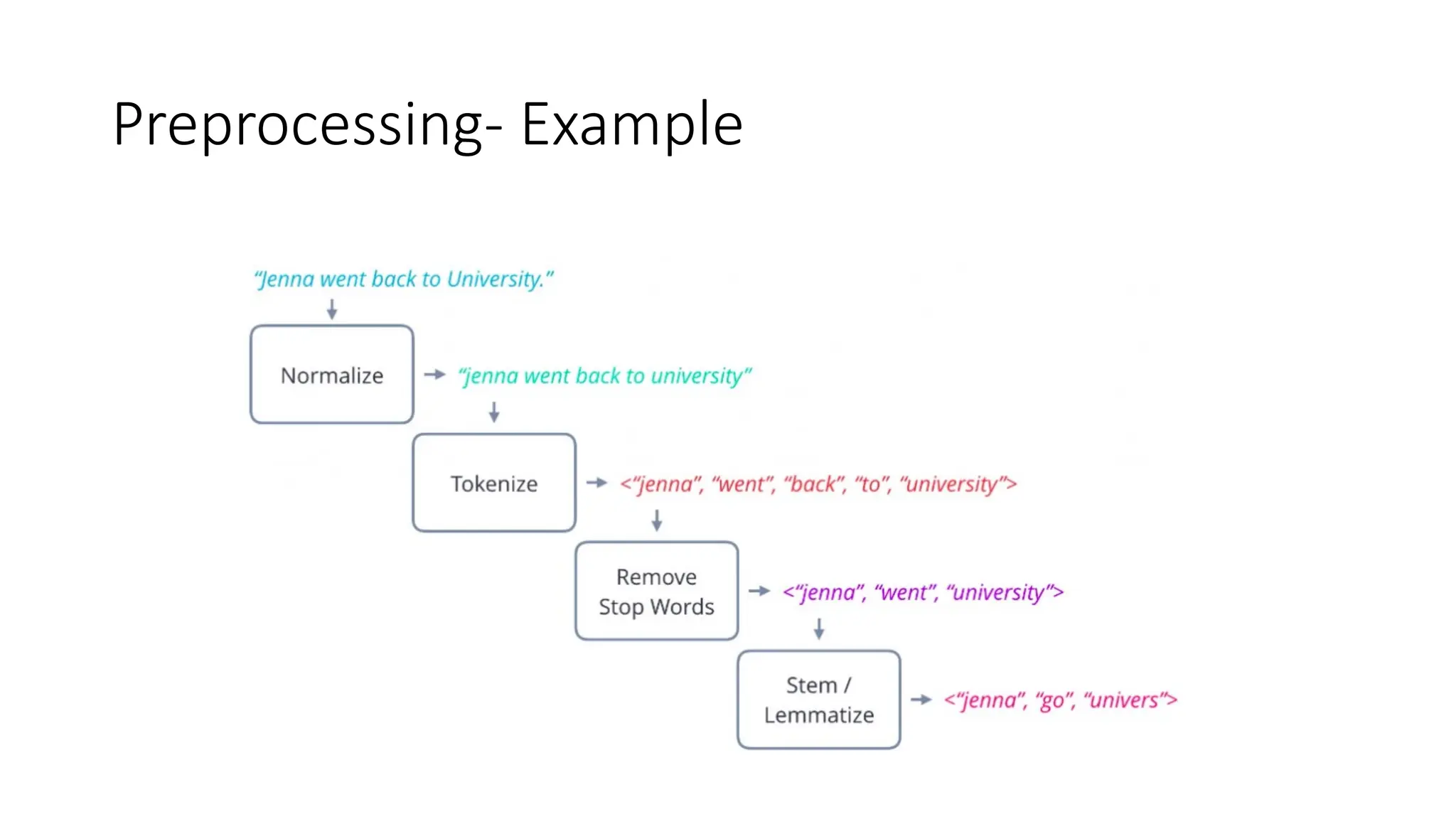
2. Tokenization
3. Stop word removal
4. Stemming
5. POS tagging
Preprocessing- Example
Methodology
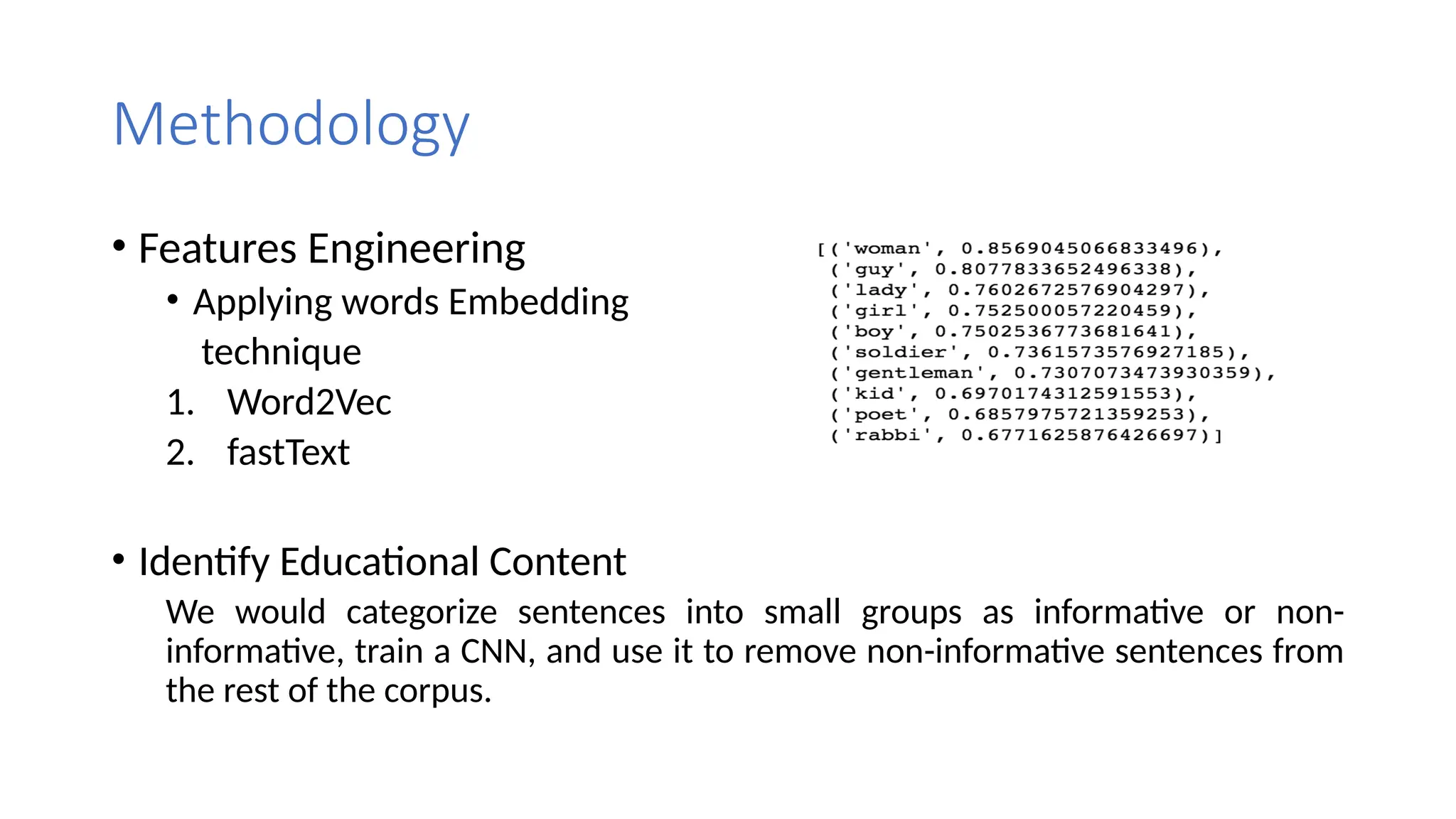
• Features Engineering
• Applying words Embedding
technique
1. Word2Vec
2. fastText
• Identify Educational Content
We would categorize sentences into small groups as informative or non-
informative, train a CNN, and use it to remove non-informative sentences from
the rest of the corpus.
Methodology
• Datasets Splitting
1. Training Set (80%)
2. Testing Set (20%)
• Sample Contents with Variety
• Assessment and Validation
Following tools will used to validate the models
Accuracy
Precesion
Recall
F1- Score
Conclusion

NEW METHODOLOGIES FOR IDENTIFYING CUSTOMER NEEDS FROM USER-GENERATED CONTENTS .pptx

  • 1.
    NEW METHODOLOGIES FOR IDENTIFYINGCUSTOMER NEEDS FROM USER-GENERATED CONTENTS
  • 2.
    Introduction • COVID-19 • E-Commerce •Traditional Methods • User-Generated Content (UGC) • Marketing Issues • NLP in Marketing
  • 3.
    Research Gaps • Review-basedRecommendation Approaches • Biased Reviews • Imbalanced Classification Problem • Context-dependent Customer Demands • Best Class Weight for Minority Groups
  • 4.
    Goal and Objectives •Creating processes that allow businesses to keep an eye on the constantly changing User Generated Contents • To improve analysts capacity to deduce what customers require from educational and non-repetitive user-generated content. • To introduce and create new methods for encoding the qualities of reviews to improve their usefulness by including more details.
  • 5.
    Goal and Objectives •To create models for different review qualities so that knowledge of reviews can be enhanced according to various reviews' features. • To provide an appropriate evaluation measure or procedure for minimizing potential biases so that accurate and fraudulent review data may be distinguished to lessen social injustice or inequality issues.
  • 6.
    Methodology • Data Gathering Reviewsdata for chosen companies will be crawled, and event-based data will be gathered via events calendars. • Data Pre-Processing 1. Data Cleaning 2. Tokenization 3. Stop word removal 4. Stemming 5. POS tagging
  • 7.
  • 8.
    Methodology • Features Engineering •Applying words Embedding technique 1. Word2Vec 2. fastText • Identify Educational Content We would categorize sentences into small groups as informative or non- informative, train a CNN, and use it to remove non-informative sentences from the rest of the corpus.
  • 9.
    Methodology • Datasets Splitting 1.Training Set (80%) 2. Testing Set (20%) • Sample Contents with Variety • Assessment and Validation Following tools will used to validate the models Accuracy Precesion Recall F1- Score
  • 10.