Confused Between a Job or an
MBA?
www.cuchd.in Campus: Gharuan, Mohali
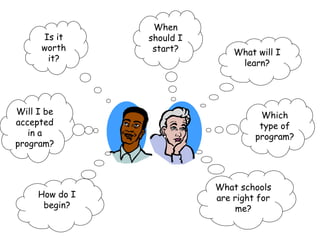
Is it
worth
it?
What will I
learn?
When
should I
start?
Will I be
accepted
in a
program?
Which
type of
program?
What schools
are right for
me?
How do I
begin?
Where do MBAs Work?
• Manufacturing
• Service Industries
• Government
What do MBAs do?
• Accounting
• Corporate finance
• Information systems
• Financial institutions • Marketing
• Consulting
• Personnel
• General management
Starting Salaries
3.5 lacs – 7.5 Lacs
Why Get an MBA?
• To open new career opportunities
• Personal development – intellectual stimulation,
self-confidence
• Shift from individual contribution to managing
others
• To further your career – stay competitive
• To increase salary
• Potential to network
• Company advice or requirement
Why NOT to Pursue an MBA!
• Looking for a “silver bullet” for success
• Something to do while looking for a job
• Unhappy in current job without knowing why
Typical MBA Student Profile
• Early twenties to Mid Twenties.
• Good academic background with solid work
experience
• Ambitious and determined
• Strong idea of career direction
What You Get with an MBA
• “Boot camp” training for management
• A focus on all specialist areas of management
• Combination of technical and “soft” skills
• In-depth focus of a particular discipline, if
desired
• Credentials
Choosing a Program
• Curriculum
• Teaching methods
• Delivery methods
• Schools
Curriculum
• Traditional
– Begin with functional core courses – finance, marketing,
accounting, macro and micro economics, operations, IT,
human resources, quantitative analysis
– General management themes – legal, social, ethical and
technological issues; change management; organizational
theory and behavior; strategic management
– Advanced courses or electives in a core area leading to
major concentration
• Variations
– Incorporate “softer” skills – leadership, negotiation,
teamwork
– Internationalize their focus
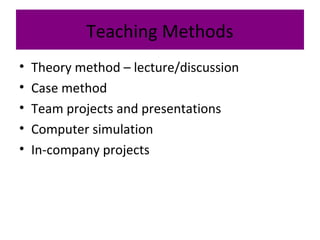
Teaching Methods
• Theory method – lecture/discussion
• Case method
• Team projects and presentations
• Computer simulation
• In-company projects
Delivery Methods
• Full time
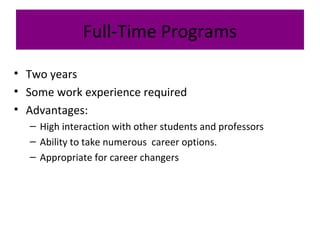
Full-Time Programs
• Two years
• Some work experience required
• Advantages:
– High interaction with other students and professors
– Ability to take numerous career options.
– Appropriate for career changers
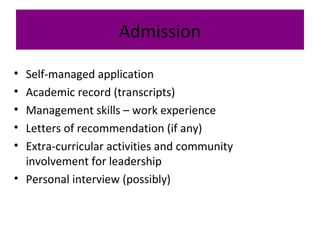
Admission
• Self-managed application
• Academic record (transcripts)
• Management skills – work experience
• Letters of recommendation (if any)
• Extra-curricular activities and community
involvement for leadership
• Personal interview (possibly)
Financial Aid
• Merit scholarships
• Loans

Confused Between JOB and MBA

  • 1.
    Confused Between aJob or an MBA? www.cuchd.in Campus: Gharuan, Mohali
  • 2.
    Is it worth it? What willI learn? When should I start? Will I be accepted in a program? Which type of program? What schools are right for me? How do I begin?
  • 3.
    Where do MBAsWork? • Manufacturing • Service Industries • Government
  • 4.
    What do MBAsdo? • Accounting • Corporate finance • Information systems • Financial institutions • Marketing • Consulting • Personnel • General management
  • 5.
  • 6.
    Why Get anMBA? • To open new career opportunities • Personal development – intellectual stimulation, self-confidence • Shift from individual contribution to managing others • To further your career – stay competitive • To increase salary • Potential to network • Company advice or requirement
  • 7.
    Why NOT toPursue an MBA! • Looking for a “silver bullet” for success • Something to do while looking for a job • Unhappy in current job without knowing why
  • 8.
    Typical MBA StudentProfile • Early twenties to Mid Twenties. • Good academic background with solid work experience • Ambitious and determined • Strong idea of career direction
  • 9.
    What You Getwith an MBA • “Boot camp” training for management • A focus on all specialist areas of management • Combination of technical and “soft” skills • In-depth focus of a particular discipline, if desired • Credentials
  • 10.
    Choosing a Program •Curriculum • Teaching methods • Delivery methods • Schools
  • 11.
    Curriculum • Traditional – Beginwith functional core courses – finance, marketing, accounting, macro and micro economics, operations, IT, human resources, quantitative analysis – General management themes – legal, social, ethical and technological issues; change management; organizational theory and behavior; strategic management – Advanced courses or electives in a core area leading to major concentration • Variations – Incorporate “softer” skills – leadership, negotiation, teamwork – Internationalize their focus
  • 12.
    Teaching Methods • Theorymethod – lecture/discussion • Case method • Team projects and presentations • Computer simulation • In-company projects
  • 13.
  • 14.
    Full-Time Programs • Twoyears • Some work experience required • Advantages: – High interaction with other students and professors – Ability to take numerous career options. – Appropriate for career changers
  • 15.
    Admission • Self-managed application •Academic record (transcripts) • Management skills – work experience • Letters of recommendation (if any) • Extra-curricular activities and community involvement for leadership • Personal interview (possibly)
  • 16.
    Financial Aid • Meritscholarships • Loans